
The B-7 road sign indicates a prohibition for motor vehicles towing a trailer, specifically targeting heavier or more complex trailer configurations like multi-axle trailers. This sign is often placed on roads with challenging conditions such as sharp bends or steep inclines where long vehicle combinations are difficult to manoeuvre safely. While it generally prohibits towing, it usually permits standard passenger cars to tow small, single-axle light trailers, so always check the specific trailer type and road conditions.
Master the meaning of the 'No Motor Vehicles with Trailers' sign (B-7) for your Polish theory test revision. This explanation clarifies when this prohibitory sign applies, ensuring you understand its practical implications for driving and road safety.
The B-7 sign is used on roads with sharp turns, steep inclines, or narrow passages where a long vehicle combination could get stuck or jackknife. It specifically targets multi-axle trailers which are much harder to maneuver. If a weight is specified on the sign, it refers to the Gross Vehicle Weight of the trailer itself.
Prohibits motor vehicles pulling a trailer, except for single-axle trailers or semi-trailers.
Get clear, practical answers to the most common questions about the B-7 - No Motor Vehicles with Trailers road sign. Learn how the sign works, what rules it represents, and how it affects real driving situations. This FAQ strengthens your understanding and supports accurate decision making for the Polish driving theory exam in Poland.
The B-7 sign prohibits motor vehicles from driving while pulling a trailer. This restriction primarily targets larger trailer combinations that can be harder to handle, especially on difficult roads. It's crucial to understand that not all trailers are banned; single-axle trailers are often still permitted.
The B-7 sign generally allows passenger vehicles to tow single-axle trailers, which are common for personal use (like small utility or garden trailers). Articulated vehicles (trucks with semi-trailers) might also be allowed unless the sign specifically indicates otherwise or a weight limit is breached.
You'll usually find the B-7 sign on roads with specific hazards that make towing difficult or dangerous. This includes roads with very sharp turns, steep uphill or downhill gradients, or narrow sections where a vehicle-trailer combination could get stuck or risk jackknifing. It's a safety measure for challenging routes.
A common trap is assuming all towing is forbidden. Learners might forget that single-axle trailers are usually allowed with passenger cars. Another trap is not considering that a supplementary plate might specify a weight limit for the trailer, which, if exceeded, would mean the vehicle is prohibited even if the trailer type would otherwise be permitted.
Yes, the B-7 sign applies to all motor vehicles. However, its primary intent is to restrict vehicles that are inherently more difficult to manoeuvre when towing, such as trucks with full-sized multi-axle trailers. Standard trucks without trailers, or those towing permitted single-axle trailers, may still be allowed depending on specific circumstances and any supplementary plates.
A clear reference image of the B-7 - No Motor Vehicles with Trailers road sign used in Poland.
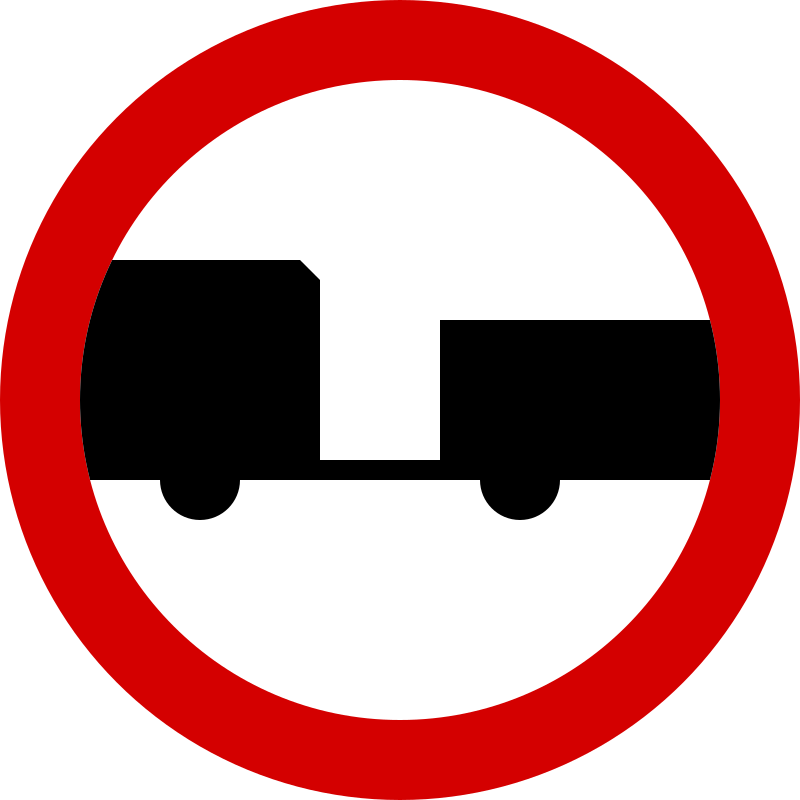
The B-7 - No Motor Vehicles with Trailers road sign may also be known by these alternative names or terms.
The B-7 - No Motor Vehicles with Trailers road sign is part of the Prohibitory Signs (B) category, which groups together signs with similar rules and functions.
Comparing signs like 'No Motor Vehicles with Trailers' with others in the prohibitory category sharpens your recognition skills and prevents confusion during your theory test revision. Effective traffic sign comparison is key to mastering Polish road rules and ensuring road safety.

B-1 Sign: Road Closed to All Traffic in Both Directions
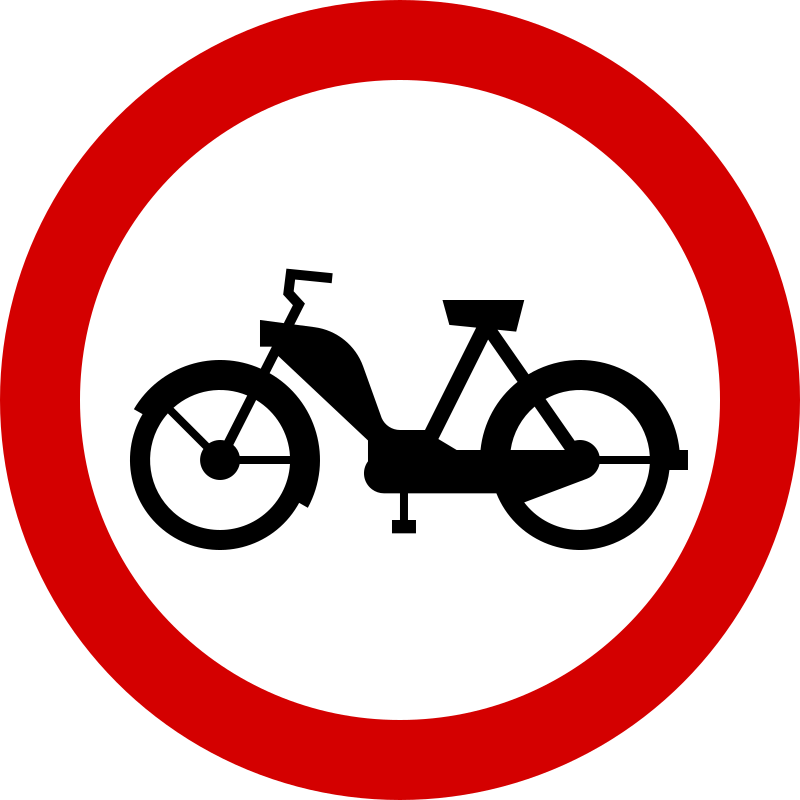
The B-10 'No Mopeds' sign prohibits entry for all mopeds past this point.
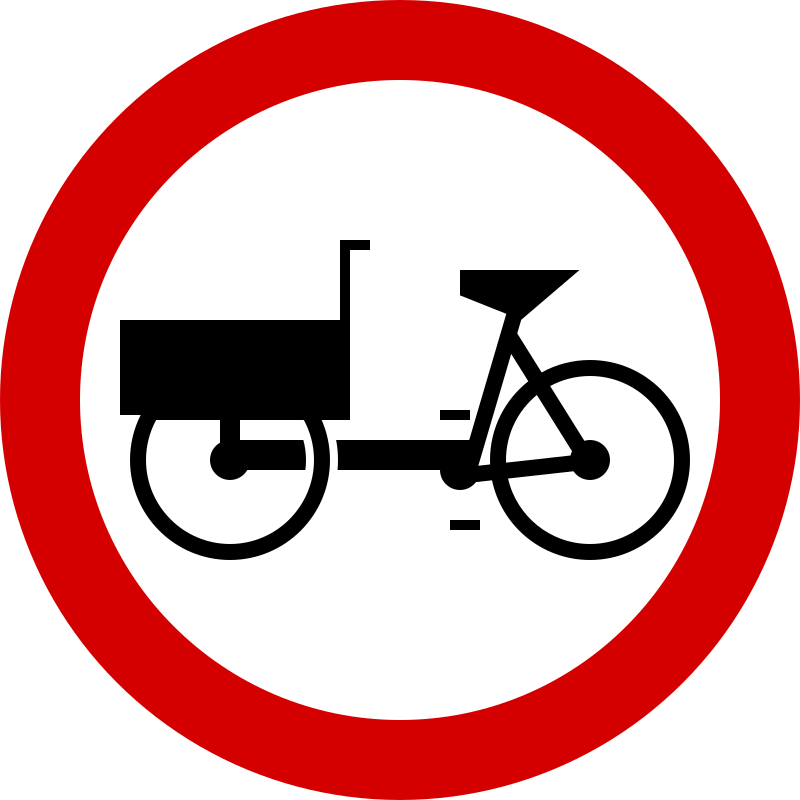
B-11: No Entry for Cycle Rickshaws and Multi-Track Carts
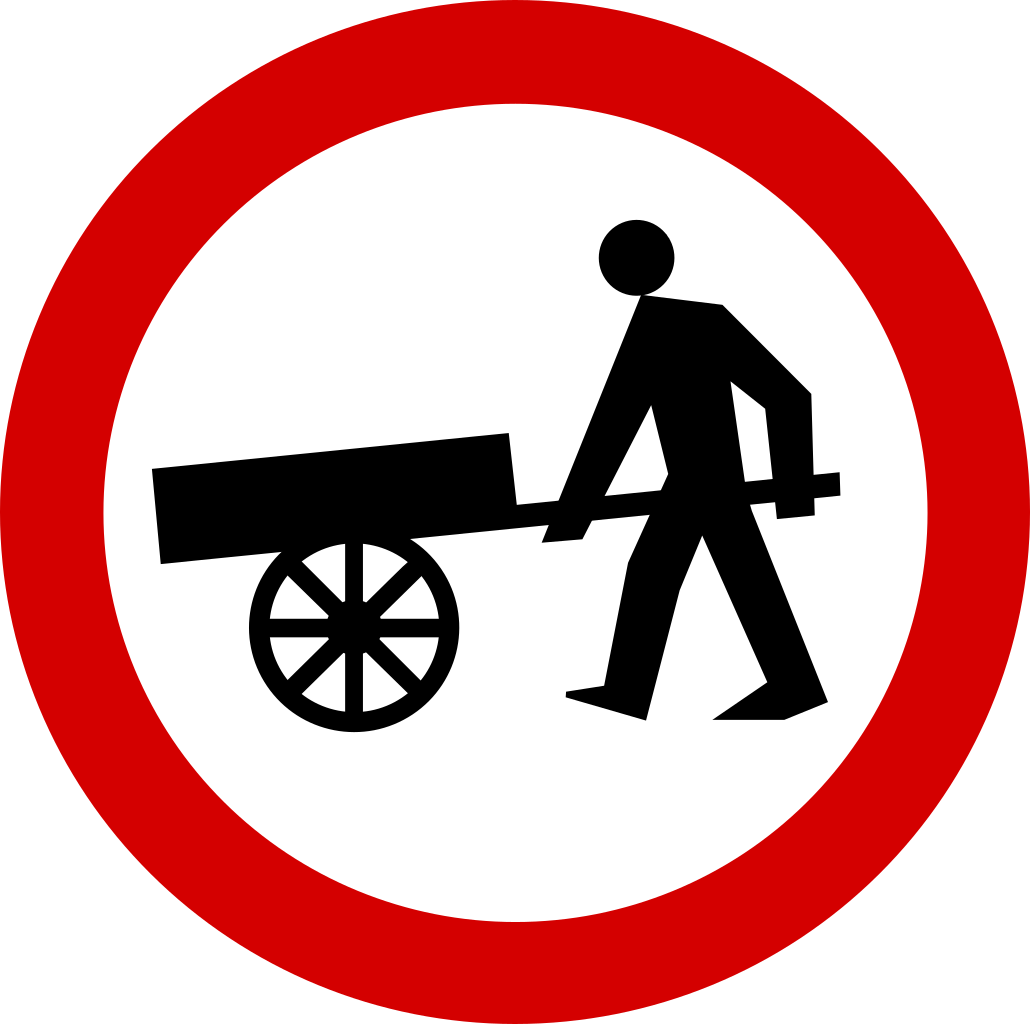
Understand the B-12 'No Handcarts' Road Sign
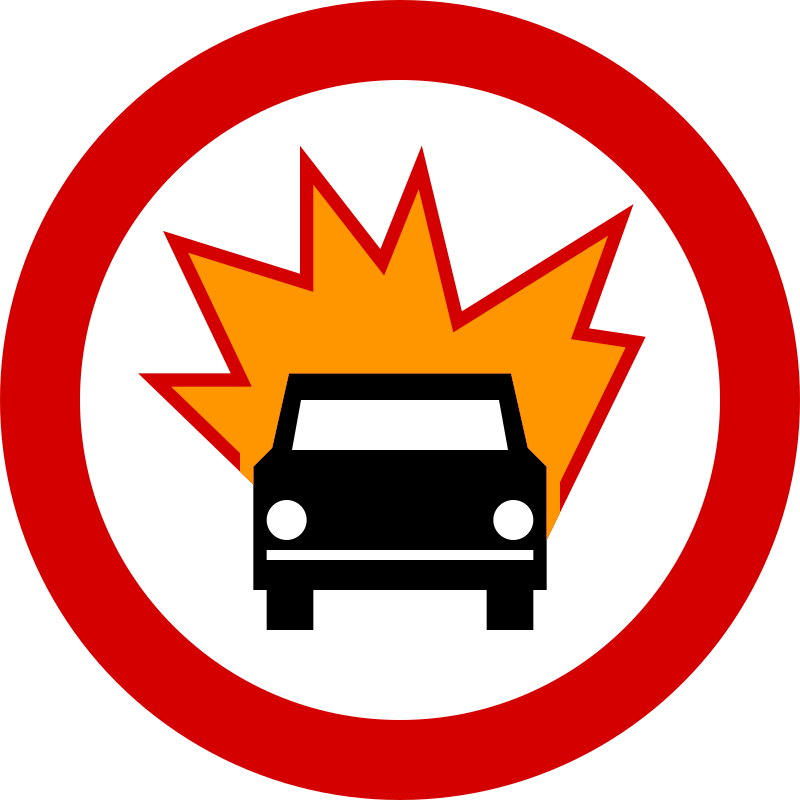
Understand the B-13 sign: No vehicles carrying explosives or flammable goods allowed.
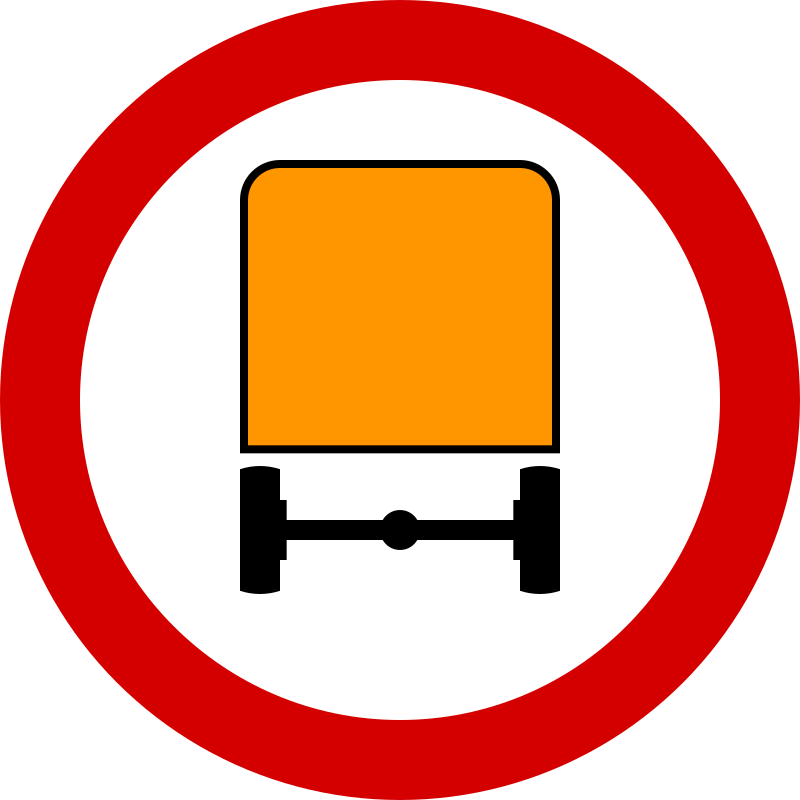
The B-13a sign means no vehicles carrying dangerous goods are allowed past this point.
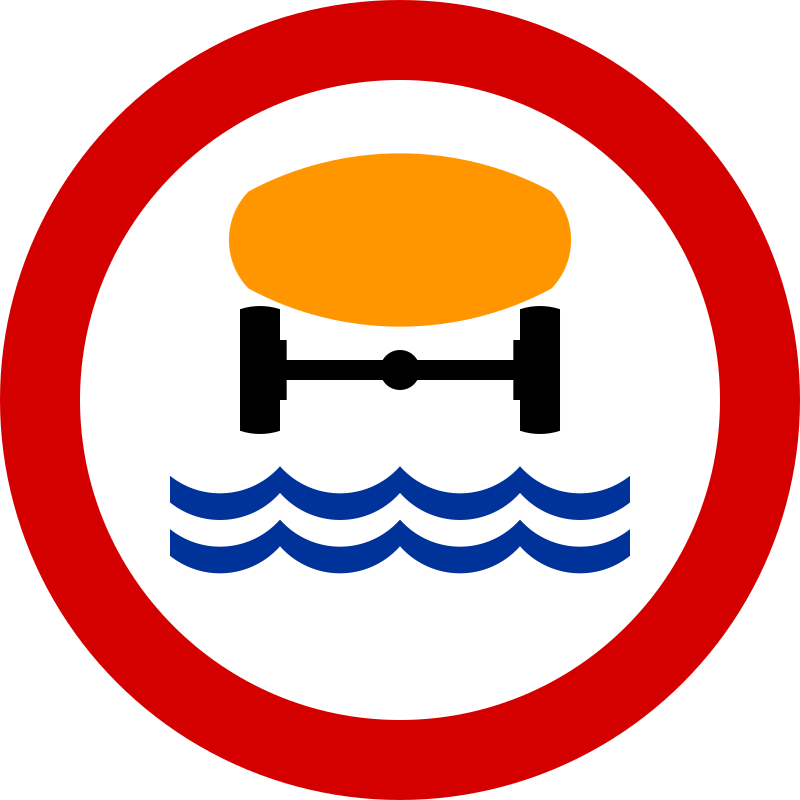
B-14 Sign: No Vehicles Carrying Water Contaminants
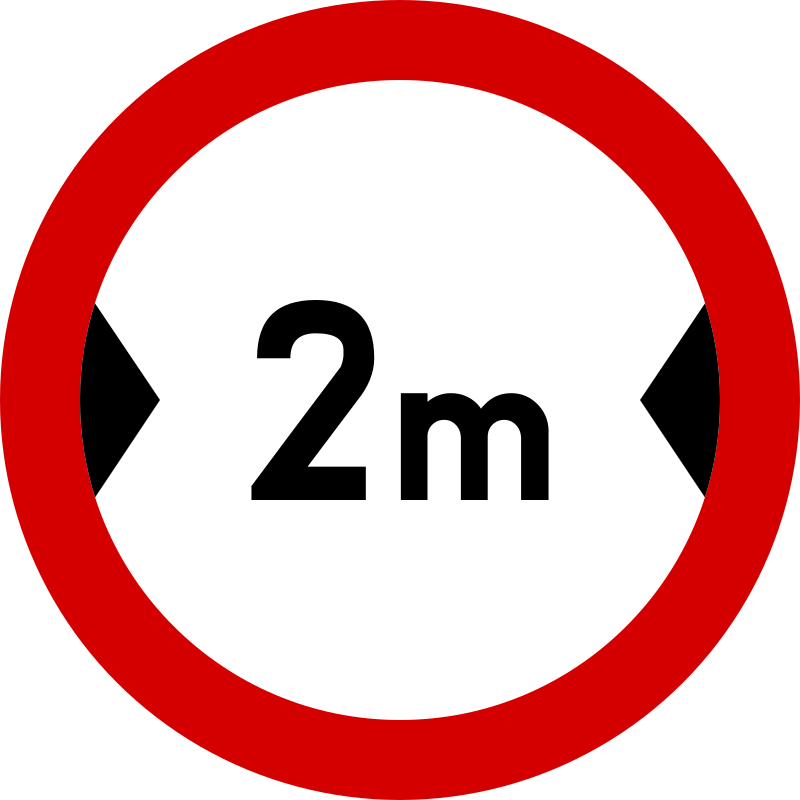
The B-15 sign prohibits vehicles wider than the specified limit from passing.
Deepen your understanding of specific road signs by reviewing official Polish traffic rules and associated real-world driving scenarios. These expert-led resources help you bridge the gap between visual recognition and practical exam application.
Prepare for your Polish driving theory exam by thoroughly understanding prohibitory signs, starting with the critical 'Zakaz Wjazdu' (B-2) marker. This article breaks down what this sign prohibits, common situations where it's used, and potential exceptions, ensuring you can confidently interpret and act upon these important traffic controls to drive safely and pass your test.
Understanding the importance of trailer tires goes beyond basic maintenance; it's fundamental to the safe operation of truck combinations in Poland. This article delves into how proper trailer tire pressure, wear management, and adherence to EU tire label standards directly influence a truck's stability, braking performance, and resistance to aquaplaning. Mastering these concepts is key for any professional driver preparing for their Polish theory exams and ensuring road safety.
Master Roadworks: Prioritize Temporary Markings for a Safer Drive and Exam Pass.
Go Beyond Obvious Dangers: Master Proactive Hazard Recognition for Your Polish Driving Exam.
The B-35 sign allows for a very brief stop—up to 60 seconds—to drop off a passenger or quickly unload a bag. Anything longer than 1 minute is legally considered 'parking' (postój) and is prohibited. The ban applies to the side of the road where the sign is placed and lasts until the next intersection.
The T-25a plate features an upward-pointing arrow. It is used when a ban (B-35 or B-36) starts at a location other than an intersection—for example, in the middle of a block. It tells the driver that from the post of the sign forward, they cannot park or stop. This is essential for maintaining visibility or traffic flow in specific road segments.
After reviewing the full list of Polish road signs, explore specific sign categories for in-depth understanding. Challenge your knowledge with practice questions focused on sign recognition and interpretation to solidify your preparation for the driving theory exam.
Browse All Polish Road Signs