Navigating the Swiss motorcycle licensing system requires a clear understanding of the 'Category A with power limitation' regulations defined by ASTRA. This guide breaks down the legal prerequisites, the importance of the mandatory 12-hour practical basic training, and the criteria for eventually upgrading to an unlimited category. By mastering these rules, you will be well-prepared to progress safely from a learner's permit to a full motorcycle license.
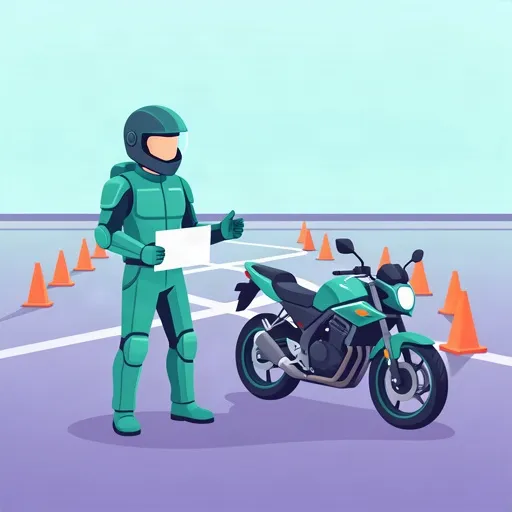
Article content overview
Obtaining a motorcycle license in Switzerland is a structured journey designed to ensure that riders develop the necessary skills and maturity before operating high-performance machines. For many, the entry point into the world of larger motorcycles is the "Category A with power limitation," often referred to as the A 35 kW license. This category serves as a vital bridge for riders who are at least 18 years old, providing a safe framework to gain experience on motorcycles that are powerful enough for touring and highway use, yet restricted to ensure manageable performance levels.
Unlike some international systems that utilize the "A2" designation, the Swiss regulatory framework—governed by the Traffic Licensing Ordinance (VZV)—uses the specific term "A with power limitation." Understanding these regulations is essential for any aspiring rider, as incorrect assumptions regarding power-to-weight ratios or training requirements can lead to delays in your licensing progression or even legal complications on the road.
To begin your journey toward a Category A 35 kW license, you must be at least 18 years old. Once you submit your application and pass the required theory examination (unless you already hold a valid Category B license), you will receive a learner's permit. A distinct advantage of the Swiss system is that, unlike in several other countries, once you possess your learner's permit, you are legally permitted to ride alone on public roads.
However, the motorcycle you choose must strictly adhere to the technical limits defined by the Association of Road Traffic Offices (asa). The primary restriction is a maximum engine power of 35 kW. Equally critical—and often overlooked by learners—is the power-to-weight ratio requirement. The motorcycle must not exceed a ratio of 0.20 kW/kg. If you select a vehicle that exceeds either of these metrics, you are not authorized to ride it under this license category, regardless of whether you have a learner's permit.
One of the most important pillars of Swiss motorcycle education is the mandatory 12-hour practical basic training course. This is not merely a formality; it is a pedagogical requirement designed to equip you with the fundamental handling skills necessary for urban and rural traffic environments. You must complete this training with a registered driving school, and it is crucial to note that this course cannot be completed using a smaller A1 category vehicle.
The training is spread over several sessions, covering emergency braking, slow-speed maneuvering, and cornering techniques. Successfully completing this course is a prerequisite for registering for the practical driving test. By investing time in these sessions, you build the confidence required to handle your motorcycle safely in the varied conditions encountered on Swiss roads, from tight alpine passes to dense city centers.
A common goal for many riders is to eventually qualify for the unlimited Category A license, which allows for the operation of high-performance motorcycles without power restrictions. In Switzerland, this is not an automatic process but a earned privilege. After holding your A 35 kW license for a minimum of two years without any major traffic offenses that lead to a license revocation, you become eligible to apply for the unlimited category.
This progression pathway rewards a clean riding history and provides an incentive for safe behavior on the road. During these two years, you gain invaluable experience in diverse weather conditions and traffic scenarios, which effectively prepares you for the demands of handling more powerful, high-displacement motorcycles.
| Requirement | Category A (35 kW) | Unlimited Category A |
|---|---|---|
| Minimum Age | 18 Years | 20 Years (after 2y practice) |
| Max Power | 35 kW | Unlimited |
| Power/Weight Ratio | Max 0.20 kW/kg | No Limit |
| Experience Needed | None (initial) | 2 Years clean record |
The theory behind motorcycle operation in Switzerland goes beyond just knowing road signs. You are expected to demonstrate an understanding of complex traffic situations, such as interactions with cyclists, pedestrians, and public transport vehicles. The exam tests your ability to perceive hazards long before they become critical.
Article content overview
Explore related topics, search based questions, and concepts that learners often look up when studying Swiss Category A 35kW License Guide. These themes reflect real search intent and help you understand how this topic connects to wider driving theory knowledge in Switzerland.
Find clear and practical answers to common questions learners often have about Swiss Category A 35kW License Guide. This section helps explain difficult points, remove confusion, and reinforce the key driving theory concepts that matter for learners in Switzerland.
The official term is 'Category A with power limitation' (A mit Leistungsbeschränkung). While some refer to it as A2 (an EU term), Swiss traffic ordinances specifically recognize it as the 35 kW limited license.
To ride in this category, the motorcycle must have a maximum power of 35 kW and a power-to-weight ratio of no more than 0.2 kW/kg.
Yes, the 12-hour practical basic training is a mandatory pedagogical requirement for all first-time motorcycle license applicants, regardless of the vehicle's displacement.
You can apply for the unlimited Category A license after two years of holding the 35 kW category, provided you have a clean driving record without license revocations during that time.
Continue your learning journey by searching our extensive library of Swiss driving theory articles. Explore additional topics, review specific road rules, or deepen your understanding of official traffic procedures to excel in your exam and drive safely in Switzerland.