
Understanding how to interact with public transport is a critical component of safe driving and essential for passing the Swiss theory exam. This guide details when you must yield to a bus pulling away from a stop and explains the safety requirements when passing a stationary bus on roads without a lay-by. You will also learn the specific behavioral expectations for sharing narrow mountain routes with the iconic Swiss Postauto.
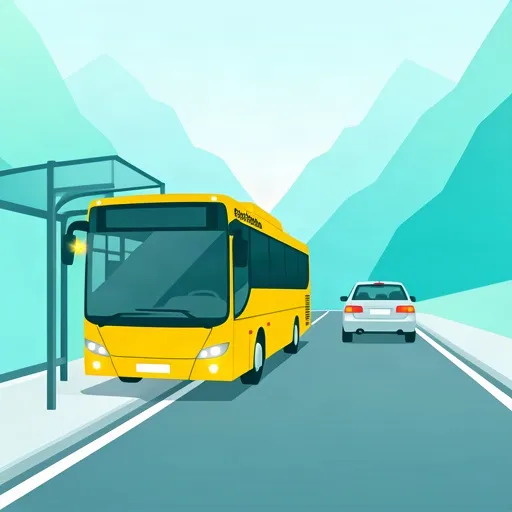
Article content overview
Driving in Switzerland requires a high degree of awareness, especially when sharing the road with public transport. Unlike some international systems where specific "school bus" laws might mandate a full stop for all traffic, Swiss traffic legislation focuses on the flow of traffic, the safety of vulnerable users, and clear priority rules for vehicles departing from designated stops. Understanding these regulations is essential not only for passing your theory exam but for navigating the unique challenges of our urban centers and narrow Alpine roads.
The core legal principle governing public transport in Switzerland is Article 36a of the Road Traffic Rules Ordinance (VRV). This regulation establishes a clear priority system for buses and trams that are stationary at a marked stop and intend to re-enter the flow of traffic. When a bus or tram is waiting at a marked bus stop, and the driver signals their intention to pull out by activating the left indicator, other road users are legally required to facilitate this maneuver.
You must adjust your speed or stop entirely if necessary to allow the bus or tram to merge back into the lane. This obligation exists to ensure that public transport can maintain its schedule and operate safely within urban environments. However, it is vital to note that this rule applies to marked stops within the traffic flow. If a bus stop is located on the left side of the road, this priority rule does not apply in the same way, as the geometry of the road and the position of the vehicle create different safety dynamics.
The priority rule for buses pulling away from a stop (Art. 36a VRV) only applies when the bus has clearly signaled its intention to move with the left indicator. Do not assume you must yield if the bus is merely idling at the stop without signaling.
A common point of confusion for students preparing for the Swiss theory exam is the difference between mandatory priority and general safety obligations. While the law mandates that you yield to a bus pulling out from a stop, you also have a duty of care when passing a stationary bus that is currently boarding or alighting passengers.
On roads without a designated bus lay-by, the bus occupies the travel lane. When passing such a vehicle, you must reduce your speed significantly and maintain a safe lateral distance. This is especially critical because passengers—including children and the elderly—may step out from in front of the bus to cross the road. Always be prepared to stop immediately if you see movement around the bus, as pedestrians boarding or exiting the vehicle are high-risk road users.
The iconic Swiss Postauto (Postal Bus) is a staple of our transport network, particularly on winding mountain roads. In these remote areas, roads are often narrow, and there is frequently no space to pass a stationary bus. In such instances, the "rule" is defined by physical necessity and road safety.
When you encounter a Postauto at a stop on a single-lane mountain road, you must wait patiently. Overtaking is impossible or dangerous, and the bus requires the full width of the carriageway to pull away safely. Always check your route, as mountain Postauto stops are well-documented, and you should anticipate that you will likely be following or waiting for these vehicles throughout your journey.
The Swiss theory exam often tests your ability to distinguish between different types of stops and your interpretation of driver intent. A frequent trap involves the "school bus" misconception. Candidates often wrongly believe there is a universal law requiring all traffic to stop for a school bus, similar to regulations in the United States. In Switzerland, there is no such general stop requirement. Instead, the focus remains on the specific priority rules of Art. 36a VRV and the general requirement to drive with caution near public transport.
Another area of confusion is the presence of a bus lay-by. If a stop has a dedicated bay that allows the bus to pull completely off the travel lane, the priority rules are less disruptive to traffic flow. However, you must still remain vigilant, as the bus will eventually need to rejoin the main lane, triggering the priority obligation again.
Swiss traffic law under Article 36a VRV requires drivers to yield to buses and trams departing from marked stops only when the left indicator is activated, prioritizing public transport schedule maintenance in urban traffic. When passing stationary buses without a lay-by, drivers must significantly reduce speed and maintain safe lateral distance to protect boarding passengers, including children and the elderly who may cross unexpectedly. Mountain roads present unique challenges with Postautos, where physical constraints make overtaking impossible and patience is mandatory. The Swiss system notably differs from other countries by not requiring universal stops for school buses, instead relying on specific priority rules and general safety obligations. Understanding when priority applies versus when general caution is required is essential for both safe driving and passing the theory exam.
A short set of high-value points that capture the most important ideas from this article.
Article 36a VRV establishes that you must yield to a bus or tram only when it has signaled its intention to pull out using the left indicator
The bus priority rule applies only to marked stops within the traffic flow, not stops on the left side of the road
When passing a stationary bus without a lay-by, you must reduce speed significantly and be prepared to stop for boarding or alighting passengers
On narrow Alpine mountain roads, you must wait behind a Postauto until it has safely moved on since overtaking is impossible or dangerous
There is no general Swiss law requiring all traffic to stop for school buses, unlike some other countries
Yield obligation only activates when the bus left indicator is active; idle buses do not demand priority
Lateral distance and reduced speed are mandatory when passing any stationary bus due to unpredictable passenger movement
Postauto stops on mountain routes are well-documented in advance; anticipate delays and plan accordingly
A dedicated lay-by reduces priority rule disruption but the bus will still need to rejoin traffic, triggering your yielding obligation
The Swiss focus is on traffic flow management and safety care, not blanket stopping requirements
Assuming you must stop for any stationary bus without checking for the left indicator signal first
Applying US-style school bus rules in Switzerland, where no universal stop requirement exists
Failing to reduce speed sufficiently when passing a bus, especially near the front door where passengers may cross
Attempting to overtake a Postauto on narrow mountain roads where it occupies the full carriageway width
Forgetting that priority rules do not apply at left-side bus stops due to different road geometry and safety dynamics
Article content overview
A short set of high-value points that capture the most important ideas from this article.
Article 36a VRV establishes that you must yield to a bus or tram only when it has signaled its intention to pull out using the left indicator
The bus priority rule applies only to marked stops within the traffic flow, not stops on the left side of the road
When passing a stationary bus without a lay-by, you must reduce speed significantly and be prepared to stop for boarding or alighting passengers
On narrow Alpine mountain roads, you must wait behind a Postauto until it has safely moved on since overtaking is impossible or dangerous
There is no general Swiss law requiring all traffic to stop for school buses, unlike some other countries
Yield obligation only activates when the bus left indicator is active; idle buses do not demand priority
Lateral distance and reduced speed are mandatory when passing any stationary bus due to unpredictable passenger movement
Postauto stops on mountain routes are well-documented in advance; anticipate delays and plan accordingly
A dedicated lay-by reduces priority rule disruption but the bus will still need to rejoin traffic, triggering your yielding obligation
The Swiss focus is on traffic flow management and safety care, not blanket stopping requirements
Assuming you must stop for any stationary bus without checking for the left indicator signal first
Applying US-style school bus rules in Switzerland, where no universal stop requirement exists
Failing to reduce speed sufficiently when passing a bus, especially near the front door where passengers may cross
Attempting to overtake a Postauto on narrow mountain roads where it occupies the full carriageway width
Forgetting that priority rules do not apply at left-side bus stops due to different road geometry and safety dynamics
Explore related topics, search based questions, and concepts that learners often look up when studying Swiss Bus and Postauto Rules. These themes reflect real search intent and help you understand how this topic connects to wider driving theory knowledge in Switzerland.
Find clear and practical answers to common questions learners often have about Swiss Bus and Postauto Rules. This section helps explain difficult points, remove confusion, and reinforce the key driving theory concepts that matter for learners in Switzerland.
No. Switzerland does not have a law requiring vehicles to stop for school buses. However, you must always exercise caution and reduce speed when passing any stationary bus where passengers are boarding or alighting.
According to Article 36a VRV, if a bus is in local traffic and signals its intention to pull away using its left indicator at a marked stop, you must yield. You must reduce speed or stop if necessary to allow the bus to enter the traffic flow.
No, the priority rule for buses pulling away from a stop (Article 36a VRV) does not apply if the stop is located on the left side of the roadway.
On narrow Alpine roads, you must act with extra care. If the Postauto is stopped to exchange passengers, you must wait, as there is often no physical space to pass. These stops are integrated into the transport schedule, and waiting is a necessity for safety.
Continue your learning journey by searching our extensive library of Swiss driving theory articles. Explore additional topics, review specific road rules, or deepen your understanding of official traffic procedures to excel in your exam and drive safely in Switzerland.