
This unit covers the critical practical driving skills of stopping, parking, and reversing, along with essential passenger and load management. You will learn the precise rules and techniques for safe execution of these manoeuvres, ensuring compliance with Swiss traffic laws and preparation for the theoretical exam.
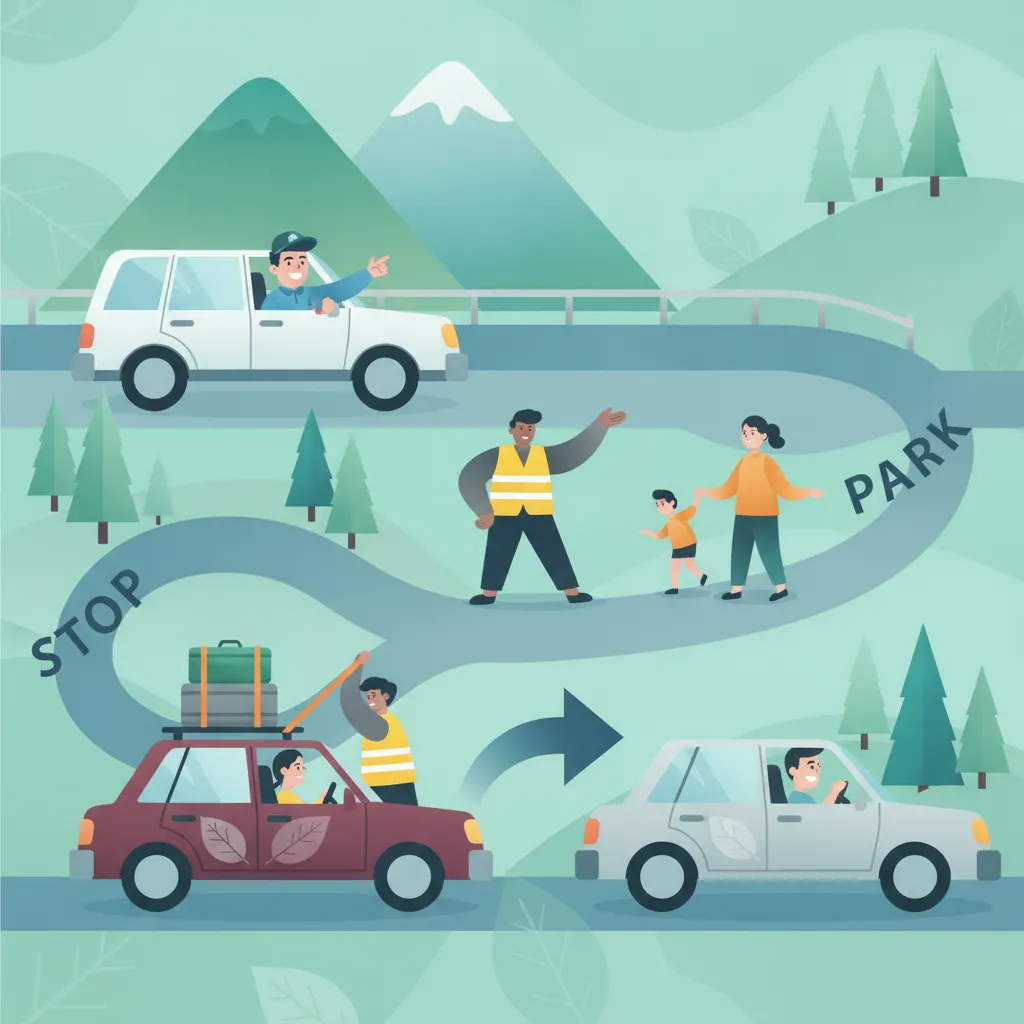
Browse all lessons that make up Stopping, Parking, Reversing, Manoeuvres, Passengers and Loads. Each lesson focuses on specific topics, learning objectives, and core concepts, helping you build essential knowledge and follow a clear, structured progression toward your study goals in Switzerland.
This lesson focuses on the rules governing when and how to stop a vehicle safely. You will learn to calculate the required stopping distance, considering reaction time and braking distance. The content also covers how to adjust stopping behavior for different road conditions and safe stopping techniques on inclines to ensure the vehicle remains under control.
This lesson explores the regulations governing parking, including designated zones, no-parking areas, and rules for parking on hills. It discusses the correct use of the handbrake and the hill start technique to prevent rolling. The content also covers parallel and perpendicular parking methods and the interpretation of Swiss parking signs.
This lesson focuses on safe reversing techniques, emphasizing the use of mirrors, rearview cameras, and checking rear visibility. You will learn to control reversing speed and safely reverse around corners or in narrow spaces. The content also outlines the necessary safety checks to perform before and during any reversing maneuver to prevent accidents.
This lesson explores the correct use of seat belts, the installation of child restraints, and the importance of securing loads. It covers weight distribution guidelines, maximum load limits, and conditions for towing a trailer. Guidance is also provided for safely transporting animals and ensuring all loads are properly secured to prevent movement.
This lesson covers complex manoeuvres such as three-point turns, U-turns, and parking in tight spaces. You will learn the step-by-step process for performing a three-point turn and the legal requirements for a U-turn. The content also provides guidance for parking in confined areas, ensuring proper lane usage and positioning during these manoeuvres.
Explore high-intent keywords and long-tail search topics learners use when researching Stopping, Parking, Reversing, Manoeuvres, Passengers and Loads. These terms reflect how people search for reliable study materials, structured explanations, and unit-level theory preparation support in Switzerland.
Find clear answers to the most common questions learners ask about Stopping, Parking, Reversing, Manoeuvres, Passengers and Loads. Understand how the unit is organized, what learning goals it supports, and how it contributes to your study progression with structured explanations and practical guidance tailored for learners in Switzerland.
In Switzerland, when parking on a hill, you must secure your vehicle to prevent it from rolling. This usually involves engaging the handbrake firmly and turning your wheels towards the curb (if facing downhill) or away from the curb (if facing uphill). Use of a gear (usually first gear or reverse) also helps prevent movement. Your lessons will cover the specific wheel turning direction required for different scenarios.
Safe stopping distance depends on your speed, reaction time, and braking distance. The two-second rule is a good guideline for maintaining a safe following gap on dry roads. Factors like weather, road surface, and vehicle condition can significantly increase the required stopping distance, which is crucial for preventing rear-end collisions. This unit expands on the principles introduced in Unit 5 regarding speed and distance.
Parallel parking involves manoeuvring your vehicle into a space between two other parked cars. For the theory exam, you need to understand the correct sequence of steps: positioning your vehicle correctly, reversing at an angle, straightening up, and moving forward. Key elements include observing your surroundings, using your mirrors, and judging distances accurately. While the practical test assesses execution, the theory test covers the rules and safe practices involved.
Swiss regulations require that all passengers, especially children, are safely accommodated. This includes the mandatory use of appropriate child restraint systems (child seats, booster seats) based on a child's age, height, and weight. Adults must wear seat belts at all times. Drivers are responsible for ensuring all passengers are properly secured before driving.
Loads must be secured so they cannot shift, fall, or obstruct your view or the vehicle's lighting. This means using appropriate straps, nets, or covers and ensuring the load is distributed evenly. Overloaded vehicles are dangerous and illegal. The theory test will cover the basic principles of load securing to ensure safety and compliance on Swiss roads.
Yes, when reversing, you must do so cautiously and only when it is safe. This involves checking your surroundings thoroughly, especially for pedestrians, cyclists, and other vehicles, using your mirrors and looking over your shoulder. You must yield to other traffic and pedestrians. Reversing into a traffic lane or onto a main road requires particular care to avoid causing danger or obstruction.
All included lessons
Lessons in Stopping, Parking, Reversing, Manoeuvres, Passengers and Loads
See who benefits most from studying Stopping, Parking, Reversing, Manoeuvres, Passengers and Loads. This overview explains how the unit supports different learning needs, what level of knowledge is helpful before starting, and how it fits into the overall study path in Switzerland.
This unit is essential for all Category B license applicants in Switzerland preparing for their theory exam. It is particularly beneficial for learners who need to solidify their understanding of practical driving situations beyond basic rules, and for anyone seeking to build confidence in everyday driving scenarios like parking and reversing.

Begin your structured preparation for the official Swiss driving licence theory test today. Browse our comprehensive curriculum, choose your ideal course, and start mastering essential traffic laws, road signs, and practical driving knowledge with confidence.
Browse Swiss Theory CoursesExplore all units and lessons included in this driving theory course.
Begin your structured preparation for the official Swiss driving licence theory test today. Browse our comprehensive curriculum, choose your ideal course, and start mastering essential traffic laws, road signs, and practical driving knowledge with confidence.
Browse Swiss Theory Courses