
This unit focuses on critical interactions with vulnerable road users, public transport, and unique traffic scenarios common in Switzerland. You will learn the specific rules and etiquette necessary to share the road safely with pedestrians, cyclists, and trams, ensuring compliance and preventing accidents. Understanding these situations is vital for passing your Category B theory exam and becoming a responsible driver.
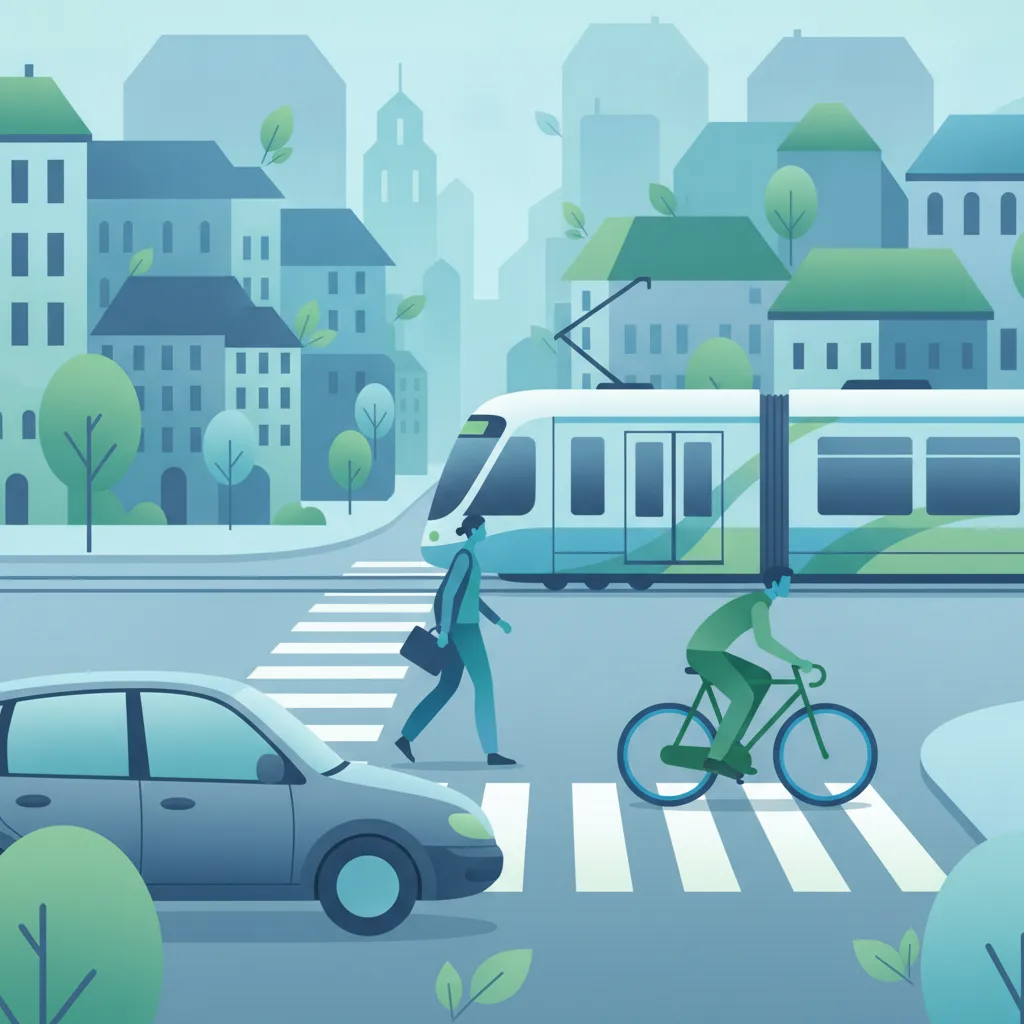
Browse all lessons that make up Vulnerable Road Users, Public Transport, Trams and Special Traffic Situations. Each lesson focuses on specific topics, learning objectives, and core concepts, helping you build essential knowledge and follow a clear, structured progression toward your study goals in Switzerland.
This lesson explores pedestrian right-of-way at various crossings, including zebra crossings and pedestrian islands. It emphasizes the need for drivers to reduce speed, anticipate pedestrian movement, and stop safely when required. The content also covers special regulations that apply in school zones, such as reduced speed limits and heightened vigilance.
This lesson focuses on the interaction between motor vehicles and cyclists, including e-bikes. You will learn the importance of respecting cyclist priority and maintaining a safe overtaking distance. The content also addresses specific Swiss regulations concerning e-bike speed limits, cyclist lane markings, and appropriate behavior when passing cyclists.
This lesson explores the priority given to public transport vehicles, especially trams and buses, in Swiss traffic. It explains how to recognize dedicated public transport lanes and the requirement to yield to trams at intersections. The content also covers procedures when a bus is stopping for passengers and how to ensure safe interactions.
This lesson focuses on school zones, where special speed limits and cautionary measures are required. You will learn to recognize school zone signs, understand reduced speed limits, and be aware of designated child crossing zones. The content also emphasizes the need for heightened vigilance when school buses stop for students to ensure child safety.
This lesson examines special traffic situations such as railway level crossings and shared zones where different road users coexist. It explains the specific safety procedures required at railway crossings and how to behave in shared zones with mixed traffic. The content also addresses the need to yield to oncoming trains and follow special signage in these unique zones.
Explore high-intent keywords and long-tail search topics learners use when researching Vulnerable Road Users, Public Transport, Trams and Special Traffic Situations. These terms reflect how people search for reliable study materials, structured explanations, and unit-level theory preparation support in Switzerland.
Find clear answers to the most common questions learners ask about Vulnerable Road Users, Public Transport, Trams and Special Traffic Situations. Understand how the unit is organized, what learning goals it supports, and how it contributes to your study progression with structured explanations and practical guidance tailored for learners in Switzerland.
In Switzerland, trams generally have priority. You must yield to trams at intersections and when they are moving into or out of a stop, unless specific traffic lights or signs indicate otherwise. Always be prepared to let trams pass, as they often cannot deviate from their tracks.
When a bus or tram is stopped at a designated stop and passengers are boarding or alighting, you must slow down significantly. If the bus or tram is signaling to depart, you must wait for it to proceed. In some cases, buses may use hazard lights to signal they are about to depart, requiring you to stop until they have moved off.
School zones are marked with specific signs and often have reduced speed limits, typically 20 or 30 km/h. You must drive with extreme caution, be prepared to stop suddenly, and always yield to children crossing the road, even if they are not using a designated crosswalk. Pay close attention to children's unpredictable behaviour.
Yes, drivers in Switzerland must always yield to pedestrians, especially at designated crosswalks. However, you must also be aware of pedestrians who may step into the road unexpectedly, particularly children or elderly individuals. Be vigilant and anticipate their movements.
Cyclists and e-bike riders have specific lanes and rights but must also follow traffic rules. Maintain a safe passing distance of at least 1.5 meters when overtaking. Be aware that cyclists may ride two abreast in some situations and must signal their intentions clearly.
A shared zone, often found in urban areas, is designed for multiple road users like pedestrians, cyclists, and vehicles to coexist. While vehicles are permitted, they are considered guests. Pedestrians and cyclists have priority. You must drive at a walking pace, be highly observant, and ready to stop at any moment.
All included lessons
Lessons in Vulnerable Road Users, Public Transport, Trams and Special Traffic Situations
See who benefits most from studying Vulnerable Road Users, Public Transport, Trams and Special Traffic Situations. This overview explains how the unit supports different learning needs, what level of knowledge is helpful before starting, and how it fits into the overall study path in Switzerland.
This unit is essential for all new drivers preparing for the Swiss Category B theory exam. It is particularly beneficial for learners who may struggle with understanding the specific rights and needs of pedestrians and cyclists, or for those unfamiliar with the priority rules concerning public transport like trams.

Begin your structured preparation for the official Swiss driving licence theory test today. Browse our comprehensive curriculum, choose your ideal course, and start mastering essential traffic laws, road signs, and practical driving knowledge with confidence.
Browse Swiss Theory CoursesExplore all units and lessons included in this driving theory course.
Begin your structured preparation for the official Swiss driving licence theory test today. Browse our comprehensive curriculum, choose your ideal course, and start mastering essential traffic laws, road signs, and practical driving knowledge with confidence.
Browse Swiss Theory Courses