
This lesson guides you through the technical aspects of performing three-point turns, legal U-turns, and parking in confined urban spaces. It builds on your foundational knowledge of vehicle positioning to help you master these essential control manoeuvres for your Swiss Category B driving theory exam and daily road safety.

Lesson content overview
Operating a vehicle safely and efficiently often requires more than just driving in a straight line or making simple turns. Drivers must be proficient in complex manoeuvres that allow for direction changes in confined spaces or precise positioning for parking. This lesson delves into the intricacies of three-point turns, U-turns, and advanced parking techniques, which are crucial skills for navigating urban environments and diverse road conditions in Switzerland.
Mastery of these manoeuvres is not only essential for passing the Swiss Category B driving examination but also for everyday driving safety. Incorrect execution can lead to accidents, traffic disruptions, and legal penalties. A thorough understanding of vehicle control, observational techniques, and traffic regulations – including stopping, parking, reversing fundamentals, road positioning, and priority rules – forms the foundation for successfully performing these advanced skills.
Complex driving manoeuvres are fundamental to maintaining smooth traffic flow and ensuring safety, especially in densely populated areas. Whether you need to reverse direction on a narrow residential street or park in a tight spot in a busy city, executing these actions with precision and confidence is paramount. These skills empower drivers to adapt to various road layouts and unexpected situations, contributing to overall road safety for themselves and other users.
Beyond practicality, proficiency in these manoeuvres demonstrates a driver's competence and control over their vehicle. It reflects an ability to think ahead, observe the environment, and react appropriately, which are hallmarks of responsible driving.
Successful execution of any complex manoeuvre hinges on adherence to several core principles. These guidelines ensure safety, legal compliance, and consideration for all road users.
A three-point turn, sometimes referred to as a "K-turn," is a manoeuvre used to change the direction of your vehicle on a narrow road where a full U-turn is not possible. It involves a sequence of moving forward, reversing, and then moving forward again, typically using the opposite side of the road to complete the turnaround within three distinct motions. This technique is particularly useful on residential streets or in confined areas where space is limited.
Performing a three-point turn requires precision and careful observation.
Positioning and Observation: Approach the right side of the road, close to the curb, and signal left. Before starting, carefully check your mirrors and blind spots for traffic, pedestrians, or cyclists in all directions. Ensure there is ample clear space both ahead and behind to execute the manoeuvre safely without obstructing others.
First Point (Forward Left): When the path is clear, steer sharply to the left, moving slowly forward across the road towards the opposite curb. Aim to get as close as possible to the opposite curb without hitting it. Stop before reaching the curb, ensuring your vehicle is angled optimally for the next reverse step.
Second Point (Reverse Right): Select reverse gear. Check again for any traffic or hazards behind you, particularly over your right shoulder and in your right mirror. Begin reversing slowly while turning the steering wheel sharply to the right. As you reverse, your vehicle will swing its front end towards your original lane. Stop when you have enough space to move forward into the desired direction, ensuring you do not back into the curb or any obstruction.
Third Point (Forward into Lane): Select first gear. Check your mirrors and blind spots once more, particularly ahead and to your left. When the road is clear, steer to straighten your wheels and drive forward, completing the turn into the correct lane in the opposite direction. Accelerate smoothly and continue driving.
In Switzerland, three-point turns must be performed where they do not obstruct traffic and where visibility is sufficient in both directions. It is prohibited to make a three-point turn if a traffic sign explicitly forbids turning around or if road conditions (such as a busy intersection, a blind curve, or a hill crest) make it unsafe. The safety corridor principle and dynamic observation are critical here, as you are temporarily occupying the entire width of the road. Any manoeuvre that endangers or impedes other road users may be penalised.
A common mistake is starting the manoeuvre without thoroughly checking for oncoming traffic or misjudging the road width, leading to obstruction or a collision risk. Drivers might also hit the curb during the forward or reverse phases if they misjudge vehicle dimensions. Rushing the manoeuvre, failing to signal, or neglecting continuous observation can also compromise safety. Always take your time, be methodical, and prioritise safety over speed.
A U-turn is a manoeuvre designed to reverse the direction of travel by rotating the vehicle 180 degrees. Unlike a three-point turn, a U-turn is typically performed in a single, continuous arc, often at an intersection or junction where sufficient road width is available.
A U-turn is essentially a full turnaround, allowing you to travel back along the same road in the opposite direction. It is a more fluid manoeuvre than a three-point turn but requires even greater spatial awareness and an understanding of traffic flow, as you often cross one or more lanes of traffic.
In Switzerland, a U-turn is permissible only where it does not obstruct traffic, where visibility is sufficient, and where no traffic sign explicitly prohibits it. U-turns are commonly allowed at intersections, provided there's enough space and no "No U-turn" sign. They are generally prohibited on curves, near hill crests, or at railway crossings where visibility is limited and poses a significant danger. It is also illegal to make a U-turn if it requires crossing a solid white line (double or single) or a physical barrier in the road.
A "No U-turn" sign typically depicts a U-shaped arrow with a red diagonal line crossing it, indicating that turning around at that location is forbidden. Ignoring such signage is a violation of traffic law and can result in fines.
Always check for traffic signs that explicitly prohibit U-turns. These signs are legally binding, and ignoring them can lead to significant penalties.
Executing a U-turn requires careful planning and observation to ensure it is performed safely and legally.
Initial Positioning: Approach the turning point in the leftmost lane that allows you to turn. Signal left well in advance to inform other road users of your intention.
Dynamic Observation: Before commencing the turn, thoroughly check your mirrors, blind spots, and the road ahead for any oncoming traffic, pedestrians, or cyclists. Your primary responsibility is to yield to all other road users.
Executing the Turn: When the path is clear, begin turning the steering wheel sharply to the left while moving slowly. Aim for a wide, smooth arc to complete the 180-degree turn without requiring additional forward/reverse movements. Maintain control of your speed throughout the turn.
Entering the New Lane: As you complete the turn, straighten your wheels and accelerate smoothly into the new lane, ensuring you are now travelling in the opposite direction. Continue observing traffic as you merge into the flow.
Common mistakes include failing to yield to oncoming traffic, attempting a U-turn where prohibited by signage or road geometry, or misjudging the vehicle's turning radius and requiring multiple attempts, which can obstruct traffic.
Parking in confined spaces is a daily challenge for many drivers. Mastering parallel and angle parking techniques is crucial for navigating urban environments and busy parking lots.
Parallel parking involves positioning your vehicle parallel to the curb, typically between two other parked cars or within a marked space. It is a fundamental skill for city driving.
The most common method involves reversing into the space.
Initial Alignment: Drive past the target parking space and align your vehicle parallel to the car parked in front of the space. Maintain approximately 0.5 to 1 metre distance from the parked car, with your rear bumper aligned with the rear bumper of the front car. Signal your intention to park.
First Reverse (Angle): Engage reverse gear. Check mirrors and blind spots. Begin reversing slowly in a straight line for a short distance (about one car length, or until your rear wheel is aligned with the other car's bumper). Then, turn your steering wheel sharply towards the curb (e.g., full right for parking on the right side).
Second Reverse (Straighten): Continue reversing slowly. Watch your left mirror to ensure your vehicle's front is clearing the car in front, and your right mirror to monitor your proximity to the curb. When your vehicle is at a 45-degree angle to the curb, or when your front bumper clears the rear bumper of the vehicle in front, begin to straighten your wheels (turn left).
Third Reverse (Adjust): Continue reversing slowly, adjusting your steering as needed to bring your vehicle parallel to the curb. Keep an eye on the car behind you.
Final Positioning: Once parallel to the curb, move forward or backward slightly to centre your vehicle within the space, ensuring adequate distance from the cars in front and behind. Straighten your wheels. Engage the parking brake.
In Switzerland, vehicles must be parked entirely within the marked limits of a curbside space. If there are no markings, you must park parallel to the curb and leave sufficient space (generally at least 0.5 metres) for adjacent vehicles and for traffic flow. Parking too far from the curb, or with any part of the vehicle protruding into the travel lane, is a violation and can result in fines or towing. Always ensure your vehicle does not obstruct pedestrians, cyclists, or emergency vehicle access.
Angle parking involves positioning your vehicle within a marked bay where the vehicle’s front or rear points at an acute angle (commonly 45° or 60°) relative to the curb or roadside. This method is common in parking lots and specific on-street bays, designed to maximise space efficiency.
Angle parking can be performed by driving forward into the bay or by reversing into it.
The primary rule for angle parking is that your vehicle must be fully contained within the marked lines of the parking bay. Protruding beyond these lines, either into an adjacent space or into the driving lane, is typically prohibited and can lead to fines. When leaving an angled bay, especially when reversing, exercise extreme caution and perform dynamic observation to avoid collisions with vehicles or pedestrians.
Parking on hills or inclines introduces additional safety considerations. Understanding how to secure your vehicle and how to perform a hill start safely is crucial.
When parking on an incline, always engage your handbrake firmly. Additionally, turn your wheels to prevent your vehicle from rolling into traffic if the brakes fail.
Always leave your vehicle in gear when parking on a slope: in first gear if facing uphill, and in reverse gear if facing downhill.
A hill start is the procedure for moving off from a stationary position on an incline without rolling backward.
Initial Setup: Ensure your handbrake is fully engaged and your vehicle is in the appropriate gear (first gear for moving forward, reverse gear for backing up).
Foot Controls: For manual cars, gently press the accelerator while simultaneously slowly releasing the clutch to find the bite point. For automatic cars, gently press the accelerator.
Release Handbrake: As you feel the engine begin to pull (at the bite point for manuals, or when the engine revs slightly for automatics), smoothly release the handbrake.
Smooth Acceleration: Continue to apply gentle acceleration and control the clutch (for manuals) to move off smoothly without rolling backward or stalling.
Practising hill starts on a gentle slope can build confidence before attempting steeper inclines. The goal is to coordinate accelerator, clutch (if manual), and handbrake release to prevent any backward roll.
Compliance with Swiss traffic law is non-negotiable for all manoeuvres. Ignoring regulations not only endangers others but also leads to legal consequences.
As reiterated, U-turns are permitted only where they do not obstruct traffic, visibility is sufficient, and no sign prohibits them. This applies to all public roads unless explicitly restricted. Three-point turns, while often necessary on narrow roads, must also be performed away from intersections and with clear visibility in both directions, ensuring traffic flow is not impeded. Violations of these rules, particularly those leading to obstruction or endangerment, can result in fines and points on your license.
Swiss parking regulations mandate that vehicles must park within designated spaces and adhere to any marked lines. This includes leaving sufficient space (typically 0.5 metres) to adjacent vehicles when parallel parking and ensuring your vehicle does not protrude beyond bay lines in angled parking. Improper parking can lead to fines, and in severe cases, your vehicle may be towed. These rules are in place to maintain orderly traffic flow and ensure access for all road users and emergency services.
Traffic signs and road markings provide explicit guidance and constraints for drivers. A "No U-turn" sign, typically a circular sign with a U-shaped arrow crossed by a red diagonal line, directly prohibits the manoeuvre at that location. Similarly, various "Parking prohibited" signs, "No stopping" signs, and road markings (such as solid lines, zigzag lines, or specific bay outlines) dictate where and how parking and manoeuvres can be performed. It is mandatory to recognise and obey all such signage and markings to avoid legal penalties and ensure road safety.
The successful execution of complex manoeuvres is not only about technique but also about adapting to changing conditions.
Pedestrians, cyclists, and motorcyclists are particularly vulnerable during complex manoeuvres. Drivers must perform continuous, dynamic observation, checking blind spots thoroughly before reversing or turning. When parking near pedestrian crossings or cycle paths, ensure you do not obstruct their right-of-way or visibility. Always assume vulnerable road users may be present, even if not immediately visible.
Understanding common mistakes helps drivers proactively avoid them.
The most effective way to prevent violations and ensure safety is through constant, dynamic observation. This means not just a quick glance, but a continuous assessment of your surroundings at every stage of a manoeuvre. Always assume others might not see you and be prepared to yield. Maintaining a calm and methodical approach, rather than rushing, drastically improves safety and the precision of your manoeuvres. Understanding the physics of turning and human reaction times underscores the need for foresight and ample space.
This lesson covers the theory and practical execution of complex manoeuvres essential for Swiss Category B drivers, including three-point turns for narrow roads, legal U-turn requirements, and various parking techniques. Key legal considerations include yielding to oncoming traffic, obeying 'No U-turn' signs, and ensuring vehicles remain within marked boundaries or adequate distance from curbs. Safety depends on dynamic observation throughout each manoeuvre and proper vehicle positioning. Hill parking requires specific wheel-turning techniques and handbrake engagement to prevent rollaway accidents.
A short set of high-value points that capture the most important learning from this lesson.
Three-point turns use three distinct movements (forward, reverse, forward) and must only be performed where visibility is sufficient and no traffic signs prohibit them
U-turns in Switzerland require yielding to oncoming traffic and are prohibited where signs forbid them, on curves, near hill crests, or at railway crossings
Parallel parking requires maintaining approximately 0.5–1 metre distance from parked vehicles and keeping the vehicle fully within marked spaces or at least 0.5 metres from the curb
When parking on inclines, always engage the handbrake and turn wheels appropriately: toward the curb when facing downhill, away from curb when facing uphill
Dynamic observation—continuous checking of mirrors, blind spots, and surrounding traffic—is mandatory throughout all manoeuvres
Explore all units and lessons included in this driving theory course.
U-turns are prohibited when crossing solid white lines or when traffic signs explicitly forbid them, including on curves and near hill crests with limited visibility
For hill parking, leave the vehicle in first gear when facing uphill and in reverse gear when facing downhill, combined with handbrake application
Angle parking allows either forward or reverse entry, but reverse entry is safer because it provides better visibility when exiting
Vehicles must not protrude beyond bay lines in angled parking or beyond 0.5 metres from the curb in parallel parking to avoid fines and obstruction
The Safety Corridor Principle requires maintaining a clear path for surrounding traffic before and during any manoeuvre to prevent obstruction
Attempting a U-turn where a 'No U-turn' sign is displayed, resulting in fines and legal penalties
Starting a three-point turn without confirming adequate clearance in both directions, creating collision risk
Parallel parking too far from the curb with vehicle encroaching into the travel lane, obstructing traffic flow
Reversing into parking spaces without checking blind spots thoroughly, risking collision with pedestrians, cyclists, or vehicles
Parking on a hill without engaging the handbrake or properly positioning wheels, creating rollaway hazards
Lesson content overview
A short set of high-value points that capture the most important learning from this lesson.
Three-point turns use three distinct movements (forward, reverse, forward) and must only be performed where visibility is sufficient and no traffic signs prohibit them
U-turns in Switzerland require yielding to oncoming traffic and are prohibited where signs forbid them, on curves, near hill crests, or at railway crossings
Parallel parking requires maintaining approximately 0.5–1 metre distance from parked vehicles and keeping the vehicle fully within marked spaces or at least 0.5 metres from the curb
When parking on inclines, always engage the handbrake and turn wheels appropriately: toward the curb when facing downhill, away from curb when facing uphill
Dynamic observation—continuous checking of mirrors, blind spots, and surrounding traffic—is mandatory throughout all manoeuvres
Explore all units and lessons included in this driving theory course.
U-turns are prohibited when crossing solid white lines or when traffic signs explicitly forbid them, including on curves and near hill crests with limited visibility
For hill parking, leave the vehicle in first gear when facing uphill and in reverse gear when facing downhill, combined with handbrake application
Angle parking allows either forward or reverse entry, but reverse entry is safer because it provides better visibility when exiting
Vehicles must not protrude beyond bay lines in angled parking or beyond 0.5 metres from the curb in parallel parking to avoid fines and obstruction
The Safety Corridor Principle requires maintaining a clear path for surrounding traffic before and during any manoeuvre to prevent obstruction
Attempting a U-turn where a 'No U-turn' sign is displayed, resulting in fines and legal penalties
Starting a three-point turn without confirming adequate clearance in both directions, creating collision risk
Parallel parking too far from the curb with vehicle encroaching into the travel lane, obstructing traffic flow
Reversing into parking spaces without checking blind spots thoroughly, risking collision with pedestrians, cyclists, or vehicles
Parking on a hill without engaging the handbrake or properly positioning wheels, creating rollaway hazards
Explore search topics learners often look for when studying Manoeuvres: Three‑Point Turns, U‑Turns, and Complex Parking. These topics reflect common questions about road rules, driving situations, safety guidance, and lesson level theory preparation for learners in Switzerland.
Browse additional driving theory lessons that cover connected traffic rules, road signs, and common driving situations related to this topic. Improve your understanding of how different rules interact across everyday traffic scenarios.
Master complex driving manoeuvres like three-point turns, U-turns, and precision parking in confined spaces. This lesson covers essential techniques for safe and legal execution, focusing on vehicle control and spatial awareness for the Swiss Category B driving theory.

Turning a long vehicle requires careful planning and execution. This lesson covers the correct procedure: approach, observation, signalling, and positioning the vehicle correctly to allow for the trailer's off-tracking without mounting the kerb. It also highlights the need for constant mirror checks throughout the turn to monitor for cyclists or other vulnerable road users who may enter the danger zone.
This lesson explores the correct procedures for turning at intersections and navigating roundabouts, focusing on lane selection and signaling. It covers the right-of-way rules for right and left turns and the importance of positioning the vehicle correctly before the turn. In roundabouts, the content emphasizes yielding to circulating traffic and selecting the correct exit lane.

This lesson focuses on safe reversing techniques, emphasizing the use of mirrors, rearview cameras, and checking rear visibility. You will learn to control reversing speed and safely reverse around corners or in narrow spaces. The content also outlines the necessary safety checks to perform before and during any reversing maneuver to prevent accidents.

This lesson provides a more detailed look at managing off-tracking in challenging situations like sharp urban corners or tight industrial estate roads. It explains the technique of moving towards the centre line before a right turn (in a right-hand drive context) to create space for the trailer to follow. This requires careful judgement and observation to ensure it is safe to do so.
This lesson focuses on maintaining proper vehicle positioning within the lane, aligning correctly, and respecting road markings. You will understand how correct positioning contributes to safe overtaking and smooth turning. The content also discusses adjustments required in different scenarios, such as narrow roads and multi-lane highways, to maintain optimal lane discipline.

When a long vehicle turns, the rear wheels follow a shorter path than the front wheels (swept path), and the rear of the vehicle swings outwards (tail swing). This lesson explains these critical concepts. You will learn how to position the vehicle before a turn to avoid mounting the kerb or striking objects like signs and pedestrians with the rear corner.
The size of a bus requires careful planning when negotiating complex intersections. This lesson teaches the importance of early lane selection, clear signalling, and comprehensive observation. It provides specific techniques for managing the vehicle's swept path through multi-lane roundabouts and other challenging urban junctions.
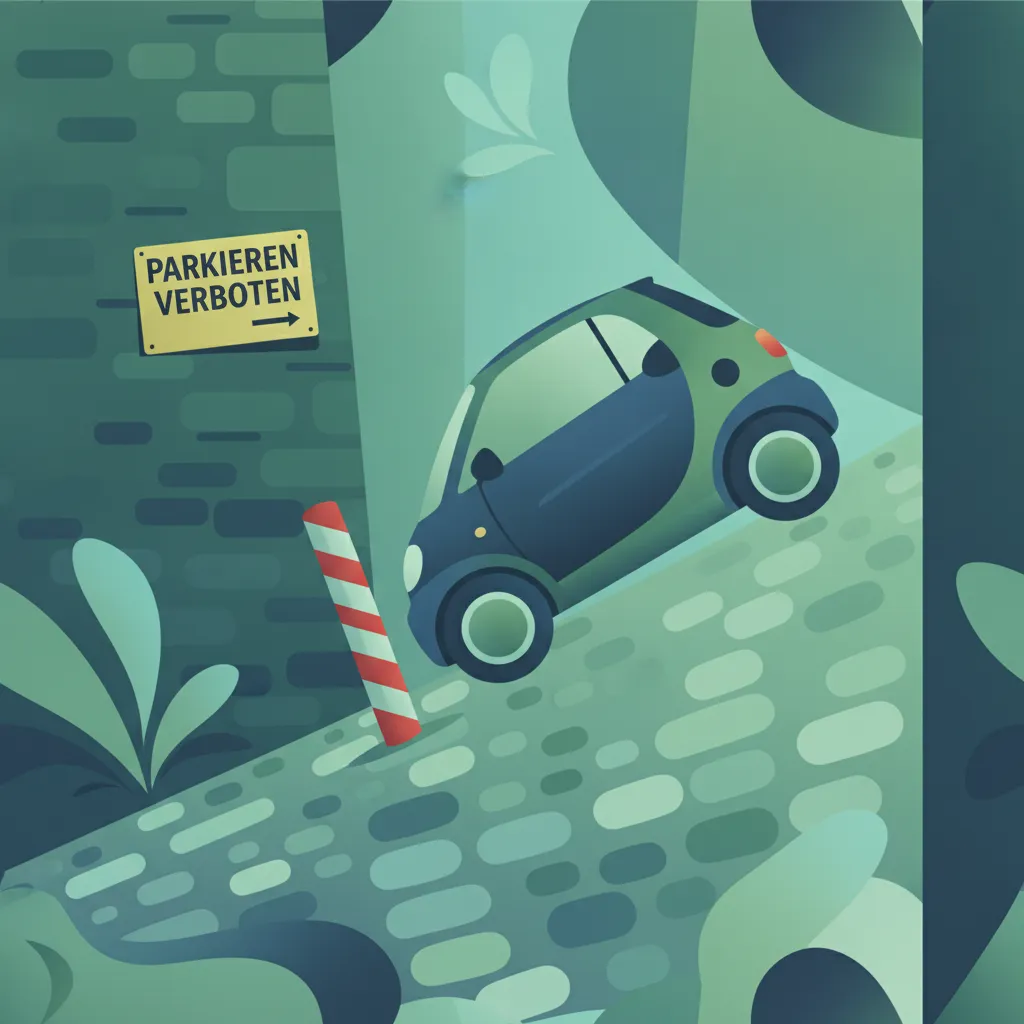
This lesson explores the regulations governing parking, including designated zones, no-parking areas, and rules for parking on hills. It discusses the correct use of the handbrake and the hill start technique to prevent rolling. The content also covers parallel and perpendicular parking methods and the interpretation of Swiss parking signs.

Driving a bus in older parts of a city requires exceptional spatial awareness and precise control. This lesson focuses on assessing clearances, managing front and rear overhang, and negotiating tight turns around parked cars and buildings. A key theme is slow, careful, and deliberate manoeuvring to avoid contact.

This lesson focuses on driving on mountain roads, addressing steep gradients, hairpin bends, and altitude-related challenges. You will learn proper techniques for climbing ascents and using engine braking on descents. The content also covers the use of snow chains, recognizing avalanche risks, and interpreting mountain road signs for safe alpine navigation.
Learn detailed Swiss regulations for parallel and angle parking, including crucial rules for parking on slopes and performing safe hill starts. Understand how to secure your vehicle and navigate inclines according to traffic law.
This lesson explores the regulations governing parking, including designated zones, no-parking areas, and rules for parking on hills. It discusses the correct use of the handbrake and the hill start technique to prevent rolling. The content also covers parallel and perpendicular parking methods and the interpretation of Swiss parking signs.
This lesson focuses on driving on mountain roads, addressing steep gradients, hairpin bends, and altitude-related challenges. You will learn proper techniques for climbing ascents and using engine braking on descents. The content also covers the use of snow chains, recognizing avalanche risks, and interpreting mountain road signs for safe alpine navigation.

Driving in the Alps requires a high level of skill and vehicle sympathy. This lesson covers techniques for climbing steep gradients by selecting the correct gear to maintain momentum without straining the engine. It reiterates the critical importance of using low gears and auxiliary brakes for descending, to ensure the service brakes remain cool and effective for the entire descent.

Driving a large vehicle on mountain passes is a demanding skill. This lesson covers selecting the correct gear for both ascents and descents to maintain control and avoid overheating the brakes. It also explains the specific priority rules that apply on mountain roads and the importance of being aware of sudden weather changes.
This lesson focuses on the rules governing when and how to stop a vehicle safely. You will learn to calculate the required stopping distance, considering reaction time and braking distance. The content also covers how to adjust stopping behavior for different road conditions and safe stopping techniques on inclines to ensure the vehicle remains under control.
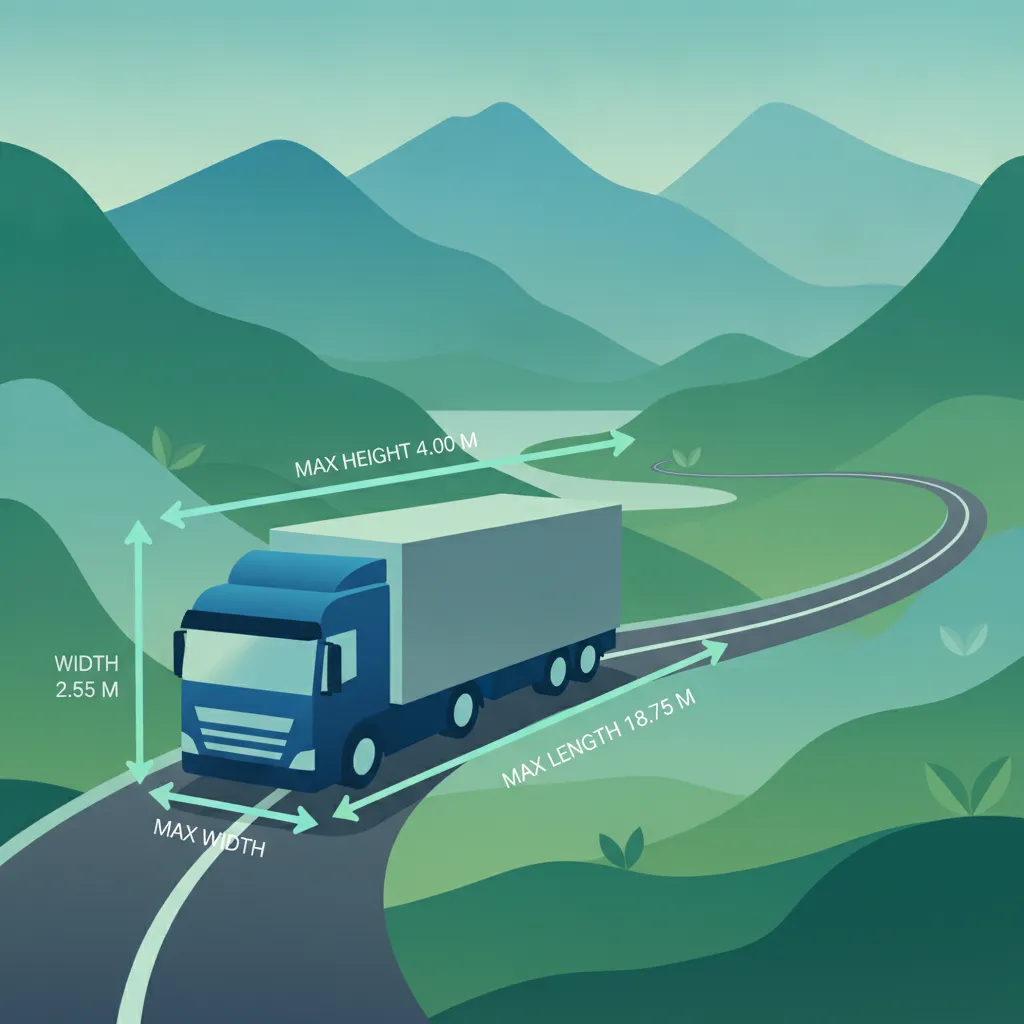
Swiss law strictly regulates the maximum dimensions of commercial vehicles to ensure they can safely navigate the infrastructure. This lesson specifies the standard limits for vehicle height (4.0m), width (2.55m), and length for various lorry and trailer combinations. Adhering to these dimensions is crucial for avoiding collisions with bridges, tunnels, and other structures, and for navigating narrow roads.
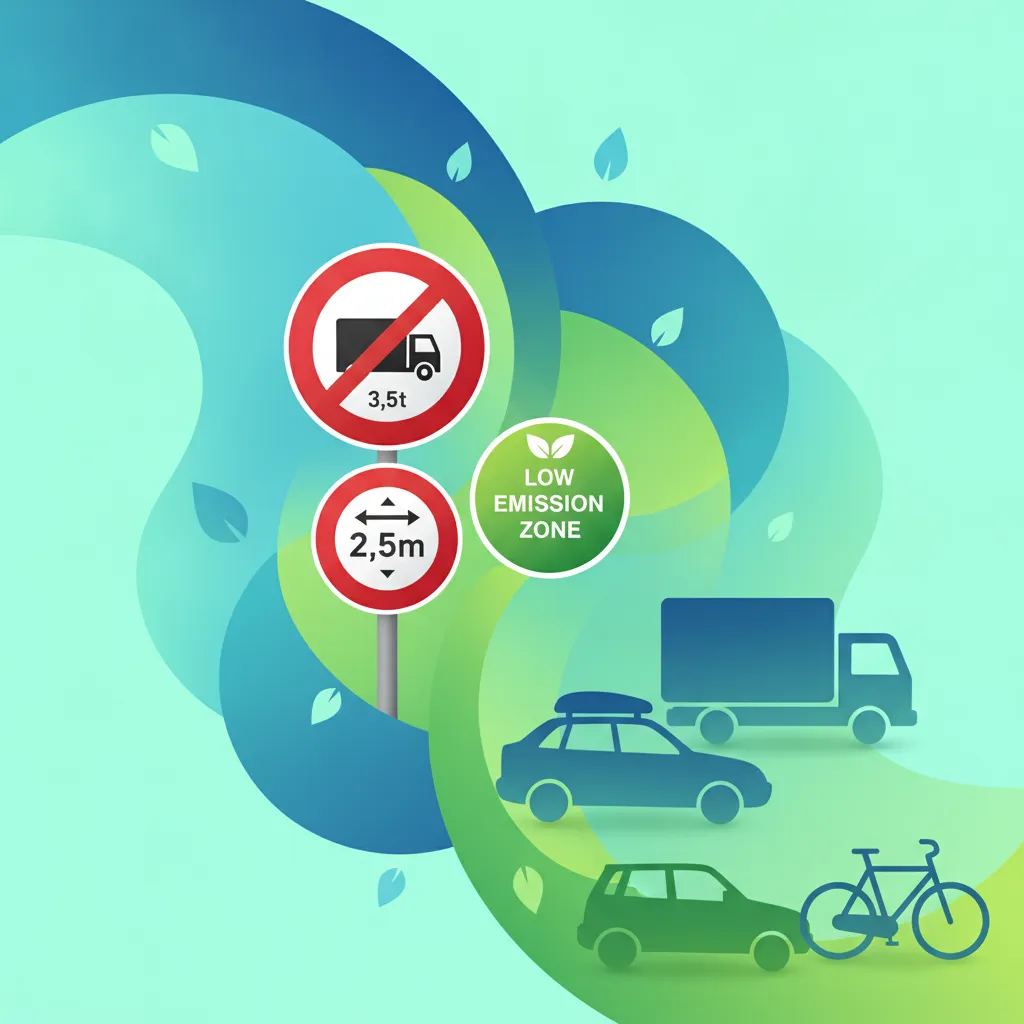
Many urban areas have restrictions to manage traffic and protect infrastructure. This lesson teaches drivers to identify and interpret traffic signs that prohibit access based on gross vehicle weight, axle load, height, or width. It also covers the growing prevalence of environmental or low-emission zones, which may restrict entry for older, more polluting vehicles.
This lesson focuses on maintaining proper vehicle positioning within the lane, aligning correctly, and respecting road markings. You will understand how correct positioning contributes to safe overtaking and smooth turning. The content also discusses adjustments required in different scenarios, such as narrow roads and multi-lane highways, to maintain optimal lane discipline.

Motorway driving requires constant concentration due to high speeds. This lesson emphasizes the importance of staying in the right-hand lane unless overtaking and the specific restrictions on lorry overtaking in Switzerland. It reinforces the need for a following distance of at least four seconds to compensate for the vehicle's long stopping distance and provides guidance on safely merging and exiting.
Turning a long vehicle requires careful planning and execution. This lesson covers the correct procedure: approach, observation, signalling, and positioning the vehicle correctly to allow for the trailer's off-tracking without mounting the kerb. It also highlights the need for constant mirror checks throughout the turn to monitor for cyclists or other vulnerable road users who may enter the danger zone.
Find clear answers to common questions learners have about Manoeuvres: Three‑Point Turns, U‑Turns, and Complex Parking. Learn how the lesson is structured, which driving theory objectives it supports, and how it fits into the overall learning path of units and curriculum progression in Switzerland. These explanations help you understand key concepts, lesson flow, and exam focused study goals.
No, U-turns are forbidden where there is a clear traffic sign prohibiting them, or where road markings like continuous lines make it illegal. Always prioritize safety and ensure you have clear visibility before attempting any turning manoeuvre.
The most important rule is to maintain constant observation of all road users. You must ensure the road is clear in both directions and check your blind spots before and during each stage of the turn, as you are likely blocking the lane temporarily.
While this is a theory course, understanding the legal and safety requirements of these manoeuvres is the first step toward performing them correctly during your practical exam. Mastering the 'why' and 'where' allows you to focus on the technical skill during your supervised practice drives.
You should only attempt a three-point turn where it is not specifically prohibited and where you have sufficient space to complete the manoeuvre safely without obstructing emergency vehicles or creating a hazard for others.
Pinpoint specific Swiss traffic rules, road signs, or driving situations you need to master. Use the practice search to start a focused revision session now and build confidence for your official driving theory exam.