
This lesson guides you through the legal requirements and practical techniques for parking and starting on hills in Switzerland. It builds on your foundational knowledge of vehicle control, ensuring you are fully prepared for both theoretical exam questions and real-world driving scenarios. You will learn to interpret parking signage and master the handbrake usage necessary for smooth, safe hill departures.
Lesson content overview
Navigating Swiss roads safely and confidently extends beyond driving; it encompasses knowing precisely where and how to stop, stand, and park your vehicle. This comprehensive lesson details the essential parking regulations, mandatory safety measures for parking on inclines, and the critical skill of executing a hill start. Understanding these rules is fundamental for maintaining traffic flow, preventing hazards, respecting other road users, and complying with Swiss road law as a Category B license holder. Mastery of these techniques ensures your vehicle remains secure and that you can smoothly resume movement from a stopped position on any gradient.
In Switzerland, parking regulations are meticulously designed to ensure road safety, maintain clear visibility, and facilitate efficient traffic flow. Drivers must be adept at identifying permissible parking areas and, equally important, recognizing zones where parking is strictly prohibited. Misinterpreting these rules can lead to fines, inconvenience, and potentially dangerous situations.
Legal parking zones are specific areas where drivers are permitted to leave their vehicles stationary for a duration, subject to specific conditions. These zones are clearly marked by traffic signs or road markings, providing unambiguous guidance. It's crucial not to assume that any empty space is available for parking; always look for official indications.
Types of Designated Parking Spaces:
When parking in a legal zone, drivers must respect any stated time limits, pay required fees, and display necessary permits or the blue disc. Failure to comply can result in fines. Believing any empty space is usable, or ignoring time limits, are common misunderstandings that lead to violations.
Certain areas are designated as no-parking zones due to safety concerns, to maintain clear visibility, or to ensure uninterrupted traffic flow. Stopping, standing, or parking in these areas is strictly prohibited, and violations often carry significant fines and the risk of the vehicle being towed.
Absolute No-Parking Zones:
It's a common misunderstanding to assume that stopping briefly for a quick task, such as picking up or dropping off, is acceptable in a no-parking zone. Always verify the specific rules for the area to avoid penalties and ensure safety.
Parking on an incline presents unique challenges due to gravity. Without proper precautions, a parked vehicle could roll uncontrollably, leading to serious accidents. Swiss regulations mandate specific procedures for parking on hills to ensure vehicle stability and prevent such incidents. These procedures involve the correct use of the handbrake and specific wheel orientation.
The handbrake, also known as the parking brake, is a crucial safety component designed to keep a vehicle stationary when parked. Unlike the foot brake, which is primarily for slowing down or stopping the vehicle temporarily, the handbrake provides a mechanical hold, independent of the main hydraulic braking system.
Correct Handbrake Engagement:
Bring the vehicle to a complete stop using the foot brake.
Engage the handbrake firmly, ensuring it holds the vehicle securely.
For manual transmission, select first gear (uphill) or reverse (downhill). For automatic, shift to "P" (Park).
Release the foot brake gradually, verifying the vehicle remains stationary.
Apply the appropriate wheel orientation based on the presence of a curb.
A common misunderstanding is assuming the foot brake alone is sufficient to secure a vehicle on a hill. The foot brake relies on hydraulic pressure and can fade over time, especially if not fully engaged, or if there's a system leak. The handbrake provides a reliable, mechanical solution for long-term parking stability.
In addition to the handbrake, turning your wheels in a specific direction when parking on a slope provides an extra layer of safety. This technique ensures that if the handbrake were to fail, the vehicle would roll safely into the curb or away from traffic, minimizing potential damage or injury.
Rules for Wheel Orientation:
Failing to turn the wheels correctly, or forgetting to engage the handbrake altogether, significantly increases the risk of the vehicle rolling away. Always ensure both safety measures are correctly applied when parking on an incline.
A hill start is a maneuver that allows a driver to move a vehicle from a complete stop on an incline without rolling backward. This technique requires precise coordination of vehicle controls and is a fundamental skill for safe driving, particularly in Switzerland's often mountainous terrain.
Performing a hill start in a manual transmission vehicle demands skillful coordination between the clutch, accelerator (throttle), and handbrake. The goal is to apply just enough power and release the clutch smoothly as the handbrake is disengaged, preventing any rollback.
Ensure the vehicle is stopped, in first gear, with the handbrake firmly engaged.
Press the clutch pedal fully down.
Apply light pressure to the accelerator pedal, bringing the engine RPMs slightly above idle (listen for the engine note change).
Slowly release the clutch pedal until you feel the "bite point" – the moment the engine load changes and the car slightly vibrates or dips. Hold it there.
While holding the clutch at the bite point and maintaining throttle, smoothly release the handbrake.
As the handbrake is fully released, gradually ease off the clutch while simultaneously increasing accelerator pressure to move forward smoothly.
Avoid sudden movements of either pedal to prevent stalling or excessive wheel spin.
A common mistake is releasing the foot brake or handbrake too quickly before the clutch is engaged at the bite point, leading to unwanted rollback. Conversely, releasing the clutch too quickly without enough throttle will stall the engine. Practice is key to developing the muscle memory for this coordinated action.
Hill starts are generally simpler in automatic transmission vehicles because there is no clutch pedal to manage. However, attention to brake release and throttle application is still essential to ensure a smooth, controlled start without rollback.
Ensure the vehicle is stopped, gear selector in "D" (Drive), with the foot brake firmly pressed, or the handbrake engaged.
If using the foot brake: Release the foot brake and immediately and smoothly apply the accelerator. Modern automatic transmissions often have a "hill hold" assist feature that will briefly maintain brake pressure to prevent rollback, but drivers should not rely solely on this.
If using the handbrake (recommended for steeper inclines):
Even with automatic transmissions, an abrupt release of the foot brake or handbrake without sufficient throttle can cause a momentary rollback, especially on very steep slopes or with heavy loads. The key is smooth, synchronized control.
Beyond simply stopping in designated areas, drivers must master specific maneuvers to park their vehicles efficiently and safely within marked spaces. Parallel and perpendicular parking are two common techniques required in urban and residential settings.
Parallel parking involves positioning your vehicle parallel to the curb, fitting it into a space between two other parked cars or within a marked length along the road. This maneuver demands spatial awareness and precise control.
Key Rules and Technique:
Position your vehicle alongside the car in front of the target space, about 0.5 to 1 meter away, with your rear bumper aligned with their rear bumper.
Engage reverse gear and check all mirrors and blind spots.
Begin reversing slowly, turning the steering wheel sharply towards the curb (e.g., full right turn if parking on the right side).
Continue reversing until your vehicle is at a 45-degree angle to the curb, and you can see the headlights of the car behind in your left mirror.
Straighten your steering wheel and continue reversing straight back until your front bumper is clear of the car in front.
Turn your steering wheel sharply away from the curb (e.g., full left turn) and continue reversing slowly until your vehicle is parallel to the curb.
Adjust your position by moving forward or backward to center your vehicle within the space and ensure it's within 30 cm of the curb.
Engage the handbrake and select "P" (automatic) or first gear/reverse (manual).
Common misunderstandings include over- or under-shooting the space, or not aligning the vehicle correctly with the required curb distance. Practice in various conditions helps build confidence and accuracy.
Perpendicular parking, also known as bay parking, involves positioning your vehicle at a right angle to the curb or a designated lane, typically found in parking lots or designated street bays.
Key Rules and Technique:
Approach the parking bay slowly, keeping a safe distance from parked cars.
Position your vehicle so your front bumper is aligned with the bay lines, ensuring enough turning space.
Turn your steering wheel sharply towards the bay as you slowly drive forward.
Monitor your mirrors and surroundings to ensure you are entering the bay straight and not hitting other vehicles or obstacles.
Straighten your steering wheel as your vehicle aligns with the bay, and continue slowly until your vehicle is fully inside the lines and close to the back of the bay.
Engage the handbrake and select "P" (automatic) or first gear (manual).
When performing perpendicular parking, always check for pedestrians and other vehicles, especially when reversing. Parking half-way out of a bay, or extending beyond the lines, is a common violation that obstructs traffic and increases the risk of collision.
Successfully navigating parking in Switzerland relies heavily on your ability to interpret traffic signs and road markings accurately. These visual cues convey critical information about where, when, and how you are permitted to park.
Swiss parking signs often use standardized symbols and colors, similar to other European countries, but can have unique supplementary panels that modify their meaning.
Supplementary Panels: These smaller signs attached below the main parking sign are crucial. They specify:
Ignoring these supplementary panels is a common mistake that can lead to unexpected fines. Always read the entire sign assembly to understand the full regulation.
Blue zones are a unique and widespread feature of Swiss parking. They are areas where parking is free but strictly time-limited, designed to encourage vehicle turnover.
Rules for Blue Zones:
Understanding and correctly using the blue disc is essential for avoiding fines in these common parking areas.
Familiarity with parking rules is not just theoretical; it translates directly into responsible driving and avoiding penalties. Violating parking regulations in Switzerland can lead to various consequences, from minor fines to the towing of your vehicle.
Driving conditions are rarely static, and responsible drivers adapt their parking and hill start techniques to varying circumstances.
Mastering parking regulations and hill start techniques is indispensable for any driver in Switzerland. The principles learned in this lesson—from understanding legal parking zones and no-parking areas to performing precise maneuvers and safely handling inclines—are foundational for responsible driving.
By diligently applying these principles, you will ensure your vehicle is always parked lawfully and safely, contributing to efficient traffic flow and accident prevention across Swiss roads.
This lesson covers Swiss parking regulations and hill start techniques essential for Category B drivers. Learners must understand designated parking zones (blue zones requiring a blue disc, white zones with payment, resident-only areas) and absolute no-parking locations including yellow lines, intersections within 5 meters, and pedestrian crossings. Parking on inclines requires the handbrake as the primary security, correct wheel orientation as a secondary measure, and proper gear selection (first/reverse for manual, 'P' for automatic). Hill starts demand smooth coordination between handbrake release, clutch engagement at the bite point, and throttle application for both manual and automatic transmissions. Supplementary signs always define the specific conditions and restrictions that drivers must obey to avoid fines and ensure road safety.
A short set of high-value points that capture the most important learning from this lesson.
Swiss parking zones include marked bays, blue zones (requiring a blue disc), white zones (paid), and resident-only areas, each with specific conditions.
The handbrake is the primary safety mechanism for securing any vehicle on an incline, and must always be firmly engaged before releasing the foot brake.
Wheel orientation on slopes provides a critical secondary safeguard: turn away from the curb when uphill with a curb, towards the curb when downhill or uphill without a curb.
Hill starts require coordinated control of handbrake, clutch (manual), and throttle to prevent rollback; practice until the bite point becomes instinctive.
Always read the entire sign assembly including supplementary panels, as they specify time limits, permitted vehicle types, and exact zones of restriction.
Explore all units and lessons included in this driving theory course.
Blue disc (Parkscheibe) must show the next full or half hour after arrival; overstaying in blue zones results in fines.
Parallel parking in Switzerland requires parking within 30 centimeters of the curb; exceeding this distance is a violation.
Parking within 5 meters of an intersection, pedestrian crossing, or bus/tram stop is strictly prohibited regardless of duration.
Yellow lines indicate absolute no-parking; a single diagonal red line means no parking with brief stops allowed; double diagonal lines (X) mean no stopping whatsoever.
When parking on a hill, shift to first gear (uphill) or reverse gear (downhill) for manual, or 'P' for automatic, as a secondary safeguard against rolling.
Releasing the foot brake before the handbrake is fully engaged and the clutch is at the bite point, causing unintended rollback.
Assuming brief stopping for quick tasks like dropping off passengers is acceptable in no-parking zones, which it is not.
Parking in resident zones or blue zones without displaying the required blue disc or permit, leading to fines and potential towing.
Failing to turn wheels correctly on hills, which removes the secondary safety barrier against rolling into traffic if the handbrake fails.
Over-shooting or under-shooting during parallel parking and misjudging the required 30 cm curb distance, creating obstruction.
Lesson content overview
A short set of high-value points that capture the most important learning from this lesson.
Swiss parking zones include marked bays, blue zones (requiring a blue disc), white zones (paid), and resident-only areas, each with specific conditions.
The handbrake is the primary safety mechanism for securing any vehicle on an incline, and must always be firmly engaged before releasing the foot brake.
Wheel orientation on slopes provides a critical secondary safeguard: turn away from the curb when uphill with a curb, towards the curb when downhill or uphill without a curb.
Hill starts require coordinated control of handbrake, clutch (manual), and throttle to prevent rollback; practice until the bite point becomes instinctive.
Always read the entire sign assembly including supplementary panels, as they specify time limits, permitted vehicle types, and exact zones of restriction.
Explore all units and lessons included in this driving theory course.
Blue disc (Parkscheibe) must show the next full or half hour after arrival; overstaying in blue zones results in fines.
Parallel parking in Switzerland requires parking within 30 centimeters of the curb; exceeding this distance is a violation.
Parking within 5 meters of an intersection, pedestrian crossing, or bus/tram stop is strictly prohibited regardless of duration.
Yellow lines indicate absolute no-parking; a single diagonal red line means no parking with brief stops allowed; double diagonal lines (X) mean no stopping whatsoever.
When parking on a hill, shift to first gear (uphill) or reverse gear (downhill) for manual, or 'P' for automatic, as a secondary safeguard against rolling.
Releasing the foot brake before the handbrake is fully engaged and the clutch is at the bite point, causing unintended rollback.
Assuming brief stopping for quick tasks like dropping off passengers is acceptable in no-parking zones, which it is not.
Parking in resident zones or blue zones without displaying the required blue disc or permit, leading to fines and potential towing.
Failing to turn wheels correctly on hills, which removes the secondary safety barrier against rolling into traffic if the handbrake fails.
Over-shooting or under-shooting during parallel parking and misjudging the required 30 cm curb distance, creating obstruction.
Explore search topics learners often look for when studying Parking Regulations and Hill Starts. These topics reflect common questions about road rules, driving situations, safety guidance, and lesson level theory preparation for learners in Switzerland.
Browse additional driving theory lessons that cover connected traffic rules, road signs, and common driving situations related to this topic. Improve your understanding of how different rules interact across everyday traffic scenarios.
Develop the skill for safe hill starts in Switzerland, learn correct handbrake engagement, and understand precise wheel orientation for parking on uphill and downhill slopes with any transmission.

This lesson focuses on driving on mountain roads, addressing steep gradients, hairpin bends, and altitude-related challenges. You will learn proper techniques for climbing ascents and using engine braking on descents. The content also covers the use of snow chains, recognizing avalanche risks, and interpreting mountain road signs for safe alpine navigation.

Driving in the Alps requires a high level of skill and vehicle sympathy. This lesson covers techniques for climbing steep gradients by selecting the correct gear to maintain momentum without straining the engine. It reiterates the critical importance of using low gears and auxiliary brakes for descending, to ensure the service brakes remain cool and effective for the entire descent.

Driving a large vehicle on mountain passes is a demanding skill. This lesson covers selecting the correct gear for both ascents and descents to maintain control and avoid overheating the brakes. It also explains the specific priority rules that apply on mountain roads and the importance of being aware of sudden weather changes.
Controlling a heavy vehicle on a steep downhill grade requires a specific technique to avoid disaster. This lesson teaches the golden rule: select a low gear before starting the descent, one that is low enough to control the speed with minimal use of the service brakes. It explains how to effectively combine this with the engine brake or retarder to maintain a safe, steady speed and keep the service brakes cool and ready for an emergency.
This lesson focuses on safe reversing techniques, emphasizing the use of mirrors, rearview cameras, and checking rear visibility. You will learn to control reversing speed and safely reverse around corners or in narrow spaces. The content also outlines the necessary safety checks to perform before and during any reversing maneuver to prevent accidents.

This lesson covers complex manoeuvres such as three-point turns, U-turns, and parking in tight spaces. You will learn the step-by-step process for performing a three-point turn and the legal requirements for a U-turn. The content also provides guidance for parking in confined areas, ensuring proper lane usage and positioning during these manoeuvres.

This lesson provides specialized techniques for safely handling hairpin turns and steep gradients. It teaches riders how to manage speed on approach, select the correct line through the bend, and use both brakes and engine braking on descents. Proper throttle control for maintaining momentum on uphill climbs is also covered.
Relying solely on the service brakes on a long downhill stretch can lead to overheating and complete brake failure (brake fade). This lesson explains the function of auxiliary brakes like retarders. You will learn how and when to engage them to maintain a safe, controlled speed, preserving the main brakes for when they are truly needed.
This lesson focuses on maintaining proper vehicle positioning within the lane, aligning correctly, and respecting road markings. You will understand how correct positioning contributes to safe overtaking and smooth turning. The content also discusses adjustments required in different scenarios, such as narrow roads and multi-lane highways, to maintain optimal lane discipline.

This lesson focuses on the rules governing when and how to stop a vehicle safely. You will learn to calculate the required stopping distance, considering reaction time and braking distance. The content also covers how to adjust stopping behavior for different road conditions and safe stopping techniques on inclines to ensure the vehicle remains under control.
Learn the essential rules for legal parking in Switzerland, understand different parking zones like blue zones, and master parallel and perpendicular parking techniques. Covers parking signs and common violations.
This lesson covers complex manoeuvres such as three-point turns, U-turns, and parking in tight spaces. You will learn the step-by-step process for performing a three-point turn and the legal requirements for a U-turn. The content also provides guidance for parking in confined areas, ensuring proper lane usage and positioning during these manoeuvres.
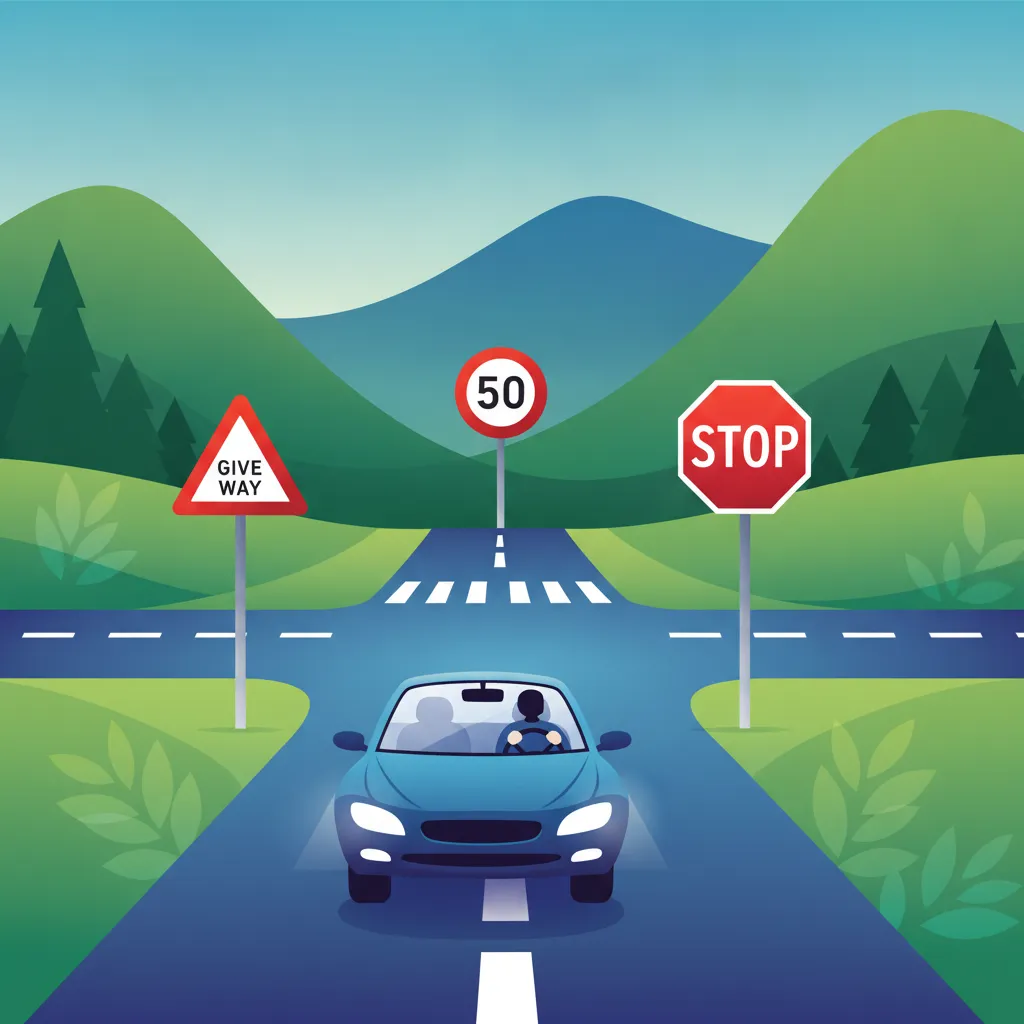
This lesson explores the category of regulatory signs, which dictate permissible and prohibited actions for drivers. It covers speed limit signs, entry restrictions, and mandatory direction signs, explaining their legal significance. Emphasis is placed on recognizing the shapes and colours that distinguish these critical signs within the Swiss traffic system.
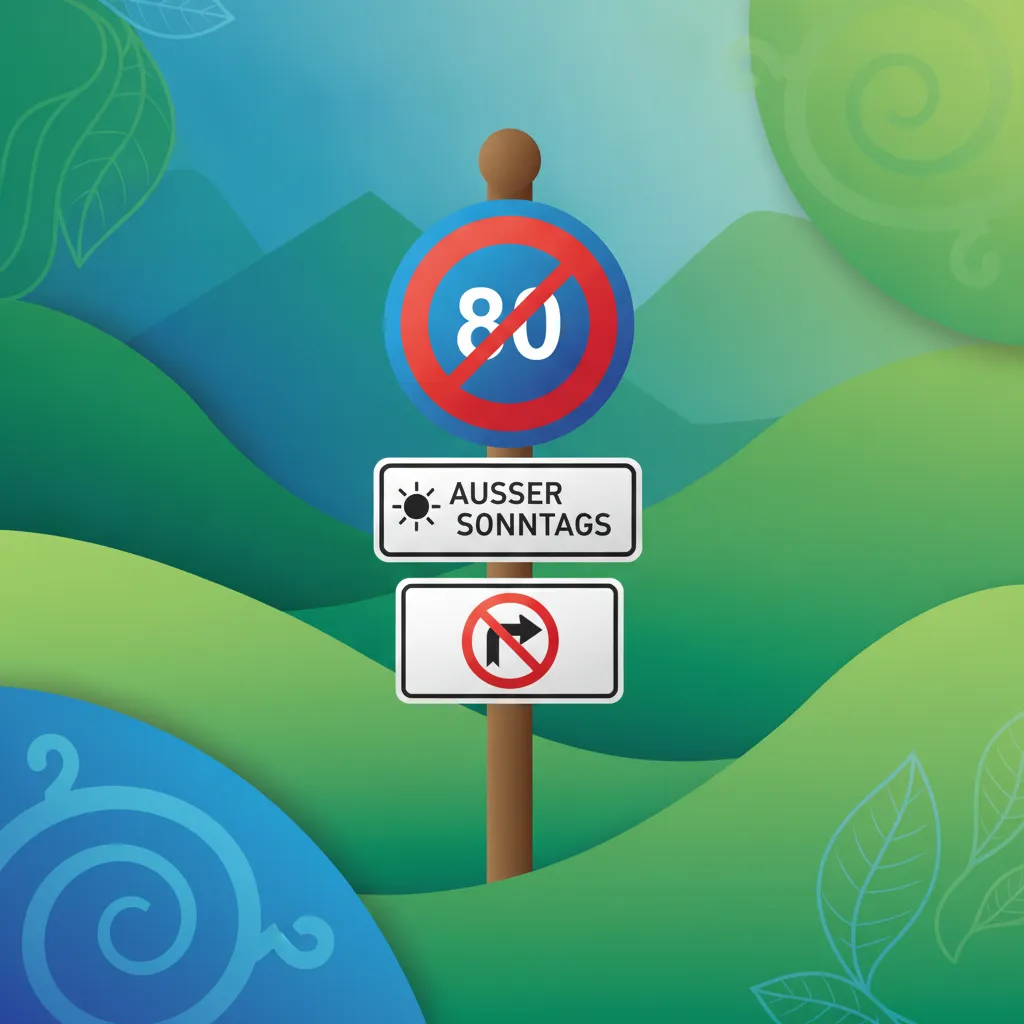
This lesson delves into supplementary signs that modify or clarify the meaning of primary traffic signs. You will learn to interpret signs indicating time restrictions, vehicle-specific limitations, and lane-specific instructions. The content also highlights how these signs interact with main regulatory signs to convey precise, context-sensitive traffic rules.

Bus lanes are a key tool for improving service reliability, but they come with specific rules. This lesson covers how to correctly interpret bus lane signs and markings. It also explains the regulations for entering and leaving the lane to make turns or avoid obstructions, and the priority rules associated with them.
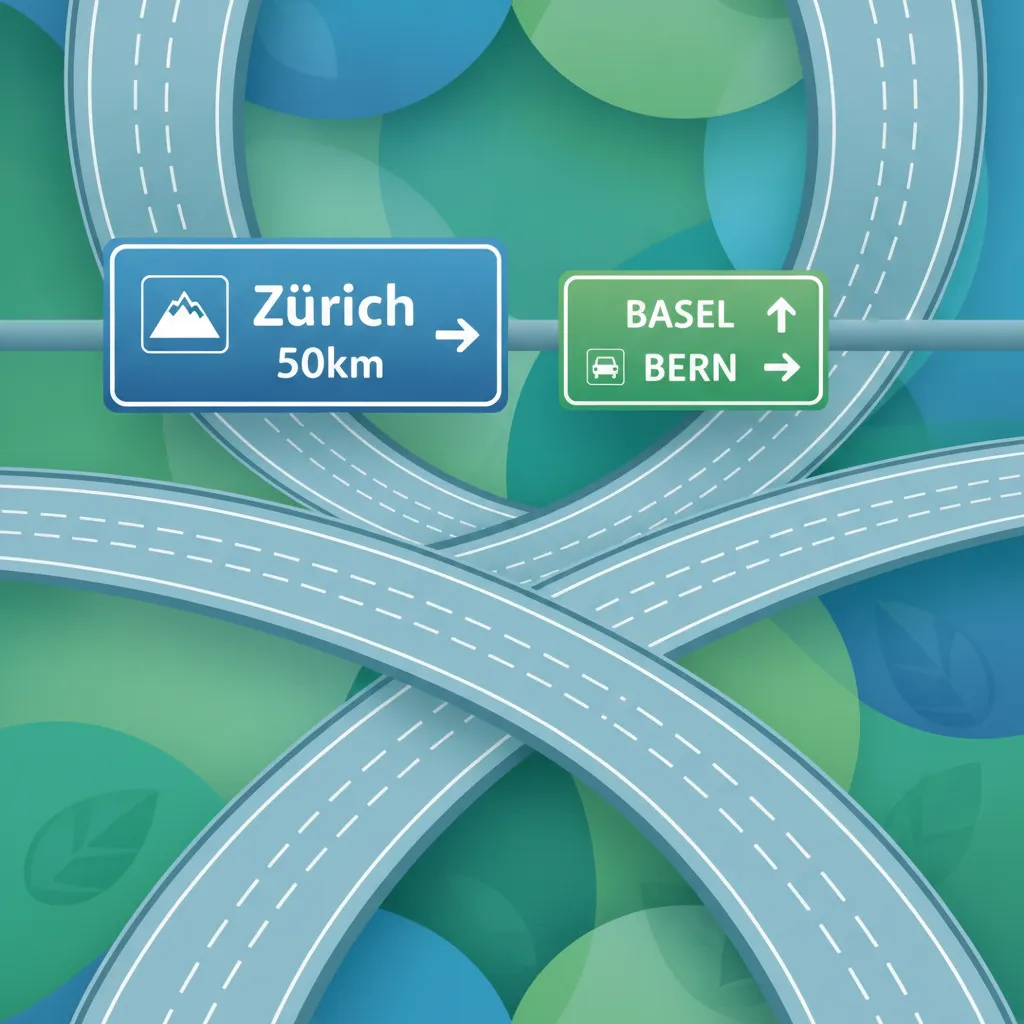
This lesson examines informational signs that provide route guidance, destination distances, and tourist information. It explains how direction signs, distance markers, and service area signs assist drivers in planning routes and making informed decisions. Understanding the logic of informational signage ensures efficient and safe navigation through the Swiss road network.
Taking regular breaks is a legal requirement and essential for combating fatigue. This lesson covers how to safely enter and park within designated lorry parks at service areas. It emphasizes the importance of applying the parking brake securely, using wheel chocks if on a slope, and being mindful of vehicle and cargo security to prevent theft.
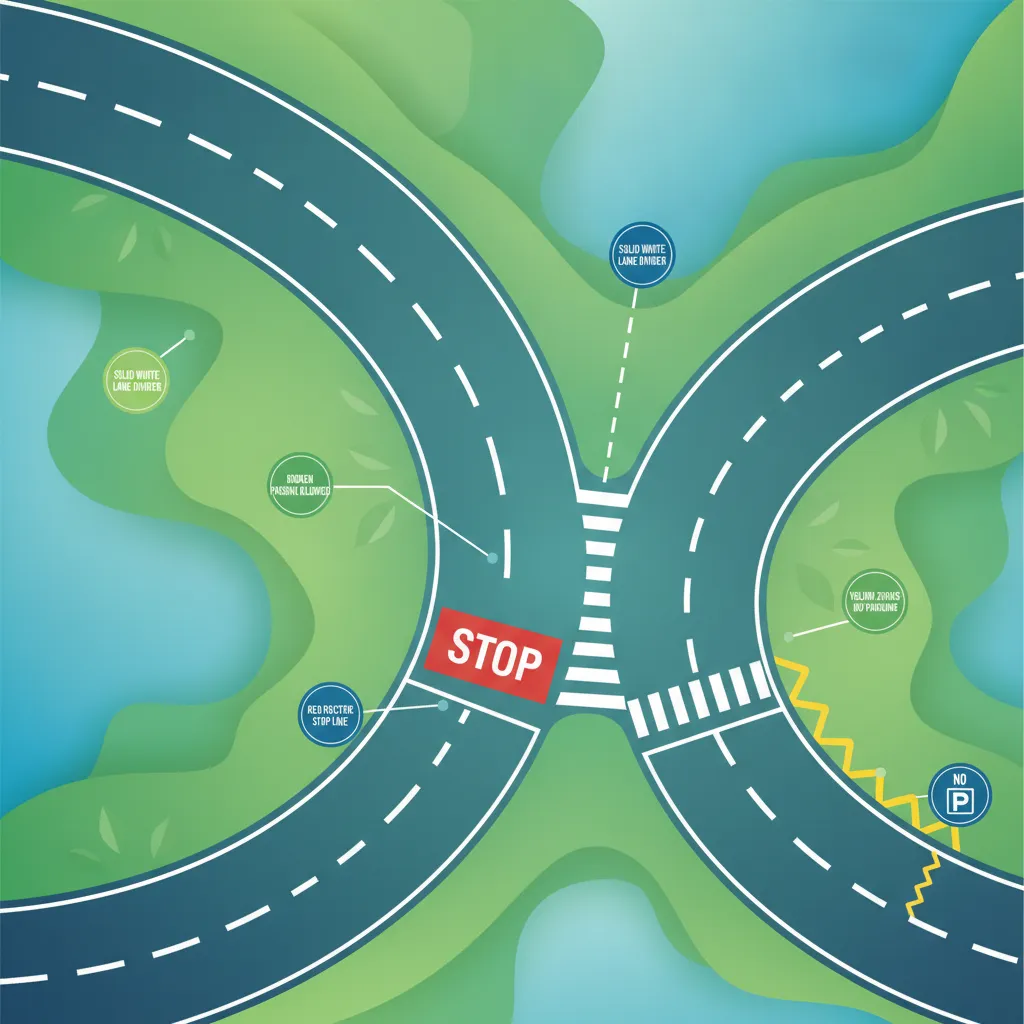
This lesson covers the various road surface markings that dictate lane usage, turning movements, and pedestrian zones. It explains the significance of solid versus broken lines, directional arrows, and specific markings for bike lanes. Understanding these markings is crucial for maintaining lane discipline and ensuring safe interactions in complex traffic environments.
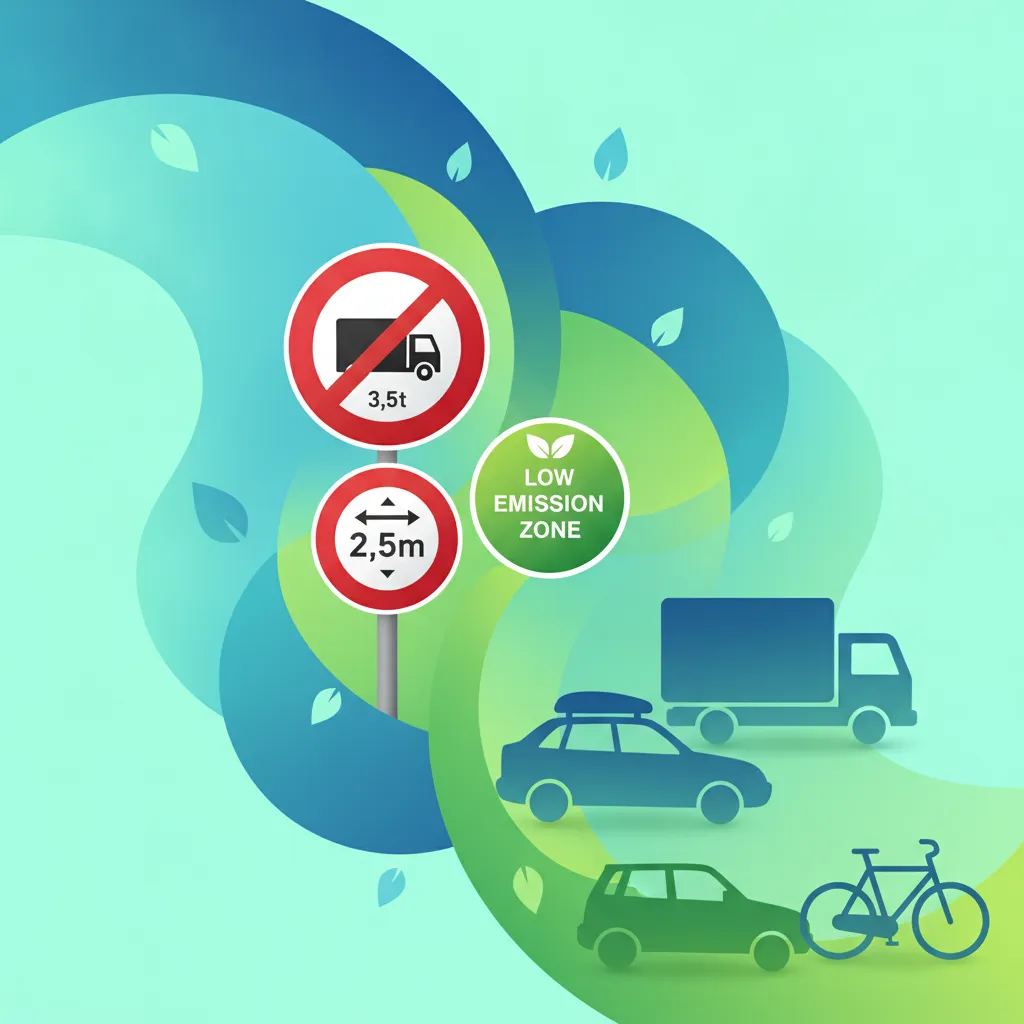
Many urban areas have restrictions to manage traffic and protect infrastructure. This lesson teaches drivers to identify and interpret traffic signs that prohibit access based on gross vehicle weight, axle load, height, or width. It also covers the growing prevalence of environmental or low-emission zones, which may restrict entry for older, more polluting vehicles.

Urban driving requires heightened awareness and careful planning. This lesson covers the challenges of narrow streets, heavy traffic, and the need to identify designated loading and unloading zones. It emphasizes the importance of planning routes in advance to account for time-based access restrictions and to avoid unsuitable roads.
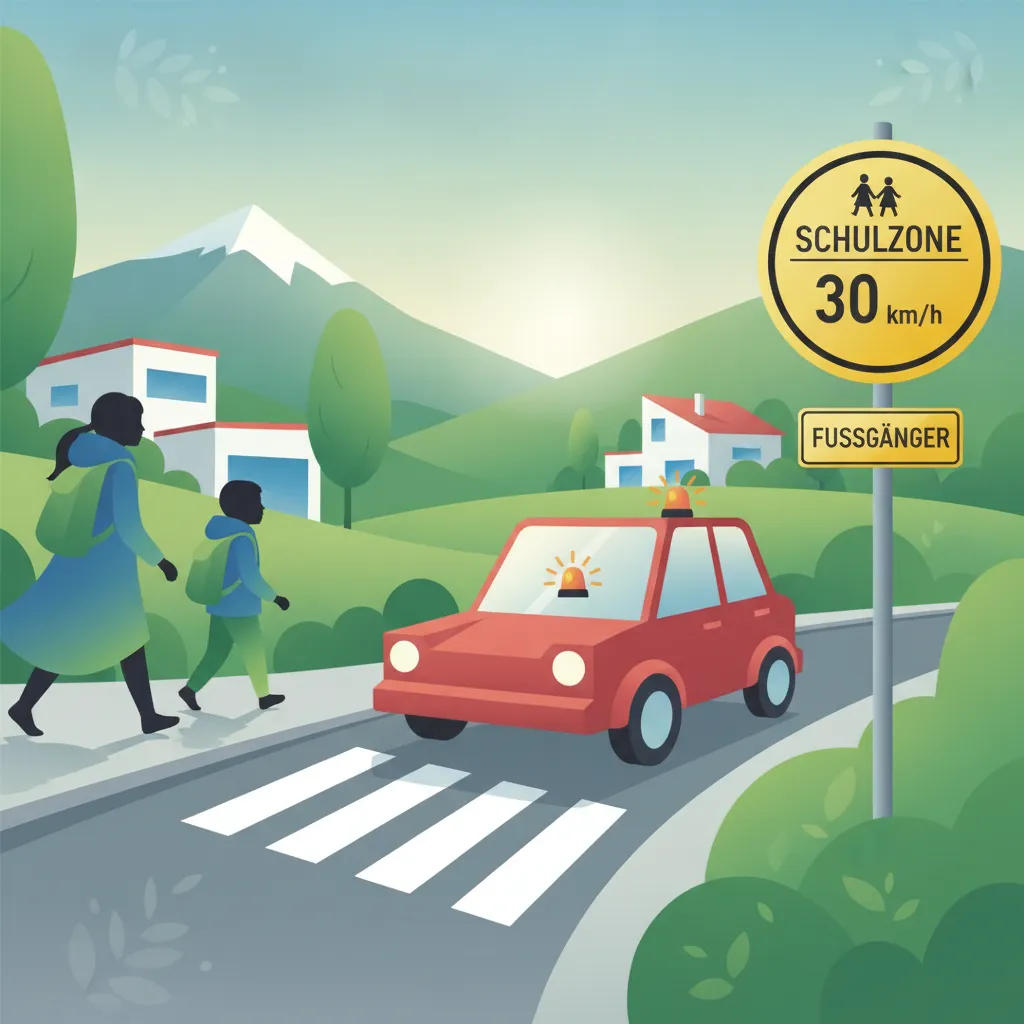
This lesson focuses on school zones, where special speed limits and cautionary measures are required. You will learn to recognize school zone signs, understand reduced speed limits, and be aware of designated child crossing zones. The content also emphasizes the need for heightened vigilance when school buses stop for students to ensure child safety.
Find clear answers to common questions learners have about Parking Regulations and Hill Starts. Learn how the lesson is structured, which driving theory objectives it supports, and how it fits into the overall learning path of units and curriculum progression in Switzerland. These explanations help you understand key concepts, lesson flow, and exam focused study goals.
In Switzerland, stopping is a voluntary halt for a brief period, such as to let a passenger in or out. Parking is defined as leaving the vehicle stationary for a longer duration, regardless of whether the driver remains inside.
The key is the precise coordination of the clutch and accelerator while using the handbrake. Hold the handbrake until you feel the vehicle's 'bite point', then smoothly release the handbrake as you apply sufficient power to move forward.
Yes, Switzerland uses specific rectangular blue signs with a white 'P' to denote parking areas, often accompanied by supplementary signs indicating time limits, costs, or parking direction.
Yes, but you must ensure your wheels are turned toward the curb to prevent the vehicle from rolling into traffic if the braking system fails. Always engage the parking brake and leave the vehicle in the correct gear.
Pinpoint specific Swiss traffic rules, road signs, or driving situations you need to master. Use the practice search to start a focused revision session now and build confidence for your official driving theory exam.