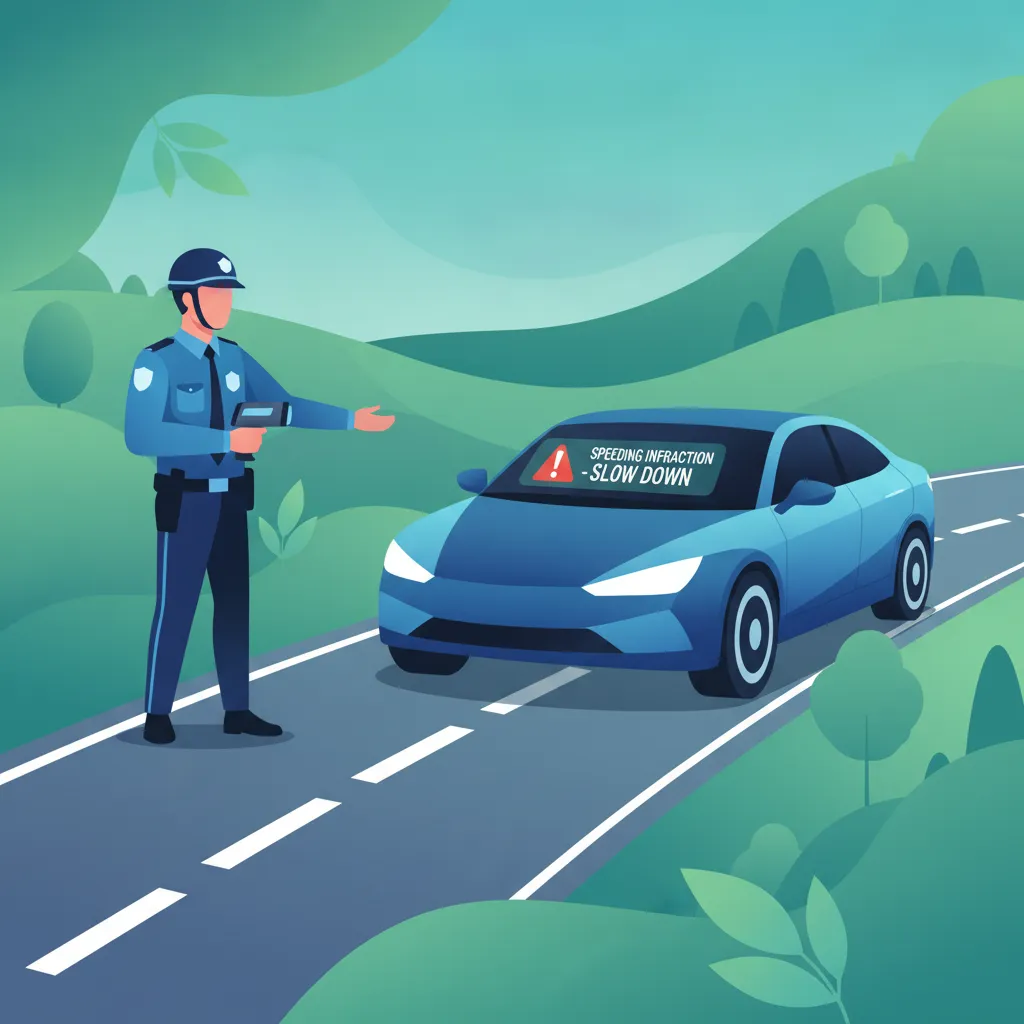
This lesson details the legal consequences of traffic violations under the French Code de la route. You will learn how the points-based licence system functions, how penalties are applied, and the options available for recovering points to maintain your driving status.
Lesson content overview
Complying with the French Highway Code (Code de la route) is not only a matter of personal and collective safety, but also a strict legal obligation. France regulates road safety through a rigorous administrative and judicial penalty framework. For anyone preparing to obtain a Category B driving licence (permis de conduire), understanding how traffic violations are detected, processed, and penalized is critical to maintaining a valid licence and avoiding severe financial or legal consequences.
This lesson provides an exhaustive overview of the French point-based licence system, the classification of monetary fines, vehicle impoundment procedures, and the mechanisms for recovering lost points through educational courses.
Introduced to encourage long-term safe driving habits, the French driving licence operates on a point-based system. Unlike systems where points accumulate as penalties, the French system allocates a pool of points to your licence, which are then subtracted when you commit traffic violations.
The French point-based licence system where a driver holds a maximum of 12 points. Infractions result in a progressive deduction of points. If the balance reaches zero, the licence is invalidated.
The total number of points available on a French driving licence depends directly on the driver's status:
To reach the 12-point maximum, probationary drivers must undergo a gradual acquisition phase over a set period, provided they commit no point-deducting violations:
For a probationary driver, committing an infraction that results in a point deduction halts the automatic yearly point increment. If a probationary driver loses 3 or more points in a single infraction, they are legally required to attend a mandatory safety awareness course.
Point deductions are standardized across France and are directly proportional to the risk the infraction poses to road users. Below is the scale of point losses based on the severity of the violation:
If you commit multiple infractions simultaneously (e.g., speeding while running a red light), points are deducted concurrently. However, the maximum number of points that can be deducted during a single traffic stop or event is strictly capped at 8 points.
In France, traffic violations are categorized into administrative fine tiers based on their gravity. These tiers govern the financial penalties imposed on drivers.
| Fine Category | Associated Penalty Range | Typical Infractions |
|---|---|---|
| Category 1 | €68 to €135 | Minor parking violations, non-functional light bulb (under certain conditions). |
| Category 2 | €135 to €375 | Handheld phone use, crossing solid lines, minor speeding, failure to use seatbelts. |
| Category 3 | €375 to €1,500 | Serious speeding, driving an overloaded vehicle, driving without valid inspection (contrôle technique). |
| Category 4 | Exceeding €1,500 | Severe speeding ( 50 km/h over limit), driving under the influence (DUI), driving without insurance. |
To incentivize swift compliance and reduce administrative overhead, the French justice system uses a variable fine scale based on the speed of payment:
In specific circumstances, French law enforcement authorities (National Police, Municipal Police, or Gendarmerie) have the legal power to order the immediate removal and storage of a vehicle in an impound lot (fourrière).
The secure municipal or state-run facility where seized or illegally parked vehicles are kept until their owners settle outstanding legal issues and storage fees.
Your vehicle can be towed and impounded under the following scenarios:
To retrieve an impounded vehicle, the owner must complete a strict sequence of administrative steps:
Drivers who have lost points can regain them through two primary pathways: automatic administrative restoration or voluntary participation in a road safety awareness course.
Check Eligibility: Ensure you have not completed another point recovery course within the last year (365 days) and that your licence is still active (balance is above 0).
Register for an Authorized Course: Enroll in a registered Stage de Sensibilisation à la Sécurité Routière approved by the local Prefecture and the Agence Nationale de Sécurité Routière (ANSR).
Attend the 7-hour Training: Actively participate in the standard educational curriculum, which focuses on speed dynamics, the dangers of chemical substances, hazard perception, and risk analysis.
Obtain Certificate and Points: Upon completion, receive your course certificate. The administrative system automatically credits up to 4 points back to your licence, effective the day after the course ends.
If you choose not to take a voluntary course, points can be restored automatically over time, provided no new infractions are committed:
When a driver repeatedly violates traffic laws or commits an exceptionally dangerous offense, the state will withdraw their privilege to drive. It is essential to distinguish between the three primary legal mechanisms of licence withdrawal:
This is a temporary administrative or judicial measure. The driver is prohibited from operating a vehicle for a specified duration (typically ranging from 1 month to several years).
Invalidation occurs automatically when a driver’s point balance drops to zero.
Unlike invalidation, which is an administrative consequence of point loss, revocation is a criminal penalty ordered directly by a judge.
The enforcement of traffic regulations in France is carried out by both human officers and automated safety networks.
France relies heavily on automated speed and safety enforcement cameras (radars). These devices capture violations and process them automatically through the National Processing Centre (ANTAI) in Rennes, which mails the fine (avis de contravention) directly to the vehicle owner's registered address.
Explore all units and lessons included in this driving theory course.
Lesson content overview
Explore all units and lessons included in this driving theory course.
Explore search topics learners often look for when studying Penalties and Enforcement. These topics reflect common questions about road rules, driving situations, safety guidance, and lesson level theory preparation for learners in France.
Browse additional driving theory lessons that cover connected traffic rules, road signs, and common driving situations related to this topic. Improve your understanding of how different rules interact across everyday traffic scenarios.
Learn the essential administrative requirements for maintaining a valid French driving licence. This guide explains documentation, vehicle registration processes, and how to navigate mandatory safety procedures while ensuring compliance with French traffic regulations to avoid license suspension or revocation in the long term.
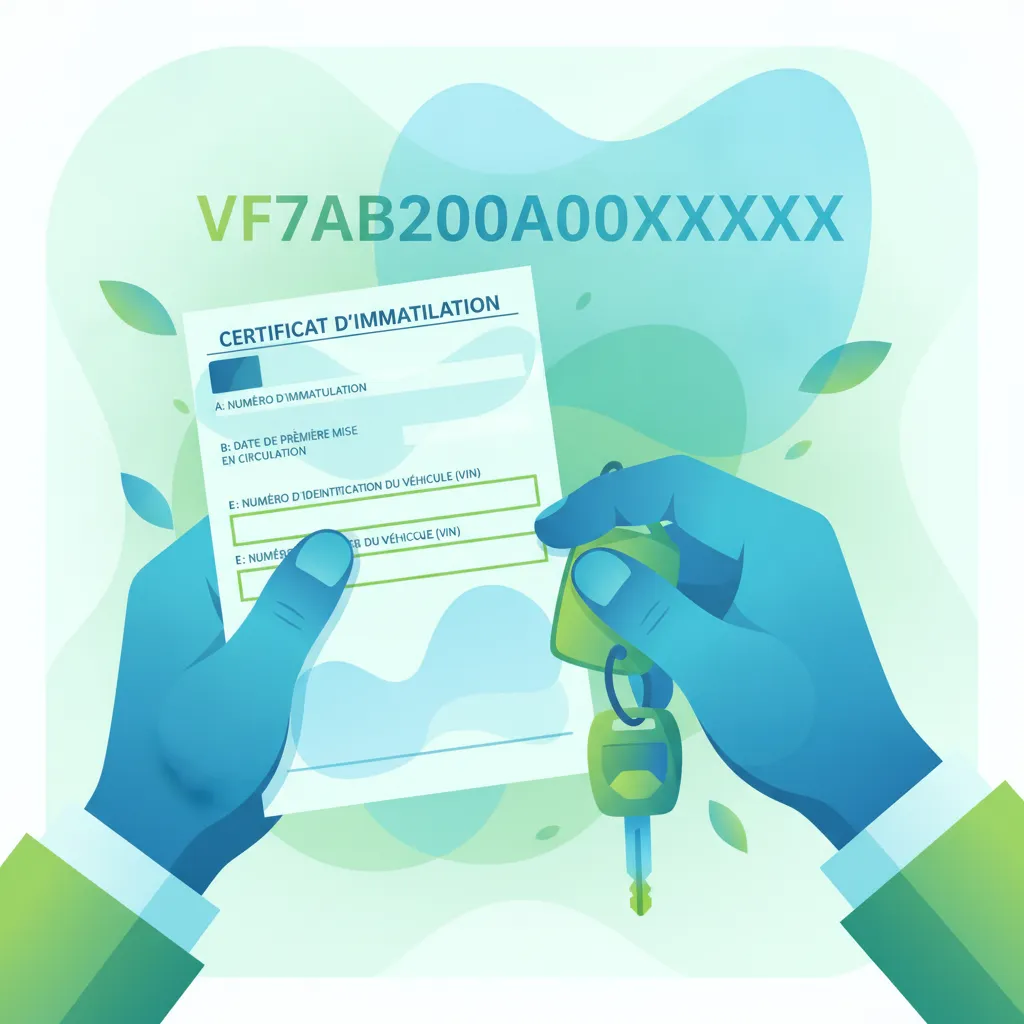
Every driver in France must be able to present official, up-to-date documentation during routine roadside police checks. This lesson details the certificat d'immatriculation (commonly known as the carte grise), valid insurance documents, and the Crit'Air environmental vignette required in low-emission zones. It explains how to complete transfers of ownership and update addresses using the official ANTS digital portal.

This lesson breaks down the exact steps required to obtain your Category B licence in France, including registering for your unique NEPH identification number. It explains the differences between traditional driving school enrollment and registering as a free candidate (candidat libre) for the ETG theory test. Learners will understand the physical, age, and administrative prerequisites necessary to progress from learning to your final practical exam.

Operating a passenger vehicle in France requires strict compliance with dynamic safety laws and maintenance rules. This lesson explains your duty of care toward other road users, mandatory child restraint and seatbelt laws, and strict prohibitions on phone use while driving. You will also learn about the required periodic technical vehicle inspections (controle technique) and third-party insurance mandates.

Traffic violations in France entail direct points deductions, financial fines, and administrative actions managed online. This lesson explains how traffic offenses are classified and how points are deducted from your total allowance of twelve. You will learn the process for paying fines, how to formally contest a citation via official channels, and the rules for attending points-recovery training.
This lesson provides a comprehensive breakdown of the mandatory paperwork required to legally operate a motorcycle in France. It covers the exact details of obtaining the vehicle registration document, known as the carte grise, and securing the mandatory civil liability insurance. Additionally, you will learn how to properly display the green insurance certificate and understand the serious penalties for driving without proper coverage.

In this lesson, drivers will learn about the mandatory documentation required for operating a goods vehicle in France. The content covers the NEPH number needed for licence applications, vehicle registration certificates (carte grise), and proof of insurance. Learners will also explore the technical inspection process, load and customs documentation for cross-border transport, and the importance of maintaining an up-to-date driver logbook.

This lesson outlines the complete administrative process required to obtain an AM licence, from acquiring a NEPH number through the ANTS portal to registering for the theoretical exam. Learners will gain insight into the necessary documentation, the role of France Titres in the licence issuance, and the legal obligations that accompany licence acquisition. Understanding this framework ensures that candidates are prepared for both the procedural and legal aspects of becoming licensed AM drivers in France.

This lesson addresses the procedures and expectations when professional drivers encounter law enforcement or customs officials in France. Topics include the types of checks that may be performed, required documentation, rights and obligations of drivers, and the consequences of non-compliance. Learners will be guided on best practices for interacting with authorities, emphasizing cooperation, transparency, and the importance of maintaining valid and up-to-date documents for both the vehicle and driver.
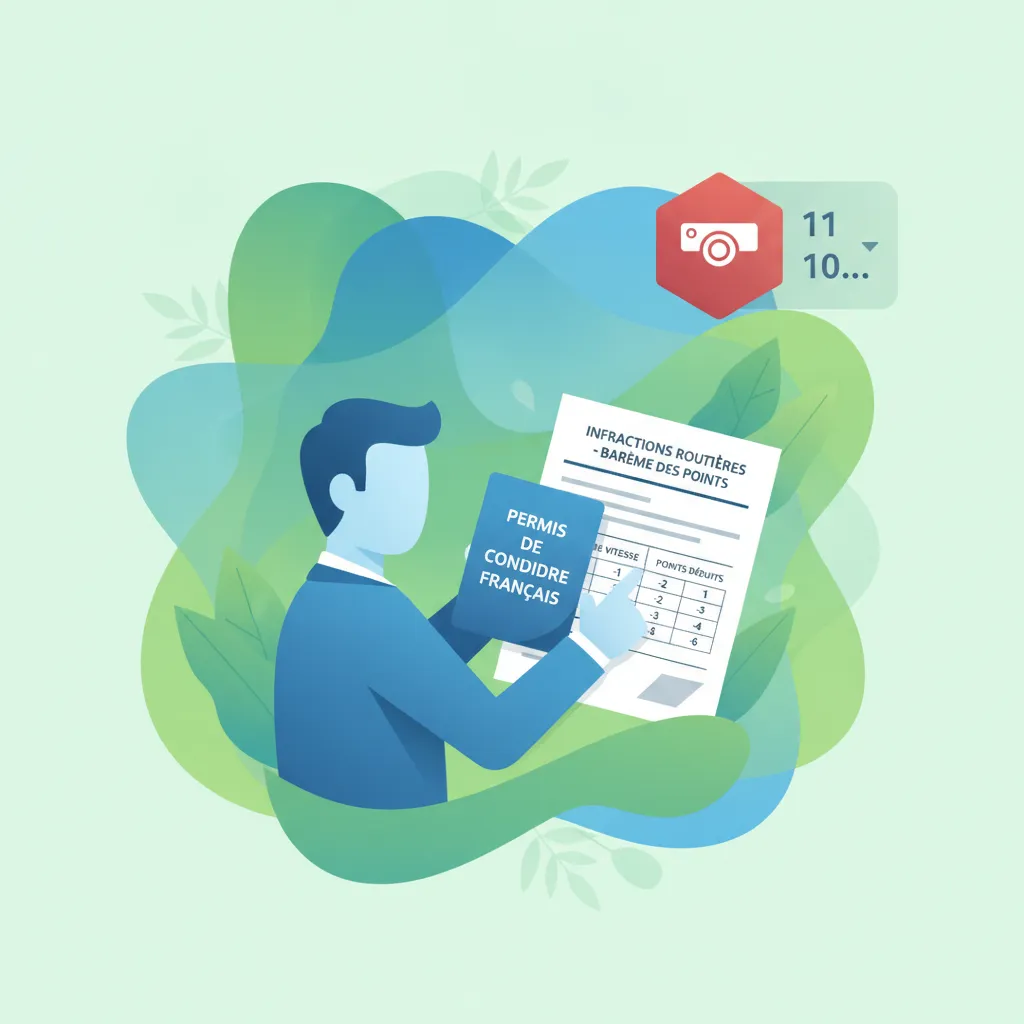
This lesson details the structure of the French points-based licensing system, explaining how points are deducted for specific traffic violations. You will learn about the special probation rules for novice licenses and the process of recovering lost points through safety courses. It also covers the fine structures, warning that ignoring basic safety laws like speed limits can lead to immediate vehicle impoundment and license suspension.
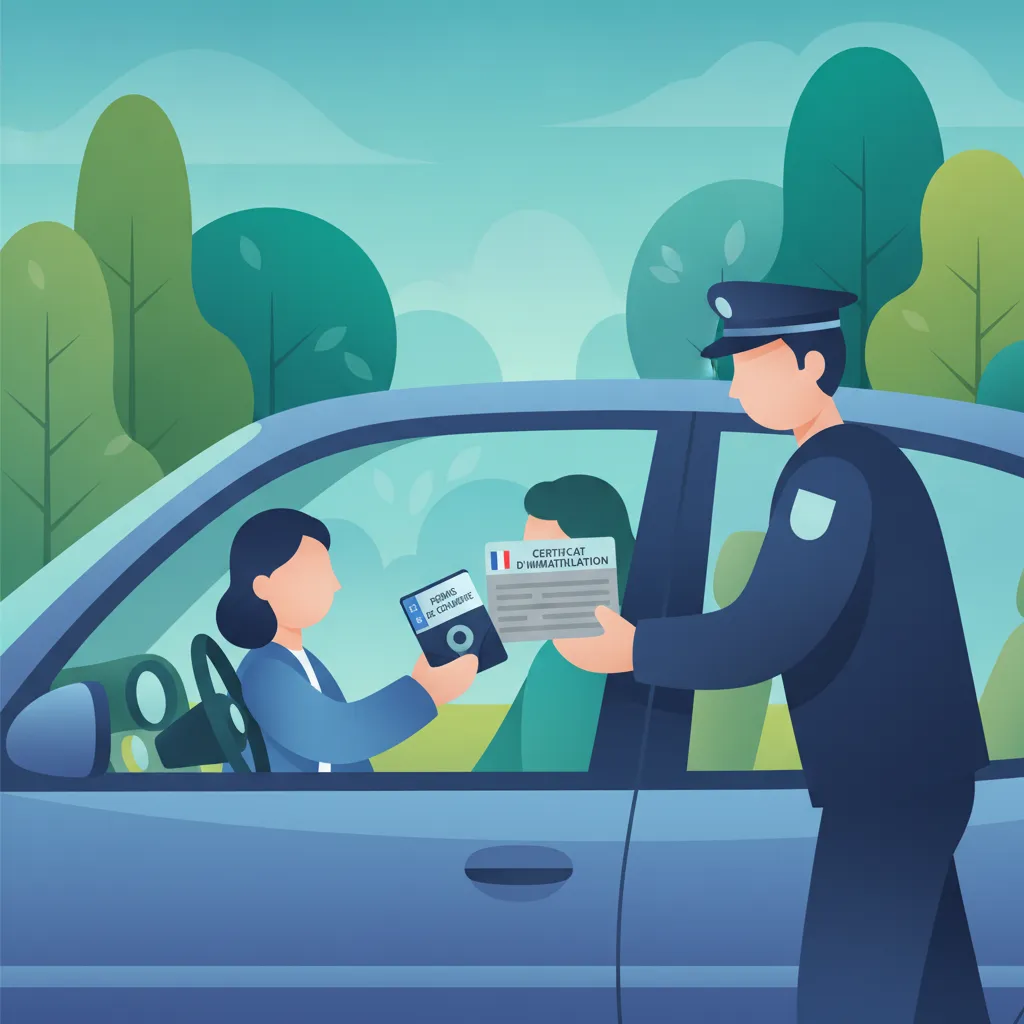
This lesson explains the critical documentation required to be kept onboard every passenger vehicle under French and European transport regulations. Learners will explore requirements for passenger manifests, insurance policies, valid transport permits, and official logbooks like the chronotachygraphe. Crucially, the lesson covers proper procedures for presenting these documents during routine roadside inspections by French law enforcement agencies.
Understand the impact of chemical substances and fatigue on driving performance according to the French Code de la route. This guide covers legal blood alcohol limits, the risks of medication, and the administrative penalties associated with impaired driving for both probationary and standard licence holders in France.
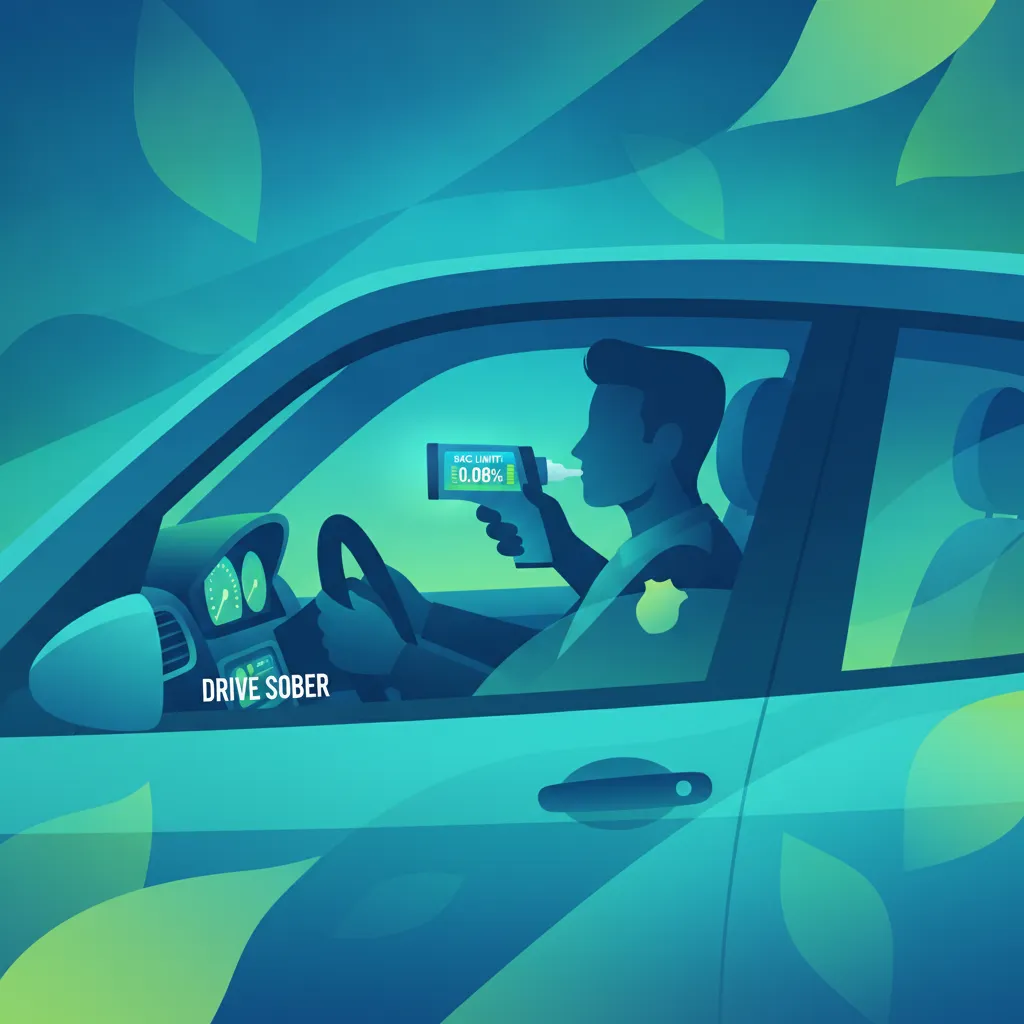
Alcohol consumption severely impairs coordination, visual depth perception, decision-making capabilities, and physical reaction times. This lesson outlines the legal Blood Alcohol Concentration limits in France: 0.5 grams per liter for standard drivers, and 0.2 grams per liter for probationary drivers. You will learn how alcohol levels are measured by police breath tests and the severe penalties for driving over the limit.

Illegal narcotics and certain over-the-counter or prescription medications severely affect a driver's focus and neurological coordination. This lesson details drug screen procedures (saliva tests) and the zero-tolerance policy for driving under the influence of narcotics. You will also learn to read the standardized warning triangles on French pharmaceutical boxes, which classify medications from level one to three.
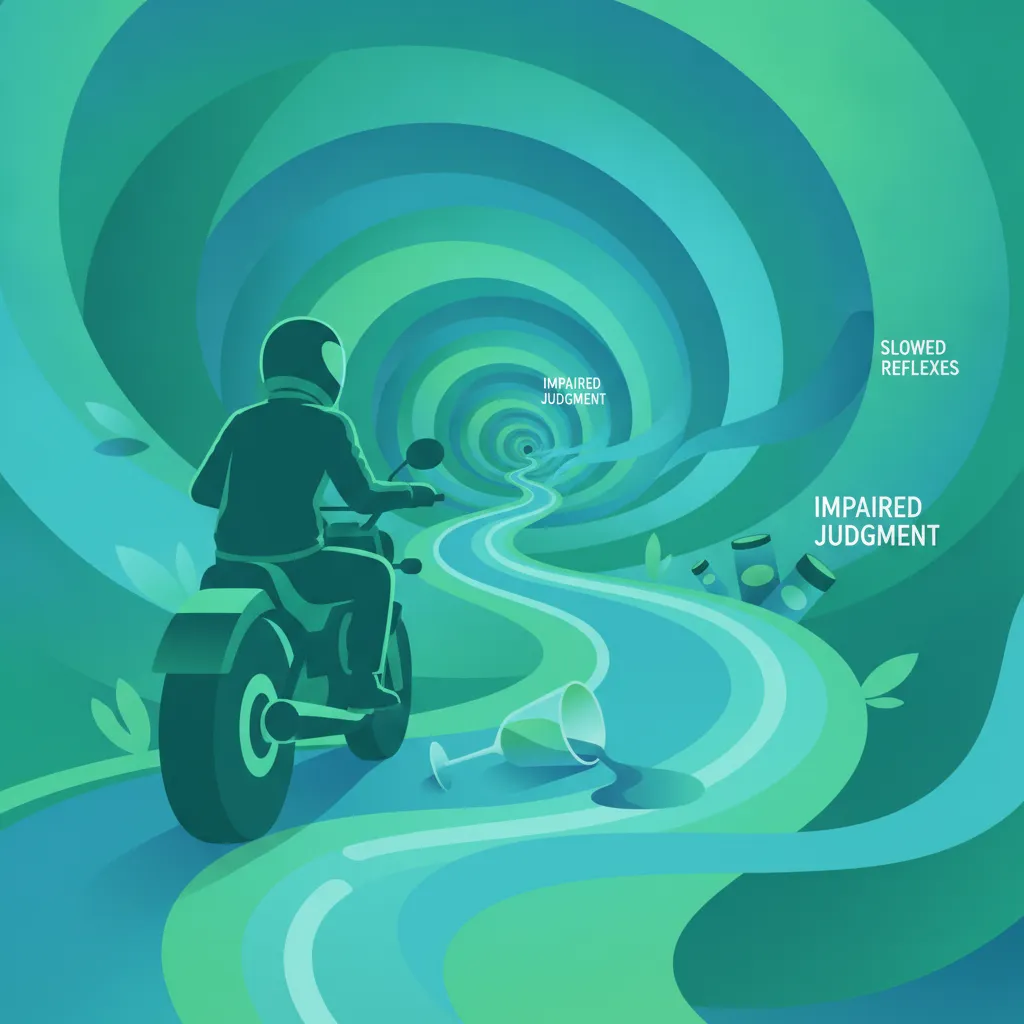
This lesson details the physiological impacts of alcohol and narcotics on key riding skills, including visual tracking and motor coordination. You will study the exact blood alcohol concentration (BAC) limits allowed in France, noting the stricter limits applied to novice riders. Finally, the lesson outlines the severe legal consequences of driving under the influence, ranging from heavy administrative fines to direct license revocation.

Learners will examine the detrimental effects of alcohol and drug consumption on riding performance, including impaired judgment, reduced reaction times, and diminished coordination. The lesson outlines French legal limits for blood alcohol content (alcoolémie), testing procedures, and the severe penalties for violations under the Code de la route. Understanding these risks reinforces the importance of sober riding.

This lesson focuses on identifying the signs of driver fatigue and understanding its impact on reaction times, decision-making, and overall safety. Learners will be introduced to legal limits on continuous driving and required rest periods as stipulated by French regulations. The content also provides practical strategies for managing fatigue, such as scheduling regular breaks, employing alertness techniques, and recognizing when to cease driving.

Fatigue and digital distractions are primary causes of motorway collisions, leading to severe lack of reaction time. This lesson teaches you to recognize early signs of drowsiness, such as heavy eyelids, frequent yawning, and wandering thoughts. It also highlights the strict bans on hand-held phone use or earphone kits, explaining the points penalties and safety risks associated with distracted driving.
This lesson addresses the physiological dangers of driver fatigue, a leading cause of severe commercial vehicle crashes. Drivers will learn to spot early physical warning signs of drowsiness, such as micro-sleeps, heavy eyelids, and slow reaction times. The lesson provides practical wellness tips, sleep hygiene guidelines, and structured rest-break strategies to maintain peak alertness throughout a shift.

This lesson examines the legal consequences, heavy monetary fines, and driver's licence point deductions resulting from traffic and transport safety violations. Learners will study specific infractions such as driving over legal hours, vehicle overloading, and ignoring passenger seatbelt laws. Understanding the strict enforcement systems in France ensures drivers actively avoid risky habits that could end their careers.

Driving at night introduces serious safety challenges, such as reduced visual range, headlight glare, and fatigue. This lesson explains how to correctly transition from high beams to low beams to avoid blinding oncoming traffic. You will learn to look toward the right-side edge line to minimize headlight glare and recognize signs of visual tiredness that necessitate immediate rest breaks.
Find clear answers to common questions learners have about Penalties and Enforcement. Learn how the lesson is structured, which driving theory objectives it supports, and how it fits into the overall learning path of units and curriculum progression in France. These explanations help you understand key concepts, lesson flow, and exam focused study goals.
A new driver starts with a probationary licence containing 6 points. Provided you commit no traffic violations, you gain points over a three-year period until you reach the full total of 12 points.
Yes, you can recover points automatically over time if you do not commit further offences, or you can speed up the process by voluntarily attending an approved road safety awareness course.
If your point balance reaches zero, your driving licence is invalidated. You must stop driving immediately and follow the administrative procedures to re-obtain your licence, which often involves retaking the theory and practical exams.
Yes, traffic violations are classified into five classes of fines (contraventions). The severity of the fine depends on the nature of the offence, such as speeding, using a phone, or parking illegally.
Ready to focus your study? Use the practice search to find exactly the French driving theory questions you need for the Code de la route and permis de conduire ETG. Refine your knowledge on specific topics or challenging rules to boost your confidence and exam readiness.