This lesson focuses on interpreting the triangular, red-bordered warning signs essential for the French Category B driving theory exam. You will learn to identify hazards early, understand the required safety adjustments, and apply these rules to real-world scenarios on French roads.
Lesson content overview
Every driver navigating French roads must be able to anticipate dangers long before they are physically visible. In the French driving theory exam, known as the Examen de l'Éthique Générale (ETG), warning signs (les signaux de danger) represent a foundational topic.
These signs do not merely point out obstacles; they require immediate cognitive processing, safe speed adjustments, and proactive defensive driving maneuvers. This lesson covers the identification, legal implications, and physical principles of French hazard warning signs, helping you secure your Category B licence and drive safely under the Code de la route.
To react appropriately to hazard indications, you must first understand how they are designed and where they are positioned relative to the actual danger. The French system relies on strict geometric and distance standards to give drivers adequate reaction time based on typical road speeds.
Standard permanent warning signs are characterized by an equilateral triangle pointing upwards with a thick red border and a white background. The symbol inside is black and represents the specific type of hazard ahead.
Temporary warning signs—such as those used for roadworks or short-term emergencies—feature a yellow background instead of white. This visual distinction alerts drivers that the configuration of the road has changed temporarily, requiring even higher levels of vigilance.
Unlike regulatory signs (like stop or speed limit signs) which usually apply right where they are posted, warning signs are placed in advance of the hazard. This design prevents panic braking and sudden, dangerous steering corrections. The French Code de la route dictates two standard distances based on the driving environment:
The Major Exception: Two-Way Traffic (A18)
The warning sign for two-way traffic (Circulation dans les deux sens, sign A18) is the only warning sign that is effective immediately at the position of the sign. It does not follow the 50m/150m rule. Be prepared for this classic trick question on the ETG exam!
Sometimes, a warning sign is accompanied by a small square or rectangular sign mounted directly underneath it, known as a panonceau.
Curves are classified by their direction and succession. The French system uses specific symbols to show whether you are approaching a single bend or a series of curves.
When you see these signs, you must adapt your speed before entering the turn. Entering a curve too fast can cause the vehicle to understeer or oversteer, leading to a loss of control. The kinetic energy of your vehicle increases with the square of your speed, meaning doubling your speed quadruples the centrifugal force pulling you outward.
Assess: Identify the direction of the curve from the sign and check your rear-view mirrors.
Brake Early: Reduce your speed on the straight approach before you turn the steering wheel.
Position: Maintain a stable position within your lane, keeping away from the center line on right-hand curves to avoid oncoming traffic.
Accelerate Smoothly: Gently apply throttle only as you begin to exit the curve and the road straightens out.
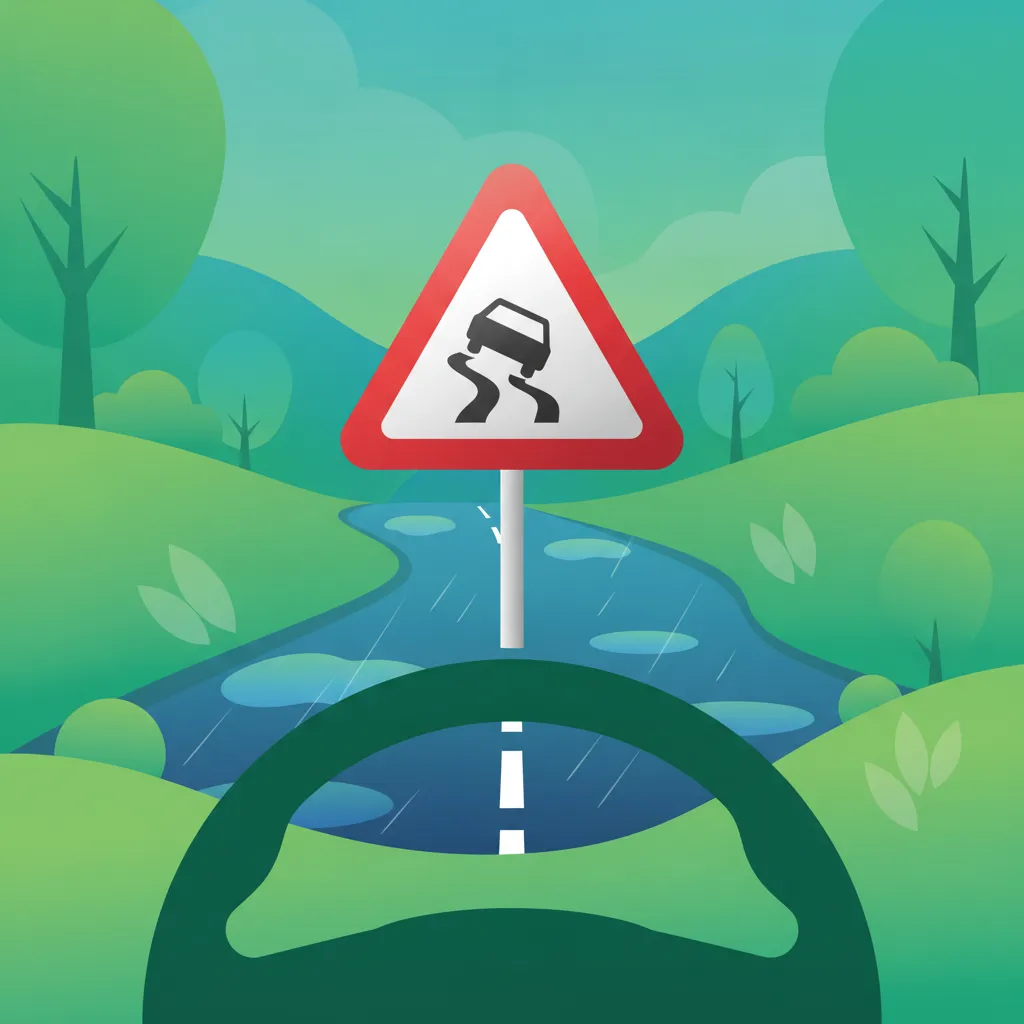
The slippery road warning sign depicts a car losing traction and leaving wavy tyre marks. This sign alerts you that the pavement offers lower friction than usual, which severely compromises tyre grip.
Reduced traction is often caused by rain, mud, gravel, damp leaves, or ice. In freezing temperatures, this sign may be paired with an ice symbol panel (panonceau de verglas).
The Physics of Grip: Under wet conditions, your stopping distance is roughly doubled compared to dry roads. On ice or snow, it can increase by up to ten times. You must increase your following distance and avoid any abrupt steering, acceleration, or braking inputs.
Road narrowing signs warn you that the usable width of the roadway is decreasing. This can happen on both sides symmetrically, or on only one side (left or right).
These signs require you to check your mirrors and prepare to merge. If oncoming traffic is present and the road becomes too narrow for two vehicles to pass safely, you must apply the priority rules of the road. Typically, the driver whose side of the road is narrowing must yield to oncoming traffic, unless priority signs state otherwise.
Animal crossing signs warn of predictable paths where wild or domestic animals frequently cross the road.
Wild animals are most active at dusk, dawn, and during the night. If you see this sign, scan the roadsides and tree lines. If an animal appears on the road, brake firmly but stay in your lane; swerving violently at high speeds can cause a head-on collision or a rollover, which is often more dangerous than a collision with the animal.
The presence of children on or near the road represents a high-risk scenario due to their unpredictable movements and limited hazard perception. The sign for this hazard depicts two stylized children.
Upon encountering this sign, you must proactively reduce your speed. In many municipal jurisdictions across France, school zones are designated as "Zone 30", enforcing a strict 30 km/h speed limit whenever children are likely to be present. Children have a narrower field of vision and difficulty estimating the speed of oncoming vehicles, making your speed reduction critical.
Roadworks signs feature a worker with a shovel on a yellow background. Because construction zones introduce dynamic hazards—such as workers on foot, heavy machinery, loose gravel, and temporary lane markings—you must obey all accompanying yellow regulatory signs.
Temporary yellow speed limit signs override any permanent white and red speed limits. Failing to slow down in a roadworks zone carries high legal penalties and directly endangers the lives of road crews.
Heeding warning signs is not optional; it is a strict legal requirement under French traffic law.
According to Article R412-12 of the French Code de la route, every driver must remain constantly in control of their vehicle and adapt their speed to the conditions of the road, weather, traffic, and potential hazards.
| Hazard Type | Official Code Reference | Driver Legal Mandate |
|---|---|---|
| Dangerous Curves | Article R412-13 | Drivers must reduce speed to maintain lateral stability and stay fully within their lane. |
| Slippery Roads | Article R412-14 | Speed must be lowered immediately. Under wet or icy conditions, standard speed limits are legally reduced (e.g., 110 km/h becomes 100 km/h on motorways, 80 km/h becomes 70 km/h on rural roads). |
| Narrowing Lanes | Article R412-15 | Drivers must yield to traffic already occupying the narrowed segment and facilitate safe merging. |
| Animal Crossings | Article R412-16 | Drivers must maintain a speed that allows them to stop safely within their clear field of vision. |
| School Zones | Article R412-18 | Drivers must yield to pedestrians and obey local 30 km/h speed limits near schools. |
| Roadworks | Article R412-19 | Mandatory compliance with temporary yellow signage and lane markings. |
| Vulnerable Crossings | Article R412-20 | Absolute requirement to yield to pedestrians stepping onto or showing intent to use a crossing. |
Ignoring a warning sign and failing to adjust your speed can lead to a charge of "vitesse excessive eu égard aux circonstances" (excessive speed given the circumstances), even if you are driving below the absolute numerical speed limit of the road. This infraction can result in:
Let's look at real-world applications of how to process and react to warning signs.
Understanding warning signs prepares you for several advanced units in your driving theory curriculum:
Explore all units and lessons included in this driving theory course.
Lesson content overview
Explore all units and lessons included in this driving theory course.
Explore search topics learners often look for when studying Warning Signs: Hazard Indications. These topics reflect common questions about road rules, driving situations, safety guidance, and lesson level theory preparation for learners in France.
Browse additional driving theory lessons that cover connected traffic rules, road signs, and common driving situations related to this topic. Improve your understanding of how different rules interact across everyday traffic scenarios.
Learn to interpret triangular warning signs in various road conditions across France. This guide explains how to identify hazards like sharp curves, slippery surfaces, or roadworks and apply the correct defensive driving techniques to maintain safety according to the Code de la route principles.

Proactive drivers scan the road constantly, detecting potential dangers before they turn into real-world emergency situations. This lesson teaches scanning techniques, the use of rear-view mirrors, and the interpretation of visual cues from other road users. You will learn to anticipate hazards like child play near roads, merging vehicles, and sudden lane changes, helping you drive defensively.

Rural roads account for a high percentage of severe accidents due to narrow widths, winding geometries, and sudden hazards. This lesson teaches strategies for negotiating sharp bends, handling agricultural machinery, and reacting to wildlife warning signs. You will learn to manage your vehicle's lane placement on roads with soft shoulders and understand speed limits on rural networks.
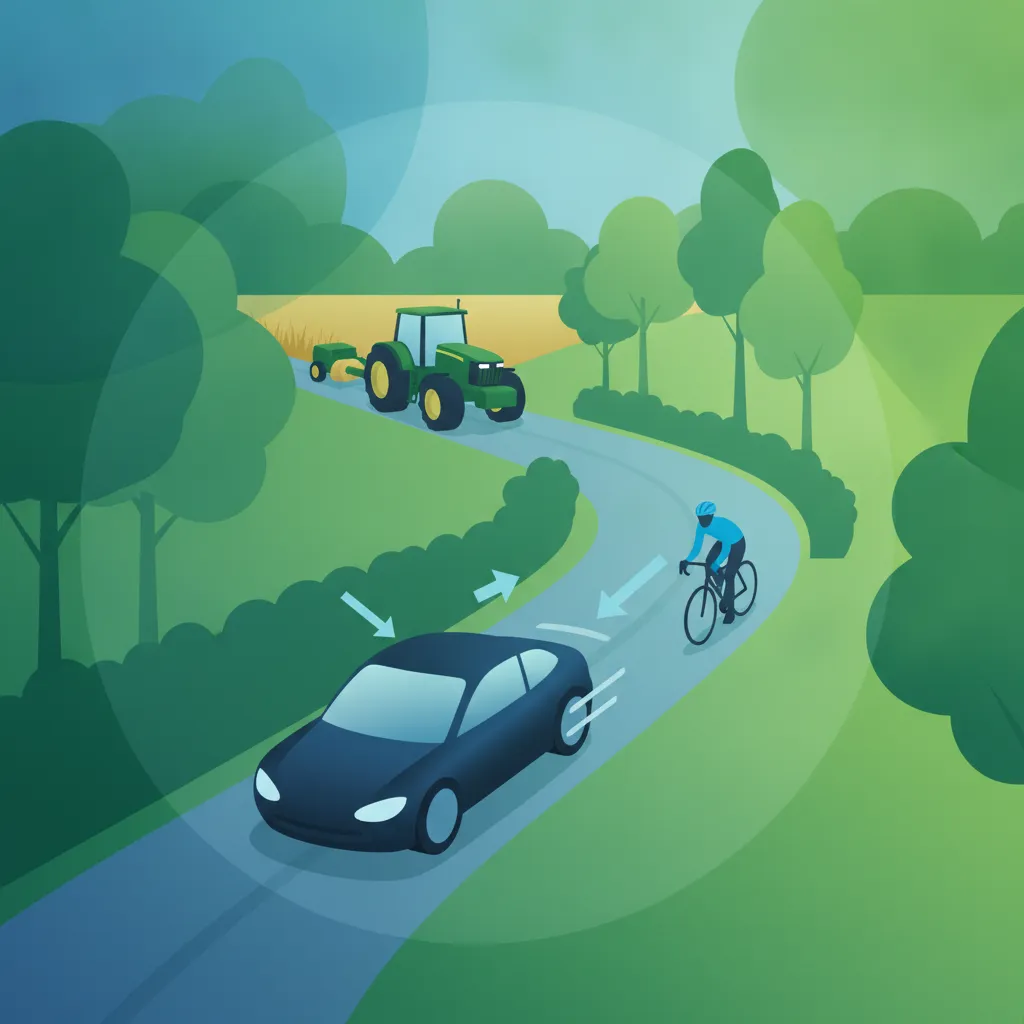
This lesson analyzes the complex driving conditions found on French secondary and rural road networks (routes départementales). Drivers will learn steering and braking techniques to descend steep gradients safely using engine retarding systems without overheating the service brakes. Anticipating agricultural machinery, domestic livestock, unlit intersections, and narrow bridges is also taught in depth.

In this lesson, drivers will explore the specific challenges presented by rural road environments, including narrower lanes, shared space with agricultural vehicles, and frequent wildlife crossings. The content emphasizes adapting speed to road curvature, surface conditions, and visibility while navigating hills and bends. Learners will also learn to interpret rural road signage and understand the importance of maintaining vigilance.

Learners will develop the ability to anticipate potential hazards on the road, enhancing reaction times and defensive riding strategies. The lesson emphasizes constant scanning, early identification of threats such as sudden stops, pedestrian crossings, or unexpected lane changes, and appropriate response measures. By cultivating proactive risk assessment, AM riders can significantly reduce accident likelihood.

Adverse weather reduces tyre traction and limits visibility, dramatically raising the risk of multi-car accidents on highways. This lesson details speed reductions required during rainfall, techniques for avoiding aquaplaning, and demisting windshields for visibility. You will learn how to maintain extra stopping distance on snow-covered roads and the correct headlight adjustments to make during fog.
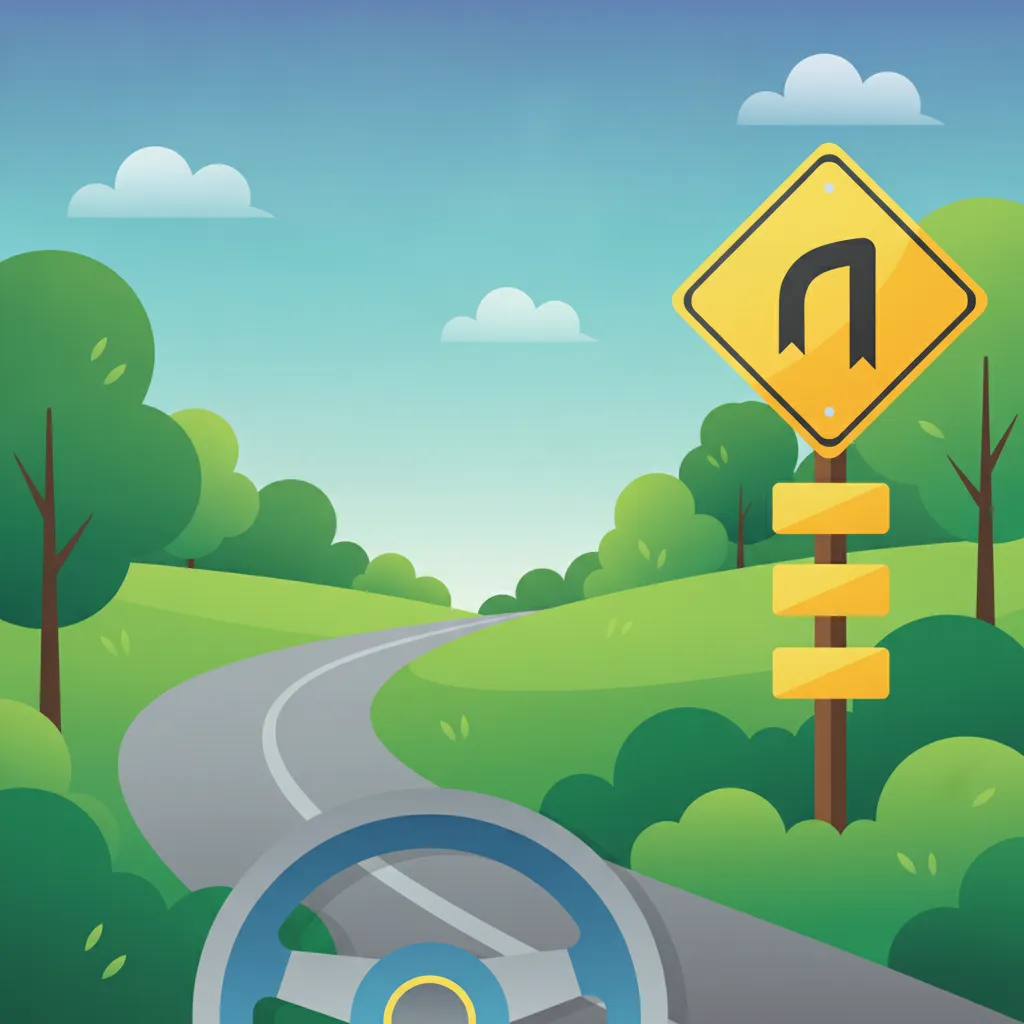
This lesson focuses on French warning signs that alert drivers to potential hazards ahead, such as curves, animal crossings, or slippery surfaces, with particular attention to signs relevant to AM riders. Learners will examine how to interpret these signs, understand the associated risks, and adapt riding behavior accordingly. By mastering warning sign recognition, riders can proactively manage safety risks in diverse road conditions.

French motorways (autoroutes) are fast, controlled-access roads with unique laws regulating lane discipline and emergencies. This lesson teaches standard lane-use: cruising in the right lane and reserving the middle or left lanes exclusively for passing. You will study emergency procedures, the use of orange emergency call boxes, safety barrier rules, and navigating toll booths (peages) safely.

In this lesson, drivers will learn strategies to avoid conflicts with smaller vehicles, such as cars and vans, which may not be as visible in large vehicle blind spots. The content emphasizes maintaining adequate spacing, using proper lane discipline, and being aware of small vehicles' behavior during lane changes and turns. Learners will also be introduced to communication techniques, such as signalling and eye contact.
Active roadworks demand heightened vigilance to protect workers and guide vehicles through modified, narrow traffic lanes. This lesson covers how to recognize yellow horizontal road lines, which supersede standard white lines, and temporary traffic signals. You will learn to obey reduced construction-zone speed limits, negotiate lane shifts, and execute detours (deviations) systematically.
Explore the foundational priority principles for French roads, including the right-hand priority rule and navigation at controlled junctions. Understand how specific warning signs signal upcoming intersections and the correct legal maneuvers required to yield safely while following official French traffic regulations.

Negotiating crossroads that lack active traffic light signals requires a clear reading of signs and painted stop or yield lines. This lesson details the obligations of stopping completely at stop signs and slowing down to yield at 'cedez le passage' markings. You will learn to assess cross-traffic speeds, determine priorities when multiple vehicles arrive, and execute turns safely.
In France, the default rule at any intersection without clear priority signage is priority-to-the-right (priorite a droite). This lesson explains how to identify unsignaled junctions in urban and rural environments and when you must yield to incoming vehicles. You will learn to spot the standard yellow diamond priority signs and triangular warning signs that indicate whether you hold the priority.
Learners will study the fundamental priority rules that dictate right-of-way at intersections, focusing on the 'priorité à droite' principle prevalent in French road design. The lesson explains how to identify priority roads, interpret yield signs, and apply these rules safely when operating an AM vehicle. Understanding priority ensures orderly movement and reduces conflict points in mixed traffic scenarios.

France features a vast network of roundabouts (carrefours a sens giratoire) governed by specific entry and lane-use regulations. This lesson explains that vehicles entering a roundabout must yield to traffic already circulating inside. You will learn how to select the correct lane depending on your exit, use direction indicators properly, and yield to pedestrians and cyclists near roundabout exits.

Controlled intersections use traffic lights and accompanying signs to manage busy crossings systematically. This lesson covers how to safely proceed on a green light, negotiate left turns when yielding to oncoming traffic, and obey flashing amber lights. You will also learn the hierarchy of traffic control, where police officer gestures overrule both traffic lights and priority signs.
This lesson provides a comprehensive breakdown of priority rules under French law, with special focus on the default rule of priorité à droite. You will learn to recognize when this rule applies, even in the absence of explicit signage, and how to verify that entering vehicles see you. It also explains how to read priority road indicators, stop signs, and yield signs, helping you manage right-of-way safely and confidently.
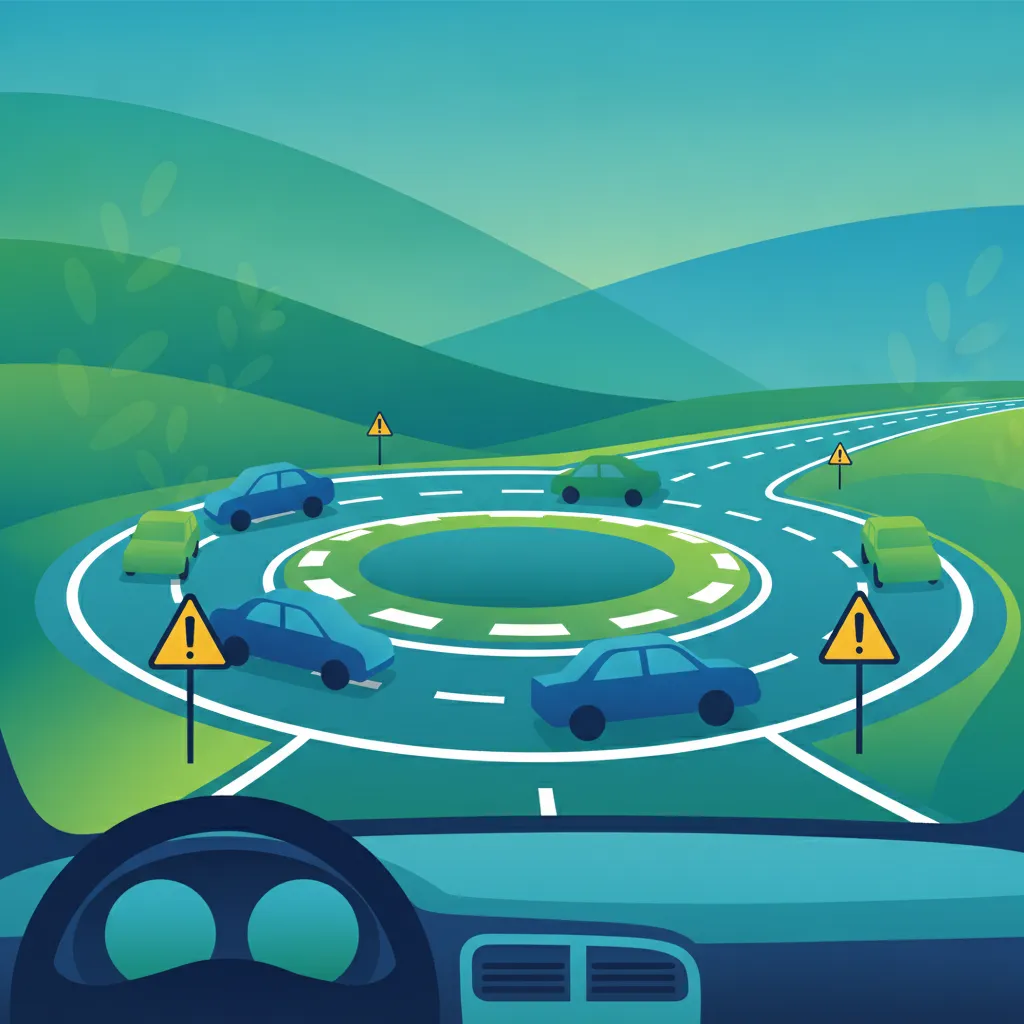
This lesson focuses on the skills required to safely enter, navigate, and exit roundabouts, a common feature in French urban environments. Learners will understand the need to yield to circulating traffic, select the appropriate lane upon entry, and signal intentions when exiting. By mastering these techniques, AM riders can safely integrate into roundabout traffic flow and reduce conflicts with other road users.
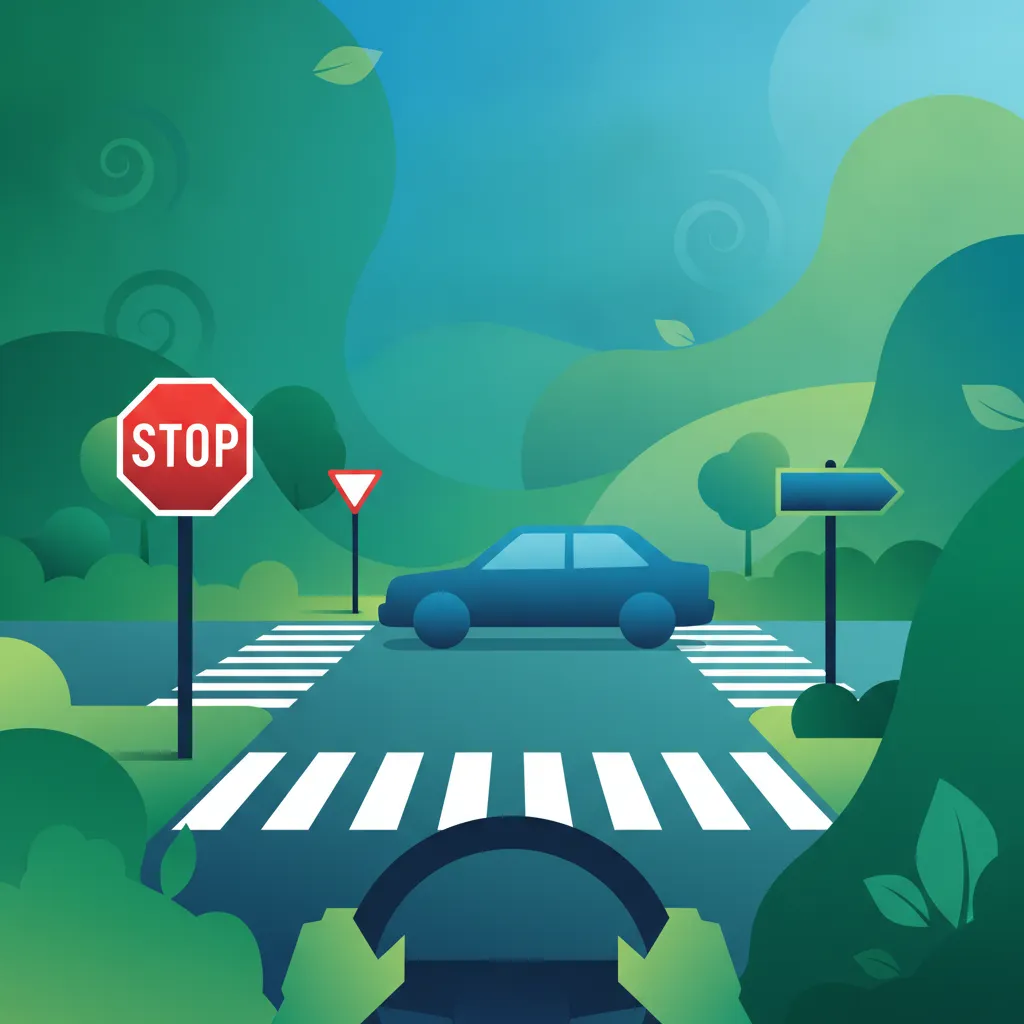
Learners will learn the critical steps for safely approaching and traversing intersections, emphasizing speed reduction, priority assessment, and adherence to right-of-way rules, including priorité à droite. The lesson covers recognizing stop lines, interpreting road markings, and maintaining a safe distance from other vehicles. By mastering these practices, AM riders can confidently navigate intersections while minimizing collision risk.
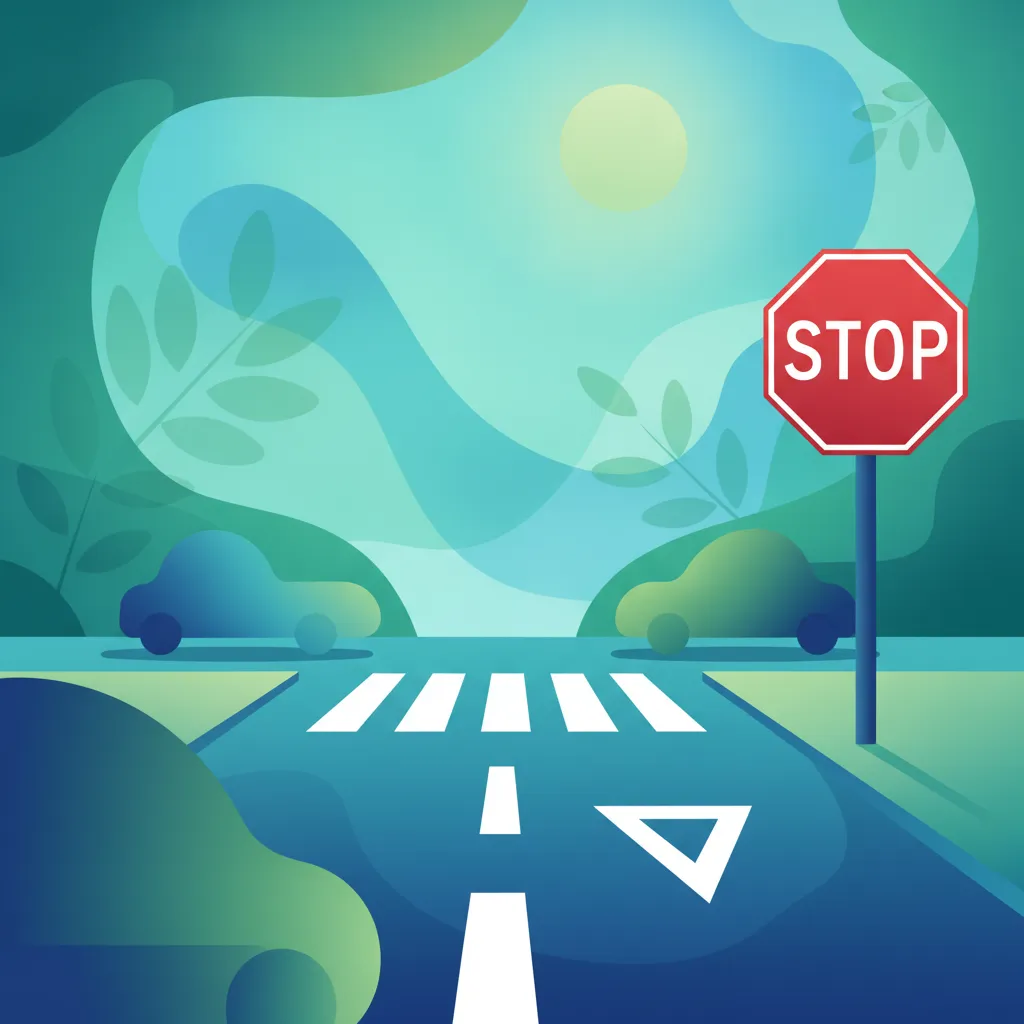
Some crossroads feature complex layouts or specific signs that modify standard priority rules, such as schematic diagrams (panonceaux schematiques). This lesson teaches you how to read these auxiliary signs, which depict the thick line of the priority road and thin lines of secondary roads. You will learn how to maintain priority when the main road curves and how to navigate non-standard intersection layouts.

In France, pedestrians have clear legal priority when stepping onto or indicating an intent to use a crossing (passage pieton). This lesson details standard zebra crossings, refuge islands, and pedestrian crossings managed by synchronized traffic light systems. You will learn to scan crossings ahead, anticipate pedestrian movements, and safely come to a stop whenever a pedestrian attempts to cross.
Find clear answers to common questions learners have about Warning Signs: Hazard Indications. Learn how the lesson is structured, which driving theory objectives it supports, and how it fits into the overall learning path of units and curriculum progression in France. These explanations help you understand key concepts, lesson flow, and exam focused study goals.
In built-up areas, warning signs are usually placed approximately 50 meters before the hazard. Outside of urban areas, they are typically placed 150 meters in advance to allow drivers sufficient time to react safely.
A white triangle with a red border and a symbol inside is a warning sign. It informs the driver of an upcoming hazard or temporary danger, requiring increased vigilance and often a reduction in speed.
No, warning signs do not mandate a full stop unless accompanied by other signals or specific traffic conditions. They primarily serve to alert you to potential danger so you can adjust your driving style, speed, or attention level accordingly.
Yes, temporary warning signs for roadworks are often characterized by a yellow background instead of the standard white background. These signals indicate active construction or maintenance and require extreme caution.
Ready to focus your study? Use the practice search to find exactly the French driving theory questions you need for the Code de la route and permis de conduire ETG. Refine your knowledge on specific topics or challenging rules to boost your confidence and exam readiness.