This lesson provides a foundational overview of the passenger vehicle licence categories required under the French Code de la route. You will learn the precise technical specifications for D1, D, D1E, and DE vehicles to ensure you fully understand the scope of your professional driving credentials before moving into operational regulations.

Lesson content overview
Operating passenger transport vehicles on the French road network comes with immense responsibility. To ensure public safety, protect passengers, and maintain order on public roads, French and European Union regulations strictly define the types of passenger vehicles a driver may operate. These limits are categorized under four primary licensing classes: Category D1, Category D, Category D1E, and Category DE.
This comprehensive guide covers the technical boundaries, regulatory frameworks, physical dynamics, and legal obligations that govern these transport licenses (permis de conduire de catégorie D). Understanding these boundaries is critical for any professional driver seeking to avoid severe legal penalties and ensure the safe transit of passengers.
The licensing framework for passenger transport is built on a simple, risk-mitigating logic: as a vehicle gets larger, heavier, and carries more passengers, the safety risks scale exponentially. A vehicle with greater mass carries significantly more kinetic energy, requires a longer stopping distance, and possesses larger blind spots (angles morts). Consequently, the French Code de la Route sets strict licensing thresholds based on three primary technical metrics:
By establishing precise legal definitions for these metrics, the licensing system ensures that professional drivers undergo training and medical evaluations tailored specifically to the physical demands of the vehicle class they operate.
To navigate the legal landscape of passenger transport, drivers must master the physical and administrative classifications of their vehicles. Operating a vehicle that exceeds even one of your license's technical limitations constitutes the serious offense of driving without a valid license.
Passenger capacity is defined as the maximum number of passenger seats legally permitted in the vehicle, as determined by the manufacturer and certified by the competent transport authority.
The official, certified number of passenger seats installed in a vehicle, excluding the driver's seat. This is recorded on the vehicle registration certificate (carte grise) and must never be exceeded.
A common misunderstanding among novice drivers is assuming that passenger capacity is flexible depending on the actual number of passengers on board. For example, driving an empty 19-seat bus with only 10 passengers on board still requires a Category D license. The physical capacity and construction of the vehicle—not the occupancy at any given moment—dictate the licensing requirement.
It is critical to distinguish between Maximum Unladen Mass (MUM) (masse à vide) and Gross Vehicle Weight Rating (GVWR) (Masse Maximale Autorisée or PTAC - Poids Total Autorisé en Charge).
For Category D1, the licensing threshold is strictly defined by the MUM, which must not exceed 5,000 kg. If a minibus has an unladen mass of 5,100 kg, it automatically falls into Category D, regardless of its length or seat count.
Category D1 is designed for light passenger transport operations, such as local community shuttles, school transport runs (ramassage scolaire), small group excursions, and private hotel shuttles.
Category D1 Technical Limits at a Glance:
Under Article R312-3 of the French Code de la Route, a Category D1 license allows you to drive a passenger vehicle constructed to carry no more than 16 passengers. The vehicle's physical profile must remain compact, meaning its total length cannot exceed 8 metres, and its unladen mass must stay at or below 5,000 kg.
These strict limits keep the vehicle's driving characteristics relatively close to a heavy light-commercial vehicle (such as a large van). Drivers of D1 vehicles must still be highly conscious of their vehicle's height, wider turning radius, and lateral wind sensitivity, but they are spared the extreme low-speed maneuverability challenges of articulated or long-wheelbase coaches.
If a Category D1 operator needs to tow a trailer (for instance, to carry luggage for a tour group or sports equipment for a school team), they must obtain the D1E extension.
The D1E category permits the coupling of a trailer to a D1 vehicle under two strict conditions:
If the combined weight or the trailer's individual weight exceeds these parameters, the driver must hold a full Category DE license.
Category D is the unrestricted heavy passenger transport license. It is the gold standard for drivers operating regional transit buses, urban municipal buses, and double-decker long-distance touring coaches.
Category D Safety Rule: While Category D has no upper limit on the number of passengers or vehicle mass, the vehicle must be operated in absolute compliance with its manufacturer-certified passenger capacity as specified on the vehicle registration document.
A standard Category D license authorizes the operation of any passenger vehicle designed to carry more than 16 passengers. There is no upper legal limit on passenger capacity under this license, though physical capacity is governed by safety standards, vehicle dimensions, and local municipal transit approvals.
Vehicles in this category typically exceed 8 metres in length (often ranging from 12 to 15 metres for single-deck coaches) and have an unladen mass well in excess of 5,000 kg. Driving a full-sized Category D vehicle requires highly advanced skills in managing sweeping turns, negotiating tight urban roundabouts, and mitigating massive blind spots that can easily hide pedestrians, cyclists, and small passenger cars.
To couple a heavy trailer to a Category D vehicle, drivers must possess the Category DE license.
Towing a heavy trailer or operating an articulated coach introduces complex vehicle dynamics, such as trailer off-tracking (where the trailer cuts the corner tighter than the towing vehicle) and an increased risk of jackknifing under heavy braking or slippery road conditions.
The French transport licensing system is governed by a series of strict legal codes. Compliance with these regulations is monitored closely by police and transport inspectors (controleurs terrestres).
The following regulations from the Code de la Route dictate the daily operating boundaries of passenger transport:
Operating a passenger-carrying vehicle is fundamentally different from driving a standard passenger car. The physical laws governing heavy vehicles dictate how a driver must accelerate, corner, brake, and plan their path.
The physical formula for kinetic energy is:
Where is the mass of the vehicle and is its velocity. Because kinetic energy scales linearly with mass but quadratically with speed, a fully loaded Category D coach weighing 18,000 kg carries immense destructive force.
When braking, this kinetic energy must be converted into thermal energy by the vehicle's braking systems. Consequently, stopping distances for Category D and DE vehicles are significantly longer than those of passenger cars. If a trailer is attached (D1E/DE), the momentum of the trailer pushes the towing vehicle forward, demanding extreme caution, active use of retarders (ralentisseurs), and massive following distances, especially in wet or icy conditions.
Passenger vehicles have a high center of gravity, particularly double-decker coaches and heavily loaded minibuses.
To contextualize how these licensing categories apply in daily operations, let us examine real-world driving scenarios and the legal boundaries surrounding them.
A school district hires a driver to transport 14 children and 2 adult supervisors (a total of 16 passengers) to a local museum using an 8-metre minibus with an unladen mass of 4,800 kg.
A tour operator uses a 7.5-metre minibus (MUM of 4,500 kg) carrying 12 passengers. To accommodate heavy luggage, the operator couples a large trailer with an unladen mass of 900 kg.
Violations of passenger transport licensing categories carry severe consequences under French law. Because professional drivers are entrusted with human lives, the courts and enforcement agencies hold operators to an exceptionally high standard of conduct.
Carrying more passengers than the vehicle is certified to transport violates Regulation § R412-3.
Towing a heavy trailer (e.g., MUM > 750 kg) without a DE or D1E license is a common operational error.
Some operators install extra seats in a D1 minibus to accommodate larger groups without purchasing a Category D vehicle.
To ensure complete legal compliance and safe operations, memorize these foundational licensing parameters:
Explore all units and lessons included in this driving theory course.
Lesson content overview
Explore all units and lessons included in this driving theory course.
Explore search topics learners often look for when studying Licence Categories D1, D, D1E, DE Overview. These topics reflect common questions about road rules, driving situations, safety guidance, and lesson level theory preparation for learners in France.
Browse additional driving theory lessons that cover connected traffic rules, road signs, and common driving situations related to this topic. Improve your understanding of how different rules interact across everyday traffic scenarios.
Understand the physical forces acting on large coaches and buses, including braking distances, mass distribution, and rollover risks. Learn how professional driver techniques and vehicle stability systems maintain passenger safety under various road conditions and transit scenarios.

This lesson emphasizes the critical importance of maintaining a safe following distance when carrying dozens of passengers. Learners will study how vehicle weight and passenger load dynamically extend braking and total stopping distances compared to standard passenger cars. The lesson provides concrete spacing rules, such as adjusted safety gaps for highway driving and increased distances on slippery roads.

Carrying heavy loads or pulling trailers significantly alters a passenger vehicle's braking distances and stability characteristics. This lesson covers how to read weight limits (like gross vehicle weight ratings), distribute cargo weight evenly, and secure items inside the boot or on roof racks. You will learn to use specialized cargo straps and understand the risks of overloading your suspension and tyres.

This lesson covers the secure loading, distribution, and stowage of passenger luggage inside designated holding areas and overhead storage bins. Candidates will analyze how physical load distribution directly influences vehicle stability, braking distances, and center of gravity during maneuvers. By learning to secure loose cargo effectively, drivers prevent unexpected load shifts that could endanger passengers or degrade vehicle control.

This lesson focuses on passenger comfort and safety by teaching drivers how to control load transfers during acceleration and gear shifts. Smooth throttle control and progressive gear engagement reduce sudden cabin shifts, preventing standing passengers from falling. Candidates will also explore eco-driving techniques that reduce fuel consumption and wear on mechanical parts without compromising route timetables.

This lesson details the emergency protocols for handling mechanical breakdowns or tire blowouts on public highways and motorways. Drivers will learn how to park the vehicle in the safest possible location, activate hazard warning lights, and deploy the reflective warning triangle. It teaches precise commands and steps for evacuating passengers quickly through safety exits, positioning them behind protective guardrails.
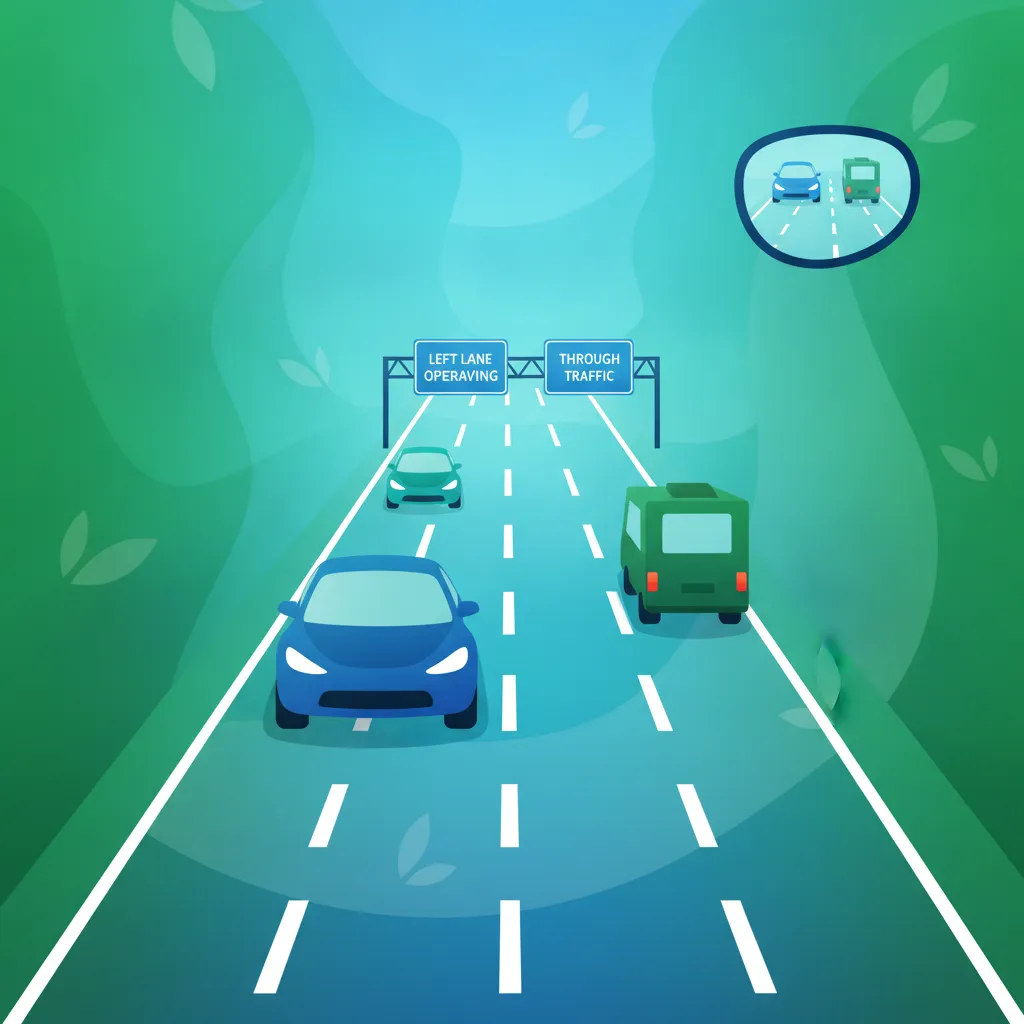
This lesson covers the rules of driving passenger vehicles on high-speed French motorways (autoroutes). Learners will study entry-ramp merging protocols, lane restrictions for vehicles over 3.5 tonnes, and motorway-specific speed limits. The lesson also highlights the correct use of toll booths (péages), emergency hard-shoulder safety procedures, and accessing dedicated coach rest areas.
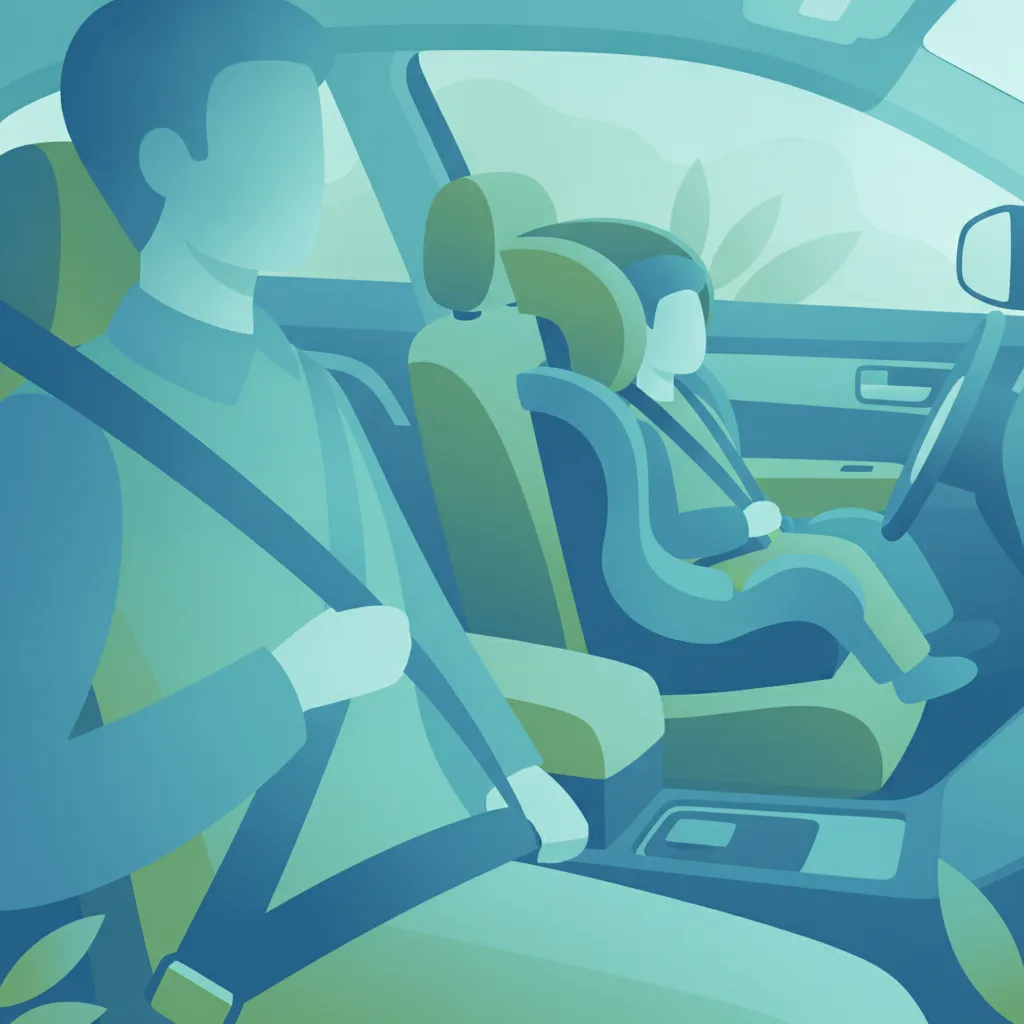
The driver of a vehicle is legally responsible for ensuring that all passengers, particularly minors, are safely restrained. This lesson explains seatbelt enforcement laws and the mandatory child safety seat requirements based on height, weight, and age. You will learn to use the standardized ISOFIX system and understand when and how to safely deactivate passenger airbags for rear-facing infant seats.
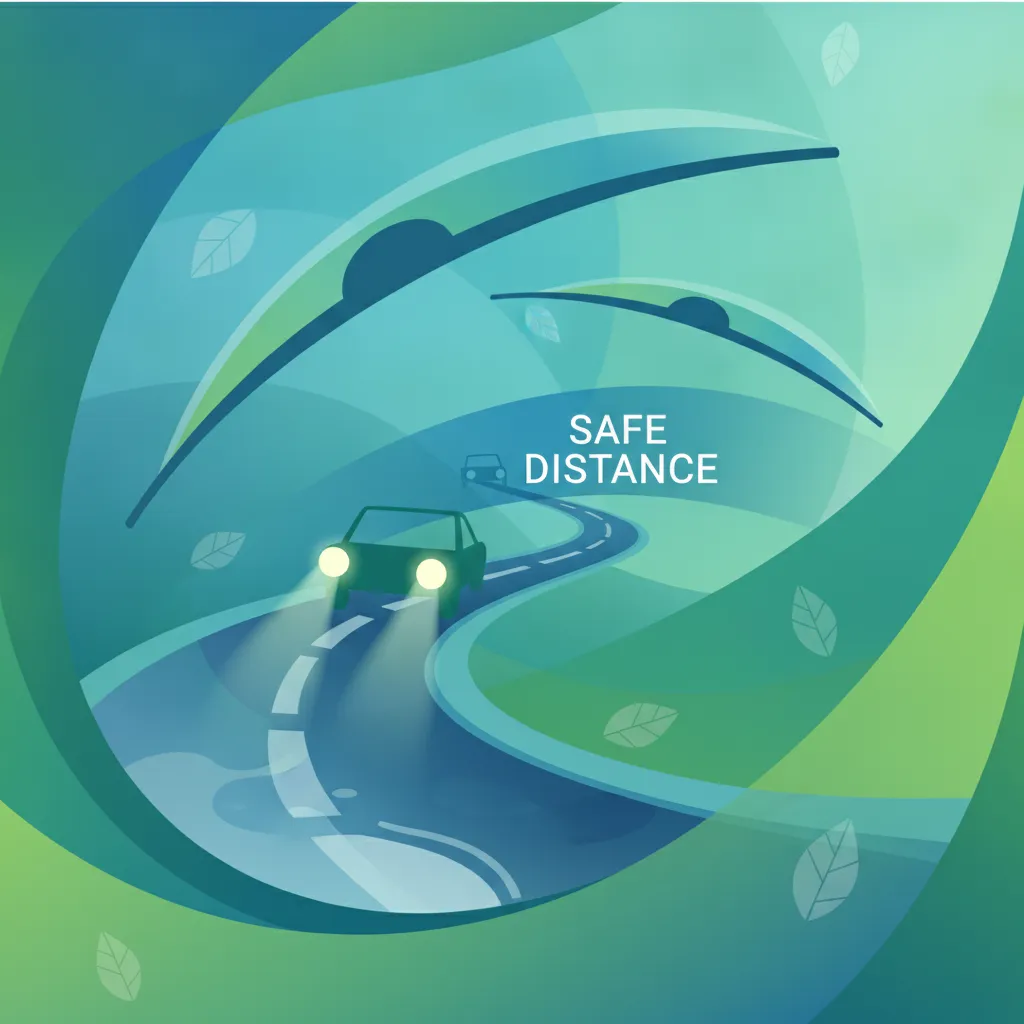
This lesson covers the mechanical and physical adaptations required to drive a passenger coach in rain, heavy fog, snow, and crosswinds. Drivers will learn to recognize signs of aquaplaning and understand the dramatic traction loss associated with wet or icy roads. It also details French winter equipment regulations (Loi Montagne) requiring snow tires or chains in designated mountainous regions.

This lesson details the specific legal speed limits for passenger transport vehicles on motorways, rural trunk roads, and urban streets under French law. Drivers will learn how speed limits shift depending on overall vehicle weight, towing arrangements, and poor weather conditions like heavy rain. Developing a proactive approach to speed management helps maintain stable vehicle control and ensures full regulatory compliance.
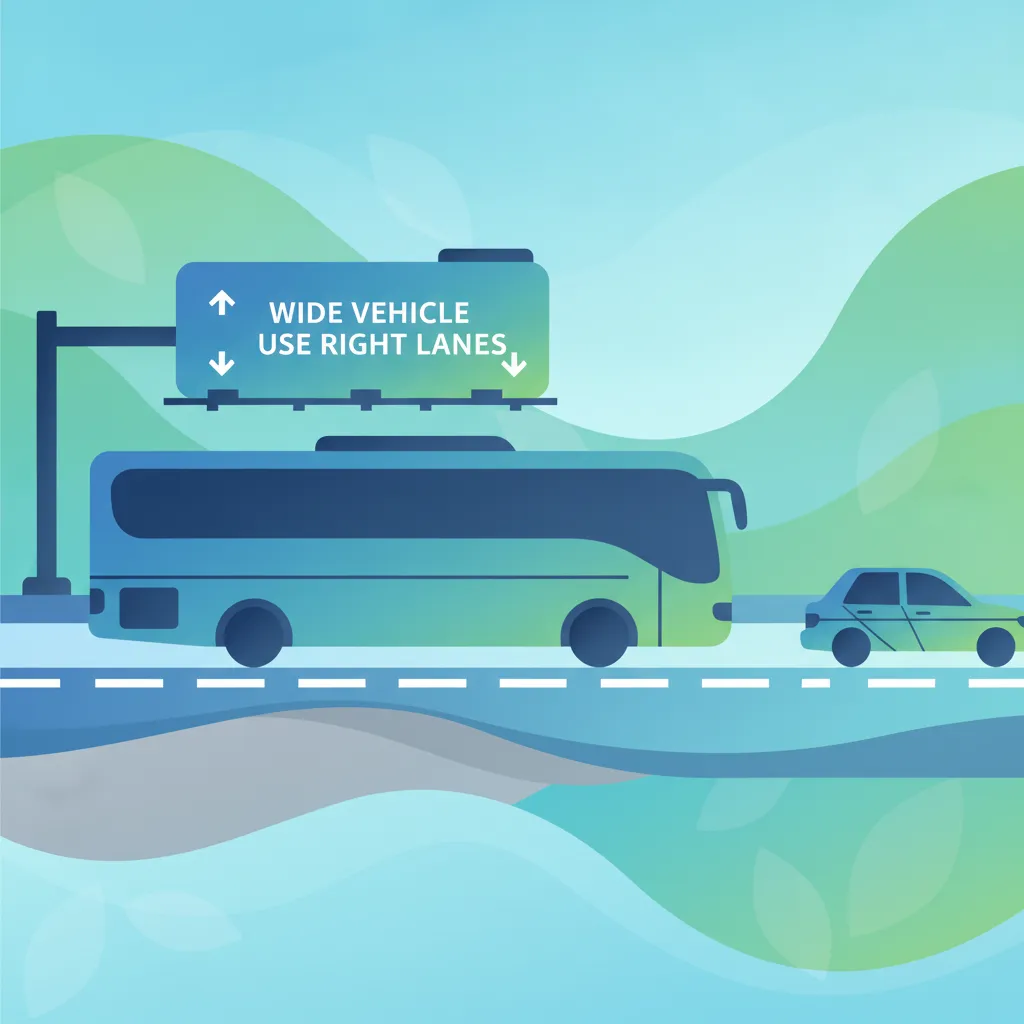
This lesson details the rules of lane discipline for operating wider and longer passenger transport vehicles on highway and city networks. Learners will explore proper lane positioning to prevent encroachment on adjacent lanes or sidewalks. It also covers the step-by-step visual and signaling sequence required to perform safe lane changes, avoiding sudden movements that could startle other drivers.
Explore the professional responsibilities and legal frameworks governing bus and coach operations in France. This guide details the importance of documentation, passenger capacity enforcement, and adherence to specific transport regulations to ensure full compliance with the French Code de la route.

This lesson examines the rigorous legal duties imposed on passenger vehicle operators by the French Code de la route and professional transport guidelines. Drivers must balance tight scheduling demands with the absolute priority of passenger safety and general public security. By studying real-world legal scenarios, candidates will learn how to maintain professional conduct, resolve on-board issues, and protect public trust during transit.

This lesson highlights the critical ethical framework governing public and private passenger transport services within the French Republic. Drivers are trained to provide equitable, non-discriminatory assistance to all travelers while fully respecting passenger privacy and dignity. Understanding these moral obligations helps prevent conflicts, enhances service accessibility, and reinforces the high standard of social responsibility expected of professional coach operators.

This lesson outlines the core operational roles that drivers must perform, from ensuring safe passenger boarding to maintaining precise vehicle control throughout the journey. It details the active risk assessments required to identify hazards on the road and handle unexpected delays safely. Additionally, candidates will understand the specific procedures for reporting accidents and communicating effectively with both passengers and operations hubs.

In this lesson, learners examine the heightened duty of care that applies to professional goods vehicle drivers, focusing on how legal obligations extend beyond basic road rules to include ethical considerations and public safety responsibilities. The content outlines expectations for compliance with French traffic laws, the importance of maintaining a professional image through courteous conduct, and the implications of negligent behavior. By integrating ethical decision-making with legal compliance, drivers are prepared to uphold the standards expected of professional operators.
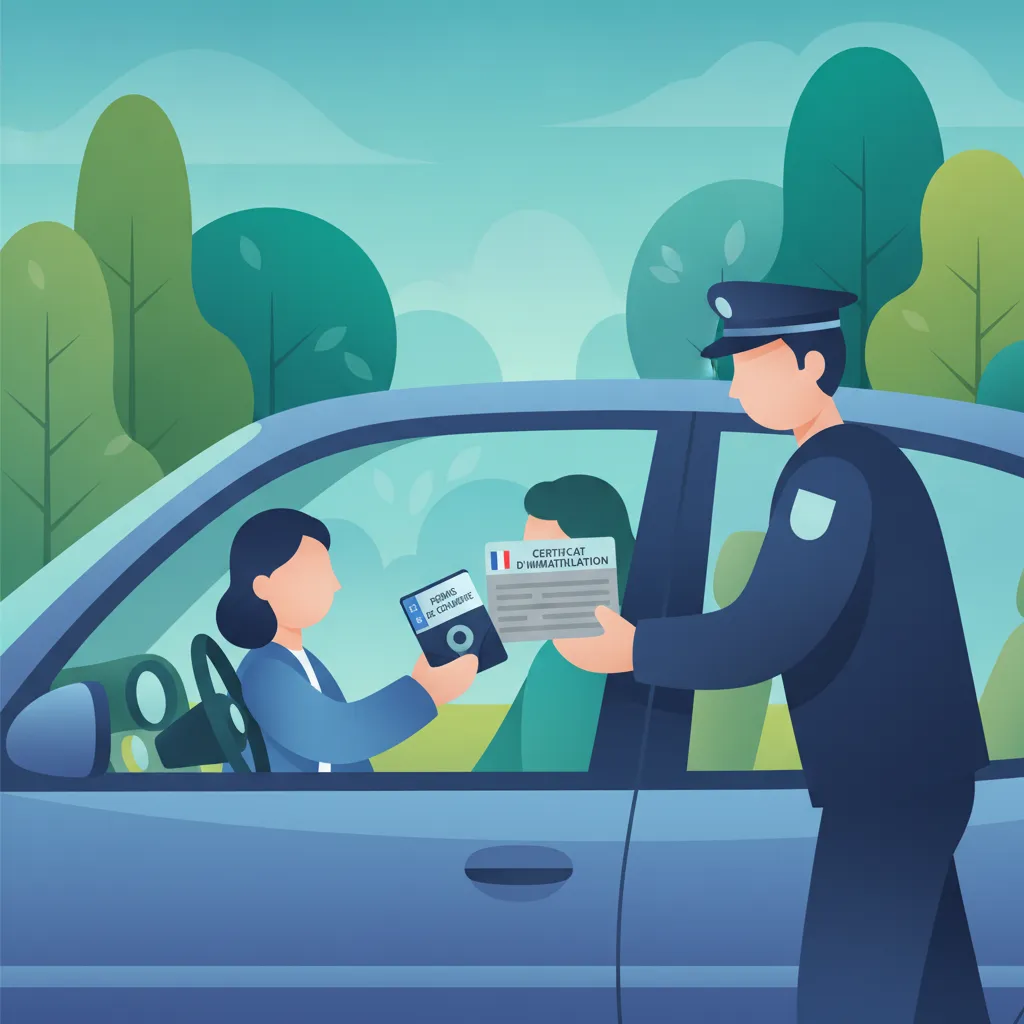
This lesson explains the critical documentation required to be kept onboard every passenger vehicle under French and European transport regulations. Learners will explore requirements for passenger manifests, insurance policies, valid transport permits, and official logbooks like the chronotachygraphe. Crucially, the lesson covers proper procedures for presenting these documents during routine roadside inspections by French law enforcement agencies.

This lesson examines the legal consequences, heavy monetary fines, and driver's licence point deductions resulting from traffic and transport safety violations. Learners will study specific infractions such as driving over legal hours, vehicle overloading, and ignoring passenger seatbelt laws. Understanding the strict enforcement systems in France ensures drivers actively avoid risky habits that could end their careers.

Operating a passenger vehicle in France requires strict compliance with dynamic safety laws and maintenance rules. This lesson explains your duty of care toward other road users, mandatory child restraint and seatbelt laws, and strict prohibitions on phone use while driving. You will also learn about the required periodic technical vehicle inspections (controle technique) and third-party insurance mandates.
This lesson delves into the dual aspects of civil and criminal liability that professional goods vehicle drivers face in the event of traffic violations or accidents. Learners will explore the range of penalties, including fines, licence suspension, vehicle seizure, and potential imprisonment for severe offenses under French law. The discussion also covers the impact of negligence on insurance coverage, the accrual of penalty points, and the broader consequences for both the driver and their employer.

In this lesson, drivers will explore the expectations for professional behavior and ethical decision-making while operating a goods vehicle. The content emphasizes the importance of a safety-first mindset, respectful interaction with other road users, and adherence to a code of conduct. Learners will also consider the environmental impact of their operations, strategies for effective communication, and the role of continuous professional development.

This lesson provides step-by-step instructions for utilizing vehicle accessibility systems, including wheelchair ramps, lifts, and specialized tie-down restraints. Drivers will study French regulatory frameworks mandating equal access to public transport services for all individuals. Crucially, the lesson covers respectful, safe, and efficient communication methods for guiding passengers with sensory, physical, or cognitive impairments.
Find clear answers to common questions learners have about Licence Categories D1, D, D1E, DE Overview. Learn how the lesson is structured, which driving theory objectives it supports, and how it fits into the overall learning path of units and curriculum progression in France. These explanations help you understand key concepts, lesson flow, and exam focused study goals.
Category D1 is for vehicles designed to carry up to 16 passengers, excluding the driver, with a length not exceeding 8 meters. Category D allows for driving vehicles designed for more than 8 passengers, with no limit on length or capacity.
The 'E' indicates that the licence holder is authorized to drive the respective vehicle (D1 or D) while towing a trailer that exceeds the standard weight limits allowed under the base category, provided the combination stays within legal limits.
While the D1/D categories are standardized across the EU, specific implementation details and additional local requirements in France are governed by the Code de la route, which is the focus of our exam preparation.
The core theory exam (ETG) covers general road safety, but professional categories require specific knowledge of passenger transport, load dynamics, and regulatory compliance that applies across the D-series categories.
Ready to focus your study? Use the practice search to find exactly the French driving theory questions you need for the Code de la route and permis de conduire ETG. Refine your knowledge on specific topics or challenging rules to boost your confidence and exam readiness.