This lesson teaches you the professional techniques required to safely navigate goods vehicles into loading docks and confined urban spaces. It builds on your understanding of vehicle dimensions and trailer awareness to ensure you can perform complex manoeuvres accurately and safely. Mastering these skills is vital for both your theory exam and your future as a professional heavy goods vehicle driver in France.

Lesson content overview
Manoeuvring a heavy goods vehicle (HGV) into a loading dock or a confined delivery space is one of the most demanding tasks a professional driver faces. Whether operating a rigid truck (Category C) or an articulated combination (Category CE), reversing into narrow, busy, or poorly lit environments requires a high level of spatial awareness, technical precision, and safety discipline.
This lesson forms a core part of the French Goods Vehicle Licence Theory Course (Category C & CE). It equips you with the theoretical principles, physical dynamics, and legal regulations required to execute these complex low-speed manoeuvres safely. Mastering these skills is essential not only for passing your theory and practical exams but also for preventing costly damage, personal injury, and operational delays throughout your driving career.
In France, a significant percentage of professional driving accidents and material damage occurs during low-speed manoeuvres on private logistics sites, distribution centres, and urban loading zones. While these incidents rarely cause high-speed impacts, they pose severe risks to warehouse personnel, pedestrian traffic, and structural infrastructure.
Under the French Code de la route, a driver retains full responsibility for controlling their vehicle at all times, even when reversing inside private property. Additionally, the French Labour Code (Code du travail) mandates strict coordination between transport companies and logistics hubs. This is executed through a mandatory written safety document known as the Protocole de Sécurité (Safety Protocol), which outlines specific site hazards, traffic flows, and docking procedures.
Successfully positioning a vehicle that can weigh up to 44 tonnes and stretch up to 18.75 metres in length requires an intimate understanding of vehicle pivot mechanics, steering geometry, and the visual limitations imposed by massive blind spots (les angles morts).
To safely guide a heavy vehicle through confined areas, you must look beyond your mirrors and understand the physical laws governing steering and trailer tracking.
When a heavy vehicle turns, the rear wheels do not follow the exact path of the front wheels. They cut inward, taking a shorter path. This phenomenon is known as off-tracking (or ripage and balayage in French).
Reversing an articulated vehicle requires counter-intuitive steering. To steer the trailer to the left, you must initially steer the tractor unit to the right. This initiates a pivot at the fifth wheel coupling (la sellette).
Once the trailer begins to angle in the desired direction, you must "follow" the trailer by turning the steering wheel in the opposite direction to stabilize the angle. If the angle between the tractor and trailer becomes too acute, the vehicle will "jackknife" (mise en portefeuille), causing severe structural damage to the cabin, the trailer tongue, or the air and electrical connection lines.
Loading docks are engineered to facilitate the rapid transfer of goods, but their designs vary. Each layout demands a distinct approach strategy.
Flush docks are the most common configuration in large French distribution centres. The loading platform is level with the warehouse floor, and a recessed pit allows the truck to back straight up to the building envelope.
Sawtooth docks are arranged at an angle (typically 30, 45, or 60 degrees) to the warehouse wall. This configuration is used when yard space in front of the building is limited, preventing a standard perpendicular approach.
In enclosed docks, the entire vehicle, or at least the rear portion, enters the building envelope. This setup is common in urban logistics hubs to control noise and temperature.
Extreme Hazard - Carbon Monoxide: When reversing into an enclosed dock, ensure your engine is not kept idling inside the building longer than necessary. Accumulation of diesel exhaust fumes poses a fatal risk to warehouse workers inside the loading bay.
Executing a flawless docking manoeuvre depends on systematic preparation and structured execution. Professional drivers rely on the G.O.A.L. method: Get Out And Look.
Pre-Manoeuvre Assessment (The G.O.A.L. Method): Before shifting into reverse, safely park the vehicle, apply the parking brake, step out of the cab, and physically inspect the dock area. Look for ground hazards (debris, ice, discarded pallets), overhead clearance hazards, the position of the dock bumpers, and any pedestrians or warehouse personnel.
Set Up the Angle of Approach: Drive past the targeted dock bay to position your vehicle at a shallow angle. For an articulated vehicle, aim to keep the tractor and trailer as straight as possible before starting to reverse. This minimizes the steering adjustments needed and keeps your sightlines open.
Secure the Vehicle and Area: Activate your hazard warning lights (feux de détresse) to warn everyone in the yard of your intention to reverse. Ensure your window is rolled down so you can hear ambient noises, shouting, or horns.
Commence Low-Speed Reversing: Select reverse gear. In France, goods vehicles are equipped with a mandatory acoustic reversing alarm (avertisseur de recul). Move at walking pace. Use your mirrors continuously, scanning from left to right, and monitor any auxiliary reversing cameras.
Execute the Final Docking Touch: Slowly ease the vehicle backward until the rear rubber bumpers make gentle contact with the dock cushions. Never slam into the dock wall; doing so can damage the warehouse foundation, rupture your rear door seals, and shift the cargo violently inside your trailer.
Secure the Parked Vehicle: Engage the parking brake, shift the transmission to neutral, shut down the engine, and step out to verify that the dock leveler can be safely positioned. Secure the wheels with wheel chocks (les cales) if the dock is not equipped with automatic vehicle restraints.
Modern technology provides excellent assistance, but it cannot replace human oversight and standard safety protocols in highly confined spaces.
Newer Category C and CE vehicles feature rear-facing cameras, ultrasonic radar sensors, and lateral blind-spot detection systems. While highly useful, these systems have limitations:
If your view is obstructed, the French Code de la route strongly recommends (and many company safety protocols mandate) the use of a spotter (guide or chef de manœuvre). For a spotter to be effective, both the driver and the spotter must follow these rules:
Below are the key manual signals used in French transport operations:
Operating a goods vehicle on private logistics yards does not exempt a driver from legal accountability. You must understand the jurisdictional boundary between public roads and private loading zones.
Unless a private yard is completely closed off to public traffic by a physical gate and clearly signed as restricted, the general rules of the Code de la route apply. This means rules regarding priority, alcohol limits, and driving behaviour are legally enforceable by the police or Gendarmerie within the site boundaries.
In accordance with French decree Arrêté du 26 avril 1996, a Protocole de Sécurité must be drawn up between the transport operator and the host enterprise before any loading or unloading operation occurs. This document must cover:
Even experienced professional drivers make errors when rushing or operating under stress. Recognizing these common traps will help you avoid costly incidents on your practical exam and in your day-to-day work.
Your approach must adapt dynamically to changes in your vehicle’s state and the surrounding environment.
Why are loading dock rules so strict? The safety protocols are rooted in physics, human reaction times, and biomechanics.
Understanding these precise technical terms is vital for your French theory exam and your communications on-site.
| Term | French Translation | Definition | Notes |
|---|---|---|---|
| Off-tracking | Ripage / Balayage | The lateral path deviation between the front steering wheels and the rear trailer axles during a turn. | Causes the trailer to cut corners. |
| Jackknife | Mise en portefeuille | An extreme angle between the tractor unit and the trailer, leading to cabin contact. | Occurs when reversing too sharply without correcting. |
| Spotter | Guide de manœuvre | A trained person on the ground who directs the driver using standardized signals. | Driver must maintain constant visual contact. |
| Safety Protocol | Protocole de sécurité | A legally mandated written safety agreement between the transport company and the dock facility. | Governed by the French Labour Code. |
| Wheel Chock | Cale de roue | A wedge placed against the vehicle's tyres to prevent accidental rolling. | Mandatory at many French logistics hubs during loading. |
| Dock Leveler | Pont de liaison / Niveleur | An adjustable metal platform that bridges the gap between the warehouse floor and the truck trailer. | Must only be deployed once the vehicle is fully secured. |
These scenarios illustrate how to translate theory into safe, professional decisions on the job.
To succeed in your theory exam and operate safely in the transport industry, keep this checklist of core competencies in mind:
Explore all units and lessons included in this driving theory course.
Lesson content overview
Explore all units and lessons included in this driving theory course.
Explore search topics learners often look for when studying Manoeuvring in Loading Docks and Tight Spaces. These topics reflect common questions about road rules, driving situations, safety guidance, and lesson level theory preparation for learners in France.
Browse additional driving theory lessons that cover connected traffic rules, road signs, and common driving situations related to this topic. Improve your understanding of how different rules interact across everyday traffic scenarios.
Understand the physical principles behind HGV turning and trailer off-tracking in French driving theory. This guide explains steering geometry, pivot points, and swept paths for articulated combinations to help you maintain control and spatial awareness during complex manoeuvring tasks in professional driving environments.
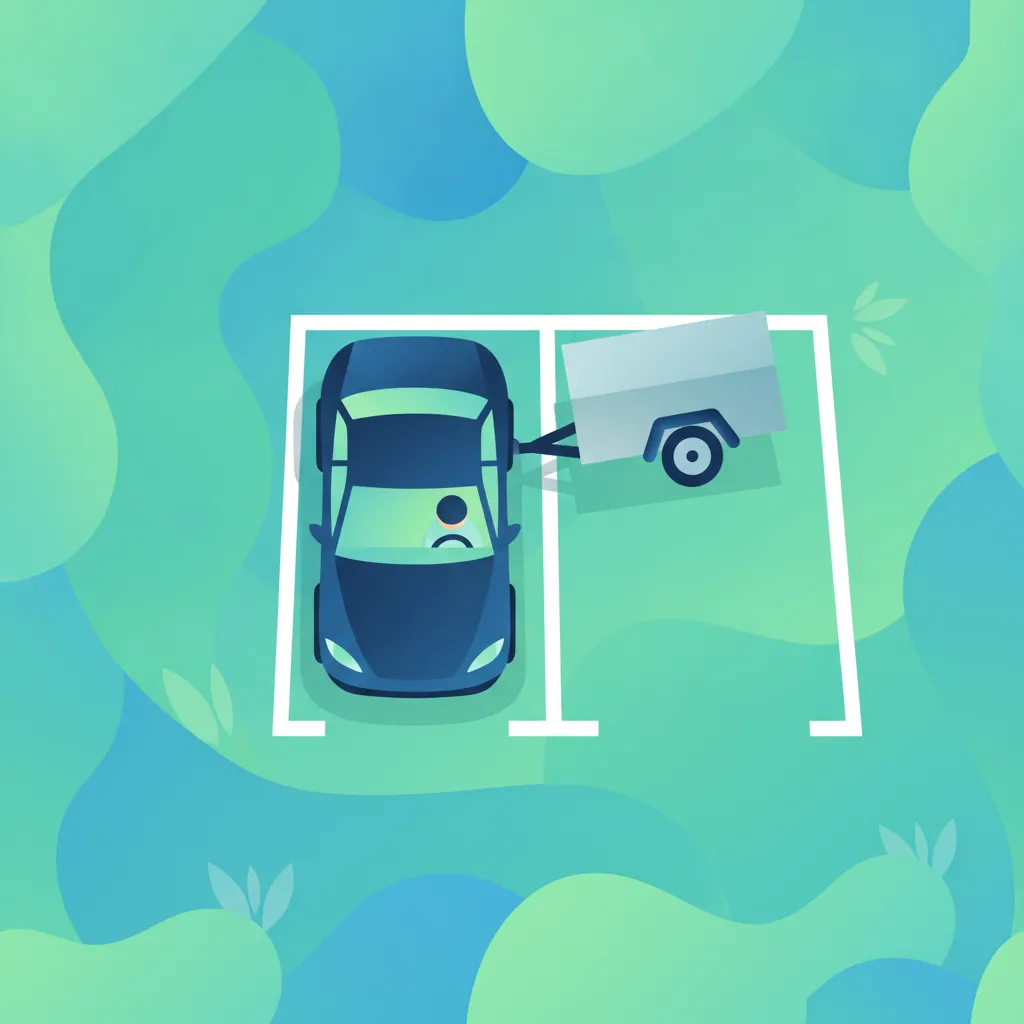
This lesson focuses on techniques for reversing safely with a trailer attached, including the use of spotters, mirrors, and backup cameras to mitigate blind spots. Learners will understand the steps for proper trailer coupling before reversing, how to control trailer sway, and the importance of using reverse gear properly. The content also covers safety checks to perform before reversing, such as ensuring the area is clear.

In this lesson, learners explore the fundamental principles governing load distribution in goods vehicles, focusing on how cargo placement affects the centre of gravity and overall vehicle stability. The content emphasizes the importance of achieving longitudinal and lateral balance to prevent adverse vehicle dynamics such as excessive sway or unintended pivoting. By understanding weight transfer phenomena and the impact of cargo positioning on the vehicle’s pivot point, drivers can make informed decisions to ensure safe loading.

In this lesson, drivers will learn about the relationship between a vehicle’s centre of gravity and its susceptibility to rollover incidents. The content covers how high-center-of-gravity loads, load shifts, and overloading can compromise lateral stability, especially during cornering or evasive maneuvers. Learners will gain insight into calculating safety margins and understanding the impact of cargo weight distribution on the overall stability of the vehicle.

This lesson provides a detailed guide on the proper procedures for coupling and uncoupling a trailer to a goods vehicle. Learners will explore the different types of coupling systems, including magnetic and pneumatic devices, and understand the critical safety checks required before and after connection. The content also covers the verification of trailer lighting, brake connections, and the use of quick-release mechanisms to ensure a secure hitch.

In this lesson, drivers will learn how to calculate safe following distances based on vehicle speed, load, road conditions, and traffic density. The content explains the components of total stopping distance, including reaction time and braking distance, and how these are affected by factors such as wet road surfaces and heavy loads. Learners will also be introduced to French road safety guidelines for maintaining appropriate gaps to ensure sufficient time to react.

This lesson focuses on the importance of recognizing and mitigating blind spots in goods vehicles, especially when towing trailers. Learners will explore techniques such as proper mirror adjustment, the use of blind spot mirrors, and visual checks to ensure that obstacles and vulnerable road users are detected before executing maneuvers. The content also discusses the limitations of blind spot monitoring systems and the need for supplementary visual checks.

In this lesson, drivers will learn how to plan and execute wide turns with goods vehicles, taking into account turning radius, pivot points, and articulation angles. The content emphasizes the necessity of using the full width of the lane, correctly aligning the vehicle through the turn, and anticipating the movement of the trailer. Learners will also explore road marking guidelines for turning and the importance of giving clear signals to surrounding traffic.

This lesson covers techniques for managing gradients while driving goods vehicles, focusing on downhill control, engine braking, and appropriate gear selection. Learners will understand how load distribution and vehicle dynamics affect descending performance and the importance of avoiding brake overheating. The content includes practical advice on using hill start assistance systems and maintaining safe speeds on steep slopes.

In this lesson, the focus is on understanding weight limits for goods vehicles, including total gross vehicle weight and individual axle load restrictions. Learners will explore how French weight regulations define permissible loads and the consequences of exceeding these limits, such as increased wear on road surfaces and safety hazards. The lesson also discusses load balancing techniques to ensure optimal axle distribution, enhancing vehicle stability and compliance with legal standards.

In this lesson, drivers will learn how to adjust their driving techniques in response to adverse weather conditions such as rain, fog, snow, ice, and strong winds. The content covers strategies for maintaining visibility, managing reduced traction on wet or icy surfaces, and adjusting speed and braking distances accordingly. Learners will also be introduced to the use of anti-skid and stability control systems under challenging weather.
Learn the regulatory framework for safe loading and unloading operations in France. This lesson covers the mandatory safety protocols, documentation responsibilities, and coordination requirements between transport operators and logistics hubs as defined by the French Code de la route and labour regulations for professional drivers.

In this lesson, drivers will learn about the mandatory documentation required for operating a goods vehicle in France. The content covers the NEPH number needed for licence applications, vehicle registration certificates (carte grise), and proof of insurance. Learners will also explore the technical inspection process, load and customs documentation for cross-border transport, and the importance of maintaining an up-to-date driver logbook.

In this lesson, drivers will learn the essential steps to take following an accident involving a goods vehicle. The content covers contacting emergency services via 112, providing first aid, and safely positioning the vehicle to protect other road users. Learners will be instructed on documenting the incident, notifying insurance providers, and fulfilling legal obligations for accident reporting, including gathering witness statements.
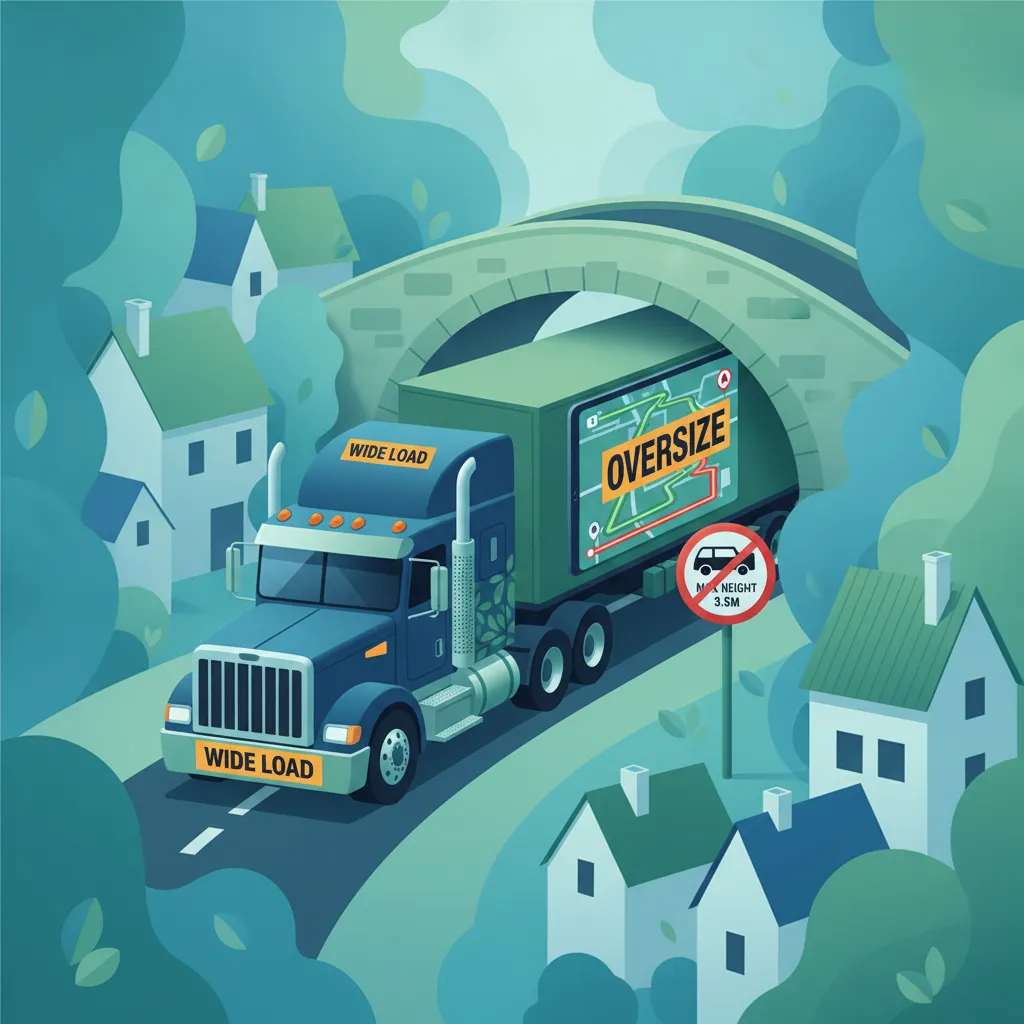
This lesson provides strategies for planning routes that accommodate oversized goods vehicles while complying with French road restrictions. Learners will learn how to identify prohibited routes, evaluate bridge and tunnel limitations, and obtain necessary access permits. The content also addresses the use of specialised GPS systems for heavy vehicle routing and the importance of contingency planning for detours, ensuring safe and efficient transport operations.
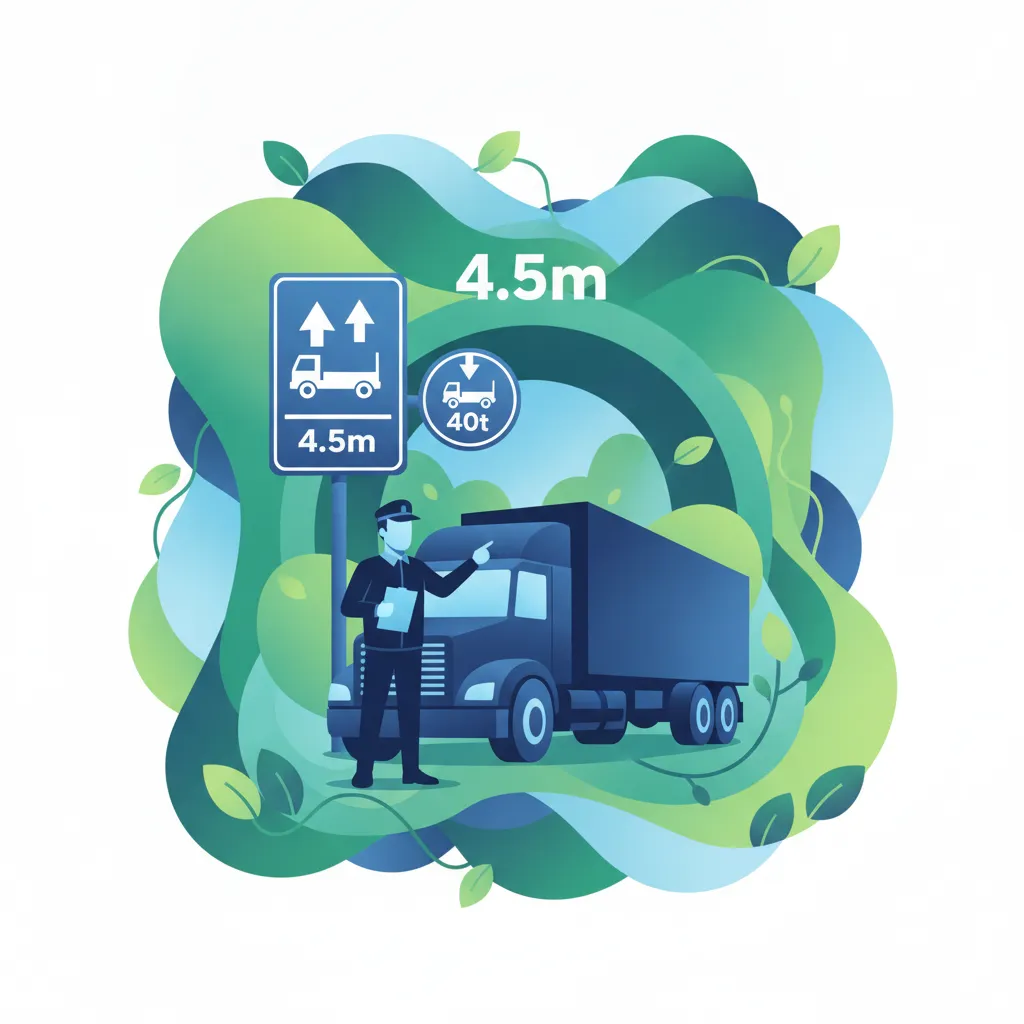
This lesson focuses on the weight and dimension restrictions that goods vehicles must adhere to while traveling on French roads. Learners will understand bridge caps, tunnel clearances, and other physical limitations imposed by infrastructure, and how these restrictions impact route planning and vehicle loading. The content also highlights legal load limits and the importance of compliance checks to avoid fines and roadblocks.

Carrying heavy loads or pulling trailers significantly alters a passenger vehicle's braking distances and stability characteristics. This lesson covers how to read weight limits (like gross vehicle weight ratings), distribute cargo weight evenly, and secure items inside the boot or on roof racks. You will learn to use specialized cargo straps and understand the risks of overloading your suspension and tyres.
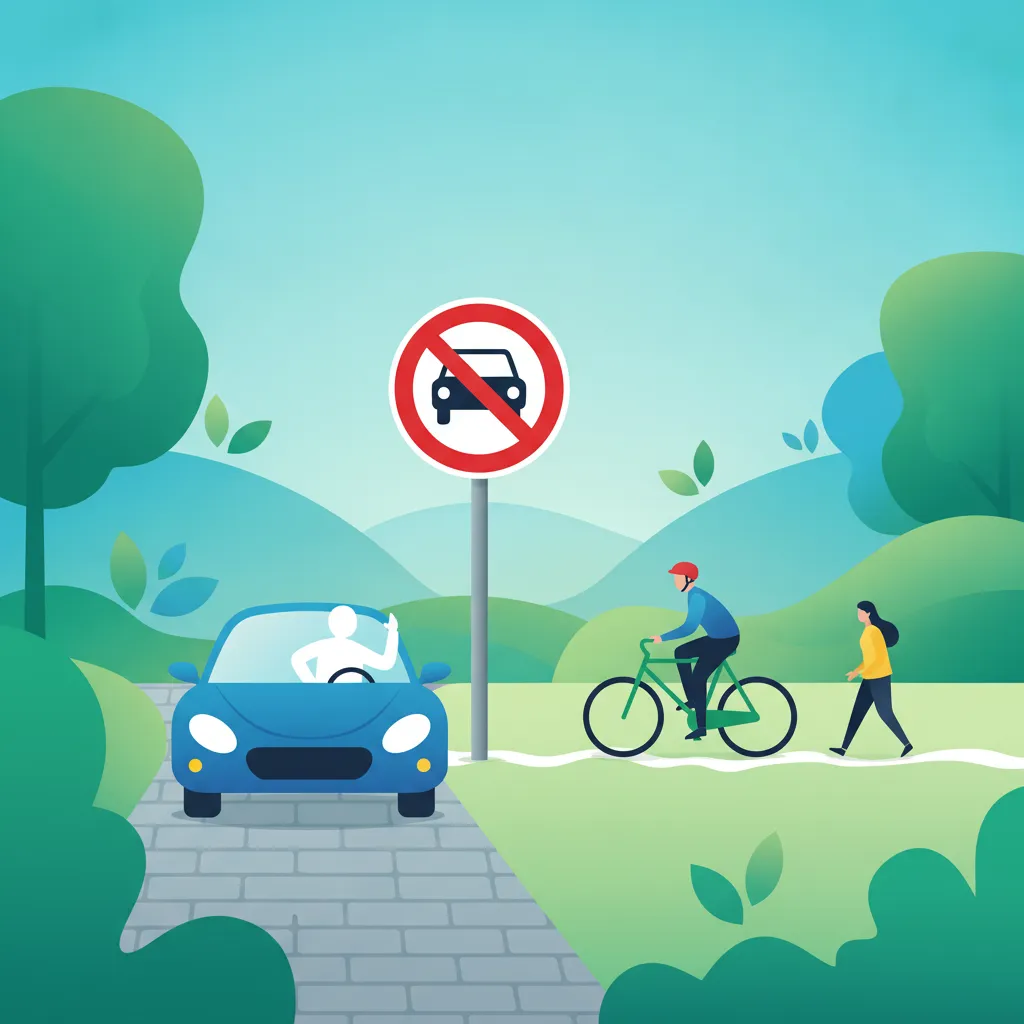
In this lesson, learners will explore the various access restrictions that apply to goods vehicles in France, such as low emission zones and weight-restricted areas. The focus is on understanding the process to obtain necessary access permits and authorisations, and how these restrictions influence route planning and operational decisions. Learners will also be introduced to specific regulations governing vehicle entry into city centres and environmentally sensitive zones.

In this lesson, learners will be equipped with the essential steps to take in the event of an emergency involving their goods vehicle, such as accidents, spills, or fires. The content covers the correct usage of the European emergency number 112, immediate safety measures to protect the scene, and the required use of driver emergency equipment like fire extinguishers and spill kits. Additionally, the lesson details the obligatory reporting processes, documentation of incidents, and cooperation with emergency services and law enforcement.

This lesson outlines the essential components of a comprehensive pre-trip vehicle inspection for goods vehicles, emphasizing safety checks for brakes, tyres, lights, mirrors, coupling devices, and cargo. Learners will understand the importance of verifying that all safety equipment is functional and that cargo is properly secured before commencing a journey. The content also details the necessary documentation checks to ensure compliance with French road regulations.
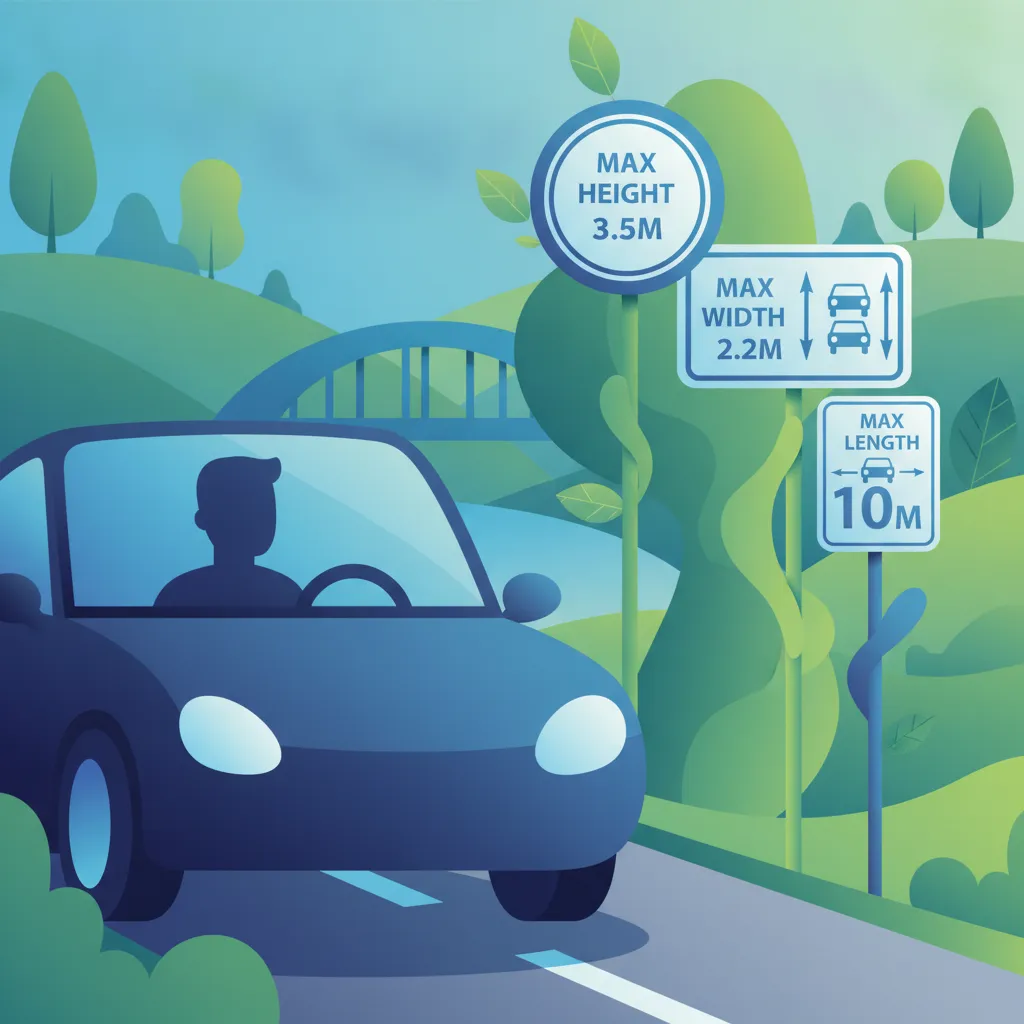
This lesson provides an in-depth analysis of how goods vehicles are classified according to their overall dimensions, such as length, width, height, and wheelbase. Learners will understand the legal limits imposed by French regulations for each vehicle class, and how these dimensions affect the vehicle’s classification and permissible routes. The material also explains the impact of cab size versus cargo space on maneuverability and route planning, highlighting the importance of accurate dimension assessment.
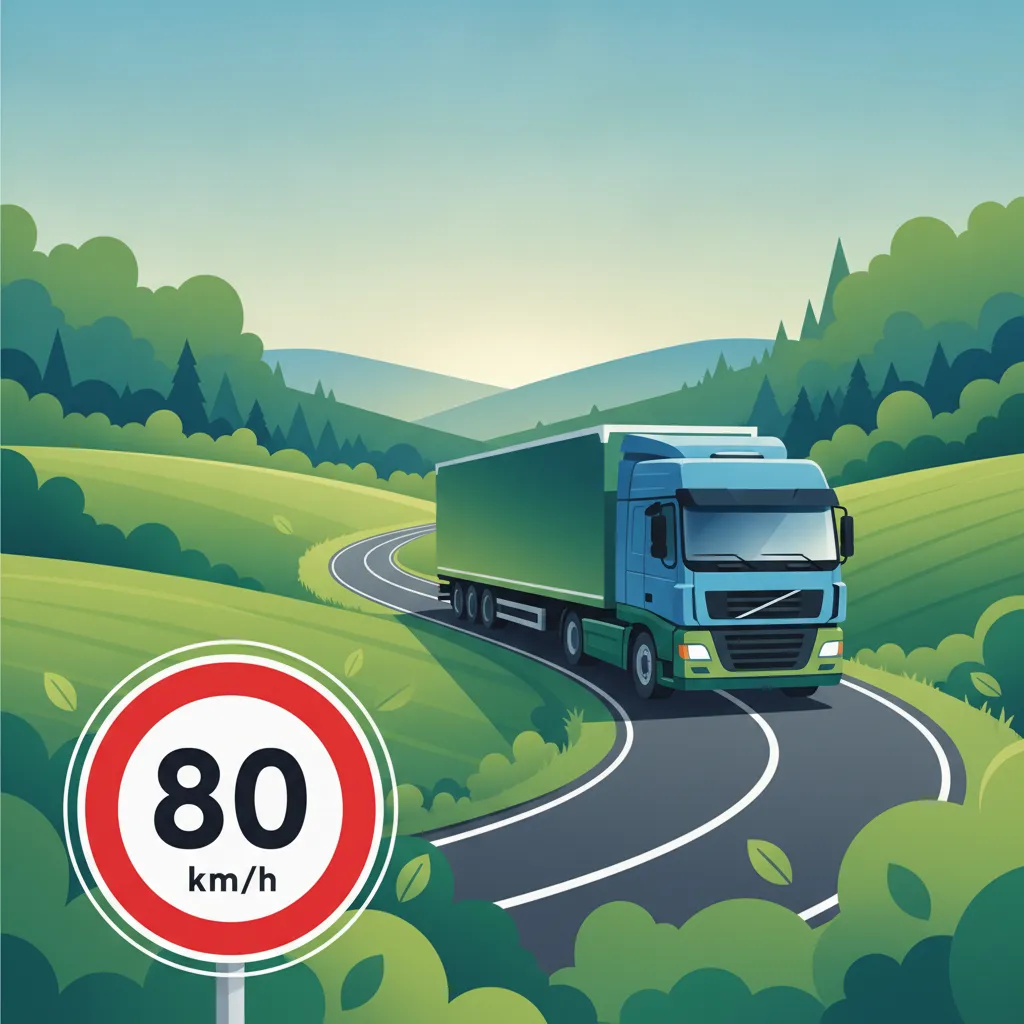
In this lesson, drivers will learn the specific speed limits that apply to goods vehicles across different road types in France, including urban areas, rural roads, and motorways. The content covers the differences between speed limit signs for heavy vehicles and standard passenger cars, the legal basis for these limits, and the importance of speed adaptation based on vehicle category and load. Learners will also be introduced to speed enforcement methods used in France, such as radar and speed cameras.
Find clear answers to common questions learners have about Manoeuvring in Loading Docks and Tight Spaces. Learn how the lesson is structured, which driving theory objectives it supports, and how it fits into the overall learning path of units and curriculum progression in France. These explanations help you understand key concepts, lesson flow, and exam focused study goals.
The golden rule is to prioritize visibility. Always use a spotter when available, keep your windows down to hear external signals, and proceed slowly while constantly checking all mirrors and monitoring systems.
Articulated vehicles have significant blind spots at the pivot point and the sides of the trailer. You must use a systematic 'mirror-check' routine and rely on blind-spot monitoring systems to ensure no vulnerable road users are in your path.
Yes, always agree on a clear set of visual or audible hand signals with the site personnel before you start moving. If you lose sight of your spotter or communication is unclear, stop the vehicle immediately.
A heavy or improperly secured load can shift during slow-speed manoeuvres, affecting the centre of gravity and potentially causing vehicle instability. Proper load distribution is critical for predictable vehicle handling in docks.
Ready to focus your study? Use the practice search to find exactly the French driving theory questions you need for the Code de la route and permis de conduire ETG. Refine your knowledge on specific topics or challenging rules to boost your confidence and exam readiness.