
This lesson explores the essential physics and mechanical behavior of braking systems in heavy vehicles. You will learn how to manage brake delay and fade risks effectively to ensure safety on steep descents and under heavy loads as part of your C1/C1E/C/CE certification.

Lesson content overview
For professional drivers operating heavy vehicles in Germany, a profound understanding of braking system limitations is paramount for safety, especially under challenging conditions. Unlike passenger cars, trucks and buses possess significantly greater mass and momentum, which drastically impacts braking performance. This lesson, crucial for the German Heavy Vehicle Driving License Theory (categories C1, C1E, C, CE), delves into phenomena such as brake delay, brake fade, and the critical risks associated with overheating.
Understanding how these factors influence your vehicle's ability to slow down and stop is not merely theoretical knowledge; it directly translates into preventing accidents, maintaining control on steep descents, and ensuring the longevity of your braking system. We will explore the underlying physics, practical implications, and essential strategies, including the use of retarders and effective speed management, to mitigate these risks and operate heavy vehicles safely.
Brake delay, often referred to as brake lag, is the inherent time lapse between when a driver presses the brake pedal and when the braking system fully generates its intended force at the wheels. This delay is a crucial consideration for heavy vehicle operators due to their vehicles' size and weight, which demand longer stopping distances and more advanced anticipation. Ignoring brake lag can lead to critical errors in judgment, especially in dynamic traffic situations or on challenging road sections.
This temporal delay is not a sign of a faulty braking system but rather a characteristic of how heavy vehicle braking mechanisms operate. It highlights the necessity for drivers to develop a keen sense of anticipation and proactive braking habits, adjusting their driving style to account for this intrinsic lag.
Brake lag in heavy vehicles stems from a combination of hydraulic and mechanical factors. In air-braking systems, commonly found in trucks and buses, the delay primarily involves the time it takes for compressed air to travel from the brake valve to the brake chambers and then for the mechanical linkages to activate the brake shoes or pads.
Hydraulic Lag: Although less prevalent in heavy vehicle primary braking (which typically uses air), some auxiliary systems or hydraulic components might experience delays due to fluid compressibility. More commonly, air systems have a "pneumatic lag" as air pressure builds up. The volume of air required for heavy vehicle brakes is substantial, and the distance it must travel through pipes contributes to this delay.
Mechanical Lag: This refers to the slack or play within the physical linkages and components of the braking system. While modern systems are designed to minimize this, some degree of mechanical movement is required before full engagement. Worn bushings, loose pins, or maladjusted components can exacerbate mechanical lag, leading to a noticeable increase in pedal travel before deceleration begins. Regular maintenance and pre-trip inspections are vital to identify and rectify such issues, ensuring the system operates within its optimal parameters.
The practical meaning of brake lag is that a heavy vehicle will travel a greater distance than expected before its brakes fully engage. On a steep downhill gradient, for instance, a driver must initiate braking earlier than they might in a passenger car, not only due to the vehicle's mass but also to account for this initial delay in brake response. This is particularly critical when approaching curves, intersections, or unexpected obstacles.
Anticipatory Braking: Always plan your braking actions well in advance. For heavy vehicles, this means starting to slow down earlier and more gradually than you might in a lighter vehicle. This proactive approach helps compensate for brake lag and allows the system to build pressure effectively.
Drivers who fail to anticipate brake lag risk overshooting intended stopping points, encroaching on danger zones, or requiring more aggressive braking later, which can contribute to brake overheating and fade. It underscores the importance of maintaining sufficient following distances and constant vigilance, especially when laden with heavy cargo.
Brake fade is a critical safety concern for heavy vehicle drivers, defined as the reduction in braking efficiency caused by the overheating of brake components. When brakes overheat, the friction material (brake pads or linings) and the braking surface (rotors or drums) undergo physical and chemical changes that diminish their ability to generate friction. The result is a noticeable decrease in stopping power, often accompanied by increased pedal effort and longer stopping distances. In severe cases, brake fade can lead to almost complete loss of braking capability, putting the vehicle and its surroundings at extreme risk.
This phenomenon is particularly dangerous for heavy vehicles because of the immense amount of kinetic energy that must be dissipated during braking, especially on long or steep descents where continuous brake application is often required. Understanding the causes and types of brake fade is essential for preventing this dangerous condition.
Braking converts the vehicle's kinetic energy into thermal energy (heat) through friction. When this heat cannot dissipate quickly enough, the temperature of the brake components rises. As temperatures climb, several issues contribute to brake fade:
These effects combine to make the brake pedal feel less responsive, requiring greater force for the same (or less) deceleration, and significantly extending the distance required to stop the vehicle.
Brake fade can manifest in different scenarios, broadly categorized as static and dynamic:
Static Fade: This occurs during continuous, prolonged braking, typically on long downhill gradients where the driver is constantly applying the service brakes to control speed. The sustained friction generates heat faster than the system can dissipate it, leading to a gradual but steady decline in braking performance. This is the most common form of fade experienced by heavy vehicle drivers on mountain passes or lengthy descents.
Dynamic Fade: This type of fade results from repeated, intense braking cycles, such as in stop-and-go traffic under heavy load or during emergency braking maneuvers followed by quick re-application. Each braking event generates a burst of heat, and if insufficient time is allowed for cooling between applications, the cumulative heat buildup quickly overwhelms the system, leading to rapid onset of fade. While static fade is a slow burn, dynamic fade can be a sudden, alarming loss of performance.
Both types of fade are serious and demand proactive driving techniques to prevent them. The critical factor is always the balance between heat generation and heat dissipation.
Recognizing the early warning signs of brake fade is crucial for driver safety. These indicators suggest that your brakes are overheating and losing effectiveness:
If you experience any of these symptoms, it is imperative to immediately reduce speed, use alternative braking methods like retarders or engine braking, and if necessary, find a safe place to pull over and allow the brakes to cool down completely before continuing.
Effective heat dissipation is the cornerstone of reliable braking performance. When a heavy vehicle brakes, the kinetic energy of its massive moving parts is converted into heat at the brake components. If this heat accumulates faster than it can be removed, the brakes will overheat, leading to fade. Therefore, the ability of the braking system to expel heat is directly linked to its sustained effectiveness.
Understanding how brakes cool down helps in appreciating the design choices and maintenance requirements critical for heavy vehicle operation, especially within the demanding context of German roads with varying terrains and gradients.
Brake systems primarily dissipate heat through three fundamental mechanisms:
The efficiency of these mechanisms is paramount. Obstructing airflow to the brakes (e.g., with poorly designed wheel covers), using unsuitable materials, or neglecting maintenance that affects component integrity can severely impair heat dissipation.
Heavy vehicle braking systems are specifically engineered to manage immense thermal loads. Their design often includes:
Proper maintenance is equally critical. Regular inspection and replacement of worn brake pads/linings, ensuring brake adjusters are correctly set, and confirming that components like brake calipers are functioning freely are all vital. Any issue that causes a brake to drag, for instance, will generate unnecessary heat and compromise the system's overall thermal capacity. Furthermore, keeping brake components clean and free from debris ensures optimal airflow and heat transfer.
Given the challenges of brake fade and the sheer mass of heavy vehicles, modern trucks and buses often incorporate retarder systems as auxiliary braking devices. Retarders significantly reduce the reliance on friction (service) brakes, particularly on long descents, thereby preventing overheating and extending the life of the primary braking system. For heavy vehicle drivers in Germany, understanding and correctly utilizing retarders is a fundamental skill for safe and economical operation.
Retarders work by converting kinetic energy into other forms of energy (usually heat) without involving the conventional wheel-mounted friction brakes. This allows for controlled deceleration and speed maintenance without the risk of brake fade.
There are primarily two types of retarder systems used in heavy vehicles:
Hydrodynamic Retarders (Fluid Retarders): These systems, often integrated into the gearbox or drivetrain, use a fluid (typically oil) to create resistance. Inside the retarder, a rotor (connected to the drive shaft) spins within a stator. When activated, fluid is pumped into the chamber between the rotor and stator. The shearing action of the fluid against the spinning rotor creates resistance, which slows the drive shaft and, consequently, the vehicle. This process converts kinetic energy into heat, which is then dissipated by a dedicated cooling system, often integrated with the engine's coolant system.
Electric Retarders (Electromagnetic Retarders): These systems use electromagnetic forces to generate resistance. They consist of a rotor (attached to the drive shaft) and an electromagnetically activated stator. When the driver engages the retarder, an electric current flows through the stator coils, creating a magnetic field. This field induces eddy currents in the spinning rotor, which generate a resisting torque that slows the drive shaft. The kinetic energy is converted into electrical energy, which is then dissipated as heat, often through specialized heat sinks or by circulating cooling air.
Both types offer distinct benefits, but their common purpose is to provide powerful, fade-free auxiliary braking, dramatically enhancing safety and reducing wear on the service brakes.
Effective use of retarders is a cornerstone of safe heavy vehicle operation, especially on German roads with their varied topography, including the Autobahnen and mountain passes. Here's how to apply them properly:
Retarder Misuse: Never assume a retarder can completely replace service brakes. Always maintain a readiness to use your foot brake for situations requiring quick stops or to supplement retarder action. Misuse can still lead to overheating of the retarder itself or inadequate stopping power.
Effective speed management is arguably the most critical skill for heavy vehicle drivers, especially when navigating steep downhill gradients or challenging terrain. It encompasses the proactive adjustment of vehicle speed to match road conditions, traffic flow, and vehicle load, thereby significantly reducing the reliance on service brakes and preventing issues like brake fade and overheating. This principle is fundamental for safe driving on German roads, from winding country routes to extended Autobahn descents.
The core idea is to control the vehicle's momentum primarily through means other than continuous friction braking. This not only enhances safety but also reduces wear and tear on expensive brake components, contributing to operational efficiency and lower maintenance costs.
Proactive speed control means anticipating upcoming road conditions and adjusting your speed before the need for heavy braking arises. For heavy vehicles, this includes:
Gear selection is a powerful, yet often underutilized, tool for speed management, especially on descents. Utilizing engine braking through proper gear selection can significantly reduce the workload on your service brakes and retarders.
Engine Braking: When you downshift, the engine's resistance to turning helps slow the vehicle. The lower the gear, the higher the engine RPM at a given road speed, and thus the greater the engine braking effect.
Select a Low Gear: Before starting a descent, choose a gear that would be appropriate for ascending the same gradient. This ensures the engine's natural resistance (and any engine brake systems, like exhaust brakes) can effectively help control your speed.
Avoid Over-Revving: While downshifting is crucial, ensure you don't select a gear so low that it causes the engine to over-rev and exceed its safe RPM limit. Modern heavy vehicles often have RPM limiters, but it's best to avoid hitting them.
Combine with Retarder: On very long or steep descents, combine engine braking with your retarder system for maximum control. This distributes the thermal load and ensures optimal safety.
Downshift Progressively: If the descent is long and requires further speed reduction, downshift progressively, one gear at a time, allowing the vehicle and engine to adjust smoothly.
By mastering gear selection alongside retarder use, heavy vehicle drivers can navigate even the steepest declines with confidence, minimizing the risk of brake overheating and fade, and adhering to safe driving practices in Germany.
Operating heavy vehicles within Germany (and across the EU) is governed by stringent regulations designed to ensure maximum safety for all road users. When it comes to braking, these regulations and established best practices specifically address the challenges of brake lag, fade, and overheating. Compliance is not just about avoiding penalties; it's about safeguarding lives and valuable cargo.
Drivers undertaking the German Heavy Vehicle Driving License Theory (C1, C1E, C, CE) must internalize these rules, which emphasize anticipatory driving, the correct use of auxiliary braking systems, and vigilance regarding vehicle condition.
German traffic law and professional driving standards place a high emphasis on controlling heavy vehicle speed, particularly on gradients. While specific laws mandating retarder use for all descents might not be explicitly codified for every single scenario, the underlying principle is clear:
Rule 1: Use Auxiliary Braking Systems on Gradients. On steep downhill gradients, drivers of heavy vehicles must use engine braking or available retarders to control their speed. The primary purpose is to minimize the use of the service brakes, thereby preventing overheating and potential brake fade. This is not merely a recommendation but a mandatory practice for safe operation, especially when carrying heavy loads. Failure to do so can result in loss of control or a severe accident.
Rule 2: Anticipate Stopping Distances and Brake Needs. Drivers must continuously anticipate required stopping distances, taking into account factors like vehicle weight, road conditions, speed, and crucially, brake lag and the potential for fade. This means starting braking maneuvers earlier than might be instinctual for a lighter vehicle.
Violating these principles, whether through negligence or lack of knowledge, carries significant risks and legal consequences:
Adherence to these legal requirements and best practices is not just about compliance; it's about embedding a safety-first mindset that recognizes and respects the physical limits of heavy vehicles.
Preventing brake system failures, particularly those caused by overheating and fade, is paramount for heavy vehicle drivers. It requires a combination of proactive driving techniques, diligent vehicle maintenance, and a deep understanding of system limitations. This section consolidates strategies to ensure reliable braking performance for German heavy vehicles under all conditions.
The goal is to empower drivers with the knowledge and habits necessary to avoid scenarios where brake performance is compromised, thereby ensuring safety for themselves and other road users.
To maintain control and prevent brake issues on downhill gradients, consider the following checklist before and during descent:
Driving conditions are rarely static, and a skilled heavy vehicle driver continuously adapts their braking strategy to the prevailing environment:
By integrating these strategies into their daily driving, heavy vehicle operators can significantly enhance safety and prolong the life of their braking systems, confidently navigating the diverse challenges of German roads.
This lesson has highlighted the critical aspects of brake delay, brake fade, and the risks of overheating in heavy vehicles, a cornerstone of the German Heavy Vehicle Driving License Theory. Mastery of these concepts is indispensable for safe and professional driving.
By implementing these principles, heavy vehicle drivers can significantly enhance safety, prevent brake system failures, and operate professionally on all roads, including the challenging Autobahnen and mountain passes of Germany.
This lesson covers the critical physics and mechanics of braking systems in heavy vehicles, focusing on brake delay (lag) and brake fade caused by overheating. Brake lag is the inherent time delay before full braking force develops, requiring anticipatory braking habits. Brake fade, which can be static or dynamic, occurs when heat builds up faster than the braking system can dissipate it, reducing friction and stopping power. Modern heavy vehicles use retarder systems—hydrodynamic or electromagnetic—to control speed on descents without relying on friction brakes. Effective heat management depends on conduction, convection, and radiation, with airflow during driving being essential for cooling. Safe downhill operation requires proactive speed management through proper gear selection, early retarder engagement, and intermittent service brake use when necessary, ensuring compliance with German heavy vehicle safety standards.
A short set of high-value points that capture the most important learning from this lesson.
Brake lag is the time delay between pedal press and full braking force, requiring heavy vehicle drivers to brake earlier and more gradually than in passenger cars.
Brake fade is a dangerous reduction in braking efficiency caused by overheating, which diminishes the friction material's ability to generate stopping power.
Retarders are auxiliary braking systems that control speed without wearing the service brakes, and they must be engaged before starting a descent to prevent brake overheating.
Effective heat dissipation in brakes occurs through conduction, convection, and radiation, with convection being the primary cooling mechanism during driving.
Proactive speed management through proper gear selection and anticipatory braking is the most critical skill for safely navigating steep downhill gradients.
Explore all units and lessons included in this driving theory course.
Static fade occurs during continuous prolonged braking on long descents; dynamic fade results from repeated intense braking cycles without adequate cooling time.
Hydrodynamic retarders use fluid resistance and integrate with the engine cooling system, while electric retarders use electromagnetic forces and do not require fluid.
Warning signs of brake fade include increased pedal travel, reduced deceleration despite harder pedal pressure, burning odors, and smoke from wheel areas.
When service brakes are needed on descents, apply them firmly for short periods then release completely to allow cooling rather than continuous light application.
Retarders are auxiliary systems and cannot replace service brakes for emergency stops or coming to a complete standstill.
Failing to account for brake lag by braking too late, especially on descents or when approaching curves and intersections.
Assuming that continuous light braking is safer than intermittent firm braking; light dragging generates more heat and leads to faster fade.
Using retarders without adjusting speed beforehand, allowing excessive momentum to build that the retarder alone cannot control.
Engaging retarders too late on descents rather than activating them before the gradient begins to prevent speed buildup.
Neglecting to downshift to an appropriate gear before descents, relying solely on service brakes or retarders without engine braking support.
Lesson content overview
A short set of high-value points that capture the most important learning from this lesson.
Brake lag is the time delay between pedal press and full braking force, requiring heavy vehicle drivers to brake earlier and more gradually than in passenger cars.
Brake fade is a dangerous reduction in braking efficiency caused by overheating, which diminishes the friction material's ability to generate stopping power.
Retarders are auxiliary braking systems that control speed without wearing the service brakes, and they must be engaged before starting a descent to prevent brake overheating.
Effective heat dissipation in brakes occurs through conduction, convection, and radiation, with convection being the primary cooling mechanism during driving.
Proactive speed management through proper gear selection and anticipatory braking is the most critical skill for safely navigating steep downhill gradients.
Explore all units and lessons included in this driving theory course.
Static fade occurs during continuous prolonged braking on long descents; dynamic fade results from repeated intense braking cycles without adequate cooling time.
Hydrodynamic retarders use fluid resistance and integrate with the engine cooling system, while electric retarders use electromagnetic forces and do not require fluid.
Warning signs of brake fade include increased pedal travel, reduced deceleration despite harder pedal pressure, burning odors, and smoke from wheel areas.
When service brakes are needed on descents, apply them firmly for short periods then release completely to allow cooling rather than continuous light application.
Retarders are auxiliary systems and cannot replace service brakes for emergency stops or coming to a complete standstill.
Failing to account for brake lag by braking too late, especially on descents or when approaching curves and intersections.
Assuming that continuous light braking is safer than intermittent firm braking; light dragging generates more heat and leads to faster fade.
Using retarders without adjusting speed beforehand, allowing excessive momentum to build that the retarder alone cannot control.
Engaging retarders too late on descents rather than activating them before the gradient begins to prevent speed buildup.
Neglecting to downshift to an appropriate gear before descents, relying solely on service brakes or retarders without engine braking support.
Explore search topics learners often look for when studying Brake Delay, Brake Fade and Overheating Risks. These topics reflect common questions about road rules, driving situations, safety guidance, and lesson level theory preparation for learners in Germany.
Browse additional driving theory lessons that cover connected traffic rules, road signs, and common driving situations related to this topic. Improve your understanding of how different rules interact across everyday traffic scenarios.
Understand the critical dangers of brake fade and overheating in heavy goods vehicles, as explained in German driving theory. This lesson covers the mechanisms behind reduced braking effectiveness on inclines and methods to prevent potential brake failure.
This lesson introduces the various braking systems in heavy vehicles, including service brakes, air brakes, and retarders. It explains the functional principles of each system, such as how compressed air is used and the role of retarders in reducing service brake wear. The content also covers the importance of dual-circuit systems and fail-safe mechanisms.

This lesson focuses on the use of retarders and engine braking techniques to control vehicle speed without excessive use of the service brake. It explains the different types of retarders, such as hydraulic and exhaust brakes, and their appropriate application. The content also covers gear selection and engine braking strategies for downhill driving.

This lesson provides a method for calculating the braking distance of loaded vehicles, considering factors such as speed, load, and road conditions. It explains the formula for total stopping distance, including reaction time and braking distance components. The content highlights the importance of maintaining adequate safety margins for emergency braking.

This lesson covers the various braking systems used on trailers, including air and electric brakes, and their integration with the towing vehicle. It explains the role of the brake controller, electrical connections for brake lights, and how braking force is distributed. The content also addresses considerations such as brake lag and trailer ABS functionality.
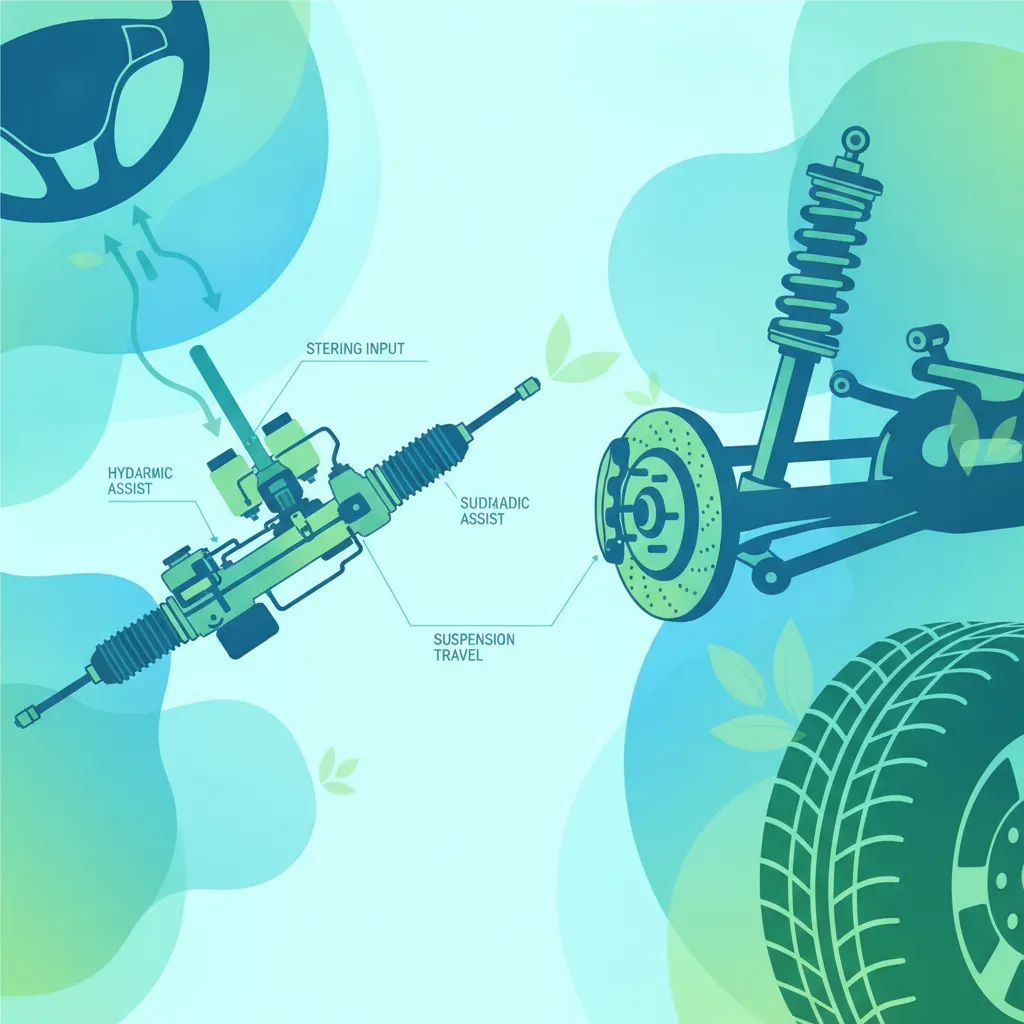
This lesson examines the steering mechanisms in heavy vehicles, including power-assisted systems, and their impact on handling. It also covers tyre technology, focusing on selection, pressure, load rating, and the importance of proper tyre maintenance. The content highlights how suspension components contribute to vehicle stability and control.

This lesson provides a systematic approach to pre-drive inspection, outlining a comprehensive checklist to verify fluid levels, brake functionality, and tyre condition. It emphasizes the importance of checking lighting, mirror adjustments, and load securement before every journey. The content highlights safety protocols to ensure the vehicle is roadworthy.
This lesson provides a step-by-step guide for safely managing a vehicle breakdown on the road. It includes instructions on performing an emergency stop, deploying hazard lights and warning triangles, and contacting assistance. The content emphasizes maintaining safety for both the driver and other road users during the breakdown.
This lesson teaches the importance of adhering to speed limits and how to manage speed effectively, especially when hauling heavy loads. It covers the function of speed-limiters to ensure compliance with legal restrictions. The content also discusses the relationship between speed, fuel consumption, and its effect on braking distance.

This lesson covers the lighting and reflector requirements for heavy vehicles, including headlamps, side markers, and brake lights. It explains the function of these systems and the necessity of underrun protection to safeguard other road users. The content also discusses regulations governing lighting systems and their importance for safety in all conditions.

This lesson focuses on the risks of jackknifing and trailer swing, particularly during braking and on downhill descents. It provides recommendations for safe speed management, proper braking techniques, and maintaining vehicle stability. The content also addresses safe reversing practices and the importance of monitoring blind spots during maneuvers.
Learn essential theory for heavy vehicle drivers on managing speed and braking distances when descending steep gradients in Germany. This lesson explores the interplay of vehicle weight, retarders, and engine braking to prevent overheating and maintain control.
This lesson explains the specific regulations for operating heavy vehicles on Autobahnen, including speed limits, lane discipline, and overtaking rules. It discusses the use of dedicated truck lanes and the importance of maintaining appropriate following distances. The content also covers procedures for merging and exiting high-speed roads safely.
This lesson focuses on the use of retarders and engine braking techniques to control vehicle speed without excessive use of the service brake. It explains the different types of retarders, such as hydraulic and exhaust brakes, and their appropriate application. The content also covers gear selection and engine braking strategies for downhill driving.
This lesson teaches the importance of adhering to speed limits and how to manage speed effectively, especially when hauling heavy loads. It covers the function of speed-limiters to ensure compliance with legal restrictions. The content also discusses the relationship between speed, fuel consumption, and its effect on braking distance.

This lesson teaches the driving techniques required for smooth operation, which is essential for passenger comfort and vehicle stability. It covers progressive application of the accelerator and brakes to avoid jolts and abrupt movements. The principles of anticipatory driving are also explored, showing how looking ahead and planning maneuvers contributes to a smoother ride, better fuel efficiency, and increased safety.

This lesson examines the risks associated with load shifting during braking and cornering maneuvers. It explains how inertia and weight transfer can cause cargo to move, potentially leading to instability or loss of control. The content emphasizes the importance of proper load securing to mitigate these risks and maintain vehicle stability.
This lesson provides a method for calculating the braking distance of loaded vehicles, considering factors such as speed, load, and road conditions. It explains the formula for total stopping distance, including reaction time and braking distance components. The content highlights the importance of maintaining adequate safety margins for emergency braking.

This lesson covers safe reversing techniques for both rigid trucks and articulated combinations, emphasizing the use of mirrors and cameras. It discusses the risks of jackknifing during reversal and the importance of speed control and safety checks. The content outlines best practices for planning a safe reversing path, potentially with a guide person.
This lesson focuses on the risks of jackknifing and trailer swing, particularly during braking and on downhill descents. It provides recommendations for safe speed management, proper braking techniques, and maintaining vehicle stability. The content also addresses safe reversing practices and the importance of monitoring blind spots during maneuvers.

This lesson covers the dimensional limits for heavy vehicles, focusing on height, width, and length restrictions. It explains how to interpret clearance signage for bridges, tunnels, and overhead obstacles, and discusses the implications for route planning. The content also addresses the importance of understanding turning radii and swept paths to avoid collisions.

This lesson provides instruction on the rules and best practices for operating a large passenger vehicle on the Autobahn. It covers the principles of strict lane discipline, regulations for minimum speed, and correct procedures for overtaking and merging. The importance of maintaining significantly increased following distances at high speeds and planning for exits well in advance is a key focus.
Find clear answers to common questions learners have about Brake Delay, Brake Fade and Overheating Risks. Learn how the lesson is structured, which driving theory objectives it supports, and how it fits into the overall learning path of units and curriculum progression in Germany. These explanations help you understand key concepts, lesson flow, and exam focused study goals.
Brake delay refers to the time it takes for air pressure to build up and engage the foundation brakes after hitting the pedal. Brake fade is the loss of braking efficiency due to excessive heat build-up in the brake drums and linings, which reduces the friction coefficient.
The theory exam tests your understanding of professional vehicle operation. Brake fade represents a critical safety risk that can lead to total brake failure on long descents, making it a common subject for hazard-perception and technical knowledge questions.
Retarders should be used for maintaining constant speed on long downhill stretches to prevent the service brakes from reaching critical temperatures. The service brake should remain reserved for full stops or emergency situations where rapid deceleration is required.
In the exam, always assume that a higher mass increases the kinetic energy a braking system must dissipate. This creates more heat, faster potential brake fade, and significantly longer braking distances that must be accounted for in your driving strategy.
Begin your targeted revision now. Use our practice search to quickly find specific German driving theory questions. Filter by StVO rules, road signs, or hazard perception to create your focused study plan. Master challenging areas and prepare confidently for your theoretical driving test.