
This lesson details the structured approach to managing passenger flow at stops, a critical competency for professional passenger transport drivers. You will learn how to operate doors safely and assist passengers with reduced mobility to ensure a professional and secure service that meets official German theory standards.

Lesson content overview
Professional passenger transport demands meticulous attention to detail, especially during the critical phases of boarding and alighting. These procedures are not merely about opening and closing doors; they encompass a structured process of managing passenger flow, ensuring accessibility for all, and maintaining safety and dignity at every stop. For drivers holding German licence categories D1, D1E, D, and DE, a thorough understanding and flawless execution of these protocols are fundamental to maintaining a smooth operation, adhering to schedules, and, most importantly, protecting the welfare of every passenger.
This lesson provides an in-depth understanding of the systematic processes involved in passenger exchange. We will explore the coordination required to manage passenger flow efficiently, the safe deployment of ramps and kneeling systems for passengers with reduced mobility, and the clear communication strategies essential for a secure and dignified experience at each stop. Mastery of these procedures is paramount for preventing crowding, minimizing dwell time, and ensuring the comfort and safety that define professional passenger service.
The efficient and safe exchange of passengers at stops is a cornerstone of professional passenger transport. This process involves a series of coordinated actions driven by core principles designed to protect passengers, optimize operations, and comply with legal obligations. By understanding these foundational concepts, drivers can execute boarding and alighting with confidence and professionalism.
The systematic management of passenger movement to and from the vehicle to reduce dwell time, prevent crowding, and enhance overall safety.
Coordination of passenger flow is the systematic management of how passengers enter and exit the vehicle. Its primary purpose is to reduce the time a vehicle spends at a stop, known as dwell time, while simultaneously preventing dangerous crowding at the doors and within the vehicle. Effective coordination ensures an orderly sequence of movement, minimizing the risk of trips, falls, and other injuries. It also contributes significantly to schedule adherence, which is vital for the reliability of public transport services. Drivers must be vigilant, providing clear guidance and maintaining an overview of passenger movement throughout the entire process.
Providing support to passengers who need help boarding or alighting, particularly those with reduced mobility, to ensure accessibility and comply with legal requirements.
Providing assistance to passengers, especially those with reduced mobility, is a critical duty for professional drivers. This principle not only upholds the dignity of all passengers but also ensures compliance with comprehensive accessibility laws. Accessibility regulations mandate that public transport services must be usable by everyone, regardless of physical ability. This often involves the use of specialized vehicle features like ramps or kneeling systems, which bridge the height difference between the vehicle entrance and the curb. Drivers are responsible for operating this equipment correctly and offering appropriate personal support when needed.
The process of extending and positioning a ramp to provide a safe entry and exit point, primarily for wheelchair users and passengers with other mobility impairments.
A vehicle mechanism that lowers the entrance height by tilting a portion of the vehicle, making boarding and alighting easier for passengers without requiring a separate ramp.
Ramps and kneeling systems are essential tools designed to facilitate safe and dignified boarding for passengers using wheelchairs or those with other mobility impairments. Their correct deployment is non-negotiable for safety. A ramp must be fully extended, stable, and securely locked in place before any passenger attempts to use it. Similarly, a kneeling system must be fully engaged and the vehicle stabilized at the lowered height before passengers are encouraged to move. Improper use can lead to equipment failure, instability, and potentially serious injuries. Drivers must be thoroughly trained in the operation of these systems specific to their vehicle type.
Providing concise, audible, and respectful directions to passengers during boarding and alighting to prevent confusion, ensure orderly movement, and enhance safety.
Clear instruction and communication are vital for managing passenger flow effectively. Passengers, especially in busy environments or unfamiliar surroundings, rely on explicit guidance from the driver or conductor. Providing audible and respectful directions helps prevent confusion, ensures orderly movement, and significantly enhances overall safety. Instructions should be adapted to the passenger's needs, whether it's a general announcement for all passengers or specific guidance for someone requiring assistance. Ambiguous or inaudible communication can lead to delays, bottlenecks, and increased risk of incidents.
Efficient passenger movement is crucial for maintaining schedules and passenger safety. Professional drivers must adhere to specific protocols that dictate the sequence and coordination of boarding and alighting processes. These protocols are designed to prevent congestion at the doors, reduce dwell time, and ensure a smooth exchange at every stop.
A fundamental rule in passenger transport is to always prioritize alighting passengers before allowing new passengers to board. This "alighting first, then boarding" principle is mandatory and serves several critical safety and efficiency purposes. When passengers attempt to board while others are still exiting, it creates bottlenecks at the doors, leads to crowding both inside and outside the vehicle, and significantly increases the risk of collisions, trips, and falls.
Always make an audible announcement such as "Bitte erst aussteigen, dann einsteigen" (Please exit first, then board) or "Steigen Sie bitte zuerst aus, bevor Sie einsteigen" to reinforce this crucial safety procedure, especially in busy urban environments.
By ensuring a clear path for alighting passengers, drivers facilitate a quicker exit from the vehicle and subsequently allow for more organized and safer boarding. This sequential approach minimizes the overall dwell time at the stop and helps maintain schedule adherence.
Once alighting is complete, boarding should proceed in an organized and efficient manner. This often involves guiding passengers to use specific doors or areas to avoid bottlenecks. For instance, on some vehicles, passengers may be encouraged to board through the front door and exit through middle or rear doors. The driver, or a conductor if present, must monitor the boarding process, ensuring passengers move promptly into the vehicle and do not obstruct the doorway.
Common mistakes include allowing passengers to block the entrance while stowing luggage or waiting for companions. Drivers should be prepared to gently remind passengers to move into the vehicle quickly, making space for others. This proactive management reduces queue length, prevents overcrowding at the entrance, and improves overall schedule reliability.
Dwell time—the duration a vehicle remains stationary at a stop—is a critical factor in public transport efficiency. While minimizing dwell time is important for schedule adherence, it must never compromise passenger safety. The goal is to achieve a rapid, yet safe, exchange of passengers. This requires a delicate balance and skilled coordination from the driver.
Position the vehicle correctly: Ensure the vehicle is as close and parallel to the curb as safely possible, reducing the step height and gap for passengers.
Announce the stop clearly: Provide timely and audible announcements, preparing passengers for their stop.
Prioritize alighting: Open doors and explicitly instruct exiting passengers to proceed first.
Monitor passenger flow: Observe both exiting and entering passengers to prevent congestion and offer assistance.
Assist as needed: Promptly deploy ramps or kneeling systems and provide physical assistance for passengers with reduced mobility.
Verify all clear: Before closing doors, visually confirm that no passengers are caught in the doors or are in an unsafe position around the vehicle.
Rapid but unsafe boarding is counterproductive. By consistently applying the "alighting first" principle, providing clear instructions, and being prepared to assist, drivers can achieve both efficiency and the highest standards of passenger safety.
A fundamental aspect of professional passenger transport, especially in Germany, is ensuring equal access and dignified travel for all individuals, including those with reduced mobility. This requires drivers to be proficient in providing assistance and operating specialized vehicle equipment.
In Germany, comprehensive laws and regulations, such as those derived from the Personenbeförderungsgesetz (PBefG) and the Barrierefreiheitsstärkungsgesetz (BFSG), mandate that public transport services must be accessible. Drivers have a legal and ethical duty of care towards all passengers, which is particularly relevant for those with reduced mobility. This means actively offering and providing assistance, which may include physical support, operating accessibility equipment, or ensuring a safe and stable environment for boarding and alighting. Ignoring a passenger's request for assistance or failing to deploy necessary equipment constitutes a violation of these obligations and can lead to significant safety risks and legal penalties.
Beyond operating vehicle systems, drivers may need to provide physical assistance. This could involve steadying a passenger as they navigate steps, helping to carry a small item, or guiding a visually impaired individual. When offering physical assistance:
For passengers using wheelchairs, assistance might involve securing the wheelchair inside the vehicle, ensuring brakes are engaged, and confirming the passenger is comfortably positioned. Drivers should be trained in proper securing techniques to prevent movement during transit.
Vehicle ramps are indispensable for wheelchair users. They bridge the gap and height difference between the vehicle floor and the ground or curb. Ramps can be either manual or hydraulic/electric.
Manual ramps are typically folded or stowed under the vehicle entrance and must be physically pulled out and positioned by the driver.
Activate safety measures: Engage the parking brake and ensure the vehicle is stable. If applicable, activate the kneeling system first.
Access the ramp: Open the specific door and locate the ramp release mechanism.
Extend the ramp: Carefully pull the ramp out fully until it locks into its extended position.
Verify stability: Ensure the ramp is resting firmly on the ground or curb, with a safe angle for the passenger. Check for any obstructions.
Guide the passenger: Direct the wheelchair user onto the ramp, ensuring a smooth and controlled ascent/descent. Offer physical assistance if needed.
Stow the ramp: Once the passenger is safely onboard/offboard and secured, unlock and retract the ramp, ensuring it is fully stowed and locked before departing.
Hydraulic or electric ramps are operated via controls within the driver's cabin or near the door.
Activate safety measures: Engage the parking brake and ensure the vehicle is stable. Activate the kneeling system if the vehicle is equipped.
Initiate deployment: Press the designated button or activate the lever for ramp extension.
Monitor deployment: Watch the ramp extend fully, ensuring it reaches the ground or curb without obstruction and locks into place.
Verify stability: Confirm the ramp is stable and at a safe angle.
Guide the passenger: Once deployed, direct the passenger to use the ramp, providing verbal or physical assistance as required.
Retract the ramp: After the passenger has safely boarded or alighted and is secured, press the retraction button, monitoring until the ramp is fully stowed and the door can be safely closed.
Always perform a visual check after deployment to ensure the ramp is stable, clear of debris, and locked into its operational position before any passenger uses it. Never allow a passenger to board or alight on a partially deployed or unsecured ramp.
Many modern passenger vehicles are equipped with a kneeling system, which electronically lowers one side of the vehicle, typically the entrance side. This significantly reduces the step height, making boarding and alighting easier for a wider range of passengers, including those with prams, small children, or minor mobility impairments, and complements ramp usage for wheelchair users.
Kneeling systems can lower either the front or rear portion of the vehicle, or sometimes both.
Position the vehicle correctly: Ensure the vehicle is stopped level with the curb, engaging the parking brake.
Activate the system: Press the designated "kneel" button or switch in the driver's cabin.
Monitor lowering: Observe the vehicle as it lowers. An indicator light or audible signal usually confirms the system is fully engaged.
Verify stability: Ensure the vehicle has completely settled and is stable at its lowered position before allowing passengers to move.
Allow boarding/alighting: Passengers can now use the reduced step height. For wheelchair users, this may be followed by ramp deployment.
Deactivate the system: Once all passengers are exchanged and the doors are closed, deactivate the kneeling system, allowing the vehicle to return to its normal ride height before driving away.
Never attempt to drive or move the vehicle while the kneeling system is active and the vehicle is lowered. This can cause severe damage to the suspension system and pose a significant safety risk. Always ensure the system is fully disengaged and the vehicle is at its normal ride height before moving.
Effective communication is a powerful tool for professional drivers, essential for maintaining order, enhancing safety, and improving passenger experience during boarding and alighting. Clear, concise, and courteous instructions prevent confusion and facilitate smooth operations.
For routine stops, standardized announcements help to manage expectations and direct passenger flow. These usually include:
These announcements should be made clearly, audibly, and at an appropriate volume, ensuring they are understood by all passengers without being intrusive. Using the vehicle's public address (PA) system is often required to ensure audibility throughout the vehicle.
In addition to standard announcements, drivers must be prepared to provide special instructions or assistance, particularly for passengers with specific needs.
Such tailored communication demonstrates professionalism, empathy, and a commitment to inclusive service. It's crucial to adapt the language and pace of speech to the individual's apparent needs.
Communication during passenger exchange should always be:
Poor communication, such as speaking too quietly, using ambiguous language, or displaying impatience, can lead to misunderstandings, delays, and potentially compromise safety. It also negatively impacts the passenger experience and the professional image of the driver and transport operator.
Adherence to specific rules and regulations is not only a matter of legal compliance but also a core component of safe and professional passenger transport in Germany. Drivers must be intimately familiar with these mandates and consistently apply best practices to prevent incidents and ensure passenger welfare.
German road traffic regulations (e.g., Straßenverkehrs-Zulassungs-Ordnung - StVZO, and general principles of Personenbeförderungsrecht) impose strict requirements on professional drivers regarding passenger exchange.
These rules are not merely guidelines; they are enforceable legal standards intended to guarantee the safety and accessibility of public transport for everyone.
Professional drivers must be aware of common pitfalls that can undermine safety and efficiency during passenger exchange:
Violations of boarding and alighting procedures carry significant risks and potential penalties:
Effective boarding and alighting procedures are not static; they must adapt to a variety of external conditions and situational factors. Professional drivers must develop the situational awareness to adjust their approach based on weather, road type, vehicle configuration, and the presence of vulnerable users.
Adverse weather conditions significantly impact the safety of passenger exchange.
The type of stop and its surrounding environment also influences procedures:
Vulnerable users, such as the elderly, children, or those with reduced mobility, require extra protection, especially in busy settings.
When operating a passenger vehicle with a trailer (e.g., for luggage on long-distance coaches, or an articulated bus with a trailer for passenger capacity), additional considerations apply:
Drivers must consider how the trailer impacts their ability to observe passengers, deploy equipment, and maintain overall safety during stops.
The systematic management of passenger boarding and alighting is far more than a routine task; it is a critical safety function and a cornerstone of professional passenger transport. For professional drivers operating under German licence categories D1, D1E, D, and DE, mastering these procedures is essential for the safety, comfort, and dignity of all passengers.
Key takeaways from this lesson include:
By consistently applying these principles and best practices, professional drivers ensure a smooth, safe, and dignified journey for everyone, upholding the high standards expected in German passenger-vehicle operation.
This lesson covers the systematic procedures for safe passenger boarding and alighting required for professional drivers holding German D/D1/DE licences. It emphasizes the mandatory 'alighting first, then boarding' principle, proper operation of ramps and kneeling systems for accessibility, and the legal duty of care under German transport law. Key procedures include correct vehicle positioning, clear PA announcements, step-by-step equipment deployment, and verification checks before departure. The lesson also addresses contextual adaptations for weather, stop environments, and vulnerable passengers, along with common mistakes that can lead to safety incidents, legal liability, and penalties.
A short set of high-value points that capture the most important learning from this lesson.
The 'alighting first, then boarding' principle is mandatory and prevents dangerous crowding, reducing the risk of trips, falls, and collisions at doors.
Ramps and kneeling systems must be fully extended, stable, and secured before any passenger uses them—partial deployment creates serious injury risks.
Drivers have a legal duty of care under PBefG and BFSG to actively assist passengers with reduced mobility using specialized equipment.
Clear, audible, and courteous communication using the PA system is essential for guiding orderly passenger flow and preventing confusion.
Procedures must adapt to environmental factors including weather conditions, stop type, and vehicle configuration with trailers.
Explore all units and lessons included in this driving theory course.
Always prioritize alighting passengers before allowing new passengers to board—never permit simultaneous boarding and alighting.
Verify ramp stability and locking before use; never allow passengers on a partially deployed or unsecured ramp.
The kneeling system must be fully disengaged and vehicle at normal ride height before driving away.
German accessibility laws (BFSG) mandate equal access for all passengers regardless of physical ability.
Dwell time optimization must never compromise passenger safety—efficiency and safety must be balanced through proper sequencing.
Allowing passengers to board while others are still exiting, creating bottlenecks and increasing injury risk at the doors.
Deploying ramps or activating kneeling systems without confirming full, stable deployment and secure positioning.
Failing to make audible announcements or using vague, inaudible instructions that cause passenger confusion and delays.
Closing doors or departing before confirming all passengers have safely boarded or alighted, or before equipment is fully stowed.
Ignoring passengers with reduced mobility who may need assistance rather than proactively offering help or deploying equipment.
Lesson content overview
A short set of high-value points that capture the most important learning from this lesson.
The 'alighting first, then boarding' principle is mandatory and prevents dangerous crowding, reducing the risk of trips, falls, and collisions at doors.
Ramps and kneeling systems must be fully extended, stable, and secured before any passenger uses them—partial deployment creates serious injury risks.
Drivers have a legal duty of care under PBefG and BFSG to actively assist passengers with reduced mobility using specialized equipment.
Clear, audible, and courteous communication using the PA system is essential for guiding orderly passenger flow and preventing confusion.
Procedures must adapt to environmental factors including weather conditions, stop type, and vehicle configuration with trailers.
Explore all units and lessons included in this driving theory course.
Always prioritize alighting passengers before allowing new passengers to board—never permit simultaneous boarding and alighting.
Verify ramp stability and locking before use; never allow passengers on a partially deployed or unsecured ramp.
The kneeling system must be fully disengaged and vehicle at normal ride height before driving away.
German accessibility laws (BFSG) mandate equal access for all passengers regardless of physical ability.
Dwell time optimization must never compromise passenger safety—efficiency and safety must be balanced through proper sequencing.
Allowing passengers to board while others are still exiting, creating bottlenecks and increasing injury risk at the doors.
Deploying ramps or activating kneeling systems without confirming full, stable deployment and secure positioning.
Failing to make audible announcements or using vague, inaudible instructions that cause passenger confusion and delays.
Closing doors or departing before confirming all passengers have safely boarded or alighted, or before equipment is fully stowed.
Ignoring passengers with reduced mobility who may need assistance rather than proactively offering help or deploying equipment.
Explore search topics learners often look for when studying Boarding and Alighting Procedures. These topics reflect common questions about road rules, driving situations, safety guidance, and lesson level theory preparation for learners in Germany.
Browse additional driving theory lessons that cover connected traffic rules, road signs, and common driving situations related to this topic. Improve your understanding of how different rules interact across everyday traffic scenarios.
Explore advanced procedures for passenger boarding and alighting, focusing on managing diverse needs and ensuring smooth passenger flow in complex scenarios. This lesson expands on basic protocols for professional drivers.

This lesson provides practical instruction on using accessibility features to assist passengers with reduced mobility. It covers the correct operation of wheelchair ramps and kneeling systems to facilitate safe boarding and alighting. Learners will also master the procedures for properly securing wheelchairs and other mobility aids inside the vehicle, ensuring compliance with accessibility standards and passenger safety.

This lesson addresses the specific safety protocols required when transporting standing passengers. It explains the importance of ensuring passengers have access to handholds and are distributed evenly to maintain vehicle stability. Learners will understand their responsibility to drive smoothly, make announcements about sudden stops, and adhere to legal capacity limits for standing passengers.

This lesson provides strategies for proactively managing passenger behavior to maintain a safe environment for everyone. It covers techniques for supervising passengers, enforcing rules on seat belt use, smoking, and alcohol, and managing luggage placement. The lesson also addresses how to handle disruptive behavior and the driver's role in assisting passengers during an emergency evacuation to ensure an orderly process.

This lesson covers the proper management of items brought on board by passengers, including luggage, prams, and mobility aids. It teaches how to use designated storage areas and racks correctly to prevent items from becoming hazards. The procedures for securing wheelchairs and other mobility devices are detailed to ensure they are stable and do not move during transit, complying with safety and accessibility standards.

This lesson examines the professional standards expected of passenger-vehicle drivers. It covers the importance of maintaining public trust through reliability, punctuality, and a professional demeanor. Key skills such as effective passenger communication, conflict resolution, and stress management are discussed as vital components of a driver's accountability and adherence to regulations.

This lesson focuses on the factors contributing to passenger comfort during a journey. It explains how to effectively operate climate control and ventilation systems to maintain a pleasant temperature and air quality. Additionally, it discusses strategies for minimizing noise and vibration and the importance of smooth driving techniques to enhance the overall ride experience for passengers.

This lesson teaches the principles of clear and effective communication with passengers. It covers the proper use of the public address system for making announcements about the route, stops, and safety procedures. Learners will also develop customer service skills for positive interactions and learn de-escalation techniques to professionally manage challenging situations or conflicts that may arise during a trip.
This lesson focuses on the logistical and safety aspects of planning long-distance passenger services. It covers the legal requirements for driving hours and rest periods, which are monitored by a tachograph. Learners will understand the importance of proactive fatigue management, scheduling regular breaks, and planning routes that include appropriate rest stops to ensure both driver alertness and passenger comfort throughout the journey.

This lesson focuses on the essential legal principle of a heightened duty of care when carrying passengers. It details the driver's responsibility to ensure the safety, comfort, and accessibility of everyone on board, from boarding to alighting. Learners will understand how to conduct risk assessments, manage passenger behavior, and prepare for potential emergencies to fulfill this crucial obligation.

This lesson provides drivers with the tools to professionally handle incidents involving passengers, from medical issues to disruptive behavior. It focuses on communication and de-escalation techniques to resolve conflicts calmly and prevent situations from worsening. The goal is to maintain a safe and orderly environment for all passengers while handling challenging interpersonal dynamics with confidence and professionalism.
Understand how to effectively manage passenger flow during boarding and alighting within busy urban traffic environments. Learn about coordinating with public transport and ensuring safety at designated stops as part of your professional driving theory.

This lesson explores the complex and fast-paced nature of urban traffic environments. It covers topics such as high traffic density, frequent pedestrian crossings, and complex intersections that require heightened awareness. Learners will develop strategies for adapting their speed and lane positioning to navigate these challenges safely, especially during peak rush hour periods and in areas with traffic calming measures.

This lesson focuses on the critical moments of interaction with pedestrians and cyclists near bus stops, a common location for accidents. It reinforces the importance of reducing speed, yielding right-of-way, and constantly monitoring blind spots during the stopping process. Learners will practice techniques like making eye contact and using signals to communicate intentions, creating a safer environment for everyone around the vehicle.

This lesson provides instruction on the rules and best practices for operating a large passenger vehicle on the Autobahn. It covers the principles of strict lane discipline, regulations for minimum speed, and correct procedures for overtaking and merging. The importance of maintaining significantly increased following distances at high speeds and planning for exits well in advance is a key focus.
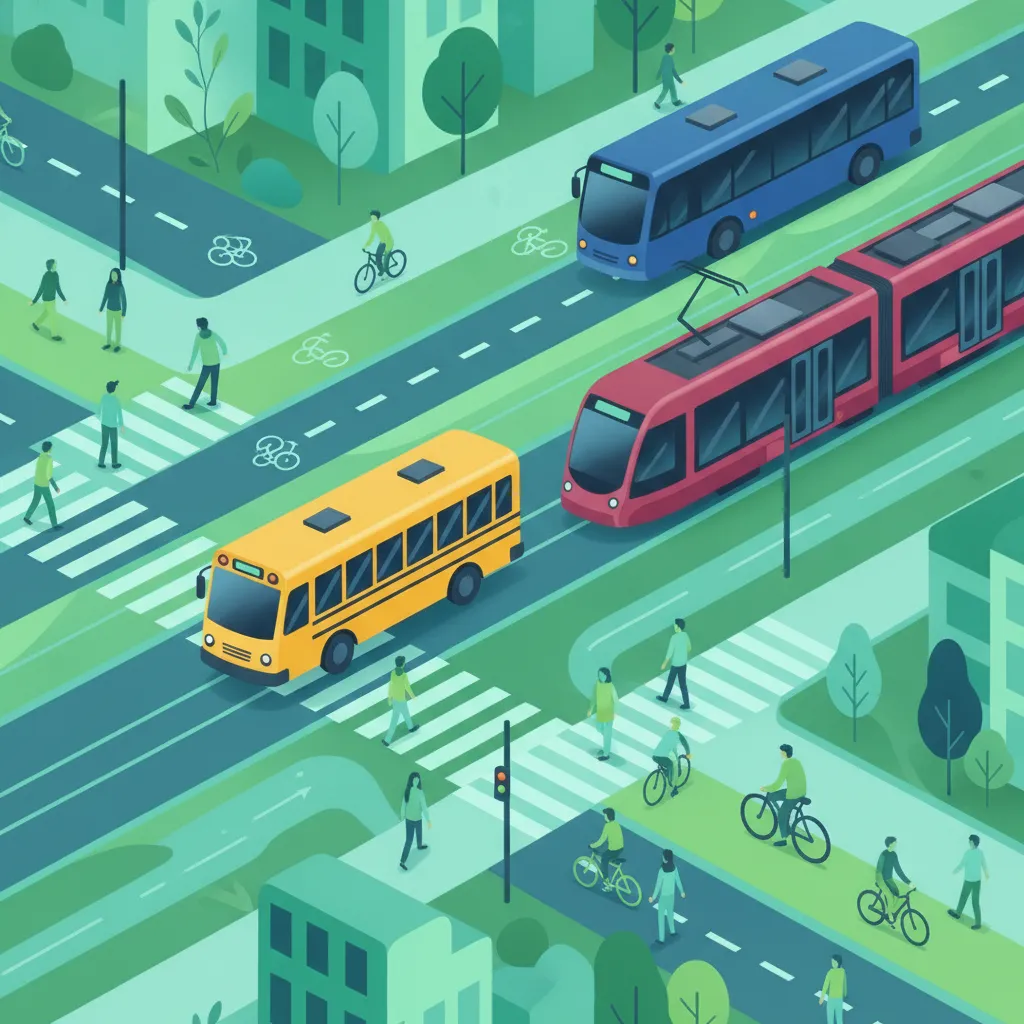
This lesson explains the specific regulations when encountering public transport. It covers the legal requirement to yield to public buses signaling to leave a bus stop and the strict rules for passing school buses with flashing hazard lights. You will also learn about the absolute priority of trams ('Straßenbahn') and how to safely drive on or across their tracks.

This lesson focuses on complex traffic environments where different types of road users share the same space. It provides guidance on situations like driving on streets with integrated tram tracks or where bus and bicycle lanes are part of the roadway. The content emphasizes understanding the specific priority rules and being extra vigilant to anticipate potential conflicts in these busy, shared zones.

This lesson teaches the precise techniques for positioning a passenger vehicle at a bus stop to ensure safety and accessibility. It covers proper alignment with the curb, managing approach speed, and positioning the doors in a safe zone away from hazards. Learners will understand how to perform these maneuvers without disrupting traffic flow and while maintaining awareness of pedestrians and cyclists in the vicinity.
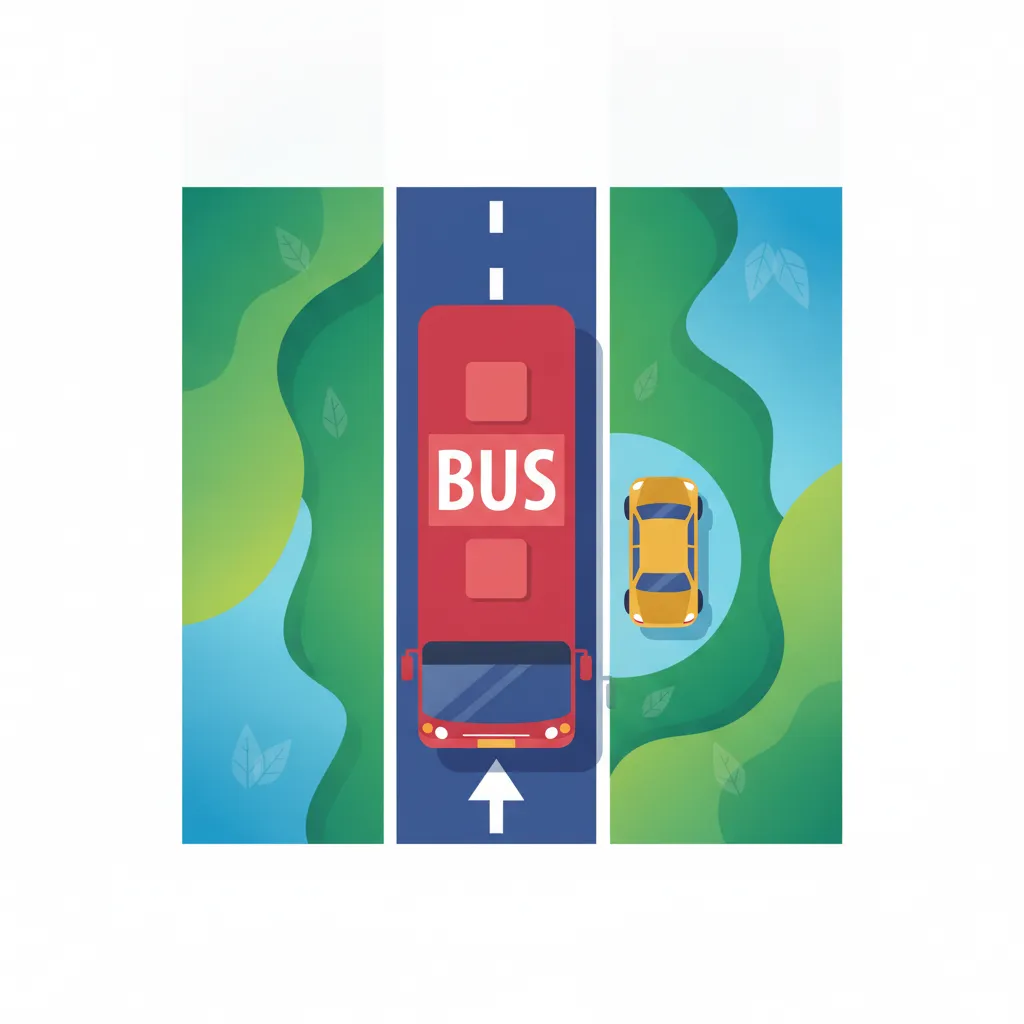
This lesson provides a detailed explanation of the rules governing dedicated bus lanes, including how to interpret markings and adhere to time-based restrictions. It clarifies the priority rules that grant buses precedence in certain traffic situations, such as when pulling out from a stop. Understanding these regulations allows drivers to use bus infrastructure efficiently and legally to maintain schedules and improve traffic flow.
This lesson provides strategies for proactively managing passenger behavior to maintain a safe environment for everyone. It covers techniques for supervising passengers, enforcing rules on seat belt use, smoking, and alcohol, and managing luggage placement. The lesson also addresses how to handle disruptive behavior and the driver's role in assisting passengers during an emergency evacuation to ensure an orderly process.
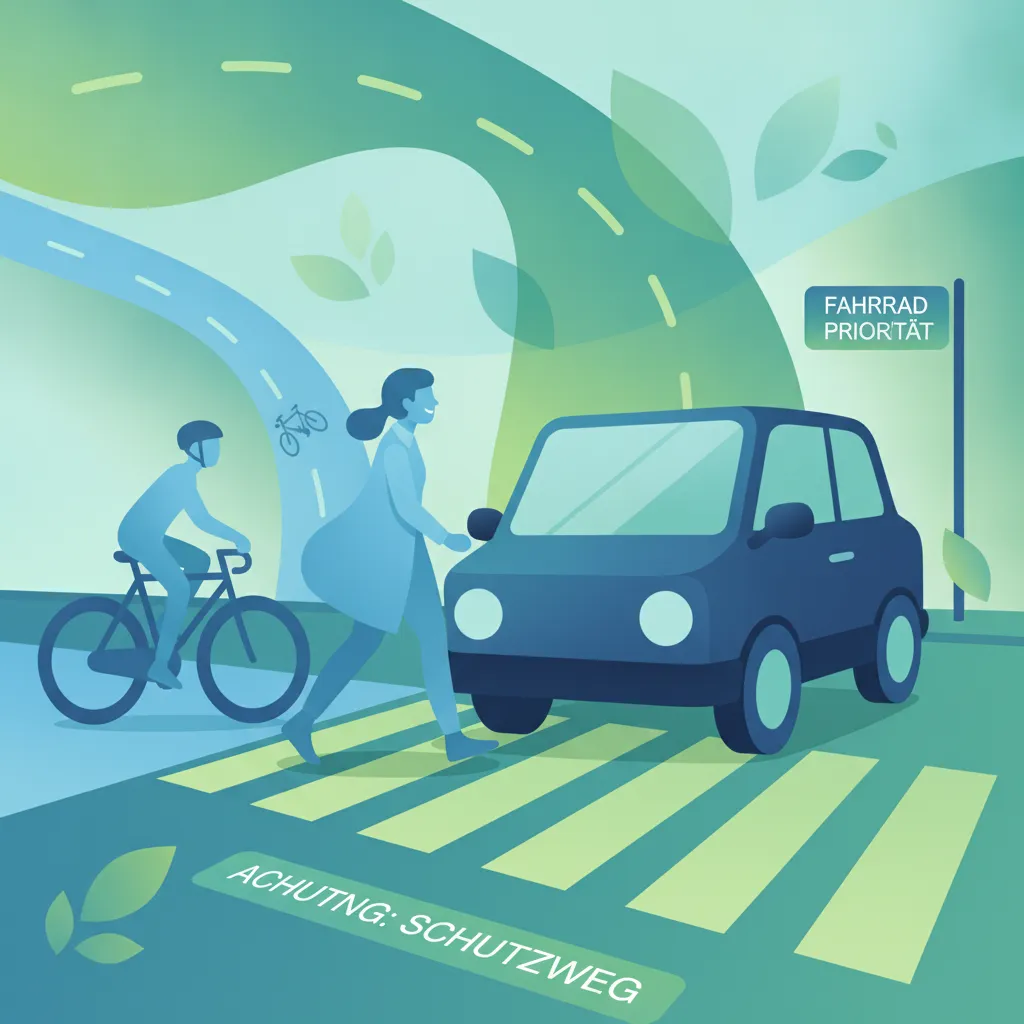
This lesson provides specific guidance on how to safely share the road with pedestrians and cyclists, who are among the most vulnerable road users. It covers the rules of conduct at zebra crossings, traffic lights for pedestrians, and designated cycle lanes. The content emphasizes the importance of vigilance, yielding right-of-way, and maintaining a safe distance to prevent accidents in urban and rural environments.
Find clear answers to common questions learners have about Boarding and Alighting Procedures. Learn how the lesson is structured, which driving theory objectives it supports, and how it fits into the overall learning path of units and curriculum progression in Germany. These explanations help you understand key concepts, lesson flow, and exam focused study goals.
You must ensure the bus is fully stopped, the parking brake is applied, and the vehicle is positioned as close to the curb as possible. Always wait for passengers to clear the door area before closing doors or moving the vehicle.
The kneeling system should be used whenever it significantly aids the entry or exit of passengers, particularly those with reduced mobility, elderly passengers, or parents with prams. It is a key accessibility feature in professional passenger transport.
Questions often focus on the driver's responsibility to monitor the door area via mirrors or cameras before operating the controls. You must show that safety checks are performed continuously before and after passenger movement.
You must ensure that passengers do not block the entry area and that they hold on securely. In professional transport, you are responsible for maintaining a safe environment and may need to instruct passengers to move further into the bus for safety.
Begin your targeted revision now. Use our practice search to quickly find specific German driving theory questions. Filter by StVO rules, road signs, or hazard perception to create your focused study plan. Master challenging areas and prepare confidently for your theoretical driving test.