
This lesson teaches you the critical skills of scanning and shoulder checks to ensure full situational awareness on your motorcycle. Understanding these techniques is essential for both your theory exam and staying safe while riding in complex Italian traffic conditions.

Lesson content overview
For any motorcyclist aspiring to ride safely and confidently on Italian roads, especially those pursuing their A1, A2, or A licenses, developing superior observation skills is paramount. This lesson delves into the fundamental observation techniques required for proactive and defensive riding. It will detail a systematic approach to scanning your road environment, utilizing mirrors effectively, and performing crucial shoulder checks to eliminate blind spots before any maneuver. Strong situational awareness is not just a skill; it's a foundation for anticipating potential hazards, reacting in a timely manner, and significantly reducing collision risk.
Effective observation equips you with the mental picture necessary to anticipate hazards, assess risks, and make informed decisions while riding. Unlike driving a car, a motorcycle offers fewer protective features, making proactive hazard detection an absolute necessity. Your human perception naturally focuses on a narrow cone directly ahead; mirrors and deliberate head-turns expand this field, compensating for inherent blind spots and peripheral limitations. The physics of vehicle motion demand early decision-making to allow sufficient reaction time, making continuous and comprehensive observation a cornerstone of safe motorcycle operation under the Codice della Strada.
Continuous Scanning: This involves an ongoing, systematic visual sweep of your entire environment while riding. Its purpose is to detect developing hazards early, enabling proactive responses rather than reactive ones. This means allocating visual attention to multiple zones: front, sides, rear, and your mirrors, constantly refreshing your mental map of traffic around you.
The Scan Sequence: A structured, repeatable order for checking mirrors, sides, and behind before any lane change, turn, or other lateral maneuver. This sequence ensures no critical area is overlooked during the crucial preparation phase for a maneuver, significantly increasing the probability that hazards are identified before you commit to an action.
Blind Spot Awareness: Acknowledging and actively compensating for areas around your motorcycle that are not visible in your mirrors. These blind spots are a major cause of motorcycle collisions during lane changes, and addressing them explicitly prevents accidents by confirming the adjacent space is clear.
Shoulder Check Execution: A quick, deliberate head and torso turn to directly look over your shoulder, specifically covering your blind spot. This provides direct visual confirmation of the presence or absence of other vehicles or obstacles before you initiate any maneuver, and it must be practiced until it is brief yet effective, without compromising motorcycle control.
Timing of Observation: Observation is not a single, isolated check but an ongoing process. You must perform thorough observation before initiating a maneuver and continuously during the maneuver itself. This maintains awareness of dynamic changes, such as other vehicles accelerating into your intended path or blind spot, ensuring you remain responsive to evolving traffic conditions.
To maintain comprehensive situational awareness, motorcyclists must mentally divide the area around their vehicle into distinct observation zones. These zones must be systematically monitored to ensure no potential hazard is overlooked.
A rider must continuously scan each of these zones, especially before and during maneuvers, ensuring a complete mental picture of their surroundings. Relying solely on mirrors or neglecting quick shoulder checks are common and dangerous mistakes that can lead to collisions.
Mirrors are indispensable tools for indirect vision, allowing you to monitor traffic behind and to the sides without constantly turning your head. However, they have limitations and must be used correctly.
Before every ride, and especially if your motorcycle's mirrors have been disturbed, you must adjust them to ensure an adequate field of view. While stationary, position your mirrors so that you can see the full width of the lane behind you and a small sliver of your own arm or shoulder. This setup allows you to quickly glance and assess traffic in the adjacent lanes without extensive head movement.
Mirrors provide a distorted view; objects may appear further away than they actually are, and their speed can be misjudged. Furthermore, mirrors cannot eliminate blind spots entirely. Misreading mirror images or assuming they provide a complete picture are common mistakes that can lead to hazardous situations. Always remember that mirrors show you some of what's behind, but never everything.
Mirror Check Tip: When checking your mirrors, don't just glance. Actively process the information: identify vehicle types, estimate their speed, and note their relative position. This active observation helps build your overall situational awareness.
The shoulder check, also known as a head-turn, is a crucial maneuver that provides direct visual confirmation of areas not covered by your mirrors – your blind spots. It is a mandatory technique for safe motorcycle operation under the Codice della Strada.
A shoulder check involves a quick, deliberate turn of your head and upper torso to look directly over your shoulder into the adjacent lane or blind spot area. This visual sweep should be brief yet thorough, ensuring you maintain control of your motorcycle and quickly return your focus to the road ahead.
A shoulder check must be performed after mirror checks and immediately before initiating any lateral maneuver. This includes:
Safety Warning: Never initiate a lateral maneuver on your motorcycle without performing a full scan sequence, including a definitive shoulder check. Failing to do so is a common cause of serious collisions.
The scan sequence is a prescribed, systematic order of observational checks designed to ensure all observation zones are verified prior to executing any maneuver. This routine helps reduce the chances of overlooking a vehicle and is obligatory under Italian traffic law (e.g., Codice della Strada) before actions like lane changes, overtaking, and merging.
Front Glance: Quickly check ahead for immediate obstacles or changes in traffic flow that might affect your maneuver. This ensures your immediate path is clear.
Rearview Mirror: Check traffic directly behind you. Are there vehicles approaching rapidly? Is there enough space behind you if you need to adjust speed?
Side Mirrors (intended direction of travel): Verify traffic on the side towards your intended maneuver. For a left lane change, check your left side mirror. For a right turn, check your right side mirror.
Shoulder Check (intended direction of travel): Perform a quick, deliberate head and torso turn to directly confirm the blind spot on the side of your intended maneuver is clear. This is the critical step to confirm no vehicle is hidden from your mirrors.
Final Front Glance: Quickly return your focus to the road ahead to reaffirm your path and check for any new immediate hazards before you execute the maneuver.
Following this structured routine reduces cognitive load and helps prevent tunnel vision, where a rider fixates on one element and misses others. Performing checks too late or skipping steps are common mistakes that leave you vulnerable. For example, when preparing to overtake on a multi-lane road, diligently following this full sequence before accelerating is essential to ensure you have a safe path.
Your head position and visual focus significantly impact your ability to detect hazards and control your motorcycle. Proper head alignment ensures you maintain situational awareness while riding.
Always practice "heads-up" riding, meaning your gaze should be directed well down the road, looking at least 12-15 seconds ahead in urban environments and even further on highways. Avoid looking down at your handlebars, speedometer, or immediate front wheel, as this limits your forward vision and can lead to instability, especially at speed.
While maintaining a forward gaze, it's crucial to actively use your peripheral vision and perform systematic head movements (scan sequence) to avoid "tunnel vision." Tunnel vision occurs when a rider fixates on a single point or object, losing awareness of everything else around them. This can be especially dangerous in heavy traffic or complex intersections where multiple hazards can emerge simultaneously. Your eyes should constantly be moving, processing information from various sources.
Proper head position also aids in motorcycle control, particularly during turns. By looking through the turn, your body naturally aligns, facilitating smoother steering and balance. This aligns your line of sight with your intended path, enabling early detection of hazards within the turn and more precise lane positioning.
The rate at which a rider repeats their visual scan sequence is known as visual scanning frequency. It's a dynamic aspect of observation that must be adjusted based on the riding environment.
As a general rule, a full scan (including mirrors and peripheral checks) should be performed every 2–3 seconds in normal traffic conditions. This frequent updating of your mental picture allows you to track changes in traffic flow, identify new hazards, and monitor the behavior of other road users.
The frequency of your visual scans must increase significantly in more complex or hazardous environments:
Practice makes perfect: Consciously practice increasing your scanning frequency in varied conditions. Over time, this constant visual processing will become second nature, greatly enhancing your hazard perception.
The blind spot is a critical area that every motorcyclist must understand and actively compensate for. It represents the space around your motorcycle that is not visible through any of your mirrors.
A motorcycle's blind spot typically extends from its side, roughly from the rider's elbow, backwards into the adjacent lane for a significant distance. This area can easily conceal an entire car, a bicycle, or another motorcycle, making it exceptionally dangerous if not cleared before a lateral movement. The size and position of blind spots can vary slightly depending on your motorcycle's design and mirror setup.
Even with perfectly adjusted mirrors, the curvature and positioning of mirrors inherently limit their field of view. There will always be zones to the immediate side and slightly to the rear that direct vision cannot reach without a head-turn. This is a physical limitation that cannot be overcome by mirror technology alone.
Due to the existence of blind spots, any lateral maneuver (such as changing lanes, merging, or overtaking) is strictly prohibited without first confirming the blind spot is clear via a shoulder check. Assuming your mirrors are sufficient is a grave and potentially fatal error. On Italian roads, failing to check your blind spot before a lane change can result in severe legal consequences and, more importantly, a high risk of a side-swipe collision.
Situational awareness is the overarching cognitive skill that integrates all observation techniques. It is the comprehensive perception of elements within the rider’s environment, the comprehension of their meaning, and the projection of their future status.
High situational awareness directly drives effective decision-making and hazard anticipation. It allows you to develop a mental model of your environment, identifying potential threats before they become immediate dangers. For instance, noticing a car in your left blind spot while planning to overtake allows you to delay your maneuver and avoid a collision, rather than reacting abruptly. This proactive mindset is critical for safe riding.
The Codice della Strada (Italian Road Code) implicitly and explicitly mandates rigorous observation practices for all drivers, especially motorcyclists, due to their increased vulnerability. Adhering to these rules is not just about avoiding fines; it's about safeguarding your life and the lives of others.
Statement: Before any lane change, overtaking maneuver, or merge onto a new roadway, the rider must verify that the intended lane or path is clear and safe. This verification must be achieved through a combination of mirror checks and a decisive shoulder check. Applicability: This rule applies to all road types and situations where a lateral movement is intended, unless specific road markings (e.g., solid lines) prohibit the maneuver altogether. Legal Status: Mandatory under the Codice della Strada. Rationale: This rule directly prevents collisions that occur when a rider moves into a space already occupied by another vehicle or when an unseen vehicle is rapidly approaching.
Statement: Before starting any ride, the motorcyclist must ensure that all rearview and side mirrors are correctly adjusted to provide an adequate field of view of the traffic behind and to the sides. Applicability: Required before every single journey. Legal Status: Mandatory. Rationale: Correct mirror adjustment is foundational to safe indirect vision, guaranteeing that key indirect vision zones are covered as much as possible, thereby reducing the size of blind spots.
Statement: A shoulder check must be performed immediately prior to and after all necessary mirror checks, just before initiating any lateral maneuver (e.g., lane change, merging). Applicability: Essential for all lateral movements. Legal Status: Mandatory. Rationale: This timing is crucial as it provides the most up-to-date and direct verification of the blind spot just before you commit to an irreversible action, thereby accounting for vehicles that may have entered the blind spot between earlier mirror checks and the start of the maneuver.
Statement: While riding, a motorcyclist must continuously scan the surrounding environment. This observational vigilance must be increased in complex traffic situations, at intersections, roundabouts, and when overtaking. Applicability: This is an ongoing obligation throughout the entirety of every ride. Legal Status: While not a single codified article, continuous observation is an implicit safety obligation. A lack of proper observation leading to an incident could fall under dangerous driving provisions of the Codice della Strada. Rationale: Continuous scanning ensures early detection of developing hazards, providing maximum time to react and reducing the need for sudden, potentially destabilizing maneuvers.
Even experienced riders can sometimes fall into poor observational habits. Recognizing these common errors is the first step toward correcting them and enhancing your safety.
Wrong: Changing lanes after only glancing in your mirrors, assuming the lane is clear. Correct: Always perform the full scan sequence, including a decisive shoulder check, to confirm the blind spot is empty. Consequence: High risk of a side-swipe collision with a vehicle hidden in your blind spot, leading to serious injury or even fatality, and legal liability for dangerous driving under Italian law.
Wrong: Riding with mirrors angled too high, too low, or too inward, only showing a part of the lane behind you or primarily your own body. Correct: Adjust your mirrors while stationary to view the full width of the lane directly behind you, and a small portion of your own shoulder. Consequence: Significantly reduced field of view, missing fast-approaching vehicles or those positioned slightly to your side, leading to undetected hazards and potential accidents.
Wrong: Fixating solely on the vehicle immediately ahead of you, ignoring traffic to your sides or behind. Correct: Maintain continuous scanning of all observation zones, frequently checking side mirrors and using peripheral vision, especially in dense traffic. Consequence: Failure to notice vehicles intending to overtake you, sudden lane changes by other drivers, or unexpected movements from the side, leading to a collision.
Wrong: Accelerating to overtake another vehicle without thoroughly checking rearward traffic via mirrors and a shoulder check. Correct: Before initiating an overtake, perform the full scan sequence to ensure there is sufficient gap behind you and no vehicle is already attempting to overtake you from behind at a higher speed. Consequence: Collision with a faster-approaching vehicle from behind or a vehicle in your blind spot that you failed to detect.
Wrong: Initiating a lane change or lateral movement before or during the shoulder check, rather than after confirming the blind spot is clear. Correct: Complete your shoulder check, ensure the blind spot is definitively clear, and then, and only then, initiate your maneuver. Consequence: Striking a vehicle that is already occupying your intended lane, as your motorcycle has started to drift before you've confirmed it's safe.
Effective observation is dynamic; it requires constant adaptation to changing environmental and traffic conditions.
Understanding the direct links between your observation practices and safety outcomes reinforces the importance of these techniques.
This lesson on observation techniques is a fundamental building block within your Italian Driving License Theory Course for Motorcycle Categories A1, A2, & A.
To fully grasp and apply these observation techniques, you should have:
The skills learned in this lesson are critical prerequisites for more advanced riding techniques and safety concepts, including:
Let's illustrate these techniques with common riding situations:
Setting: You are riding your motorcycle on a six-lane Italian motorway (autostrada) in moderate traffic under sunny conditions. You intend to move from the rightmost lane to the middle lane.
Correct Behavior:
Incorrect Behavior: You glance at your mirrors, see a gap, and start to move left without performing a shoulder check. A small, dark-colored car that was perfectly hidden in your left blind spot is now alongside you, forcing you to swerve abruptly back into your original lane, potentially causing a collision or losing control.
Setting: You are on a two-lane city street with parked cars on the right, light traffic. You encounter a slower vehicle ahead that you wish to overtake.
Correct Behavior:
Incorrect Behavior: You only check your rearview mirror and, seeing a gap, you accelerate to overtake. As you pull out, a scooter that was filtering through traffic and sitting in your left blind spot is now directly alongside you, causing a near-miss and requiring an emergency brake or swerve.
Setting: You are approaching a four-way intersection in moderate urban traffic, intending to turn left.
Correct Behavior:
Incorrect Behavior: You only focus on oncoming traffic, failing to perform a left shoulder check before turning. A bicycle rider, lawfully positioned to your left, is struck as you initiate your turn, having been completely unseen in your blind spot.
The ability to accurately and continuously observe your surroundings is the most critical skill for any motorcyclist. It forms the foundation of defensive riding and hazard perception, significantly reducing the risk of collisions.
These foundational concepts equip motorcyclists with the essential observational skills needed for safe, defensive riding. They are the bedrock for understanding and applying further lessons on signaling, speed management, advanced maneuvering, and navigating the diverse challenges of Italian roads.
This lesson teaches the essential observation techniques that form the foundation of safe motorcycle riding in Italy. The systematic scan sequence—checking mirrors followed by decisive shoulder checks before every lateral maneuver—is mandatory under the *Codice della Strada* and is the primary defense against blind spot collisions. Continuous visual scanning at appropriate frequencies adapts to traffic density and conditions, while proper head position prevents dangerous tunnel vision. Understanding observation zones, mirror limitations, and situational awareness enables proactive hazard detection and timely reactions, significantly reducing collision risk across all Italian road environments.
A short set of high-value points that capture the most important learning from this lesson.
The mandatory pre-maneuver scan sequence is: front glance → rearview mirror → side mirrors → shoulder check → final front glance
Mirrors alone cannot eliminate blind spots; shoulder checks are non-negotiable before any lateral maneuver
Visual scanning must occur every 2–3 seconds in normal conditions, increasing to every 1–2 seconds in heavy traffic or complex environments
Situational awareness involves perceiving hazards, comprehending their meaning, and projecting future events to anticipate threats
Proper mirror adjustment should show the full lane width behind you plus a small portion of your own shoulder
Explore all units and lessons included in this driving theory course.
Adjust mirrors before every ride so they show the full width of the lane behind you
A shoulder check is a quick, deliberate head and torso turn to directly view the blind spot, not a lazy glance
Shoulder checks must be performed after mirror checks and immediately before initiating lane changes, overtaking, merging, or turns
Visual scanning frequency must increase in busy urban traffic, at intersections, during overtaking, in adverse weather, and at higher speeds
Objects in mirrors appear further away than they actually are and their speed can be misjudged
Changing lanes after only checking mirrors, assuming the blind spot is clear without a shoulder check
Performing the shoulder check too late—after the maneuver has already begun—leaving no time to react to hidden vehicles
Adjusting mirrors incorrectly so they show only your own body or an inadequate view of adjacent lanes
Suffering tunnel vision by fixating on the vehicle ahead while ignoring side mirrors, rearview mirror, and peripheral vision
Looking over your shoulder for too long, causing loss of forward awareness and potential control issues
Lesson content overview
A short set of high-value points that capture the most important learning from this lesson.
The mandatory pre-maneuver scan sequence is: front glance → rearview mirror → side mirrors → shoulder check → final front glance
Mirrors alone cannot eliminate blind spots; shoulder checks are non-negotiable before any lateral maneuver
Visual scanning must occur every 2–3 seconds in normal conditions, increasing to every 1–2 seconds in heavy traffic or complex environments
Situational awareness involves perceiving hazards, comprehending their meaning, and projecting future events to anticipate threats
Proper mirror adjustment should show the full lane width behind you plus a small portion of your own shoulder
Explore all units and lessons included in this driving theory course.
Adjust mirrors before every ride so they show the full width of the lane behind you
A shoulder check is a quick, deliberate head and torso turn to directly view the blind spot, not a lazy glance
Shoulder checks must be performed after mirror checks and immediately before initiating lane changes, overtaking, merging, or turns
Visual scanning frequency must increase in busy urban traffic, at intersections, during overtaking, in adverse weather, and at higher speeds
Objects in mirrors appear further away than they actually are and their speed can be misjudged
Changing lanes after only checking mirrors, assuming the blind spot is clear without a shoulder check
Performing the shoulder check too late—after the maneuver has already begun—leaving no time to react to hidden vehicles
Adjusting mirrors incorrectly so they show only your own body or an inadequate view of adjacent lanes
Suffering tunnel vision by fixating on the vehicle ahead while ignoring side mirrors, rearview mirror, and peripheral vision
Looking over your shoulder for too long, causing loss of forward awareness and potential control issues
Explore search topics learners often look for when studying Observation Techniques and Shoulder Checks. These topics reflect common questions about road rules, driving situations, safety guidance, and lesson level theory preparation for learners in Italy.
Browse additional driving theory lessons that cover connected traffic rules, road signs, and common driving situations related to this topic. Improve your understanding of how different rules interact across everyday traffic scenarios.
Explore realistic riding scenarios common in Italy, focusing on how to apply advanced observation skills, including mirror use and shoulder checks, in complex traffic situations. This lesson builds on fundamental techniques for better hazard perception and decision-making.

This lesson provides specific strategies for riding on narrow rural roads, which often feature poor surfaces and limited sightlines. It details the techniques for approaching and navigating hairpin bends, including selecting the correct line, managing speed before entry, and using appropriate gear selection. The content emphasizes anticipating oncoming traffic and potential hazards hidden around blind corners for enhanced safety.

This lesson addresses the specific challenges of sharing the road with two-wheeled motor vehicles like motorcycles and scooters. It highlights their reduced visibility and stability compared to cars, requiring drivers to double-check blind spots and maintain a greater following distance. The content also discusses common behaviors like lane filtering and the need for drivers to be predictable and signal intentions clearly.

This lesson addresses the increased complexity of overtaking in urban environments with dense traffic and frequent intersections. It stresses the importance of thorough observation, including mirror and blind spot checks, to ensure a safe gap is available. The content covers judging speed differentials and the necessity of clear signalling to execute the maneuver without causing conflict with other road users.

This lesson focuses on the vital systems for visibility and communication: mirrors, lighting, and signals. It provides instruction on the proper adjustment of mirrors to minimize blind spots and the correct use of headlamps, indicators, and brake lights as per Italian regulations. The content underscores how maintaining these systems in full working order is crucial for being seen and signalling intentions clearly in traffic.

This lesson provides a comprehensive guide to riding on high-speed motorways, or autostrade. It details the correct procedures for safely merging into traffic from an entry ramp and exiting via a deceleration lane. The content reinforces strict lane discipline, rules for overtaking, and the importance of maintaining a significantly larger following distance to compensate for higher speeds and potential wind gusts.

This lesson focuses on the unique demands of mountain riding, from handling steep inclines and declines to understanding the impact of altitude on the motorcycle's engine performance. It covers the effective use of engine braking on descents to prevent brake overheating. The content also prepares riders for the rapidly changing weather conditions, such as wind and fog, that are common at higher elevations.

This lesson equips riders to safely manage the challenges posed by road construction zones. It explains how to interpret temporary signage, navigate lane closures or diversions, and maintain heightened awareness for surface hazards like gravel or steel plates. The content emphasizes the need to reduce speed and increase following distances to safely share the road with large construction vehicles and workers.

This lesson introduces the principles and etiquette of organized group riding to ensure safety and cohesion. It covers common formations, such as staggered, and the importance of maintaining consistent spacing between riders. The content also details the standardized hand signals used for communication within the group and defines the responsibilities of key roles like the lead and sweep riders.
This lesson focuses on the comprehensive duties of a motorcyclist, from ensuring vehicle and equipment legality to following traffic regulations. It covers key obligations mandated by the Codice della Strada, such as mandatory insurance coverage and adherence to environmental rules. The material reinforces the importance of responsible road conduct and the legal consequences of non-compliance.

This lesson focuses on the correct use of mirrors to maintain situational awareness and the techniques required to manage blind spots. It explains how to adjust mirrors for the best possible view of surrounding traffic. You will also learn why shoulder checks are critical before changing lanes or turning to detect vehicles hidden in blind zones.
Learn to recognize and avoid frequent errors in motorcycle observation, such as incorrect mirror use and neglected shoulder checks. Understand how these mistakes create dangerous blind spots and their consequences under Italian traffic law.
This lesson focuses on the correct use of mirrors to maintain situational awareness and the techniques required to manage blind spots. It explains how to adjust mirrors for the best possible view of surrounding traffic. You will also learn why shoulder checks are critical before changing lanes or turning to detect vehicles hidden in blind zones.

This lesson teaches riders how to strategically position their vehicle within a lane for maximum visibility to others. It explains how to avoid riding in the blind spots of larger vehicles and how to maintain a safe buffer zone. Proper positioning enhances a rider's presence on the road and is a key component of defensive driving in mixed traffic.
This lesson focuses on the vital systems for visibility and communication: mirrors, lighting, and signals. It provides instruction on the proper adjustment of mirrors to minimize blind spots and the correct use of headlamps, indicators, and brake lights as per Italian regulations. The content underscores how maintaining these systems in full working order is crucial for being seen and signalling intentions clearly in traffic.
This lesson addresses the specific challenges of sharing the road with two-wheeled motor vehicles like motorcycles and scooters. It highlights their reduced visibility and stability compared to cars, requiring drivers to double-check blind spots and maintain a greater following distance. The content also discusses common behaviors like lane filtering and the need for drivers to be predictable and signal intentions clearly.
This lesson is focused on strategies to increase a motorcyclist's conspicuity in traffic. It explains the benefits of using high-visibility clothing in fluorescent colors for daytime riding and the critical role of reflective materials at night. The content also covers how proper use of lighting, including daytime running lights, can significantly reduce the risk of accidents by making the rider more noticeable to others.
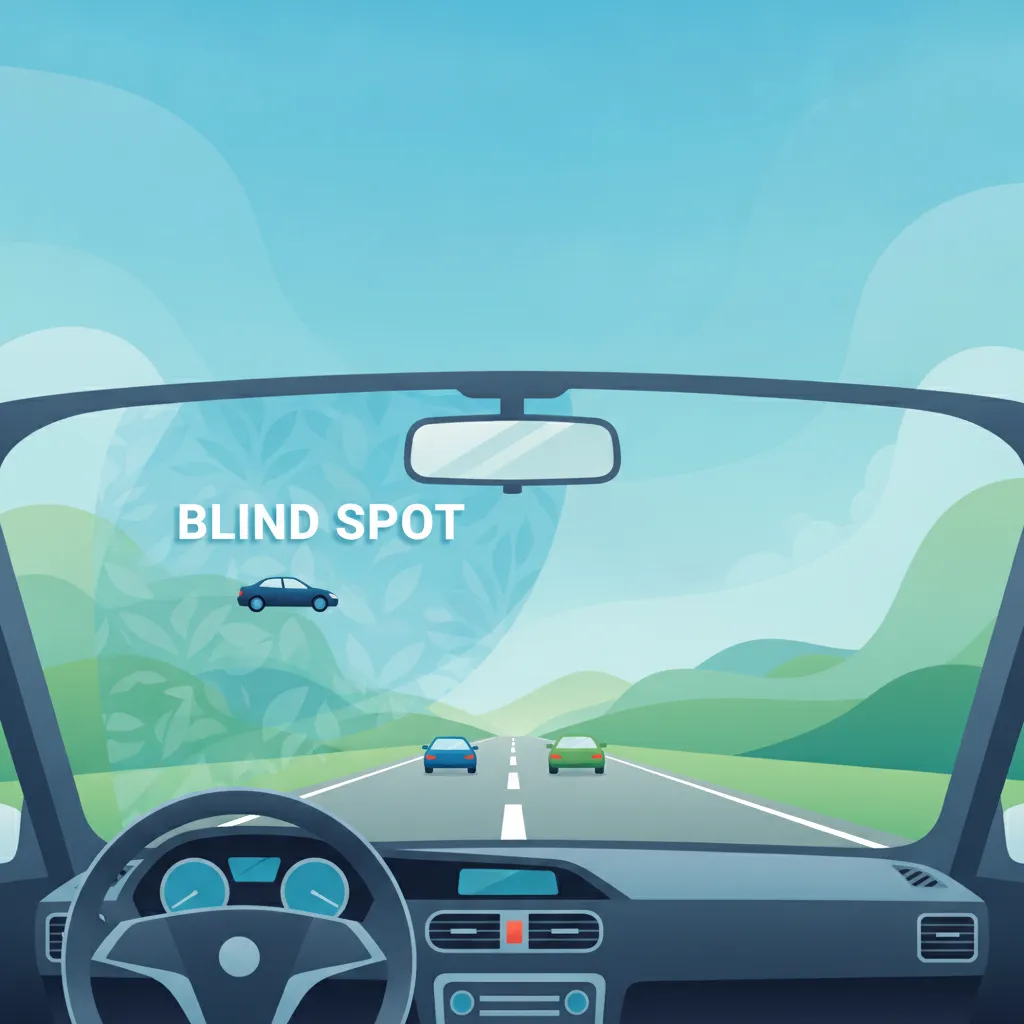
This lesson highlights the large blind spots—or 'no-zones'—that exist to the front, back, and sides of a heavy vehicle, where smaller vehicles, cyclists, and pedestrians can disappear from view. It teaches proactive scanning techniques, the importance of anticipating hazards, and how to use mirrors and direct vision effectively to manage these high-risk areas. Awareness and mitigation of blind spots are crucial for preventing collisions, especially in urban traffic.

This lesson explains the critical importance of a continuous and systematic visual scan for maintaining 360-degree awareness around the vehicle. It details the correct technique for using interior and exterior mirrors in conjunction with direct vision and shoulder checks to effectively identify hazards. The content emphasizes the need to be aware of blind spots before any maneuver, such as changing lanes or turning.
This lesson addresses the increased complexity of overtaking in urban environments with dense traffic and frequent intersections. It stresses the importance of thorough observation, including mirror and blind spot checks, to ensure a safe gap is available. The content covers judging speed differentials and the necessity of clear signalling to execute the maneuver without causing conflict with other road users.

This lesson explains the concept of using lane positioning as a proactive safety tool. It details how to select a position within the lane to maximize visibility to other drivers, especially at junctions, and to create a buffer of space from potential dangers. The content emphasizes the 'see and be seen' principle, teaching riders to constantly adjust their position based on traffic, road conditions, and potential escape routes.

This lesson addresses two key aspects of defensive riding: maintaining a safe buffer and performing overtaking maneuvers. It details how to use time-based rules, such as the two-second rule, to ensure adequate following distance for reaction. The content also provides a structured approach to overtaking, covering observation, signalling, speed management, and ensuring sufficient clearance before returning to the lane.
Find clear answers to common questions learners have about Observation Techniques and Shoulder Checks. Learn how the lesson is structured, which driving theory objectives it supports, and how it fits into the overall learning path of units and curriculum progression in Italy. These explanations help you understand key concepts, lesson flow, and exam focused study goals.
Even with two mirrors, there are significant blind spots to the side and slightly behind the motorcycle that mirrors cannot cover. A physical shoulder check is the only way to ensure the lane is clear before you commit to a turn or lane change.
You should maintain a constant rhythm of observation, checking your mirrors and surroundings frequently. Whenever you intend to change your speed or road position, you must perform a deliberate, visible shoulder check to show the examiner you have assessed all hazards.
Yes, many questions regarding urban traffic, overtaking, and intersections are designed to verify your understanding of proper observation procedures and the risks of failing to check blind spots.
Yes. In urban areas, you should use 'foveal' vision to focus on specific hazards like cars pulling out, while using your peripheral vision to monitor the wider environment. Constantly checking for opening car doors and pedestrians is vital.
Start searching now to pinpoint exactly which Italian driving theory topics, road signs, or traffic rules you need to master. Use our advanced filters to build a custom practice session and ensure you're fully prepared for every aspect of your official driving licence exam.