
This lesson focuses on the practical challenges of harvest traffic, where agricultural vehicles frequently share roads during peak seasons. We will analyse real-world case studies to understand how to safely coordinate speed, maintain distances, and communicate intentions with other road users. Understanding these dynamics is crucial for safe operation and passing your Category T theory exam.
Lesson content overview
During peak agricultural periods, particularly harvest season, public roads in rural Poland witness a unique traffic phenomenon: dense concentrations of agricultural vehicles. This lesson provides a comprehensive guide to safely managing and navigating these specific conditions, ensuring compliance with Polish traffic law (Prawo o ruchu drogowym) and promoting harmonious road sharing. It delves into real-world scenarios where multiple tractors and trailers operate on limited road space, exploring critical strategies for coordinated movement, maintaining safe distances, effective signaling, and managing field access points.
Harvest traffic presents a distinct set of challenges for all road users. Unlike typical vehicle flows, it is characterized by high-density, low-speed convoys of heavy machinery, often operating on narrow rural roads designed for lighter, faster traffic. Understanding these dynamics is crucial for drivers of Category T agricultural vehicles, as their actions directly impact safety and efficiency.
Agricultural vehicle convoys consist of tractors, often pulling one or more trailers, moving between fields, storage facilities, and processing plants. These combinations are slow, wide, and heavy, leading to significantly longer braking distances and reduced maneuverability compared to standard passenger vehicles. The sheer number of these vehicles during harvest peaks can overwhelm road infrastructure, creating bottlenecks and increasing the risk of accidents. Drivers must be prepared for variable loads, temporary stops for loading or unloading, and frequent entries and exits from fields that may lack formal intersections.
Operating agricultural vehicles on public roads is subject to specific regulations under Polish law (Prawo o ruchu drogowym). These laws are designed to protect both the drivers of agricultural machinery and other road users from the inherent risks associated with slow, heavy vehicles. Key legal areas include specific speed limits for Category T vehicles, mandatory lighting requirements, rules for signaling intentions, and right-of-way protocols at field access points. Adherence to these regulations is not only a legal obligation but also a fundamental aspect of safe driving practice during harvest.
Safe road sharing during harvest requires a proactive approach centered on several core principles. These principles aim to mitigate risks associated with the unique characteristics of agricultural traffic and ensure smooth, predictable movement for all.
Traffic coordination refers to the collective adjustment of speed, lane usage, and timing among multiple agricultural vehicles sharing a road segment. Its primary purpose is to prevent bottlenecks and "stop-and-go" waves that can lead to rear-end collisions, especially given the extended braking distances of heavy machinery. Drivers must constantly monitor surrounding vehicles and anticipate movements, adjusting their speed and position proactively to maintain a steady flow. This collective responsibility helps maximize road capacity while minimizing disruptions.
A safe following distance is the minimum longitudinal gap that allows a tractor-trailer combination to stop safely without hitting the vehicle ahead, taking into account load, road conditions, and vehicle type. For heavy agricultural vehicles, this distance is significantly longer than for passenger cars due to increased mass and inertia. Compensating for longer braking distances and reduced maneuverability when hauling heavy loads is paramount. A general guideline for tractors and trailers is to maintain a gap of at least 4 seconds or, at 20 km/h, approximately 30 meters. This distance must be further extended in adverse conditions.
Speed harmonization involves aligning the travel speeds of all agricultural vehicles within a localized traffic cluster to a common, appropriate limit for the road segment and traffic density. This practice reduces dangerous speed differentials that can provoke sudden braking or risky overtaking attempts on narrow roads. Drivers must select a speed that respects legal limits but also adjusts for the specific load, road slope, and prevailing weather conditions. The goal is to create a predictable and uniform flow, minimizing unexpected maneuvers within the convoy and for other road users.
The effective use of visual and auditory signals is critical for conveying intentions to other drivers and road users. This includes directional indicators, hazard warning lights, and, in specific circumstances, the horn. Proper signaling provides predictability, which is especially important at field access points where visibility may be limited and sudden maneuvers are common. According to Polish regulations, auxiliary lighting (like hazard lights) is mandatory when traveling at speeds of 20 km/h or less, and turn signals must be activated at least 30 meters before any maneuver. Using these signals correctly helps prevent misunderstandings and potential collisions.
Field access points, where agricultural tracks intersect public roads, are common sites for collisions due to yielding violations. Legal priority rules dictate who proceeds first at these intersections to ensure an orderly entry and exit without obstructing main traffic flow. Vehicles entering a public road from a field access must yield (Ustąp pierwszeństwa) to vehicles already on the road, unless specific signage indicates otherwise. Drivers must approach these points with extreme caution, stopping completely, assessing traffic, and only proceeding when a safe gap is available.
Proper load distribution and securement are fundamental for maintaining vehicle stability during all phases of driving: acceleration, braking, and cornering. An improperly distributed load can cause trailer sway, reduce traction, lead to uneven braking, and increase the risk of rollover. Loads must be centered, secured, and must not exceed the axle weight limits prescribed for Category T vehicles. Continuous monitoring of load stability, particularly with dynamic loads like liquids or shifting bulk, is essential.
Overtaking slower agricultural vehicles on narrow rural roads requires careful judgment and adherence to specific safety protocols. These roads often lack sufficient width for safe passing, and visibility can be restricted by curves, hills, or roadside vegetation. Overtaking should only be attempted when the road width clearly allows both vehicles to pass safely without encroaching on the oncoming lane or forcing other vehicles off the road. Polish regulations prohibit overtaking where visibility is less than 100 meters or where the road width is insufficient for two-way traffic (typically less than 3.5 meters).
Expanding on the core principles, these key concepts provide deeper insights into specific aspects of managing agricultural vehicle operations on public roads.
Harvest traffic flow refers to the characteristic movement patterns of convoys of tractors and trailers during peak seasons. Common patterns include linear convoys (vehicles following in a single line), staggered entry (vehicles joining a main road at different points), and bidirectional crossings (vehicles moving in opposite directions on narrow roads). Drivers will encounter long strings of vehicles moving at similar low speeds, often with temporary pauses for loading or unloading. It is critical to obey specific speed limits (e.g., maximum 40 km/h outside built-up areas, 20 km/h within villages) and maintain safe gaps. A common mistake is to assume unlimited space, leading to excessive tailgating.
Speed synchronization (Synchronizacja prędkości) is the deliberate alignment of travel speeds among all agricultural vehicles within a localized traffic cluster. This practice minimizes speed differentials, thereby reducing the need for sudden braking or dangerous overtaking maneuvers. For example, if one tractor with a heavy load needs to travel at 25 km/h, the entire convoy should ideally adjust to this speed. This ensures a smoother, more predictable flow for everyone involved and for other road users. Drivers must always prioritize safety and adjust speed not just to legal limits but also to the capabilities of the slowest or most heavily loaded vehicle in the convoy, factoring in terrain and weather.
The safe following distance for agricultural vehicles is the minimum distance required to stop safely without colliding with the vehicle ahead. This calculation must factor in speed, load, road condition, and driver reaction time. While time-based distances (e.g., 4 seconds) are practical, understanding space-based distances (e.g., approximately 30 meters at 20 km/h) provides a tangible reference. Polish road law (art. 9 §1) mandates maintaining a distance that allows for safe braking. A critical error is applying the "car-driver" 2-second rule without accounting for the significantly greater inertia and longer braking distances of a loaded tractor-trailer combination. Increasing this gap is essential on downhill slopes or wet surfaces.
An effective signaling protocol for harvest traffic involves the mandatory use of visual and, occasionally, auditory signals specific to agricultural vehicles. This includes turn indicators for any change of direction, hazard warning lights to indicate a slow-moving or temporarily stopped vehicle, and the horn for warning of imminent danger. For instance, at a field entrance, a tractor must activate hazard lights while stopping to assess traffic and use turn indicators to signal its intended direction before merging. Polish regulations mandate auxiliary lighting when speeds are 20 km/h or less, further increasing conspicuity. Neglecting hazard lights in poor visibility or relying solely on the horn are common mistakes that reduce predictability and increase risk.
Access point management involves precise procedures for entering or exiting a public road via a field gate or other agricultural access. This includes strict adherence to yielding rules and proper signaling. At uncontrolled field access points, drivers must stop before the public road, assess oncoming traffic carefully, and proceed only when a sufficient and safe gap appears. Polish road code (art. 35) explicitly states that vehicles entering from a side road or property must give way to traffic on the main road unless signs indicate otherwise. Misinterpreting right-of-way, especially at unmarked or temporary access points, is a frequent cause of collisions.
Overtaking agricultural vehicles on narrow rural roads demands extreme caution. The decision to pass should only be made if the road width permits both the agricultural vehicle and the overtaking vehicle (or the oncoming traffic, if applicable) to proceed safely without any risk of collision. This may involve using wide shoulders as temporary passing zones if available and safe. Polish law restricts overtaking on roads where visibility is less than 100 meters or where the road width is insufficient for safe two-way traffic (typically less than 3.5 meters). Attempting to overtake on a curve, near an intersection, or when the opposite lane is occupied are dangerous and illegal practices.
Load distribution refers to how cargo weight is arranged on a tractor-trailer, profoundly influencing its center of gravity and, consequently, its stopping distance and cornering stability. A front-heavy load can reduce steering control, while a rear-heavy load increases braking distance and can cause dangerous trailer sway, especially during lane changes or on uneven surfaces. Even load distribution is crucial for maintaining traction and ensuring optimal braking performance. Loads must be securely fastened and must not exceed the axle load limits specified in the vehicle's registration. Ignoring these principles can lead to loss of control, particularly when braking suddenly or navigating curves.
Harvest season often coincides with unpredictable weather, making weather-adjusted driving paramount. This involves modifying driving behavior in response to adverse conditions such as rain, fog, snow, or strong winds. In wet conditions, for instance, tire traction significantly decreases, necessitating a speed reduction of at least 30% and a corresponding increase in following distance. In fog, auxiliary lights become mandatory to enhance visibility. Polish law requires drivers to adapt their speed and driving style to prevailing visibility and road conditions, irrespective of posted speed limits. Failure to adjust can lead to hydroplaning on wet surfaces, skidding on icy roads, or complete loss of control.
Understanding the specific legal requirements for Category T vehicles in Poland is fundamental to safe and lawful operation. These regulations, primarily derived from the Prawo o ruchu drogowym, address the unique characteristics of agricultural machinery.
For Category T vehicles, strict speed limits apply to mitigate risks associated with their size and operational characteristics. The maximum speed permitted on public roads outside built-up areas is 40 km/h. Within villages or built-up zones (obszar zabudowany), the maximum speed is further reduced to 20 km/h. These limits are mandatory according to Prawo o ruchu drogowym, art. 48, and are crucial for preventing accidents with higher-speed traffic and protecting all road users.
To enhance conspicuity, agricultural vehicles traveling at low speeds are required to use auxiliary lighting. Specifically, hazard or auxiliary lights must be illuminated when the vehicle's speed is 20 km/h or less on public roads, particularly in low-visibility conditions such as dusk, night, or fog. This requirement, stipulated in Prawo o ruchu drogowym, art. 61, significantly increases the visibility of slow-moving machinery to other drivers, preventing potential rear-end collisions.
Clear communication of intentions is a legal obligation. Drivers must use turn signals at least 30 meters before any turn or entry onto a public road. When stopping temporarily at an access point, such as a field gate, flashing hazard lights are mandatory to alert other road users to the vehicle's stationary or slow-moving status. This regulation (Prawo o ruchu drogowym, art. 113) provides predictive information, allowing other drivers to anticipate maneuvers and react safely.
Vehicles entering a public road from a side agricultural access point must give way (ustąp pierwszeństwa) to traffic already on the main road, unless specific signage clearly indicates otherwise. This rule, enshrined in Prawo o ruchu drogowym, art. 35, is critical for preventing collisions at junctions where visibility may be limited and ensures the main traffic flow is not disrupted.
While not always specified with an exact meter value in all contexts, Polish road law (Prawo o ruchu drogowym, art. 9) mandates that drivers maintain a distance from the vehicle ahead that allows for a safe stop, given the vehicle's load, speed, and road conditions. For heavy agricultural vehicles, a practical minimum gap is approximately 30 meters (or at least 4 seconds) when traveling at 20 km/h. This accounts for the significantly longer braking distances of loaded tractors and trailers.
Specific restrictions apply to overtaking maneuvers involving agricultural vehicles, particularly on narrower rural roads. Overtaking is strictly prohibited on roads where visibility is less than 100 meters (e.g., on curves, near hillcrests) or where the road width is less than 3.5 meters for two-way traffic. These rules (Prawo o ruchu drogowym, art. 45) are designed to guarantee sufficient space for returning to the original lane without endangering oncoming traffic or forcing other vehicles off the road.
The horn may be used to warn of imminent danger but is not to be used as a primary means of communication in normal traffic flow. Excessive or continuous use of the horn is generally prohibited (Prawo o ruchu drogowym, art. 30), except in situations where a clear and immediate danger of collision exists. It should always complement visual signals rather than replace them.
All cargo transported by agricultural vehicles must be properly secured to prevent shifting during transit. Furthermore, the load must not exceed the axle load limits and total permissible mass indicated on the vehicle's registration documents. These regulations (Prawo o ruchu drogowym, art. 67) are critical for preventing dangerous load shifts that can lead to loss of control, vehicle instability, and accidents.
Understanding common mistakes and complex scenarios is vital for developing sound judgment in harvest traffic. These examples highlight where drivers often falter and the severe consequences that can follow.
One of the most frequent violations is tailgating, especially on narrow field access roads or within convoys. When a driver follows too closely, their reaction time is severely reduced, leaving insufficient space to stop if the lead tractor brakes suddenly. This often results in rear-end collisions, which can cause significant damage and injury, particularly given the mass difference between agricultural vehicles.
Attempting to overtake another agricultural vehicle on a single-lane road without a proper passing zone is extremely dangerous. Such maneuvers often lead to obstruction of oncoming traffic, forcing them to swerve or brake abruptly, and can result in severe head-on collisions, especially on roads with limited visibility.
Neglecting to use hazard lights when traveling at low speeds or in adverse conditions, such as misty weather, is a common oversight. A tractor proceeding without auxiliary lights becomes virtually invisible to other road users, including cyclists and pedestrians, leading to near-misses or serious accidents.
A tractor merging from a side field entrance onto a main road without yielding to approaching traffic (even if it appears to be at a moderate speed) is a frequent cause of accidents. This misjudgment forces other drivers to brake sharply or swerve, increasing the risk of side-impact collisions or multi-vehicle incidents.
Improper load securing, such as transporting an unfastened hay bale, can have dire consequences. If the load shifts during braking or cornering, it can cause severe trailer sway, lead to loss of control, and potentially result in the vehicle tipping over or colliding with roadside obstacles.
Maintaining the legal speed limit of 40 km/h on a wet dirt road during heavy rain, for example, is a critical error. While legal, it is unsafe. Such conditions drastically reduce traction and can lead to hydroplaning or skidding, causing the driver to lose control. The correct behavior would be to reduce speed by at least 30% and increase following distances.
Continuously using the horn to signal an intention to turn, instead of relying primarily on visual indicators, can cause confusion among other drivers. The horn should be reserved for warning of immediate danger, not as a substitute for clear and consistent visual signaling.
Driving an agricultural vehicle safely demands adaptability. Conditions are rarely static, and drivers must constantly adjust their behavior based on external factors.
In rain, fog, or snow, speed must be reduced by at least 30%, and following distances increased by 50%. In heavy fog, auxiliary lights become mandatory regardless of the time of day. Wet surfaces significantly reduce tire friction, effectively doubling braking distances.
At dusk or during the night, and whenever visibility is reduced, hazard lights must be used when traveling at 20 km/h or less. Turn signals must be clearly illuminated and activated at least 30 meters before any maneuver. Enhanced vigilance for unlit obstacles or vulnerable road users is also paramount.
On a two-lane country road, overtaking is permissible only if the road width exceeds 3.5 meters and visibility is greater than 100 meters. On narrow, single-lane farm tracks, overtaking might be impossible or require a complete stop and even reversal if no designated passing zone exists. Each road type demands a different approach to lane utilization and interaction with other traffic.
Heavy loads dramatically increase braking distance and influence vehicle handling. Drivers must always adjust their following gap to compensate for this. Trailer sway, often caused by uneven loads or sudden movements, necessitates slower cornering speeds and gentle steering inputs to maintain control. The specific dynamics of the tractor-trailer combination must be constantly assessed.
When pedestrians, cyclists, or motorcyclists are present near a field access point or on narrow roads, additional caution and significantly reduced speed are always required. Regardless of legal priority, drivers of agricultural vehicles must yield to vulnerable road users and ensure their safety, as they are far less protected in a collision.
Understanding the cause-and-effect relationships in driving helps predict outcomes and reinforces safe practices.
This lesson builds upon several foundational areas of knowledge crucial for Category T drivers.
Legal Foundations and Licence Requirements: A strong understanding of Polish traffic law (Prawo o ruchu drorom) and the specific regulations for Category T licenses is essential. This includes basic right-of-way concepts.
Tractor Construction and Control Systems: Familiarity with the dimensions, weight, braking systems, steering dynamics, and trailer coupling mechanisms of agricultural vehicles is fundamental.
Road Signs and Markings for Agricultural Vehicles: The ability to recognize and interpret standard road signs, temporary harvest-specific signs, and lane markings is critical for safe navigation.
Operational Maneuvers and Load Management: Skills in loading, properly securing cargo, and understanding how load distribution affects vehicle handling are prerequisite.
Driving in Rural Environments and Mixed Traffic: Familiarity with the characteristics of rural roads, common field access points, and the dynamics of mixed traffic situations provides essential context.
Safety, Hazard Perception, and Environmental Conditions: An understanding of human perception-reaction times, the impact of weather on road surfaces, and effective hazard identification skills is vital.
This lesson directly prepares learners for further practical scenarios and decision-making challenges within the curriculum, specifically for advanced case studies involving harvest traffic.
These scenarios illustrate how theoretical knowledge is applied in complex, real-world harvest traffic situations, demanding careful judgment and adherence to safety protocols.
Deepening the understanding of the 'why' behind the rules enhances a driver's ability to make informed decisions.
For drivers of agricultural vehicles, the average perception-reaction time is approximately 1.5 seconds. At a speed of 20 km/h, this translates to a distance of roughly 8-9 meters traveled before the driver even begins to apply the brakes. When the braking distance (typically 20-25 meters for a loaded tractor-trailer on dry pavement) is added, the necessity of a 30+ meter safe following gap becomes evident. This time and distance increase significantly with driver fatigue, distractions, or adverse conditions.
Every additional tonne of cargo carried by a tractor-trailer combination can increase its stopping distance by approximately 5%. This is due to the increased inertia that must be overcome and the added stress on the braking system, which can reduce tire traction. Proper load distribution mitigates this effect by ensuring even weight across axles, optimizing tire grip and brake effectiveness. Neglecting this principle forces the vehicle's braking system and tires to work beyond their optimal capacity.
Fog can reduce a driver's effective sight distance to as little as 30 meters, making hazard lights and drastically reduced speeds an absolute necessity to maintain safe headway. Wet road surfaces can halve the coefficient of friction between tires and the road, effectively doubling the required braking distance. These physical realities dictate that speed limits must be treated as absolute maximums, with actual driving speed adjusted downwards dramatically to match conditions.
Drivers in convoys can sometimes develop a false sense of security, leading to phenomena like "platooning," where vehicles follow too closely without sufficient independent observation or communication. This herd mentality can override individual judgment. Explicit, timely, and correct signaling becomes even more crucial in such situations to prevent misinterpretation of intentions and ensure each driver remains an active, responsible participant rather than passively following the leader.
In Poland, statistics show that accidents involving agricultural vehicles, particularly during harvest season, account for a notable percentage (around 15%) of rural road collisions. A significant majority of these incidents are attributed to insufficient following distance, failure to yield at field access points, or improper load management. These insights underscore the critical importance of mastering the concepts covered in this lesson to reduce accident rates and enhance road safety for everyone.
Harvest traffic represents a unique and demanding driving environment for Category T vehicle operators in Poland. Mastering its intricacies is essential for safety, efficiency, and legal compliance.
This lesson addresses the unique challenges of harvest traffic in Poland, where high-density, low-speed convoys of tractors and trailers operate on rural roads. It covers essential legal requirements including speed limits, mandatory signaling protocols, and right-of-way rules at field access points under Prawo o ruchu drogowym. Key operational concepts include speed synchronization within convoys, maintaining appropriate following distances accounting for heavy vehicle braking physics, proper load securing to prevent trailer sway, and weather-adjusted driving techniques. Detailed case studies illustrate correct and incorrect behaviors in scenarios involving field gate navigation, convoy management, overtaking decisions, and downhill load stability, preparing Category T learners for both exam success and safe real-world agricultural driving.
A short set of high-value points that capture the most important learning from this lesson.
Polish law mandates Category T vehicles operate at ≤40 km/h outside built-up areas and ≤20 km/h within them, with hazard lights mandatory when traveling at ≤20 km/h.
Safe following distance for loaded agricultural vehicles must be at least 4 seconds (~30 meters at 20 km/h), accounting for significantly longer braking distances than passenger cars.
Turn signals must be activated at least 30 meters before any maneuver, and vehicles entering from field access points must always yield to main road traffic.
Overtaking agricultural vehicles is prohibited when visibility is under 100 meters or road width is insufficient for safe two-way traffic (typically under 3.5 meters).
Load distribution directly affects vehicle stability; improperly secured loads can cause trailer sway, loss of control, and dangerous weight shifts during braking or cornering.
Explore all units and lessons included in this driving theory course.
Speed synchronization within convoys ensures smooth traffic flow—adjust to the slowest or most heavily loaded vehicle's speed.
Weather adaptation is mandatory: reduce speed by at least 30% and increase following distance by 50% in rain, fog, or snow.
Perception-reaction time (~1.5 seconds) plus braking distance (~20-25 meters for loaded tractors) explains why a 30+ meter gap is essential.
Every additional tonne of cargo increases stopping distance by approximately 5%, making proper load distribution critical for safety.
At field access points, stop completely, activate hazard lights in low visibility, and yield only when a confirmed safe gap exists.
Tailgating within convoys, assuming the 2-second car-driver rule applies to heavy agricultural vehicles with much greater inertia.
Attempting to overtake on curves, near intersections, or when road width is under 3.5 meters due to insufficient visibility or space.
Neglecting hazard lights when traveling at low speeds in fog, dusk, or mist, making the tractor nearly invisible to other road users.
Merging from field access without stopping or yielding, assuming approaching traffic will adjust speed to accommodate.
Sharp or sudden braking with unsecured or poorly distributed loads, causing violent cargo shifts and potentially severe trailer sway.
Lesson content overview
A short set of high-value points that capture the most important learning from this lesson.
Polish law mandates Category T vehicles operate at ≤40 km/h outside built-up areas and ≤20 km/h within them, with hazard lights mandatory when traveling at ≤20 km/h.
Safe following distance for loaded agricultural vehicles must be at least 4 seconds (~30 meters at 20 km/h), accounting for significantly longer braking distances than passenger cars.
Turn signals must be activated at least 30 meters before any maneuver, and vehicles entering from field access points must always yield to main road traffic.
Overtaking agricultural vehicles is prohibited when visibility is under 100 meters or road width is insufficient for safe two-way traffic (typically under 3.5 meters).
Load distribution directly affects vehicle stability; improperly secured loads can cause trailer sway, loss of control, and dangerous weight shifts during braking or cornering.
Explore all units and lessons included in this driving theory course.
Speed synchronization within convoys ensures smooth traffic flow—adjust to the slowest or most heavily loaded vehicle's speed.
Weather adaptation is mandatory: reduce speed by at least 30% and increase following distance by 50% in rain, fog, or snow.
Perception-reaction time (~1.5 seconds) plus braking distance (~20-25 meters for loaded tractors) explains why a 30+ meter gap is essential.
Every additional tonne of cargo increases stopping distance by approximately 5%, making proper load distribution critical for safety.
At field access points, stop completely, activate hazard lights in low visibility, and yield only when a confirmed safe gap exists.
Tailgating within convoys, assuming the 2-second car-driver rule applies to heavy agricultural vehicles with much greater inertia.
Attempting to overtake on curves, near intersections, or when road width is under 3.5 meters due to insufficient visibility or space.
Neglecting hazard lights when traveling at low speeds in fog, dusk, or mist, making the tractor nearly invisible to other road users.
Merging from field access without stopping or yielding, assuming approaching traffic will adjust speed to accommodate.
Sharp or sudden braking with unsecured or poorly distributed loads, causing violent cargo shifts and potentially severe trailer sway.
Explore search topics learners often look for when studying Case Studies: Harvest Traffic and Road Sharing. These topics reflect common questions about road rules, driving situations, safety guidance, and lesson level theory preparation for learners in Poland.
Browse additional driving theory lessons that cover connected traffic rules, road signs, and common driving situations related to this topic. Improve your understanding of how different rules interact across everyday traffic scenarios.
Understand the specific Polish legal requirements for operating Category T agricultural vehicles during harvest. Covers speed limits, lighting, signaling, and yielding rules to ensure safe and lawful road sharing.
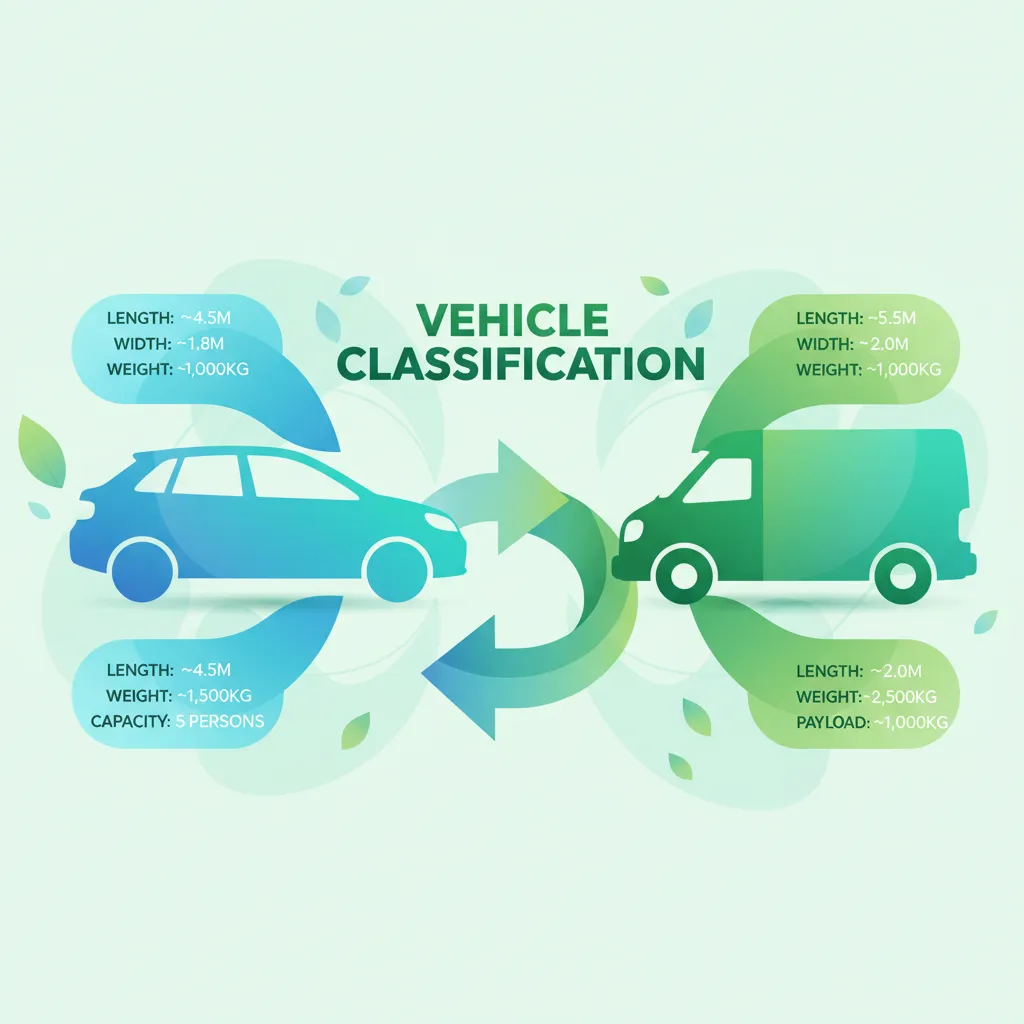
This lesson focuses on the precise classification of agricultural vehicles as defined by Polish law, differentiating between tractors, forestry machines, and trailers. It examines the legal parameters such as maximum permissible weight, width, height, and length that affect roadworthiness certifications. The lesson clarifies terminology used in official documents, ensuring learners can correctly identify the vehicles they are permitted to operate.
This lesson examines the signs that convey dimensional and weight restrictions, which are vital for safe tractor and trailer operation. It outlines how to read width, height, and weight limit signs and the legal implications of exceeding these limits. The lesson provides guidance on planning loads to comply with bridge and road classification restrictions found across Polish rural networks.
This lesson explains the scope of the Category T licence, distinguishing it from other categories and outlining the vehicles covered, such as agricultural and forestry vehicles. It details the legal basis for operating these vehicles on public roads, including specific provisions in the Prawo o ruchu drogowym. Learners will understand the regulatory environment defining where and how Category T vehicles may be driven within Poland.
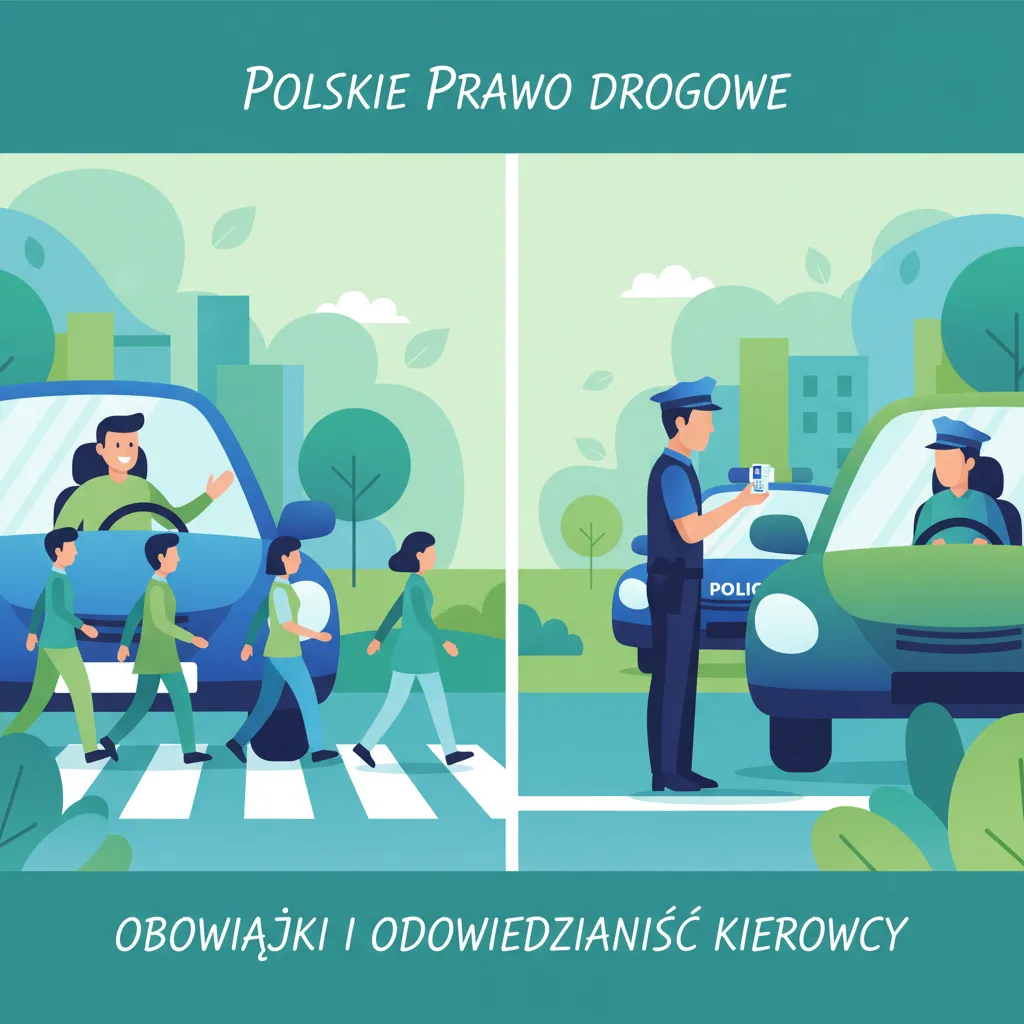
This lesson outlines the legal responsibilities of tractor drivers as stipulated by Polish traffic law, emphasizing the duty to comply with all rules of the road. It discusses the liability framework for accidents involving agricultural vehicles, including the need for appropriate insurance and potential penalties. The lesson also explains the importance of maintaining accurate documentation, such as registration papers and a driver’s licence.
This lesson explores the correct lane and road positioning for tractors, emphasizing the use of the right-hand lane or shoulder where appropriate. It clarifies how speed limits differ between road types and provides guidelines for adjusting speed based on vehicle load, road condition, and traffic density. Proper positioning improves safety for both the tractor driver and other road users sharing the same space.

This lesson focuses on the specific hazards introduced by seasonal weather, such as mud, snow, ice, fog, and heavy rain. It explains how these conditions affect traction, braking, and driver visibility, and provides guidance on adjusting speed and using appropriate tires. The lesson also covers the proper use of lights and reflectors to improve visibility in low-light conditions.
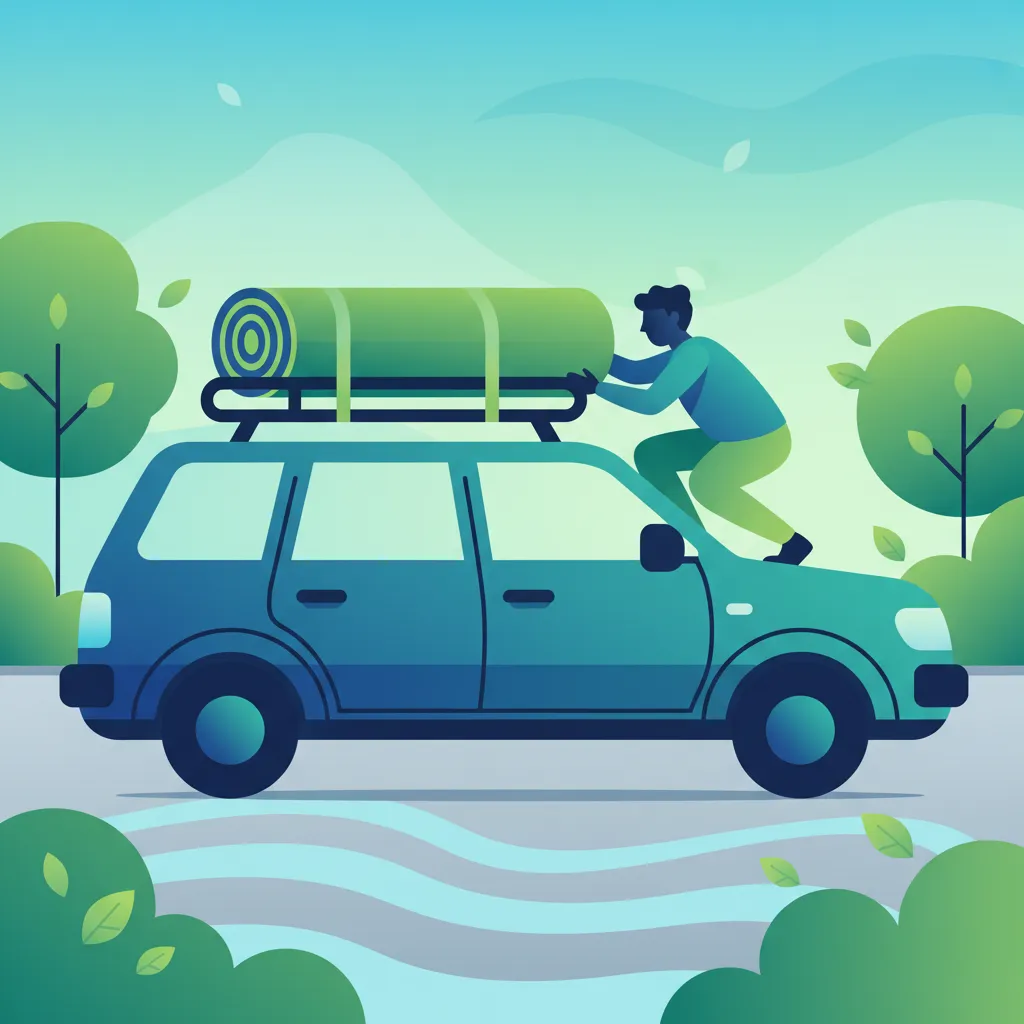
This lesson provides comprehensive guidelines for safely transporting agricultural equipment, focusing on proper load securing techniques and weight distribution calculations. It discusses route planning that accounts for road conditions, bridge weight capacities, and seasonal obstacles like mud or snow. The lesson also emphasizes the use of protective equipment and regular compliance verification for safe operations.
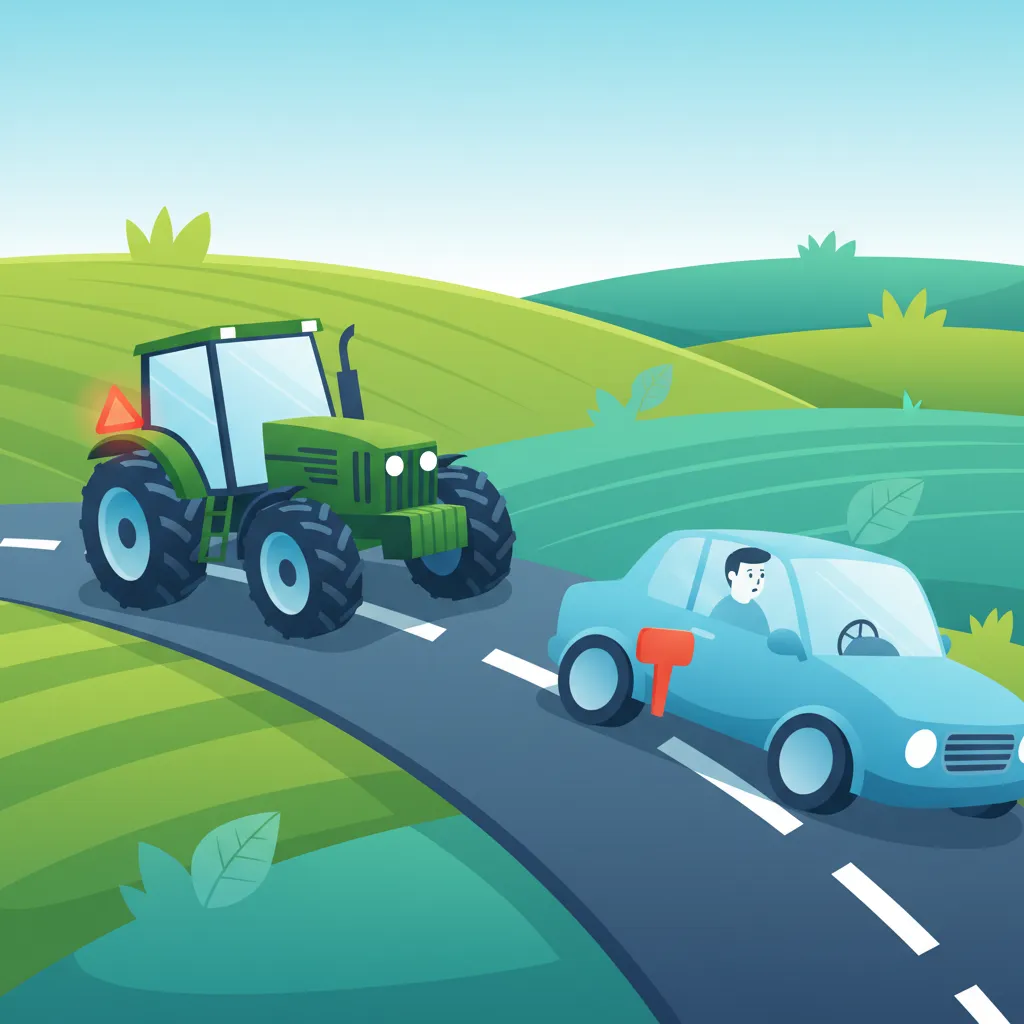
This lesson introduces hazard perception concepts specific to agricultural vehicles, teaching learners how to identify potential dangers such as unexpected farm equipment or changing road conditions. It outlines a systematic approach to visual scanning, risk evaluation, and timely decision-making to avoid accidents. The lesson provides guidelines for interpreting scenario simulations that mirror real-world rural road hazards.
This lesson provides a step-by-step guide to safely coupling and uncoupling trailers, highlighting the correct use of hitches, drawbars, and safety chains. It emphasizes pre-couple inspections, alignment checks, and the necessity of confirming secure connections before movement. Learners will also study procedures for safely uncoupling, including establishing a safe zone and verifying trailer stability.
This lesson provides a systematic approach to pre-use inspections, covering essential components that must be checked before operating a tractor. Learners will learn how to assess tire pressure, test brakes, verify the operation of all lights and beacons, and examine hitch conditions. Performing these checks ensures vehicle roadworthiness and reduces the risk of mechanical failure during operation.
Learn about typical errors and dangerous situations encountered by agricultural vehicle drivers during harvest season in Poland. Focuses on understanding accident causes and applying defensive driving strategies.
This lesson introduces hazard perception concepts specific to agricultural vehicles, teaching learners how to identify potential dangers such as unexpected farm equipment or changing road conditions. It outlines a systematic approach to visual scanning, risk evaluation, and timely decision-making to avoid accidents. The lesson provides guidelines for interpreting scenario simulations that mirror real-world rural road hazards.
This lesson introduces defensive driving principles for rural settings, teaching learners how to continually scan the environment and anticipate potential hazards. It discusses the unique challenges posed by slow-moving agricultural traffic, field entrances, and unpredictable farm equipment maneuvers. The lesson emphasizes proactive decision-making and early brake application to avoid collisions in mixed traffic.
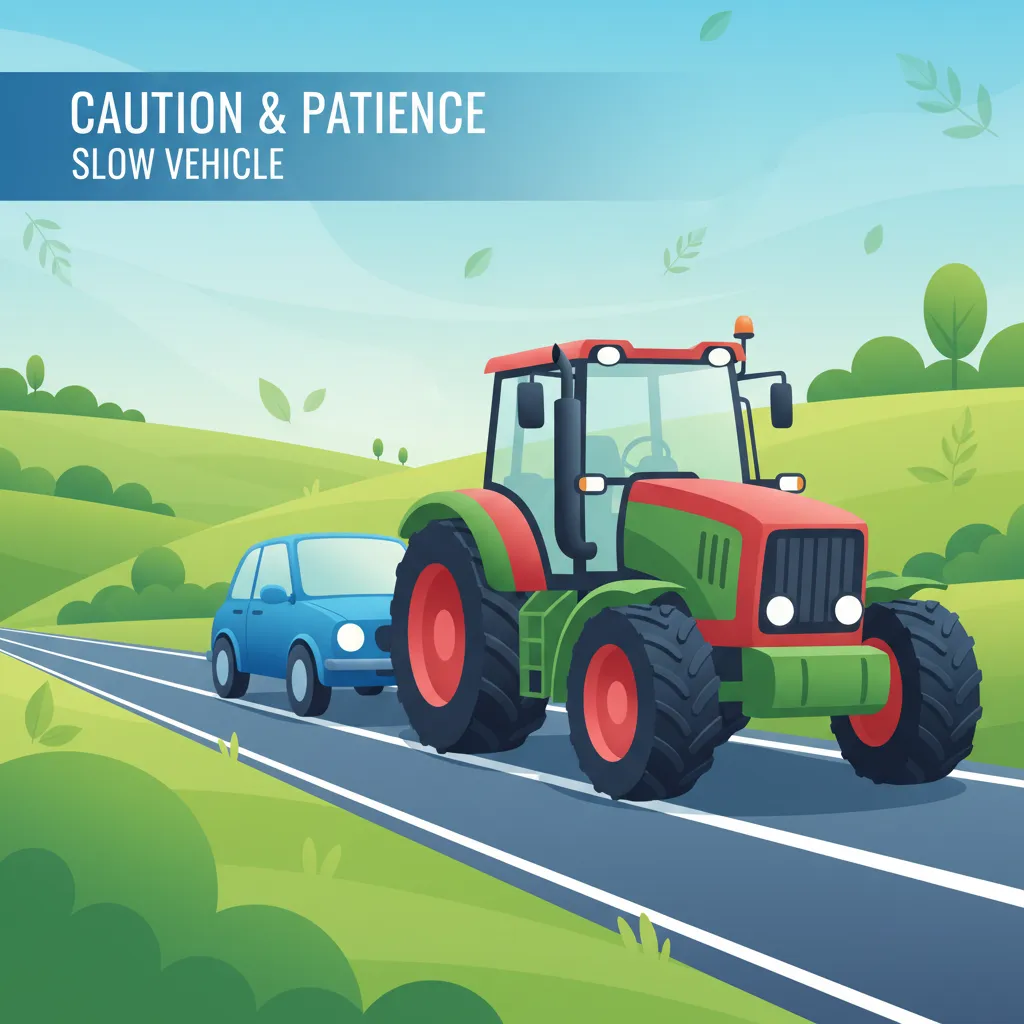
This lesson addresses encounters with slow-moving vehicles, such as tractors, which are common on rural roads. It teaches drivers to be patient, maintain a safe following distance, and only overtake when it is absolutely safe and legal to do so. Recognizing the large size and limited maneuverability of such vehicles is crucial for avoiding accidents.
In this lesson, learners explore riding on rural and countryside roads, where road markings may be sparse and surface conditions varied. The content covers safe overtaking in single-lane sections, interaction with agricultural vehicles and animals, and the handling of gravel or uneven surfaces. Learners will also study the importance of anticipating curves and adjusting speed to light conditions, equipping them with the skills needed for safe countryside travel.
This lesson provides a step-by-step guide to safely coupling and uncoupling trailers, highlighting the correct use of hitches, drawbars, and safety chains. It emphasizes pre-couple inspections, alignment checks, and the necessity of confirming secure connections before movement. Learners will also study procedures for safely uncoupling, including establishing a safe zone and verifying trailer stability.

This lesson explores the unique characteristics of driving on rural roads. It highlights potential hazards such as sharp, unbanked curves, poor road surfaces, and limited visibility due to hills and vegetation. The content teaches drivers to anticipate these conditions and adjust their speed and position to navigate safely.
This lesson outlines the legal responsibilities of tractor drivers as stipulated by Polish traffic law, emphasizing the duty to comply with all rules of the road. It discusses the liability framework for accidents involving agricultural vehicles, including the need for appropriate insurance and potential penalties. The lesson also explains the importance of maintaining accurate documentation, such as registration papers and a driver’s licence.
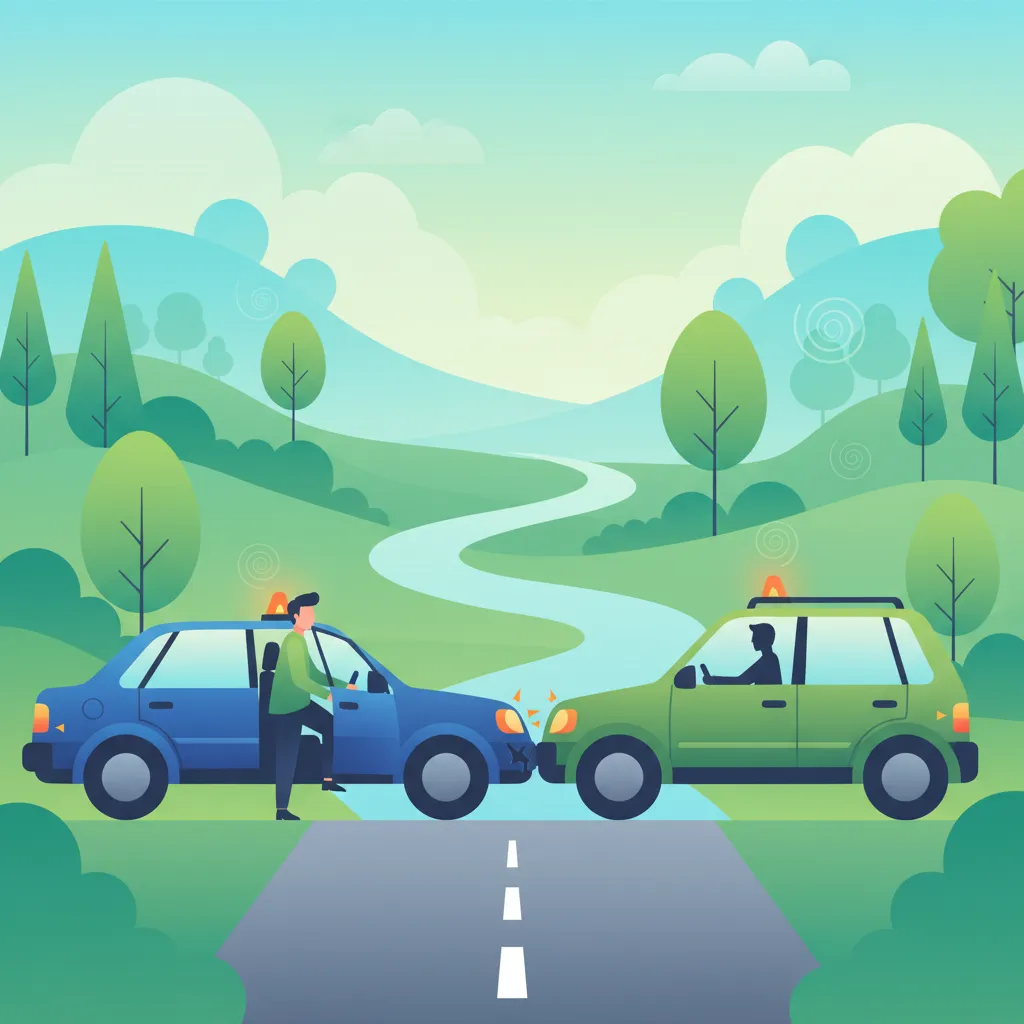
This lesson outlines the emergency procedures a tractor driver must follow in case of a breakdown, trailer detachment, or accident. It covers immediate actions such as pulling over safely, deploying warning triangles, and using hazard lights to alert other road users. The lesson details the steps for reporting the incident, providing first aid, and securing the scene to prevent further hazards.
This lesson focuses on the specific hazards introduced by seasonal weather, such as mud, snow, ice, fog, and heavy rain. It explains how these conditions affect traction, braking, and driver visibility, and provides guidance on adjusting speed and using appropriate tires. The lesson also covers the proper use of lights and reflectors to improve visibility in low-light conditions.
This lesson explores the correct lane and road positioning for tractors, emphasizing the use of the right-hand lane or shoulder where appropriate. It clarifies how speed limits differ between road types and provides guidelines for adjusting speed based on vehicle load, road condition, and traffic density. Proper positioning improves safety for both the tractor driver and other road users sharing the same space.
Find clear answers to common questions learners have about Case Studies: Harvest Traffic and Road Sharing. Learn how the lesson is structured, which driving theory objectives it supports, and how it fits into the overall learning path of units and curriculum progression in Poland. These explanations help you understand key concepts, lesson flow, and exam focused study goals.
The main challenges include coordinating speed with faster vehicles, maintaining safe distances due to increased stopping distances for tractors and trailers, dealing with potential field access congestion, and ensuring clear communication of intentions through signaling. Reduced visibility due to dust or weather can also be a significant factor during harvest.
Always use your indicators well in advance to signal turns or lane changes, just as you would in any vehicle. If indicators are not working or visible, use clear hand signals. Be extra vigilant and ensure other road users, including cyclists and pedestrians, have seen your signals before making a maneuver.
Overtaking slow-moving vehicles like tractors during harvest requires extreme caution. Drivers of faster vehicles must ensure there is ample space and visibility to overtake safely, respecting any road markings and signs. For tractor drivers, be aware of faster traffic approaching from behind and consider pulling over safely if possible to let them pass, especially on narrow rural roads.
When approaching field access points or farm entrances, especially when a tractor is turning, anticipate potential conflicts with oncoming traffic or vehicles already entering/exiting. Slow down, use your indicators early, and if necessary, wait for a clear gap. Be aware that other tractors may be maneuvering in or out of these points, so maintain a defensive driving posture.
Yes, the Polish theory exam for Category T includes questions that assess your understanding of safe driving practices in various conditions, including busy periods like harvest. These questions often present scenarios requiring you to choose the safest course of action regarding speed, signaling, and road sharing with other agricultural and non-agricultural vehicles.
Build custom practice sessions tailored precisely to your needs. Focus on areas requiring improvement, review specific Polish road signs, or master complex traffic rules to ensure full preparation for your official driving license exam.