
This lesson guides you through the critical pre-use inspections required for Category T agricultural vehicles in Poland. You will learn a systematic approach to checking tires, brakes, lights, and hitches, ensuring your tractor and trailer are roadworthy and safe before every journey. Mastering these checks is vital not only for passing your Polish driving theory exam but also for practical safety and compliance with legal obligations, building upon the previous lesson on driver obligations.
Lesson content overview
Operating an agricultural tractor, particularly on public roads, requires a diligent approach to safety and vehicle maintenance. Before every journey, whether on a farm or public highway, a systematic pre-use inspection is critical. This lesson, designed for the Polish Category T driving license theory course, focuses on the essential components that demand careful scrutiny: tires, brakes, lights, and hitches. Performing these fundamental checks ensures your vehicle's roadworthiness, prevents mechanical failures, and significantly reduces the risk of accidents, aligning with legal obligations under Polish traffic law (Prawo o ruchu drogowym).
Pre-use checks are a cornerstone of safe vehicle operation and a mandatory preventive safety protocol. They establish that critical subsystems meet safety thresholds before the vehicle is set in motion, safeguarding the driver, other road users, and the agricultural machinery itself. This practice is deeply rooted in both the physics of vehicle dynamics (e.g., friction, load transfer) and the legal framework governing vehicle condition standards in Poland.
Regular pre-use inspections not only enhance safety but also contribute to the longevity of your tractor and its implements by identifying wear or faults early, allowing for timely corrective actions.
These inspections are directly linked to several other vital areas of your driving theory knowledge. Understanding the location and function of tractor components, as covered in topics like "Tractor Construction and Control Systems," is a prerequisite. Furthermore, these checks fulfill your legal duty to ensure vehicle roadworthiness, a concept explored in "Driver Obligations and Liability." Finally, the findings from these inspections often dictate follow-up actions, such as maintenance or repairs, which are covered in "Maintenance of Attachments, Implement Safety, and Documentation."
Several core principles underpin the necessity and methodology of pre-use checks for Category T vehicles. Adhering to these principles ensures operational safety and legal compliance.
The legal requirement that every vehicle operating on public roads must be in a condition that does not endanger safety.
Purpose and Rationale: The primary goal is to prevent accidents caused by mechanical component failure. A non-roadworthy vehicle poses a severe risk to all road users. Implications: As a driver, you are legally obligated to refuse to operate a vehicle with identified deficiencies that render it unsafe. All necessary repairs or adjustments must be made before departure.
Purpose and Rationale: Routine checks performed before use are a form of preventive maintenance, designed to identify early signs of wear or faults. This proactive approach reduces the likelihood of unexpected breakdowns and extends the service life of expensive agricultural machinery. Implications: Identifying issues such as under-inflated tires or a soft brake pedal allows for immediate corrective actions, preventing minor problems from escalating into major safety hazards.
Purpose and Rationale: The mechanical connection between the tractor, any attached trailer, and implements must be robust, secure, and correctly aligned. This integrity is essential for the safe transmission of forces during acceleration, braking, and turning maneuvers. Implications: Any failure in the load path, such as an incorrectly hitched trailer or a loose safety chain, can lead to a loss of control, dangerous trailer sway, or even complete detachment, with potentially catastrophic consequences.
Purpose and Rationale: All lighting and beacons on an agricultural vehicle must be fully functional and used appropriately for the prevailing conditions. These devices provide critical communication to other road users, indicating the vehicle's presence, size, speed, and intended movements. Implications: Faulty or improperly used lights drastically reduce the tractor's visibility, especially during dusk, dawn, night, or adverse weather conditions, increasing the risk of collisions and incurring legal penalties under Polish traffic law.
Purpose and Rationale: Specific statutory provisions in Polish law govern vehicle inspections, including tire pressure limits, brake performance standards, lighting requirements, and hitch safety. Adhering to these regulations is not only a legal obligation but also a fundamental aspect of insurance requirements and liability management.
Implications: Non-compliance can lead to severe penalties, including fines, license points, and significantly increased liability in the event of an accident. Drivers must be familiar with provisions such as those in Rozporządzenie Ministra Infrastruktury (Regulation of the Minister of Infrastructure) concerning vehicle technical conditions.
A thorough pre-use inspection involves a systematic examination of several key areas. Understanding what to look for and why it matters is paramount.
Tires are the sole contact point between the tractor and the ground, responsible for supporting the vehicle's weight, transmitting traction, and absorbing shocks. Their condition directly impacts handling, braking, and fuel efficiency.
Definition: The amount of air inside a tire, typically measured in bar or pounds per square inch (psi).
Practical Meaning: Correct tire pressure, as specified by the manufacturer, is crucial for maintaining the tire's load-carrying capacity, ensuring an optimal contact patch with the road surface, and minimizing uneven wear. Incorrect pressure can lead to poor handling, increased stopping distances, and higher fuel consumption.
Associated Rules: Polish regulations, specifically Rozporządzenie Ministra Infrastruktury, mandate that tires must be in good condition and inflated to the pressure noted on the vehicle's data plate or in the owner's manual.
Common Misunderstandings: Many drivers believe a visual inspection is sufficient; however, tires can be significantly under-inflated even if they appear firm. Always use a calibrated pressure gauge.
Example: A tractor's data plate specifies a front-axle pressure of 3.5 bar and a rear-axle pressure of 4.0 bar. Before starting work, the driver uses a calibrated gauge to adjust each tire to these precise values.
Definition: The vertical distance from the tire's surface to the deepest part of the tread grooves. Practical Meaning: Adequate tread depth ensures sufficient grip, especially on wet, muddy, or uneven farm surfaces. Worn treads drastically reduce traction and increase the risk of skidding. Associated Rules: While agricultural tires may have different specific limits, tires on public roads (especially those designed for higher speeds or road use) often adhere to a minimum tread depth, typically 1.6 mm, similar to passenger vehicles. Always check manufacturer guidelines for specific agricultural tire requirements.
Definition: The side part of the tire between the tread and the wheel rim. Practical Meaning: The sidewall provides structural integrity. Any cuts, bulges, cracks, or signs of dry rot can compromise the tire's structure, leading to a sudden and dangerous blowout. Check Procedure: Visually inspect the entire circumference of each tire's sidewall for any damage. Pay attention to areas that might have scraped against obstacles.
Use a calibrated tire pressure gauge to check the pressure of all tires against manufacturer specifications. Adjust if necessary.
Visually inspect the tire tread for sufficient depth and even wear. Look for embedded objects like stones or nails.
Examine the tire sidewalls for any cuts, bulges, cracks, or other signs of damage.
The braking system is paramount for slowing and stopping the vehicle safely. A comprehensive check must include both the tractor's service (foot) brake and parking (hand) brake, as well as any trailer brakes.
Definition: The primary braking system, typically actuated by a foot pedal, designed to slow or stop the vehicle during operation. Most agricultural tractors use hydraulic systems, though some heavier models might employ pneumatic (air) brakes. Practical Meaning: Effective brakes must engage smoothly, provide strong, even braking force, and release completely. Excessive pedal travel or a spongy feel indicates potential issues like air in the hydraulic system or worn components. Associated Rules: Polish law mandates that all braking devices must be fully functional, have sufficient friction material, and be checked for wear before operation.
A "soft" or spongy brake pedal is a critical warning sign and may indicate air in the hydraulic lines or low brake fluid. Never ignore this symptom; it can severely compromise your ability to stop.
Check Procedure:
Definition: A secondary braking system, usually manually operated, designed to hold the vehicle stationary, particularly on inclines. Practical Meaning: The parking brake must securely hold the tractor, preventing unintended movement. Check Procedure: Engage the parking brake on a slight incline (if safe to do so) and ensure it holds the tractor firmly. Release it and ensure it disengages completely.
Definition: Braking systems on agricultural trailers, which can be mechanically, hydraulically, or pneumatically operated, designed to work in conjunction with the tractor's brakes. Practical Meaning: When towing a trailer, its brakes must function correctly to maintain control and ensure safe stopping distances. Neglecting trailer brake inspection is a common oversight. Check Procedure:
Proper illumination and signaling are vital for road safety, especially for large, slow-moving agricultural vehicles. These systems allow you to see and be seen, and to communicate your intentions to other road users.
Definition: Lights located at the front of the vehicle, including low (dipped) beams and high (main) beams. Practical Meaning:
Prawo o ruchu drogowym) specifies that vehicles must be equipped with functional lighting and that drivers must use appropriate lights in low-visibility conditions. During daylight, dipped beams are required in tunnels and during periods of reduced visibility (rain, fog).
Common Misunderstandings: Believing daytime running lights are sufficient at night or in adverse weather; they are not. Dipped beams must be used.Definition: Lights at the rear of the vehicle, including red tail lights (for visibility) and brighter red stop lights (which illuminate when the brakes are applied). Practical Meaning: Tail lights ensure the tractor is visible from the rear. Stop lights are crucial for warning following drivers of your intention to slow down or stop. Check Procedure: Have someone observe the rear of the tractor while you operate the headlights and apply the brakes.
Definition: Amber flashing lights located at the front, sides, and rear, used to signal a turn or lane change. Practical Meaning: Indicators communicate your intended direction of travel to other road users, preventing collisions. Check Procedure: Activate the left and right turn signals, ensuring all bulbs flash at a regular rate.
Definition: Auxiliary lights designed to illuminate work areas (work lights) and flashing amber warning lights (beacons) used to indicate a slow-moving or stationary vehicle, especially during work or on public roads. Practical Meaning: Work lights are essential for safe operation during night-time field work. Amber beacons are mandatory for slow-moving agricultural vehicles (e.g., those traveling under 30 km/h) on public roads, dramatically increasing their visibility to other drivers. Associated Rules: Polish regulations often specify requirements for beacons on agricultural vehicles.
Turn on the dipped beams and walk around the tractor to confirm all front and rear lights are working.
Activate the left and right turn indicators separately, ensuring all front, side, and rear indicator lights are flashing correctly.
Press the brake pedal and verify that the rear stop lights illuminate brightly.
Turn on any work lights and the amber beacon, checking their functionality.
The hitch is the critical mechanical link between the tractor and any trailed implement or trailer. Its integrity is vital for safe towing.
Definition: The mechanical connection between the tractor and the trailer/implement. Common types include a drawbar hitch, three-point linkage, or a ball hitch, often secured by a robust pin or locking mechanism. Practical Meaning: A correctly engaged hitch transmits pulling forces, braking forces, and lateral forces without slippage or excessive play. Any wear, damage, or incorrect engagement can lead to accidental uncoupling. Associated Rules: Polish regulations mandate that the coupling must be secure, free from excessive wear, and correctly rated for the combined weight of the tractor and trailer/implement.
Definition: A secondary mechanical connection, typically chains or cables, between the tractor and trailer, designed to prevent complete separation in the event of primary hitch failure. Practical Meaning: Safety chains act as a fail-safe. They must be correctly attached, of adequate strength, and have minimal slack to prevent the trailer from losing control if it detaches. Excessive slack (e.g., more than 30 cm) can allow the trailer to hit the ground or sway wildly before the chain becomes taut. Associated Rules: Polish regulations require safety chains or secondary coupling devices to be attached and properly adjusted.
Definition: The electrical plug and socket that transmit power and signals from the tractor to the trailer's lighting system (tail lights, stop lights, indicators). Practical Meaning: Functional electrical connections ensure that the trailer's lights operate in sync with the tractor's, maintaining visibility and signaling integrity for the entire combination. Check Procedure: After connecting the electrical cable, test all trailer lights (tail, stop, indicators) as you would with the tractor's lights.
Ensure the hitch mechanism is clean and free from debris.
Connect the trailer or implement, ensuring the primary coupling device (e.g., drawbar pin) is fully engaged and locked.
Attach the safety chains or secondary coupling device, ensuring they are taut but allow for turning, with minimal slack (e.g., less than 30 cm).
Connect the electrical cable for trailer lights, ensuring a firm connection.
Perform a "pull test": Gently pull the tractor forward a few meters, then brake, observing the hitch for any unusual movement or sound. This confirms secure engagement.
Test all trailer lights (tail, stop, indicators) from the driver's seat.
Beyond the mechanical components, drivers of Category T vehicles also have obligations regarding onboard safety equipment and the overall decision to operate.
Polish law, under specific regulations such as § 55 of the Prawo o ruchu drogowym, mandates that certain safety equipment must be present and easily accessible in the vehicle. This typically includes:
If any critical defect is identified during pre-use checks that compromises the vehicle's roadworthiness or safety, Polish law unequivocally prohibits operating that vehicle on public roads. The driver is legally liable for any consequences arising from driving a defective vehicle. This means if a brake line is broken or a headlamp is non-functional, the journey must be postponed until repairs are made.
Driving a tractor with known critical defects is a serious violation of Polish traffic law and can lead to significant fines, license points, and severe liability in the event of an accident. Prioritize safety and repair any issues immediately.
The thoroughness and specific focus of pre-use checks should adapt to prevailing conditions.
When operating in areas with pedestrians or cyclists, confirmed functionality of all lights and brakes is paramount. Maintain safe distances, as reduced braking performance (due to load or road conditions) increases stopping distances. Ensuring proper signaling is critical to avoid surprising vulnerable users.
The direct correlation between pre-use checks and operational safety cannot be overstated.
Benefits of Correct Pre-use Checks:
Consequences of Skipped or Incorrect Checks:
Systematic pre-use checks are an indispensable part of operating an agricultural tractor safely and legally in Poland. These inspections are a proactive measure to prevent accidents, extend vehicle life, and comply with the Prawo o ruchu drogowym and other relevant regulations.
By diligently performing these checks, you contribute significantly to road safety, protect your machinery, and fulfill your duties as a responsible Category T vehicle operator in Poland.
This lesson covers the mandatory pre-use inspections for Category T agricultural vehicles in Poland, which are essential for both exam success and safe road operation. Learners must systematically check tires for correct pressure, adequate tread depth, and undamaged sidewalls; verify brakes including service brake pedal firmness, parking brake holding power, and trailer brake connections; confirm all lighting systems including dipped beams, stop lights, indicators, and amber beacons are functional; and inspect hitches for secure coupling, proper safety chain tension with minimal slack, and electrical connectivity. Polish regulations under Prawo o ruchu drogowym and the Ministry of Infrastructure mandate roadworthiness, prohibit operating defective vehicles, and require specific safety equipment on board. Pre-use checks should be adapted based on weather conditions, load status, and road type to ensure optimal safety and compliance.
A short set of high-value points that capture the most important learning from this lesson.
Pre-use checks are a mandatory legal requirement under Polish traffic law for Category T vehicles operating on public roads
Tire inspection must cover pressure (per manufacturer data plate, e.g., 3.5 bar front/4.0 bar rear), tread depth (minimum 1.6mm for road tires), and sidewall condition for cracks or bulges
Brake checks must include service brake (firm pedal with travel under 5cm), parking brake holding power, and trailer brake functionality with secure connections
All lighting systems including dipped beams, stop lights, indicators, and amber beacons must be verified functional before operation
A secure hitch requires proper coupling engagement, safety chains with minimal slack under 30cm, and tested electrical connections
Explore all units and lessons included in this driving theory course.
Visual tire inspection alone is insufficient - always use a calibrated pressure gauge as tires can appear firm while significantly under-inflated
A soft or spongy brake pedal indicates air in hydraulic lines or low brake fluid and is a critical warning sign requiring immediate attention
Dipped beams are mandatory in tunnels and during reduced visibility (rain, fog, dusk, dawn, night) regardless of whether daylight is present
Safety chains act as a fail-safe if the primary hitch fails and must be attached with minimal slack to prevent dangerous trailer movement
Driving a vehicle with identified critical defects that compromise roadworthiness is prohibited under Polish law and carries legal liability
Assuming daytime running lights are sufficient for night driving or adverse weather - dipped beams are always required in low visibility
Neglecting to check trailer brakes when towing, leading to loss of control and increased stopping distances
Using high beams when approaching or following other vehicles, which can dazzle drivers and cause accidents
Failing to test electrical connections between tractor and trailer, resulting in non-functional trailer lights and reduced visibility for other road users
Overlooking safety equipment items (first-aid kit, fire extinguisher, warning triangle) which are mandatory under Polish law
Lesson content overview
A short set of high-value points that capture the most important learning from this lesson.
Pre-use checks are a mandatory legal requirement under Polish traffic law for Category T vehicles operating on public roads
Tire inspection must cover pressure (per manufacturer data plate, e.g., 3.5 bar front/4.0 bar rear), tread depth (minimum 1.6mm for road tires), and sidewall condition for cracks or bulges
Brake checks must include service brake (firm pedal with travel under 5cm), parking brake holding power, and trailer brake functionality with secure connections
All lighting systems including dipped beams, stop lights, indicators, and amber beacons must be verified functional before operation
A secure hitch requires proper coupling engagement, safety chains with minimal slack under 30cm, and tested electrical connections
Explore all units and lessons included in this driving theory course.
Visual tire inspection alone is insufficient - always use a calibrated pressure gauge as tires can appear firm while significantly under-inflated
A soft or spongy brake pedal indicates air in hydraulic lines or low brake fluid and is a critical warning sign requiring immediate attention
Dipped beams are mandatory in tunnels and during reduced visibility (rain, fog, dusk, dawn, night) regardless of whether daylight is present
Safety chains act as a fail-safe if the primary hitch fails and must be attached with minimal slack to prevent dangerous trailer movement
Driving a vehicle with identified critical defects that compromise roadworthiness is prohibited under Polish law and carries legal liability
Assuming daytime running lights are sufficient for night driving or adverse weather - dipped beams are always required in low visibility
Neglecting to check trailer brakes when towing, leading to loss of control and increased stopping distances
Using high beams when approaching or following other vehicles, which can dazzle drivers and cause accidents
Failing to test electrical connections between tractor and trailer, resulting in non-functional trailer lights and reduced visibility for other road users
Overlooking safety equipment items (first-aid kit, fire extinguisher, warning triangle) which are mandatory under Polish law
Explore search topics learners often look for when studying Pre-use Checks: Tires, Brakes, Lights, and Hitches. These topics reflect common questions about road rules, driving situations, safety guidance, and lesson level theory preparation for learners in Poland.
Browse additional driving theory lessons that cover connected traffic rules, road signs, and common driving situations related to this topic. Improve your understanding of how different rules interact across everyday traffic scenarios.
Understand the legal duties and responsibilities of Category T drivers in Poland regarding pre-use checks, maintenance, and ensuring vehicle roadworthiness. Covers driver liability and compliance with Polish traffic law.
This lesson outlines the legal responsibilities of tractor drivers as stipulated by Polish traffic law, emphasizing the duty to comply with all rules of the road. It discusses the liability framework for accidents involving agricultural vehicles, including the need for appropriate insurance and potential penalties. The lesson also explains the importance of maintaining accurate documentation, such as registration papers and a driver’s licence.
This lesson explains the scope of the Category T licence, distinguishing it from other categories and outlining the vehicles covered, such as agricultural and forestry vehicles. It details the legal basis for operating these vehicles on public roads, including specific provisions in the Prawo o ruchu drogowym. Learners will understand the regulatory environment defining where and how Category T vehicles may be driven within Poland.

This lesson examines the signs that convey dimensional and weight restrictions, which are vital for safe tractor and trailer operation. It outlines how to read width, height, and weight limit signs and the legal implications of exceeding these limits. The lesson provides guidance on planning loads to comply with bridge and road classification restrictions found across Polish rural networks.

This lesson details the formal prerequisites for obtaining a Category T licence, focusing on the minimum age and mandatory health assessment. It outlines the specific medical certificates required, the process for submitting proof of identity and residency, and the role of the local road transport office. The content also clarifies the importance of maintaining up-to-date health documentation and the legal consequences of non-compliance.
This lesson focuses on the maintenance of agricultural implements and attachments powered via the tractor’s PTO and hydraulic systems. It covers routine inspection of hydraulic lines, lubrication of moving parts, and verification of safety features before each use. Additionally, the lesson stresses the importance of keeping detailed maintenance logs and certification documents to satisfy legal standards.
This lesson introduces routine vehicle safety checks that every driver should perform. It covers how to check tire pressure and tread depth, verify essential fluid levels like oil and coolant, and ensure all lights are operational. Performing these simple inspections regularly helps prevent breakdowns and enhances overall road safety for everyone.
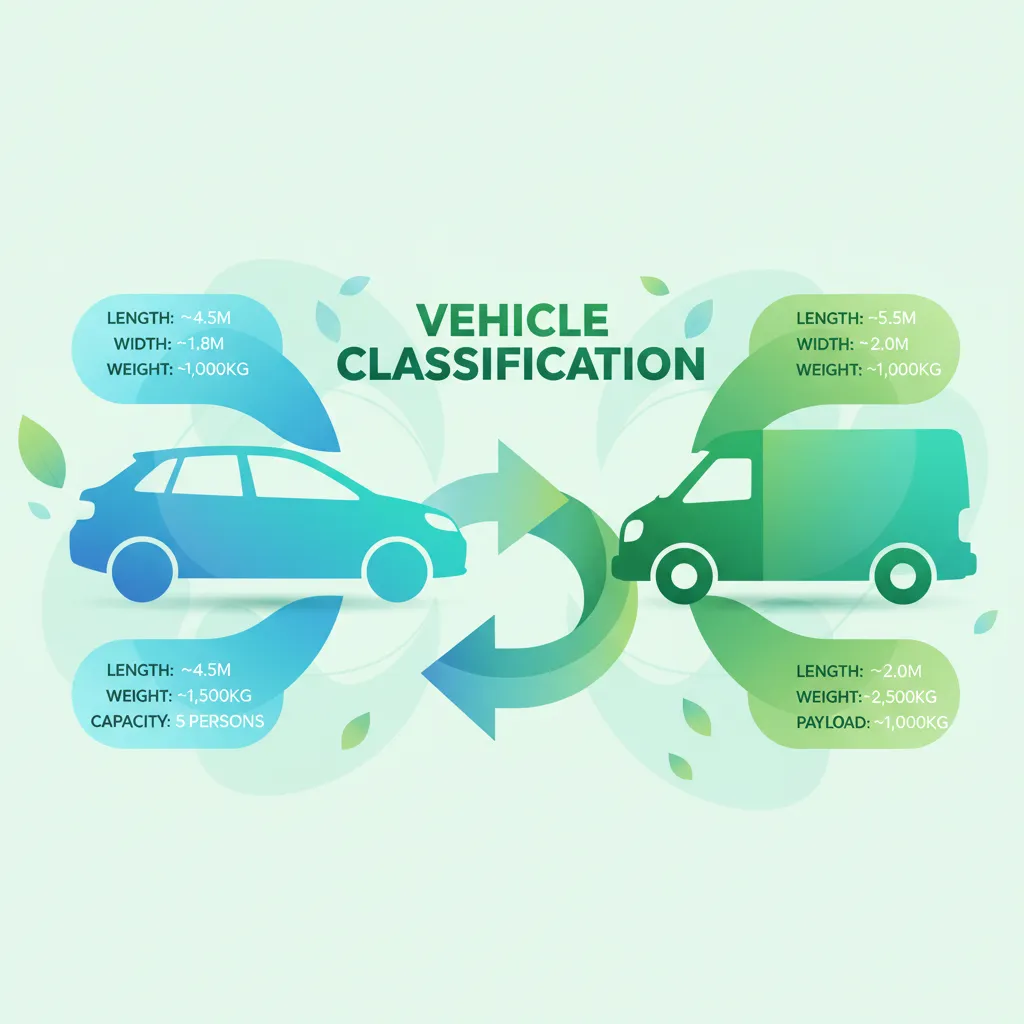
This lesson focuses on the precise classification of agricultural vehicles as defined by Polish law, differentiating between tractors, forestry machines, and trailers. It examines the legal parameters such as maximum permissible weight, width, height, and length that affect roadworthiness certifications. The lesson clarifies terminology used in official documents, ensuring learners can correctly identify the vehicles they are permitted to operate.
This lesson enumerates the mandatory safety equipment every vehicle must carry in Poland, such as a warning triangle and a fire extinguisher. It explains their proper use and storage, alongside routine pre-journey inspections that a driver should perform. These checks include verifying lights, tire pressure, and fluid levels to ensure the vehicle is roadworthy and compliant with safety regulations.
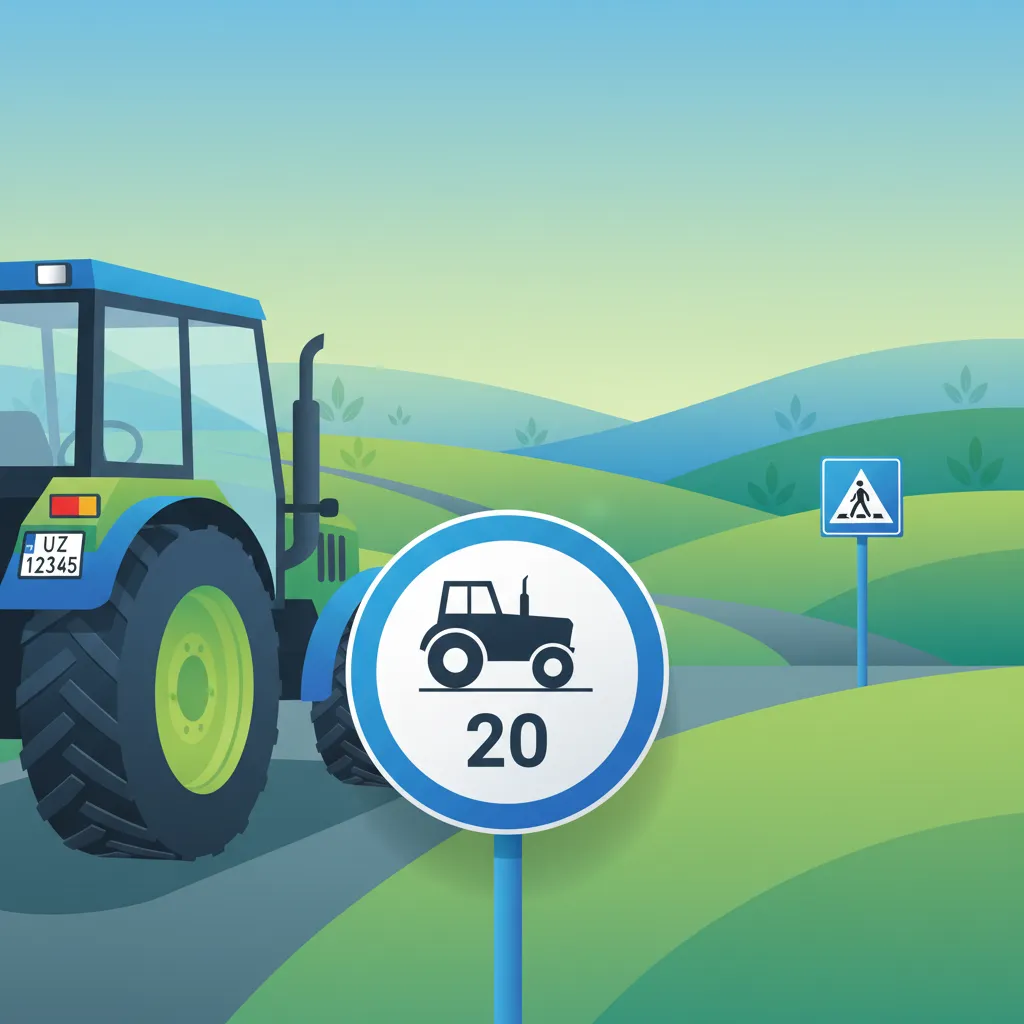
This lesson reviews the core set of regulatory and warning signs that all road users must obey, emphasizing those that affect agricultural tractors such as speed limits, stop, and give-way signs. It clarifies the colour and shape conventions used in Polish signage, enabling drivers to quickly recognize and react to sign information. The lesson also addresses the placement of signs in rural environments where visibility may be compromised.

This lesson details the documentation required for a Category B licence application and vehicle operation. It explains the function of the vehicle registration certificate (dowód rejestracyjny), the mandatory civil liability insurance (OC), and the certificate of technical inspection. Learners will understand the verification process and the importance of keeping these documents current and accessible.
Learn how to adjust essential pre-use inspections for agricultural tractors based on seasonal weather and road conditions in Poland, focusing on tires, lights, and brakes for optimal safety year-round.

This lesson focuses on the specific hazards introduced by seasonal weather, such as mud, snow, ice, fog, and heavy rain. It explains how these conditions affect traction, braking, and driver visibility, and provides guidance on adjusting speed and using appropriate tires. The lesson also covers the proper use of lights and reflectors to improve visibility in low-light conditions.
In this lesson, learners focus on the essential maintenance tasks required to keep a motorcycle in optimal condition across seasonal changes. The content outlines a comprehensive pre-ride checklist that includes tyre pressure verification, brake fluid inspection, battery performance checks, and chain lubrication. Learners will also study the selection of appropriate seasonal tyres and oil viscosity adjustments, helping prevent mechanical failures and enhance rider safety.
This lesson introduces hazard perception concepts specific to agricultural vehicles, teaching learners how to identify potential dangers such as unexpected farm equipment or changing road conditions. It outlines a systematic approach to visual scanning, risk evaluation, and timely decision-making to avoid accidents. The lesson provides guidelines for interpreting scenario simulations that mirror real-world rural road hazards.
This lesson focuses on the maintenance of agricultural implements and attachments powered via the tractor’s PTO and hydraulic systems. It covers routine inspection of hydraulic lines, lubrication of moving parts, and verification of safety features before each use. Additionally, the lesson stresses the importance of keeping detailed maintenance logs and certification documents to satisfy legal standards.
This lesson examines real-world case studies of harvest traffic, where multiple tractors and trailers share limited road space during peak agricultural periods. Learners explore strategies for coordinating speed, maintaining safe distances, and using signaling to communicate intentions. The content also addresses the challenges of field access points and the need for cooperation with other drivers.

This lesson provides comprehensive guidelines for safely transporting agricultural equipment, focusing on proper load securing techniques and weight distribution calculations. It discusses route planning that accounts for road conditions, bridge weight capacities, and seasonal obstacles like mud or snow. The lesson also emphasizes the use of protective equipment and regular compliance verification for safe operations.
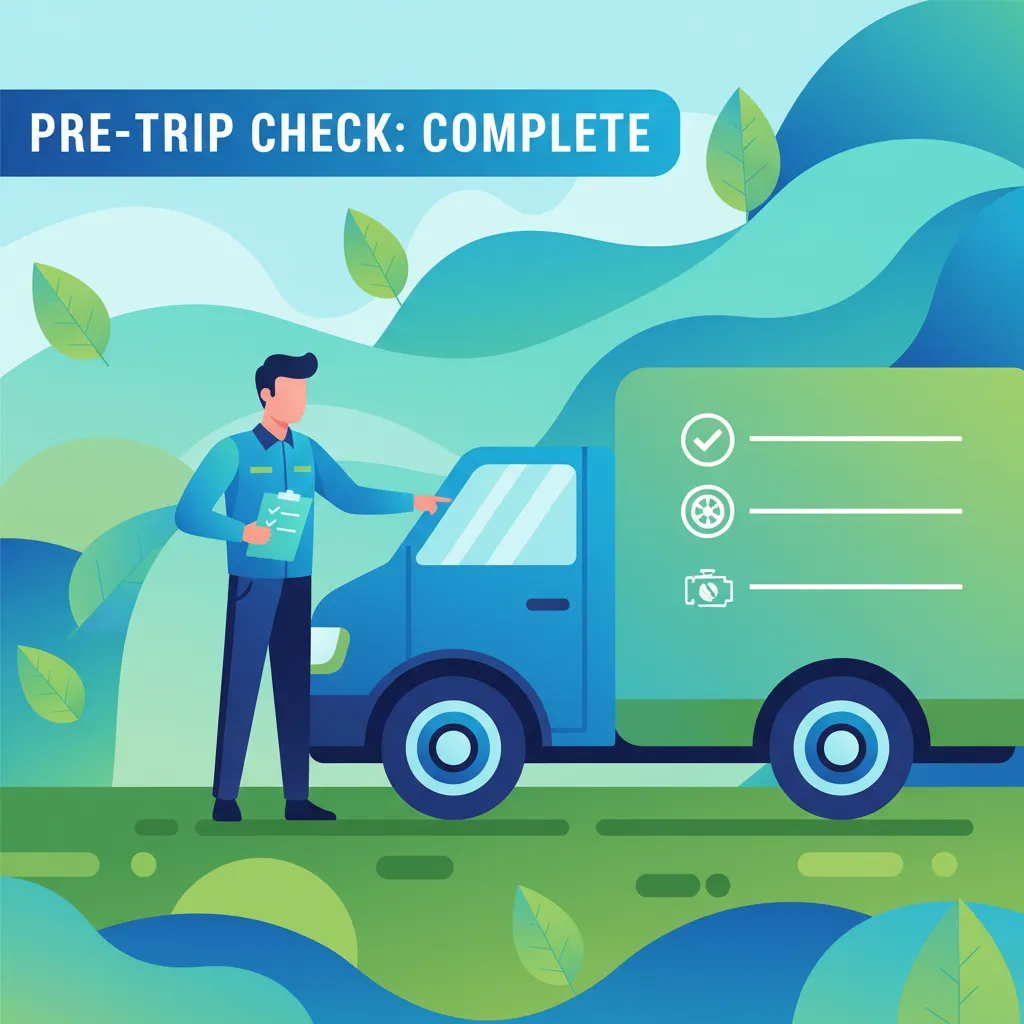
This lesson details the critical pre-trip inspection routine that every professional driver must perform. It provides a step-by-step checklist for visually inspecting essential components such as tires, brakes, lights, and fluid levels to identify potential safety hazards. Learners will understand the importance of verifying that mirrors are correctly adjusted, emergency equipment is present, and cargo securing points are intact, thereby ensuring the vehicle's roadworthiness and preventing roadside failures.

This lesson explores the correct lane and road positioning for tractors, emphasizing the use of the right-hand lane or shoulder where appropriate. It clarifies how speed limits differ between road types and provides guidelines for adjusting speed based on vehicle load, road condition, and traffic density. Proper positioning improves safety for both the tractor driver and other road users sharing the same space.
This lesson focuses on the precise classification of agricultural vehicles as defined by Polish law, differentiating between tractors, forestry machines, and trailers. It examines the legal parameters such as maximum permissible weight, width, height, and length that affect roadworthiness certifications. The lesson clarifies terminology used in official documents, ensuring learners can correctly identify the vehicles they are permitted to operate.

This lesson covers the fundamental procedures for starting and stopping a tractor, with emphasis on selecting the appropriate gear and clutch engagement for smooth motion. It explains how to manage traction on soft fields, loose gravel, and wet paved roads, and how to calculate safe stopping distances. The content also discusses hill starts and the prevention of wheel slip during acceleration and deceleration.
Find clear answers to common questions learners have about Pre-use Checks: Tires, Brakes, Lights, and Hitches. Learn how the lesson is structured, which driving theory objectives it supports, and how it fits into the overall learning path of units and curriculum progression in Poland. These explanations help you understand key concepts, lesson flow, and exam focused study goals.
The most critical checks involve ensuring all lights and reflectors are clean and working, verifying tire pressure and condition, testing the service and parking brakes, and checking that the trailer hitch is securely connected and undamaged. These elements are vital for road safety and heavily emphasized in Polish driving regulations for agricultural vehicles.
In Poland, pre-use checks for Category T agricultural vehicles should ideally be performed before every journey, especially when operating on public roads or transporting heavy loads. While not always legally mandated for every single trip, it is a crucial safety practice to ensure continuous roadworthiness and prevent accidents.
Driving a Category T vehicle that fails essential pre-use checks and is not roadworthy can result in significant legal consequences, including fines, points on your license, and even vehicle immobilization by Polish authorities. More importantly, it dramatically increases the risk of accidents, endangering yourself and others.
Yes, Polish regulations for Category T vehicles require careful inspection of trailer hitches. You must ensure the hitch mechanism is fully engaged and locked, safety chains or cables are correctly attached, and there's no excessive play. Proper hitching is paramount for stable and safe towing.
When checking lights for your Polish Category T exam, ensure all headlights, taillights, brake lights, indicators, side markers, and any amber warning beacons are functioning, clean, and visible. Reflectors should also be clean and undamaged. This verifies your vehicle's visibility and signalling capabilities.
Build custom practice sessions tailored precisely to your needs. Focus on areas requiring improvement, review specific Polish road signs, or master complex traffic rules to ensure full preparation for your official driving license exam.