
Welcome to the 'Core Motorcycle Mechanics and Controls' unit! This lesson on Steering Mechanics and Counter-Steering is crucial for understanding how your motorcycle handles. Mastering these concepts will not only help you pass your Polish Category A theory exam but also build a foundation for safe and intuitive riding.

Lesson content overview
Mastering motorcycle steering is fundamental to safe and confident riding, especially for those preparing for their Category A licence in Poland. Beyond simply turning the handlebars, effective motorcycle control involves a sophisticated interplay of vehicle geometry, rider input, and the physics of motion. This lesson delves into the mechanical principles that govern how a motorcycle steers, providing Polish motorcycle theory students with a comprehensive understanding of stability, agility, and the crucial technique known as counter-steering.
A deep grasp of these concepts is vital not only for precise handling in everyday situations but also for reacting safely in emergencies and complying with Polish traffic safety regulations. We will explore how factors like rake angle and trail dictate a bike's inherent stability and how a rider's subtle actions, including weight transfer, initiate and maintain turns at various speeds.
Motorcycles possess an inherent self-stabilizing characteristic that allows them to remain upright, particularly at speed. This stability is largely due to the carefully engineered "steering geometry" – a set of physical dimensions that define how the front wheel and steering mechanism interact with the rest of the bike and the road surface. Understanding these components is the first step toward advanced motorcycle control.
The rake angle, often referred to as caster angle, is a critical dimension in motorcycle design. It is defined as the angle, measured in degrees, between the steering head axis (the pivot point around which the front fork turns) and a vertical line perpendicular to the ground. This angle significantly influences how quickly a motorcycle responds to steering inputs and how stable it feels when traveling in a straight line.
A steeper rake angle (smaller number of degrees, e.g., 22-24°) positions the front wheel closer to the steering axis, resulting in quicker, more agile steering. This setup is common on sportbikes where rapid direction changes are prioritized. Conversely, a more relaxed rake angle (larger number of degrees, e.g., 27-35°) pushes the front wheel further forward relative to the steering axis. This increases straight-line stability, making the bike feel more planted and comfortable for touring or cruising. However, it also makes the steering response slower and requires more effort to initiate a turn.
Polish regulations, while not specifying exact rake limits, implicitly require that any modifications to a motorcycle, including its steering geometry, must not compromise vehicle safety and must pass a technical inspection. Altering the rake angle without proper engineering considerations can drastically change a motorcycle's handling characteristics, potentially making it unstable or difficult to control.
Trail is another pivotal aspect of steering geometry, working hand-in-hand with the rake angle. It is the horizontal distance, measured along the ground, between two points: where the steering axis line intersects the ground and where the front tire's contact patch meets the ground. Essentially, trail indicates how far the tire's contact point "trails" behind the steering axis.
This seemingly small dimension is responsible for the motorcycle's self-centering force. Just like the caster wheels on a shopping trolley, trail creates a leverage effect that naturally wants to align the front wheel with the direction of travel, returning the handlebars to a straight-ahead position after a turn.
Maintaining the manufacturer-specified trail is crucial for predictable handling. Worn components in the steering head, such as bearings or bushings, can introduce play that effectively alters the trail, reducing the self-centering force and potentially leading to instability or dangerous wobbles. Under Polish law, any deviation from manufacturer specifications that compromises safe operation must be rectified.
The wheelbase is the longitudinal distance between the centers of the front and rear axles. While not directly part of the steering mechanism itself, it significantly influences a motorcycle's overall handling, affecting both its stability and its turning radius.
Modifying the wheelbase of a motorcycle is a significant alteration that affects its entire geometry and handling characteristics. Any such modification must not exceed legal vehicle dimension limits and requires approval through a technical inspection under Polish regulations to ensure it does not compromise safety.
One of the most counter-intuitive yet fundamental techniques in motorcycle riding is counter-steering. At speeds above approximately 10-15 km/h, a motorcycle does not turn simply by turning the handlebars in the desired direction of the turn. Instead, riders must use a brief, momentary input of the handlebars in the opposite direction to initiate a lean into the turn.
The concept of counter-steering relies on a principle called the gyroscopic effect and the generation of lean angle. When you push the left handlebar forward (which turns the front wheel slightly to the right), the gyroscopic precession of the spinning front wheel causes the motorcycle to lean to the left. As the bike begins to lean, gravity and centripetal force work together to guide the motorcycle into the turn.
Once the desired lean angle is achieved, the rider can then apply steady pressure in the direction of the turn to maintain that lean through the curve, or ease off to reduce the lean and stand the bike up. The process involves three main phases:
The lean angle is the angle between the motorcycle's longitudinal axis and the vertical plane during a turn. It is directly related to the speed of the motorcycle and the radius of the turn. For a given speed, a tighter turn requires a greater lean angle to generate the necessary centripetal force to prevent the bike from continuing straight.
However, there are limits to how much a motorcycle can lean. Exceeding the available tire grip will result in a loss of traction, leading to a slide or crash. This is why riders must constantly assess road conditions, tire capabilities, and their speed to ensure the lean angle remains within safe parameters. On wet or slippery surfaces, the maximum safe lean angle is significantly reduced.
Polish Road Traffic Law mandates that riders maintain full control of their vehicle at all times. Reckless or abrupt steering inputs, especially those leading to an excessive lean or loss of control, could be considered dangerous driving. It is the rider's responsibility to adjust speed and lean angle appropriately for the conditions to ensure safety for themselves and other road users.
While counter-steering initiates the lean, weight transfer and the rider's body positioning play a crucial role in refining a motorcycle's trajectory and maintaining stability through a turn. Weight transfer is the redistribution of the combined mass of the rider and bike due to acceleration, braking, or cornering forces.
During cornering, some weight naturally shifts to the outside of the turn, loading the outside tires more heavily. A rider's body positioning can intentionally influence this weight distribution:
When turning, try to look through the turn and towards your exit point. Your body and the motorcycle will naturally follow your gaze, improving your line and making the turn smoother.
Improper weight transfer can lead to a loss of traction. For instance, shifting too much weight to the rear during a hard turn can lighten the front wheel, compromising steering control. Conversely, overloading the front wheel while braking hard in a turn can overwhelm its grip. Polish regulations, particularly § 42 of the Road Traffic Law, require riders to adhere to load and passenger limits, as overloading can significantly affect a motorcycle's handling and steering response.
Operating a motorcycle safely on Polish roads requires not only technical skill but also adherence to specific legal requirements concerning vehicle condition and riding conduct. These regulations are in place to ensure predictable behavior and minimize risks for all road users.
Under § 57 ust. 1 of the Polish Road Traffic Law (Prawo o ruchu drogowym), motorcycles must be maintained in a technical condition that ensures safe operation. This explicitly includes steering components and geometry. Manufacturers specify acceptable tolerances for rake, trail, and other steering-related dimensions. Any wear or damage that causes these dimensions to fall outside the specified range, or introduces excessive play (e.g., worn steering head bearings), is prohibited as it can lead to instability and loss of control. Regular maintenance and pre-ride checks are therefore not just good practice, but a legal obligation.
§ 23 ust. 2 of the Polish Road Traffic Law states that a rider must not endanger other road users through reckless handling. This includes abrupt, uncontrolled, or inappropriate steering inputs that could lead to unpredictable vehicle behavior or loss of control. For example, executing a sudden, sharp counter-steer at high speeds without proper control could be deemed dangerous driving. Riders must ensure their steering inputs are smooth, predictable, and appropriate for the current road and traffic conditions.
Any significant alteration to a motorcycle's steering geometry (e.g., changing the rake angle, trail, or wheelbase) falls under § 46 of the Polish Road Traffic Law concerning vehicle modifications. Such changes must be approved by a technical inspection and conclusively demonstrate that they do not compromise the vehicle's safety or handling characteristics. Unapproved modifications can render a motorcycle illegal for road use and, more importantly, can drastically impair its stability and control, leading to dangerous situations.
The weight carried by a motorcycle, including the rider, passenger, and luggage, has a profound impact on its steering and handling. § 42 of the Polish Road Traffic Law mandates that the total weight must not exceed the motorcycle's maximum rated capacity. Overloading a motorcycle, especially if the weight distribution is skewed (e.g., too much weight at the rear), can significantly alter its center of gravity. This can lighten the front wheel, making steering feel vague, less responsive, and compromising braking performance. Riders must be aware of their motorcycle's weight limits and adjust their riding technique accordingly when carrying a passenger or heavy load.
Even experienced riders can sometimes fall into habits that compromise safe steering. Being aware of these common pitfalls can help you develop better riding techniques.
Effective motorcycle steering is not a one-size-fits-all technique. Riders must constantly adapt their approach based on external factors such as weather, road type, and the state of their vehicle.
When riding in adverse conditions like heavy rain or strong winds, reduce your speed significantly. This gives you more time to react, reduces the required lean angle in turns, and minimizes the impact of external forces on your steering.
Steering a motorcycle effectively is rarely an isolated action. It is deeply integrated with other fundamental rider inputs: throttle control, clutch use, and braking.
These elements must be synchronized to achieve smooth, controlled, and safe cornering. Mastering this coordination is a hallmark of an advanced rider and is essential for effective hazard avoidance and overall road safety on Polish roads.
To confidently and safely navigate the roads, particularly for those pursuing a Category A licence in Poland, remember these core principles of motorcycle steering:
By diligently applying these principles, you will develop the precise control necessary to ride safely and confidently on Polish roads, fulfilling the high standards expected of a Category A motorcyclist.
This lesson covers the mechanical principles of motorcycle steering, focusing on geometry factors like rake angle and trail that create self-stabilizing behavior. The counter-steering technique is explained in detail: above 10-15 km/h, a brief opposite handlebar push initiates lean via gyroscopic precession, followed by maintaining lean through the turn. Weight transfer and body positioning refine trajectory and grip distribution. Polish regulations mandate that steering geometry remain within manufacturer specifications and that riders maintain smooth, controlled inputs appropriate to conditions. Learners should understand how to adapt technique for weather, road surface, vehicle load, and different road types while coordinating steering with throttle and braking.
A short set of high-value points that capture the most important learning from this lesson.
Rake angle and trail are the primary geometry factors that determine a motorcycle's inherent stability, agility, and self-centering behavior.
Counter-steering is required at speeds above 10-15 km/h to initiate a lean; a brief push on the opposite handlebar causes the front wheel to turn right, which via gyroscopic precession makes the bike lean left.
Lean angle is directly related to speed and turn radius; exceeding available tire grip leads to a low-side crash, especially on wet or slippery surfaces.
Weight transfer through body position, braking, and acceleration significantly affects tire grip distribution between front and rear wheels during cornering.
Polish Road Traffic Law requires motorcycles to maintain steering geometry within manufacturer specifications; worn steering head components can introduce dangerous play.
Explore all units and lessons included in this driving theory course.
Steeper rake (22-24°) provides quicker steering for sportbikes; more relaxed rake (27-35°) enhances straight-line stability for touring bikes.
Trail creates the self-centering force that returns handlebars to straight-ahead; short trail (<100mm) is light and responsive, long trail (>150mm) is stable but slower.
Counter-steering involves three phases: initiation (opposite push), transition (allow natural steer), and entry (maintain lean with subtle pressure).
Heavy loads or passengers shift the center of gravity, making steering feel lighter and less precise; adjust inputs accordingly.
Abrupt steering inputs at high speeds or excessive lean on low-grip surfaces violates safe riding conduct under Polish law.
Abrupt or excessive counter-steering at low speeds can cause front wheel flop or wobble; smooth, gradual input is needed below 10 km/h.
Target fixation on hazards causes riders to steer toward them instead of looking through the turn toward the desired exit.
Turning with one hand severely reduces precision and available force for counter-steering and emergency maneuvers.
Combining hard front braking with aggressive counter-steering during a deep lean can overwhelm front tire grip and cause a low-side crash.
Ignoring worn steering head bearings or suspension components introduces play that reduces self-centering effect and can cause high-speed wobbles.
Lesson content overview
A short set of high-value points that capture the most important learning from this lesson.
Rake angle and trail are the primary geometry factors that determine a motorcycle's inherent stability, agility, and self-centering behavior.
Counter-steering is required at speeds above 10-15 km/h to initiate a lean; a brief push on the opposite handlebar causes the front wheel to turn right, which via gyroscopic precession makes the bike lean left.
Lean angle is directly related to speed and turn radius; exceeding available tire grip leads to a low-side crash, especially on wet or slippery surfaces.
Weight transfer through body position, braking, and acceleration significantly affects tire grip distribution between front and rear wheels during cornering.
Polish Road Traffic Law requires motorcycles to maintain steering geometry within manufacturer specifications; worn steering head components can introduce dangerous play.
Explore all units and lessons included in this driving theory course.
Steeper rake (22-24°) provides quicker steering for sportbikes; more relaxed rake (27-35°) enhances straight-line stability for touring bikes.
Trail creates the self-centering force that returns handlebars to straight-ahead; short trail (<100mm) is light and responsive, long trail (>150mm) is stable but slower.
Counter-steering involves three phases: initiation (opposite push), transition (allow natural steer), and entry (maintain lean with subtle pressure).
Heavy loads or passengers shift the center of gravity, making steering feel lighter and less precise; adjust inputs accordingly.
Abrupt steering inputs at high speeds or excessive lean on low-grip surfaces violates safe riding conduct under Polish law.
Abrupt or excessive counter-steering at low speeds can cause front wheel flop or wobble; smooth, gradual input is needed below 10 km/h.
Target fixation on hazards causes riders to steer toward them instead of looking through the turn toward the desired exit.
Turning with one hand severely reduces precision and available force for counter-steering and emergency maneuvers.
Combining hard front braking with aggressive counter-steering during a deep lean can overwhelm front tire grip and cause a low-side crash.
Ignoring worn steering head bearings or suspension components introduces play that reduces self-centering effect and can cause high-speed wobbles.
Explore search topics learners often look for when studying Steering Mechanics and Counter-Steering. These topics reflect common questions about road rules, driving situations, safety guidance, and lesson level theory preparation for learners in Poland.
Browse additional driving theory lessons that cover connected traffic rules, road signs, and common driving situations related to this topic. Improve your understanding of how different rules interact across everyday traffic scenarios.
Explore the physics behind motorcycle steering, including rake angle, trail, and wheelbase. Understand how these geometric factors and rider input influence handling stability and cornering for Category A theory.

This lesson provides insight into the suspension system of a motorcycle, describing how front forks and rear swingarms absorb road irregularities and influence handling. It discusses the importance of correct tire pressure for grip and stability, and outlines procedures for monitoring and adjusting pressure according to load. Learners will learn how passenger weight and cargo distribution affect the motorcycle’s center of gravity and how to compensate through suspension preload adjustments.

This lesson introduces the core operations of the throttle, clutch, and gearbox, explaining how throttle input modulates engine power and how clutch engagement allows seamless gear changes. Learners will study the gear ratio system, the sequential shifting pattern, and the importance of locating the neutral position correctly. The content also covers techniques for smooth acceleration, proper timing for upshifts and downshifts, and the concept of rev matching to maintain vehicle stability during transitions.

This lesson examines how cross-winds affect motorcycle stability and control, providing strategies for compensating wind gusts through rider body positioning and throttle management. Learners will understand the aerodynamic effects of wind on the bike, how to position within the lane to minimize drift, and techniques for maintaining balance during sudden gusts. The content also covers the influence of wind on braking distances and the importance of adjusting speed.

This lesson covers the principles of motorcycle braking, differentiating between the front and rear brake systems and their respective contributions to stopping power. It explains how anti-lock braking system (ABS) works to prevent wheel lock-up and improve control on slippery surfaces. Learners will explore the optimal brake balance, techniques for progressive deceleration, and the factors influencing stopping distances under various road conditions, ensuring riders can maintain reliable braking performance.

This lesson explores how riders can use engine braking to manage speed without over-relying on the mechanical brakes, especially during downhill scenarios. It teaches the proper use of downshifts combined with clutch modulation to achieve controlled deceleration while maintaining stability. The lesson also covers optimal gear selection for hill climbing and fuel efficiency, explaining how rpm management affects engine load and overall power delivery for enhanced safety.

In this lesson, learners examine defensive overtaking practices, focusing on when and how to safely pass other road users. The content covers speed differential calculations, appropriate passing distances, and the importance of maintaining clear visibility during overtaking. Learners will also study the impact of road curvature, traffic flow, and lane selection on overtaking safety, allowing them to minimize risks associated with passing maneuvers.

In this lesson, learners study the physics behind stopping distances, breaking it down into perception-reaction time and braking distance components. The content explains how speed, vehicle mass, and road surface friction influence the total stopping distance. Learners will practice calculating stopping distances under different conditions and understand the importance of maintaining a safety margin by improving hazard perception and rider response.
Learn about typical errors in motorcycle steering and counter-steering, and how to avoid them for safer cornering. Understand the correct application of rider input and weight transfer for Polish Category A theory.

This lesson outlines strategies for planning escape routes and adopting protective positioning to avoid potential collisions. Learners will study the concept of a defensive riding line that maximizes visibility and provides an optimal safety corridor. The content emphasizes maintaining adequate distance buffers, choosing lanes that reduce exposure to hazards, and preparing for emergency maneuvers such as swift swerves, allowing riders to react quickly in critical situations.
This lesson introduces the core operations of the throttle, clutch, and gearbox, explaining how throttle input modulates engine power and how clutch engagement allows seamless gear changes. Learners will study the gear ratio system, the sequential shifting pattern, and the importance of locating the neutral position correctly. The content also covers techniques for smooth acceleration, proper timing for upshifts and downshifts, and the concept of rev matching to maintain vehicle stability during transitions.
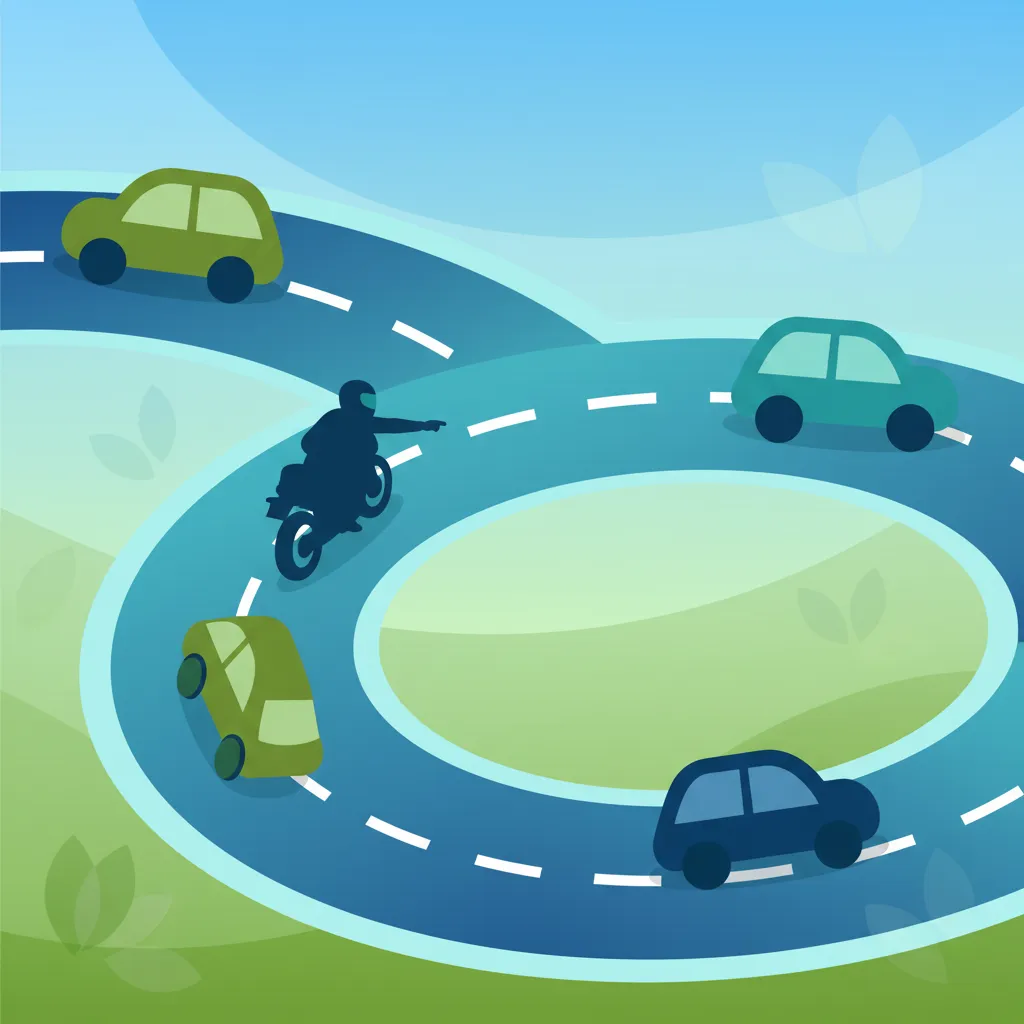
This lesson focuses on the proper techniques for negotiating roundabouts, which are common in Polish urban environments. Learners will learn the correct approach to entering a roundabout, yielding to circulating traffic, selecting the appropriate lane, and signaling intentions when exiting. The lesson also discusses speed adaptation for safe circulation and blind-spot checks before changing lanes within the roundabout, ensuring smooth and legal navigation.

This lesson focuses on the principles of maintaining a safe following distance behind other road users, introducing the two-second and three-second rules as guidelines. Learners will learn how to estimate safe gaps based on speed, road conditions, and traffic density, and understand the importance of a reaction-time buffer to prevent rear-end collisions. The lesson also covers techniques for visual distance estimation, promoting safe tailgating avoidance.
This lesson provides insight into the suspension system of a motorcycle, describing how front forks and rear swingarms absorb road irregularities and influence handling. It discusses the importance of correct tire pressure for grip and stability, and outlines procedures for monitoring and adjusting pressure according to load. Learners will learn how passenger weight and cargo distribution affect the motorcycle’s center of gravity and how to compensate through suspension preload adjustments.
In this lesson, learners examine defensive overtaking practices, focusing on when and how to safely pass other road users. The content covers speed differential calculations, appropriate passing distances, and the importance of maintaining clear visibility during overtaking. Learners will also study the impact of road curvature, traffic flow, and lane selection on overtaking safety, allowing them to minimize risks associated with passing maneuvers.
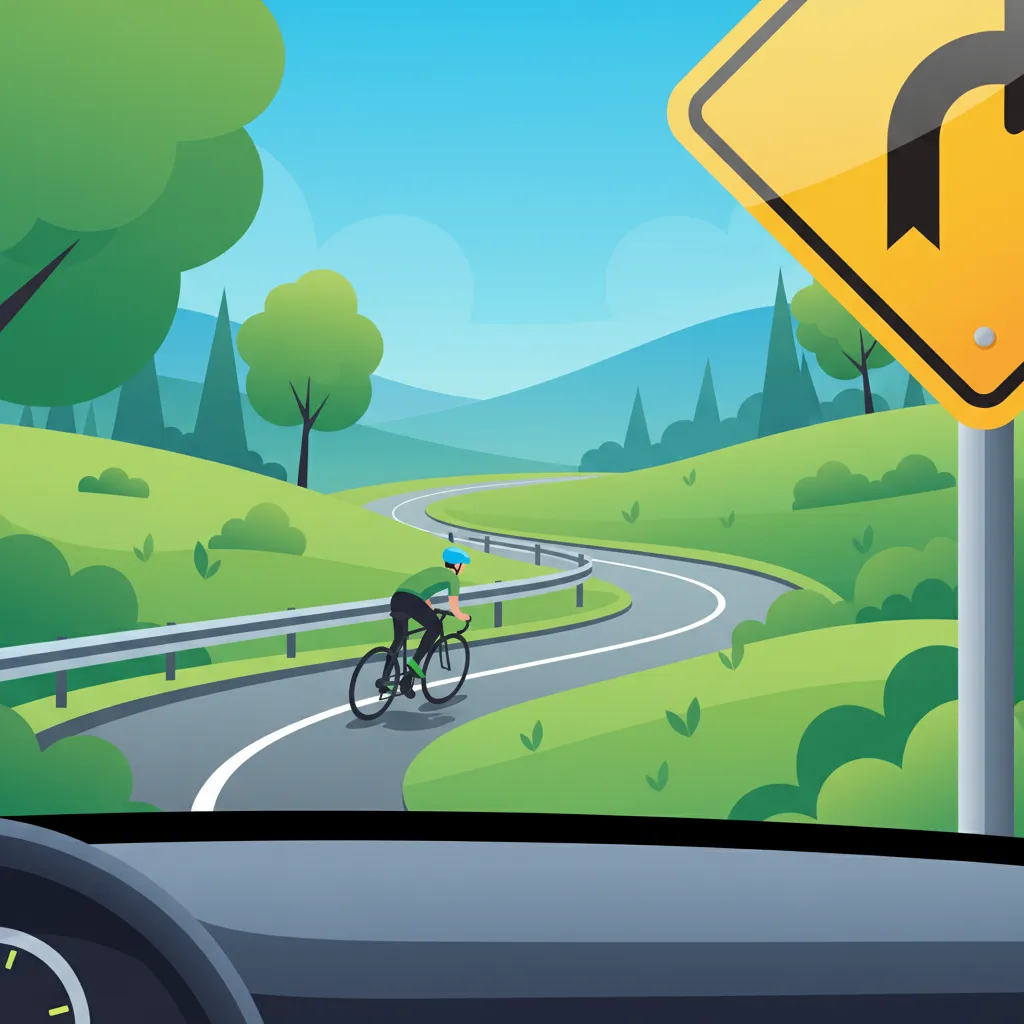
In this lesson, learners study warning signs that alert drivers to potential hazards, focusing on those that are particularly relevant to motorcyclists. The content includes signs indicating curves, slippery surfaces, animal crossings, tram tracks, and construction zones, each requiring specific riding adjustments. The lesson teaches riders how to interpret these signs to anticipate hazards, adjust speed appropriately, and maintain a safe distance from potential dangers.
This lesson examines how cross-winds affect motorcycle stability and control, providing strategies for compensating wind gusts through rider body positioning and throttle management. Learners will understand the aerodynamic effects of wind on the bike, how to position within the lane to minimize drift, and techniques for maintaining balance during sudden gusts. The content also covers the influence of wind on braking distances and the importance of adjusting speed.
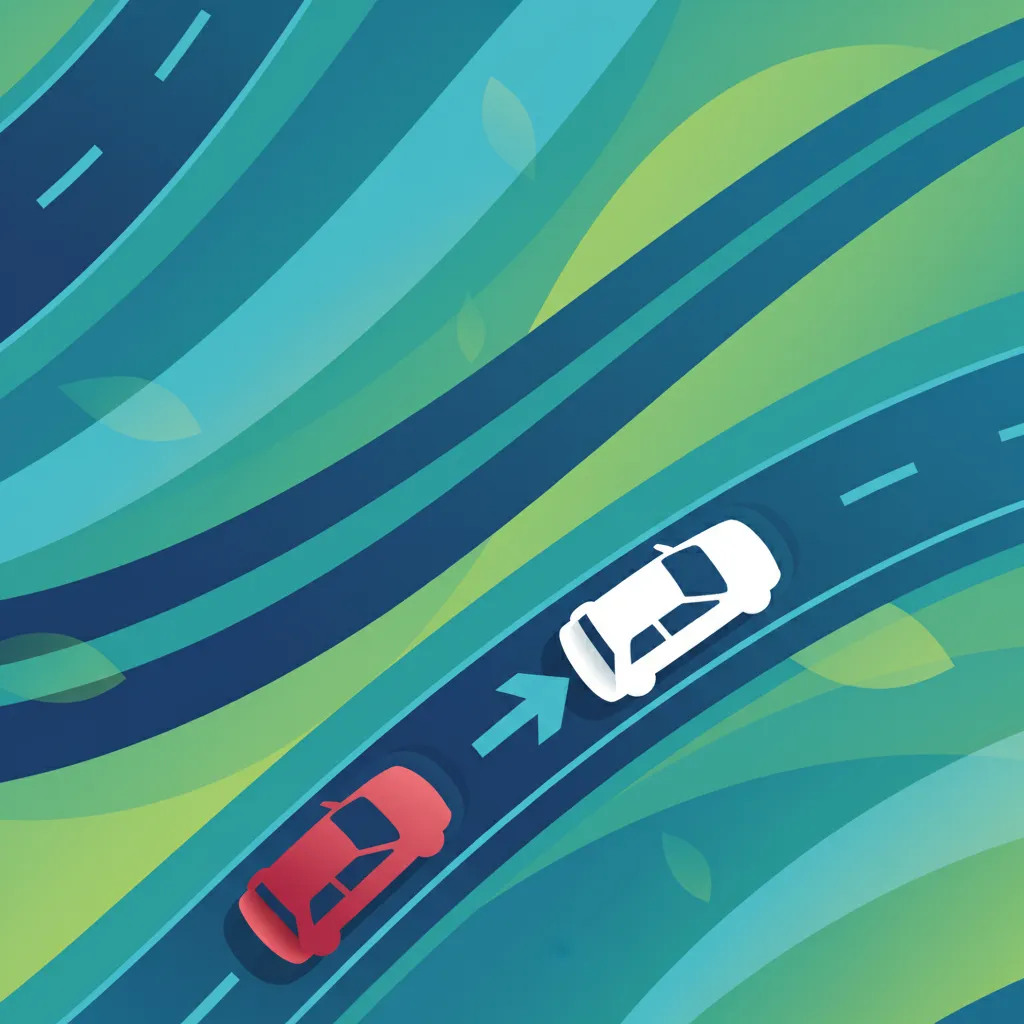
In this lesson, learners focus on the complex task of merging onto highways and changing lanes at high speeds, following Polish highway regulations. The content covers the use of acceleration lanes for building speed, selecting appropriate gaps, and positioning the motorcycle safely within traffic flow. It also highlights blind-spot monitoring, proper signaling, and the importance of maintaining a safety margin when entering or exiting lanes for hazard-free highway integration.

In this lesson, learners focus on the identification and management of blind spots that affect motorcyclists, particularly when sharing the road with larger vehicles such as trucks and buses. The content covers the use of side mirrors, head-turn techniques, and optimal rider positioning to minimize blind-spot exposure. Learners will also study the characteristics of blind spots at intersections and during overtaking maneuvers to reduce collision risk.
Find clear answers to common questions learners have about Steering Mechanics and Counter-Steering. Learn how the lesson is structured, which driving theory objectives it supports, and how it fits into the overall learning path of units and curriculum progression in Poland. These explanations help you understand key concepts, lesson flow, and exam focused study goals.
Counter-steering is the technique where you initially push the handlebar in the opposite direction of the turn you want to make. For example, to turn left, you briefly push the left handlebar forward. This action causes the bike to lean right, which then initiates the desired left turn. It's crucial because it's the primary method for initiating lean and controlling direction at speed.
Rake angle (the steering axis tilt) and trail (the distance between the steering axis and the tire contact patch) are critical geometry factors. A steeper rake and shorter trail can make steering quicker and more responsive, but potentially less stable. Conversely, a slacker rake and longer trail generally enhance stability, especially at higher speeds, but may require more effort to initiate turns. These factors balance agility with stability.
Yes, rider weight distribution is a significant factor. Shifting your weight subtly towards the inside of a turn helps the motorcycle lean more easily and can assist in maintaining the desired lean angle. While counter-steering initiates the lean, precise control of your body position and weight distribution fine-tunes the cornering line and stability.
Speed significantly impacts steering. At lower speeds, steering is more direct and less reliant on counter-steering. As speed increases, counter-steering becomes more effective and less effort is required to initiate a lean. At very high speeds, slight inputs become more pronounced, requiring smooth and precise control to avoid over-correction. Understanding this relationship is key for safe cornering at different speeds.
Yes, the Polish Category A theory exam includes questions assessing your understanding of vehicle dynamics and safe riding principles. You may encounter questions that test your knowledge of concepts like counter-steering, lean angle, and how rider input affects control, especially in relation to hazard perception and safe maneuvering.
Build custom practice sessions tailored precisely to your needs. Focus on areas requiring improvement, review specific Polish road signs, or master complex traffic rules to ensure full preparation for your official driving license exam.