
This lesson focuses on the critical skills of defensive overtaking and speed management, essential for safe motorcycle riding in Poland. Building on our understanding of road signs and priority rules, we'll explore how to safely pass other vehicles and maintain appropriate speeds in various conditions. This knowledge is vital for both passing your Category A theory exam and ensuring your safety on Polish roads.

Lesson content overview
Overtaking is one of the most dynamic and potentially hazardous manoeuvres a motorcyclist undertakes. For riders pursuing their Polish Category A motorcycle licence, mastering defensive overtaking and precise speed management is not just a skill – it is a legal obligation and a critical component of road safety. This lesson delves into the fundamental principles, regulations, and practical considerations required to safely pass other road users on Polish roads, reducing the risk of collisions and ensuring smooth traffic flow.
Defensive overtaking transcends mere adherence to speed limits; it is a proactive, risk-minimising approach. It demands accurate speed assessment, optimal road positioning, and an unimpeded line of sight before initiating any passing manoeuvre. By understanding and applying these techniques, motorcyclists can anticipate potential hazards, react effectively to unpredictable road user behaviour, and maintain control in diverse traffic conditions.
The Polish Road Traffic Act (Prawo o ruchu drogowym) sets clear stipulations for overtaking, prioritising the safety of all road users. Any manoeuvre that endangers others, fails to maintain a safe distance, or occurs under conditions of limited visibility is strictly prohibited. Mastering these rules is not merely about passing a theory exam; it directly correlates with a motorcyclist's ability to navigate complex traffic scenarios safely and confidently. This lesson will equip you with the knowledge to fulfill these legal obligations and adopt best practices.
Successful defensive overtaking relies on a combination of specific principles, each designed to mitigate risk and ensure a safe passage. These principles guide a rider's decision-making process before, during, and after an overtaking manoeuvre.
Overtaking performed only when the rider can maintain a safe distance, adequate visibility, and control, anticipating possible hazards from other road users and road geometry.
Defensive overtaking requires a comprehensive assessment of the situation before committing to the manoeuvre. This includes evaluating the speed of the vehicle to be passed, the surrounding traffic, prevailing road conditions, and the potential for hazards. The goal is to minimise exposure to unpredictable behaviour from other road users and the inherent risks associated with road geometry, such as blind spots or curves. Pre-overtake scanning, precise speed calculations, and proper lane selection are all integral to this approach.
The difference between the overtaking rider’s speed and the speed of the vehicle being overtaken. This value determines the feasibility and safety of completing a pass within a visible distance.
Effective speed differential management is crucial for safe overtaking. The rider must establish a sufficient speed difference (ΔV) between their motorcycle and the vehicle being passed to complete the manoeuvre safely within the available visible road length. This calculation dictates the necessary acceleration and the overall distance required for the pass. An insufficient speed differential can prolong the time spent in the opposing lane or alongside another vehicle, increasing exposure to risk. It is vital to remember that exceeding the legal maximum speed limit during an overtake is strictly prohibited in Poland.
The unobstructed length of road ahead that is visible to the rider, critical for anticipating hazards and safely completing an overtaking manoeuvre.
Overtaking is only permissible when the rider has a clear, unobstructed line of sight for a sufficient distance ahead. For motorcycles on Polish roads, this typically means seeing at least 30 metres of clear road. This requirement prevents overtaking in blind spots, on curves, or at intersections where oncoming traffic or hidden hazards might be obscured. If visibility is compromised due to road geometry, weather, or other obstructions, the rider must defer the overtake until conditions improve and a clear line of sight is guaranteed.
The minimum side-to-side distance required between the overtaking motorcycle and the overtaken vehicle.
A minimum lateral clearance of 1.5 metres is required between a motorcycle and the vehicle being passed on Polish roads. This distance is vital for preventing side-impact collisions and providing both the rider and the overtaken vehicle with adequate reaction space. On narrower lanes, this requirement may mean that overtaking is not possible or requires extreme caution. Riders must position their motorcycle appropriately within the lane to ensure this critical gap is maintained, especially when passing larger vehicles or vulnerable road users like cyclists.
Road geometry significantly influences overtaking safety. Curves, gradients, and lane widths directly impact a rider's sight distance, acceleration capabilities, and required passing space. For instance, curves naturally reduce the visible road ahead, making overtaking hazardous and often illegal. Uphill gradients reduce a motorcycle's acceleration, requiring more time and distance to complete a pass, while downhill gradients increase speed, demanding tighter control. Adverse weather conditions further exacerbate these challenges, reducing traction and visibility. A defensive rider constantly evaluates these factors and adjusts their overtaking strategy accordingly.
Different traffic situations demand varied approaches to overtaking. Understanding these scenarios and the specific Polish regulations governing them is fundamental to safe riding.
Motorcyclists encounter several types of overtaking situations:
Each scenario necessitates a distinct assessment of speed, lane positioning, and visibility. The overriding rule is that overtaking must never endanger other road users, as stipulated by the Polish Road Traffic Act (e.g., Article 24 and 26).
To perform a safe overtake, you must calculate the required speed differential (ΔV) that allows you to complete the manoeuvre within the visible distance. This involves several components:
When calculating ΔV, always factor in your motorcycle's acceleration capability, especially on inclines or when carrying a passenger/luggage. Overestimating your bike's power can lead to dangerous situations. Remember that you must not exceed the maximum posted speed limit to achieve the necessary ΔV.
For example, if you are travelling at 80 km/h and approach a car moving at 60 km/h, you have a base speed differential of 20 km/h. To safely complete the pass, you might need to accelerate your motorcycle to 95 km/h, establishing a ΔV of 35 km/h relative to the overtaken vehicle. This acceleration must be achieved within the legal speed limits and allow you to complete the manoeuvre within the available visibility, without putting yourself or others at risk.
As mentioned, a minimum lateral clearance of 1.5 metres is legally required for motorcyclists when passing another vehicle or road user. This distance is particularly critical when passing vulnerable road users such as cyclists, pedestrians, or even other motorcyclists.
On roads with narrow lanes (e.g., less than 2.5 metres wide), achieving this 1.5-metre clearance can be challenging or even impossible without crossing a solid line or encroaching significantly into the opposing lane. In such cases, overtaking may be prohibited or require exceptional caution and patience. Never assume you can "squeeze" past a vehicle; inadequate clearance drastically increases the risk of side-impact collisions.
The unobstructed line of sight ahead is paramount. The Polish Road Traffic Act (Article 24) explicitly prohibits overtaking on curves where sight distance is insufficient. While a general guideline of 30 metres of clear road ahead for motorcycles applies, this distance reduces dramatically on curves.
Factors that impact visibility include:
A rider must continuously scan the road ahead and assess visibility. If a curve is blind or limits visibility below the safe threshold (e.g., 30 metres for a motorcycle), overtaking is prohibited. You must wait until you have exited the curve and can clearly see a sufficient length of road ahead.
These signs are critical indicators that you should prepare to reduce speed and exercise extreme caution, as overtaking is highly likely to be unsafe.
The dynamics of traffic density and lane configuration are vital for safe overtaking.
On multi-lane roads, especially dual carriageways (droga dwujezdniowa), Polish law (Article 23) generally stipulates that overtaking should occur on the left. Overtaking on the right is only permitted if specific road markings explicitly designate a lane for overtaking on the right, or if the traffic in the left lane is stationary or moving very slowly. Always pay close attention to lane markings and signage.
Never assume an open lane permits overtaking. Always verify lane markings and traffic flow to ensure the manoeuvre is safe and legal. Overtaking on the right without designated markings or specific conditions can lead to dangerous situations and legal penalties.
Adhering to specific legal regulations is paramount for motorcyclists in Poland. Violations can lead to severe penalties, including fines, penalty points, and even license suspension.
Visibility Requirement: You must only overtake when you can see at least 30 metres ahead of your motorcycle. This is particularly critical on curves, near intersections, and pedestrian crossings. (Polish Road Traffic Act Art. 24 § 1).
Speed Limits: You must not exceed the maximum posted speed limit during an overtaking manoeuvre. The general allowance of 20 km/h over the limit often discussed for cars in specific contexts does not apply to motorcycles during overtaking. (Regulation of Speed Limits, Art. 3).
Lateral Clearance: Maintain an adequate lateral clearance of at least 1.5 metres from the vehicle being passed. This distance is crucial for safety and stability for both parties.
Prohibition on Curves: Overtaking is generally prohibited on curves where the sight distance is insufficient to ensure safety. Only proceed if road geometry genuinely guarantees ample visibility. (Art. 24 § 3).
Overtaking on the Right: Allowed only on multi-lane roads where specific road markings explicitly designate an overtaking lane for the right-hand side, or if the vehicle in the left lane is signalling a left turn. (Art. 23).
Vulnerable Road Users: When overtaking cyclists, ensure you provide at least 1.5 metres of lateral clearance. For other vulnerable road users like pedestrians, similar caution and space are mandatory. (Regulation on Cyclists, Art. 38).
Avoiding Oncoming Traffic: During overtaking, you must never block the path of oncoming traffic. This requires confirming a clear opposing lane for the entire duration of the manoeuvre. (Art. 27).
Signalling Intent: Always use appropriate turn signals well in advance to indicate your intention to overtake and when returning to your lane.
Understanding typical mistakes helps in avoiding them. Many dangerous situations arise from misjudging conditions or ignoring fundamental rules.
Safe overtaking is not a static procedure; it must be adapted to a multitude of environmental and situational factors.
At night, poor illumination makes hazard detection harder, especially for oncoming traffic. Use your headlights correctly, avoid high beams when approaching or following other vehicles, and increase your required visibility distance (e.g., to at least 40 metres for motorcycles) as peripheral vision is reduced.
Special care must be taken when overtaking vulnerable road users (VRUs), such as pedestrians, cyclists, and mopeds.
These signs are clear indicators to prepare to yield and never overtake in their vicinity if there are crossing pedestrians or cyclists.
Understanding the cause-and-effect relationships is crucial for internalising defensive riding principles.
Defensive overtaking and effective speed management are cornerstones of safe motorcycle riding, particularly in a comprehensive curriculum like the Polish Motorcycle Theory for Category A. The principles of maintaining sufficient visibility and lateral clearance, accurately calculating speed differentials, and adapting to diverse road and weather conditions are non-negotiable. By integrating these practices, you not only comply with Polish law but also significantly enhance your safety and the safety of others on the road.
Remember, every overtaking manoeuvre carries inherent risks. A truly defensive rider understands these risks, meticulously assesses the situation, and defers the manoeuvre if there is any doubt about its safety or legality.
Defensive overtaking for Polish motorcycle riders combines legal compliance with risk assessment, requiring at least 30 metres of clear visibility and 1.5 metres of lateral clearance. Speed differential (ΔV) calculations must account for your motorcycle's actual acceleration within legal speed limits, never exceeding posted limits to complete a pass. Road curvature, weather conditions, gradients, and traffic density all dynamically affect overtaking safety and must be continuously evaluated. Common violations include overtaking on blind curves, insufficient clearance, speed limit violations, and failing to signal, each carrying significant legal and safety consequences. The cornerstone principle is that any doubt about safety or legality should result in deferring the overtake until conditions are unequivocally safe.
A short set of high-value points that capture the most important learning from this lesson.
Defensive overtaking requires assessing speed differential, visibility, lateral clearance, and road geometry before executing any pass.
The visibility requirement for motorcycles on Polish roads is at least 30 metres of clear road ahead before overtaking.
A minimum lateral clearance of 1.5 metres must be maintained between the motorcycle and any vehicle being passed.
Speed differential (ΔV) calculation determines whether a safe overtake is possible within the available visible distance.
Overtaking is prohibited on blind curves where sight distance is insufficient, regardless of assumptions about oncoming traffic.
Explore all units and lessons included in this driving theory course.
Never exceed the posted speed limit during an overtaking manoeuvre; the 20 km/h tolerance does not apply to motorcycles in Poland.
Overtake on the left as a general rule; overtaking on the right is only permitted with explicit lane markings or when the left lane vehicle is signalling left turn.
When overtaking cyclists or pedestrians, maintain at least 1.5 metres of lateral clearance and be prepared to yield.
Environmental factors like rain, fog, gradients, and night riding require increased visibility distances and greater speed differential margins.
Always signal your intention before overtaking and when returning to your lane; failure to signal is a common and dangerous violation.
Attempting to overtake on blind curves because the road 'seems clear' without accounting for reduced sight lines.
Squeezing past vehicles with insufficient lateral clearance (less than 1.5m) when lanes are narrow, increasing side-impact risk.
Accelerating beyond the speed limit to achieve a larger speed differential, which is illegal and reduces control.
Misjudging speed differential calculations by overestimating motorcycle acceleration capability, especially on uphill gradients or when loaded.
Overtaking in heavy traffic where gaps are insufficient, leading to abrupt braking and chain-reaction hazards.
Lesson content overview
A short set of high-value points that capture the most important learning from this lesson.
Defensive overtaking requires assessing speed differential, visibility, lateral clearance, and road geometry before executing any pass.
The visibility requirement for motorcycles on Polish roads is at least 30 metres of clear road ahead before overtaking.
A minimum lateral clearance of 1.5 metres must be maintained between the motorcycle and any vehicle being passed.
Speed differential (ΔV) calculation determines whether a safe overtake is possible within the available visible distance.
Overtaking is prohibited on blind curves where sight distance is insufficient, regardless of assumptions about oncoming traffic.
Explore all units and lessons included in this driving theory course.
Never exceed the posted speed limit during an overtaking manoeuvre; the 20 km/h tolerance does not apply to motorcycles in Poland.
Overtake on the left as a general rule; overtaking on the right is only permitted with explicit lane markings or when the left lane vehicle is signalling left turn.
When overtaking cyclists or pedestrians, maintain at least 1.5 metres of lateral clearance and be prepared to yield.
Environmental factors like rain, fog, gradients, and night riding require increased visibility distances and greater speed differential margins.
Always signal your intention before overtaking and when returning to your lane; failure to signal is a common and dangerous violation.
Attempting to overtake on blind curves because the road 'seems clear' without accounting for reduced sight lines.
Squeezing past vehicles with insufficient lateral clearance (less than 1.5m) when lanes are narrow, increasing side-impact risk.
Accelerating beyond the speed limit to achieve a larger speed differential, which is illegal and reduces control.
Misjudging speed differential calculations by overestimating motorcycle acceleration capability, especially on uphill gradients or when loaded.
Overtaking in heavy traffic where gaps are insufficient, leading to abrupt braking and chain-reaction hazards.
Explore search topics learners often look for when studying Defensive Overtaking and Speed Management. These topics reflect common questions about road rules, driving situations, safety guidance, and lesson level theory preparation for learners in Poland.
Browse additional driving theory lessons that cover connected traffic rules, road signs, and common driving situations related to this topic. Improve your understanding of how different rules interact across everyday traffic scenarios.
Explore advanced overtaking principles for motorcycles in Poland, focusing on challenging scenarios such as adverse weather, narrow lanes, and urban environments. Understand how to adapt speed management and visibility assessments for safer passing manoeuvres.

In this lesson, learners explore riding on rural and countryside roads, where road markings may be sparse and surface conditions varied. The content covers safe overtaking in single-lane sections, interaction with agricultural vehicles and animals, and the handling of gravel or uneven surfaces. Learners will also study the importance of anticipating curves and adjusting speed to light conditions, equipping them with the skills needed for safe countryside travel.

This lesson is dedicated to the safe overtaking of two-wheeled vehicles. It explains the legal requirement to leave a sufficient lateral distance (at least 1 meter) when passing cyclists. The content highlights the vulnerability of these road users and the need for patience, reduced speed, and careful judgment.

This lesson outlines strategies for planning escape routes and adopting protective positioning to avoid potential collisions. Learners will study the concept of a defensive riding line that maximizes visibility and provides an optimal safety corridor. The content emphasizes maintaining adequate distance buffers, choosing lanes that reduce exposure to hazards, and preparing for emergency maneuvers such as swift swerves, allowing riders to react quickly in critical situations.

In this lesson, learners study warning signs that alert drivers to potential hazards, focusing on those that are particularly relevant to motorcyclists. The content includes signs indicating curves, slippery surfaces, animal crossings, tram tracks, and construction zones, each requiring specific riding adjustments. The lesson teaches riders how to interpret these signs to anticipate hazards, adjust speed appropriately, and maintain a safe distance from potential dangers.

This lesson details the legal framework for overtaking in Poland. It explains how to interpret road markings, such as solid and double solid lines, and prohibition signs that forbid passing. The content emphasizes the critical need for sufficient sight distance and a clear path before initiating an overtaking maneuver to ensure safety.

This lesson examines the variety of pavement markings that define lane structures, traffic flow, and special zones on Polish roads. Learners will study solid and broken lines, lane division markings, and the distinct symbols for bicycle lanes, bus lanes, and tram tracks, all of which affect motorcyclist positioning. The lesson also addresses surface texture indicators that signal changing road conditions, enabling riders to maintain correct lane discipline.

This lesson examines the specific rules and etiquette for riding on Polish motorways and high-speed highways, focusing on proper lane positioning, entry via acceleration lanes, and maintaining appropriate following distances. Learners will study overtaking protocols at high speeds, proper use of deceleration lanes for exits, and techniques for aerodynamic positioning. The content also covers safe lane changes and emergency lane usage to ensure efficient travel.
In this lesson, learners examine how environmental conditions such as rain, wind, ice, and reduced visibility necessitate adjustments in riding speed. The content provides guidelines for assessing road surfaces, judging appropriate cornering speeds, and reducing speed proactively in adverse weather. Learners will understand the impact of temperature on tyre performance and the need to increase safety margins, mastering adaptive speed management to maintain control.
This lesson focuses on the proper techniques for negotiating roundabouts, which are common in Polish urban environments. Learners will learn the correct approach to entering a roundabout, yielding to circulating traffic, selecting the appropriate lane, and signaling intentions when exiting. The lesson also discusses speed adaptation for safe circulation and blind-spot checks before changing lanes within the roundabout, ensuring smooth and legal navigation.

This lesson focuses on the unique demands of urban riding within Polish cities, addressing traffic lights, pedestrian zones, one-way streets, and the presence of tram tracks. Learners will study safe lane positioning on narrow roads, blind-spot management, and how to share the road with buses and cyclists. The content also covers strategies for navigating stop-and-go traffic, anticipating signal changes, and maintaining visibility in dense urban environments.
Understand the legal framework for motorcycle overtaking in Poland, including speed differentials, lateral clearance, and prohibited situations. Learn to identify and avoid common mistakes that lead to dangerous situations and accidents.
This lesson details the legal framework for overtaking in Poland. It explains how to interpret road markings, such as solid and double solid lines, and prohibition signs that forbid passing. The content emphasizes the critical need for sufficient sight distance and a clear path before initiating an overtaking maneuver to ensure safety.
This lesson is dedicated to the safe overtaking of two-wheeled vehicles. It explains the legal requirement to leave a sufficient lateral distance (at least 1 meter) when passing cyclists. The content highlights the vulnerability of these road users and the need for patience, reduced speed, and careful judgment.

In this lesson, learners examine the specific actions required at stop signs and give-way intersections under Polish traffic regulations. The content explains the legal requirement for a full stop before the stop line, incorporating a visual scan of all directions before proceeding. It also covers the give-way protocol, where riders must yield to traffic already in the intersection or on the main road, emphasizing the need for correct positioning and observation.

This lesson introduces the fundamental principles of right-of-way on Polish roads, explaining how priority road signs determine the flow of traffic at intersections. Learners will explore the hierarchy of vehicle classes and the specific obligations that arise when approaching a yield line or a give-way sign. The content details the legal precedence of main road traffic over secondary road traffic, helping riders safely navigate intersections and avoid right-of-way infractions.

In this lesson, learners examine the core legal obligations that apply to motorcyclists operating on Polish roads, including the mandatory use of helmets, periodic vehicle inspections, and the necessity of valid insurance and registration. The content details the classification of traffic offences and explains the associated penalty system, including fines, demerit points, and potential licence suspension. Additionally, the lesson outlines procedural requirements for accident reporting and interaction with law enforcement, providing a comprehensive view of a rider’s legal responsibilities.
This lesson examines the family of regulatory signs that dictate mandatory actions and prohibitions on Polish roads, emphasizing how each sign influences motorcyclist behaviour. Learners will explore the stop, give way, speed limit, and no overtaking signs, understanding the legal obligations they impose. The lesson also highlights signs that specifically affect motorcycles, such as lane restrictions, ensuring riders recognize and obey regulations unique to two-wheel traffic.
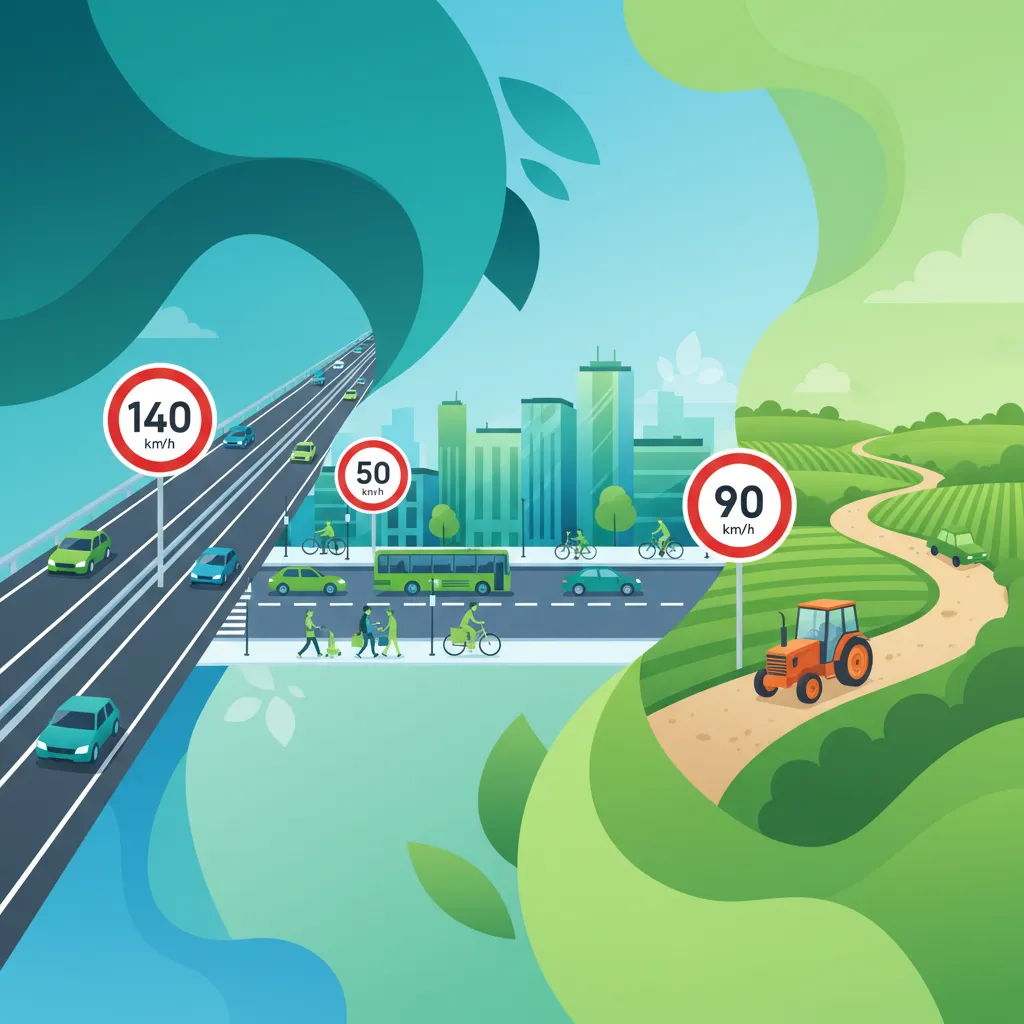
This lesson provides a comprehensive overview of the statutory speed limits applicable to different categories of Polish roads, including urban areas, residential zones, rural roads, highways, and motorways. Learners will examine the visual cues of speed limit signs and learn how speed limit transitions affect rider behavior. The content also covers how enforcement mechanisms impact compliance and the importance of real-time speed adaptation to remain within legal thresholds.
This lesson examines the specific rules and etiquette for riding on Polish motorways and high-speed highways, focusing on proper lane positioning, entry via acceleration lanes, and maintaining appropriate following distances. Learners will study overtaking protocols at high speeds, proper use of deceleration lanes for exits, and techniques for aerodynamic positioning. The content also covers safe lane changes and emergency lane usage to ensure efficient travel.
This lesson examines the variety of pavement markings that define lane structures, traffic flow, and special zones on Polish roads. Learners will study solid and broken lines, lane division markings, and the distinct symbols for bicycle lanes, bus lanes, and tram tracks, all of which affect motorcyclist positioning. The lesson also addresses surface texture indicators that signal changing road conditions, enabling riders to maintain correct lane discipline.
In this lesson, learners explore riding on rural and countryside roads, where road markings may be sparse and surface conditions varied. The content covers safe overtaking in single-lane sections, interaction with agricultural vehicles and animals, and the handling of gravel or uneven surfaces. Learners will also study the importance of anticipating curves and adjusting speed to light conditions, equipping them with the skills needed for safe countryside travel.
Find clear answers to common questions learners have about Defensive Overtaking and Speed Management. Learn how the lesson is structured, which driving theory objectives it supports, and how it fits into the overall learning path of units and curriculum progression in Poland. These explanations help you understand key concepts, lesson flow, and exam focused study goals.
The most crucial factor is ensuring you have sufficient visibility and a clear, unobstructed path ahead. This means checking your mirrors, blind spots, and anticipating the actions of other road users. Never overtake if there's any doubt about safety or legality.
A sufficient speed differential between your motorcycle and the vehicle being overtaken is essential for a quick and safe manoeuvre. If your speed is too close, the overtaking process will take longer, increasing exposure to potential hazards. You must be able to accelerate sufficiently to pass promptly.
Yes, overtaking in curves, at junctions, or on hills where visibility is limited is generally prohibited or highly dangerous. Polish law and safe riding practice dictate that you must have a clear view of the road ahead for a safe distance before initiating an overtake.
Common mistakes include underestimating the time and distance needed for overtaking, failing to check blind spots, misjudging oncoming traffic speed, and overtaking in prohibited areas like junctions or bends. The theory exam often presents scenarios to test these specific judgments.
Defensive overtaking means always assuming the worst-case scenario. This includes anticipating that the vehicle ahead might brake suddenly, another vehicle might emerge from a side road, or a hazard might appear. It involves planning your overtake with ample safety margins and being prepared to abort if necessary.
Build custom practice sessions tailored precisely to your needs. Focus on areas requiring improvement, review specific Polish road signs, or master complex traffic rules to ensure full preparation for your official driving license exam.