
Roundabouts can be tricky, especially on a motorcycle. This lesson breaks down the essential techniques for navigating Polish roundabouts safely and legally, preparing you for both the theory exam and real-world riding challenges. We'll cover everything from approach to exit, ensuring you understand your rights and responsibilities.
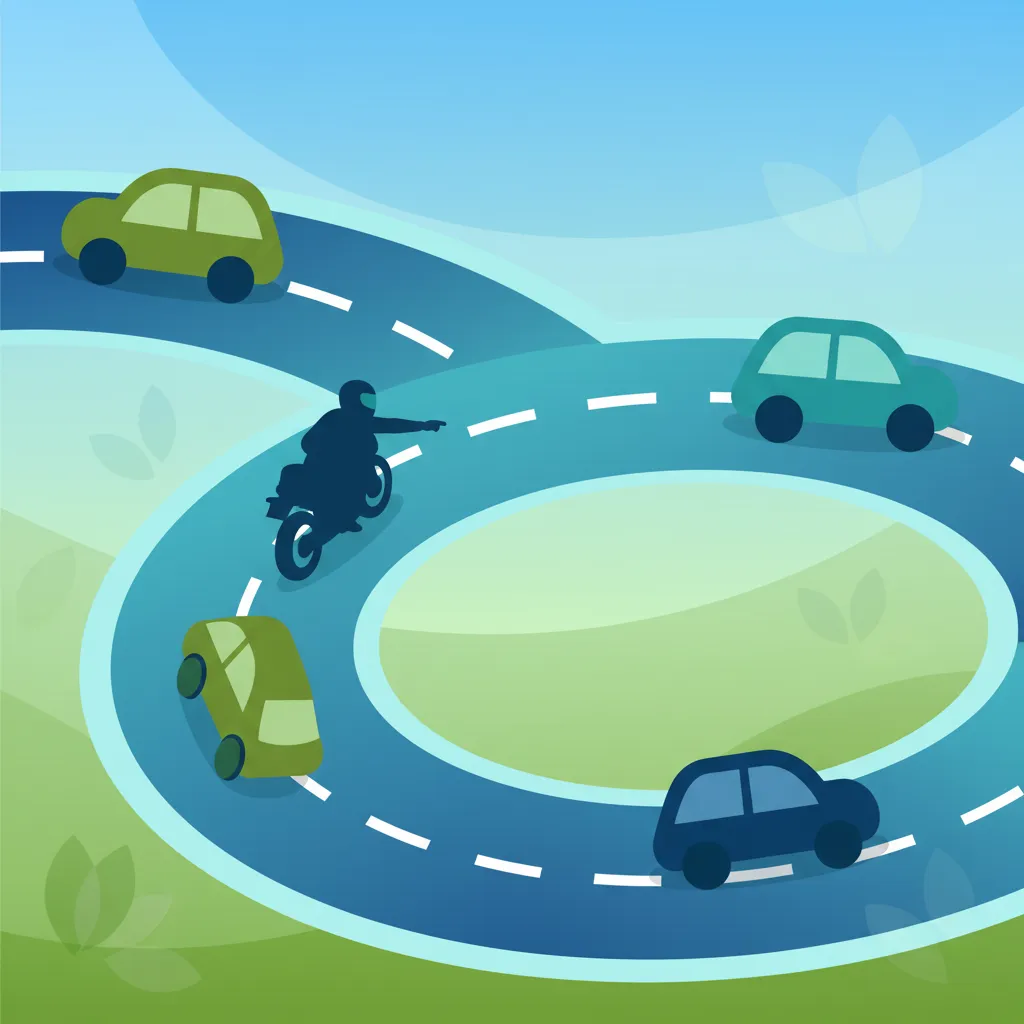
Lesson content overview
This lesson covers the complete procedure for safely and legally navigating Polish roundabouts on a motorcycle, from approach to exit. The core principle is that circulating traffic always has priority, requiring riders to yield and wait for safe gaps before entering. Correct lane selection must be determined before entry based on intended exit, and riders must maintain lane discipline throughout. Signaling requirements under Polish law mandate activation at least 30 meters before exits, with blind-spot checks essential before any lane change. Speed should be kept low (typically 30 km/h or below in urban settings), and pedestrians at exit crosswalks must always be yielded to regardless of other priorities.
A short set of high-value points that capture the most important learning from this lesson.
Vehicles already circulating within a roundabout have absolute priority over those entering; failure to yield is both dangerous and illegal under Polish law.
Lane selection must be determined before entry based on your intended exit: rightmost lane for first exit, inner lane for left turns or U-turns.
Activate your turn signal just after passing the exit before your intended one, and cancel it promptly after exiting.
Maintain controlled speeds of 30 km/h or lower in urban roundabouts to ensure stability, adequate reaction time, and traction.
Perform over-the-shoulder blind-spot checks before changing position or exiting, as mirrors alone cannot detect all hazards.
Explore all units and lessons included in this driving theory course.
Article 30 of Prawo o ruchu drogowym establishes that circulating traffic always has priority over entering vehicles.
Article 45 requires signaling at least 30 meters before any turn or lane change, including roundabout exits.
Section 56 prohibits lane changes across solid road markings; select your lane before entering and maintain it until exit.
Article 61 mandates yielding to pedestrians at all marked crosswalks, including those at roundabout exits.
Urban roundabouts typically have advisory speeds of 30 km/h or lower, even when the default urban limit is 50 km/h.
Entering a roundabout without yielding, misjudging gaps or assuming circulating vehicles will slow down.
Changing lanes inside the roundabout or crossing solid lane markings, which is illegal and creates collision risks.
Signaling too late, too early in the wrong direction, or forgetting to cancel the signal after exiting.
Failing to check blind spots before exiting, leading to side-impact collisions with vehicles in adjacent lanes.
Hugging the central island too closely, which reduces visibility to other drivers and limits maneuvering space.
Lesson content overview
A short set of high-value points that capture the most important learning from this lesson.
Vehicles already circulating within a roundabout have absolute priority over those entering; failure to yield is both dangerous and illegal under Polish law.
Lane selection must be determined before entry based on your intended exit: rightmost lane for first exit, inner lane for left turns or U-turns.
Activate your turn signal just after passing the exit before your intended one, and cancel it promptly after exiting.
Maintain controlled speeds of 30 km/h or lower in urban roundabouts to ensure stability, adequate reaction time, and traction.
Perform over-the-shoulder blind-spot checks before changing position or exiting, as mirrors alone cannot detect all hazards.
Explore all units and lessons included in this driving theory course.
Article 30 of Prawo o ruchu drogowym establishes that circulating traffic always has priority over entering vehicles.
Article 45 requires signaling at least 30 meters before any turn or lane change, including roundabout exits.
Section 56 prohibits lane changes across solid road markings; select your lane before entering and maintain it until exit.
Article 61 mandates yielding to pedestrians at all marked crosswalks, including those at roundabout exits.
Urban roundabouts typically have advisory speeds of 30 km/h or lower, even when the default urban limit is 50 km/h.
Entering a roundabout without yielding, misjudging gaps or assuming circulating vehicles will slow down.
Changing lanes inside the roundabout or crossing solid lane markings, which is illegal and creates collision risks.
Signaling too late, too early in the wrong direction, or forgetting to cancel the signal after exiting.
Failing to check blind spots before exiting, leading to side-impact collisions with vehicles in adjacent lanes.
Hugging the central island too closely, which reduces visibility to other drivers and limits maneuvering space.
Explore search topics learners often look for when studying Roundabout Navigation for Motorcyclists. These topics reflect common questions about road rules, driving situations, safety guidance, and lesson level theory preparation for learners in Poland.
Browse additional driving theory lessons that cover connected traffic rules, road signs, and common driving situations related to this topic. Improve your understanding of how different rules interact across everyday traffic scenarios.
Explore complex roundabout scenarios and advanced intersection navigation techniques relevant to Polish motorcycle theory. Understand multi-lane roundabouts, yielding challenges, and specific rules for safe passage in varied traffic environments.
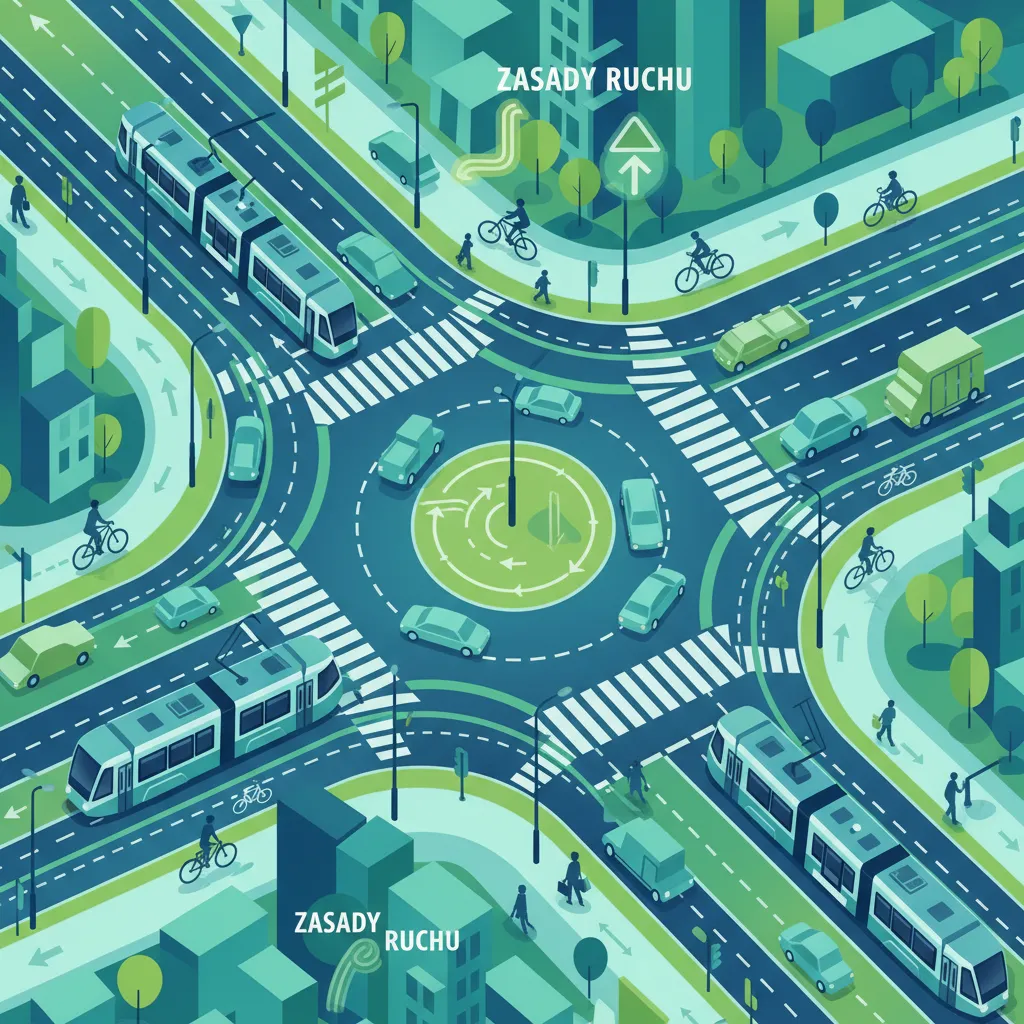
In this lesson, learners investigate complex junctions and intersections found across urban, rural, and highway environments, focusing on multi-lane configurations, traffic light coordination, and roundabout navigation. The content emphasizes priority rules, blind-spot assessment when merging, and safe lane selection for turning maneuvers. Learners will also consider interactions with cyclists and pedestrians, and the importance of adjusting approach speed for safe navigation.
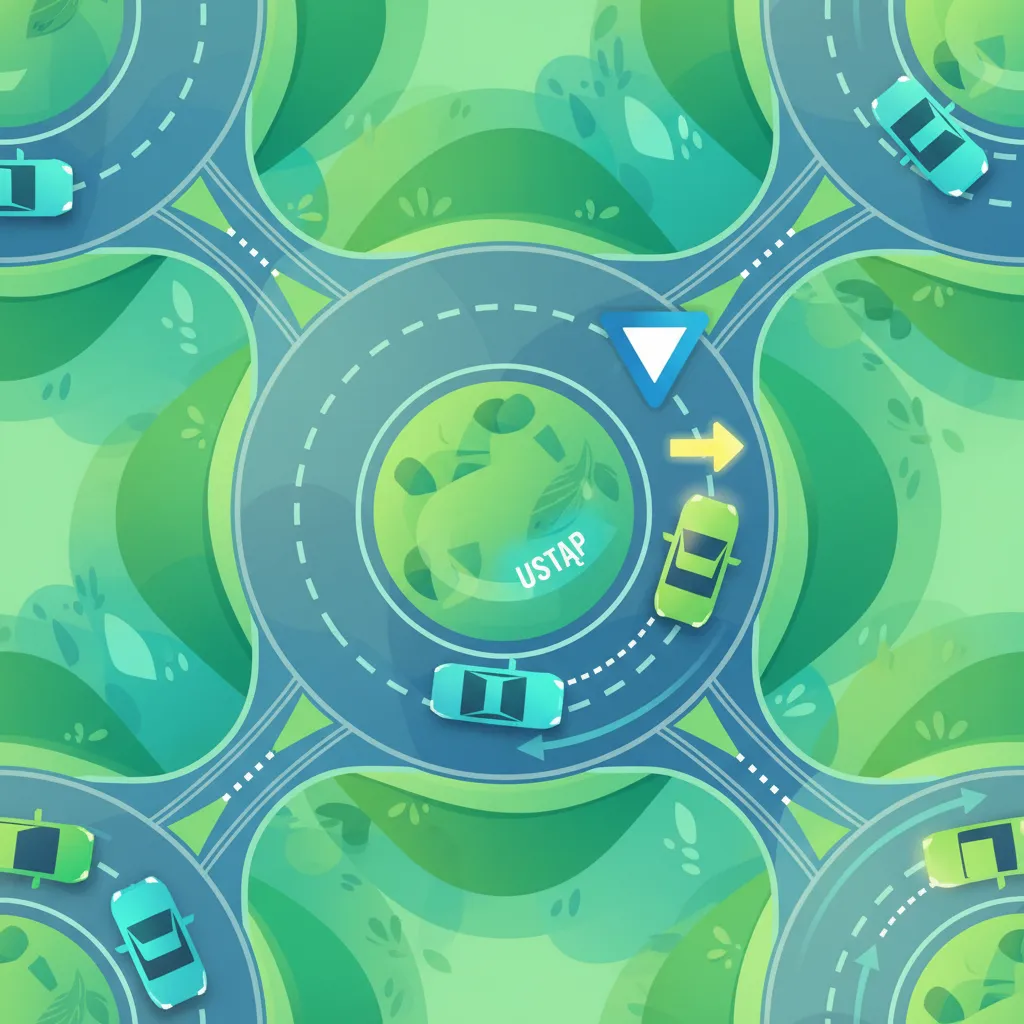
This lesson explains the specific rules for navigating roundabouts, a common feature on Polish roads. It emphasizes the primary rule of yielding to traffic already circulating within the roundabout before entering. The content also covers correct lane positioning for different exits and the proper use of indicators when exiting.
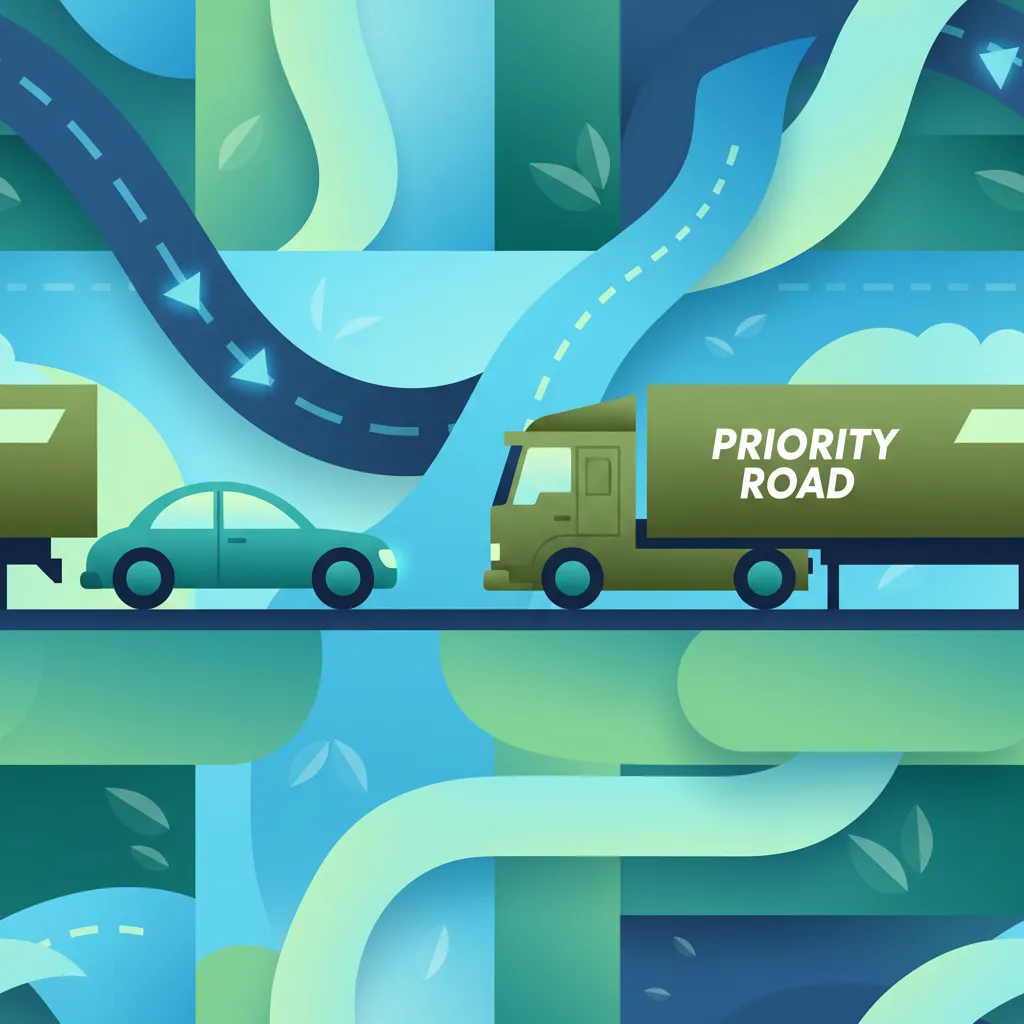
This lesson introduces the fundamental principles of right-of-way on Polish roads, explaining how priority road signs determine the flow of traffic at intersections. Learners will explore the hierarchy of vehicle classes and the specific obligations that arise when approaching a yield line or a give-way sign. The content details the legal precedence of main road traffic over secondary road traffic, helping riders safely navigate intersections and avoid right-of-way infractions.
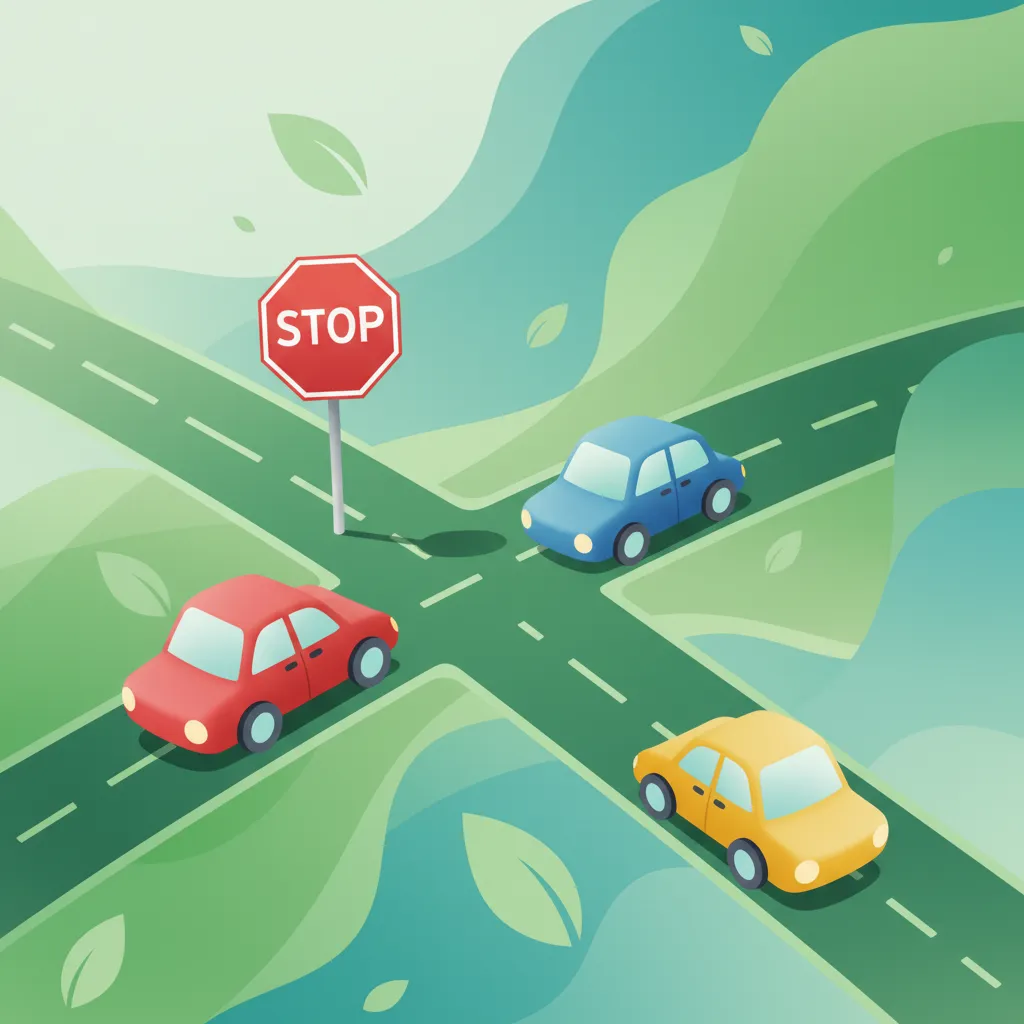
In this lesson, learners examine the specific actions required at stop signs and give-way intersections under Polish traffic regulations. The content explains the legal requirement for a full stop before the stop line, incorporating a visual scan of all directions before proceeding. It also covers the give-way protocol, where riders must yield to traffic already in the intersection or on the main road, emphasizing the need for correct positioning and observation.

This lesson examines the specific rules and etiquette for riding on Polish motorways and high-speed highways, focusing on proper lane positioning, entry via acceleration lanes, and maintaining appropriate following distances. Learners will study overtaking protocols at high speeds, proper use of deceleration lanes for exits, and techniques for aerodynamic positioning. The content also covers safe lane changes and emergency lane usage to ensure efficient travel.
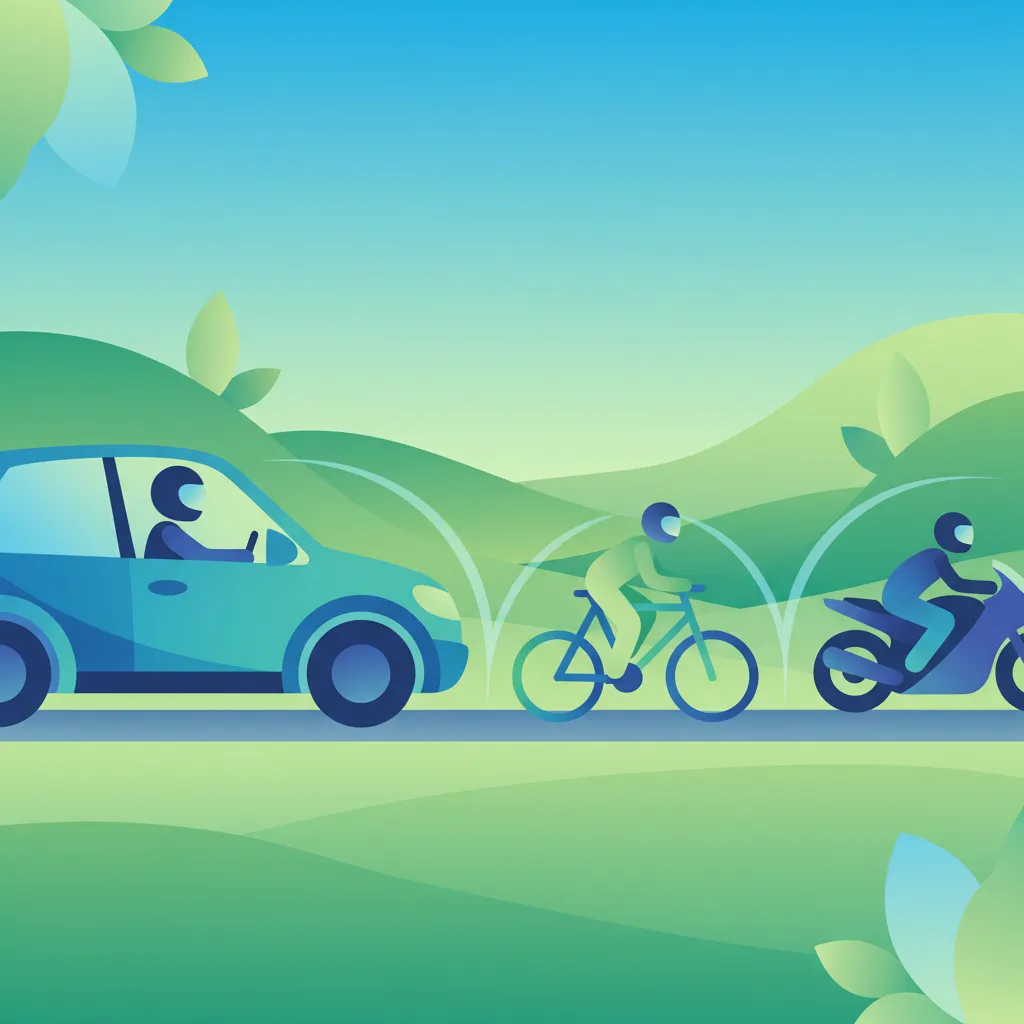
This lesson is dedicated to the safe overtaking of two-wheeled vehicles. It explains the legal requirement to leave a sufficient lateral distance (at least 1 meter) when passing cyclists. The content highlights the vulnerability of these road users and the need for patience, reduced speed, and careful judgment.

This lesson examines the responsibilities of motorcyclists when approaching pedestrian crossings and interacting with cyclists, emphasizing the marked right-of-way for pedestrians at zebra crossings. Learners will study how to determine safe passing distances, adjust speed, and use visual cues such as eye contact to ensure pedestrians have cleared the crossing. The content also covers interactions with cyclists sharing the road, highlighting the need for anticipation and adequate passing gaps.

This lesson provides strategies for safely navigating the numerous intersections typical of urban environments. It reinforces the application of priority rules in situations with limited visibility and high traffic volume. Techniques for making turns in narrow streets and being aware of pedestrians and cyclists at junctions are central to the instruction.
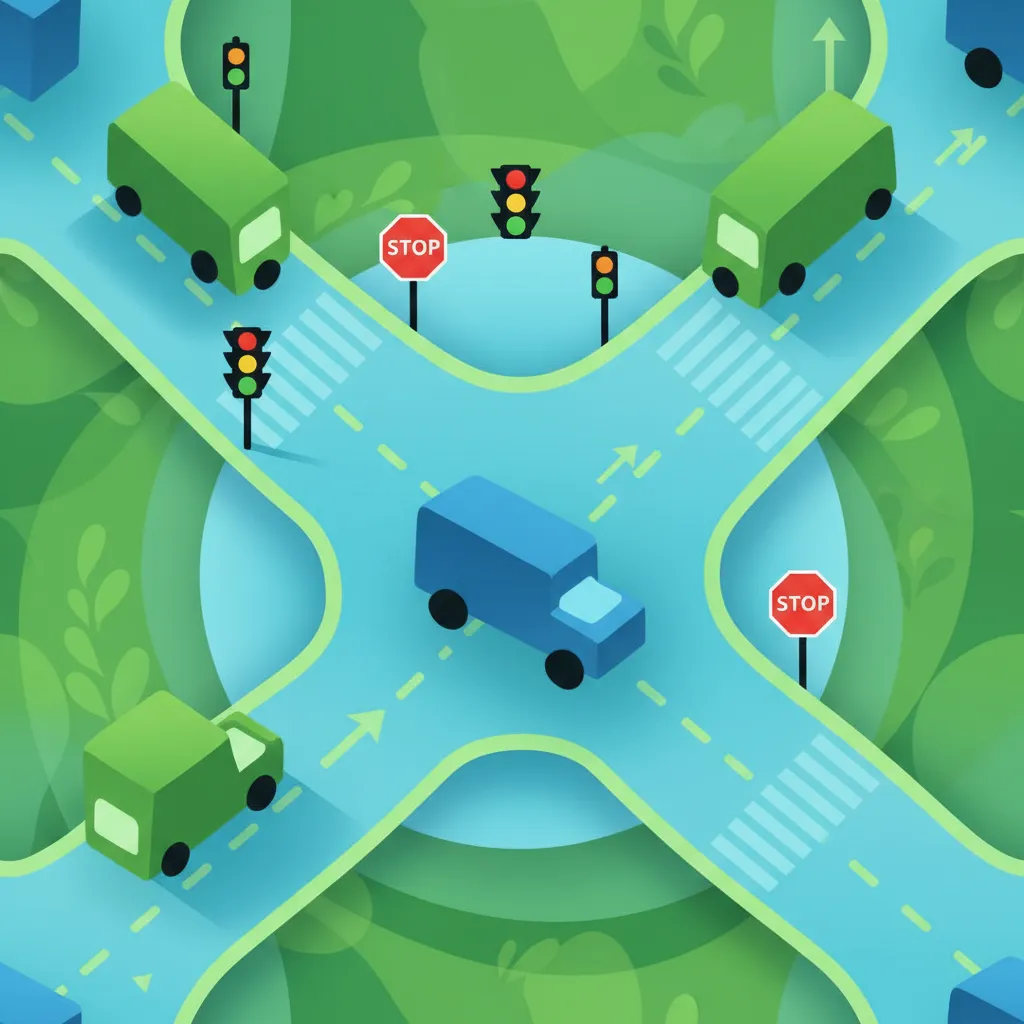
This lesson provides a comprehensive breakdown of the right-of-way rules that govern intersections. It explains the clear directives given by traffic lights, stop signs, and yield signs, and clarifies the procedures at unmarked or uncontrolled intersections, where the 'priority to the right' rule often applies. Learners will understand the legal hierarchy of these rules to make correct, safe, and predictable decisions when navigating through any junction, reducing the risk of conflict with other traffic.

This lesson focuses on the unique demands of urban riding within Polish cities, addressing traffic lights, pedestrian zones, one-way streets, and the presence of tram tracks. Learners will study safe lane positioning on narrow roads, blind-spot management, and how to share the road with buses and cyclists. The content also covers strategies for navigating stop-and-go traffic, anticipating signal changes, and maintaining visibility in dense urban environments.
Learn about frequent errors motorcyclists make when navigating Polish roundabouts, including improper yielding, lane discipline issues, and signaling failures. Understand how to avoid these pitfalls for safer riding and theory test success.
In this lesson, learners investigate complex junctions and intersections found across urban, rural, and highway environments, focusing on multi-lane configurations, traffic light coordination, and roundabout navigation. The content emphasizes priority rules, blind-spot assessment when merging, and safe lane selection for turning maneuvers. Learners will also consider interactions with cyclists and pedestrians, and the importance of adjusting approach speed for safe navigation.
This lesson explains the specific rules for navigating roundabouts, a common feature on Polish roads. It emphasizes the primary rule of yielding to traffic already circulating within the roundabout before entering. The content also covers correct lane positioning for different exits and the proper use of indicators when exiting.
In this lesson, learners examine the specific actions required at stop signs and give-way intersections under Polish traffic regulations. The content explains the legal requirement for a full stop before the stop line, incorporating a visual scan of all directions before proceeding. It also covers the give-way protocol, where riders must yield to traffic already in the intersection or on the main road, emphasizing the need for correct positioning and observation.

This lesson examines the variety of pavement markings that define lane structures, traffic flow, and special zones on Polish roads. Learners will study solid and broken lines, lane division markings, and the distinct symbols for bicycle lanes, bus lanes, and tram tracks, all of which affect motorcyclist positioning. The lesson also addresses surface texture indicators that signal changing road conditions, enabling riders to maintain correct lane discipline.
This lesson focuses on the unique demands of urban riding within Polish cities, addressing traffic lights, pedestrian zones, one-way streets, and the presence of tram tracks. Learners will study safe lane positioning on narrow roads, blind-spot management, and how to share the road with buses and cyclists. The content also covers strategies for navigating stop-and-go traffic, anticipating signal changes, and maintaining visibility in dense urban environments.
This lesson examines the specific rules and etiquette for riding on Polish motorways and high-speed highways, focusing on proper lane positioning, entry via acceleration lanes, and maintaining appropriate following distances. Learners will study overtaking protocols at high speeds, proper use of deceleration lanes for exits, and techniques for aerodynamic positioning. The content also covers safe lane changes and emergency lane usage to ensure efficient travel.

In this lesson, learners examine defensive overtaking practices, focusing on when and how to safely pass other road users. The content covers speed differential calculations, appropriate passing distances, and the importance of maintaining clear visibility during overtaking. Learners will also study the impact of road curvature, traffic flow, and lane selection on overtaking safety, allowing them to minimize risks associated with passing maneuvers.
This lesson introduces the fundamental principles of right-of-way on Polish roads, explaining how priority road signs determine the flow of traffic at intersections. Learners will explore the hierarchy of vehicle classes and the specific obligations that arise when approaching a yield line or a give-way sign. The content details the legal precedence of main road traffic over secondary road traffic, helping riders safely navigate intersections and avoid right-of-way infractions.
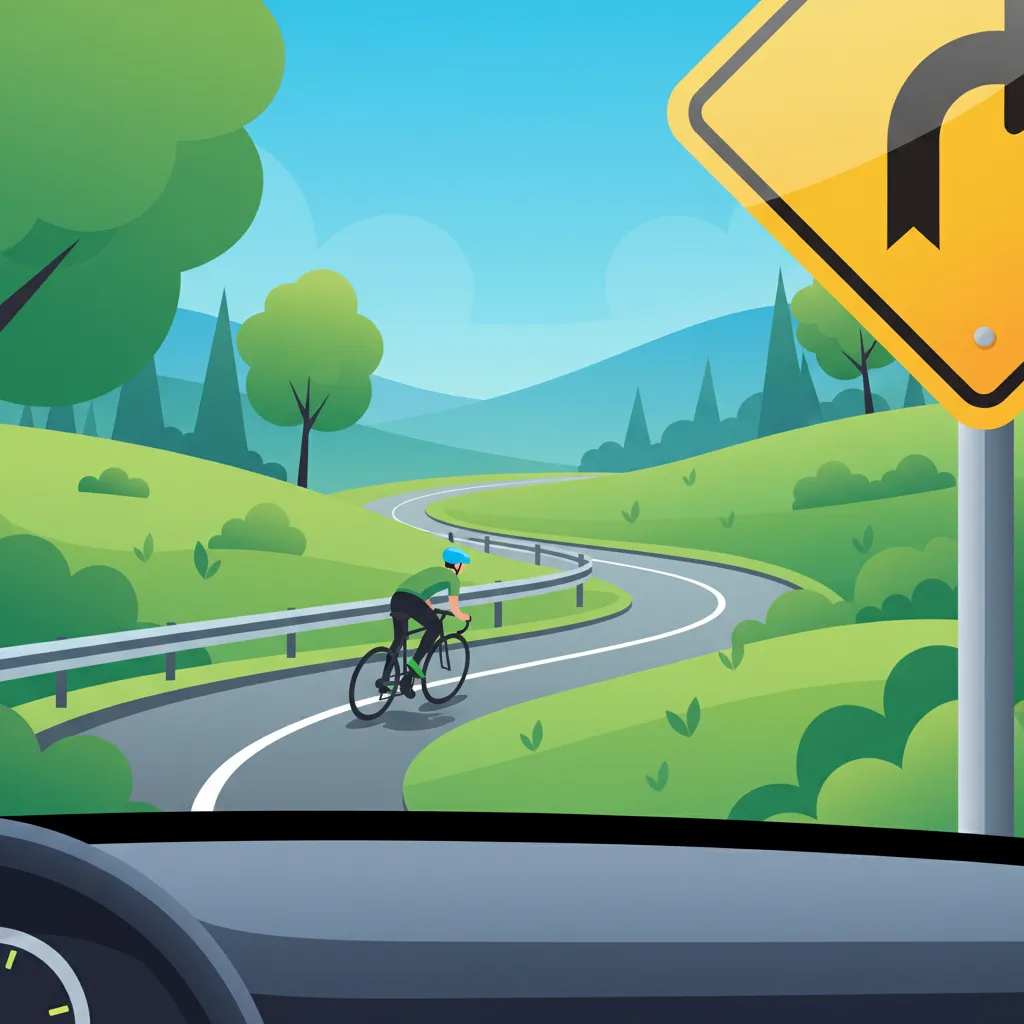
In this lesson, learners study warning signs that alert drivers to potential hazards, focusing on those that are particularly relevant to motorcyclists. The content includes signs indicating curves, slippery surfaces, animal crossings, tram tracks, and construction zones, each requiring specific riding adjustments. The lesson teaches riders how to interpret these signs to anticipate hazards, adjust speed appropriately, and maintain a safe distance from potential dangers.

This lesson outlines strategies for planning escape routes and adopting protective positioning to avoid potential collisions. Learners will study the concept of a defensive riding line that maximizes visibility and provides an optimal safety corridor. The content emphasizes maintaining adequate distance buffers, choosing lanes that reduce exposure to hazards, and preparing for emergency maneuvers such as swift swerves, allowing riders to react quickly in critical situations.
Find clear answers to common questions learners have about Roundabout Navigation for Motorcyclists. Learn how the lesson is structured, which driving theory objectives it supports, and how it fits into the overall learning path of units and curriculum progression in Poland. These explanations help you understand key concepts, lesson flow, and exam focused study goals.
Yes, in Poland, just like most other vehicles, motorcycles must yield to traffic that is already circulating within the roundabout when entering. Always ensure there is a safe gap before proceeding.
The lane choice depends on your intended exit. Generally, for exits to the right or straight ahead, use the right-hand lane. For exits to the left or U-turns, use the left-hand lane. Always signal your intentions and check blind spots before changing lanes.
You should signal left when you intend to take an exit that requires moving across lanes or is towards the left/U-turn. For exits to the right, you generally signal right as you pass the exit before yours. Always signal in advance of your maneuver.
Filtering or lane splitting on a motorcycle within a roundabout is generally not recommended and can be dangerous due to limited space and unpredictable movements of other vehicles. Focus on maintaining your lane and signaling clearly.
If you miss your intended exit on a Polish roundabout, do not stop suddenly or try to force your way. Continue circulating around the roundabout and take the exit the second or third time, ensuring you signal correctly and check for traffic.
Build custom practice sessions tailored precisely to your needs. Focus on areas requiring improvement, review specific Polish road signs, or master complex traffic rules to ensure full preparation for your official driving license exam.