
Welcome to the essential lesson on merging onto highways and changing lanes safely on Polish motorways. This part of Unit 4 focuses on high-speed maneuvers, building on your understanding of priority rules. Mastering these skills is crucial for hazard-free highway integration and passing your Category A theory exam.
Lesson content overview
Navigating high-speed roadways like motorways and expressways is a fundamental skill for every motorcyclist in Poland. This lesson focuses on the critical techniques and legal requirements for safely merging onto these busy roads and performing smooth lane changes. Given the higher speeds and dynamic traffic conditions, these maneuvers demand precise judgment, acute situational awareness, and strict adherence to Polish traffic regulations.
Merging onto a highway and changing lanes at high speeds are among the most complex tasks a rider faces. Errors in these situations can quickly lead to dangerous scenarios, including forced braking by other vehicles, sideswipe collisions, or loss of control, especially for motorcyclists who are more vulnerable. Mastery of these skills is not only crucial for passing your Category A licence exam but, more importantly, for ensuring your safety and the safety of others on Polish roads. It directly impacts traffic flow and collision prevention where decision-making windows are significantly shorter.
Integrating into or repositioning within high-speed traffic streams requires a methodical approach based on several key principles. These principles combine physics, legal obligations, and defensive riding strategies to ensure predictable and safe maneuvers.
Pas Rozbiegowy in Poland, is a critical feature for highway entry. It provides the necessary space and time to accelerate your motorcycle to highway speed without impeding the flow of traffic already on the main carriageway. Riders should utilize the full length of this lane to build speed, identify a safe gap, and then smoothly transition onto the highway. Failing to use the acceleration lane properly, or merging too early, can lead to dangerous speed differentials and sudden braking by existing highway traffic.
Adherence to specific Polish traffic laws is non-negotiable for safe and legal highway maneuvers. These regulations are designed to minimize risk and ensure predictable behavior from all road users.
When entering a highway from an acceleration lane, Polish law explicitly states that vehicles joining the main carriageway must yield (ustąpić pierwszeństwa) to traffic already traveling on it. This means you do not have automatic right-of-way. You must wait for a suitable gap or adjust your speed to find one, ensuring you do not force vehicles already on the highway to brake or change lanes.
Polish regulations mandate that turn signals must be activated for a minimum period before a lane change or merge on roads with speed limits exceeding 50 km/h, which includes all motorways and expressways. This period is typically at least 5 seconds. This extended signaling time is crucial at higher speeds, providing ample notice to other drivers and significantly contributing to safety. A brief flash is insufficient and can lead to legal penalties.
The law requires vehicles to use the designated acceleration lane (Pas Rozbiegowy) to increase speed before merging onto a highway. This provision ensures that entering traffic matches the flow speed, reducing the risk of disruption and collisions. It underscores the importance of utilizing the full length of the acceleration lane to achieve optimal merging speed.
While not always expressed as an exact numerical distance, Polish law mandates maintaining a safe following distance from the vehicle ahead, adjusted for speed and conditions. For highways, the commonly accepted guideline and safe practice is a minimum 3-second interval. This distance provides adequate reaction time for unforeseen events, such as sudden braking by the vehicle in front. Failing to maintain this buffer increases the risk of rear-end collisions.
Polish regulations require drivers to ensure the target lane is clear before any lateral movement. This implicitly includes checking blind spots, as mirrors alone are not sufficient to guarantee a clear path. A conscious head turn to look over your shoulder is therefore a legal necessity, not just a recommendation, to prevent side collisions with vehicles not visible in your mirrors.
Performing a lane change on a highway requires a methodical, controlled sequence of actions.
Assess Traffic and Plan Ahead: Continuously monitor traffic conditions using your mirrors. Identify your desired lane and potential gaps well in advance. Plan your move, anticipating the need to accelerate or adjust speed.
Signal Your Intention Early: Activate your turn signal for a minimum of 5 seconds before initiating any lateral movement. This communicates your intent clearly to surrounding drivers.
Scan Mirrors and Check Blind Spot: Perform a thorough mirror scan (rearview, then side mirror corresponding to the direction of your lane change). Immediately follow with a quick head turn (lifesaver glance) over your shoulder to check your blind spot for any hidden vehicles.
Identify a Safe and Adequate Gap: Ensure the gap you've chosen is large enough to accommodate your motorcycle safely, providing at least a 3-second safety margin from both the vehicle ahead and behind in the target lane. This allows for smooth entry without forcing others to react.
Execute a Smooth Lateral Movement: With your signal still active, and the path clear, gently apply throttle and steer smoothly into the new lane. Avoid abrupt steering inputs, which can destabilize the motorcycle, especially at speed. Maintain your speed or slightly accelerate to integrate seamlessly.
Cancel Signal and Adjust to New Lane: Once fully established in the new lane and maintaining a safe distance from other traffic, cancel your turn signal. Continue to monitor your surroundings.
Motorcyclists must use particularly smooth and controlled inputs when changing lanes at highway speeds. Sudden steering or braking can easily upset the bike's balance. A slight counter-steer (pushing the handle grip in the direction you want to turn) followed by a smooth lean is effective for initiating the turn, combined with gentle throttle application to maintain speed. Maintain a relaxed grip on the handlebars and look where you want to go.
Understanding common mistakes can help you avoid them, ensuring safer riding and compliance with Polish traffic laws.
A frequent and dangerous error is entering the highway from the acceleration lane before achieving a speed comparable to the main traffic flow. This forces vehicles already on the highway to brake or swerve, creating a high risk of rear-end collisions.
Activating the turn signal too late, or for less than the legally mandated 5 seconds, is a violation and a major safety risk. Other drivers will not have enough time to react to your intentions, increasing the chance of a collision.
Reliance solely on mirrors without a blind-spot check is a recipe for disaster. Vehicles, especially other motorcycles, can easily be hidden in these areas. A quick head turn is crucial to verify the lane is clear.
Merging or changing lanes into a gap that is too small, forcing other drivers to brake sharply or take evasive action, is aggressive and illegal driving. It demonstrates a lack of proper gap selection and regard for other road users' safety.
Instead of using the acceleration lane to build speed, some riders accelerate only after entering the main carriageway. This practice disrupts traffic flow and violates regulations, as the acceleration lane is specifically designed for pre-merge speed matching.
Maintaining the same speed and gap requirements in adverse weather (rain, fog, ice) is extremely risky. Reduced visibility and traction demand increased safety margins and slower speeds.
Mistaking an exit slip road for an entry ramp can lead to dangerous situations, including driving against the flow of exiting traffic. Always pay close attention to road markings and signage to distinguish between entry and exit ramps.
Reduced visibility at night makes signaling even more critical. Failing to use bright, correctly timed signals significantly increases the risk of other drivers not noticing your intentions, leading to potential collisions.
Sudden, aggressive throttle input during a lane change can destabilize a motorcycle, potentially leading to a loss of traction or a fall, especially if the road surface is uneven or wet. Smooth, moderate acceleration is key.
The principles of merging and lane changing remain constant, but their application must be adapted to different environmental and traffic conditions.
At night or in low visibility (e.g., dusk), other drivers' perception of your speed and distance can be impaired.
Carrying a passenger or heavy luggage alters your motorcycle's dynamics, primarily affecting acceleration and braking.
Understanding the underlying physics and human factors reinforces the importance of safe riding practices.
Here are some real-world examples to illustrate the application of these principles.
Setting: You are on an acceleration lane approaching a two-lane motorway in Poland. The weather is clear, and traffic is flowing smoothly at the speed limit of 120 km/h.
Correct Behavior: You enter the acceleration lane and steadily increase your speed, aiming to reach close to 120 km/h. While accelerating, you scan the main carriageway for a suitable gap in the left lane. You activate your left turn signal at least 5 seconds before your merge point. Upon identifying a 4-second gap, you perform a quick blind-spot check, then smoothly steer your motorcycle into the left lane, maintaining your speed.
Incorrect Behavior: You accelerate to only 80 km/h in the acceleration lane, activate your signal for just 2 seconds, and merge directly into a 2-second gap. This forces the vehicle behind you to brake sharply and the one ahead to accelerate quickly, creating a dangerous situation.
Explanation: The correct behavior prioritizes speed matching, proper signaling, and sufficient gap selection, respecting the right-of-way of vehicles already on the motorway. The incorrect behavior creates an unsafe speed differential and insufficient notice, increasing collision risk.
Setting: You are riding on a three-lane highway in moderate rain, and traffic is dense but flowing at around 80 km/h. You need to change from the middle lane to the right lane.
Correct Behavior: Recognizing the adverse conditions, you decide to increase your safety margin. You begin scanning your mirrors more frequently, checking for a larger-than-usual gap in the right lane. When a 3-second lateral gap appears, you activate your right turn signal for at least 5 seconds. You perform a thorough blind-spot check over your right shoulder. Seeing the lane is clear, you gently and smoothly steer your motorcycle into the right lane while maintaining a steady speed and adjusting for potentially reduced traction on the wet surface.
Incorrect Behavior: You attempt the lane change by relying only on your mirrors, with a short flicker of your signal, into a tight 1-second gap. This leads to a near-miss with a car that was in your blind spot, forcing you to swerve back.
Explanation: The correct approach demonstrates an understanding of how adverse weather affects braking and visibility, requiring increased safety margins and a meticulous blind-spot check. The incorrect behavior highlights the dangers of underestimating weather impacts and neglecting crucial safety checks.
Setting: You are carrying a passenger and have heavy luggage on your motorcycle. You are approaching an expressway ramp with an acceleration lane, and the expressway traffic is flowing at 100 km/h.
Correct Behavior: You acknowledge that the added weight will reduce your motorcycle's acceleration capability. You plan to use the full length of the acceleration lane, allowing extra time and distance to steadily build up speed to match the 100 km/h expressway traffic. Once your speed is appropriate, you signal left for at least 5 seconds, perform your blind-spot check, and smoothly merge into a safe, ample gap.
Incorrect Behavior: You attempt to merge quickly, not fully utilizing the acceleration lane, resulting in your motorcycle entering the expressway still slower than the main traffic. This causes vehicles behind you to brake, putting your passenger and yourself at risk.
Explanation: The correct behavior accounts for the altered vehicle dynamics due to load, ensuring that speed matching is achieved safely over a longer duration in the acceleration lane. The incorrect behavior ignores these critical factors, creating a dangerous speed differential.
Mastering merging onto highways and executing safe lane changes is a cornerstone of proficient motorcycle riding, especially when preparing for your Polish Category A licence. This lesson has covered the fundamental principles, the specific legal requirements under Polish traffic law, and how to adapt your riding to various conditions. By consistently applying the concepts of speed matching, precise gap selection, timely signaling, thorough blind-spot monitoring, and maintaining adequate safety margins, you will be well-equipped to navigate Poland's high-speed roadways with confidence and safety. These skills build directly upon your understanding of road signs, speed management, and priority rules, forming a crucial part of your overall defensive riding strategy.
This lesson covers the essential skills and Polish legal requirements for safely merging onto highways and changing lanes at high speeds as a Category A motorcyclist. Key principles include speed matching (reaching highway flow speed before merging), proper use of the acceleration lane (Pas Rozbiegowy), selecting adequate gaps with minimum 3-second safety margins, signaling for at least 5 seconds, and performing blind-spot checks via head turns. Polish regulations mandate yielding to main carriageway traffic and thorough lane clearance checks. Riders must adapt techniques for adverse weather, night riding, different road types (motorways vs expressways), and vehicle load conditions, where reduced acceleration and longer stopping distances require greater caution.
A short set of high-value points that capture the most important learning from this lesson.
Speed matching is critical: accelerate to match or slightly exceed highway traffic flow before merging to avoid forcing other vehicles to brake.
The acceleration lane (Pas Rozbiegowy) must be used fully to build appropriate speed before entering main traffic, not after.
Mirrors alone are insufficient: a deliberate head turn (lifesaver glance) is essential to verify blind spots before any lateral movement.
Maintain a minimum 3-second safety margin from surrounding traffic to allow reaction time for unexpected events.
Signal activation must be at least 5 seconds before merging or changing lanes on Polish highways to give other drivers adequate notice.
Explore all units and lessons included in this driving theory course.
Always yield to traffic already on the main carriageway when merging from an acceleration lane - you do not have right-of-way.
Polish law requires turn signals for a minimum of 5 seconds before lane changes on roads with speed limits over 50 km/h.
The lifesaver glance (head turn over shoulder) is a legal necessity, not just a recommendation, to check blind spots.
Adverse conditions (rain, fog, night, passenger load) require increased safety margins and slower speeds.
Motorways (Autostrady) allow higher speeds (120-140 km/h) and longer acceleration lanes than Expressways (Drogi Ekspresowe) at 100-120 km/h.
Merging without sufficient speed from the acceleration lane, creating dangerous speed differentials with main carriageway traffic.
Activating turn signals for less than the required 5 seconds, giving other drivers insufficient time to react.
Relying solely on mirrors without performing a blind-spot check, missing vehicles hidden in mirror blind spots.
Attempting to merge into gaps that are too small, cutting off other vehicles and forcing emergency braking.
Misusing the acceleration lane by merging before reaching highway speed and then accelerating on the main carriageway.
Lesson content overview
A short set of high-value points that capture the most important learning from this lesson.
Speed matching is critical: accelerate to match or slightly exceed highway traffic flow before merging to avoid forcing other vehicles to brake.
The acceleration lane (Pas Rozbiegowy) must be used fully to build appropriate speed before entering main traffic, not after.
Mirrors alone are insufficient: a deliberate head turn (lifesaver glance) is essential to verify blind spots before any lateral movement.
Maintain a minimum 3-second safety margin from surrounding traffic to allow reaction time for unexpected events.
Signal activation must be at least 5 seconds before merging or changing lanes on Polish highways to give other drivers adequate notice.
Explore all units and lessons included in this driving theory course.
Always yield to traffic already on the main carriageway when merging from an acceleration lane - you do not have right-of-way.
Polish law requires turn signals for a minimum of 5 seconds before lane changes on roads with speed limits over 50 km/h.
The lifesaver glance (head turn over shoulder) is a legal necessity, not just a recommendation, to check blind spots.
Adverse conditions (rain, fog, night, passenger load) require increased safety margins and slower speeds.
Motorways (Autostrady) allow higher speeds (120-140 km/h) and longer acceleration lanes than Expressways (Drogi Ekspresowe) at 100-120 km/h.
Merging without sufficient speed from the acceleration lane, creating dangerous speed differentials with main carriageway traffic.
Activating turn signals for less than the required 5 seconds, giving other drivers insufficient time to react.
Relying solely on mirrors without performing a blind-spot check, missing vehicles hidden in mirror blind spots.
Attempting to merge into gaps that are too small, cutting off other vehicles and forcing emergency braking.
Misusing the acceleration lane by merging before reaching highway speed and then accelerating on the main carriageway.
Explore search topics learners often look for when studying Merging and Lane Changing on Highways. These topics reflect common questions about road rules, driving situations, safety guidance, and lesson level theory preparation for learners in Poland.
Browse additional driving theory lessons that cover connected traffic rules, road signs, and common driving situations related to this topic. Improve your understanding of how different rules interact across everyday traffic scenarios.
Explore advanced strategies for safely merging onto Polish highways and changing lanes at high speeds. Covers detailed understanding of speed matching, gap selection techniques, and the critical role of blind spot awareness for Category A riders.

This lesson provides a guide to safely entering high-speed roads. It explains the function of the acceleration lane, where drivers must increase their speed to match the flow of traffic on the main carriageway. The importance of signaling, checking mirrors, and looking over the shoulder for blind spots before merging is heavily emphasized.

This lesson details the critical process of merging onto a high-speed motorway. It explains how to use the full length of the acceleration lane to build up to the speed of the flowing traffic, which is essential for a smooth and safe entry. Learners will study techniques for judging gaps in traffic, signaling intentions clearly, and performing thorough mirror and blind spot checks before executing the merge, ensuring a seamless integration into the highway environment.
In this lesson, learners investigate complex junctions and intersections found across urban, rural, and highway environments, focusing on multi-lane configurations, traffic light coordination, and roundabout navigation. The content emphasizes priority rules, blind-spot assessment when merging, and safe lane selection for turning maneuvers. Learners will also consider interactions with cyclists and pedestrians, and the importance of adjusting approach speed for safe navigation.

This lesson examines the specific rules and etiquette for riding on Polish motorways and high-speed highways, focusing on proper lane positioning, entry via acceleration lanes, and maintaining appropriate following distances. Learners will study overtaking protocols at high speeds, proper use of deceleration lanes for exits, and techniques for aerodynamic positioning. The content also covers safe lane changes and emergency lane usage to ensure efficient travel.
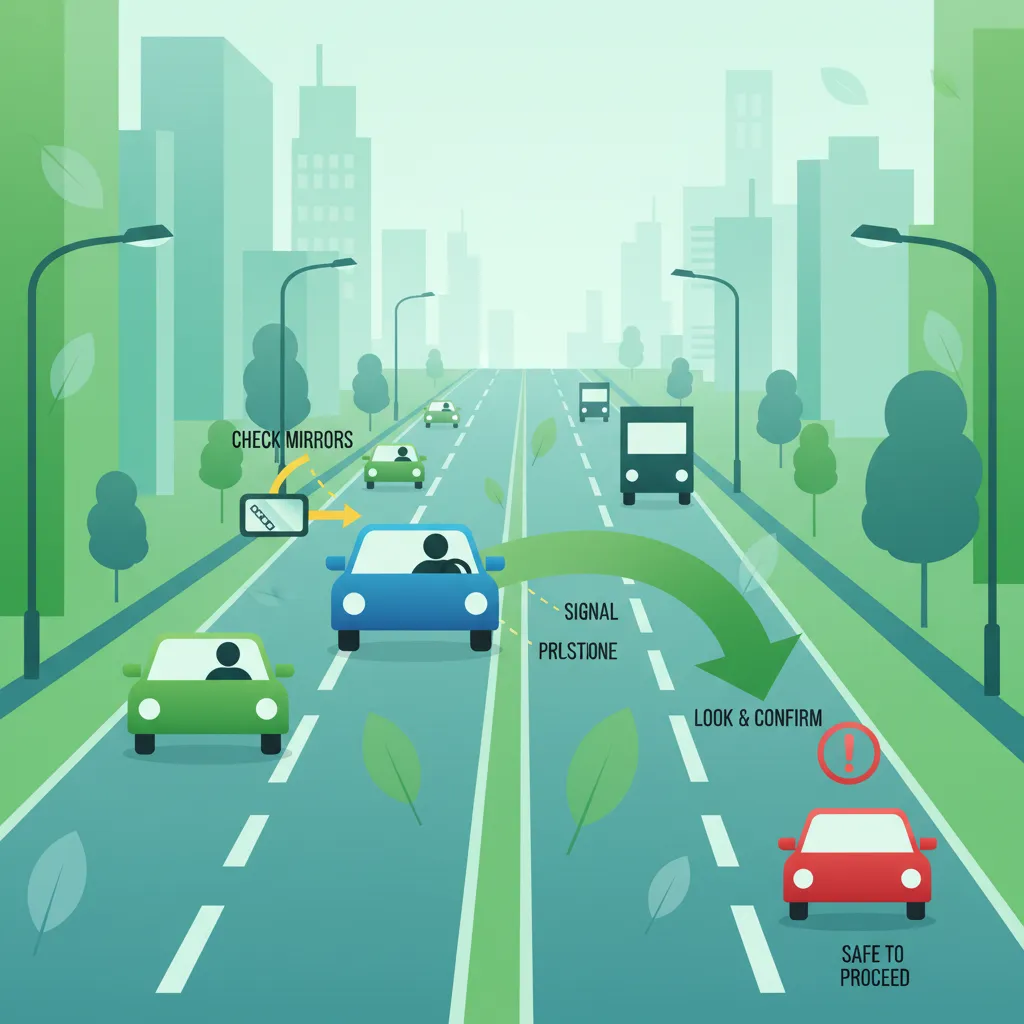
This lesson adapts lane-changing principles for the challenging environment of dense city traffic. It reinforces the critical 'mirror, signal, maneuver' sequence, with a strong focus on checking blind spots immediately before moving. The content advises on judging gaps in traffic and executing the lane change smoothly and decisively.
This lesson focuses on the proper techniques for negotiating roundabouts, which are common in Polish urban environments. Learners will learn the correct approach to entering a roundabout, yielding to circulating traffic, selecting the appropriate lane, and signaling intentions when exiting. The lesson also discusses speed adaptation for safe circulation and blind-spot checks before changing lanes within the roundabout, ensuring smooth and legal navigation.

In this lesson, learners examine defensive overtaking practices, focusing on when and how to safely pass other road users. The content covers speed differential calculations, appropriate passing distances, and the importance of maintaining clear visibility during overtaking. Learners will also study the impact of road curvature, traffic flow, and lane selection on overtaking safety, allowing them to minimize risks associated with passing maneuvers.
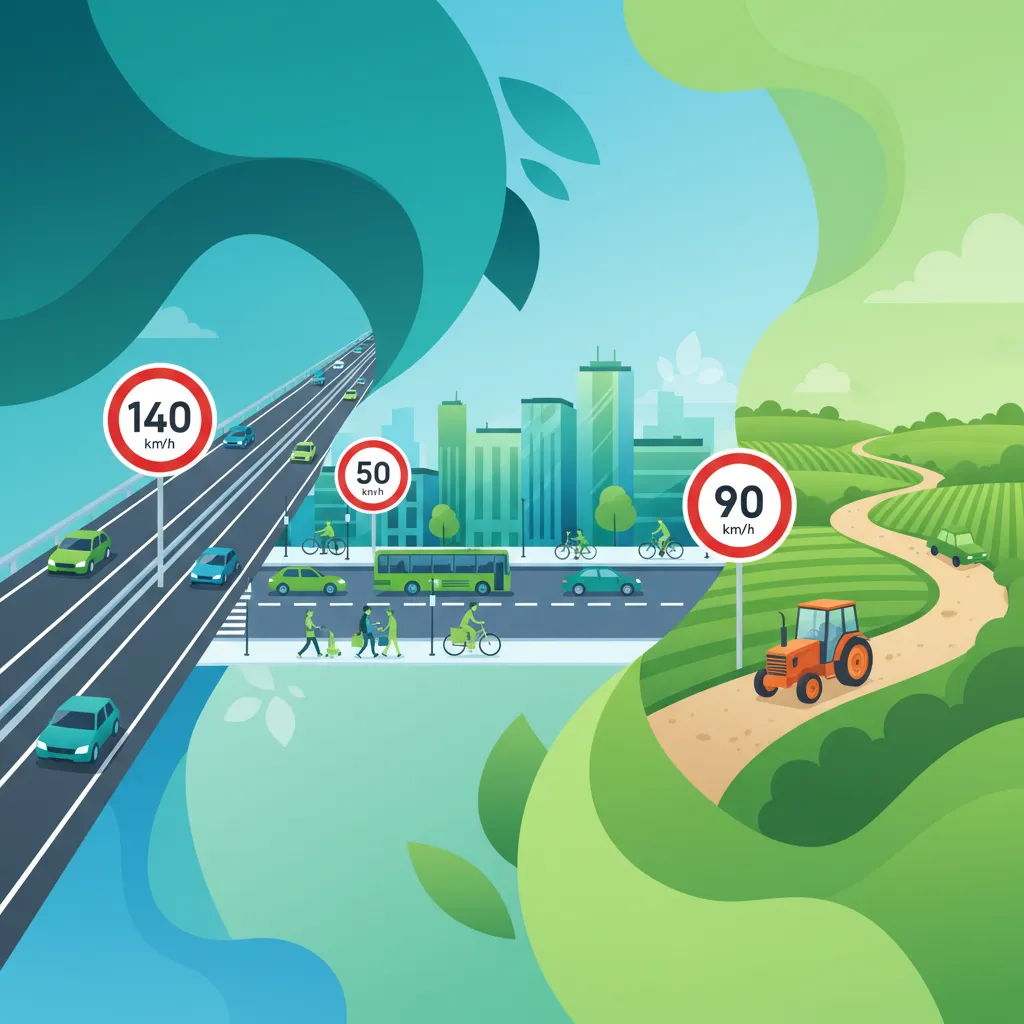
This lesson provides a comprehensive overview of the statutory speed limits applicable to different categories of Polish roads, including urban areas, residential zones, rural roads, highways, and motorways. Learners will examine the visual cues of speed limit signs and learn how speed limit transitions affect rider behavior. The content also covers how enforcement mechanisms impact compliance and the importance of real-time speed adaptation to remain within legal thresholds.

This lesson examines the variety of pavement markings that define lane structures, traffic flow, and special zones on Polish roads. Learners will study solid and broken lines, lane division markings, and the distinct symbols for bicycle lanes, bus lanes, and tram tracks, all of which affect motorcyclist positioning. The lesson also addresses surface texture indicators that signal changing road conditions, enabling riders to maintain correct lane discipline.
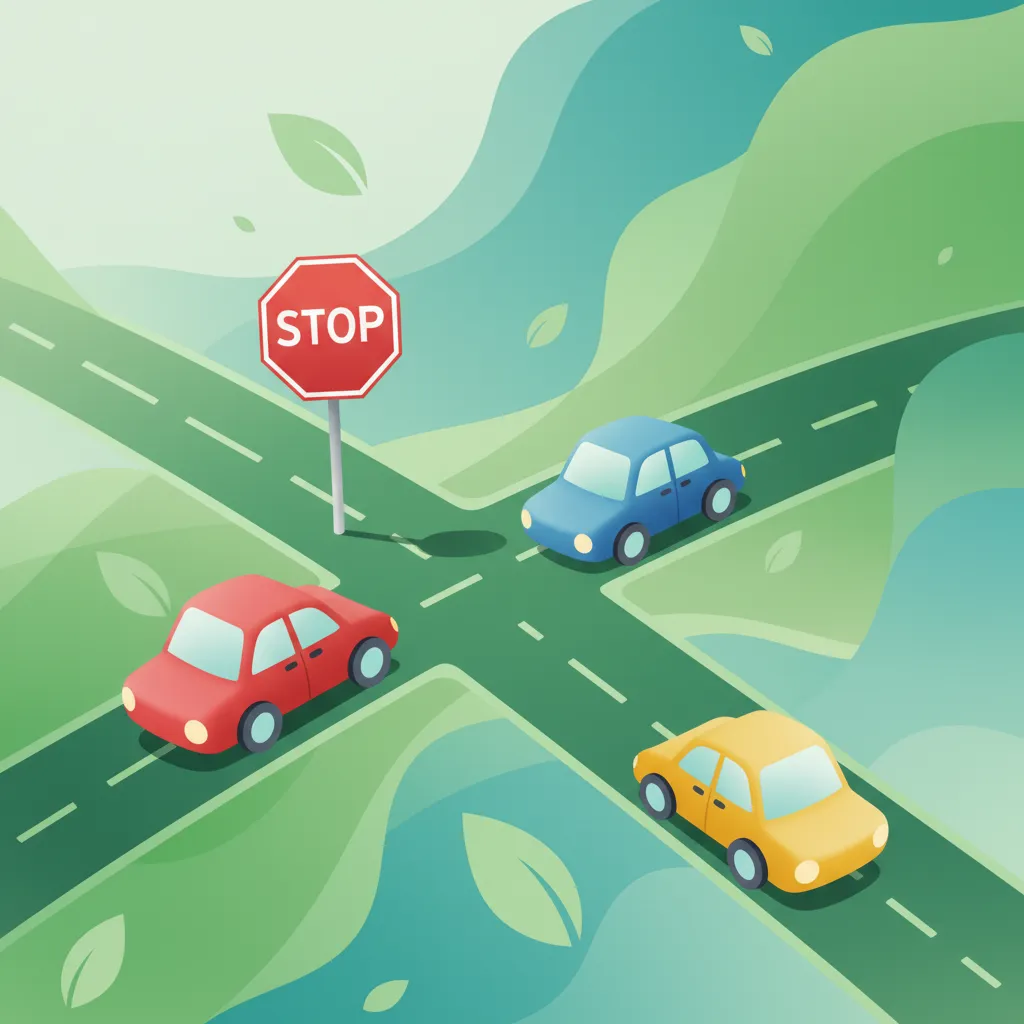
In this lesson, learners examine the specific actions required at stop signs and give-way intersections under Polish traffic regulations. The content explains the legal requirement for a full stop before the stop line, incorporating a visual scan of all directions before proceeding. It also covers the give-way protocol, where riders must yield to traffic already in the intersection or on the main road, emphasizing the need for correct positioning and observation.
Understand how to apply Polish highway rules for merging and lane changes through realistic scenarios. This lesson highlights common errors and effective strategies for safe motorcycle integration in various traffic conditions.
This lesson examines the specific rules and etiquette for riding on Polish motorways and high-speed highways, focusing on proper lane positioning, entry via acceleration lanes, and maintaining appropriate following distances. Learners will study overtaking protocols at high speeds, proper use of deceleration lanes for exits, and techniques for aerodynamic positioning. The content also covers safe lane changes and emergency lane usage to ensure efficient travel.
This lesson focuses on the proper techniques for negotiating roundabouts, which are common in Polish urban environments. Learners will learn the correct approach to entering a roundabout, yielding to circulating traffic, selecting the appropriate lane, and signaling intentions when exiting. The lesson also discusses speed adaptation for safe circulation and blind-spot checks before changing lanes within the roundabout, ensuring smooth and legal navigation.
In this lesson, learners investigate complex junctions and intersections found across urban, rural, and highway environments, focusing on multi-lane configurations, traffic light coordination, and roundabout navigation. The content emphasizes priority rules, blind-spot assessment when merging, and safe lane selection for turning maneuvers. Learners will also consider interactions with cyclists and pedestrians, and the importance of adjusting approach speed for safe navigation.

In this lesson, learners explore riding on rural and countryside roads, where road markings may be sparse and surface conditions varied. The content covers safe overtaking in single-lane sections, interaction with agricultural vehicles and animals, and the handling of gravel or uneven surfaces. Learners will also study the importance of anticipating curves and adjusting speed to light conditions, equipping them with the skills needed for safe countryside travel.
This lesson adapts lane-changing principles for the challenging environment of dense city traffic. It reinforces the critical 'mirror, signal, maneuver' sequence, with a strong focus on checking blind spots immediately before moving. The content advises on judging gaps in traffic and executing the lane change smoothly and decisively.
This lesson outlines strategies for planning escape routes and adopting protective positioning to avoid potential collisions. Learners will study the concept of a defensive riding line that maximizes visibility and provides an optimal safety corridor. The content emphasizes maintaining adequate distance buffers, choosing lanes that reduce exposure to hazards, and preparing for emergency maneuvers such as swift swerves, allowing riders to react quickly in critical situations.
In this lesson, learners examine the specific actions required at stop signs and give-way intersections under Polish traffic regulations. The content explains the legal requirement for a full stop before the stop line, incorporating a visual scan of all directions before proceeding. It also covers the give-way protocol, where riders must yield to traffic already in the intersection or on the main road, emphasizing the need for correct positioning and observation.

This lesson focuses on the unique demands of urban riding within Polish cities, addressing traffic lights, pedestrian zones, one-way streets, and the presence of tram tracks. Learners will study safe lane positioning on narrow roads, blind-spot management, and how to share the road with buses and cyclists. The content also covers strategies for navigating stop-and-go traffic, anticipating signal changes, and maintaining visibility in dense urban environments.
This lesson examines the variety of pavement markings that define lane structures, traffic flow, and special zones on Polish roads. Learners will study solid and broken lines, lane division markings, and the distinct symbols for bicycle lanes, bus lanes, and tram tracks, all of which affect motorcyclist positioning. The lesson also addresses surface texture indicators that signal changing road conditions, enabling riders to maintain correct lane discipline.
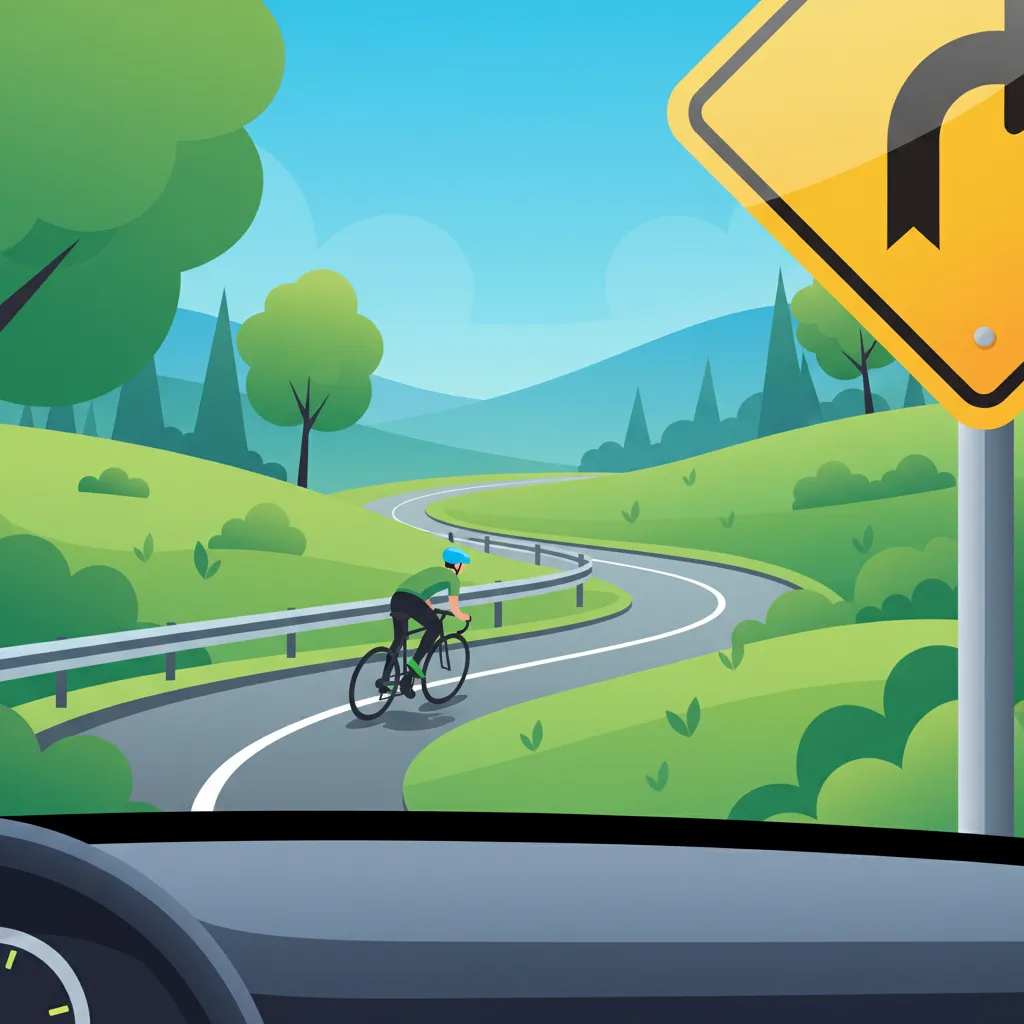
In this lesson, learners study warning signs that alert drivers to potential hazards, focusing on those that are particularly relevant to motorcyclists. The content includes signs indicating curves, slippery surfaces, animal crossings, tram tracks, and construction zones, each requiring specific riding adjustments. The lesson teaches riders how to interpret these signs to anticipate hazards, adjust speed appropriately, and maintain a safe distance from potential dangers.
Find clear answers to common questions learners have about Merging and Lane Changing on Highways. Learn how the lesson is structured, which driving theory objectives it supports, and how it fits into the overall learning path of units and curriculum progression in Poland. These explanations help you understand key concepts, lesson flow, and exam focused study goals.
Merging involves entering the highway from a ramp, requiring you to match the speed of traffic in the rightmost lane using an acceleration lane. Changing lanes is moving from one lane to another already on the highway, which requires checking mirrors and blind spots, signaling, and finding a safe gap in the target lane's traffic.
Assess the distance of the vehicle ahead in your target lane and its speed. A safe gap provides enough space for you to enter and accelerate without forcing other drivers to brake suddenly. For motorcycles, always consider that you might be less visible; aim for a slightly larger gap than you might think necessary.
Polish law requires you to signal your intention, check mirrors and blind spots thoroughly, and ensure there is sufficient space in the target lane before moving. Motorcyclists should be extra vigilant about blind spots due to their smaller profile. Avoid sudden changes and always maintain a safe following distance in your new lane.
Yes, acceleration lanes are crucial for gaining speed to match highway traffic. Use the entire length of the lane to accelerate smoothly and safely. Look for your merging opportunity while accelerating and be prepared to adjust speed if necessary. Don't merge until you are close to the speed of the highway traffic.
Blind spots are areas around your motorcycle that cannot be seen directly in mirrors. On high-speed highways, other vehicles, especially cars and trucks, can easily disappear into your blind spot. A proper head check (looking over your shoulder) is essential before any lane change to ensure the space is clear.
Build custom practice sessions tailored precisely to your needs. Focus on areas requiring improvement, review specific Polish road signs, or master complex traffic rules to ensure full preparation for your official driving license exam.