
Safe following distance is crucial for motorcyclists to react to sudden braking by other road users. This lesson, part of Unit 5 on Speed Management, introduces the vital two-second and three-second rules. Mastering this concept is key to safe riding and passing your Category A theory exam.

Lesson content overview
Maintaining a safe following distance is a fundamental principle of defensive riding and a critical component of road safety. For motorcyclists, understanding and consistently applying these principles is paramount to preventing collisions, especially rear-end crashes, and ensuring adequate time to react to unexpected hazards. This lesson, part of your Polish Motorcycle Theory – Comprehensive Licence Preparation for Category A, delves into the theory and practical application of safe following distances, connecting it with Polish traffic law and real-world riding conditions.
The primary goal of maintaining a safe following distance is to create a sufficient time-based gap between your motorcycle and the vehicle ahead. This gap allows you enough time to perceive a hazard, process the necessary response, and execute braking maneuvers safely, preventing a collision. Unlike a fixed linear distance, which becomes inadequate at higher speeds, a time-based gap ensures that your reaction and braking time remains constant relative to your speed. This crucial concept is rooted in the physics of motion and human reaction times.
At higher speeds, your motorcycle covers more ground per second, naturally requiring a greater linear distance for the same time-based safety margin. The average perception-reaction time for a rider is approximately 1.5 seconds. This inherent human delay, coupled with the distance required to bring a motorcycle to a complete stop, necessitates an additional buffer to account for the lead vehicle's deceleration and potential unexpected actions. Polish law, specifically Ustawa o ruchu drogowym, legally obliges drivers, including motorcyclists, to maintain a "safe distance" to prevent crashes and protect other road users.
Rather than attempting to calculate precise metres, which can be challenging and distracting while riding, safe following distances are universally taught using simple time-based rules. These rules provide an easily verifiable and adjustable metric for maintaining safety.
The Two-Second Rule establishes a minimum following gap of two seconds between your motorcycle and the rear of the vehicle ahead. This rule applies under ideal riding conditions: dry roads, good visibility (daylight), and light traffic. It serves as your default guideline for everyday riding scenarios.
A minimum following gap of two seconds between a rider's motorcycle and the rear of the lead vehicle, applicable under dry roads, good visibility, and light traffic conditions.
How to Apply the Two-Second Rule:
Choose a Fixed Reference Point: Select a stationary object on the side of the road, such as a road sign, lamppost, bridge, or even a prominent shadow.
Watch the Lead Vehicle: As the rear of the vehicle ahead passes your chosen reference point, begin counting "one-thousand-one, one-thousand-two."
Check Your Position: Your motorcycle should not reach the same reference point until you have finished counting "two." If you reach the point before or at "two," you are following too closely and need to increase your distance.
Why Two Seconds? This baseline buffer provides sufficient time to cover the average rider's perception-reaction time and initiate braking under ideal conditions. It is a critical safety requirement that helps prevent rear-end collisions. Assuming that "two seconds" means "two motorcycle lengths" is a common misunderstanding; it is a time-based measurement that adapts to your speed. For instance, at 60 km/h (approximately 16.7 metres per second), a two-second gap translates to roughly 33.4 metres.
The Three-Second Rule (or more) is an expanded following gap used when riding conditions are anything less than ideal. It mandates increasing your following distance to three seconds (or even more) to compensate for factors that reduce traction, visibility, or increase braking distances.
An expanded following gap of three seconds (or more) employed when road surface, weather, traffic density, or vehicle load reduces traction or visibility, or when carrying a passenger or heavy gear.
When to Apply the Three-Second Rule (or more):
The method for applying the three-second rule is identical to the two-second rule: choose a fixed reference point and count "one-thousand-one, one-thousand-two, one-thousand-three." If you reach the point before "three," you are too close. At 90 km/h (approximately 25 metres per second), a three-second gap equates to roughly 75 metres.
Beyond the base two or three-second rule, it's crucial to integrate a reaction-time buffer. This is an additional time allowance, typically 0.5 to 1 second, added to your calculated gap. Its purpose is to accommodate your brain's processing delay and the mechanical lag in your braking system. While your average reaction time might be 1.5 seconds, factors like fatigue, distractions, or complex situations can increase this.
By aiming for a slightly larger gap (e.g., 2.5 seconds on dry roads instead of just 2 seconds), you ensure that you can initiate braking before the lead vehicle's deceleration even begins to significantly reduce the distance between you. This buffer is especially vital in situations where sudden stops are common, such as heavy urban traffic. Ignoring this buffer under such conditions can quickly lead to insufficient stopping distance. For example, riding at 40 km/h with a 2.5-second gap results in approximately 27.7 metres of spacing, providing a more robust safety margin than a mere two-second gap.
While the time-based rules provide the foundational understanding, effectively judging safe following distance on the road requires practical visual estimation techniques. These methods allow you to quickly assess and maintain your safety gap without relying on electronic aids.
This is the most common and reliable method. As detailed above for the two- and three-second rules, you choose a stationary object (a fixed landmark) by the roadside. When the vehicle ahead passes this landmark, you start counting your designated seconds ("one-thousand-one, one-thousand-two..."). You should not reach that same landmark before completing your count. Consistent practice will refine your ability to judge these time intervals accurately.
It's helpful to have a rough idea of how linear distance changes with speed for a one-second interval. For practical purposes, at approximately 54 km/h, your motorcycle travels roughly 15 metres per second. This means:
This mental estimation helps bridge the gap between the abstract time concept and concrete spatial perception, allowing you to roughly visualize the physical space you need to maintain. For example, if you're traveling at 50 km/h and apply the two-second rule, you're aiming for approximately 28 metres. This might feel like "several car lengths," but importantly, it's not a fixed number of lengths but a dynamic distance based on time.
Practice visual estimation frequently. As you ride, consciously pick landmarks and count seconds. This regular practice will make the judgment of safe following distances instinctive and natural, enhancing your overall road awareness.
Several critical factors demand an adjustment to your base following distance. Understanding these influences is key to adaptive speed management and defensive riding.
In Poland, the requirement to maintain a safe following distance is not merely a recommendation but a legal obligation enshrined in the Ustawa o ruchu drogowym (Road Traffic Act).
The core of this legal requirement is found in Article 75 § 2 of the Ustawa o ruchu drogowym, which states: "The driver shall keep a safe distance from the vehicle ahead, taking into account the speed, road conditions and traffic."
These recommendations align with broader EU safety directives, ensuring harmonized safety standards across member states. The principle is clear: your following distance must be sufficient to safely stop your motorcycle without colliding with the vehicle ahead, even if they brake suddenly.
Even experienced riders can sometimes make errors in judging or maintaining safe following distances. Being aware of these common violations and edge cases can help you ride more defensively.
Understanding the underlying reasoning behind safe following distances reinforces their importance and helps you apply them consistently.
The total distance required to stop your motorcycle is a sum of two components:
By maintaining a time-based gap, you ensure that the reaction distance alone is always less than the total available gap. This leaves a crucial margin for your braking distance, giving you the necessary space to stop safely. For example, at 90 km/h, your motorcycle travels approximately 25 metres per second. A two-second gap provides 50 metres, which is enough to cover the reaction distance (approx. 37.5 metres for a 1.5s reaction time) and leave a buffer for braking.
The human element is a significant variable. Factors such as fatigue, distraction, illness, or even unexpected emotional states can lengthen your perception-reaction time. By building in an additional reaction-time buffer (0.5-1 second), you account for these potential human limitations and enhance your safety margin. Reducing cognitive load by having ample space also allows you to focus better on scanning for hazards and making informed decisions.
Polish traffic law imposes a duty of care on all drivers. Article 75 § 2 makes it clear that failing to maintain a safe distance is a breach of this duty, potentially leading to findings of negligence in the event of a collision. Such a finding can result in significant legal penalties, including fines, license points, and liability for damages.
Riding with a safe following distance reduces stress and improves your overall riding experience. Knowing you have ample time and space to react instills confidence, allowing you to ride more smoothly and defensively. Conversely, tailgating creates a high-pressure environment, leading to rushed decisions and increased anxiety, which can further impair reaction times.
Maintaining safe following distances is not an isolated skill; it is deeply intertwined with several other fundamental aspects of motorcycle theory and practice.
Understanding the specific terminology associated with safe following distances is crucial for mastering this topic.
Let's explore several practical scenarios to illustrate how the rules and adjustments for safe following distances apply in different riding situations.
Dry Urban Street – 50 km/h
Rainy Motorway – 100 km/h
Nighttime Rural Road with a Passenger – 70 km/h
Downhill Curve – 80 km/h
Snowy City Street – 30 km/h
Mastering safe following distances is a cornerstone of responsible and defensive motorcycle riding, essential for your safety and compliance with Polish traffic law.
By diligently applying these principles, you will significantly enhance your safety on the road, reduce stress, and ride with greater confidence and control as a Category A motorcyclist.
Maintaining safe following distances is a legal requirement under Polish traffic law and a critical defensive riding skill for motorcyclists. The two-second rule serves as your baseline for ideal conditions, while the three-second rule (or more) becomes mandatory when road surface, weather, visibility, or load conditions degrade. This time-based approach ensures your reaction and braking buffer remains adequate regardless of speed, unlike fixed car-length rules. Practical application involves choosing a stationary landmark by the roadside and counting seconds as the vehicle ahead passes it—your motorcycle should not reach that landmark before you finish your count. Understanding when to extend your gap (for wet roads, night riding, heavy traffic, passengers, curves, and large vehicles) and integrating a 0.5–1 second reaction buffer will significantly reduce rear-end collision risk and ensure compliance with Article 75 § 2 of the Ustawa o ruchu drogowym.
A short set of high-value points that capture the most important learning from this lesson.
Maintain a minimum two-second gap as your baseline; this time-based rule automatically adjusts for speed rather than using fixed car lengths
Increase following distance to three seconds or more under adverse conditions including wet roads, night riding, heavy traffic, and when carrying passengers
Always add an extra 0.5–1 second reaction-time buffer beyond the base rule to account for human perception delays and brake system lag
Polish traffic law (Article 75 § 2) legally obliges motorcyclists to maintain a safe distance, making adherence to these rules a legal requirement not just a recommendation
Use stationary roadside landmarks to count seconds—this makes gap estimation practical and intuitive for real-world riding
Explore all units and lessons included in this driving theory course.
Two seconds = baseline rule for dry roads, good visibility, and light traffic
Three seconds = wet roads, rain, night riding, heavy traffic, passenger on board, downhill slopes, and when following vulnerable road users
Four seconds (or more) = icy or snowy conditions where braking distance can multiply by ten or more
Passengers or heavy luggage add at least one extra second to your standard gap due to increased braking distance
At 60 km/h, two seconds equals approximately 33 metres; at 100 km/h, three seconds equals approximately 83 metres
Tailgating in wet conditions by keeping the two-second rule when wet roads require a minimum three-second gap due to doubled braking distance
Miscounting seconds at high speed—at 120 km/h, two seconds translates to roughly 66 metres, which riders often underestimate
Ignoring passenger or load effect on braking distance and failing to add the required extra second
Maintaining a standard gap through curves where lead vehicles brake earlier and harder, leaving insufficient reaction space
Over-relying on ABS or electronic safety aids to compensate for insufficient following distance—these systems cannot shorten human reaction time
Lesson content overview
A short set of high-value points that capture the most important learning from this lesson.
Maintain a minimum two-second gap as your baseline; this time-based rule automatically adjusts for speed rather than using fixed car lengths
Increase following distance to three seconds or more under adverse conditions including wet roads, night riding, heavy traffic, and when carrying passengers
Always add an extra 0.5–1 second reaction-time buffer beyond the base rule to account for human perception delays and brake system lag
Polish traffic law (Article 75 § 2) legally obliges motorcyclists to maintain a safe distance, making adherence to these rules a legal requirement not just a recommendation
Use stationary roadside landmarks to count seconds—this makes gap estimation practical and intuitive for real-world riding
Explore all units and lessons included in this driving theory course.
Two seconds = baseline rule for dry roads, good visibility, and light traffic
Three seconds = wet roads, rain, night riding, heavy traffic, passenger on board, downhill slopes, and when following vulnerable road users
Four seconds (or more) = icy or snowy conditions where braking distance can multiply by ten or more
Passengers or heavy luggage add at least one extra second to your standard gap due to increased braking distance
At 60 km/h, two seconds equals approximately 33 metres; at 100 km/h, three seconds equals approximately 83 metres
Tailgating in wet conditions by keeping the two-second rule when wet roads require a minimum three-second gap due to doubled braking distance
Miscounting seconds at high speed—at 120 km/h, two seconds translates to roughly 66 metres, which riders often underestimate
Ignoring passenger or load effect on braking distance and failing to add the required extra second
Maintaining a standard gap through curves where lead vehicles brake earlier and harder, leaving insufficient reaction space
Over-relying on ABS or electronic safety aids to compensate for insufficient following distance—these systems cannot shorten human reaction time
Explore search topics learners often look for when studying Maintaining Safe Following Distances. These topics reflect common questions about road rules, driving situations, safety guidance, and lesson level theory preparation for learners in Poland.
Browse additional driving theory lessons that cover connected traffic rules, road signs, and common driving situations related to this topic. Improve your understanding of how different rules interact across everyday traffic scenarios.
Learn how to adapt your motorcycle's following distance in Poland for challenging conditions like rain, fog, heavy traffic, or carrying a passenger. Understand the three-second rule and beyond for safer theory exam preparation.
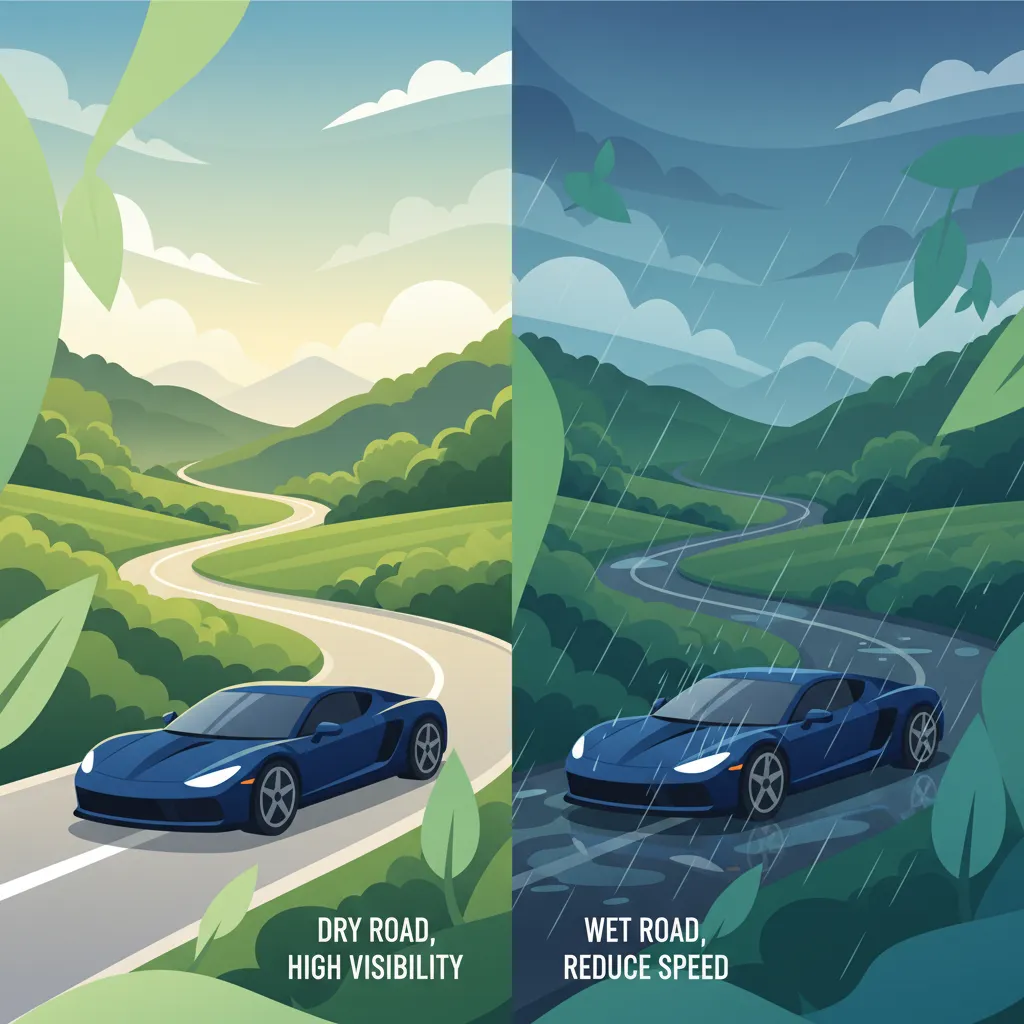
In this lesson, learners examine how environmental conditions such as rain, wind, ice, and reduced visibility necessitate adjustments in riding speed. The content provides guidelines for assessing road surfaces, judging appropriate cornering speeds, and reducing speed proactively in adverse weather. Learners will understand the impact of temperature on tyre performance and the need to increase safety margins, mastering adaptive speed management to maintain control.

This lesson teaches the crucial concept that drivers must always adapt their speed to the current conditions. It explains how factors like rain, fog, ice, heavy traffic, and poor visibility reduce safety margins and require a lower speed than the posted limit. This principle of defensive driving is essential for preventing accidents in challenging situations.
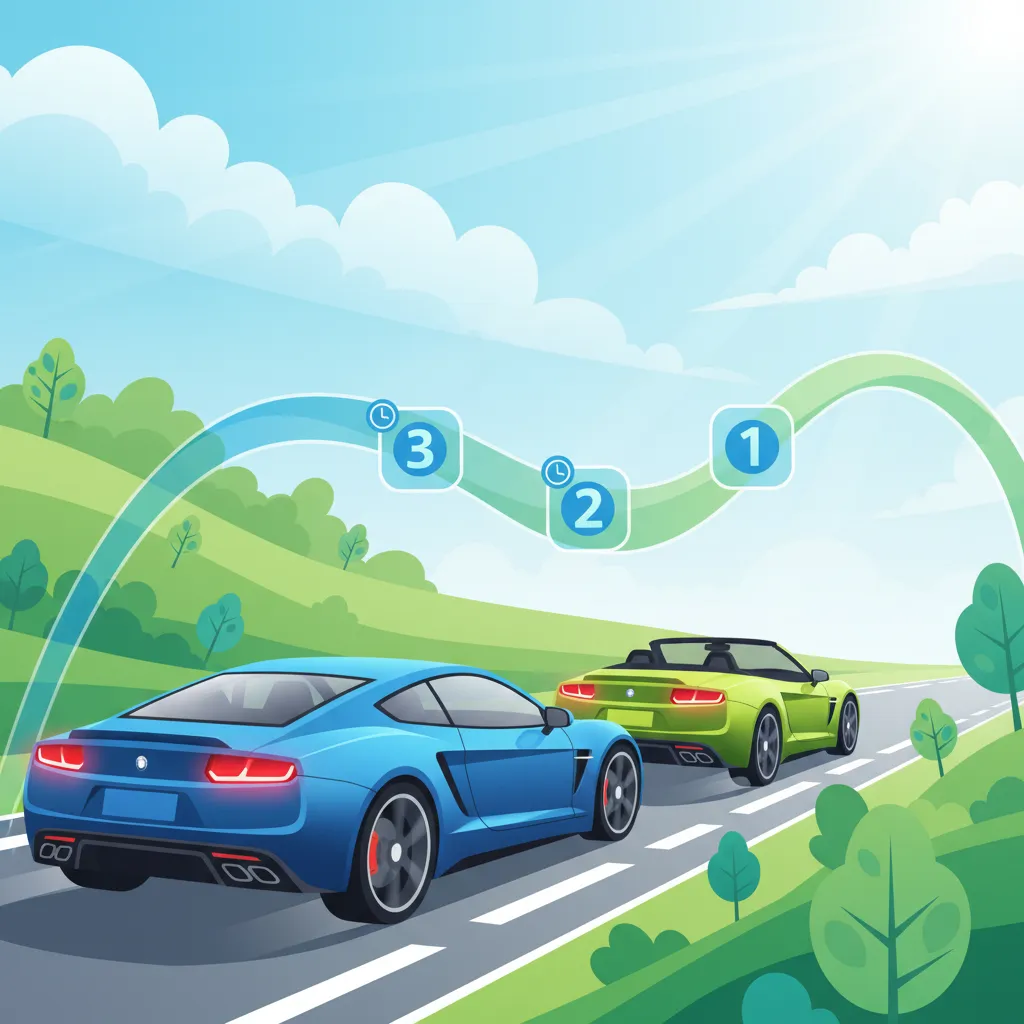
This lesson provides practical methods for maintaining a safe buffer zone behind the vehicle in front. It explains the 'two-second rule' as a minimum following distance in good conditions and how to increase it to three or more seconds in adverse weather. This skill is critical for allowing enough time to react and brake safely to avoid rear-end collisions.

This lesson equips learners with a structured approach to risk assessment and decision-making when facing adverse weather or seasonal conditions. The content introduces a hazard perception framework, guiding riders to assess weather forecasts, evaluate road surface conditions, and calculate safety margins. Learners will learn how to make go/no-go decisions, adjust speed dynamically, and plan contingencies for unexpected events to prioritize safety.

This lesson addresses environmental factors that impact rider visibility, such as low light, night conditions, fog, and glare from headlights. Learners will explore strategies for riding safely in reduced visibility, including the use of reflective gear, proper headlamp settings, and appropriate eye protection. The content also covers hazard detection techniques in adverse weather and how to adjust speed to maintain safety, enhancing rider safety across all conditions.

This lesson focuses on the specific challenges of riding in rain, detailing how wet road surfaces reduce tyre grip and increase braking distances. Learners will learn about hydroplaning risk, the importance of deep tyre tread, and the need for smooth throttle and brake modulation to maintain stability. The content also covers visibility concerns, such as proper headlamp use and the selection of waterproof clothing, so riders can safely navigate wet conditions.

In this lesson, learners explore riding on rural and countryside roads, where road markings may be sparse and surface conditions varied. The content covers safe overtaking in single-lane sections, interaction with agricultural vehicles and animals, and the handling of gravel or uneven surfaces. Learners will also study the importance of anticipating curves and adjusting speed to light conditions, equipping them with the skills needed for safe countryside travel.

This lesson focuses on the specific challenges of driving in rainy conditions. It explains the phenomenon of hydroplaning, where tires lose contact with the road surface, and how to prevent it by reducing speed. The importance of good tire condition, effective windscreen wipers, and extending following distances is also covered in detail.

This lesson teaches drivers how to adapt their speed, following distance, and control inputs to safely navigate adverse conditions. It covers the challenges posed by rain, snow, and ice, explaining the loss of traction and the increased risk of skidding or aquaplaning. The content provides specific strategies for driving in fog, which reduces visibility, and strong crosswinds, which can affect the stability of a high-sided vehicle, promoting a proactive and defensive driving mindset.
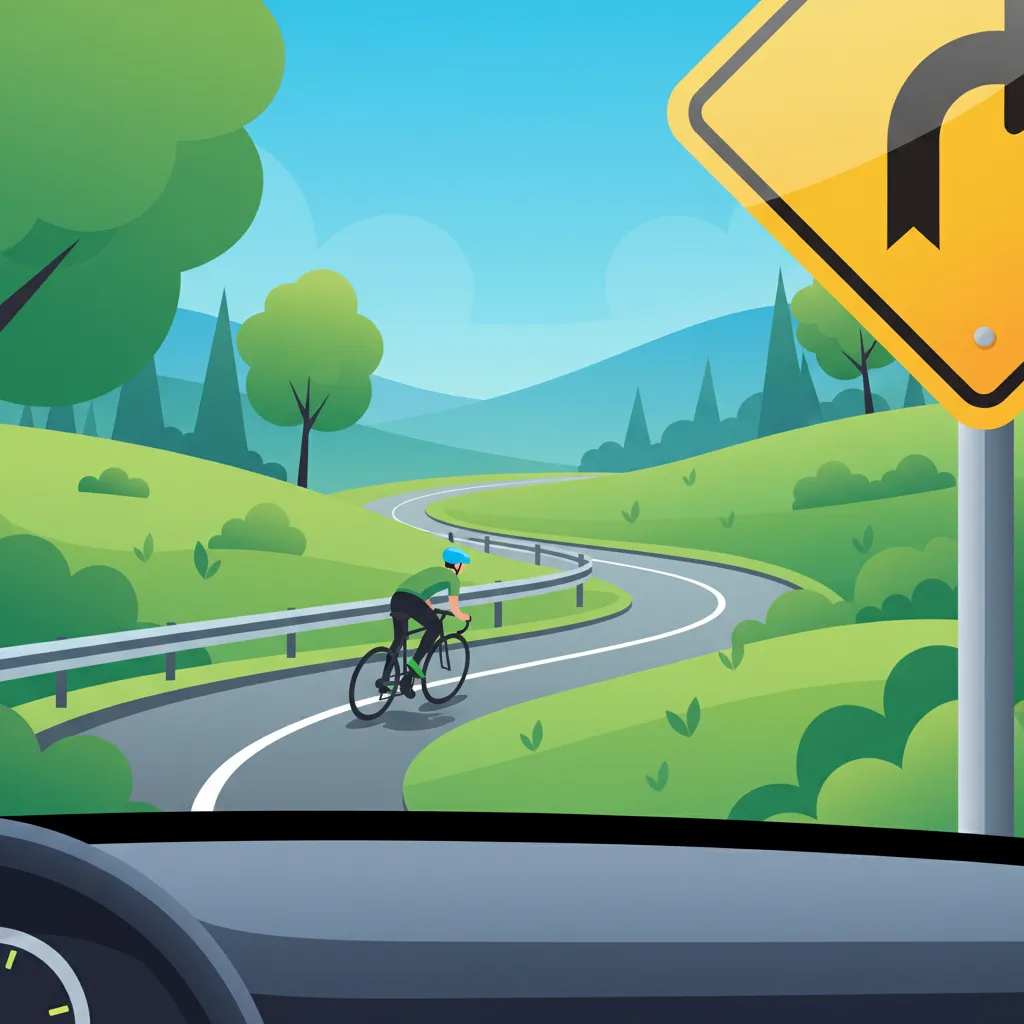
In this lesson, learners study warning signs that alert drivers to potential hazards, focusing on those that are particularly relevant to motorcyclists. The content includes signs indicating curves, slippery surfaces, animal crossings, tram tracks, and construction zones, each requiring specific riding adjustments. The lesson teaches riders how to interpret these signs to anticipate hazards, adjust speed appropriately, and maintain a safe distance from potential dangers.
Identify typical errors riders make when maintaining safe following distances, including speed, conditions, and legal obligations. Improve your understanding of Polish driving theory to avoid critical errors and enhance safety.
This lesson provides practical methods for maintaining a safe buffer zone behind the vehicle in front. It explains the 'two-second rule' as a minimum following distance in good conditions and how to increase it to three or more seconds in adverse weather. This skill is critical for allowing enough time to react and brake safely to avoid rear-end collisions.

This lesson is dedicated to the safe overtaking of two-wheeled vehicles. It explains the legal requirement to leave a sufficient lateral distance (at least 1 meter) when passing cyclists. The content highlights the vulnerability of these road users and the need for patience, reduced speed, and careful judgment.
In this lesson, learners examine the core legal obligations that apply to motorcyclists operating on Polish roads, including the mandatory use of helmets, periodic vehicle inspections, and the necessity of valid insurance and registration. The content details the classification of traffic offences and explains the associated penalty system, including fines, demerit points, and potential licence suspension. Additionally, the lesson outlines procedural requirements for accident reporting and interaction with law enforcement, providing a comprehensive view of a rider’s legal responsibilities.
In this lesson, learners explore riding on rural and countryside roads, where road markings may be sparse and surface conditions varied. The content covers safe overtaking in single-lane sections, interaction with agricultural vehicles and animals, and the handling of gravel or uneven surfaces. Learners will also study the importance of anticipating curves and adjusting speed to light conditions, equipping them with the skills needed for safe countryside travel.
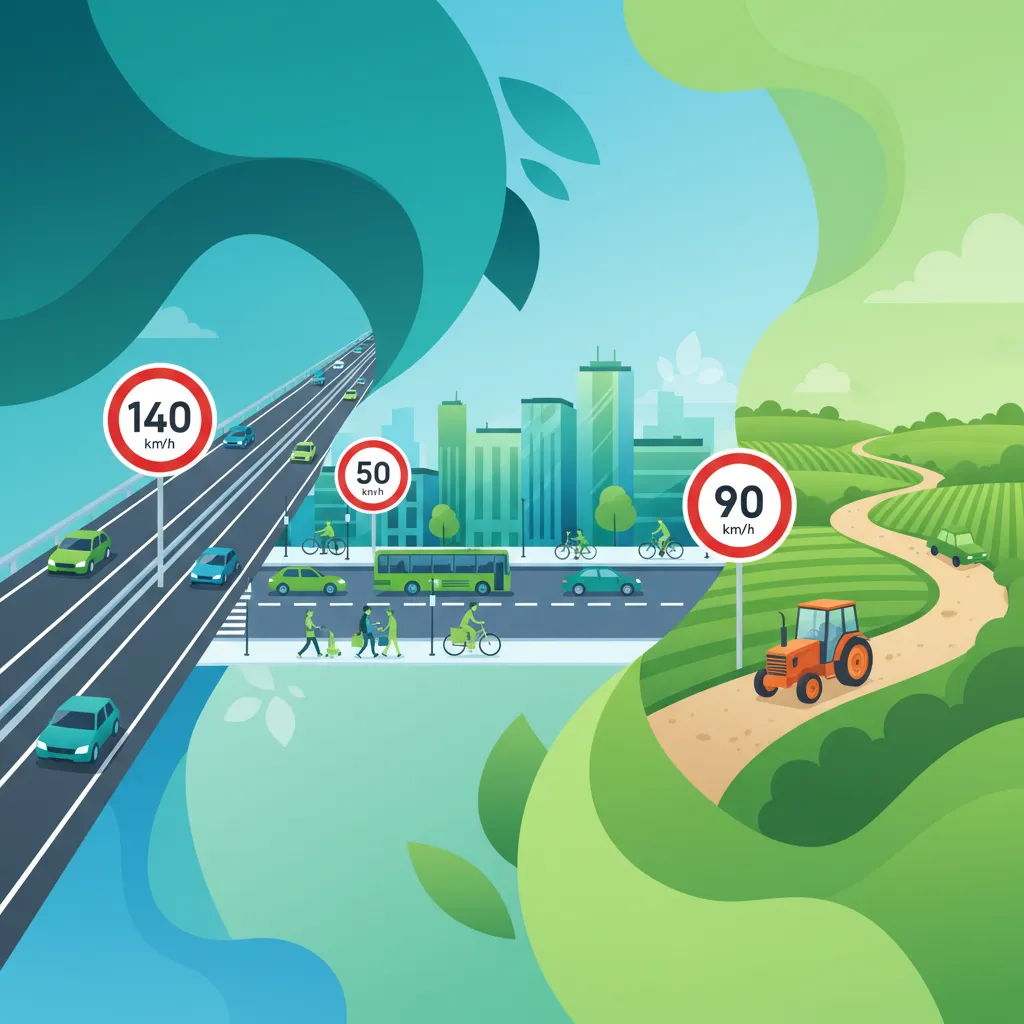
This lesson provides a comprehensive overview of the statutory speed limits applicable to different categories of Polish roads, including urban areas, residential zones, rural roads, highways, and motorways. Learners will examine the visual cues of speed limit signs and learn how speed limit transitions affect rider behavior. The content also covers how enforcement mechanisms impact compliance and the importance of real-time speed adaptation to remain within legal thresholds.

In this lesson, learners focus on the identification and management of blind spots that affect motorcyclists, particularly when sharing the road with larger vehicles such as trucks and buses. The content covers the use of side mirrors, head-turn techniques, and optimal rider positioning to minimize blind-spot exposure. Learners will also study the characteristics of blind spots at intersections and during overtaking maneuvers to reduce collision risk.

In this lesson, learners examine defensive overtaking practices, focusing on when and how to safely pass other road users. The content covers speed differential calculations, appropriate passing distances, and the importance of maintaining clear visibility during overtaking. Learners will also study the impact of road curvature, traffic flow, and lane selection on overtaking safety, allowing them to minimize risks associated with passing maneuvers.

This lesson details the legal framework for overtaking in Poland. It explains how to interpret road markings, such as solid and double solid lines, and prohibition signs that forbid passing. The content emphasizes the critical need for sufficient sight distance and a clear path before initiating an overtaking maneuver to ensure safety.

This lesson examines the specific rules and etiquette for riding on Polish motorways and high-speed highways, focusing on proper lane positioning, entry via acceleration lanes, and maintaining appropriate following distances. Learners will study overtaking protocols at high speeds, proper use of deceleration lanes for exits, and techniques for aerodynamic positioning. The content also covers safe lane changes and emergency lane usage to ensure efficient travel.
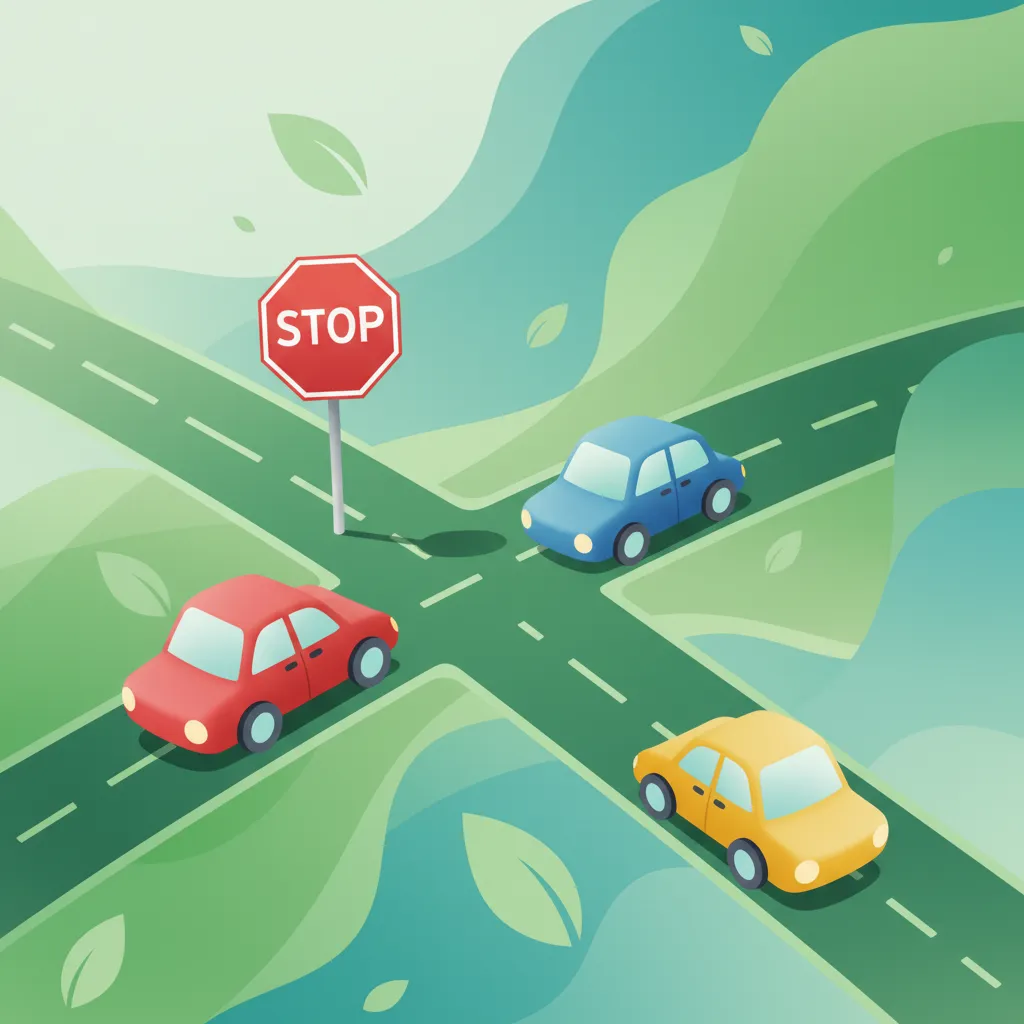
In this lesson, learners examine the specific actions required at stop signs and give-way intersections under Polish traffic regulations. The content explains the legal requirement for a full stop before the stop line, incorporating a visual scan of all directions before proceeding. It also covers the give-way protocol, where riders must yield to traffic already in the intersection or on the main road, emphasizing the need for correct positioning and observation.
Find clear answers to common questions learners have about Maintaining Safe Following Distances. Learn how the lesson is structured, which driving theory objectives it supports, and how it fits into the overall learning path of units and curriculum progression in Poland. These explanations help you understand key concepts, lesson flow, and exam focused study goals.
The two-second rule is a simple method to ensure you have enough time to react if the vehicle in front of you stops suddenly. Find a fixed point (like a sign or bridge) and start counting when the vehicle ahead passes it. If you pass the same point before you finish counting 'two-thousand-and-one', you are too close.
The three-second rule provides an even larger safety margin and is recommended in conditions where visibility is reduced, road surfaces are slippery (rain, ice), traffic is heavy, or you are following larger vehicles that might obstruct your view. It's a more conservative approach for increased safety.
As your speed increases, the distance you need to stop also increases dramatically due to kinetic energy. Therefore, at higher speeds, you must also increase your following distance to maintain a safe time gap and allow for adequate stopping distance.
Tailgating, or following too closely, significantly reduces your reaction time. It increases the risk of a rear-end collision if the vehicle ahead brakes unexpectedly. For motorcyclists, it also limits escape routes and can be perceived as aggressive, potentially provoking other drivers.
The Polish Category A theory exam often includes questions that present a scenario where you must choose the correct action or identify the safe following distance. These questions might involve calculating distance based on speed or identifying appropriate actions in specific road conditions.
Build custom practice sessions tailored precisely to your needs. Focus on areas requiring improvement, review specific Polish road signs, or master complex traffic rules to ensure full preparation for your official driving license exam.