
Delve into the sophisticated hybrid powertrain of the Audi Nuvolari, understanding how its V8 engine works in conjunction with electric motors. This article explains the engineering concepts behind torque vectoring and regenerative braking, offering insights into the evolution of vehicle technology relevant to automotive enthusiasts and students of engineering principles.
Article content overview
While the Spanish driving theory exam, overseen by the Dirección General de Tráfico (DGT), focuses on the essential rules and safety practices for everyday driving, understanding the evolution of automotive technology offers valuable context for any driver. Innovations in high-performance vehicles, such as the sophisticated hybrid systems found in the Audi Nuvolari, showcase advancements that gradually influence the broader automotive landscape. This exploration delves into the engineering principles behind its complex powertrain, highlighting concepts like the integration of combustion engines with electric motors, sophisticated torque distribution, and the mechanics of regenerative braking. These technologies, though advanced, represent the cutting edge of automotive engineering, offering a glimpse into the future of vehicle efficiency and performance.
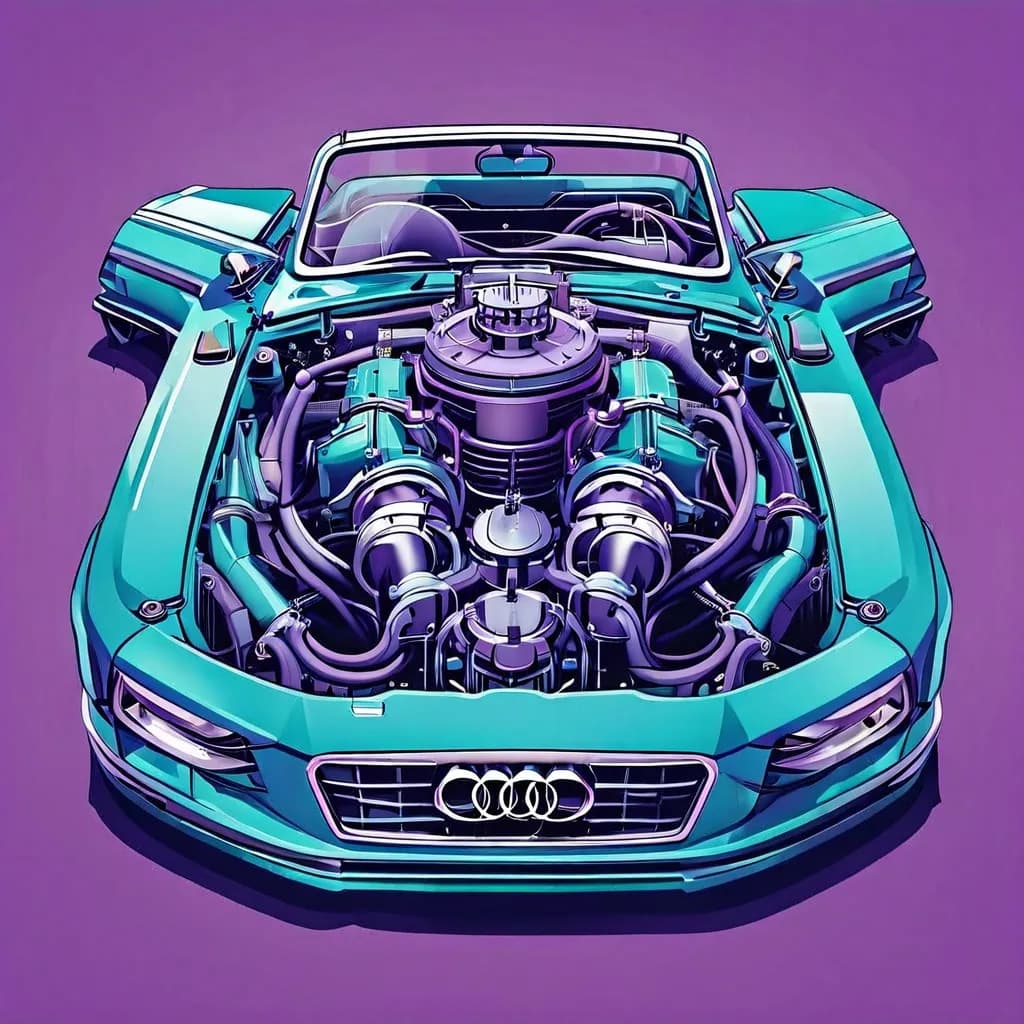
The Audi Nuvolari represents a peak in automotive engineering by harmoniously blending a potent V8 internal combustion engine with multiple electric motors. This synergy is not merely about adding power; it's a carefully orchestrated system designed to optimize performance, efficiency, and responsiveness. The V8 engine, capable of remarkable revs, provides the raw power, while the electric motors contribute immediate torque and the ability to fine-tune power delivery to each wheel. This dual-source approach allows the vehicle to operate in various modes, from purely electric propulsion for silent urban driving to a combined assault of power for exhilarating performance. Understanding this fundamental integration is key to appreciating how modern vehicles are striving for both greater output and improved environmental performance, a trend that will continue to shape the cars we drive.
The electric motors in the Nuvolari's setup are particularly noteworthy. With three axial-flow electric motors, two dedicated to the front axle and one centrally positioned, the system achieves a level of control previously unseen. The placement of two motors on the front axle is a deliberate engineering choice, enabling precise management of power sent to each front wheel. This capability is fundamental to advanced systems like torque vectoring, which plays a crucial role in the car's exceptional handling characteristics. The third electric motor, nestled between the V8 and the transmission, likely assists in clutch engagement, power blending, and potentially recapturing energy during deceleration. This intricate ballet of power sources demonstrates a sophisticated approach to propulsion, moving beyond the simple combination of engine types to a truly integrated system.
Torque vectoring is a sophisticated automotive technology that significantly enhances a vehicle's handling, particularly during cornering. In essence, it involves dynamically distributing torque (rotational force) to individual wheels to improve traction, stability, and responsiveness. In the context of the Audi Nuvolari, the two electric motors on the front axle are instrumental in achieving this. By precisely controlling the amount of power sent to the left and right front wheels, the system can counteract understeer or oversteer, allowing the car to carve through corners with remarkable agility. This active management of torque is a testament to how advanced electronic systems can interpret driver input and road conditions to optimize vehicle dynamics in real-time.
This advanced form of all-wheel drive, often referred to as predictive quattro, utilizes data from various sensors to anticipate the car's needs. By analyzing factors such as steering angle, throttle position, and yaw rate, the system can proactively adjust torque distribution to maintain optimal grip and balance. This predictive capability means that the car doesn't just react to slip; it anticipates it, providing a seamless and confidence-inspiring driving experience. For drivers, the underlying principle is about maximizing the available traction under all conditions, a concept that, while advanced in execution here, relates to the fundamental importance of maintaining grip that is tested in basic driving theory.
Regenerative braking is a cornerstone of modern hybrid and electric vehicle technology, offering a dual benefit of energy recovery and reduced wear on traditional friction brakes. When a driver lifts off the accelerator or applies the brakes, the electric motors function in reverse, acting as generators. This process converts the vehicle's kinetic energy—the energy of motion—back into electrical energy, which is then stored in the battery. This recovered energy can then be used to power the electric motors, thereby improving overall efficiency and extending the vehicle's range. The effectiveness of regenerative braking is a key factor in the efficiency of any hybrid or electric vehicle.
The Audi Nuvolari’s system is designed to seamlessly integrate regenerative braking with its hydraulic braking system. This "brake-by-wire" technology allows for precise control over how much braking force is applied and whether it comes from regeneration or the conventional friction brakes. In situations requiring maximum stopping power, such as emergency braking, both systems work in tandem. The inclusion of large Audi Ceramic Pro brakes further underscores the performance-oriented nature of the vehicle, capable of dissipating immense heat generated during extreme braking events. For everyday driving, the emphasis is on maximizing the use of regenerative braking, a technology that is becoming increasingly common across the automotive spectrum.
Beyond the powertrain, advanced aerodynamic features play a critical role in the performance and safety of high-performance vehicles like the Audi Nuvolari. Active aerodynamics involve elements that can change their position or shape in response to driving conditions, optimizing airflow for better downforce, reduced drag, or improved cooling. The retractable rear spoiler, for instance, can adjust its angle to provide more downforce during high-speed cornering or retract to minimize drag on straights, contributing to both stability and efficiency. Similarly, features like an S-duct at the front manage airflow to reduce lift and improve cooling for critical components.
The integration of a Formula 1-style DRS (Drag Reduction System) function further exemplifies the car's focus on high-speed performance. While not a feature typically found on standard road vehicles, the underlying principles of managing airflow to enhance speed and stability are relevant to general automotive engineering. Understanding how vehicles are designed to interact with the air at speed helps appreciate the complexities of vehicle dynamics and the importance of aerodynamic stability, a concept that indirectly relates to maintaining control of a vehicle in various driving conditions as stressed in the DGT’s exam material.
While the Audi Nuvolari operates at the extreme end of automotive performance, the underlying engineering principles are part of a broader evolution in vehicle technology. The emphasis on hybrid powertrains, efficient energy management through regenerative braking, and sophisticated electronic control systems for handling are trends that are increasingly impacting mainstream vehicles. As learner drivers, gaining an appreciation for these advancements can provide a deeper understanding of the vehicles you will encounter on the road, including the safety features and efficiency considerations that DGT regulations aim to uphold.
The use of lightweight materials like carbon-fiber reinforced plastic (CFRP) and advanced chassis structures, such as Audi's Space Frame, are also critical to modern vehicle design. These innovations contribute not only to performance by reducing weight but also enhance safety by improving structural rigidity. While the DGT's theoretical exams primarily focus on traffic rules and safe driving practices, a foundational understanding of automotive engineering principles can foster a more informed and responsible approach to driving and vehicle maintenance.
While the Audi Nuvolari showcases cutting-edge automotive engineering far beyond the scope of the DGT's driving theory test, understanding concepts like hybrid power, regenerative braking, and advanced handling systems provides valuable context for the evolution of automotive technology.
Article content overview
Explore related topics, search based questions, and concepts that learners often look up when studying Advanced Hybrid Systems Explained. These themes reflect real search intent and help you understand how this topic connects to wider driving theory knowledge in Spain.
Find clear and practical answers to common questions learners often have about Advanced Hybrid Systems Explained. This section helps explain difficult points, remove confusion, and reinforce the key driving theory concepts that matter for learners in Spain.
Regenerative braking converts kinetic energy, normally lost as heat during braking, back into electrical energy to recharge the battery, thus improving efficiency and range.
Torque vectoring actively distributes engine torque to individual wheels, allowing for more precise control, better traction, and improved cornering ability by sending more power to the wheel that needs it most.
Electric motors supplement the internal combustion engine, providing additional power for acceleration, enabling all-electric driving, and facilitating features like torque vectoring and advanced regenerative braking.
While specific performance metrics are not directly tested, understanding the underlying automotive engineering principles, such as hybrid systems and braking technologies, provides a broader context for appreciating modern vehicle advancements and safety features.
Now that you have found specific articles, continue to deepen your understanding by exploring related DGT regulations or other driving theory topics. Strengthen your knowledge of road signs, traffic scenarios, and essential Spanish driving procedures to prepare for your official driving license exam.