
Restriction signs are crucial for drivers as they indicate limitations on vehicle size, weight, load, or specific maneuvers that could pose a risk. Understanding these signs helps you assess if a route is suitable for your vehicle before you commit, preventing dangerous situations and potential damage. This knowledge is vital for both passing your theory test and navigating real-world traffic safely.
An explanation of how Restriction Signs road signs apply in real traffic situations in Spain. Learn where these signs are typically placed, what drivers are expected to do when they appear, and how correct reactions help you stay safe, avoid fines, and succeed in your Spanish driving theory exam.
Restriction signs are typically encountered on roads where certain vehicles might pose a hazard due to their dimensions or weight, or where specific maneuvers are prohibited. You'll see mass limitation signs (R-201, R-202) on bridges, older road sections, or in areas with weight restrictions for environmental or structural reasons. Signs limiting vehicle length (R-203), width (R-204), or height (R-205) are often found before narrow passages, tunnels, underpasses, or areas with low overhead structures, such as railway bridges or low-clearance entrances. The 'passing without stopping prohibited' sign (R-200) is usually seen at toll booths, border crossings, or checkpoints where payment or inspection is mandatory before proceeding. Drivers must always check these signs against their vehicle's specifications and load to ensure they can legally and safely pass.
An overview of the key learning outcomes when studying the Restriction Signs road sign category. Understand the main concepts, sign meanings, and traffic situations covered here so you can recognise patterns, answer theory questions more confidently, and build a solid foundation for safe driving in Spain.
Restriction signs indicate limits on vehicle size, weight, or specific maneuvers, crucial for safe driving in Spain. Studying these road signs together helps you quickly identify height, width, and weight restrictions, preparing you for complex traffic rules and your DGT theory test. Mastering their sign meanings is vital for preventing accidents and ensuring compliance with Spanish licence process requirements.
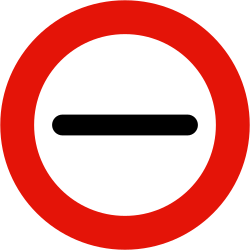
R-200 Sign: Understand When You Must Stop and Cannot Pass Without Stopping
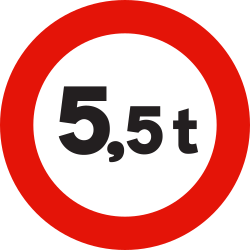
Understand the R-201 Mass Limitation road sign in Spain.
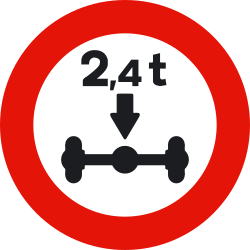
R-202: Understand the Mass Limitation Per Axle Road Sign
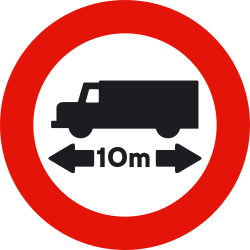
Obey the Length Limitation sign (R-203) to avoid restrictions.
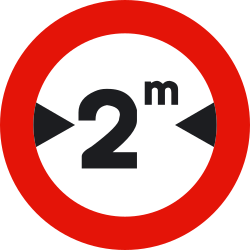
Obey the Width Limitation sign (R-204) to avoid hazards and legal issues.
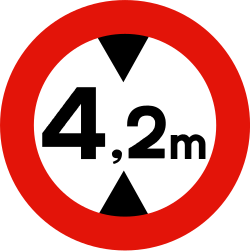
The R-205 sign warns of a height restriction ahead, crucial for safe driving and your Spanish theory test.
Clear answers to common questions about the Restriction Signs road sign category. Use this FAQ to review tricky rules, understand how these signs appear in exam scenarios, and remove confusion that often leads to mistakes in the Spanish driving theory exam in Spain.
A general mass limitation sign (R-201) indicates the maximum total weight your vehicle is allowed to be. A mass limitation per axle sign (R-202) specifies the maximum weight that can be placed on each individual axle of your vehicle. Both limits must be adhered to, but the per-axle limit is particularly important for managing load distribution and protecting road surfaces or structures.
Width (R-204) and height (R-205) limitation signs are usually placed before specific obstructions. This could be a narrow bridge, an underpass with a low clearance, a tunnel, or even certain parking structures. These signs are critical for larger vehicles like lorries or motorhomes to prevent them from getting stuck or causing damage.
If you encounter a restriction sign for which your vehicle exceeds the stated limit (e.g., mass, height, width, length), you must not proceed past the sign. You should look for alternative routes that are suitable for your vehicle's dimensions or weight. Often, there will be signs directing larger vehicles onto a different, more appropriate road.
Not exclusively, but the signs listed in this group predominantly focus on physical limitations like mass, size, and load. For instance, the R-200 sign, 'passing without stopping prohibited,' is also a restriction, but it's about a required action or process rather than a physical attribute of the vehicle. However, the core purpose of this group is to inform drivers about limitations that affect their route or passage.
Generally, these signs apply to all vehicles unless otherwise specified. However, some limitations, particularly those related to weight or dimensions, are more relevant to larger vehicles such as trucks, buses, or motorhomes. It's always the driver's responsibility to know their vehicle's specifications and check if they comply with any displayed restriction signs.
Dive deeper into specific road sign groups to test your knowledge and reinforce your understanding of Spanish traffic regulations. Start exploring each category to build a strong foundation for your DGT driving theory exam and ensure you drive safely on Spanish roads.
Browse Road Sign Categories