
Direction signs are your crucial guides on the road, telling you exactly which way to go for destinations, towns, exits, and services. Understanding these signs is vital for both safely reaching your chosen location and for passing your driving theory exam. This section will help you interpret these vital navigational aids and react appropriately, ensuring you always know where you're heading.
An explanation of how Direction Signs road signs apply in real traffic situations in Spain. Learn where these signs are typically placed, what drivers are expected to do when they appear, and how correct reactions help you stay safe, avoid fines, and succeed in your Spanish driving theory exam.
You will encounter direction signs frequently as you drive, particularly when approaching decision points, junctions, or exits. These signs are designed to provide clear guidance towards your intended destination, whether it's a specific town, a service area, or an important landmark. On conventional roads, they help you navigate through urban and rural areas, indicating the correct route for towns or points of interest. When approaching highways or dual carriageways, specific signs will direct you towards the nearest entry slip roads or indicate which lane to use for specific destinations. Signs for services, like rest stops or petrol stations, often appear on motorways and major routes, alerting you to upcoming facilities. It's essential to read these signs in advance to position your vehicle correctly for your intended maneuver, reducing the risk of sudden braking or incorrect turns, which can be hazardous in busy traffic.
An overview of the key learning outcomes when studying the Direction Signs road sign category. Understand the main concepts, sign meanings, and traffic situations covered here so you can recognise patterns, answer theory questions more confidently, and build a solid foundation for safe driving in Spain.
Direction signs are crucial for Spanish traffic rules, guiding you precisely towards your destination at complex junctions or exits. Learning these road signs as a group helps you recognize their distinct visual cues, like arrow patterns and location information, for seamless navigation. Mastering their meanings ensures confident decision-making during your DGT theory test and on real Spanish roads.
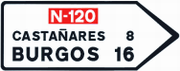
Navigate with confidence using the S-300 sign for towns on conventional routes.
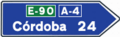
Guide your route with the Towns on a Highway Sign (S-301)
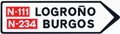
The S-310 sign helps you navigate towns on different routes in Spain.
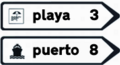
Navigate efficiently with the 'Places of Interest by Conventional Road' sign (S-320).
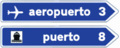
The S-321 Sign: Guiding You to Places of Interest on Highways and Dual Carriageways
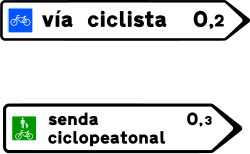
Follow the S-322 sign for directions to cycle routes or paths.

This sign guides you to an immediate exit for a conventional highway.
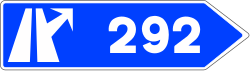
Navigate your route with Destination Signs for Immediate Exit to highways or dual carriageways.

Know where to go with immediate exit destination signs in Spain.

Understand Destination Signs for Immediate Exits with Shared Highway Access (S-347)

Navigate with Confidence: The Detour Destination Sign (S-348)
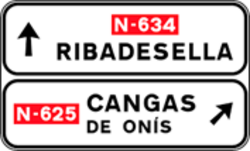
Understand the S-348a immediate exit sign with side panel on conventional or multi-lane roads.

The S-348b Variable Destination Signal Guides You To The Right Route.
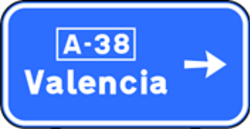
Immediate Exit Sign with Side Panel: Navigate Your Route Clearly
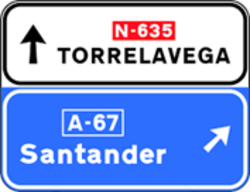
Understand the Spanish Immediate Exit Sign (S-349a) towards Motorways
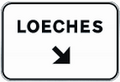
The S-350 sign guides you to an immediate departure to a conventional road.
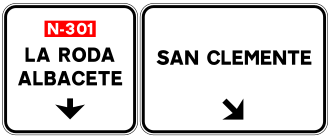
Know Your Route with the Immediate Exit Sign (S-350a)
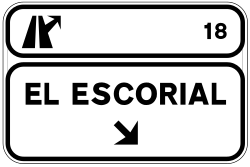
Prepare for immediate departure from the highway to a conventional road with the S-351 sign.
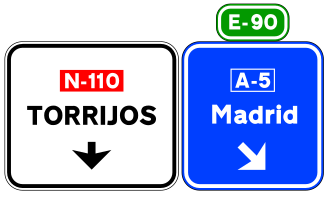
Understand the Immediate Exit Sign above the Carriageway for Motorways and Dual Carriageways
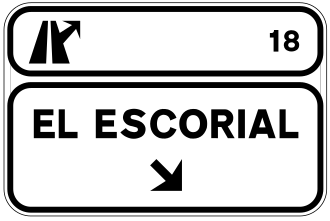
Navigate Motorway Exits Safely with the Immediate Exit Sign (S-352)
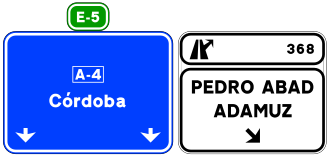
Immediate Exit Sign: Navigating Exits on Motorways and Dual Carriageways
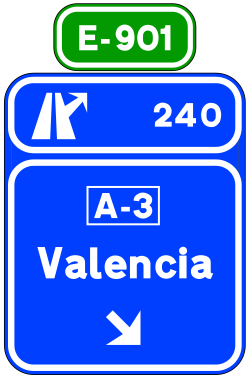
Follow the S-353 Sign for Immediate Exits on Motorways and Dual Carriageways
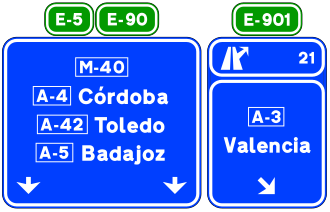
Follow the S-353a sign for your immediate exit on motorways and dual carriageways.
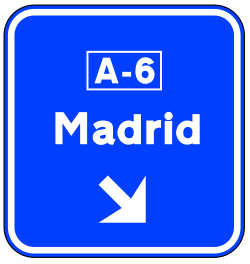
S-354: Immediate Exit Ahead to Highway or Dual Carriageway
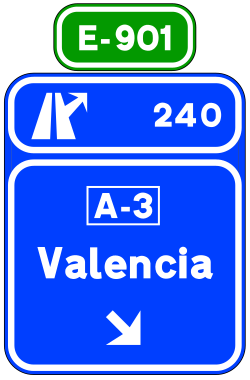
Prepare for your immediate exit on highways and dual carriageways with the S-355 guidance sign.
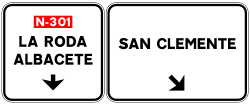
Understand the S-360 Sign for Immediate Exits to Conventional Roads
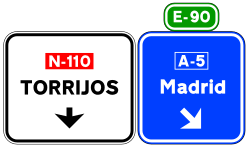
Immediate Exit to Highway or Dual Carriageway from Conventional Road Sign (S-362)
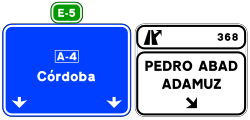
Immediate Exit from Highway to Conventional Road Sign (S-366)
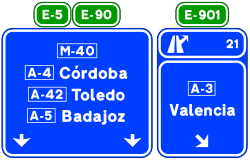
Understand the S-368 Sign for Highway Exits and Your Direction on Spanish Roads
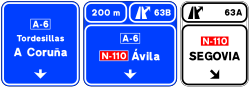
Understand Highway Signs for Immediate Exits on Dual Carriageways
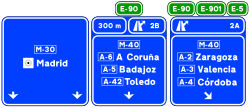
Understand the S-375 sign for upcoming highway exits and lane choices.
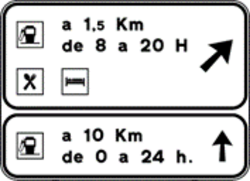
Navigate with Confidence: The Immediate Exit Sign for Services on Busy Roads
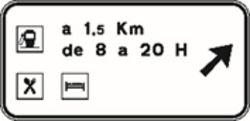
Know your route with the Immediate Exit Sign for Services on Other Conventional Roads (S-377).
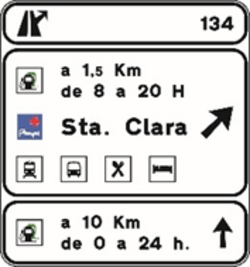
S-378: Immediate Exit Sign for Services on Motorways and Dual Carriageways
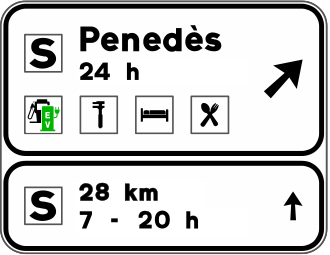
Understand the Immediate Exit Sign toward a Service Area (S-379) in Spain.
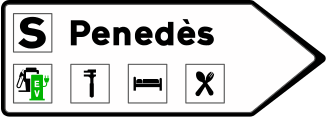
Prepare for your immediate exit to a service area with the S-380 destination sign.
Clear answers to common questions about the Direction Signs road sign category. Use this FAQ to review tricky rules, understand how these signs appear in exam scenarios, and remove confusion that often leads to mistakes in the Spanish driving theory exam in Spain.
Direction signs on conventional roads often use a white background with black text or symbols, guiding you through towns and local routes. On highways and dual carriageways, these signs typically have a blue or green background, indicating destinations accessible via slip roads and indicating lanes for specific exits. Both serve to guide you, but their appearance and context differ based on the road type and speed limits.
Signs indicating an immediate exit usually feature a prominent arrow pointing downwards or directly indicating the lane or slip road you need to take very soon. They might be placed directly above the carriageway or on the side of the road with an arrow showing the direction of the upcoming exit. Pay close attention to these as they require timely lane changes or decision-making.
If you miss your exit or the direction sign for your route, do not brake suddenly or attempt a dangerous maneuver. Continue to the next safe exit or junction. You can then use your navigation system or look for signs indicating your town or destination to re-route. It's always safer to proceed to a more suitable place to correct your course than to force a maneuver in traffic.
Yes, there are specific direction signs for service areas, including petrol stations, restaurants, and rest stops. These often have symbols indicating the type of facility. On motorways, these signs are usually blue and may include symbols for amenities. On conventional roads, they might have a white background with relevant symbols or text, guiding you to essential services.
Signs with side panels, particularly those indicated as 'Immediate Exit Sign with Side Panel', often provide additional directional information for specific lanes or routes immediately after the exit. The main panel shows the destination, and the side panel clarifies which lane or direction corresponds to that destination, especially useful on multi-lane roads or complex junctions.
Dive deeper into specific road sign groups to test your knowledge and reinforce your understanding of Spanish traffic regulations. Start exploring each category to build a strong foundation for your DGT driving theory exam and ensure you drive safely on Spanish roads.
Browse Road Sign Categories