
Confirmation signs are your trusted companions, reassuring you that you're still on the right path, especially after navigating intersections or highway exits. These signs typically repeat essential route or destination details, allowing you to continue your journey with peace of mind. Understanding this group is crucial for both safe navigation and achieving success in your driving theory exam.
An explanation of how Confirmation Signs road signs apply in real traffic situations in Spain. Learn where these signs are typically placed, what drivers are expected to do when they appear, and how correct reactions help you stay safe, avoid fines, and succeed in your Spanish driving theory exam.
Confirmation signs appear frequently after you've made a decision at an intersection, junction, or exit, especially on longer journeys or complex road networks. You'll encounter signs like S-600 on standard roads, confirming the next towns or destinations along your route. On faster roads such as highways or dual carriageways, sign S-602 serves the same purpose, ensuring you haven't missed your intended turn. Sign S-603, a supplementary sign, might appear just after an exit to provide even more specific advance information about upcoming route choices or destinations, helping you make informed decisions well in advance. Drivers should look for these signs to verify they are continuing on the correct route and to avoid unnecessary deviations, thereby improving journey efficiency and reducing stress.
An overview of the key learning outcomes when studying the Confirmation Signs road sign category. Understand the main concepts, sign meanings, and traffic situations covered here so you can recognise patterns, answer theory questions more confidently, and build a solid foundation for safe driving in Spain.
Confirmation signs (Señales de Confirmación) are crucial for verifying your route on Spanish roads after intersections or exits. Studying these road signs together helps you confidently recognize repeated destination information, ensuring you avoid confusion during your driving theory test and real-world navigation. They are vital for smooth, stress-free journeys.
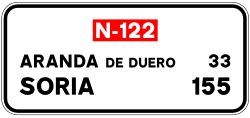
Know Your Route with the S-600 Confirmation of Towns Sign
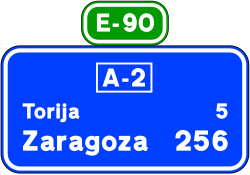
S-602: Your Guide to Confirming Towns on Highways and Dual Carriageways
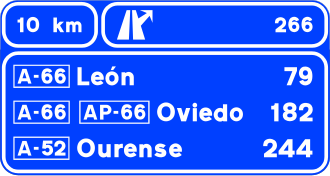
S-603: Supplementary Confirmation Sign with Advance Exit Information for Route Guidance
Clear answers to common questions about the Confirmation Signs road sign category. Use this FAQ to review tricky rules, understand how these signs appear in exam scenarios, and remove confusion that often leads to mistakes in the Spanish driving theory exam in Spain.
The primary difference lies in the type of road they are found on and their typical design. Confirmation signs on conventional roads (like S-600) are generally simpler and designed for lower speeds. On highways or dual carriageways (like S-602), these signs are often larger, more robust, and integrated into the highway's signage system to be easily visible at higher speeds and to confirm continued travel on that specific route.
Confirmation signs are vital for reducing driver anxiety and preventing navigational errors. By clearly indicating that you are still on the correct route, they allow you to focus on driving safely without the distraction of uncertainty. This is especially important on unfamiliar roads or during long journeys where missing a turn could lead to significant delays or hazardous situations.
Absolutely. The theory test includes questions about various road signs and their meanings. Understanding confirmation signs, particularly their role in confirming your route after junctions or exits, is essential for correctly answering questions related to navigation and route planning. Recognizing these signs helps demonstrate your comprehension of traffic management systems.
In such cases, it's always best to prioritise official road signs. Road signs are legally binding and reflect the current, official routing. GPS systems can sometimes be outdated or misinterpret complex junctions. Therefore, trust the confirmation signs to guide you correctly. If you are unsure, cautiously proceed on the route indicated by the signs and reassess your navigation at the next safe opportunity or signpost.
Dive deeper into specific road sign groups to test your knowledge and reinforce your understanding of Spanish traffic regulations. Start exploring each category to build a strong foundation for your DGT driving theory exam and ensure you drive safely on Spanish roads.
Browse Road Sign Categories