
Welcome to the foundational unit for your Spanish motorcycle theory exam preparation. This module introduces the different motorcycle licence categories available in Spain, including A1, A2, and A, detailing the progression and legal requirements for each. You will also learn about essential documentation, vehicle classifications, and gain insight into the theoretical exam format and effective study strategies.
Browse all lessons that make up Licensing & Motorcycle Fundamentals. Each lesson focuses on specific topics, learning objectives, and core concepts, helping you build essential knowledge and follow a clear, structured progression toward your study goals in Spain.
This lesson details the A1, A2, and A motorcycle licence categories recognized by the DGT, focusing on technical specifications like engine displacement and power limits. It explains the progressive licensing path, age thresholds, and mandatory training requirements for each stage. The content also covers the administrative procedures for applying and the legal responsibilities of each licence holder.
This lesson examines the legal framework for motorcyclists in Spain, including mandatory registration, compulsory insurance, and equipment standards enforced by the DGT. It covers the legal necessity of a homologated helmet, reflective clothing, and compliance with noise and emission standards. Learners also review documentation checks, vehicle inspections, and penalties for non-compliance.
This lesson categorizes the range of motorcycles, distinguishing between sport, naked, touring, off-road, scooter, and electric models. It analyzes each category’s design, performance characteristics, and typical use cases such as urban commuting or long-distance touring. Understanding these attributes helps align a vehicle choice with a specific licence category and riding environment.
This lesson breaks down the structure of the DGT theoretical exam for motorcycles, describing the number of multiple-choice questions and the required passing score. It provides study strategies such as revision schedules and the use of official question banks to improve recall. Learners are also advised on managing time allocation per question to align with DGT’s scoring algorithm.
Explore high-intent keywords and long-tail search topics learners use when researching Licensing & Motorcycle Fundamentals. These terms reflect how people search for reliable study materials, structured explanations, and unit-level theory preparation support in Spain.
Find clear answers to the most common questions learners ask about Licensing & Motorcycle Fundamentals. Understand how the unit is organized, what learning goals it supports, and how it contributes to your study progression with structured explanations and practical guidance tailored for learners in Spain.
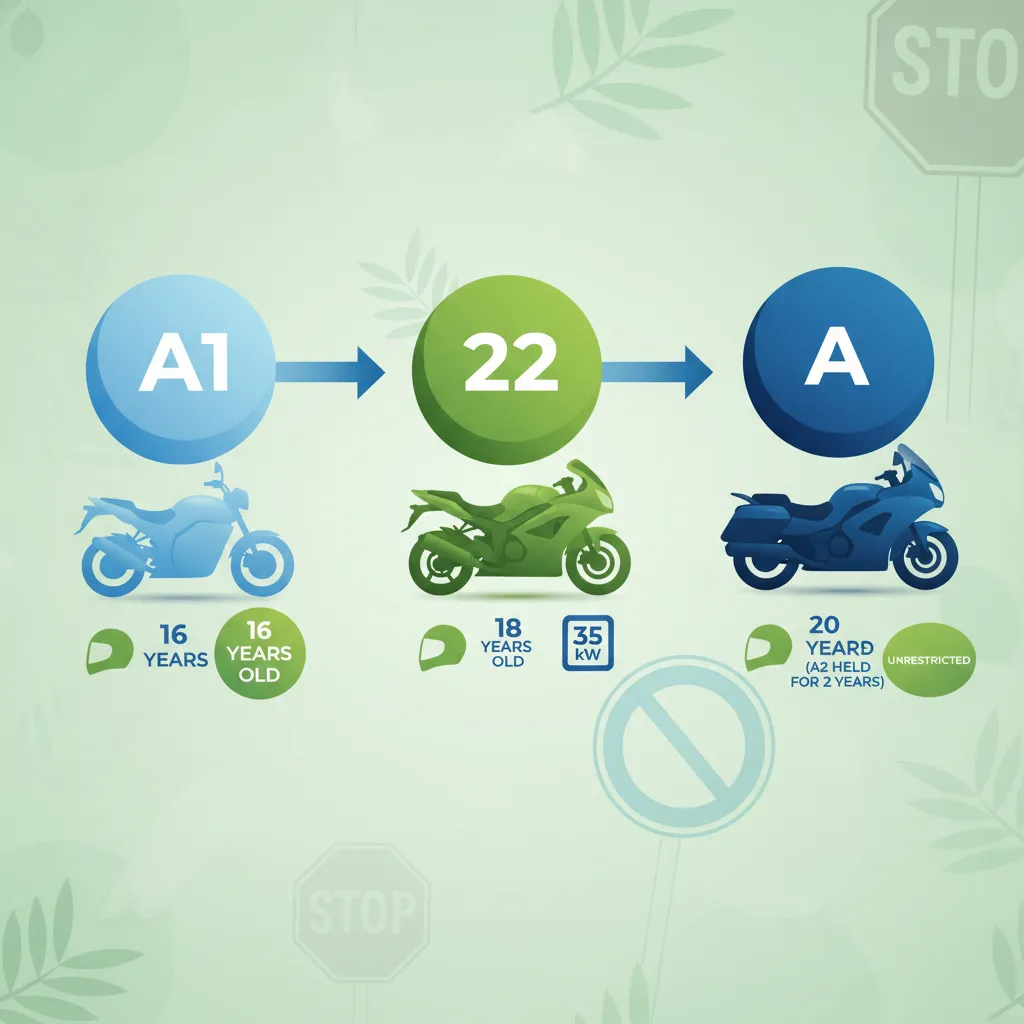
The A1 licence is for motorcycles with a maximum engine capacity of 125cc and 35kW, typically obtainable at 16 years old. The A2 licence allows for motorcycles with up to 70kW, usually requiring at least 18 years old. The full A licence permits riding any type of motorcycle and requires at least 2 years of experience with the A2 licence, or direct access at 24 years old. This unit details these progressions and specific requirements.
Key prerequisites include reaching the minimum age for the desired licence category (16 for A1, 18 for A2, 24 for A or 20 with 2 years of A2 experience), holding a valid DNI or NIE, and not being disqualified from driving. You will also need to pass both a theoretical and a practical test. This unit covers these requirements in detail.
The DGT motorcycle theory exam is typically a multiple-choice test conducted on a computer. For A, A1, and A2 licences, it usually consists of 30 questions, with a maximum of 3 errors allowed for a passing score. This unit will explain the exam format, question types, and common pitfalls.
Generally, you will need your national identity document (DNI) or foreigner identification number (NIE), passport-sized photographs, proof of payment for the application fees, and potentially a medical certificate stating you are fit to ride. This unit will guide you through the specific documents required by the DGT.
While some general traffic rules overlap, the motorcycle theory exam has specific content related to motorcycle operation, safety, and unique road scenarios. It's crucial to study material tailored to motorcycle licences, like this unit, to cover topics such as specific rider controls, protective gear, and motorcycle-specific hazard perception.
Vehicle classification helps define which licence category is required to operate a specific type of motorcycle. Factors like engine capacity, power output, and whether the vehicle has a sidecar determine its classification and which licence you need. This unit explains these classifications to ensure you understand legal operation.
All included lessons
Lessons in Licensing & Motorcycle Fundamentals
See who benefits most from studying Licensing & Motorcycle Fundamentals. This overview explains how the unit supports different learning needs, what level of knowledge is helpful before starting, and how it fits into the overall study path in Spain.
This unit is essential for anyone looking to obtain a motorcycle licence in Spain, whether it's their first motorcycle licence or an upgrade. It is particularly beneficial for new riders planning to get their A1, A2, or A licence and for those who need a clear understanding of the licensing process and exam requirements.

Begin your preparation for the Spanish DGT driving licence exam today. Browse our full curriculum to find guided courses, detailed lessons on traffic legislation, road signs, and essential driving practices. Start learning systematically and confidently.
Explore DGT Theory Courses & CurriculumExplore all units and lessons included in this driving theory course.
Begin your preparation for the Spanish DGT driving licence exam today. Browse our full curriculum to find guided courses, detailed lessons on traffic legislation, road signs, and essential driving practices. Start learning systematically and confidently.
Explore DGT Theory Courses & Curriculum