
This group of signs warns you about potential hazards, unusual road conditions, or upcoming risks. They are typically triangular and appear before the danger itself, giving you time to adjust your speed and attention. Understanding these signs is crucial for both passing your theory test and ensuring your safety and the safety of others on the road.
An explanation of how General Danger Signs road signs apply in real traffic situations in Spain. Learn where these signs are typically placed, what drivers are expected to do when they appear, and how correct reactions help you stay safe, avoid fines, and succeed in your Spanish driving theory exam.
General danger signs, often triangular with a red border, are placed on roads to alert drivers to upcoming hazards or unusual situations. You'll encounter them in various settings: approaching intersections (like P-1, P-2, P-4) where priority rules might apply or where visibility is limited, on winding roads with sharp curves (P-13, P-14), or where the road surface changes unexpectedly (P-15, P-15a, P-15b, P-28). They also warn of specific dangers like level crossings (P-7, P-8, P-11), bridges (P-5), tram lines (P-6), animals (P-23, P-24), pedestrians or cyclists (P-20a, P-20b, P-20c, P-22a, P-22b), children (P-21), and adverse conditions such as slippery roads (P-19, P-34), narrowings (P-17, P-17a, P-17b), or falling rocks (P-26). These signs are vital for proactive driving; they require you to increase your awareness, potentially reduce speed, and be ready to take evasive action or yield as necessary.
An overview of the key learning outcomes when studying the General Danger Signs road sign category. Understand the main concepts, sign meanings, and traffic situations covered here so you can recognise patterns, answer theory questions more confidently, and build a solid foundation for safe driving in Spain.
These essential general danger road signs from the DGT curriculum warn of specific upcoming hazards or unusual road conditions in Spain. Studying these triangular warning signs together helps you recognize common patterns and interpret their meanings quickly for effective hazard perception. Mastering these traffic signs is crucial for your DGT theory test revision and safe driving.
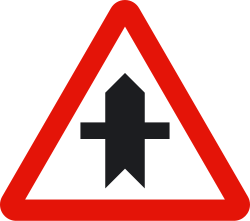
Prepare for intersections with priority ahead using the P-1 warning sign.
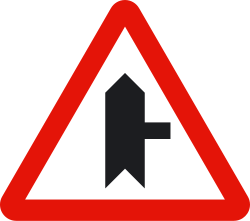
Prepare for intersections where the road on the right has priority with the P-1a warning sign.
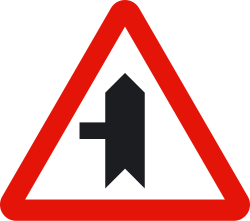
Prepare for intersections with priority on the left using the P-1b warning sign.
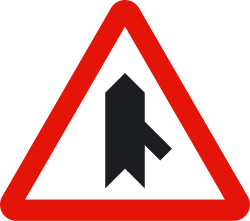
Prepare for intersections with priority over merging traffic from the right.
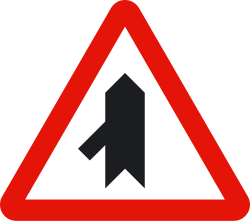
Prepare for an upcoming intersection where you have priority over merging traffic from the left.
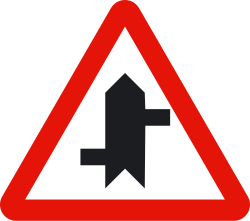
Warning: Section with Shortcuts Ahead!
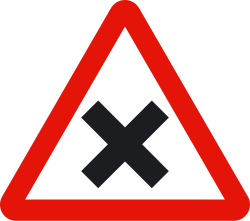
Prepare for an intersection where traffic from the right has priority with the P-2 warning sign.
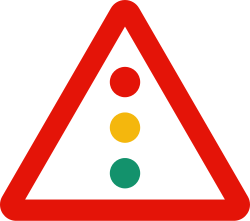
Prepare for traffic lights ahead with the P-3 warning sign
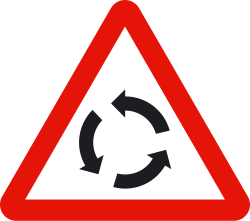
Prepare for Roundabouts Ahead with the P-4 Warning Sign!
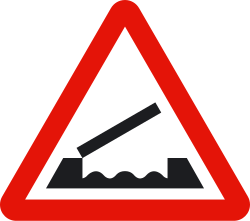
Prepare for opening bridges with the P-5 warning road sign.
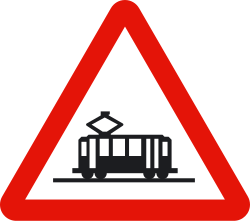
Prepare for Tram Crossings with the P-6 Warning Sign
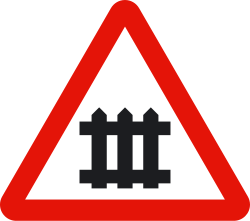
Warning: Level Crossing with Barriers Ahead
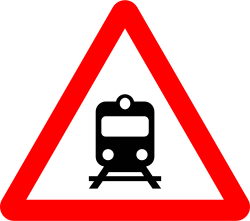
Prepare for level crossings without barriers with the P-8 warning sign.

Prepare for upcoming level crossings or moving bridges with the P-9a warning sign.

Warning: Prepare for a Level Crossing or Moving Bridge Ahead (Right Side)

Prepare for a level crossing or moving bridge ahead with the P-9c warning sign.

Prepare for a level crossing or moving bridge ahead with the P-10a warning sign.

Prepare for a level crossing or moving bridge on your left with the P-10b warning sign.

Prepare for a level crossing or moving bridge ahead on the left with the P-10c warning sign.

Prepare for the P-11 Level Crossing (Single Track) warning sign.

Prepare for Level Crossings with Multiple Tracks Ahead: Sign P-11a
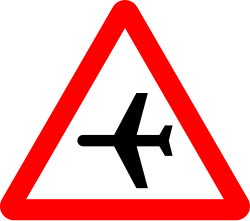
Prepare for Low-Flying Aircraft with the P-12 Warning Sign
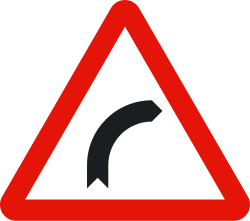
Prepare for the dangerous curve to the right ahead with the P-13a warning sign.
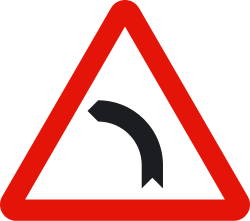
Prepare for the Dangerous Curve to the Left Ahead with Sign P-13b
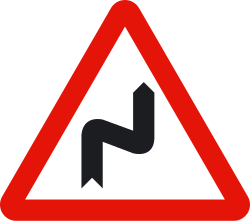
Prepare for Dangerous Curves Ahead: P-14a Warns of Curves, Starting Right
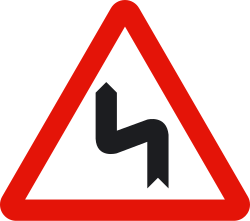
Beware of dangerous curves ahead, starting with a sharp turn to the left!
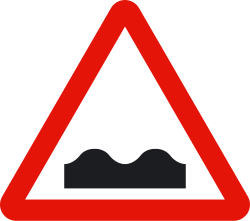
Prepare for an Uneven Road Ahead with the P-15 Warning Sign
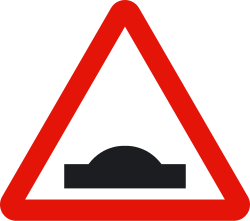
Watch out for speed bumps ahead with the P-15a warning sign!
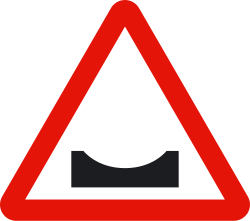
Prepare for dips ahead with the P-15b warning sign in Spain.
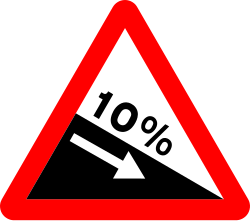
Prepare for Steep Descents with the P-16a Warning Sign
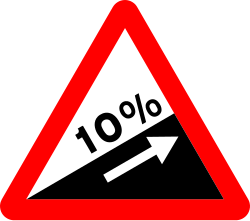
Prepare for a steep ascent ahead with the P-16b warning sign.
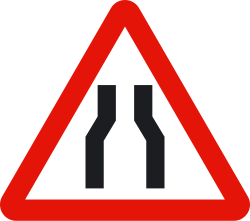
Prepare for the 'Road Narrows on Both Sides' warning sign (P-17).
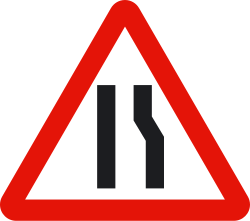
Prepare for a Road Narrows on the Right with the P-17a Warning Sign
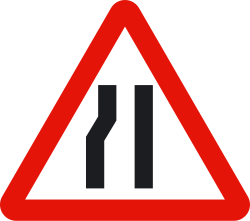
Prepare for a road narrowing on the left with the P-17b warning sign.
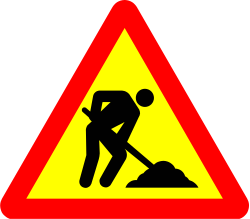
Prepare for 'Roadworks Ahead' with the P-18 Warning Sign
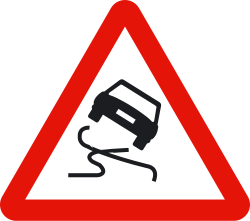
Prepare for a slippery road ahead with the P-19 warning sign.
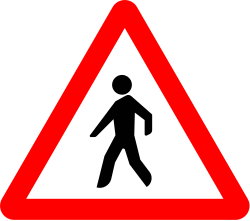
Beware of Pedestrians Ahead with the P-20a Warning Sign
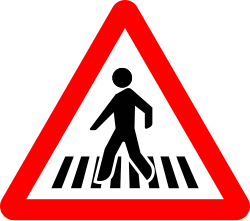
Beware of Pedestrian Crossings Ahead with the P-20b Warning Sign
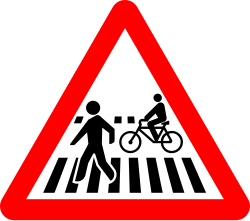
Prepare for Pedestrian and Cyclist Crossings with the P-20c Warning Sign
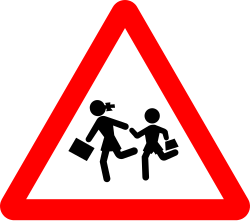
Look out for children ahead with the P-21 warning sign!
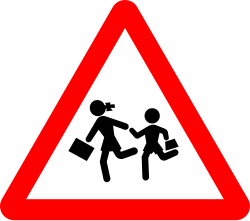
Slow Down: The P-21a 'Children' Warning Sign Means Children May Be Present.
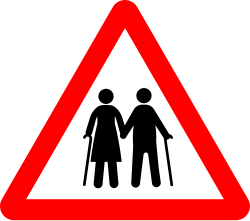
Watch out for elderly pedestrians with the P-21b warning sign!
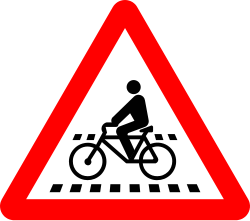
Prepare for cyclists crossing ahead with the P-22a warning sign.
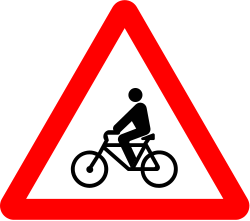
Watch out for cyclists ahead with the P-22b warning sign!
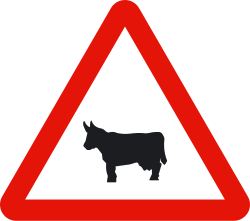
Warning: Cattle or Livestock Ahead (Sign P-23)
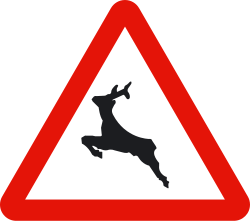
Beware of Deer and Wild Animals Ahead with the P-24 Warning Sign
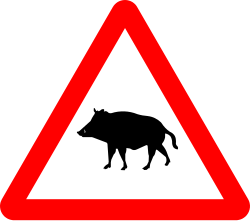
Watch out for wild boars with the P-24a warning sign!
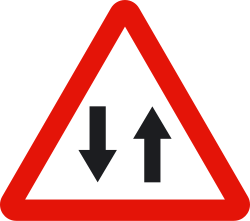
Prepare for Two-Way Traffic Ahead with the P-25 Warning Sign
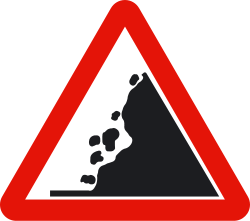
Watch out for falling rocks with the P-26 warning sign!
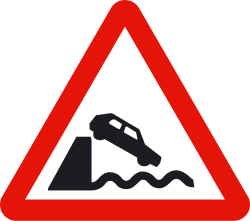
Beware of unprotected bodies of water ahead with the P-27 warning sign.
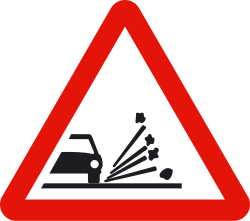
Prepare for Loose Surface Material Ahead with the P-28 Warning Sign
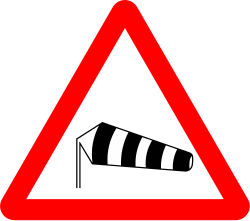
Prepare for crosswinds with the P-29 warning sign.
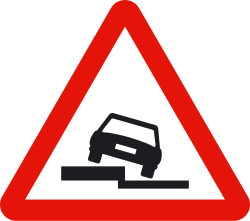
Warning: Soft or Low Verges Ahead – Prepare for Reduced Roadside Stability.
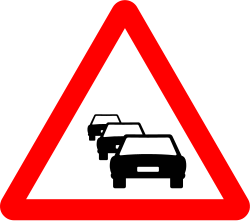
Prepare for traffic queues ahead with the P-31 warning sign.
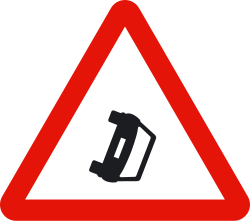
Recognise the P-32 Accident sign and prepare for hazards ahead.
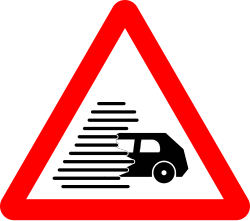
Prepare for reduced visibility ahead with the P-33 warning sign.
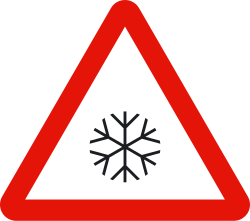
Prepare for icy roads with the P-34 Slippery Pavement warning sign.
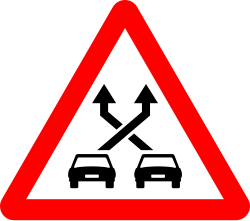
Prepare for braided crossings with the P-35 warning sign.
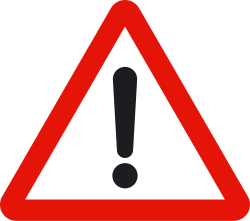
The P-50 'Other Dangers' sign warns you to prepare for an unexpected hazard ahead.
Clear answers to common questions about the General Danger Signs road sign category. Use this FAQ to review tricky rules, understand how these signs appear in exam scenarios, and remove confusion that often leads to mistakes in the Spanish driving theory exam in Spain.
The main purpose of general danger signs is to alert drivers to potential hazards or unusual road conditions that lie ahead. They serve as a warning, giving drivers advance notice so they can prepare and adjust their driving accordingly, such as reducing speed, increasing observation, or changing lane position to ensure safety.
The distance at which these signs are placed before the actual hazard can vary depending on the road type and speed limit. On faster roads or where a more immediate reaction is needed, they are typically placed further in advance to give drivers sufficient time to prepare. In urban areas, they might be placed closer to the hazard. Always be prepared to encounter the danger soon after passing the sign.
In many countries, general danger and warning signs are indeed triangular, signifying a warning. However, the exact shape and colour can vary slightly by region. The key is to recognise the symbol and understand the warning it conveys, which is typically about an upcoming hazard that requires attention and possible speed adjustment.
If you encounter multiple danger signs, it indicates a complex or compounded hazard. You should increase your level of caution significantly. This might mean slowing down more considerably, paying extra attention to your surroundings, and being prepared for several different risks in quick succession. For example, seeing a 'curves' sign followed by a 'slippery road' sign means you need to navigate those curves with extreme care.
General danger signs are primarily warnings; they alert you to a situation you may need to react to. Mandatory signs (like 'turn left only') tell you what you *must* do, while prohibitory signs (like 'no entry') tell you what you *must not* do. Danger signs inform and advise caution, whereas mandatory and prohibitory signs impose rules that must be obeyed.
Dive deeper into specific road sign groups to test your knowledge and reinforce your understanding of Spanish traffic regulations. Start exploring each category to build a strong foundation for your DGT driving theory exam and ensure you drive safely on Spanish roads.
Browse Road Sign Categories