
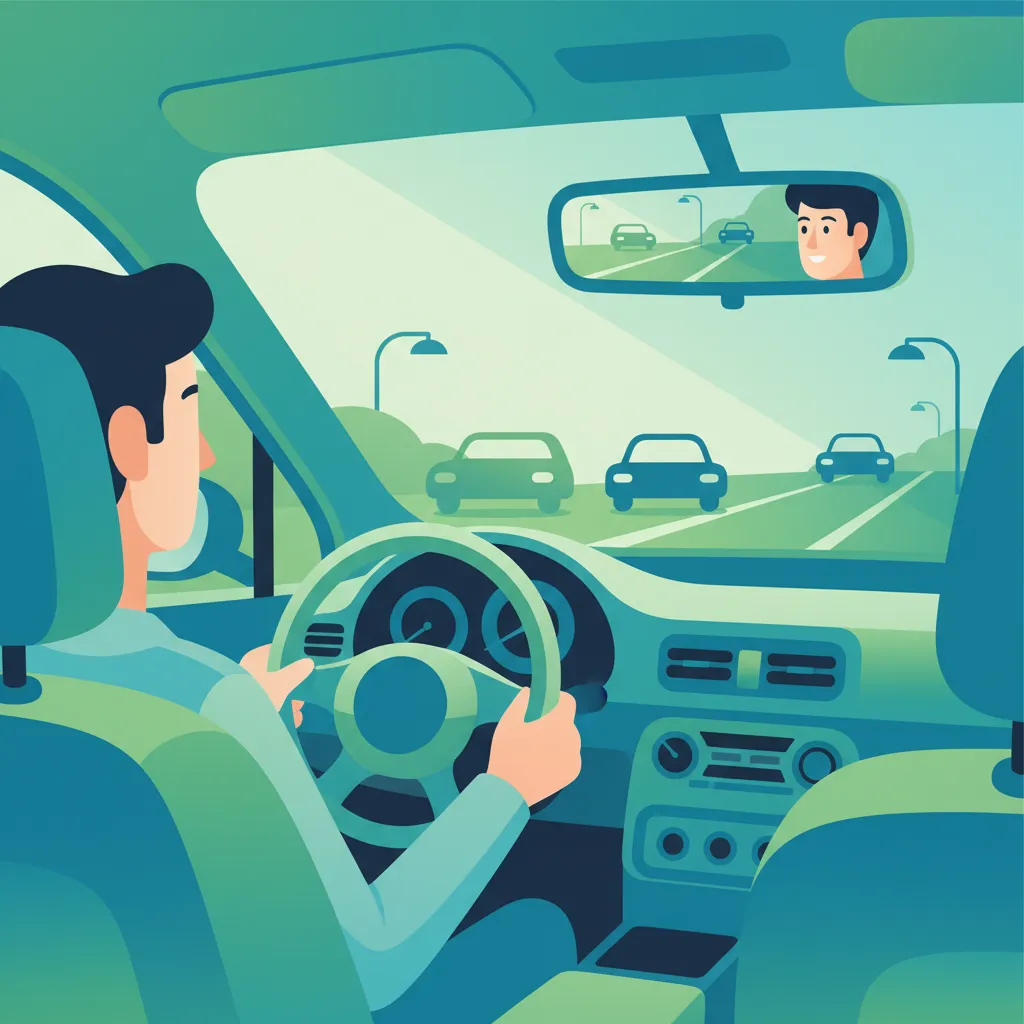
Mirror checks are fundamental to anticipatory and safe driving, allowing you to monitor traffic behind and to your sides. In Spain, understanding when and how to use your interior and exterior mirrors (espejos retrovisores) is vital for everything from routine travel to complex maneuvers, as emphasized by DGT regulations and preventive driving principles.
Theory topic content overview
Read the full theory topic guide for Mirror Checks with structured, easy-to-scan content built for learners in Spain. This detailed section explains the exact rule, meaning, traffic context, comparison points, and exam logic behind this Spanish driving theory topic so you can study faster, understand the concept more clearly, and avoid common interpretation mistakes on the theory test.
Mirror checks, or observación por los espejos retrovisores, are a cornerstone of safe and proactive driving in Spain. They involve using your vehicle's mirrors to continuously monitor the traffic environment around you, providing vital information about other road users, their positions, and their intentions. This essential skill allows drivers to make informed decisions, anticipate hazards, and execute maneuvers safely, aligning perfectly with the DGT's emphasis on conducción preventiva (preventive driving).
At its heart, a mirror check is a quick, deliberate glance at your vehicle's mirrors to gather information about what is happening behind and to the sides. It's not just a mechanical action but an integral part of your overall observation strategy, which also includes looking ahead (mirar a lo lejos) and checking your blind spots.
In Spain, mastering mirror checks is critical for both passing your DGT driving theory exam and developing safe, anticipatory driving habits on our diverse road network, from urban streets to autovías and autopistas.
The DGT consistently highlights observation as a primary safety skill. Neglecting mirror checks is a common cause of accidents and a frequent pitfall in driving tests. Here’s why they are so important:
autovía, turning at an intersection, or parking, knowing what's around you is non-negotiable.Conducción Preventiva: Mirror checks contribute directly to anticipación. By continuously monitoring traffic, you can predict the movements of others and adjust your driving proactively, rather than reacting suddenly to unexpected situations.Espejos RetrovisoresSpanish traffic regulations (and common sense) dictate a structured approach to using your mirrors.
Even when driving straight and without an immediate maneuver, espejos retrovisores must be checked regularly.
The DGT advises that the frequency of these mirror checks depends on the driving environment:
autovías and in heavy urban traffic, more frequent glances are necessary to stay aware of rapidly changing conditions.de forma breve) – long enough to gather information but brief enough not to divert your attention from the road ahead for too long.Mirror checks are mandatory before any action that changes your vehicle's position or speed:
espejo retrovisor interior to ensure vehicles behind you are aware and not too close.Cambio de Carril): Follow the "Mirror-Signal-Maneuver" (RSM) sequence. Check interior and side mirrors, then your blind spot, then signal (señalizar), then execute the maneuver safely.Girar): Before turning left or right, check side mirrors for cyclists, motorcycles, or pedestrians who might be alongside you or in your path.Adelantar): Crucially, before starting to overtake, check your interior and exterior mirrors to ensure no one is already overtaking you.vía or joining traffic (e.g., from an acceleration lane onto an autovía), use mirrors to assess gaps and approaching vehicles.Estacionar): Use mirrors to monitor surroundings and ensure you are not obstructing other road users or pedestrians.Ángulos Muertos)Your side mirrors have ángulos muertos (blind spots) – areas around your vehicle that are not visible. In Spain, it's particularly emphasized to:
girar la cabeza): A quick glance over your shoulder is essential to check these blind spots, especially before changing lanes or merging.motoristas: Motorcycles are often harder to spot and frequently fall into blind spots. Extra vigilance is needed.Espejos Retrovisores and Their FunctionsVehicles are equipped with at least two, often three, espejos retrovisores in Spain:
Espejo Retrovisor Interior): Provides a wide view directly behind your vehicle. Primarily used for general traffic observation behind you and before braking. Adjust it so you can see the entire rear window.Espejos Retrovisores Exteriores): Provide views to the sides and slightly behind the vehicle. Essential for lane changes, turning, and monitoring adjacent traffic. Adjust them to minimize your blind spots, showing a small sliver of your own vehicle.Important Note on Adjustment: Always adjust your mirrors before starting your journey, with the vehicle stationary and on level ground, as stated in DGT guidelines. Improperly adjusted mirrors compromise your visibility significantly.
Several conditions can affect how you conduct mirror checks and how effective they are:
autovías), vehicles approach and recede much faster, demanding more frequent and vigilant checks.Many learners struggle with mirror checks during their DGT exam due to these common errors:
ángulos muertos. This is a very common failure point.Retrovisor-Señal-Maniobra (RSM).For safe driving in Spain and success in your DGT exams, treat mirror checks not as a chore, but as an integral part of your driving awareness. Make it a habit to constantly scan your espejos retrovisores, combine this with head turns for blind spots, and always integrate these observations before signaling or initiating any maneuver. This active, preventive driving approach will make you a safer, more confident driver on Spanish roads.
Mirror checks (observación por los espejos retrovisores) are a fundamental skill in Spanish driving, required by DGT regulations and essential for preventive driving (conducción preventiva). They involve continuous scanning of interior and exterior mirrors combined with head turns for blind spots (ángulos muertos), particularly important for detecting motorcycles (motoristas). The mandatory sequence is Mirror-Signal-Maneuver (Retrovisor-Señal-Maniobra), applied before braking, changing lanes, turning, overtaking, merging, parking, or opening doors. Mirror check frequency must adapt to driving conditions including speed on autovías, traffic density, and weather, with extra vigilance needed when visibility is reduced.
A short set of high-value points that capture the most important ideas from this theory explanation.
Mirror checks are a continuous, proactive habit essential for situational awareness, not just a mechanical action before maneuvers
Every change in speed or direction requires prior mirror observation combined with blind spot checks
The mandatory observation sequence is Mirror-Signal-Maneuver (Retrovisor-Señal-Maniobra in Spanish)
Blind spot checks require turning your head to cover areas not visible in mirrors, especially for detecting motorcycles
Mirror check frequency must adapt to speed, traffic density, and weather conditions
Before braking, changing lanes, turning, overtaking, merging, parking, or opening doors—always check mirrors first
Side mirrors have blind spots (ángulos muertos); a head turn is always required before lane changes or merging
Adjust mirrors before starting your journey with the vehicle stationary to maximize effectiveness
Do not linger in another driver's blind spot—stay aware of your position relative to other vehicles
Glances should be brief and purposeful, gathering information without diverting attention from the road ahead
Relying only on mirrors without turning your head to check blind spots—this is a frequent DGT exam failure point
Checking mirrors after signaling or beginning a maneuver instead of before; the sequence must always be observation first
Driving with improperly adjusted mirrors, severely limiting visibility of surrounding traffic
Checking mirrors infrequently or inconsistently, leading to gaps in situational awareness during the drive
Glancing at mirrors without actually processing what is seen or acting on the information gathered
Start with a short, direct summary of Mirror Checks before reading the full explanation below.
Mirror checks involve regularly scanning your interior rear-view and exterior side mirrors to stay aware of surrounding traffic. This constant observation helps you anticipate other road users' movements and is mandatory before any maneuver like braking, changing lanes, or turning. In Spain, this skill is a core component of defensive driving and is frequently tested by the DGT to ensure drivers maintain full situational awareness.
Review the most important terms, rule signals, and traffic concepts linked to Mirror Checks.
Explore related theory topic pages connected to Mirror Checks and continue with the next useful rule explanation.
See the common search queries learners use when trying to understand Mirror Checks in Spain.

Continue your preparation by exploring specific Spanish driving theory topics in depth. Review road signs, understand priority rules, and master DGT traffic laws. This section provides the essential knowledge to pass your exam and drive safely across Spain.
Explore Spanish Driving Theory TopicsTheory topic content overview
A short set of high-value points that capture the most important ideas from this theory explanation.
Mirror checks are a continuous, proactive habit essential for situational awareness, not just a mechanical action before maneuvers
Every change in speed or direction requires prior mirror observation combined with blind spot checks
The mandatory observation sequence is Mirror-Signal-Maneuver (Retrovisor-Señal-Maniobra in Spanish)
Blind spot checks require turning your head to cover areas not visible in mirrors, especially for detecting motorcycles
Mirror check frequency must adapt to speed, traffic density, and weather conditions
Before braking, changing lanes, turning, overtaking, merging, parking, or opening doors—always check mirrors first
Side mirrors have blind spots (ángulos muertos); a head turn is always required before lane changes or merging
Adjust mirrors before starting your journey with the vehicle stationary to maximize effectiveness
Do not linger in another driver's blind spot—stay aware of your position relative to other vehicles
Glances should be brief and purposeful, gathering information without diverting attention from the road ahead
Relying only on mirrors without turning your head to check blind spots—this is a frequent DGT exam failure point
Checking mirrors after signaling or beginning a maneuver instead of before; the sequence must always be observation first
Driving with improperly adjusted mirrors, severely limiting visibility of surrounding traffic
Checking mirrors infrequently or inconsistently, leading to gaps in situational awareness during the drive
Glancing at mirrors without actually processing what is seen or acting on the information gathered
Start with a short, direct summary of Mirror Checks before reading the full explanation below.
Mirror checks involve regularly scanning your interior rear-view and exterior side mirrors to stay aware of surrounding traffic. This constant observation helps you anticipate other road users' movements and is mandatory before any maneuver like braking, changing lanes, or turning. In Spain, this skill is a core component of defensive driving and is frequently tested by the DGT to ensure drivers maintain full situational awareness.
Review the most important terms, rule signals, and traffic concepts linked to Mirror Checks.
Explore related theory topic pages connected to Mirror Checks and continue with the next useful rule explanation.
See the common search queries learners use when trying to understand Mirror Checks in Spain.
Continue your preparation by exploring specific Spanish driving theory topics in depth. Review road signs, understand priority rules, and master DGT traffic laws. This section provides the essential knowledge to pass your exam and drive safely across Spain.
Explore Spanish Driving Theory TopicsUse this exam-focused revision tip to understand how Mirror Checks is likely to appear in theory questions for learners in Spain. This section helps you identify the most testable part of the rule, avoid common traps, and remember the concept more effectively during Spanish driving theory exam preparation.
The DGT theory exam frequently tests your understanding of when and how to perform mirror checks, especially in conjunction with maneuvers. Remember the 'Mirror-Signal-Maneuver' routine, and always be prepared to explain why constant observation is key to preventive driving and avoiding blind spot incidents.
Read direct answers to the most common learner questions about Mirror Checks in Spain. This FAQ focuses on rule confusion, practical meaning, comparison with similar concepts, and the exact uncertainties that appear most often in Spanish driving theory revision and exam preparation.
Mirror checks are crucial for maintaining situational awareness, allowing you to know what is happening around your vehicle. This helps you anticipate hazards, make informed decisions, and prevent collisions by being aware of other road users, especially before changing speed or direction.
You should check your mirrors regularly, even when driving in a straight line. It is especially critical before any maneuver, such as braking, accelerating, changing lanes, turning, overtaking, or even opening your car door. The DGT emphasizes constant observation.
Most cars have three mirrors: an interior rear-view mirror (espejo retrovisor interior) to see directly behind the vehicle, and two exterior side mirrors (espejos retrovisores exteriores) on the left and right sides to view traffic to your sides and rear-quarter areas.
Yes, regular mirror checks, combined with a quick head turn (shoulder check), are essential for detecting vehicles in your blind spots (ángulos muertos), areas that cannot be seen using mirrors alone. This is particularly important before changing lanes or merging.
The frequency of mirror checks depends on the driving situation, traffic density, and road type. On busy Spanish motorways (autovías/autopistas) or in heavy urban traffic, you should check more frequently than on quiet rural roads. The key is to constantly monitor your surroundings with brief, quick glances.
The 'Mirror-Signal-Maneuver' (MSM) routine is a fundamental sequence for executing driving actions safely. It means you must first check your mirrors, then signal your intentions, and only then perform the maneuver (like changing lanes or turning). This is a core expectation in the DGT driving test.
Use our powerful search functionality to pinpoint specific Spanish DGT driving theory practice sets. Filter by road sign categories, traffic law topics, or question difficulty to build custom study sessions and reinforce your knowledge precisely where it matters for your official exam.