
In Spain, trams and certain public transport vehicles, like urban buses in specific situations, are often granted priority to ensure efficient service and safety. Their fixed routes, significant size, and limited maneuverability mean other road users must adapt their driving behavior. Understanding these rules is essential for safely navigating Spanish city streets and busy intersections.
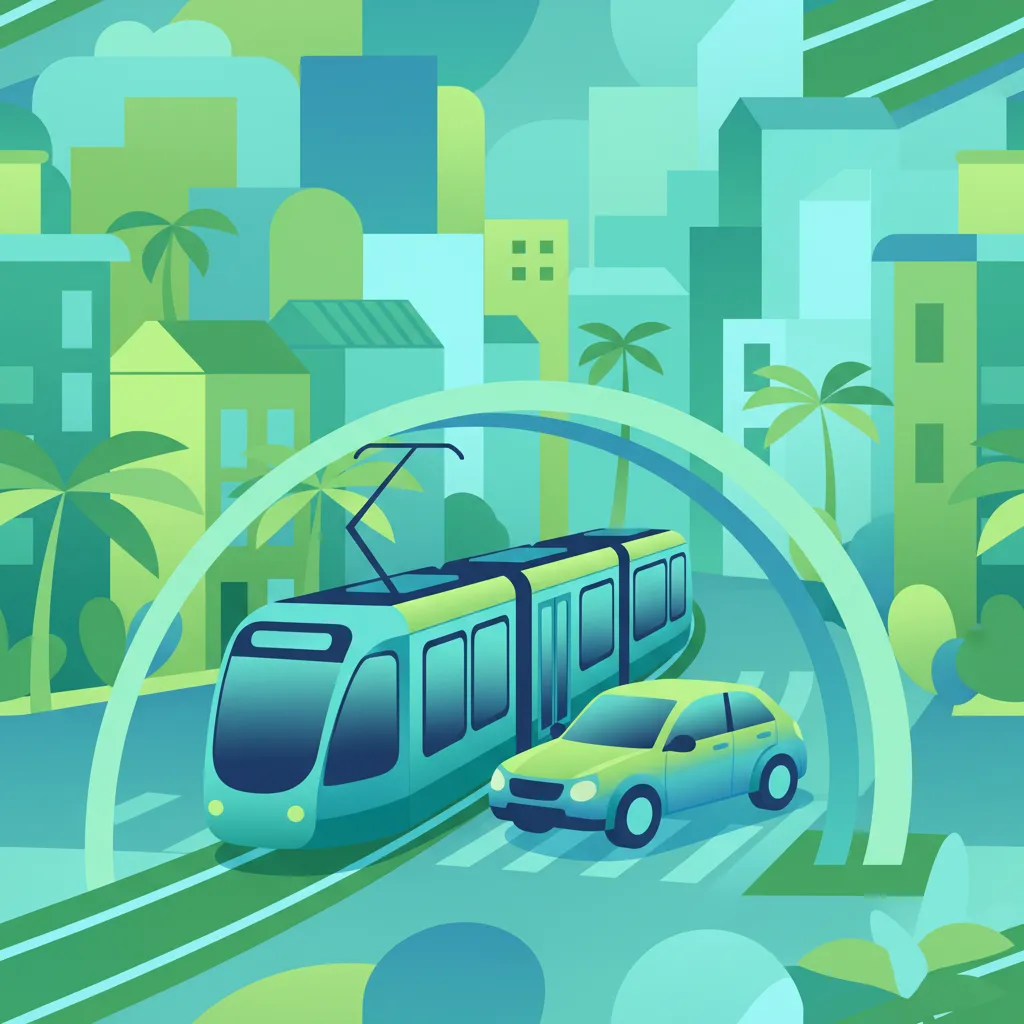
Theory topic content overview
Read the full theory topic guide for Tram Priority Rules with structured, easy-to-scan content built for learners in Spain. This detailed section explains the exact rule, meaning, traffic context, comparison points, and exam logic behind this Spanish driving theory topic so you can study faster, understand the concept more clearly, and avoid common interpretation mistakes on the theory test.
In Spanish traffic, understanding tram and public transport priority is fundamental for safe and efficient urban driving, as stipulated by the Dirección General de Tráfico (DGT). These specific priority rules are designed to account for the unique operational characteristics of vehicles like trams (tranvías) and certain urban buses (autobuses urbanos), ensuring their smooth movement and the safety of all road users.
Tram and public transport priority refers to the specific DGT rules that grant right of way to trams and, under specific conditions, to urban public service buses over other vehicles. This means that drivers of cars, motorcycles, and other vehicles must typically yield the right of way (ceder el paso) to these transport methods, particularly at intersections, crossings, and when they are rejoining traffic from stops. This is a core concept in the Spanish driving license theory and practical driving.
The DGT establishes these reglas de prioridad tranvía y autobús for several critical reasons:
According to Article 57.1.b of the Spanish General Highway Code (Reglamento General de Circulación), "Vehicles circulating on rails have the right of priority over other road users." This is a blanket rule for trams unless specific signage indicates otherwise.
When a tram approaches an intersection or a crossing where its tracks intersect with the road, it generally has priority of passage. This applies even if you would normally have priority based on the general right-hand rule (derecha preferente) in an unmarked intersection, or if you are on what seems to be the main road.
While trams have inherent priority due to their fixed rails, urban public transport buses in Spain have a more conditional priority.
The DGT's General Highway Code (Article 64.2) grants priority to public service buses (autobuses de línea regulares) when they signal their intention to leave a designated bus stop within a built-up area (zona urbana) to rejoin the traffic stream.
Understanding these factors helps explain why trams have priority and aids in anticipating situations:
A common point of confusion for learners preparing for the DGT theory exam is how tram priority interacts with other established rules.
Let's consider typical urban driving scenarios in Spain involving public transport priority:
Learners often make these errors regarding tram and public transport priority in Spain:
To successfully pass your DGT driving theory exam and drive safely in Spain, always remember:
By understanding and applying these priority rules for trams and public transport in Spain, you contribute significantly to road safety and ensure smooth navigation through busy urban environments.
Trams in Spain hold inherent priority on their fixed tracks under Article 57.1.b of the General Highway Code, meaning they generally pass first at intersections and crossings even when the right-hand rule would suggest otherwise. The P-6 warning sign alerts drivers to tram crossings ahead, and traffic lights or explicit signs can override tram priority. Urban buses receive more limited priority only when leaving a stop within a built-up area. Drivers must always yield to trams on rails, maintain safe distances accounting for their long braking distances, and never block tram tracks or passages near stops where passengers are boarding.
A short set of high-value points that capture the most important ideas from this theory explanation.
Trams have inherent priority over other vehicles due to their fixed rail tracks, which prevent them from swerving or deviating from their path.
Article 57.1.b of the Spanish General Highway Code grants trams priority of passage at intersections unless specific traffic signals dictate otherwise.
Urban buses only receive priority when leaving a designated stop within a built-up area, as per Article 64.2, and this does not apply outside urban zones.
Tram priority overrides the general right-hand rule (derecha preferente) at unmarked intersections where tram tracks cross the road.
Emergency vehicles with active sirens and lights always take priority over trams and buses, overriding their usual priority rights.
Look for the P-6 'Cruce de tranvía' sign—it warns of a tram crossing ahead where the tram has priority of passage.
Traffic lights and explicit STOP or GIVE WAY signs always supersede tram's inherent priority; if a tram's light is red, it must stop.
When an urban bus signals to leave a stop in a built-up area, you must slow down or stop to let it rejoin traffic.
Never stop or block tram tracks at an intersection—you must have enough space to clear the tracks completely before stopping.
Trams require long braking distances due to their mass and momentum; they cannot stop quickly to avoid obstacles.
Assuming the standard right-hand rule applies at intersections with tram tracks, forgetting that tram priority overrides it.
Blocking tram tracks at junctions or in traffic, preventing the tram from continuing on its fixed path.
Failing to yield to an urban bus that has signalled its departure from a stop in a built-up area.
Attempting to overtake a tram on the side where passengers are boarding or alighting if there is no safety island.
Underestimating a tram's braking distance and stopping ability, leading to dangerous situations at crossings or intersections.
Start with a short, direct summary of Tram Priority Rules before reading the full explanation below.
Trams and certain public transport vehicles generally have priority in Spanish traffic, primarily due to their fixed routes on rails and their limited ability to maneuver or stop quickly. Drivers must yield to these vehicles, especially at intersections and designated stops, to prevent collisions and maintain traffic flow, as regulated by DGT rules.
Review the most important terms, rule signals, and traffic concepts linked to Tram Priority Rules.
Explore related theory topic pages connected to Tram Priority Rules and continue with the next useful rule explanation.
See the common search queries learners use when trying to understand Tram Priority Rules in Spain.

Continue your preparation by exploring specific Spanish driving theory topics in depth. Review road signs, understand priority rules, and master DGT traffic laws. This section provides the essential knowledge to pass your exam and drive safely across Spain.
Explore Spanish Driving Theory TopicsTheory topic content overview
A short set of high-value points that capture the most important ideas from this theory explanation.
Trams have inherent priority over other vehicles due to their fixed rail tracks, which prevent them from swerving or deviating from their path.
Article 57.1.b of the Spanish General Highway Code grants trams priority of passage at intersections unless specific traffic signals dictate otherwise.
Urban buses only receive priority when leaving a designated stop within a built-up area, as per Article 64.2, and this does not apply outside urban zones.
Tram priority overrides the general right-hand rule (derecha preferente) at unmarked intersections where tram tracks cross the road.
Emergency vehicles with active sirens and lights always take priority over trams and buses, overriding their usual priority rights.
Look for the P-6 'Cruce de tranvía' sign—it warns of a tram crossing ahead where the tram has priority of passage.
Traffic lights and explicit STOP or GIVE WAY signs always supersede tram's inherent priority; if a tram's light is red, it must stop.
When an urban bus signals to leave a stop in a built-up area, you must slow down or stop to let it rejoin traffic.
Never stop or block tram tracks at an intersection—you must have enough space to clear the tracks completely before stopping.
Trams require long braking distances due to their mass and momentum; they cannot stop quickly to avoid obstacles.
Assuming the standard right-hand rule applies at intersections with tram tracks, forgetting that tram priority overrides it.
Blocking tram tracks at junctions or in traffic, preventing the tram from continuing on its fixed path.
Failing to yield to an urban bus that has signalled its departure from a stop in a built-up area.
Attempting to overtake a tram on the side where passengers are boarding or alighting if there is no safety island.
Underestimating a tram's braking distance and stopping ability, leading to dangerous situations at crossings or intersections.
Start with a short, direct summary of Tram Priority Rules before reading the full explanation below.
Trams and certain public transport vehicles generally have priority in Spanish traffic, primarily due to their fixed routes on rails and their limited ability to maneuver or stop quickly. Drivers must yield to these vehicles, especially at intersections and designated stops, to prevent collisions and maintain traffic flow, as regulated by DGT rules.
Review the most important terms, rule signals, and traffic concepts linked to Tram Priority Rules.
Explore related theory topic pages connected to Tram Priority Rules and continue with the next useful rule explanation.
See the common search queries learners use when trying to understand Tram Priority Rules in Spain.
Continue your preparation by exploring specific Spanish driving theory topics in depth. Review road signs, understand priority rules, and master DGT traffic laws. This section provides the essential knowledge to pass your exam and drive safely across Spain.
Explore Spanish Driving Theory TopicsUse this exam-focused revision tip to understand how Tram Priority Rules is likely to appear in theory questions for learners in Spain. This section helps you identify the most testable part of the rule, avoid common traps, and remember the concept more effectively during Spanish driving theory exam preparation.
Pay close attention to scenarios involving trams at intersections in your DGT theory exam. Remember that their fixed path and inability to swerve are key reasons for their priority, and drivers must always anticipate their presence and yield, even if other priority rules might suggest otherwise.
Read direct answers to the most common learner questions about Tram Priority Rules in Spain. This FAQ focuses on rule confusion, practical meaning, comparison with similar concepts, and the exact uncertainties that appear most often in Spanish driving theory revision and exam preparation.
Trams generally have priority in Spain unless specifically indicated otherwise by traffic signals or road signs. This is due to their fixed tracks and limited maneuverability.
Public transport buses in Spain usually have priority when leaving a bus stop, especially if it is clearly indicated. They also have priority in dedicated bus lanes, where other vehicles are not permitted to drive.
At intersections with tram tracks, you must give way to any approaching tram, even if you would normally have priority over other vehicles. Always check for trams before crossing tracks.
Trams have special priority because they operate on fixed rails, cannot steer to avoid obstacles, and require longer distances to stop due to their size and weight. Granting them priority enhances safety and public transport efficiency.
While no specific sign gives 'tram priority' universally, signs like P-6 'Cruce de tranvía' warn of a tram crossing, reinforcing their general right of way. Traffic lights specific to trams also regulate their movement.
Failing to give way to a tram when required is a serious traffic infraction in Spain and can lead to fines, points on your license, and dangerous traffic situations.
Emergency vehicles (police, fire, ambulance) operating in an urgent service with activated lights and sirens generally have priority over all other vehicles, including trams, provided they do so safely.
Tranvía prioridad is the Spanish term referring to the right of way that trams possess in traffic, which is a fundamental rule drivers must understand for safe coexistence with public transport systems.
Use our powerful search functionality to pinpoint specific Spanish DGT driving theory practice sets. Filter by road sign categories, traffic law topics, or question difficulty to build custom study sessions and reinforce your knowledge precisely where it matters for your official exam.