
Pre-signaling signs are your advance notice of what's coming up, helping you prepare for junctions, exits, and changes in the road ahead. Understanding these signs is crucial for making timely lane choices, planning your route effectively, and ensuring a smoother, safer journey. This section will equip you with the knowledge to interpret these important directional cues, boosting your confidence for both the theory exam and real-world driving.
An explanation of how Pre-signaling Signs road signs apply in real traffic situations in Spain. Learn where these signs are typically placed, what drivers are expected to do when they appear, and how correct reactions help you stay safe, avoid fines, and succeed in your Spanish driving theory exam.
You'll encounter pre-signaling signs well in advance of your actual turn, exit, or decision point. These are particularly common on faster roads like highways and dual carriageways, where early awareness is vital for safety, but they also appear on conventional roads before complex intersections or roundabouts. For example, you might see signs indicating a forthcoming roundabout with specific lane instructions, or advance warning of multiple exits on a highway. Some signs also point towards service areas or towns. Drivers must pay attention to these signs to choose the correct lane in good time, preventing last-minute lane changes or sudden braking, which can be hazardous.
An overview of the key learning outcomes when studying the Pre-signaling Signs road sign category. Understand the main concepts, sign meanings, and traffic situations covered here so you can recognise patterns, answer theory questions more confidently, and build a solid foundation for safe driving in Spain.
These crucial road signs provide essential advance notice for upcoming junctions, exits, or service points in Spain. Studying pre-signaling sign meanings together helps you master early lane selection and smooth transitions, critical for safe driving and excelling in your DGT theory test. Improve your traffic sign recognition for confident route navigation.
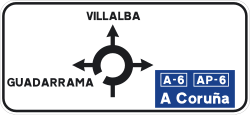
Get ready for the roundabout with the S-200 pre-signaling traffic sign.
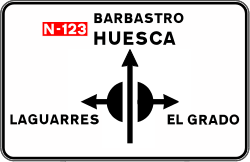
Advance Sign for a Split Roundabout from the Main Roadway (S-201)
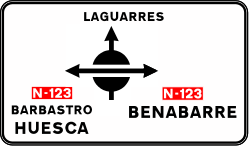
Prepare for a Split Roundabout with this Advance Warning Sign (S-202)
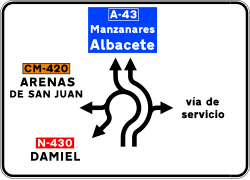
Prepare to choose your lane early with the Advance Roundabout Sign (S-203).
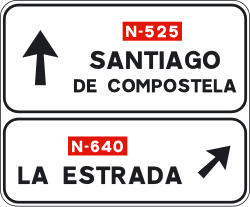
S-220: Get Ready for Directions to a Conventional Road Ahead
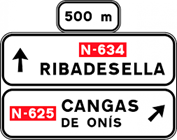
Advance Sign S-220a: Guiding You on Conventional and Multi-lane Roads
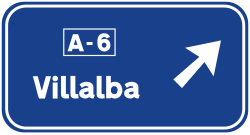
S-222: Get Ready for Highway or Motorway Directions Ahead
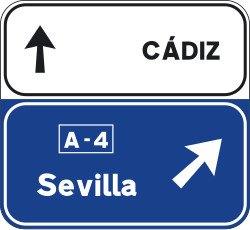
Prepare for highway routes with the S-222a pre-signalling directions road sign.
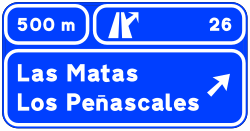
S-225: Pre-signaling Directions on Highways and Dual Carriageways
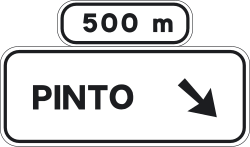
S-230: Pre-signaling for Conventional Roads Ahead
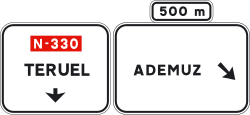
Navigate your route with the S-230a pre-signaling road sign on conventional roads.
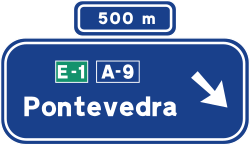
Prepare for your turn to a highway with this pre-signaling road sign on conventional routes.
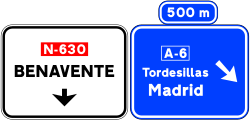
Understand the S-232a Sign: Pre-signaling Route Information on Conventional Roads
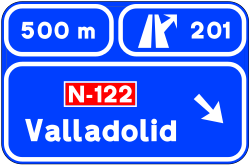
Understand the S-235 Sign: Pre-signaling on Highways for Any Road
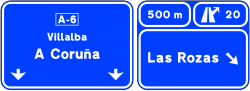
Pre-signaling on Highways: Guiding You to Your Exit or Direction
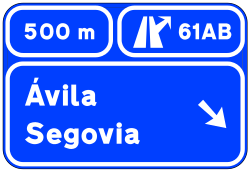
Get Ready for Two Close Exits Ahead with the S-242 Pre-signaling Sign
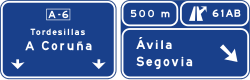
Prepare for two close highway exits with this crucial pre-signaling road sign.
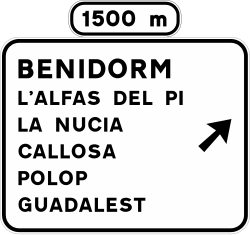
Understand the S-245 Supplementary Advance Sign for Towns on Conventional or Multi-lane Roads.
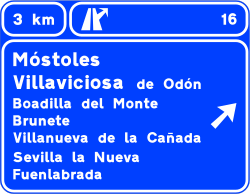
Navigate with Confidence: The Supplementary Advance Sign for Towns on Motorways.
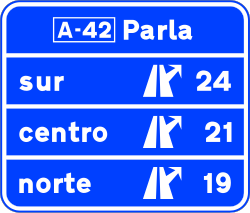
Prepare for Exits on Bypass Roads with This Advance Signage
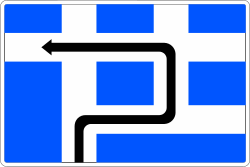
S-250: Get Ready to Choose Your Route with This Pre-Signaling Sign
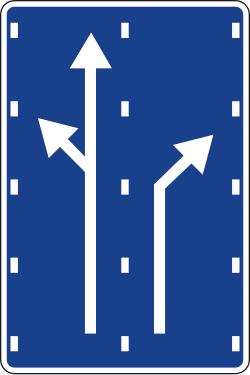
S-260 Lane Pre-Signaling: Choose Your Route Clearly and Safely
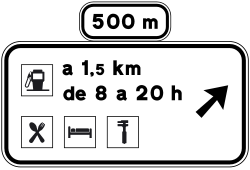
See the S-261 sign for upcoming service areas on conventional roads.
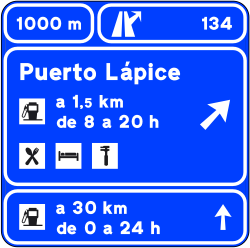
Prepare for a shared exit to an area or service area on highways with the S-263 pre-signaling sign.
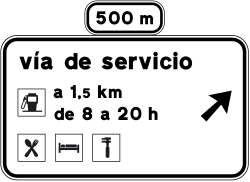
Get Ready for Service Road Access with the S-264 Pre-signaling Sign
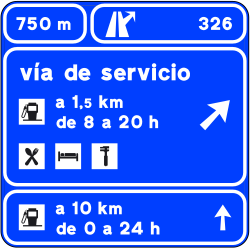
Get Ready for a Service Road Exit on the Highway with the S-266 Sign
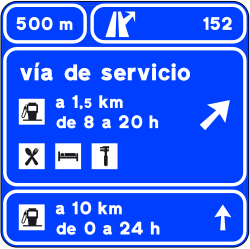
S-266a: Pre-signaling an Exclusive Service Road Exit on Highways
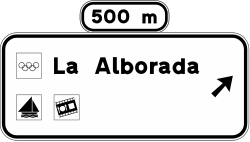
Advance Sign for Various Services: Navigate Your Route Effectively
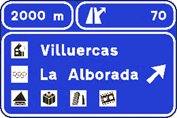
Advance Sign for Various Services on Motorway or Dual Carriageway
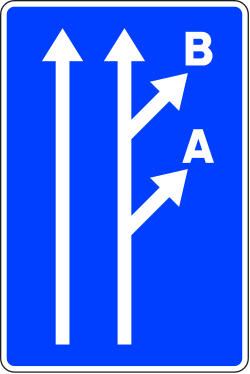
Prepare for two very close exits ahead with the S-270 pre-signaling road sign.
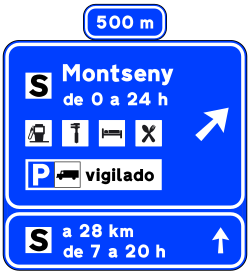
Prepare for service areas with the S-271 pre-signaling traffic sign.
Clear answers to common questions about the Pre-signaling Signs road sign category. Use this FAQ to review tricky rules, understand how these signs appear in exam scenarios, and remove confusion that often leads to mistakes in the Spanish driving theory exam in Spain.
The main purpose of pre-signaling signs is to provide drivers with advance information about upcoming road features such as junctions, exits, roundabouts, or service areas. This allows drivers to prepare, choose the correct lane early, and plan their route or manoeuvre safely without disrupting traffic flow.
The distance at which you see pre-signaling signs can vary depending on the type of road and the speed limit. On faster roads like highways, they are placed much further in advance to allow ample reaction time. On slower, conventional roads, they might be closer to the junction or exit. Always be alert to these signs as you approach potential decision points.
Most pre-signaling signs provide directional information, indicating which direction leads to a specific destination, road, or facility. However, some may also indicate upcoming hazards or road conditions that require preparation. The context of the sign, along with its symbols and text, will clarify its specific message.
Pre-signaling signs are placed much further in advance than regular directional signs. Their primary function is to give you ample time to process information and make a decision about your lane or route. Regular directional signs are usually closer to the actual junction or exit and serve as a final confirmation or immediate guidance.
While understanding the meaning and purpose of the signs is essential for passing your theory test and driving safely, you generally do not need to memorise the specific codes (like S-200). Focus on recognising the visual appearance of the signs, understanding the information they convey, and knowing how to react to them appropriately.
Dive deeper into specific road sign groups to test your knowledge and reinforce your understanding of Spanish traffic regulations. Start exploring each category to build a strong foundation for your DGT driving theory exam and ensure you drive safely on Spanish roads.
Browse Road Sign Categories