
This unit is your essential guide to understanding the core controls and mechanical aspects of motorcycles. We'll cover everything from how the throttle, clutch, and gears work together to the critical details of braking systems like ABS. Mastering these fundamentals is key to both passing your Spanish DGT theory exam for A, A1, and A2 licences and ensuring safe operation on the road.
Browse all lessons that make up Motorcycle Controls & Mechanics. Each lesson focuses on specific topics, learning objectives, and core concepts, helping you build essential knowledge and follow a clear, structured progression toward your study goals in Spain.
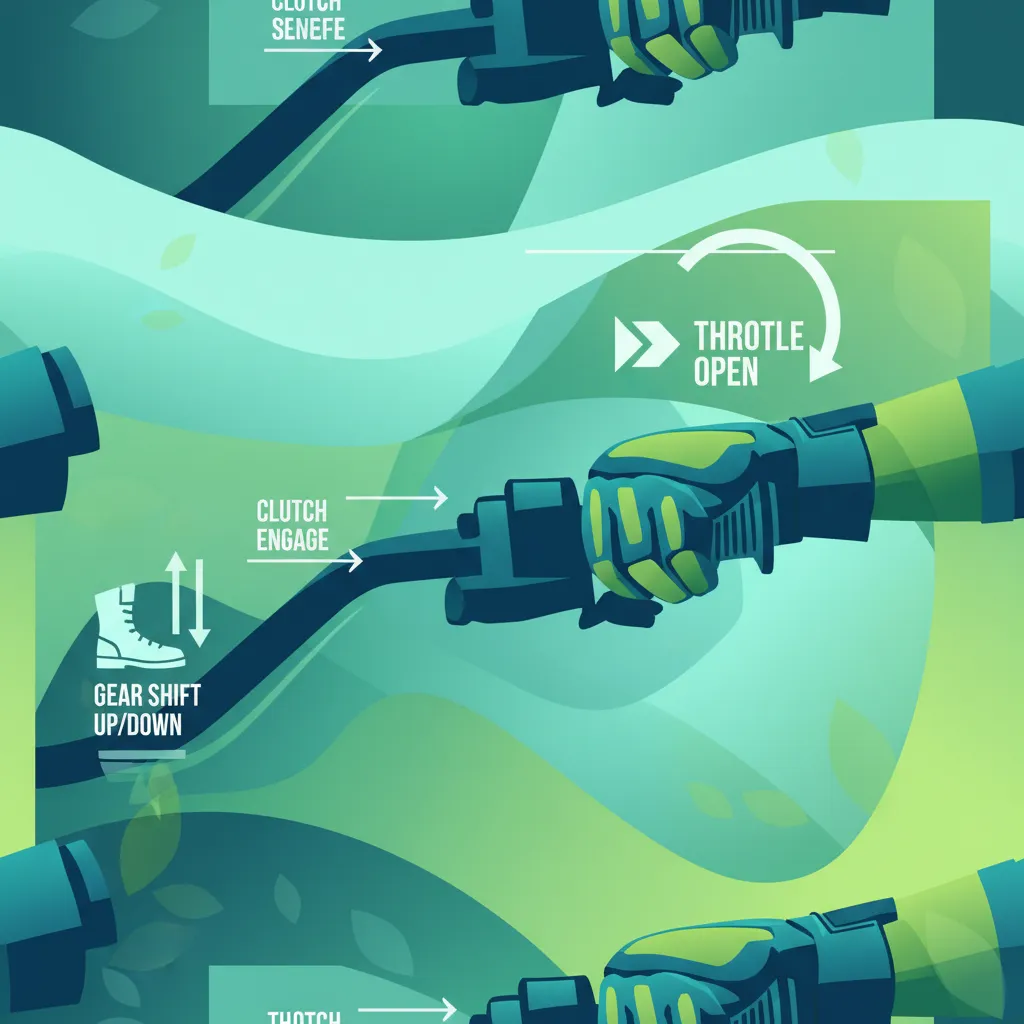
This lesson explains the synchronized operation of the throttle, clutch, and gear selector, detailing how power delivery is modulated. It introduces the typical gear shifting pattern, explains the purpose of neutral, and discusses appropriate rpm ranges for upshifts and downshifts. Emphasis is placed on rider coordination for smooth acceleration and effective engine braking.
This lesson covers the principles of anti-lock braking systems (ABS), describing how wheel slip detection prevents wheel lock-up. It explains combined braking operation, where front and rear brakes are applied in a calibrated ratio to maintain stability. Learners also explore how ABS enhances safety on low-traction surfaces and review DGT braking regulations.
This lesson introduces essential mechanical checks to ensure motorcycle reliability and safety. Topics include monitoring engine oil and coolant levels, chain lubrication procedures, and tire pressure verification. By establishing a routine maintenance schedule, riders can proactively address issues and comply with DGT guidelines.
This lesson explains the operation of a typical four-stroke motorcycle engine, describing each phase of the combustion cycle. It contrasts fuel injection systems with carburetors and details how fuel is mixed with air for efficient combustion. Topics also cover emissions control, cooling strategies, and oil circulation for a comprehensive overview of engine performance.
Explore high-intent keywords and long-tail search topics learners use when researching Motorcycle Controls & Mechanics. These terms reflect how people search for reliable study materials, structured explanations, and unit-level theory preparation support in Spain.
Find clear answers to the most common questions learners ask about Motorcycle Controls & Mechanics. Understand how the unit is organized, what learning goals it supports, and how it contributes to your study progression with structured explanations and practical guidance tailored for learners in Spain.
Anti-lock Braking System (ABS) prevents wheel lock-up during braking, allowing the rider to maintain steering control. Combined braking systems link either the front or rear brake lever to activate the other brake simultaneously, helping to distribute braking force more evenly and reduce stopping distances, especially for less experienced riders. Both systems are designed to enhance safety and are frequently tested in the DGT theory exam.
These three controls are fundamental to managing a motorcycle's speed and power. Proper coordination allows for smooth acceleration, deceleration, and gear changes, which is essential for maintaining balance, especially at low speeds, and for navigating traffic safely. Incorrect use can lead to stalling, jerky movements, or loss of control, all of which are critical safety considerations for the DGT exam.
You don't need to be a mechanic, but the DGT exam does require a basic understanding of engine fundamentals. This includes knowing how the engine provides power, the role of the fuel system, and basic maintenance awareness. This knowledge helps riders understand their motorcycle's capabilities and limitations, contributing to safer riding.
Knowing how your motorcycle's controls and mechanical systems work allows you to react appropriately to different riding conditions on Spanish roads. For example, understanding braking systems helps you respond better in emergencies, and awareness of engine performance aids in merging onto highways or navigating varied terrain. This practical knowledge enhances both safety and confidence.
Yes, the DGT theory exam for A, A1, and A2 licences includes questions focused on the operation of motorcycle controls, the function of braking systems (including ABS), and basic mechanical principles. This unit is designed to cover all the necessary topics to ensure you are well-prepared for these specific exam sections.
All included lessons
Lessons in Motorcycle Controls & Mechanics
See who benefits most from studying Motorcycle Controls & Mechanics. This overview explains how the unit supports different learning needs, what level of knowledge is helpful before starting, and how it fits into the overall study path in Spain.
This unit is designed for aspiring motorcycle riders preparing for their A, A1, or A2 licence theory exam in Spain. It's particularly beneficial for beginners who need a solid understanding of how their motorcycle operates, as well as for those who want to reinforce their knowledge of mechanical principles for the DGT test.

Begin your preparation for the Spanish DGT driving licence exam today. Browse our full curriculum to find guided courses, detailed lessons on traffic legislation, road signs, and essential driving practices. Start learning systematically and confidently.
Explore DGT Theory Courses & CurriculumExplore all units and lessons included in this driving theory course.
Begin your preparation for the Spanish DGT driving licence exam today. Browse our full curriculum to find guided courses, detailed lessons on traffic legislation, road signs, and essential driving practices. Start learning systematically and confidently.
Explore DGT Theory Courses & Curriculum