
Location signs are your road map, helping you pinpoint your exact position on the network. This group includes signs indicating town entrances, exits, provinces, and even kilometre markers on highways. Understanding these signs is crucial for both passing your theory exam and for safe, confident navigation in everyday driving.
An explanation of how Location Signs road signs apply in real traffic situations in Spain. Learn where these signs are typically placed, what drivers are expected to do when they appear, and how correct reactions help you stay safe, avoid fines, and succeed in your Spanish driving theory exam.
Location signs appear frequently throughout your driving journey, particularly as you enter or leave towns, villages, or administrative regions. You'll see them on motorways and conventional roads, often marking provincial or autonomous community boundaries. Kilometer markers are essential on highways, helping you track your progress and providing reference points for emergencies or navigation apps. Tunnel location signs are vital for informing you about specific conditions or obligations within tunnels, which can significantly affect driving behaviour. Recognizing these signs helps you understand where you are in relation to your destination and the broader road network, aiding in planning and adherence to any area-specific rules.
An overview of the key learning outcomes when studying the Location Signs road sign category. Understand the main concepts, sign meanings, and traffic situations covered here so you can recognise patterns, answer theory questions more confidently, and build a solid foundation for safe driving in Spain.
Location signs are critical for spatial awareness and navigation on Spanish roads. This collection prepares you to identify municipalities, provinces, and key markers like tunnel entries or kilometre posts, crucial for DGT theory test success. Learning these road signs enhances your driving knowledge and ability to anticipate local traffic rules.
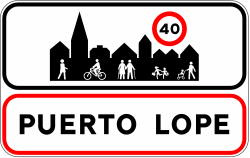
Understand the 'Entrance to Town' Sign (S-500) in Spain

The S-510 'Exit from Town' sign guides you out of populated areas.

The S-520 Sign: Navigating with Roadside Landmarks
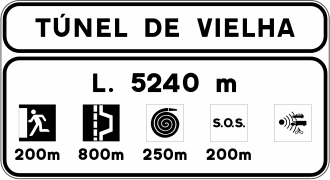
Learn to navigate safely with the Spanish Tunnel Location Sign (S-530)
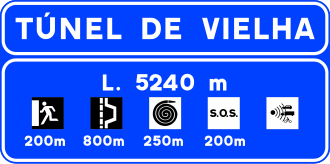
Understand the S-531 Tunnel Location Sign on Motorways with Safety Facility Information
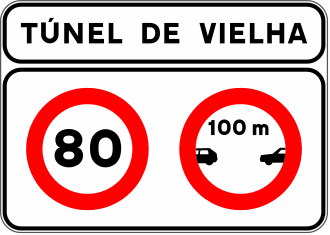
Navigate Safely with the S-532 Tunnel Location Sign on Conventional Roads
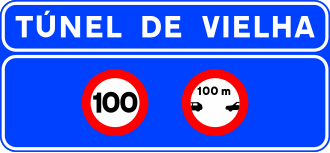
Understand the S-533 Tunnel Location Sign for Motorway Navigation in Spain
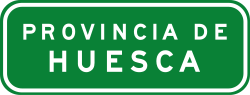
Understand the S-540 'Entrance to Province' Guidance Sign in Spain

The S-550 Sign: Indicating Your Entrance to an Autonomous Community
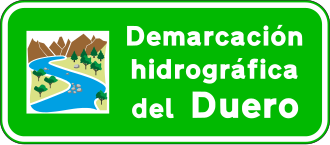
This is the Hydrographic Boundary Sign (S-551) guiding your route choices.
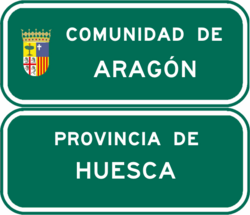
The S-560 Sign: Welcome to an Autonomous Community!
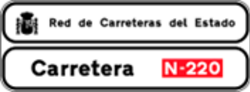
S-561: Navigating with Institutional Guidance Signs on Conventional and Multilane Roads
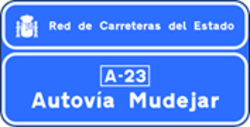
Understand the S-562 Institutional Sign on Spanish Motorways and Dual Carriageways
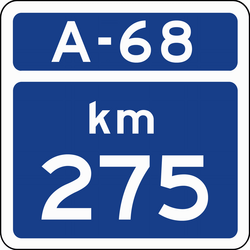
Understand the S-570 Kilometer Marker Sign on Highways and Dual Carriageways
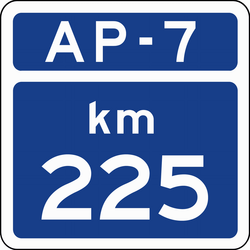
This sign marks your location on a Spanish toll highway.
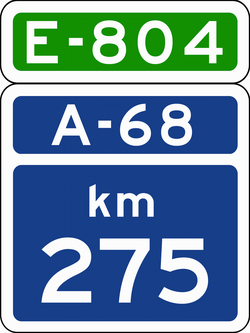
Understand the Kilometer Marker sign on European Routes
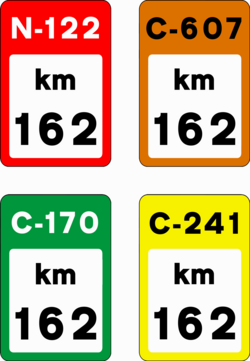
Understand the S-572 Kilometer Marker sign on conventional Spanish roads.
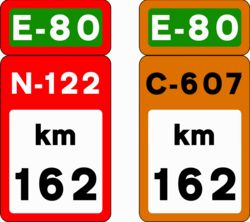
Understand the S-573 Kilometer Marker Sign on European Routes

Understand the S-574 Miriametric Marker Sign on Spanish Highways

What does the Miriametric Marker on a Conventional Road (S-574a) sign mean?

Understand the Miriametric Marker Sign on Spanish Toll Highways

This sign marks the 10-kilometre point on international routes, guiding your journey.

Decipher the S-574d: Your Ten-Kilometre Marker on International Motorways

Understand the Ten-Kilometre Marker for Toll Motorways on International Routes (S-574e)
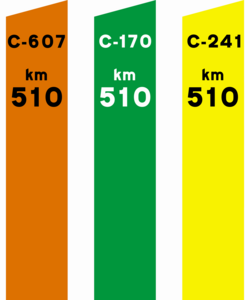
The S-575 Miriametric Marker: Your Guide on Spanish Roads
Clear answers to common questions about the Location Signs road sign category. Use this FAQ to review tricky rules, understand how these signs appear in exam scenarios, and remove confusion that often leads to mistakes in the Spanish driving theory exam in Spain.
Signs like 'Entrance to town' (S-500) mark the administrative boundary of a municipality or populated area. When you see this sign, it signifies that you are entering a zone where specific traffic rules, such as lower speed limits or different parking regulations, may apply. They are fundamental for drivers to orient themselves and adjust their driving behaviour accordingly.
Kilometre markers (like S-570 and S-572) are crucial for navigation and safety. They indicate the distance travelled along a specific route. In case of breakdown or an emergency, these markers provide an exact location reference for roadside assistance or emergency services. They also help you gauge your progress and plan your remaining journey.
Yes, tunnel location signs (S-530, S-531, S-532, S-533) are often tested in theory exams. These signs provide vital information about specific conditions, safety facilities, or traffic obligations within tunnels. Understanding what these signs mean can be critical for safe passage through tunnels, where visibility and traffic flow can be challenging. Ignoring them could lead to dangerous situations or fines.
A town entrance sign (S-500) marks the boundary of a smaller administrative unit, like a municipality or village, typically within a province. A province entrance sign (S-540) marks the boundary of a larger administrative region, like a province. Both indicate you are entering a new geographical and administrative area, but the 'province' sign signifies entry into a much larger territory with potentially different regional characteristics or regulations.
While the exact codes might not be on the exam, you absolutely need to understand the *purpose* of different kilometre and miriametric markers. The key is to recognise that they all serve to mark distance along the road. You should be able to identify them as markers on different road types (highway, conventional, toll) and understand their role in providing precise location information for navigation and emergencies. Focus on the concept of distance tracking rather than memorizing every specific variant.
Dive deeper into specific road sign groups to test your knowledge and reinforce your understanding of Spanish traffic regulations. Start exploring each category to build a strong foundation for your DGT driving theory exam and ensure you drive safely on Spanish roads.
Browse Road Sign Categories