
Safe speed refers to the constant evaluation and adjustment of your driving velocity based on immediate road, weather, and traffic circumstances. It's crucial to understand that simply adhering to the maximum legal speed limit isn't always safe; conditions often demand a slower, more cautious approach. This concept is fundamental for maintaining vehicle control, effectively responding to hazards, and is frequently tested in the Spanish DGT driving theory exam.
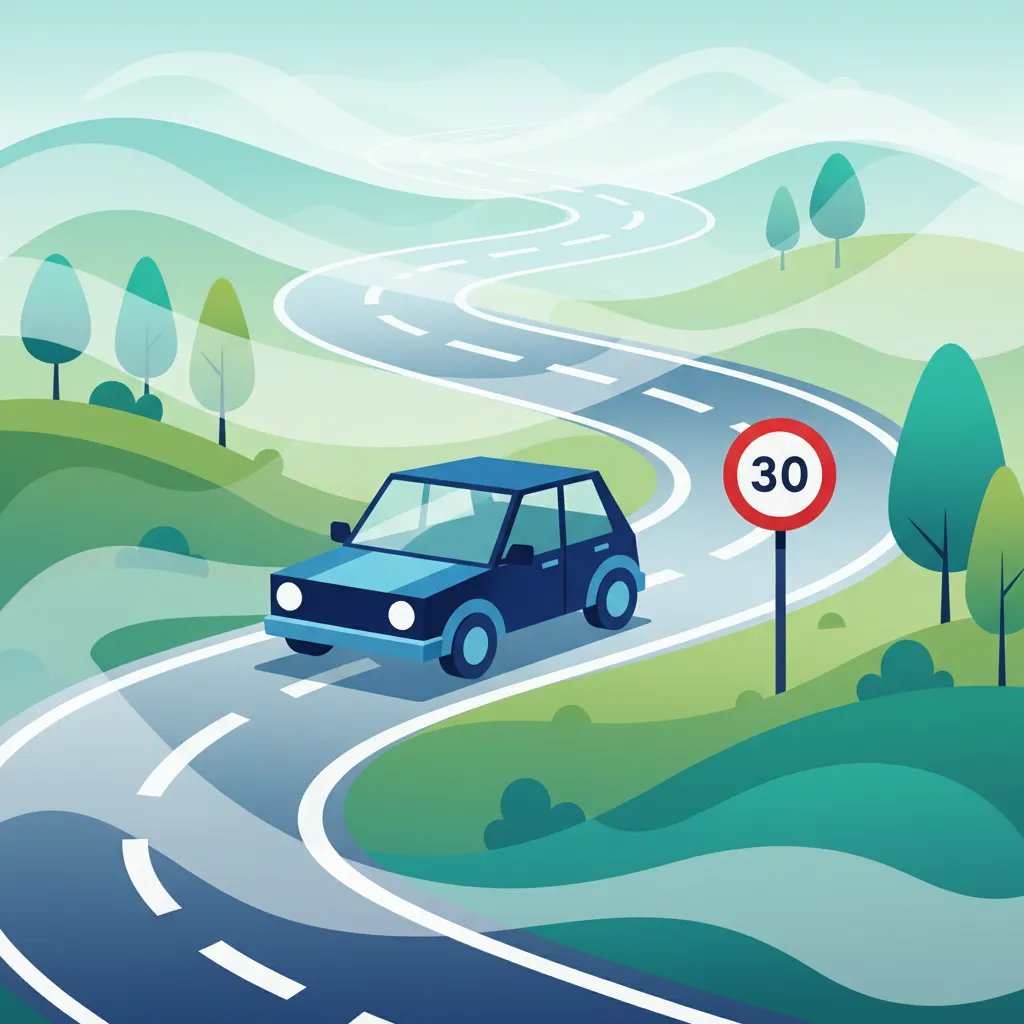
Theory topic content overview
Read the full theory topic guide for Safe Speed & Road Conditions with structured, easy-to-scan content built for learners in Spain. This detailed section explains the exact rule, meaning, traffic context, comparison points, and exam logic behind this Spanish driving theory topic so you can study faster, understand the concept more clearly, and avoid common interpretation mistakes on the theory test.
In Spanish driving theory, safe speed (or velocidad segura / velocidad adecuada) is the speed at which a driver can maintain full control of their vehicle, react effectively to unforeseen hazards, and stop safely within the visible distance ahead. It is a dynamic concept, constantly adjusted, and not simply the maximum legal speed limit (velocidad máxima) posted for a given road.
The Dirección General de Tráfico (DGT) emphasizes that while speed limits set the legal maximum under ideal conditions, drivers are legally obliged to adapt their speed to prevailing circumstances. This means that often, the safest speed will be lower than the posted limit.
Understanding and applying the principle of safe speed in Spain is fundamental for several reasons:
Choosing a safe speed is a continuous decision-making process based on a real-time assessment of various factors. It requires constant observation and anticipation:
This adaptive approach to speed ensures that your stopping distance is always less than the visible distance ahead, allowing you to avoid unexpected obstacles.
Numerous elements dictate the velocidad adecuada at any given moment on Spanish roads:
It is crucial for learners to differentiate between a legal maximum and a safe, adaptive choice, and how this relates to stopping capability.
Speed has a disproportionate effect on the total distance required to stop your vehicle. This total stopping distance (distancia de detención) is the sum of two components:
The DGT highlights that as speed increases, both reaction distance and braking distance increase, meaning your total stopping distance becomes significantly longer. This directly reduces your ability to stop safely, underlining the importance of safe speed.
Consider these common situations on Spanish roads where safe speed is paramount:
Learners frequently make errors by:
The DGT's core message regarding speed is one of responsibility and continuous assessment. Always prioritize safety over reaching the maximum permitted speed. Think: "Can I stop safely if something unexpected happens right now?" If the answer isn't a confident "yes," you are driving too fast for the conditions.
Remember, the safe speed is the one that grants you complete control, adequate stopping distance, and the ability to react to any situation on the road, ensuring safety for all road users in Spain.
The concept of safe speed in Spanish driving theory requires drivers to continuously evaluate road, weather, traffic, and vehicle conditions to choose an appropriate velocity, which may be well below the posted speed limit. The DGT emphasizes that driving at the maximum permitted speed is not automatically safe when conditions deteriorate, and can constitute dangerous speed even without exceeding the limit. Speed has an exponential effect on stopping distance, meaning both reaction distance and braking distance grow substantially as velocity increases, fundamentally reducing your ability to avoid hazards. Key factors demanding speed reduction include reduced visibility from weather or darkness, slippery or damaged road surfaces, heavy traffic density, complex road layouts, and vehicle load. For DGT exam success, learners must demonstrate judgment-based understanding of speed adaptation rather than simply memorizing speed limits.
A short set of high-value points that capture the most important ideas from this theory explanation.
Safe speed is the speed at which you can stop within your visible distance and maintain full vehicle control, regardless of the posted limit.
In Spain, driving at the legal speed limit can still be considered dangerous speed if conditions require you to go slower.
Speed affects stopping distance exponentially; doubling your speed roughly quadruples your braking distance.
Safe speed requires continuous observation and real-time adjustment based on visibility, road surface, traffic, and your vehicle.
The DGT mandates that drivers always be able to stop safely without endangering themselves or others, making adaptation a legal obligation.
Safe speed is a dynamic, continuous choice based on current conditions, not a static speed limit.
Total stopping distance = reaction distance (0.75-1 second reaction time) + braking distance (increases exponentially with speed).
Even at 20-30 km/h in poor conditions, you may be going too fast if you cannot stop in time for a hazard.
Reduce speed for: reduced visibility (fog, rain, night driving), poor road surface (wet, icy, gravel), dense traffic, sharp bends, steep descents, and heavy vehicle loads.
If you cannot confidently answer 'yes' to stopping safely, you are driving too fast for the conditions.
Confusing the speed limit with safe speed; assuming that driving below the limit always means driving safely.
Underestimating how weather conditions like rain, fog, or strong sunlight require significant speed reductions.
Failing to reduce speed enough in areas with pedestrians, cyclists, or children, even in urban zones.
Not accounting for increased stopping distance when the vehicle is heavily loaded or towing a trailer.
Poor hazard perception by not scanning far enough ahead, leaving insufficient distance to react and brake safely.
Start with a short, direct summary of Safe Speed & Road Conditions before reading the full explanation below.
Safe speed is the optimal velocity a driver chooses, not just the legal limit, by continuously evaluating current road, traffic, and environmental conditions. In Spain, DGT regulations require drivers to adapt their speed to ensure they can stop safely and respond to any unforeseen hazards. This means reducing speed for poor visibility, heavy traffic, adverse weather, or complex road layouts, prioritizing safety over reaching the maximum allowed speed.
Review the most important terms, rule signals, and traffic concepts linked to Safe Speed & Road Conditions.
Explore related theory topic pages connected to Safe Speed & Road Conditions and continue with the next useful rule explanation.
See the common search queries learners use when trying to understand Safe Speed & Road Conditions in Spain.

Continue your preparation by exploring specific Spanish driving theory topics in depth. Review road signs, understand priority rules, and master DGT traffic laws. This section provides the essential knowledge to pass your exam and drive safely across Spain.
Explore Spanish Driving Theory TopicsTheory topic content overview
A short set of high-value points that capture the most important ideas from this theory explanation.
Safe speed is the speed at which you can stop within your visible distance and maintain full vehicle control, regardless of the posted limit.
In Spain, driving at the legal speed limit can still be considered dangerous speed if conditions require you to go slower.
Speed affects stopping distance exponentially; doubling your speed roughly quadruples your braking distance.
Safe speed requires continuous observation and real-time adjustment based on visibility, road surface, traffic, and your vehicle.
The DGT mandates that drivers always be able to stop safely without endangering themselves or others, making adaptation a legal obligation.
Safe speed is a dynamic, continuous choice based on current conditions, not a static speed limit.
Total stopping distance = reaction distance (0.75-1 second reaction time) + braking distance (increases exponentially with speed).
Even at 20-30 km/h in poor conditions, you may be going too fast if you cannot stop in time for a hazard.
Reduce speed for: reduced visibility (fog, rain, night driving), poor road surface (wet, icy, gravel), dense traffic, sharp bends, steep descents, and heavy vehicle loads.
If you cannot confidently answer 'yes' to stopping safely, you are driving too fast for the conditions.
Confusing the speed limit with safe speed; assuming that driving below the limit always means driving safely.
Underestimating how weather conditions like rain, fog, or strong sunlight require significant speed reductions.
Failing to reduce speed enough in areas with pedestrians, cyclists, or children, even in urban zones.
Not accounting for increased stopping distance when the vehicle is heavily loaded or towing a trailer.
Poor hazard perception by not scanning far enough ahead, leaving insufficient distance to react and brake safely.
Start with a short, direct summary of Safe Speed & Road Conditions before reading the full explanation below.
Safe speed is the optimal velocity a driver chooses, not just the legal limit, by continuously evaluating current road, traffic, and environmental conditions. In Spain, DGT regulations require drivers to adapt their speed to ensure they can stop safely and respond to any unforeseen hazards. This means reducing speed for poor visibility, heavy traffic, adverse weather, or complex road layouts, prioritizing safety over reaching the maximum allowed speed.
Review the most important terms, rule signals, and traffic concepts linked to Safe Speed & Road Conditions.
Explore related theory topic pages connected to Safe Speed & Road Conditions and continue with the next useful rule explanation.
See the common search queries learners use when trying to understand Safe Speed & Road Conditions in Spain.
Continue your preparation by exploring specific Spanish driving theory topics in depth. Review road signs, understand priority rules, and master DGT traffic laws. This section provides the essential knowledge to pass your exam and drive safely across Spain.
Explore Spanish Driving Theory TopicsUse this exam-focused revision tip to understand how Safe Speed & Road Conditions is likely to appear in theory questions for learners in Spain. This section helps you identify the most testable part of the rule, avoid common traps, and remember the concept more effectively during Spanish driving theory exam preparation.
Many DGT exam questions test your judgment on safe speed in various scenarios, not just your knowledge of speed limits. Always consider factors like rain, fog, heavy traffic, and the presence of vulnerable road users. Remember, the safest speed is often below the maximum permitted limit when conditions are not ideal, and failing to adapt speed can lead to serious test errors.
Read direct answers to the most common learner questions about Safe Speed & Road Conditions in Spain. This FAQ focuses on rule confusion, practical meaning, comparison with similar concepts, and the exact uncertainties that appear most often in Spanish driving theory revision and exam preparation.
The speed limit is the maximum allowed under ideal conditions, while safe speed is the appropriate speed chosen by the driver based on actual road, traffic, and weather circumstances at any given moment, prioritizing safety.
The speed limit doesn't account for real-time variables like heavy rain, poor visibility, congested traffic, or unexpected road hazards, all of which require a reduced speed for safety, as per Spanish traffic regulations.
You must continuously assess factors such as visibility, road surface (wet, dry, icy), traffic density, presence of pedestrians or cyclists, road curves, your vehicle's condition, and your own physical and mental state.
Higher speeds significantly increase both your reaction distance and braking distance, leading to a much longer overall stopping distance. This reduces your ability to avoid collisions and is a key DGT concept.
Reduce speed when visibility is poor (fog, heavy rain), approaching intersections, passing vulnerable road users, in heavy traffic, on slippery roads, or when entering urban areas or construction zones. The DGT emphasizes adapting to changing conditions.
Yes, DGT exams frequently include questions on adapting your speed to various road scenarios, emphasizing decision-making for safety rather than just memorizing speed limits or driving at the maximum permitted speed.
Use our powerful search functionality to pinpoint specific Spanish DGT driving theory practice sets. Filter by road sign categories, traffic law topics, or question difficulty to build custom study sessions and reinforce your knowledge precisely where it matters for your official exam.