
Navigate Spanish city streets with confidence by mastering urban traffic signals and signage. This unit covers everything you need to know about traffic lights, pedestrian signals, and the various types of regulatory, warning, and informational signs you'll encounter daily on your moped.
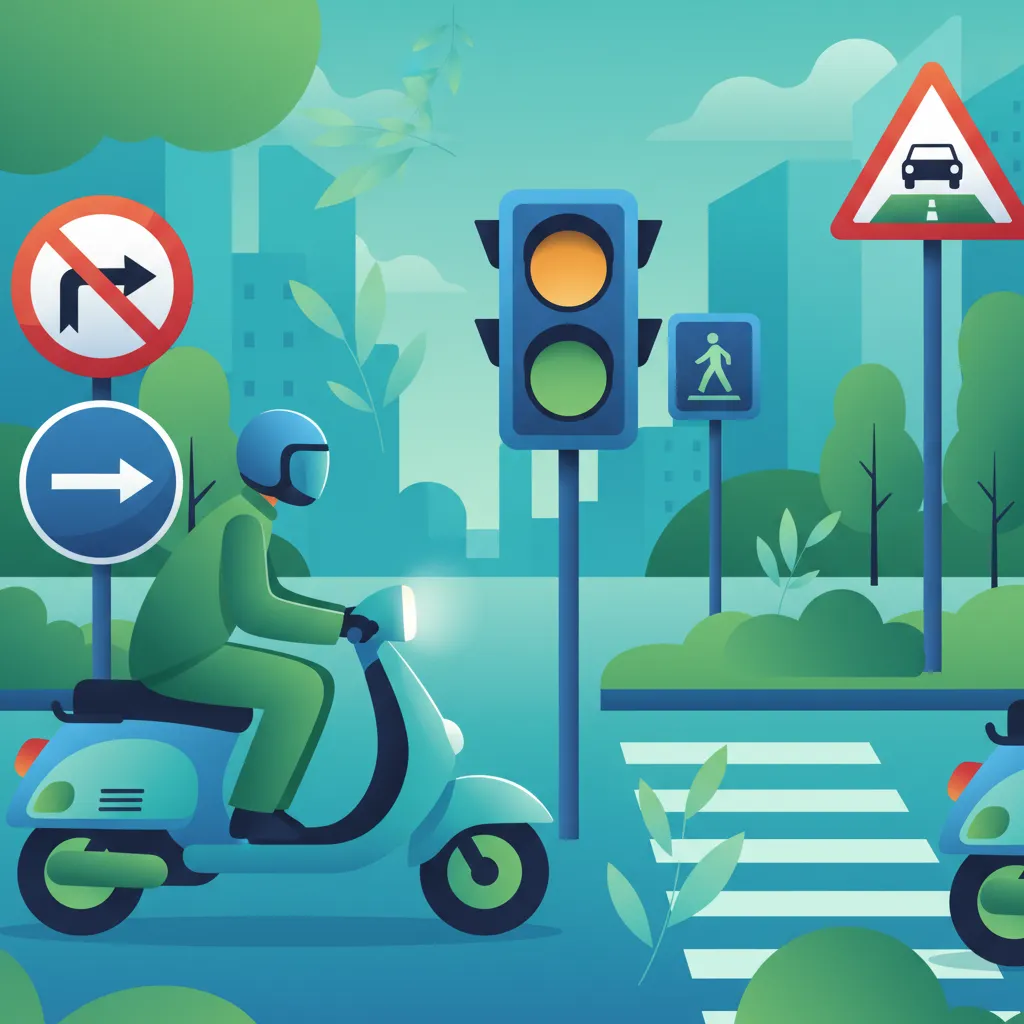
Browse all lessons that make up Urban Traffic Signals & Signage. Each lesson focuses on specific topics, learning objectives, and core concepts, helping you build essential knowledge and follow a clear, structured progression toward your study goals in Spain.
This lesson explains each phase of a Spanish traffic light, detailing the specific action required for red, amber, and green signals. It clarifies the meaning of a flashing amber light, which indicates yielding to other traffic or pedestrians, and the red-amber combination. Understanding these signals is fundamental for safely navigating controlled intersections and ensuring compliance with traffic flow rules established by the DGT.
This lesson introduces the regulatory signs that impose obligations or prohibitions on road users, with a focus on those pertinent to mopeds. It covers common signs such as speed limits, 'no entry', and mandatory turn directions, explaining how their shape and color indicate their function. Learners will be able to identify and correctly interpret these signs to navigate urban road networks legally and safely, avoiding potential fines.
This lesson covers warning and informational signs, which are crucial for anticipating road conditions. It explains how triangular warning signs alert riders to upcoming hazards like sharp curves, slippery surfaces, or pedestrian crossings. The content also describes rectangular informational signs that provide directions, distances, and other useful guidance, helping riders to plan their route and adjust their driving in advance.
Explore high-intent keywords and long-tail search topics learners use when researching Urban Traffic Signals & Signage. These terms reflect how people search for reliable study materials, structured explanations, and unit-level theory preparation support in Spain.
Find clear answers to the most common questions learners ask about Urban Traffic Signals & Signage. Understand how the unit is organized, what learning goals it supports, and how it contributes to your study progression with structured explanations and practical guidance tailored for learners in Spain.
In Spanish urban areas, you'll encounter three main types of signs: regulatory signs (like speed limits or no entry), warning signs (alerting you to hazards like curves or pedestrian crossings), and informational signs (providing guidance or directions). Understanding the shape, color, and symbol of each is key for safe riding.
Generally, traffic lights function the same for all vehicles, including mopeds, according to DGT regulations. However, you must always be aware of your specific position on the road and how your size and speed might affect interactions with larger vehicles. Pay close attention to any specific signals for cyclists or mopeds if present.
A flashing amber traffic light in Spain indicates caution. You should proceed with reduced speed and be prepared to stop, giving way to any traffic already within the intersection. Always scan for other vehicles, pedestrians, and cyclists before continuing.
Yes, riders must always yield to pedestrians on designated pedestrian crossings, regardless of whether there is a traffic light or a specific pedestrian signal. Slow down and be prepared to stop well in advance if pedestrians are present or about to cross.
Regulatory signs dictate mandatory actions or prohibitions for all traffic, including mopeds. These signs ensure order and safety, such as limiting speed, prohibiting certain maneuvers, or indicating one-way streets. Ignoring them can lead to fines and dangerous situations.
The best preparation involves studying each type of sign and signal covered in this unit thoroughly. Practice with example questions that specifically test your understanding of urban signage scenarios. Understanding the context in which each sign appears is crucial for correct interpretation.
All included lessons
Lessons in Urban Traffic Signals & Signage
See who benefits most from studying Urban Traffic Signals & Signage. This overview explains how the unit supports different learning needs, what level of knowledge is helpful before starting, and how it fits into the overall study path in Spain.
This unit is essential for all aspiring moped riders in Spain preparing for the Category AM theory exam. It's particularly beneficial for beginners who need a clear understanding of urban traffic control and for any rider who wants to refresh their knowledge of Spanish road signs and signals.

Begin your preparation for the Spanish DGT driving licence exam today. Browse our full curriculum to find guided courses, detailed lessons on traffic legislation, road signs, and essential driving practices. Start learning systematically and confidently.
Explore DGT Theory Courses & CurriculumExplore all units and lessons included in this driving theory course.
Begin your preparation for the Spanish DGT driving licence exam today. Browse our full curriculum to find guided courses, detailed lessons on traffic legislation, road signs, and essential driving practices. Start learning systematically and confidently.
Explore DGT Theory Courses & Curriculum