
This lesson prepares professional bus and coach drivers for the unique challenges of Austrian winter conditions. You will learn techniques for maintaining vehicle control on snow and ice, alongside the mandatory procedures for fitting and using snow chains (Schneeketten) on heavy vehicles.
Lesson content overview
Winter driving in Austria presents unique and significant challenges, particularly for drivers operating large passenger vehicles such as buses and coaches. The varied terrain, from busy city streets to steep alpine passes, combined with often severe winter weather, demands specific knowledge, specialized equipment, and refined driving skills. This lesson is tailored for professionals undertaking the Austrian Driving Theory Course for Bus & Coach Licence (Category D), focusing on ensuring the utmost safety and comfort for passengers when navigating snow-covered and icy roads.
Understanding the principles of traction, the correct application of snow chains, and adapted driving techniques are not merely advisable; they are legal necessities and fundamental responsibilities for Category D drivers. This comprehensive guide will prepare you to confidently and safely manage your vehicle under challenging Austrian winter conditions.
At the heart of safe winter driving is a thorough understanding of traction, which is the grip generated between your vehicle's tires and the road surface. This grip is what allows your bus or coach to accelerate, decelerate, and change direction effectively. On dry asphalt, tires typically have a high level of static traction, meaning they roll without slipping. However, snow and ice dramatically alter this fundamental relationship.
The coefficient of friction (μ) is a scientific measure that quantifies the level of grip available. It's the ratio of the force resisting movement (friction) to the force pressing the two surfaces together (the vehicle's weight). On dry asphalt, the coefficient of friction is relatively high, typically between 0.7 and 0.8, allowing for strong grip and responsive control. When the road is wet, this drops to around 0.5.
The ratio of the frictional force resisting motion to the normal force pressing surfaces together. A higher μ indicates more grip, while a lower μ signifies reduced grip.
On snow-covered roads, the coefficient of friction can plummet to approximately 0.3, and on ice, it can be as low as 0.1. This severe reduction directly translates to longer stopping distances, reduced cornering ability, and a much higher risk of skidding. For a heavy vehicle like a bus, the implications of reduced friction are even more profound due to its greater mass and momentum. Drivers must adjust their following distances proportionally to this reduction in grip.
Drivers must strive to maintain static traction, where the tires are rolling without slipping, as this provides maximum control over the vehicle. When tires begin to slip, control transitions to kinetic traction, which offers significantly less grip and is indicative of a loss of control, often leading to a skid. The goal in winter driving is to avoid any sudden control inputs that could cause the tires to lose static traction and begin to slide.
Common mistakes on slippery surfaces include harsh braking, abrupt steering, or rapid acceleration. Each of these actions can easily overcome the limited static friction available, causing the wheels to spin or lock and the vehicle to lose stability.
Given the challenging winter conditions, especially on Austria's alpine routes, snow chains (Schneeketten) are a critical piece of safety equipment, often legally required. These are metal links or cables that are fitted around the tires to significantly increase the effective tread depth and surface area contacting the snow or ice, thereby enhancing the coefficient of friction.
Several types of snow chains exist, including the traditional ladder-type, diamond-pattern chains, and modern cable-type chains. For use in Austria, snow chains must meet specific national technical standards, known as ÖNORM, most commonly ÖNORM S 4386 or S 4370. This certification guarantees a minimum level of strength, performance, and compatibility with vehicle and tire types. Using non-approved chains is not only unsafe but also illegal and can lead to penalties.
Austrian standardization body that sets technical specifications and quality standards for various products, including snow chains. Chains must be ÖNORM-approved for legal use in Austria.
Correct installation of snow chains is paramount for their effectiveness. Chains must always be fitted to the drive wheels – the wheels that receive power from the engine and propel the vehicle. For most Category D buses and coaches, which are typically rear-engine and rear-wheel drive, this means chains must be installed on the rear axle only. Fitting chains to non-drive wheels offers minimal benefit for propulsion and braking and may even be illegal depending on specific regulations.
Incorrectly fitting snow chains to the wrong axle (e.g., front wheels on a rear-wheel-drive bus) will not provide the intended traction benefit and could still result in penalties in mandatory chain zones.
Austrian traffic regulations, particularly the Straßenverkehrsordnung (StVO) §38 Abs.1 and specific Alpine Road Ordinances, mandate the use of snow chains on designated road sections during winter conditions. These "chain-required zones" (Kettenpflicht) are clearly indicated by roadside signs.
Upon encountering this sign, drivers must stop their vehicle safely before the zone, fit the approved snow chains to their drive wheels, and then proceed with caution. Failure to comply is a punishable offense, carrying fines and potential penalty points, and critically endangers passengers and other road users. Chains must be kept onboard the vehicle during winter months, even if not immediately required.
Fitting snow chains, especially on a large vehicle, requires practice and attention to detail. It is advisable to practice fitting chains in a safe, controlled environment before encountering real-world conditions.
Stop Safely: Pull over in a safe, level area before entering the mandatory chain zone. Engage the parking brake, switch off the engine, and put on reflective safety vests for visibility.
Prepare Chains: Lay out the chains on the ground to ensure they are not tangled. Identify the inner and outer hooks/fasteners.
Initial Placement: Drape the chain over the top of the drive wheel. Some chains have a flexible cable that you guide behind the tire, bringing the ends together at the top.
Connect Inner Hook: Connect the inner loop or hook, ensuring the chain is centered on the tire.
Connect Outer Components: Connect the outer links or tensioning devices according to the manufacturer's instructions.
Drive Forward Slightly: Drive the bus forward by about half a wheel rotation (a few metres) to allow the chain to fully settle around the tire.
Re-tension and Secure: Re-tension the chain using the provided tensioning system. Chains must be snug against the tire but not excessively tight. Check that all links are properly seated and secure. Repeat for the other drive wheel.
Check After Driving: After driving a short distance (e.g., 500 metres) at low speed, stop and re-check the tension of both chains. Chains can loosen slightly as they settle.
Driving a bus or coach on low-friction surfaces demands a highly adaptive and gentle approach. The objective is always to maintain control and ensure passenger safety and comfort by avoiding any sudden movements that could upset the vehicle's stability.
On snow or ice, even moderate throttle application can easily cause the drive wheels to spin, leading to a loss of traction and momentum.
Braking on snow and ice requires significant anticipation and a delicate touch. Braking distances increase dramatically, sometimes by a factor of three or more compared to dry conditions.
When braking on ice with ABS, you might feel a pulsating in the brake pedal or hear a grinding noise. This is normal and indicates the system is working. Maintain steady pressure.
Rapid steering inputs are a primary cause of skids on slippery roads, especially for high-center-of-gravity vehicles like buses.
This is one of the most critical adjustments for winter driving. The standard "two-second rule" for following distance on dry roads is insufficient for snow and ice.
While speed limits define the maximum permissible speed, the "appropriate speed" is dictated by the current road and weather conditions.
Compliance with Austrian traffic law regarding winter equipment is not only a safety measure but a legal obligation with significant consequences for non-compliance.
As previously discussed, specific road sections, particularly in mountainous regions, are designated as mandatory snow chain zones. These zones are clearly marked by the circular blue sign with a white snow chain symbol, often accompanied by the phrase "Kettenpflicht" (chain duty).
Even if the road appears clear when you approach a "Kettenpflicht" sign, you are still legally required to fit chains if the sign is present and road conditions warrant it (e.g., active snowfall, icy patches).
Failing to fit snow chains where mandated can lead to:
Just as important as knowing when to fit chains is knowing when to remove them. Driving with snow chains on dry asphalt or surfaces that do not require them is:
Chains must be removed immediately after exiting a mandatory chain zone or when road conditions no longer necessitate their use. Designated chain removal areas are often provided.
Operating a Category D vehicle in winter conditions comes with unique challenges compared to driving a standard car.
Buses and coaches are significantly heavier than cars, which translates to:
The higher center of gravity of a bus makes it more susceptible to roll-over accidents, especially during sharp turns or sudden evasive maneuvers on low-friction surfaces. Smooth, controlled steering is paramount.
As a professional Category D driver, passenger comfort and safety are your primary responsibilities.
Most large buses and coaches are rear-wheel drive. This means:
Even with careful preparation and adapted driving, winter roads can present unexpected hazards.
Black ice is a particularly insidious hazard. It's a thin, transparent layer of ice that forms on the road surface, often appearing as wet asphalt. It's difficult to see, especially at night or in shaded areas.
If your bus begins to skid, the key is to remain calm and react gently.
In an emergency, you may have no choice but to brake firmly.
Driving a bus or coach in Austrian winter conditions requires a high level of preparedness, skill, and adherence to specific legal requirements. By understanding the reduced friction on snow and ice, mastering the installation and use of ÖNORM-approved snow chains, and adopting gentle, anticipatory driving techniques, you significantly enhance the safety of your passengers and your vehicle.
Always prioritize safety over speed, and remember that adaptability to changing conditions is your greatest asset. Regular practice of chain fitting and a keen awareness of specific Austrian winter driving regulations will make you a more confident, competent, and professional Category D driver, ready to navigate the country's beautiful, yet challenging, winter landscapes.
This lesson addresses the critical knowledge Category D drivers need for Austrian winter conditions, covering the physics of reduced traction on snow and ice where friction coefficients plummet to 0.3 and 0.1 respectively. It establishes the legal requirement under StVO §38 Abs.1 for ÖNORM-approved snow chains on drive wheels within designated Kettenpflicht zones, complete with a detailed fitting procedure. The lesson emphasizes that maintaining static traction through gentle, anticipatory driving inputs is essential—sudden control movements cause skids. Key exam-relevant points include chain placement rules for rear-wheel-drive buses, the four-to-six second following distance requirement, ABS limitations on ice, and black ice recognition and response.
A short set of high-value points that capture the most important learning from this lesson.
Coefficient of friction drops dramatically on snow (μ ≈ 0.3) and ice (μ ≈ 0.1) compared to dry asphalt (μ ≈ 0.7–0.8), requiring proportional adjustments to following distance and speed
Snow chains must be ÖNORM-approved (S 4386 or S 4370) and fitted only to drive wheels—in most buses, the rear axle
Chain-required zones (Kettenpflicht) are legally mandated under StVO §38 Abs.1, indicated by specific road signs, and non-compliance carries fines and penalty points
All vehicle control inputs—steering, braking, and acceleration—must be gentle and progressive to maintain static traction and prevent skids
ABS prevents wheel lock-up on ice but does not shorten stopping distances; do not pump brakes on ABS-equipped vehicles
Explore all units and lessons included in this driving theory course.
On rear-wheel-drive buses, chains go on the rear drive wheels only—fitting them to front wheels provides no traction benefit
Friction coefficient values: dry asphalt 0.7–0.8, wet road 0.5, snow 0.3, ice 0.1
Chain-fitting procedure: stop safely → prepare → drape over wheel → connect inner hook → connect outer components → drive forward half rotation → re-tension → check after 500 metres
Following distance on snow/ice should extend to 4–6 seconds minimum, not the standard 2-second rule
Black ice appears as wet-look patches on bridges, overpasses, and shaded areas; response is to ease off accelerator and avoid braking
Fitting snow chains to non-drive wheels on a rear-wheel-drive bus, which provides no propulsion benefit but still results in penalties if stopped in a Kettenpflicht zone
Applying sudden braking, steering, or acceleration on slippery surfaces, which overwhelms static traction and causes skids
Believing ABS automatically provides shorter stopping distances on ice—ABS maintains steering control but stopping distances remain significantly longer
Continuing to drive with chains fitted after exiting a chain zone, which damages tires, chains, and suspension and may be illegal
Starting in first gear on ice when a higher gear would reduce wheel torque and make pulling away easier
Lesson content overview
A short set of high-value points that capture the most important learning from this lesson.
Coefficient of friction drops dramatically on snow (μ ≈ 0.3) and ice (μ ≈ 0.1) compared to dry asphalt (μ ≈ 0.7–0.8), requiring proportional adjustments to following distance and speed
Snow chains must be ÖNORM-approved (S 4386 or S 4370) and fitted only to drive wheels—in most buses, the rear axle
Chain-required zones (Kettenpflicht) are legally mandated under StVO §38 Abs.1, indicated by specific road signs, and non-compliance carries fines and penalty points
All vehicle control inputs—steering, braking, and acceleration—must be gentle and progressive to maintain static traction and prevent skids
ABS prevents wheel lock-up on ice but does not shorten stopping distances; do not pump brakes on ABS-equipped vehicles
Explore all units and lessons included in this driving theory course.
On rear-wheel-drive buses, chains go on the rear drive wheels only—fitting them to front wheels provides no traction benefit
Friction coefficient values: dry asphalt 0.7–0.8, wet road 0.5, snow 0.3, ice 0.1
Chain-fitting procedure: stop safely → prepare → drape over wheel → connect inner hook → connect outer components → drive forward half rotation → re-tension → check after 500 metres
Following distance on snow/ice should extend to 4–6 seconds minimum, not the standard 2-second rule
Black ice appears as wet-look patches on bridges, overpasses, and shaded areas; response is to ease off accelerator and avoid braking
Fitting snow chains to non-drive wheels on a rear-wheel-drive bus, which provides no propulsion benefit but still results in penalties if stopped in a Kettenpflicht zone
Applying sudden braking, steering, or acceleration on slippery surfaces, which overwhelms static traction and causes skids
Believing ABS automatically provides shorter stopping distances on ice—ABS maintains steering control but stopping distances remain significantly longer
Continuing to drive with chains fitted after exiting a chain zone, which damages tires, chains, and suspension and may be illegal
Starting in first gear on ice when a higher gear would reduce wheel torque and make pulling away easier
Explore search topics learners often look for when studying Austrian Winter Driving: Snow, Ice and Use of Snow Chains. These topics reflect common questions about road rules, driving situations, safety guidance, and lesson level theory preparation for learners in Austria.
Browse additional driving theory lessons that cover connected traffic rules, road signs, and common driving situations related to this topic. Improve your understanding of how different rules interact across everyday traffic scenarios.
Learn the essential steps and legal requirements for fitting snow chains (Schneeketten) to your bus or coach in Austria. This lesson covers identifying drive wheels, ÖNORM standards, and safe installation techniques for winter driving.

Rural Austrian roads present unique challenges, including lack of markings, tight spaces, and slow-moving agricultural vehicles. This lesson teaches how to read the road ahead, anticipate hazards around blind bends, and use passing places effectively when meeting other large vehicles. It emphasizes adjusting speed to suit the limited visibility and variable road conditions.
High-speed driving in a large vehicle requires excellent lane discipline and forward planning. This lesson covers Austrian speed limits for buses, rules for joining and leaving the motorway, safe overtaking procedures, and maintaining appropriate following distances. The critical importance of forming an emergency corridor ('Rettungsgasse') in traffic jams is also a key topic.
Properly managed luggage is crucial for safety and passenger flow. This lesson covers procedures for stowing items in underfloor lockers on coaches and managing larger items like prams or winter sports equipment inside the vehicle. It emphasizes the legal requirement to keep gangways and emergency exits clear and provides guidance on assisting passengers with their belongings.

Driving a heavy vehicle in the Alps requires specific skills to manage its energy and momentum. This lesson focuses on using lower gears and auxiliary braking systems (retarder/engine brake) to control speed on long descents and prevent brake overheating. It also covers the correct line and technique for navigating tight hairpin turns safely and efficiently.

This lesson focuses on adapting driving techniques for hazardous weather conditions. It details the legal requirements for winter tires and the proper use of snow chains in Austria. Additionally, it covers safe driving practices in low visibility conditions like fog, such as reducing speed and using appropriate lights.

This lesson provides a clear breakdown of the different Category D licences in Austria. It explains the specific rights and limitations associated with each, including the maximum number of passengers for D1 (minibus) and D (bus/coach). Furthermore, it details the rules for combination vehicles, covering trailers (D1E, DE) and their specific operational requirements.
This lesson provides practical information on the use of winter equipment for AM vehicles. It explains the legal requirements for winter tires and snow chains in Austria under specific conditions. The content includes guidance on how to correctly install and remove snow chains to ensure they are effective and safe.

Transporting children carries the highest level of responsibility. This lesson covers the specific Austrian rules for school buses, including the use of warning signs and lights. It focuses on developing a mindset of extreme caution, anticipating that children may run into the road unexpectedly, and managing the chaotic traffic environment often found around schools during drop-off and pick-up times.
This lesson outlines the essential daily checks that form the foundation of safe passenger transport. It provides a step-by-step guide to inspecting key components such as tyres, brakes, lights, steering, and emergency equipment. You will learn how to identify potential defects and understand the procedures for reporting issues to ensure the vehicle is roadworthy.
Adverse weather demands a significant adjustment in driving technique. This lesson explains the dangers of aquaplaning in heavy rain, the need for drastically reduced speed in fog, and how to anticipate and correct for the effects of strong crosswinds on a high-sided vehicle. It reinforces the importance of increasing following distances and using appropriate lighting to see and be seen.
Explore the specific challenges of driving buses and coaches in Austrian alpine winter conditions, including black ice, reduced traction on snow and ice, and advanced techniques for safe cornering and braking.
This lesson focuses on the specialized skills required for navigating alpine roads safely. It covers techniques for managing steep gradients, such as using a lower gear for engine braking on descents, and how to safely negotiate hairpin turns. The content stresses the importance of being prepared for rapid weather changes and understanding the effects of altitude on both the driver and the vehicle's performance.
Driving a heavy vehicle in the Alps requires specific skills to manage its energy and momentum. This lesson focuses on using lower gears and auxiliary braking systems (retarder/engine brake) to control speed on long descents and prevent brake overheating. It also covers the correct line and technique for navigating tight hairpin turns safely and efficiently.
Rural Austrian roads present unique challenges, including lack of markings, tight spaces, and slow-moving agricultural vehicles. This lesson teaches how to read the road ahead, anticipate hazards around blind bends, and use passing places effectively when meeting other large vehicles. It emphasizes adjusting speed to suit the limited visibility and variable road conditions.
This lesson equips drivers with the knowledge to handle a range of adverse weather conditions safely. It explains the risks of hydroplaning in heavy rain, reduced visibility in fog, and loss of traction on snow and ice, including the hidden danger of black ice. The content provides practical strategies for speed adaptation, correct use of lighting, and maintaining vehicle control, as well as specific considerations for night driving.
This lesson focuses on adapting driving techniques for hazardous weather conditions. It details the legal requirements for winter tires and the proper use of snow chains in Austria. Additionally, it covers safe driving practices in low visibility conditions like fog, such as reducing speed and using appropriate lights.
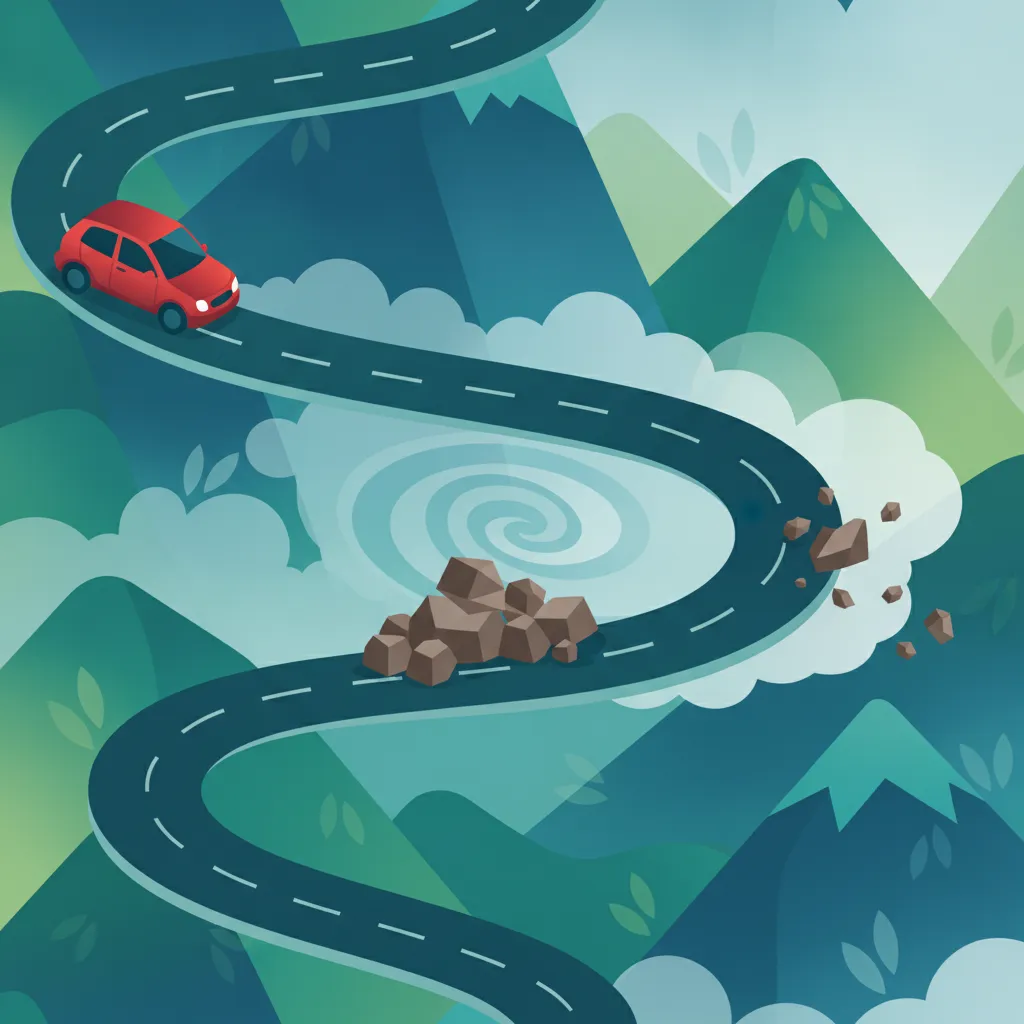
This lesson prepares riders for the specific conditions of Austria's mountain passes. It highlights hazards such as tight hairpin turns, potential for sudden weather changes, rockfall, and variable road surfaces. Awareness of these unique challenges allows riders to anticipate risks and adapt their technique for safe and enjoyable alpine touring.

This lesson prepares drivers for the demanding conditions of Alpine driving. It covers techniques for managing speed on steep up-hill and down-hill sections, being prepared for sudden weather changes, and following safety protocols inside mountain tunnels. This specialized knowledge is essential for operating safely in mountainous terrain.

This lesson consolidates knowledge by applying it to common everyday driving situations. It offers practical tips on topics like smooth driving for fuel efficiency, managing distractions in the cabin, and maintaining courtesy in frustrating traffic. The content reinforces defensive driving principles as a constant habit, helping learners transition from theoretical knowledge to confident, safe, and responsible real-world driving.
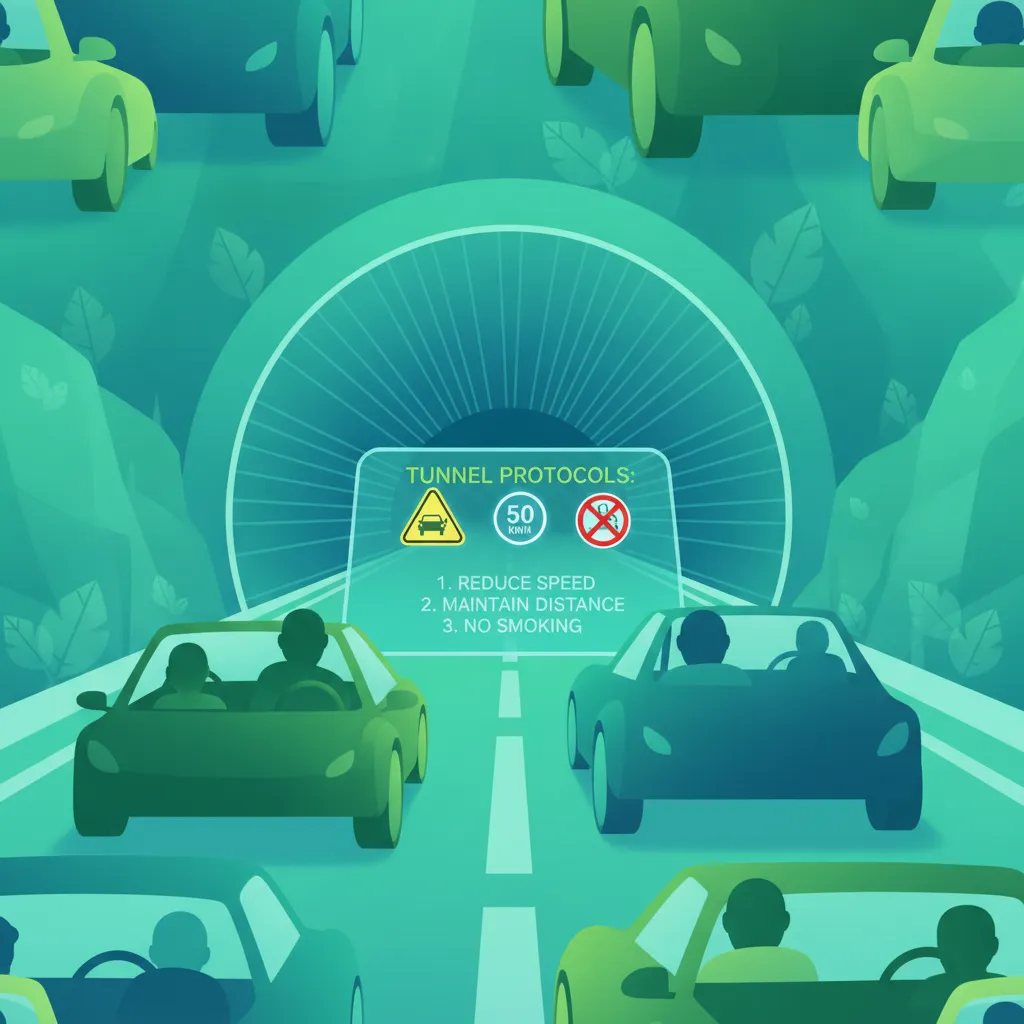
Austria's mountainous terrain means drivers will frequently encounter long tunnels. This lesson details the specific regulations, such as turning on lights and maintaining distance, as well as how to react to tunnel-specific warning signs and signals. Crucially, it covers the correct emergency procedures to follow in the event of a fire, accident, or breakdown inside a tunnel.

This lesson introduces the proactive mindset of defensive driving, which focuses on anticipating potential hazards rather than just reacting to them. It teaches techniques for systematic risk assessment, including scanning the road ahead, checking mirrors frequently, and being aware of the potential actions of other road users. By adopting these safe habits, drivers can create a buffer of safety around their vehicle and significantly reduce the likelihood of being involved in an accident.
Find clear answers to common questions learners have about Austrian Winter Driving: Snow, Ice and Use of Snow Chains. Learn how the lesson is structured, which driving theory objectives it supports, and how it fits into the overall learning path of units and curriculum progression in Austria. These explanations help you understand key concepts, lesson flow, and exam focused study goals.
You must use snow chains when the official 'Schneeketten vorgeschrieben' traffic sign is displayed. Even without the sign, you should consider using them if road conditions make travel impossible without them to ensure passenger safety.
Under Austrian law, if you are driving on routes where snow or ice is likely, your vehicle must be equipped with appropriate winter tyres. Carrying snow chains is often mandatory for heavy vehicles in alpine regions, and you must know how to fit them.
Braking distances increase significantly on snow and ice. As a bus driver, you must double or triple your usual following distance and use engine braking or retarders carefully to avoid locking the wheels, even with modern ABS systems.
Smoothness is key. Every input, including steering, accelerating, and braking, must be gentle and progressive to prevent the tyres from losing traction. Sudden movements often lead to skidding, which is difficult to correct with a large vehicle.
Refine your study plan by searching for specific Austrian driving theory practice sets. Pinpoint questions related to particular road rules, signs, or challenge levels, and begin practicing immediately to reinforce your knowledge and excel in your official exam with confidence. Get started with focused revision today.