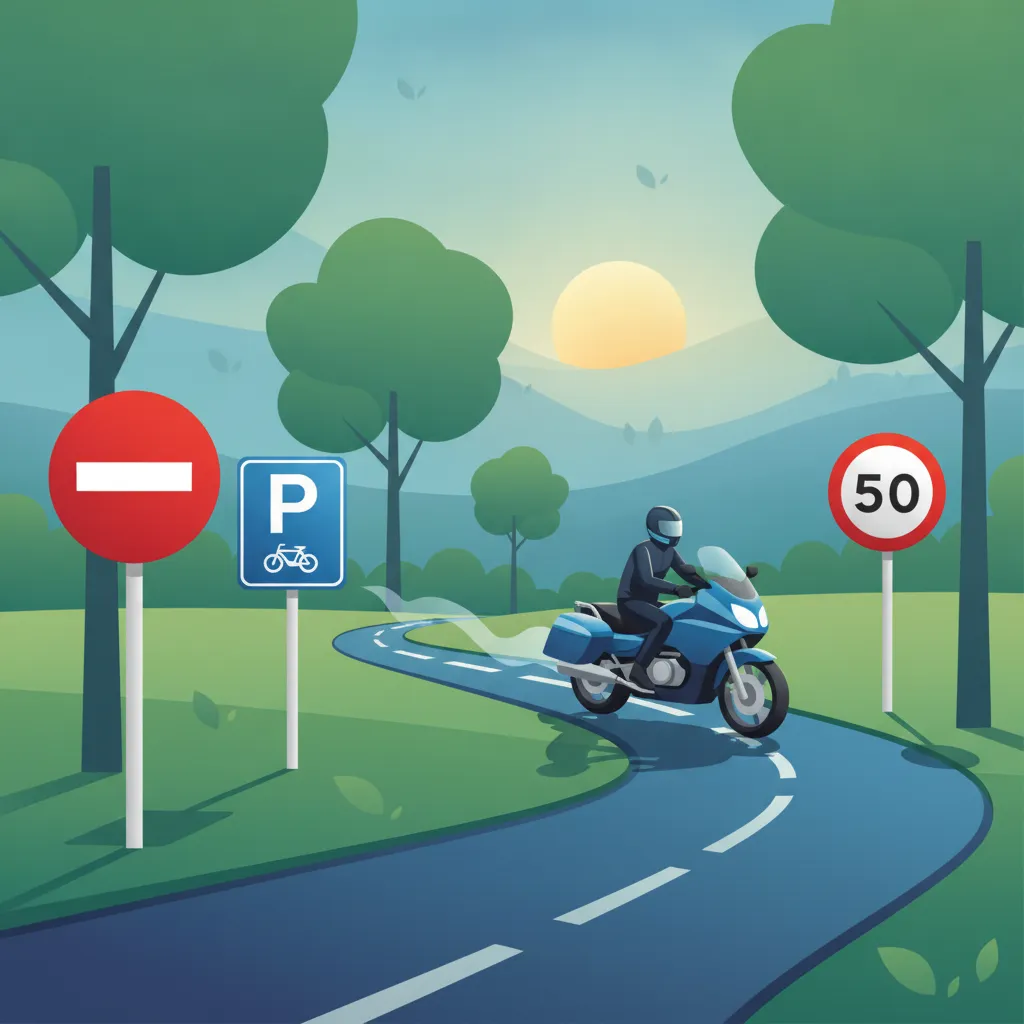
This lesson provides an in-depth look at the regulatory and informative road signs essential for every motorcyclist in Belgium. By mastering these symbols, you will improve your ability to navigate safely and pass the A, A1, and A2 theory exams. You will build upon your foundation of general road knowledge to interpret specific commands and information provided by Belgian road infrastructure.
Lesson content overview
Navigating Belgian roads safely and legally as a motorcyclist requires a profound understanding of traffic signs. These visual cues are critical communication tools, conveying regulations, warnings, and guidance essential for rider safety and compliance with traffic law. For motorcyclists, correctly identifying and interpreting these signs is not just about avoiding fines; it's about predicting road conditions, managing speed, choosing the correct lane, and making safe decisions that protect themselves and other road users.
This lesson of the Comprehensive Belgian Motorcycle Theory Course: Licence A, A1 & A2 will equip you with the knowledge to confidently interpret regulatory and informative road signs specifically relevant to motorcyclists in Belgium. We will delve into how these signs dictate speed limits, prohibit overtaking, indicate compulsory routes or turns, and convey other vital information, all while emphasizing the distinct shapes and colors that categorize them under Belgian traffic law. Mastering this understanding is fundamental for safe navigation, passing your theory exam, and becoming a responsible rider.
Belgian road signs are categorized by their distinct shapes and colors, which instantly convey their primary function and legal authority. Recognizing these categories is the first step towards accurate interpretation for any road user, especially motorcyclists who must make quick decisions in dynamic traffic environments.
Regulatory signs are the backbone of traffic control. They inform all road users, including motorcyclists, of mandatory actions they must perform or prohibitions they must not violate. Failure to comply with these signs constitutes a traffic offense, leading to potential fines, license points, or more severe legal consequences.
These signs are predominantly circular in shape.
Informative signs provide useful information to guide road users but generally do not impose legal obligations directly related to mandatory actions or prohibitions. They help with navigation, indicate facilities, or provide context about road conditions. While not regulatory, ignoring relevant informative signs can still lead to inefficient or unsafe travel, such as missing an exit or being unprepared for an upcoming change.
These signs are typically rectangular (or sometimes square).
For motorcyclists, understanding the difference between mandatory and prohibitory actions is paramount. Mandatory signs dictate what you must do, while prohibitory signs indicate what you must not do. Both categories carry legal weight and directly impact your riding strategy and safety.
Consistency in sign interpretation is a cornerstone of road safety. Every sign's shape, color, and symbol are standardized by Belgian law (primarily through the Royal Decree of 1 December 1975 on the general regulation of the police on road traffic and the use of public roads, known as RVV 1990), ensuring uniform understanding across the country.
Speed limit signs are among the most frequently encountered regulatory signs. They dictate the maximum permissible speed for all vehicles, including motorcycles, on a given road segment. Adhering to these limits is fundamental for road safety and legal compliance.
Speed limit signs are easily recognizable. They are circular with a distinctive red border, a white background, and a black number indicating the maximum speed in km/h. They apply from the point where the sign is erected until an "end of speed limit" sign, another speed limit sign, or a junction where a different speed limit might apply.
For motorcyclists, a speed limit sign indicates the absolute maximum speed they may travel. Exceeding this limit is a direct violation of traffic law. It is crucial to adjust your speed not only to the posted limit but also to prevailing road, traffic, and weather conditions. A posted 90 km/h limit does not mean it's safe to ride at 90 km/h in heavy rain or dense fog.
A frequent misunderstanding is assuming the posted speed limit is a target speed that must always be met, or that it represents a minimum speed. In reality, it is a maximum. Another common error is failing to notice changes in speed limits, especially when transitioning between different road environments (e.g., entering a built-up area from a rural road, or exiting a motorway).
Overtaking maneuvers, especially on a motorcycle, require clear visibility and sufficient space. "No Overtaking" signs are critical regulatory tools designed to prevent dangerous situations where overtaking would be unsafe.
General "No Overtaking" signs (C23) are circular, with a red border, a white background, and depict two vehicles side-by-side, with the left vehicle (usually black) overtaking the right vehicle (usually red), crossed by a red diagonal bar.
When you encounter a "No Overtaking" sign, whether general (C23) or motorcycle-specific (C24), you must not attempt to overtake other vehicles until an "End of No Overtaking" sign (C29 or C31 for specific prohibitions, or C47 for general end of local prohibitions) is passed. This rule applies regardless of your speed or the perceived safety of the maneuver.
A common misunderstanding is believing that "No Overtaking" signs only apply to situations where you'd be exceeding the speed limit or that they don't apply if the vehicle in front is moving slowly. The prohibition is absolute. Another error is assuming it only applies to four-wheeled vehicles, ignoring motorcycle-specific signs like C24.
No overtaking zones are often implemented in conjunction with factors like:
Mandatory turn signs are crucial for regulating traffic flow and preventing dangerous maneuvers at intersections. They inform road users, including motorcyclists, that they must proceed in a specific direction.
Mandatory turn signs are blue circular signs with white arrows pointing in the required direction(s). These are part of the 'D' series of signs in Belgium, denoting mandatory instructions.
Mandatory turn signs can indicate various requirements:
For motorcyclists, these signs mean you must execute the indicated turn or proceed in the specified direction. Failure to do so can lead to driving against traffic, obstructing other vehicles, or entering a prohibited zone.
The primary rule is strict compliance. Even if your GPS indicates a different route or you prefer to go straight, a mandatory turn sign overrides your personal preference.
A common misunderstanding is to ignore mandatory turn signs, especially if there are no immediate visible hazards or if a rider assumes they are simply suggestions. This can lead to last-minute lane changes, confusion, and potential collisions with vehicles that are correctly following the signs.
Direction and lane usage signs are informative tools that guide motorcyclists to their destinations and help manage traffic flow by organizing vehicles into specific lanes.
Direction signs are generally rectangular. On motorways and main roads, they are typically blue with white lettering and arrows (F-series), indicating directions to towns, motorways, or important facilities. On local roads, they might be white with black lettering.
Lane usage signs often combine direction arrows with specific lane designations, sometimes using symbols to indicate which types of vehicles should use which lane.
While informative signs don't impose direct prohibitory laws, they are vital for effective lane discipline. If a sign indicates a lane is for "turning left only," you should not proceed straight from that lane. Ignoring these signs can lead to being in the wrong lane, having to cut across traffic, or missing your turn, all of which are risky for motorcyclists.
Certain areas or road segments may be restricted or entirely prohibited for motorcycles for safety, environmental, or other regulatory reasons. These restrictions are clearly indicated by specific regulatory signs.
The "Prohibited Entry for Motorcycles" sign (C5) is a circular sign with a red border, a white background, and a black motorcycle symbol crossed by a red diagonal bar. This sign is distinct from "No Entry" for all vehicles (C1), which is a red circle with a horizontal white bar.
When you encounter a C5 sign, it means that motorcycles are expressly forbidden from entering the road segment or area beyond the sign. This prohibition is absolute. You must find an alternative route.
A common misunderstanding is to assume that "No Entry for Motorcycles" applies only during specific hours or to certain types of motorcycles. Unless explicitly stated by additional signage (e.g., "7 AM - 7 PM"), the prohibition is generally permanent. Another error is believing that temporary entry (e.g., just for a short distance) is permissible. Any entry is a violation.
Just as regulations begin with signs, they also end. "End of Regulation" signs inform road users that a previously imposed restriction is no longer in effect.
Generic "End of Regulation" signs (like C47, "End of all local prohibitions") are circular with a white background and a single thick black diagonal line running from the upper right to the lower left. Specific "End of speed limit" (C49) or "End of no overtaking" (C29/C31/C33) signs are also common.
Upon passing an "End of Regulation" sign, the specific restriction it refers to (e.g., a speed limit, an overtaking ban, or a general prohibition) ceases to apply. You should then revert to the default traffic rules for that type of road or the next applicable signs. For instance, after an "End of 30 km/h" sign in a built-up area, the default 50 km/h limit resumes.
A frequent error is assuming that restrictions continue indefinitely, leading to unnecessary cautious riding, or conversely, assuming all restrictions end, even those not explicitly covered by the sign. Only the specific regulation indicated, or all local prohibitions not related to parking or stopping (for C47), are lifted.
While the general "No Overtaking" sign (C23) applies to all vehicles, Belgium also has a sign specifically targeting motorcycles.
This sign (C24), as discussed earlier, is a circular sign with a red border, white background, and a black motorcycle symbol crossed by a red diagonal. Its practical meaning is unambiguous: motorcyclists are forbidden from overtaking any other motorized vehicle in the area where this sign is posted. This rule typically applies to zones where motorcycle overtaking is deemed particularly risky due to road geometry, poor visibility, or specific local hazards (e.g., near schools or pedestrian crossings).
Road infrastructure sometimes includes dedicated lanes or paths for specific types of vehicles to improve traffic flow or enhance safety.
These are often rectangular signs, typically blue, with white symbols or arrows indicating the designated lane or path. While there isn't a universally common specific sign for a "motorcycle-only lane" in Belgium that acts as a standalone mandatory sign like for bicycles, the concept of mandatory lane usage is conveyed through various means. For example, a sign showing a bicycle indicates a mandatory path for cyclists and moped riders (D7), which motorcycles (A, A1, A2 licence holders) are generally not allowed to use.
When a lane or path is designated for a specific type of vehicle, other vehicle types are generally prohibited from using it. For motorcyclists, this means:
A common error is to ignore lane markings or signs, assuming all lanes are open to all vehicles. This can lead to riding in a bus lane, a bicycle path, or a lane designated for turning only when going straight. Such actions are illegal, disruptive, and dangerous.
In Belgium, road signs are legally binding instruments deriving their authority from the Royal Decree of 1 December 1975 (RVV 1990). Non-compliance with regulatory signs is a serious matter, subject to various penalties, which can include fines, points on your driving license, or even immediate disqualification in severe cases.
The rationale behind these regulations is primarily road safety. Speed limits are set to match road design, traffic volume, and potential hazards, directly influencing kinetic energy and stopping distances. No overtaking zones are strategically placed to prevent collisions in areas of poor visibility or high risk. Mandatory turn signs streamline traffic flow at intersections, reducing conflict points and promoting predictable behavior.
Even experienced riders can sometimes make errors in interpreting or complying with road signs. Being aware of these common pitfalls can help you avoid them.
While road signs provide clear directives, external factors often require riders to exercise judgment and adjust their behavior beyond the minimum compliance.
The relationship between correctly following road signs and ensuring motorcycle safety is direct and undeniable.
In essence, road signs are not arbitrary rules; they are carefully designed safety measures. For motorcyclists, whose exposure to injury in a crash is higher, strict adherence to these visual commands is a critical component of defensive riding and overall road safety.
To solidify your understanding, consider these common riding scenarios on Belgian roads:
C43 sign indicating 30 km/h as you approach a school. You must immediately reduce your speed to 30 km/h. After passing the school zone, you encounter a C49 sign. You can now resume the default urban speed limit of 50 km/h unless another C43 sign indicates a different limit.C24 sign, "No Overtaking for Motorcycles," just before a sharp bend. Despite the road ahead appearing clear for a moment, you must not attempt to overtake the car in front until you pass the corresponding "End of No Overtaking" sign.D3 sign, a blue circle with a white arrow pointing left, indicating a "Mandatory Left Turn." Even if your usual route goes straight, you are legally required to turn left at this intersection. You must position your motorcycle in the leftmost lane well in advance.C5 sign, "Prohibited Entry for Motorcycles," at the entrance to a narrow street. This means you cannot enter that street on your motorcycle and must find an alternative route, respecting the restriction for all motorcycles.These scenarios highlight the daily application of road sign knowledge, underscoring its importance for both legal compliance and personal safety.
This lesson has highlighted the critical role of regulatory and informative road signs for motorcyclists on Belgian roads. To be a safe and compliant rider, you must:
By internalizing this knowledge and practicing vigilant observation on the road, you contribute significantly to your own safety and the safety of others, fulfilling the responsibilities of a competent motorcyclist.
This lesson covers the identification and interpretation of Belgian regulatory and informative road signs essential for motorcycle riders. Regulatory signs are distinguished by their circular shape with red borders for prohibitions (speed limits, no overtaking) or blue backgrounds with white symbols for mandatory directions (mandatory turns). Motorcycle-specific signs like C24 and C5 impose restrictions that apply exclusively to motorcyclists. Informative signs use rectangular shapes to provide navigation guidance on motorways and local roads. Understanding sign shapes, colors, and codes under Belgian traffic law (RVV 1990) is crucial for legal compliance, road safety, and passing the A, A1, or A2 theory exam.
A short set of high-value points that capture the most important learning from this lesson.
Regulatory signs for motorcyclists are primarily circular: red borders indicate prohibitions (no entry, no overtaking), while blue with white symbols indicate mandatory actions (turn left, turn right)
Speed limit signs (C43) are circular with red borders, white backgrounds, and black numerals showing the maximum speed in km/h
Motorcycle-specific prohibition signs like C24 (no overtaking for motorcycles) and C5 (no entry for motorcycles) require extra attention as they target motorcyclists directly
Mandatory direction signs (D1-D7) are blue circular signs with white arrows that legally require you to proceed in the indicated direction
Informative and direction signs are typically rectangular with blue (motorways) or white (local) backgrounds and provide navigation guidance without imposing direct legal prohibitions
Explore all units and lessons included in this driving theory course.
Speed limits are maximum speeds, not targets or minimums—always adjust to weather and road conditions
No overtaking prohibitions (C23, C24) remain in effect until you pass an 'End of Prohibition' sign (C29, C31, C47)
The C47 sign ('End of All Local Prohibitions') cancels all local restrictions not related to parking or stopping
C49 ('End of Speed Limit') restores the default speed limit for that road type, such as 50 km/h in built-up areas
Lane discipline matters—riding in lanes designated for other vehicles (buses, bicycles) is prohibited for motorcycles
Assuming the posted speed limit is a target speed to achieve rather than a maximum not to exceed
Overlooking motorcycle-specific signs like C24 and C5, believing general prohibition signs don't apply to motorcyclists differently
Attempting to go straight through an intersection marked with a mandatory turn sign (D1-D7) because your GPS or preference suggests otherwise
Failing to notice 'End of Regulation' signs and continuing to comply unnecessarily with restrictions that have lifted
Entering a lane or path designated for cyclists or mopeds (D7) with a motorcycle, assuming motorcycles can use any lane
Lesson content overview
A short set of high-value points that capture the most important learning from this lesson.
Regulatory signs for motorcyclists are primarily circular: red borders indicate prohibitions (no entry, no overtaking), while blue with white symbols indicate mandatory actions (turn left, turn right)
Speed limit signs (C43) are circular with red borders, white backgrounds, and black numerals showing the maximum speed in km/h
Motorcycle-specific prohibition signs like C24 (no overtaking for motorcycles) and C5 (no entry for motorcycles) require extra attention as they target motorcyclists directly
Mandatory direction signs (D1-D7) are blue circular signs with white arrows that legally require you to proceed in the indicated direction
Informative and direction signs are typically rectangular with blue (motorways) or white (local) backgrounds and provide navigation guidance without imposing direct legal prohibitions
Explore all units and lessons included in this driving theory course.
Speed limits are maximum speeds, not targets or minimums—always adjust to weather and road conditions
No overtaking prohibitions (C23, C24) remain in effect until you pass an 'End of Prohibition' sign (C29, C31, C47)
The C47 sign ('End of All Local Prohibitions') cancels all local restrictions not related to parking or stopping
C49 ('End of Speed Limit') restores the default speed limit for that road type, such as 50 km/h in built-up areas
Lane discipline matters—riding in lanes designated for other vehicles (buses, bicycles) is prohibited for motorcycles
Assuming the posted speed limit is a target speed to achieve rather than a maximum not to exceed
Overlooking motorcycle-specific signs like C24 and C5, believing general prohibition signs don't apply to motorcyclists differently
Attempting to go straight through an intersection marked with a mandatory turn sign (D1-D7) because your GPS or preference suggests otherwise
Failing to notice 'End of Regulation' signs and continuing to comply unnecessarily with restrictions that have lifted
Entering a lane or path designated for cyclists or mopeds (D7) with a motorcycle, assuming motorcycles can use any lane
Explore search topics learners often look for when studying Regulatory and Informative Signs Relevant to Motorcyclists. These topics reflect common questions about road rules, driving situations, safety guidance, and lesson level theory preparation for learners in Belgium.
Browse additional driving theory lessons that cover connected traffic rules, road signs, and common driving situations related to this topic. Improve your understanding of how different rules interact across everyday traffic scenarios.
Understand the critical regulatory and mandatory road signs in Belgium. This lesson clarifies the meaning of prohibition, restriction, and mandatory direction signs, crucial for safe motorcycle navigation and theory exam success.
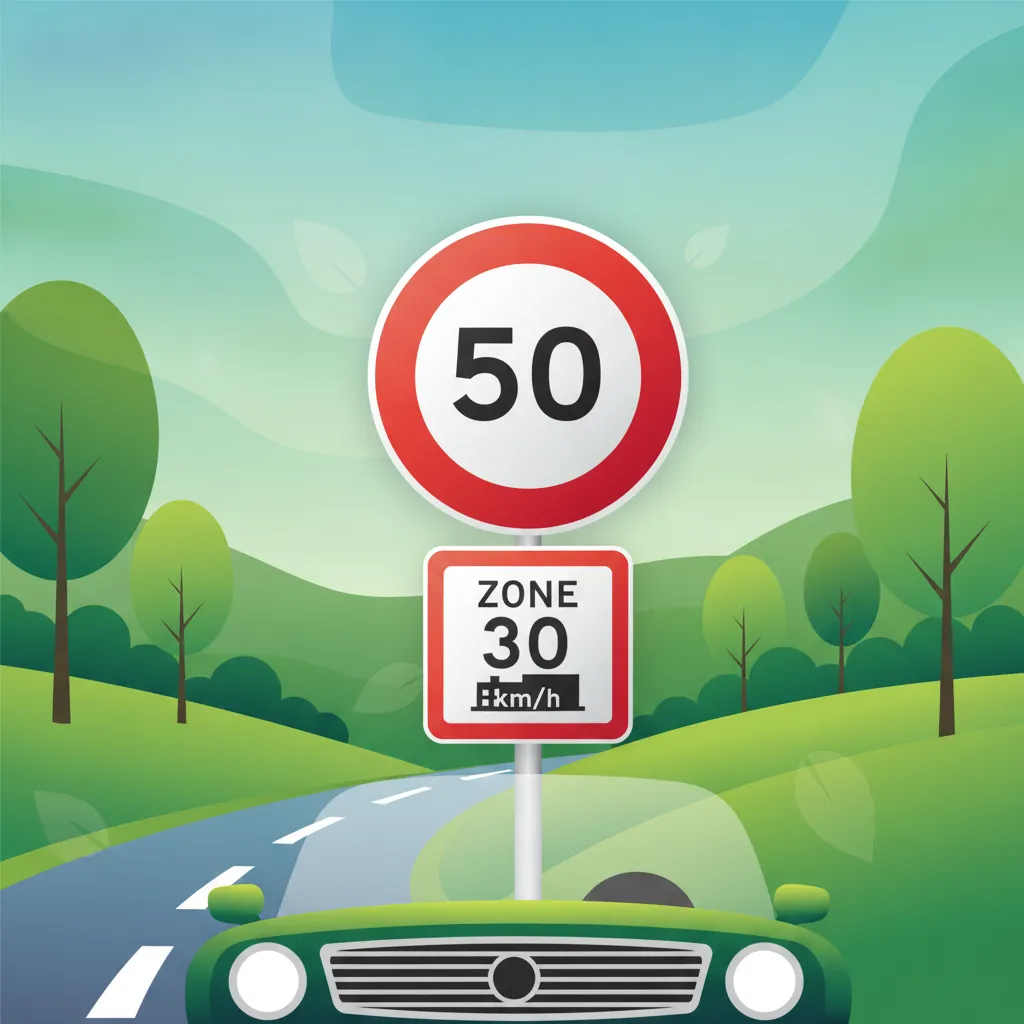
In this lesson, learners explore the full range of regulatory signs used throughout Belgium to enforce traffic laws. It covers signs that prescribe actions, such as stop and give way, as well as those that restrict actions, like speed limits and overtaking bans. Understanding these signs enables drivers to comply accurately with enforced traffic regulations.
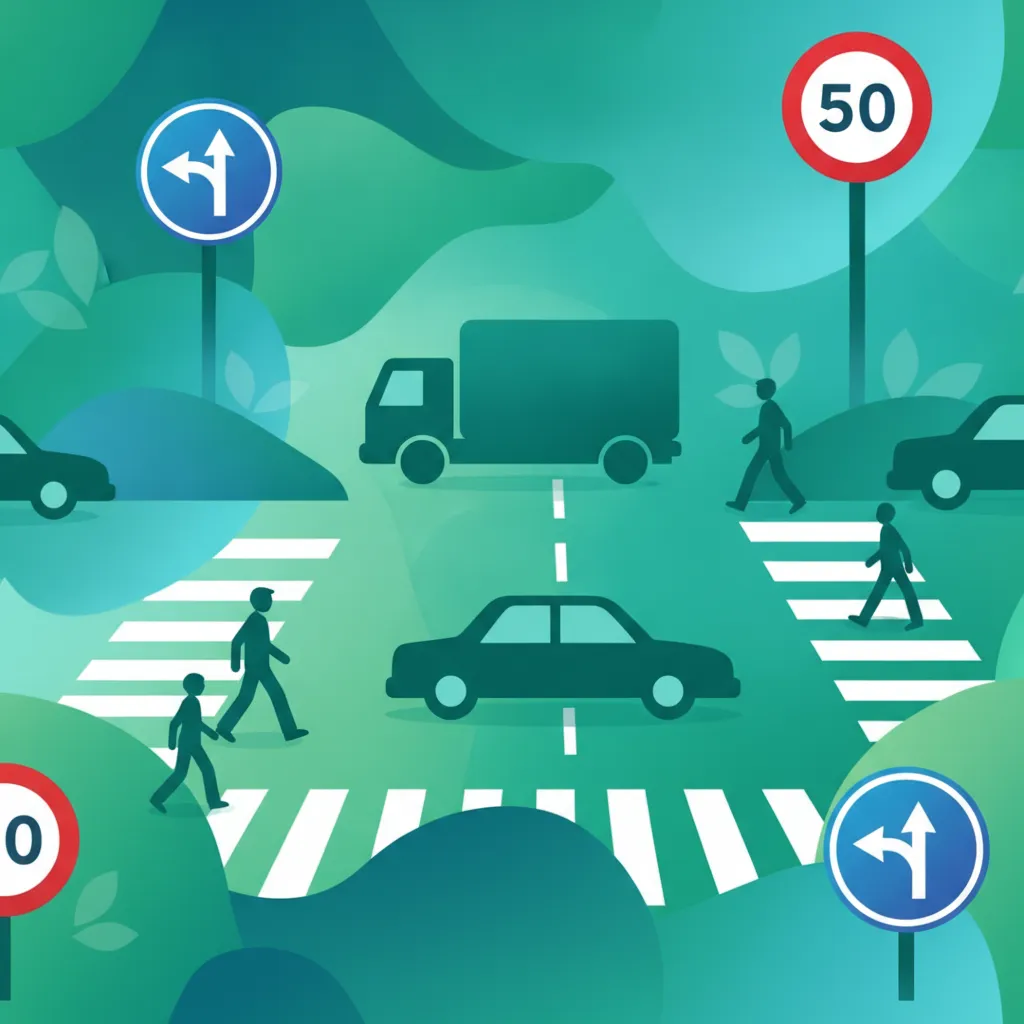
This lesson focuses on regulatory signs, which impose legal obligations and restrictions on road users. It explains the meaning of common signs such as speed limits, stop, yield, and no-entry, detailing how they apply to Category AM vehicles. Understanding these signs is fundamental for legal compliance and safe interaction with traffic, as they dictate required actions and prohibitions.

This lesson focuses on warning signs designed to alert drivers to potential hazards ahead. Topics include warnings for sharp curves, steep gradients, slippery surfaces, and zones with high pedestrian or wildlife activity. Learners will understand how to correctly interpret these signs and adjust their driving behavior to maintain safety on the road.

This lesson provides a detailed explanation of the various road markings found on Belgian roads and their specific significance for motorcyclists. It covers the rules associated with solid and broken lane lines, stop lines at junctions, and markings for pedestrian and bicycle crossings. Understanding these markings is essential for correct lane positioning and safe navigation.
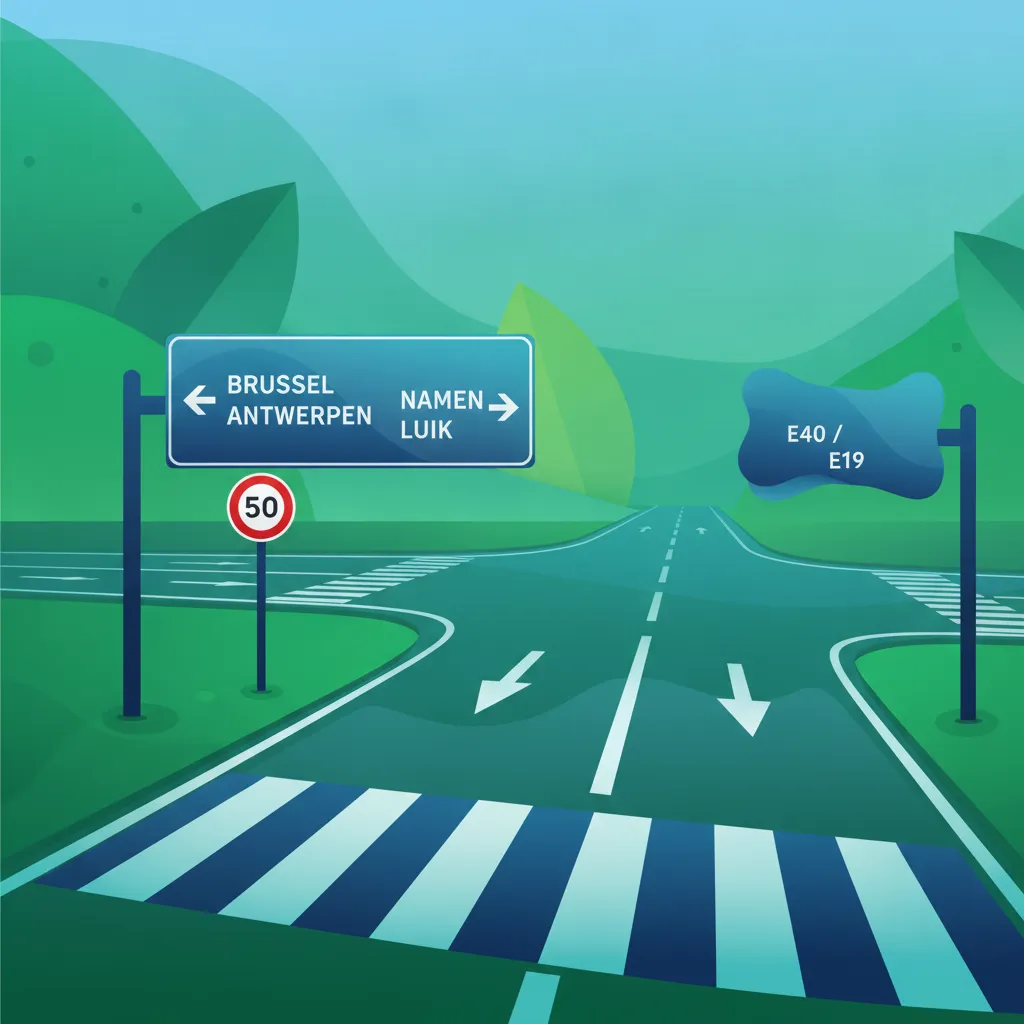
This lesson explains the role of information signs and road markings in guiding road users. It covers directional signs that help with navigation and markings that delineate lanes, pedestrian crossings, and zones for specific users like cyclists. Learners will understand how to use this information to maintain correct lane positioning and navigate their route efficiently and safely.
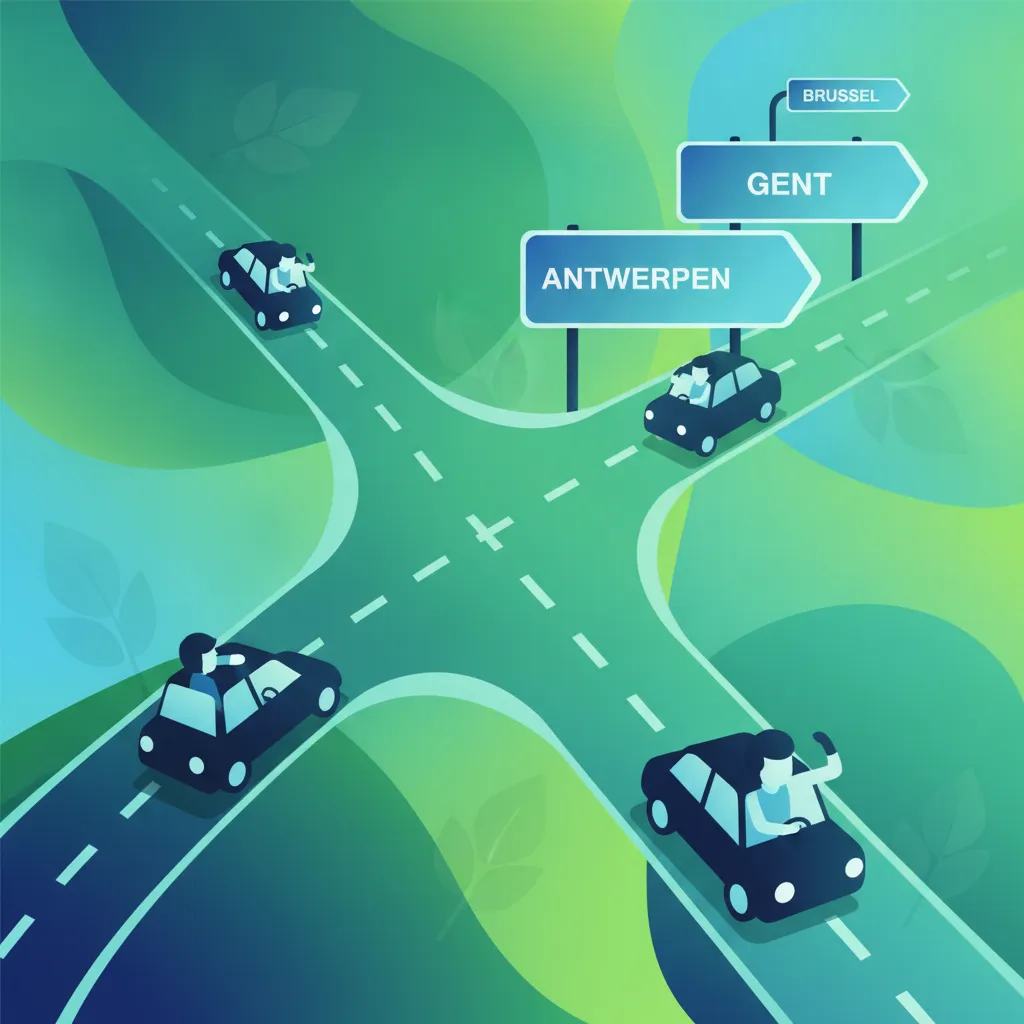
Information signs provide drivers with essential guidance about destinations, services, and the road layout. This lesson covers signs indicating distances, directions to towns, availability of services like fuel stations, and specific lane guidance. Learners will know how to read these signs to navigate efficiently and locate necessary facilities while driving.
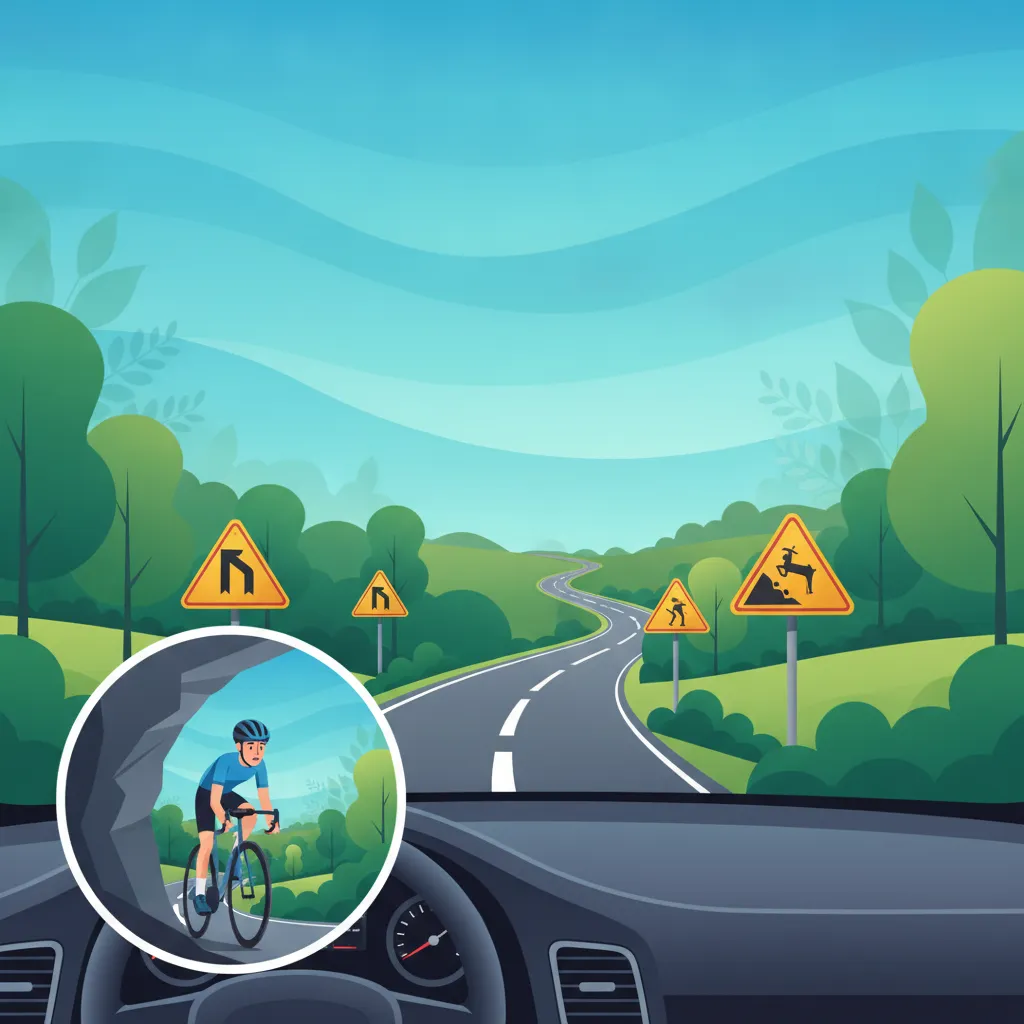
This lesson is dedicated to warning signs, which are designed to alert drivers to potential dangers ahead. It covers the interpretation of signs indicating sharp curves, steep gradients, slippery surfaces, and the presence of pedestrians or animals. By understanding these warnings, riders can anticipate potential hazards and adjust their speed and position proactively for safer travel.
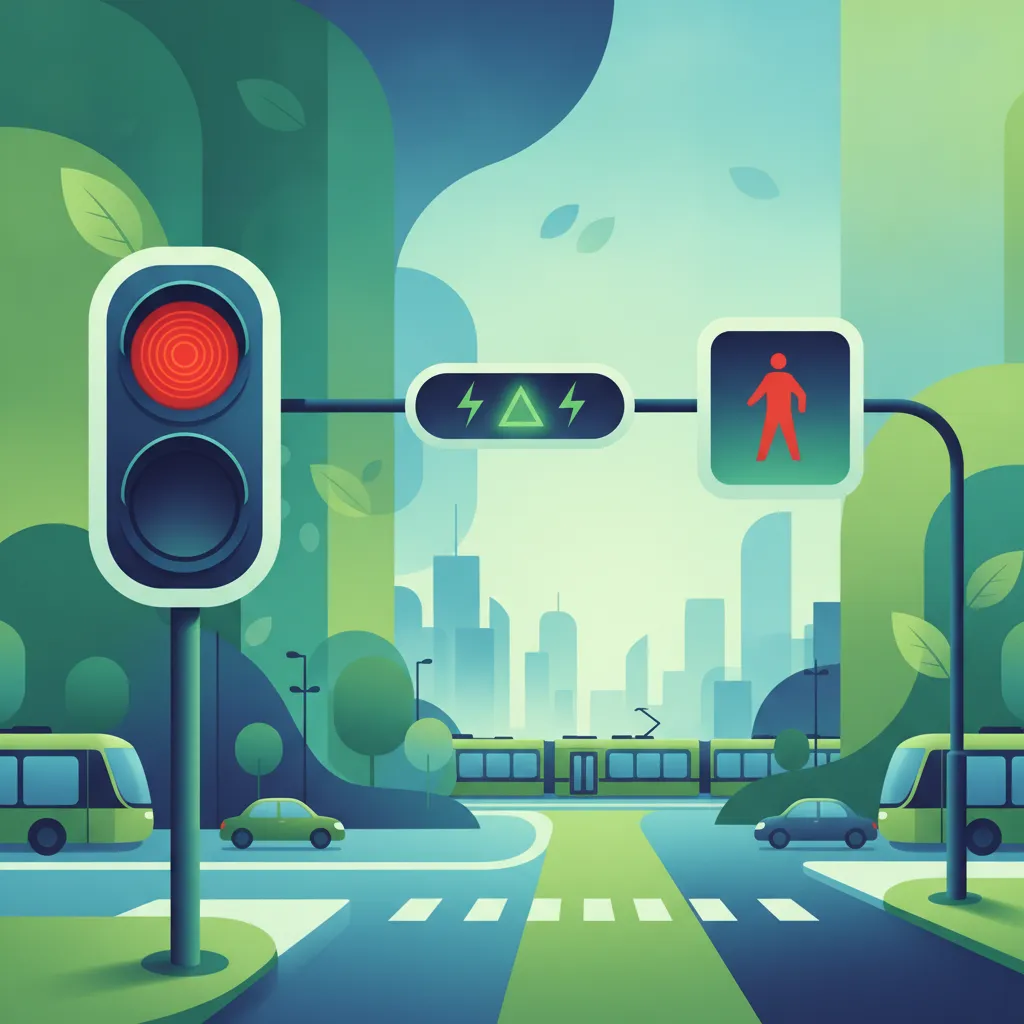
This lesson examines the operation of traffic light systems in Belgium, clarifying the meaning of red, amber, and green signals, including flashing lights and directional arrows. It details a motorcyclist's legal obligations when approaching and navigating signal-controlled intersections. The content also addresses specialized signals for pedestrians and trams that riders must recognize and respond to correctly.
This lesson covers the specific challenges of driving on motorways, rural roads, and navigating roadworks. Learners will review lane discipline on high-speed roads and identify hazards common to rural roads, such as sharp bends and wildlife. It also explains the importance of adjusting speed and following temporary signage in construction zones.

This lesson focuses on techniques and equipment designed to enhance a rider's visibility on the road. It covers the effective use of reflective materials on clothing and the motorcycle itself, as well as the legal requirements for lighting under Belgian law. You will learn strategies to improve your conspicuity during the day, at night, and in adverse weather conditions.
Learn to correctly interpret Belgian road signs in various contexts. This lesson covers common misunderstandings and practical application of signs, focusing on how shape, color, and location dictate meaning for motorcyclists.
This lesson provides a detailed explanation of the various road markings found on Belgian roads and their specific significance for motorcyclists. It covers the rules associated with solid and broken lane lines, stop lines at junctions, and markings for pedestrian and bicycle crossings. Understanding these markings is essential for correct lane positioning and safe navigation.
This lesson explains the role of information signs and road markings in guiding road users. It covers directional signs that help with navigation and markings that delineate lanes, pedestrian crossings, and zones for specific users like cyclists. Learners will understand how to use this information to maintain correct lane positioning and navigate their route efficiently and safely.
This lesson focuses on warning signs designed to alert drivers to potential hazards ahead. Topics include warnings for sharp curves, steep gradients, slippery surfaces, and zones with high pedestrian or wildlife activity. Learners will understand how to correctly interpret these signs and adjust their driving behavior to maintain safety on the road.
This lesson is dedicated to warning signs, which are designed to alert drivers to potential dangers ahead. It covers the interpretation of signs indicating sharp curves, steep gradients, slippery surfaces, and the presence of pedestrians or animals. By understanding these warnings, riders can anticipate potential hazards and adjust their speed and position proactively for safer travel.
This lesson examines the operation of traffic light systems in Belgium, clarifying the meaning of red, amber, and green signals, including flashing lights and directional arrows. It details a motorcyclist's legal obligations when approaching and navigating signal-controlled intersections. The content also addresses specialized signals for pedestrians and trams that riders must recognize and respond to correctly.
This lesson covers the specific challenges of driving on motorways, rural roads, and navigating roadworks. Learners will review lane discipline on high-speed roads and identify hazards common to rural roads, such as sharp bends and wildlife. It also explains the importance of adjusting speed and following temporary signage in construction zones.
Information signs provide drivers with essential guidance about destinations, services, and the road layout. This lesson covers signs indicating distances, directions to towns, availability of services like fuel stations, and specific lane guidance. Learners will know how to read these signs to navigate efficiently and locate necessary facilities while driving.
Directional symbols and arrows painted on the road surface guide drivers on permitted lane movements and turning directions. This lesson explains the interpretation of these arrows, covering rules for one-way streets, mandatory turns, and lane-specific instructions. Learners will understand how to comply with these symbols to navigate complex intersections safely and efficiently.

This lesson provides a comprehensive guide to motorway riding, starting with the procedure for safely merging into high-speed traffic from a slip road. It details the importance of strict lane discipline, including the rules for overtaking and the proper use of lanes. You will also learn the correct technique for planning and executing a safe exit from the motorway.
This lesson focuses on regulatory signs, which impose legal obligations and restrictions on road users. It explains the meaning of common signs such as speed limits, stop, yield, and no-entry, detailing how they apply to Category AM vehicles. Understanding these signs is fundamental for legal compliance and safe interaction with traffic, as they dictate required actions and prohibitions.
Find clear answers to common questions learners have about Regulatory and Informative Signs Relevant to Motorcyclists. Learn how the lesson is structured, which driving theory objectives it supports, and how it fits into the overall learning path of units and curriculum progression in Belgium. These explanations help you understand key concepts, lesson flow, and exam focused study goals.
Regulatory signs in Belgium are generally circular with a red border, while informative signs are typically rectangular or square with blue or white backgrounds. Remembering this shape and color coding is vital for answering exam questions quickly.
Yes, some signs specifically address motorcycle access or restrictions. You must pay attention to signs indicating 'no access for motorcycles' or those allowing motorcycles to use specific lanes, such as bus lanes in certain cities.
Informative signs provide crucial details about your environment, such as the start of a residential zone or parking instructions. Failing to notice these can lead to errors in both the theory exam and real-world riding.
Yes, the theory exam expects you to understand all common road signs. Even if a sign applies to cars, such as a one-way street or a weight restriction, it applies to you as a motorcyclist as well.
Ready to focus your Belgian driving theory revision? Utilize our powerful search tool to pinpoint exact topics, road signs, or difficulty levels. Engage with practice questions that directly address your learning needs and solidify your understanding of Belgian traffic laws for your upcoming exam.