
This lesson explores critical urban riding scenarios including navigating tram tracks, identifying legal bus lane access, and understanding Low-Emission Zone (LEZ) restrictions. Building on your knowledge of road signs and markings, these specific rules are essential for safe city riding and frequently appear in the official Belgian motorcycle theory exam.
Lesson content overview
As a motorcyclist navigating the diverse road network of Belgium, encountering special traffic situations is a regular occurrence, particularly in urban environments. This lesson provides a comprehensive guide to understanding and safely managing interactions with tram areas, bus lanes, and Low-Emission Zones (LEZs). Mastering these specific regulations is not just about legal compliance; it's fundamental for your safety, the efficiency of public transport, and contributing to a healthier urban environment.
This section builds upon your existing knowledge of general traffic signs, road markings, and priority rules, applying those principles to unique scenarios where specific rules override general assumptions. Understanding these zones will equip you to make informed decisions and ride confidently and responsibly across Belgian roads.
Trams are an integral part of public transport in many Belgian cities, sharing road space with other vehicles. For motorcyclists, understanding and respecting tram priority is paramount for preventing accidents and ensuring smooth traffic flow. Trams, due to their fixed tracks and limited maneuverability, are granted a specific, overriding priority.
Tram priority means that trams have the absolute right of way over all other road users, including motorcyclists, cars, and bicycles, whenever their paths cross or when they are otherwise in conflict. This applies universally, regardless of road signs, traffic lights (unless a specific tram signal is present), or standard priority rules at intersections.
The rationale behind this rule is multifold:
When riding a motorcycle near tram tracks or at tram crossings, your awareness must be heightened. It's not just about priority; the physical presence of tracks can also pose a hazard.
Special Warning for Tram Tracks: Always cross tram tracks at a sharp angle (as perpendicular as possible) to prevent your motorcycle tires from slipping into the grooves, which can cause a loss of control, especially when turning or in wet weather.
Overtaking a tram requires extreme caution and is often not advisable, or even permitted, in many situations.
This sign warns specifically about tram tracks, reminding drivers to be aware of the inherent dangers and the presence of trams.
Bus lanes are designated sections of the road intended to give priority to public transport, helping buses maintain schedules and reduce urban congestion. For motorcyclists, knowing when and if these lanes can be used is crucial for avoiding fines and ensuring safety.
Bus lanes are typically distinguished by specific road markings and signage.
This sign explicitly designates a lane for buses. Without additional symbols, motorcyclists are prohibited.
In Belgium, the general rule is that motorcyclists are NOT permitted to use bus lanes. This is a strict regulation designed to prioritize public transport and ensure the safety of bus passengers.
However, there might be very rare and specific exceptions where a bus lane is designated as a "mixed-use" lane and explicitly permits motorcycles. This permission will always be indicated by additional symbols on the D7 sign. For instance, a D7 sign showing a bus and a motorcycle symbol would indicate permission. Never assume permission. If there is no explicit sign indicating motorcycle access, consider the lane off-limits.
When in doubt about bus lane access, always assume prohibition. Unauthorized entry can lead to significant fines.
Entering a bus lane without explicit permission is a traffic offense in Belgium and can result in:
Low-Emission Zones (LEZs), or Lage-Emissie Zones (LEZ) in Dutch and Zones de Basses Émissions (ZBE) in French, are increasingly common in Belgian cities. These zones are designed to improve urban air quality by restricting access to vehicles that do not meet specific emission standards.
An LEZ is a designated urban area where the most polluting vehicles are prohibited or incur a charge to enter. The restrictions are based on a vehicle's emission class, often referred to as its 'Euro standard'. Older, more polluting vehicles typically do not meet the required standards.
The primary goals of LEZs are:
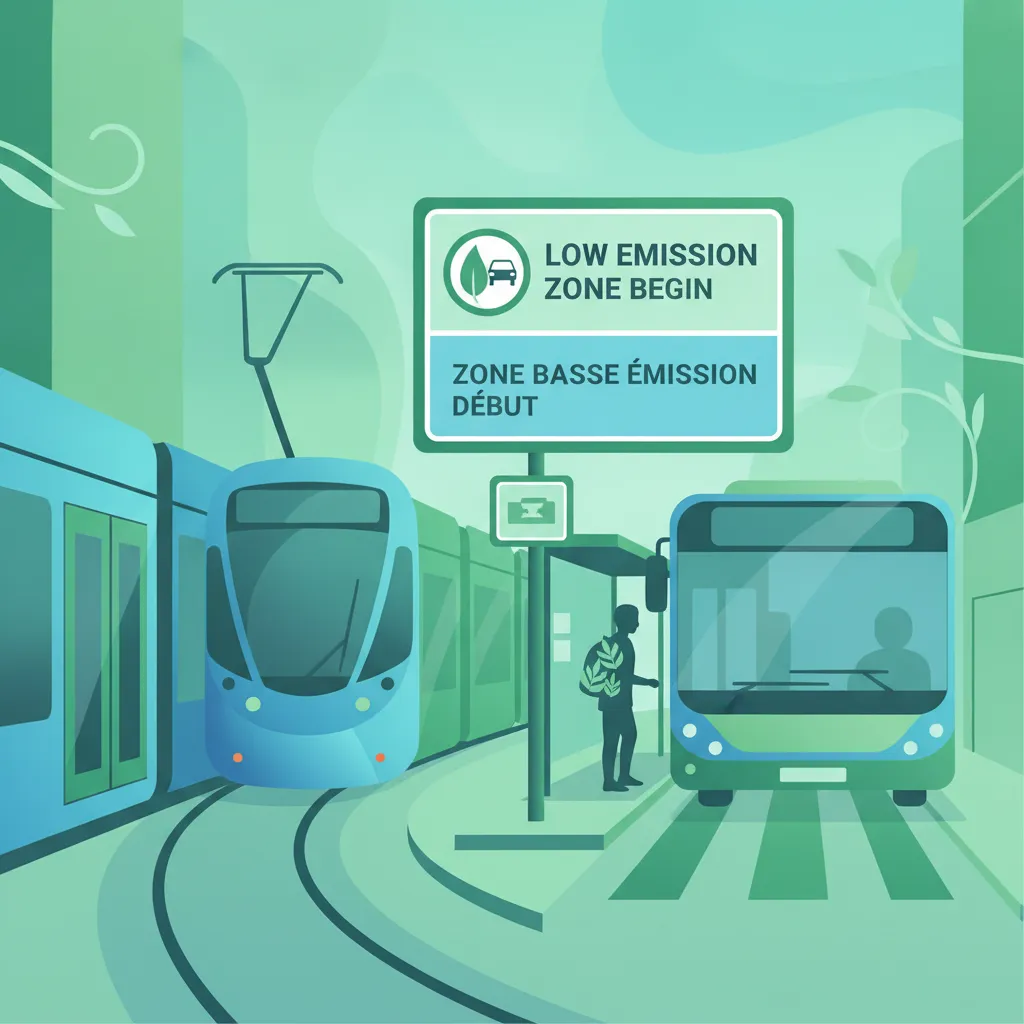
This sign marks the beginning of an LEZ. Variations may include additional information about permitted vehicle types or emission standards.
Before entering any Belgian city with an LEZ (e.g., Brussels, Antwerp, Ghent), it is imperative for motorcyclists to verify their vehicle's compliance.
Plan Ahead: Always check the specific LEZ rules of your destination city well in advance of your journey. Do not rely on general assumptions.
Once you've confirmed your motorcycle's eligibility, adherence to LEZ rules is straightforward:
Identify Your Motorcycle's Euro Standard: Check your registration certificate.
Research Destination City's LEZ Rules: Visit the official city LEZ website (e.g., Brussels, Antwerp, Ghent).
Verify Eligibility: Confirm if your Euro standard is permitted.
Register (if required): Register your vehicle online, even if compliant, if the city's rules stipulate it.
Plan Your Route: Avoid the LEZ if your motorcycle is not compliant or registered.
Even experienced riders can make mistakes in these special zones. Awareness and adherence to specific rules are key to safety and avoiding penalties.
This lesson covers three critical urban riding scenarios for Belgian motorcyclists: tram areas where trams have absolute priority requiring riders to always yield and cross tracks perpendicularly, bus lanes which are generally off-limits unless explicitly marked with additional symbols, and Low-Emission Zones where compliance depends on verifying your motorcycle's Euro standard against city-specific rules. Understanding these special zones is essential for both theory exam success and safe, legal urban riding in Belgian cities like Brussels, Antwerp, and Ghent.
A short set of high-value points that capture the most important learning from this lesson.
Trams have absolute priority over all vehicles including motorcycles, regardless of traffic lights or standard priority rules
Always cross tram tracks at a near-90-degree angle to prevent tires from catching in the grooves
Motorcyclists are generally prohibited from using bus lanes in Belgium unless signage explicitly permits it
Low-Emission Zone access depends on your motorcycle's Euro emission standard, which must be verified before entering any LEZ city
LEZ rules vary by city (Brussels, Antwerp, Ghent) and can change over time, requiring advance verification
Explore all units and lessons included in this driving theory course.
Tram priority overrides all other rules including green lights and stop signs
Look for additional symbols on the D7 bus lane sign to identify rare mixed-use permissions
Your motorcycle's Euro standard (Euro 3, 4, 5) is stated on the registration certificate (kentekenbewijs/certificat d'immatriculation)
LEZ enforcement uses ANPR cameras that automatically detect non-compliant or unregistered vehicles
If a tram is stopped to board passengers, you must stop behind it and wait until it departs
Assuming tram priority only applies when the tram is moving or when there are no passengers visible
Entering a bus lane without checking for explicit motorcycle permission on the regulatory sign
Riding into an LEZ without first verifying the motorcycle's Euro standard against current city requirements
Crossing tram tracks at a shallow angle, especially in wet conditions, risking wheel slippage
Assuming LEZ rules are the same across all Belgian cities without checking the specific municipality's regulations
Lesson content overview
A short set of high-value points that capture the most important learning from this lesson.
Trams have absolute priority over all vehicles including motorcycles, regardless of traffic lights or standard priority rules
Always cross tram tracks at a near-90-degree angle to prevent tires from catching in the grooves
Motorcyclists are generally prohibited from using bus lanes in Belgium unless signage explicitly permits it
Low-Emission Zone access depends on your motorcycle's Euro emission standard, which must be verified before entering any LEZ city
LEZ rules vary by city (Brussels, Antwerp, Ghent) and can change over time, requiring advance verification
Explore all units and lessons included in this driving theory course.
Tram priority overrides all other rules including green lights and stop signs
Look for additional symbols on the D7 bus lane sign to identify rare mixed-use permissions
Your motorcycle's Euro standard (Euro 3, 4, 5) is stated on the registration certificate (kentekenbewijs/certificat d'immatriculation)
LEZ enforcement uses ANPR cameras that automatically detect non-compliant or unregistered vehicles
If a tram is stopped to board passengers, you must stop behind it and wait until it departs
Assuming tram priority only applies when the tram is moving or when there are no passengers visible
Entering a bus lane without checking for explicit motorcycle permission on the regulatory sign
Riding into an LEZ without first verifying the motorcycle's Euro standard against current city requirements
Crossing tram tracks at a shallow angle, especially in wet conditions, risking wheel slippage
Assuming LEZ rules are the same across all Belgian cities without checking the specific municipality's regulations
Explore search topics learners often look for when studying Special Situations: Tram Areas, Bus Lanes, and Low-Emission Zones. These topics reflect common questions about road rules, driving situations, safety guidance, and lesson level theory preparation for learners in Belgium.
Browse additional driving theory lessons that cover connected traffic rules, road signs, and common driving situations related to this topic. Improve your understanding of how different rules interact across everyday traffic scenarios.
Explore in-depth Belgian motorcycle theory on navigating special traffic zones like tram areas and bus lanes. Understand complex LEZ regulations and requirements for urban riding.
This lesson teaches motorcyclists how to safely navigate mixed traffic environments that include cars, buses, and trams. It highlights the significant blind spots of larger vehicles and explains the absolute priority of trams on their tracks. You will learn the rules for sharing space with public transport and how to maintain safe distances when following or overtaking buses.
This lesson examines the interactions between private vehicles and public transport, focusing on buses and trams. Learners will understand the priority rules for these vehicles, recognizing dedicated lanes and stopping positions. Special considerations for motorcyclists, school buses, and other vulnerable users are also discussed to ensure safe coexistence.
This lesson details a motorcyclist's obligations when approaching various types of crossings, including marked pedestrian and bicycle lanes. It emphasizes the legal requirement to yield to vulnerable road users and the importance of thorough visual checks before proceeding. You will learn how to maintain a safe distance and anticipate the movements of pedestrians and cyclists in urban areas.
This lesson examines the operation of traffic light systems in Belgium, clarifying the meaning of red, amber, and green signals, including flashing lights and directional arrows. It details a motorcyclist's legal obligations when approaching and navigating signal-controlled intersections. The content also addresses specialized signals for pedestrians and trams that riders must recognize and respond to correctly.
This lesson focuses on the heightened awareness required when approaching and traversing pedestrian and cyclist crossings. It clarifies the legal rules, including the absolute priority of pedestrians on zebra crossings, and the importance of reducing speed. Riders will learn how to anticipate the movements of these vulnerable road users and position their vehicle to ensure a safe interaction.

This lesson offers specific strategies for motorcyclists navigating roundabouts in Belgium. It covers the rules for entering the roundabout, including yielding to circulating traffic, and how to choose the correct lane for your intended exit. The content stresses the importance of clear signaling and maintaining awareness of other vehicles during entry and exit maneuvers.
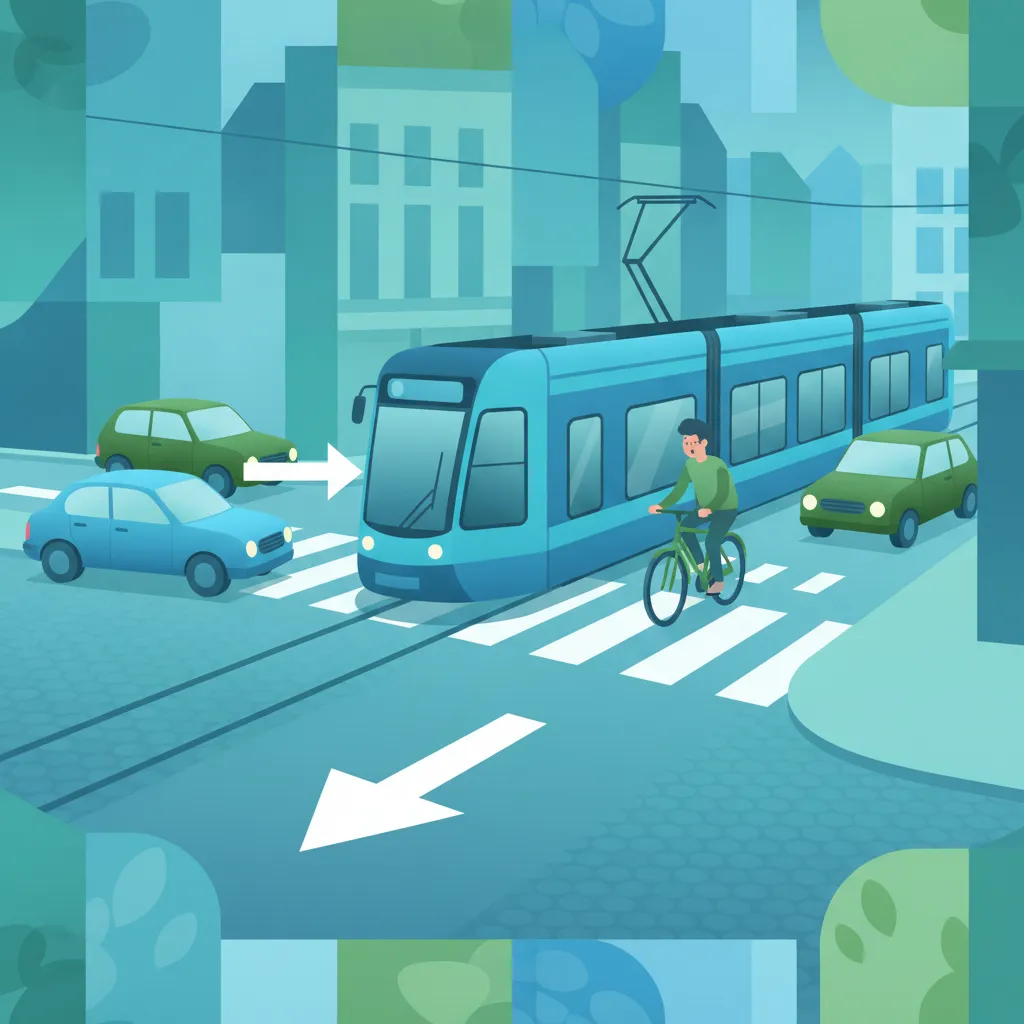
This lesson delves into the complex priority rules that govern Belgian roadways, with a strong focus on the default 'priority from the right' principle. It explains how to interpret priority signs, such as 'give way' and 'stop', and apply the correct right-of-way at various types of junctions. You will learn the hierarchy of road users and the specific rules for yielding in different traffic scenarios.

This lesson focuses on the rules governing pedestrian crossings, including marked zebra crossings and signal-controlled crossings. Special attention is given to school zones and residential areas where pedestrian activity is high. Learners will understand how to recognize and respect pedestrian priority in various crossing scenarios to ensure their safety.
This lesson provides a detailed explanation of the various road markings found on Belgian roads and their specific significance for motorcyclists. It covers the rules associated with solid and broken lane lines, stop lines at junctions, and markings for pedestrian and bicycle crossings. Understanding these markings is essential for correct lane positioning and safe navigation.
This lesson introduces the core principles of priority that govern traffic flow in Belgium, with a primary focus on the 'priority from the right' rule. It explains how to identify priority roads indicated by signs and how to act at uncontrolled intersections where the default rule applies. Understanding these rules is critical for AM riders to navigate junctions, intersections, and roundabouts safely and without conflict.
Learn about frequent errors motorcyclists make in tram areas, bus lanes, and LEZs in Belgium. Understand safety practices and official rules to avoid fines and hazards.
This lesson teaches motorcyclists how to safely navigate mixed traffic environments that include cars, buses, and trams. It highlights the significant blind spots of larger vehicles and explains the absolute priority of trams on their tracks. You will learn the rules for sharing space with public transport and how to maintain safe distances when following or overtaking buses.
This lesson examines the interactions between private vehicles and public transport, focusing on buses and trams. Learners will understand the priority rules for these vehicles, recognizing dedicated lanes and stopping positions. Special considerations for motorcyclists, school buses, and other vulnerable users are also discussed to ensure safe coexistence.
This lesson details a motorcyclist's obligations when approaching various types of crossings, including marked pedestrian and bicycle lanes. It emphasizes the legal requirement to yield to vulnerable road users and the importance of thorough visual checks before proceeding. You will learn how to maintain a safe distance and anticipate the movements of pedestrians and cyclists in urban areas.
This lesson explores the unique challenges presented by dense urban environments, including riding in heavy traffic and navigating narrow streets. It provides strategies for positioning your motorcycle to avoid the 'dooring zone' of parked cars and to maintain visibility. You will learn defensive riding techniques to anticipate sudden actions from other drivers in congested conditions.
This lesson focuses on the heightened awareness required when approaching and traversing pedestrian and cyclist crossings. It clarifies the legal rules, including the absolute priority of pedestrians on zebra crossings, and the importance of reducing speed. Riders will learn how to anticipate the movements of these vulnerable road users and position their vehicle to ensure a safe interaction.
This lesson focuses on the rules governing pedestrian crossings, including marked zebra crossings and signal-controlled crossings. Special attention is given to school zones and residential areas where pedestrian activity is high. Learners will understand how to recognize and respect pedestrian priority in various crossing scenarios to ensure their safety.

This lesson explains the concept of strategic road positioning to enhance safety and visibility. It teaches riders how to select the best position within a lane to be seen by other drivers and to have a good view of the road ahead. A key focus is on identifying and staying out of the large blind spots of cars, vans, and trucks to prevent dangerous situations.
This lesson examines the operation of traffic light systems in Belgium, clarifying the meaning of red, amber, and green signals, including flashing lights and directional arrows. It details a motorcyclist's legal obligations when approaching and navigating signal-controlled intersections. The content also addresses specialized signals for pedestrians and trams that riders must recognize and respond to correctly.
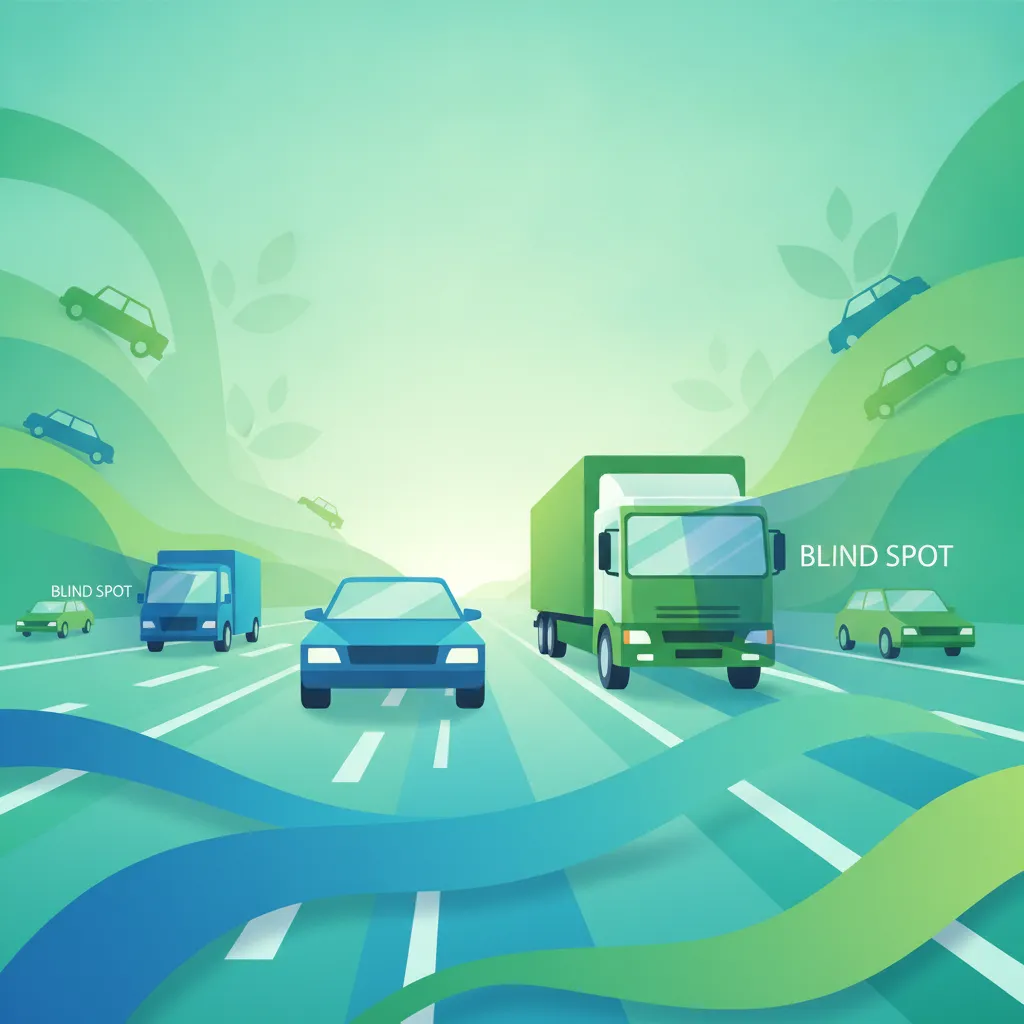
This lesson focuses on recognizing and staying out of the blind spots of other vehicles, especially large trucks and buses where 'no-zones' are significant. It provides practical strategies for managing your position on the road to ensure you remain visible to other drivers at all times. You will learn to anticipate lane changes and other maneuvers from vehicles that may not be aware of your presence.
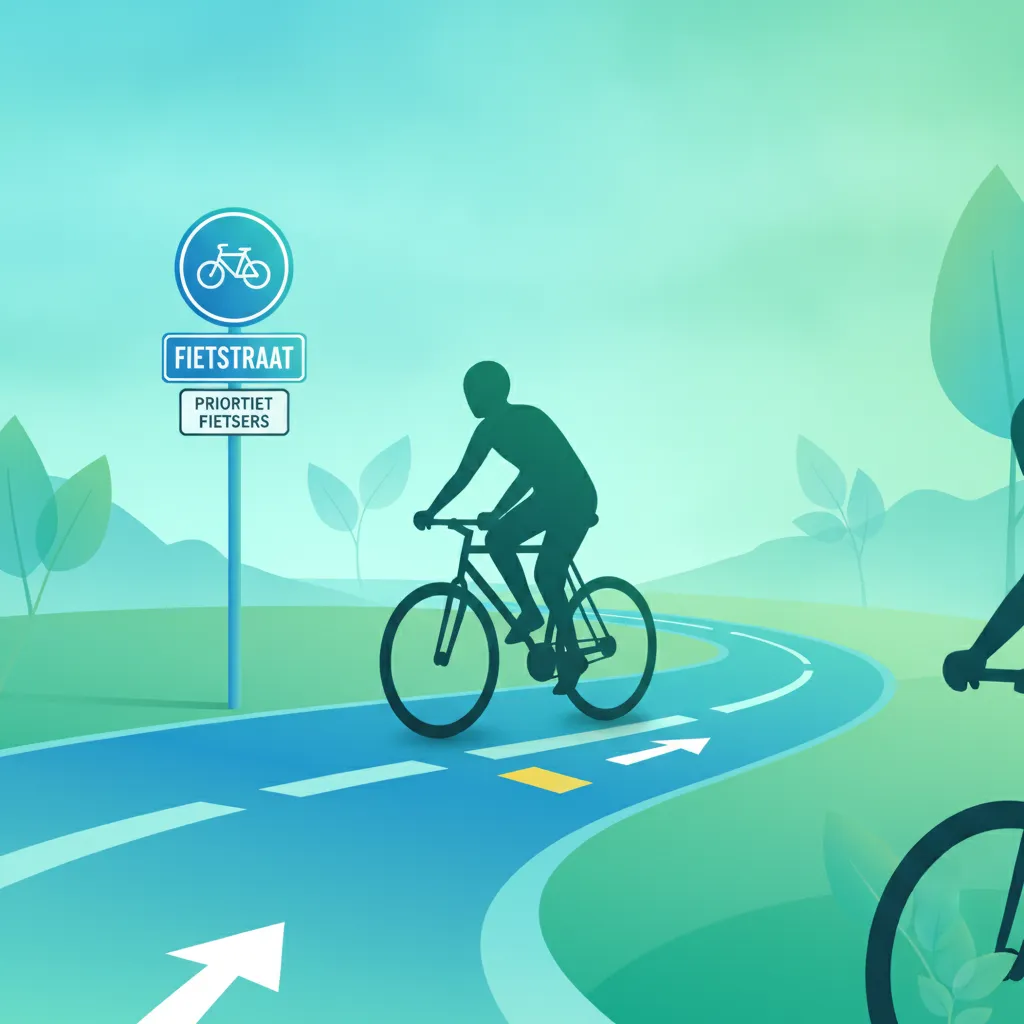
Cyclists are a significant part of Belgian traffic, and this lesson explores the rules and infrastructure that support safe cycling. Learners will study dedicated bicycle lanes, bicycle streets, and where cyclists have priority. The lesson also covers safe overtaking distances and the importance of anticipating cyclist movements.
Find clear answers to common questions learners have about Special Situations: Tram Areas, Bus Lanes, and Low-Emission Zones. Learn how the lesson is structured, which driving theory objectives it supports, and how it fits into the overall learning path of units and curriculum progression in Belgium. These explanations help you understand key concepts, lesson flow, and exam focused study goals.
No, motorcycles may only use bus lanes if the lane specifically indicates this with a sign showing a motorcycle symbol beneath the bus/taxi icon. Do not assume access without clear signage.
Trams have absolute priority at all times when moving. Even when they are at a stop, you must be extremely cautious; you should never impede a tram's path and must always yield if a potential conflict exists.
Yes, depending on your vehicle's age and Euro standard, you may need to register your motorcycle to enter specific LEZs in cities like Antwerp, Brussels, or Ghent. Check your vehicle's compliance before riding in these areas to avoid fines.
Look for the specific road signs. If the sign only depicts a bus or a taxi, and no motorcycle symbol is present, the lane is off-limits to you. Riding in a prohibited bus lane is a traffic violation.
Ready to focus your Belgian driving theory revision? Utilize our powerful search tool to pinpoint exact topics, road signs, or difficulty levels. Engage with practice questions that directly address your learning needs and solidify your understanding of Belgian traffic laws for your upcoming exam.