
This lesson explores the essential system of road markings you will encounter while riding in Belgium, from simple lane lines to complex junction markings. Understanding these lines is crucial for maintaining correct lane position and adhering to priority rules during your A, A1, and A2 motorcycle theory exam. You will learn how to interpret these markings to anticipate traffic flow and ride safely.
Lesson content overview
Road markings are fundamental components of the Belgian road network, serving as a visual language painted directly onto the surface to guide, regulate, and inform all road users, especially motorcyclists. They are designed to complement road signs and traffic lights, providing immediate, ground-level information crucial for safe navigation. For anyone undertaking the Comprehensive Belgian Motorcycle Theory Course: Licence A, A1 & A2, a thorough understanding of these markings is not just beneficial—it's essential for correct lane positioning, anticipating other road users' behavior, and adhering to traffic law.
Motorcyclists, due to their smaller profile and unique handling characteristics, must possess a precise understanding of road markings. These markings directly influence lane discipline, permissible overtaking maneuvers, and crucial stopping points, all of which are vital for maintaining a safe riding environment. Misinterpreting a line, ignoring a stop marking, or encroaching on a designated lane can lead to severe consequences, including collisions, legal penalties, and endangerment of vulnerable road users. This lesson will detail the various markings found on Belgian roads, explaining their specific meaning and practical significance for riders.
Lane markings delineate the flow of traffic, separate opposing directions, and define where lane changes or overtaking maneuvers are permitted or prohibited. Understanding the nuances of each line type is paramount for a motorcyclist's safety and legal compliance.
A solid white line on the road surface serves as a clear indicator that crossing it is generally prohibited. This applies to both overtaking and changing lanes.
In contrast to solid lines, a broken white line signifies that lane changes and overtaking maneuvers are generally permitted, provided it is safe to do so.
The presence of a solid double white line represents an even stricter prohibition than a single solid white line. It means that neither lane may be crossed in either direction.
Solid yellow lines often indicate lanes with specific purposes or restrictions, such as turning lanes, bus lanes, or areas where parking is prohibited.
While less common for general lane separation, solid red lines generally signify the highest level of restriction.
Intersections are critical points on the road where traffic from different directions converges. Road markings play a vital role in regulating priority and ensuring safe passage.
A stop line is a thick white line painted across the width of a lane at junctions, traffic lights, or stop signs.
Yield lines, often appearing as a row of white triangles painted across the lane, signal that drivers must give way to traffic on the intersecting road.
In some Belgian urban areas, you might encounter stop lines specifically designed with motorcyclists in mind. These may be positioned slightly further back from the main vehicular stop line, creating a small "motorcycle waiting box" or providing a better vantage point for riders to observe oncoming traffic or activate traffic light sensors without encroaching into the main intersection. Always position your motorcycle to maximize your visibility to other drivers and your view of the road ahead, respecting any special markings.
Road markings are fundamental in creating safe zones for pedestrians and cyclists, who are among the most vulnerable road users. Motorcyclists have a heightened responsibility to respect these markings and protect those on foot or bicycle.
A pedestrian crossing, commonly known as a zebra crossing, is marked by distinctive alternating white lines (a zebra pattern) across the road.
Bicycle lanes are specific sections of the road designated exclusively for cyclists, often painted green or marked with bicycle symbols.
While not ubiquitous, some areas may feature blind spot lines—dashed white lines that indicate the approximate position of a vehicle's blind spot relative to cyclists and motorcyclists.
Beyond standard lane delineation, Belgian roads feature markings for specific functions, access rules, and parking regulations.
Bus lanes are dedicated lanes reserved primarily for public transport buses. They are typically marked with specific signs, often accompanied by solid red lines or red-painted surfaces, and sometimes the word "BUS" painted on the road.
Road edge markings are solid white or yellow lines that define the very edge of the carriageway (the part of the road intended for vehicle traffic).
Various road markings designate areas for parking or stopping. These typically involve white lines outlining parking bays, sometimes accompanied by symbols for specific vehicle types (e.g., disabled parking).
Road markings are not merely suggestions; they are legally binding instructions, failure to comply with which constitutes a traffic offense. The Belgian Road Traffic Code (often referencing principles from European conventions) forms the legal basis for these regulations.
The rules governing solid, broken, and double lines are fundamental to maintaining orderly traffic and preventing accidents. Crossing a solid white or double white line when prohibited is a serious violation, aimed at preventing dangerous maneuvers such as head-on collisions. Breaking these rules is an infringement of the Belgian Road Traffic Code, designed to maintain road safety.
Legal obligations dictate that vehicles must stop before a stop line when required by a stop sign or a red traffic light. Similarly, at yield lines, the law demands that drivers be prepared to stop and give way to priority traffic. These rules are non-negotiable and are crucial for managing priority at intersections, which is a key component of the Belgian traffic system.
The law unequivocally states that motorcyclists, like all drivers, must yield to pedestrians at zebra crossings. This legal obligation extends to being prepared to stop when a pedestrian is present or about to step onto the crossing. Similarly, the prohibition against using bicycle lanes is legally enforced to protect cyclists and prevent conflicts between different modes of transport.
The rules governing bus lanes and bicycle lanes are legally binding restrictions designed to optimize traffic flow for public transport and ensure the safety of cyclists. Unless explicitly permitted by accompanying signage, motor vehicles, including motorcycles, are legally prohibited from entering or using these designated lanes. Violations can lead to significant fines and penalties.
Despite the clear visual cues, certain road markings are frequently misunderstood or violated, leading to dangerous situations and legal repercussions for motorcyclists.
One of the most common and dangerous violations is crossing a solid white line or, even worse, a solid double white line to overtake a slower vehicle or change lanes. This can lead to head-on collisions, especially on bends or crests, and carries severe penalties.
Motorcyclists sometimes creep past a stop line at a red light or fail to stop at a yield line when priority traffic is approaching, underestimating the risk or assuming the way will clear. This can cause collisions at junctions and is a direct violation of priority rules.
Riding in a bicycle lane, even for a brief moment, or using a bus lane without explicit permission, are frequent errors. While it might seem like a shortcut, these actions endanger vulnerable users and disrupt planned traffic flow.
Although broken lines permit lane changes, some motorcyclists fail to adequately check their blind spots and mirrors before changing lanes, particularly when moving over multiple lanes. This increases the risk of side-swipe collisions with vehicles that might be alongside them.
The interpretation and effectiveness of road markings can vary significantly depending on external factors. Motorcyclists must adjust their riding behavior accordingly.
In adverse weather conditions such as heavy rain, snow, or fog, road markings can become faded, obscured, or less visible. This demands extra caution from motorcyclists. In such conditions, broken lines might be difficult to distinguish from solid lines, necessitating a more conservative approach to lane changes and overtaking. Use your headlights, even during the day, to improve your visibility to others and to illuminate the road surface ahead.
The application and significance of markings can also vary by road type:
The agility and narrow profile of a motorcycle mean that precise lane positioning is crucial to staying within marked boundaries and maximizing safety. While a car might have some leeway, a motorcyclist needs to be more precise, especially when navigating multi-lane roads or curves. Maintaining a safe distance from road edges and ensuring you are clearly visible within your lane are always priorities.
A comprehensive understanding of Belgian road markings is an indispensable skill for every motorcyclist. These painted lines, symbols, and patterns on the road surface communicate critical information about traffic flow, legal restrictions, and safety precautions. From distinguishing between solid and broken lines to understanding the mandates of stop and yield markings, and respecting zones for vulnerable road users, each marking plays a vital role in accident prevention and efficient road use.
By internalizing the rules and reasoning behind each marking, motorcyclists can ride more confidently, predictably, and safely. This knowledge, combined with constant vigilance and adaptation to changing conditions, is a cornerstone of responsible riding on Belgian roads, ensuring you are well-prepared for your licence A, A1, or A2 theory exam and for a lifetime of safe motorcycling.
This lesson covers the complete system of Belgian road markings essential for motorcyclists, including lane delineation lines (solid, broken, double white, yellow, and red), intersection control markings (stop lines and yield lines), and protected zones for vulnerable users. Understanding the difference between solid lines that prohibit crossing and broken lines that permit it when safe is crucial for both exam success and real-world safety. Motorcyclists must respect absolute prohibitions at double white and red lines, yield to pedestrians at zebra crossings, and never use bicycle or bus lanes without explicit permission. The rules are legally binding under the Belgian Road Traffic Code, and violations carry penalties while creating significant safety risks for all road users.
A short set of high-value points that capture the most important learning from this lesson.
Solid white and double white lines absolutely prohibit crossing - never cross them for overtaking or lane changes under any circumstances
Broken white lines permit lane changes only when safe, after thorough mirror checks and head checks for blind spots
Stop lines require a complete halt before the line; yield lines require giving way without necessarily stopping if the way is clear
Bicycle lanes and bus lanes are strictly off-limits to motorcyclists unless supplementary signage explicitly permits access
Pedestrian crossings give pedestrians absolute priority - motorcyclists must stop when pedestrians are present or about to cross
Explore all units and lessons included in this driving theory course.
Double solid white lines create an absolute prohibition that applies in both directions and cannot be crossed for any reason
Yellow lines indicate specific lane functions such as turning lanes, no-parking zones, or temporary restrictions - always check accompanying signs for context
Solid red lines represent the highest restriction level and indicate areas where crossing is absolutely forbidden, such as emergency lanes
Road markings can become obscured in adverse weather conditions (rain, snow, fog) - adopt a more conservative approach when visibility is reduced
Special motorcycle stop lines may exist in some Belgian urban areas, positioned to give riders better visibility of traffic and easier activation of traffic light sensors
Crossing solid white or double white lines to overtake slower vehicles, particularly on curves or crests where visibility is limited
Creeping past a stop line at a red light or failing to stop at a yield line when priority traffic is approaching
Using bicycle lanes even briefly, or riding in bus lanes without checking for explicit permission signs
Failing to perform head checks before lane changes despite broken white lines permitting the maneuver, due to motorcycle blind spots being hidden from mirrors
Disregarding parking bay markings and time restrictions, leading to fines or obstructing traffic flow near junctions
Lesson content overview
A short set of high-value points that capture the most important learning from this lesson.
Solid white and double white lines absolutely prohibit crossing - never cross them for overtaking or lane changes under any circumstances
Broken white lines permit lane changes only when safe, after thorough mirror checks and head checks for blind spots
Stop lines require a complete halt before the line; yield lines require giving way without necessarily stopping if the way is clear
Bicycle lanes and bus lanes are strictly off-limits to motorcyclists unless supplementary signage explicitly permits access
Pedestrian crossings give pedestrians absolute priority - motorcyclists must stop when pedestrians are present or about to cross
Explore all units and lessons included in this driving theory course.
Double solid white lines create an absolute prohibition that applies in both directions and cannot be crossed for any reason
Yellow lines indicate specific lane functions such as turning lanes, no-parking zones, or temporary restrictions - always check accompanying signs for context
Solid red lines represent the highest restriction level and indicate areas where crossing is absolutely forbidden, such as emergency lanes
Road markings can become obscured in adverse weather conditions (rain, snow, fog) - adopt a more conservative approach when visibility is reduced
Special motorcycle stop lines may exist in some Belgian urban areas, positioned to give riders better visibility of traffic and easier activation of traffic light sensors
Crossing solid white or double white lines to overtake slower vehicles, particularly on curves or crests where visibility is limited
Creeping past a stop line at a red light or failing to stop at a yield line when priority traffic is approaching
Using bicycle lanes even briefly, or riding in bus lanes without checking for explicit permission signs
Failing to perform head checks before lane changes despite broken white lines permitting the maneuver, due to motorcycle blind spots being hidden from mirrors
Disregarding parking bay markings and time restrictions, leading to fines or obstructing traffic flow near junctions
Explore search topics learners often look for when studying Road Markings and Their Significance for Bikers. These topics reflect common questions about road rules, driving situations, safety guidance, and lesson level theory preparation for learners in Belgium.
Browse additional driving theory lessons that cover connected traffic rules, road signs, and common driving situations related to this topic. Improve your understanding of how different rules interact across everyday traffic scenarios.
Learn about specific Belgian road markings like bus lanes, road edge lines, and parking bay markings. Understand their rules and significance for safe motorcycle riding and compliance with traffic law.
This lesson focuses on the correct identification and interpretation of regulatory and informative road signs that are particularly relevant to motorcyclists. It covers signs that dictate speed limits, prohibit overtaking, and indicate compulsory routes or turns. You will learn to recognize different sign categories based on their distinct shapes and colors as defined by Belgian traffic law.

This lesson introduces the various types of road surface markings and their specific legal meanings in Belgium. Topics include the rules for solid and broken lines, double lines, and special markings for pedestrian zones, bus lanes, and tramways. Understanding these markings is essential for maintaining correct lane discipline and executing safe overtaking maneuvers.
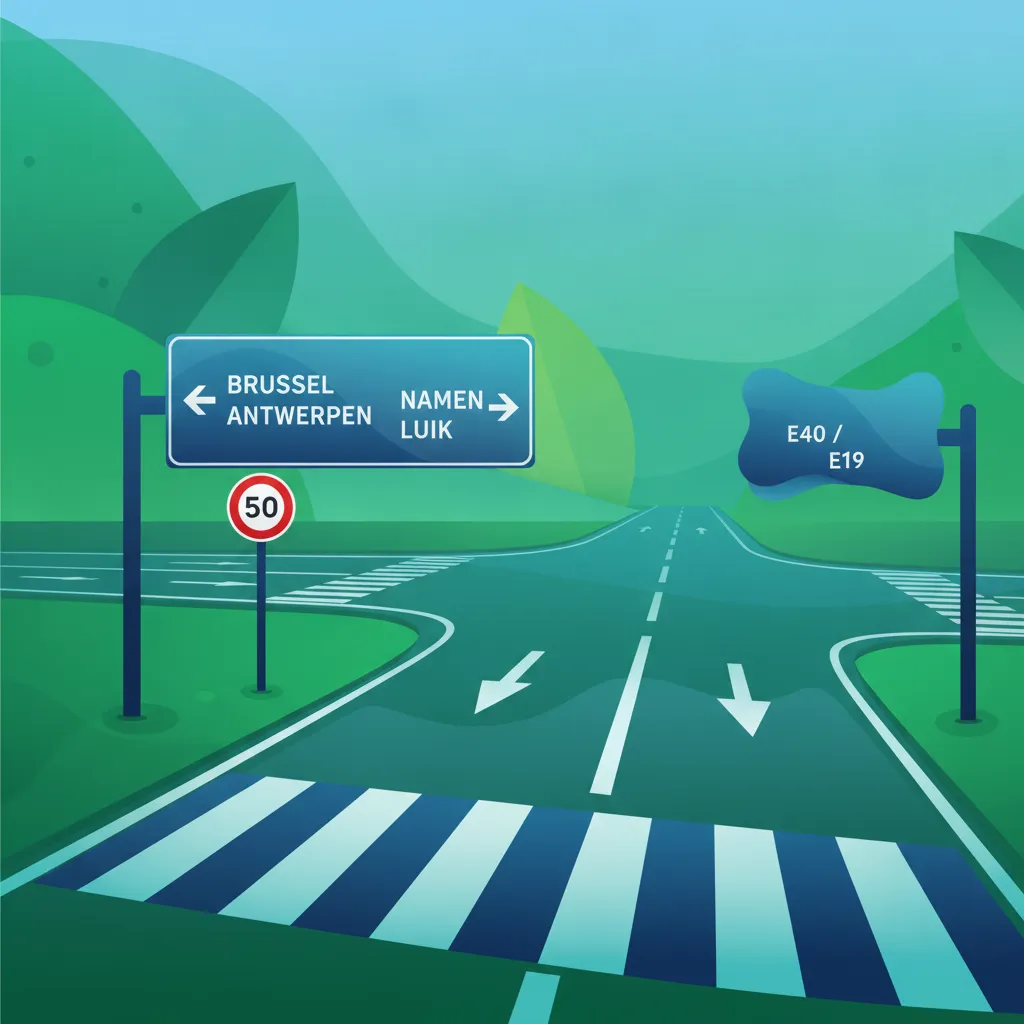
This lesson explains the role of information signs and road markings in guiding road users. It covers directional signs that help with navigation and markings that delineate lanes, pedestrian crossings, and zones for specific users like cyclists. Learners will understand how to use this information to maintain correct lane positioning and navigate their route efficiently and safely.
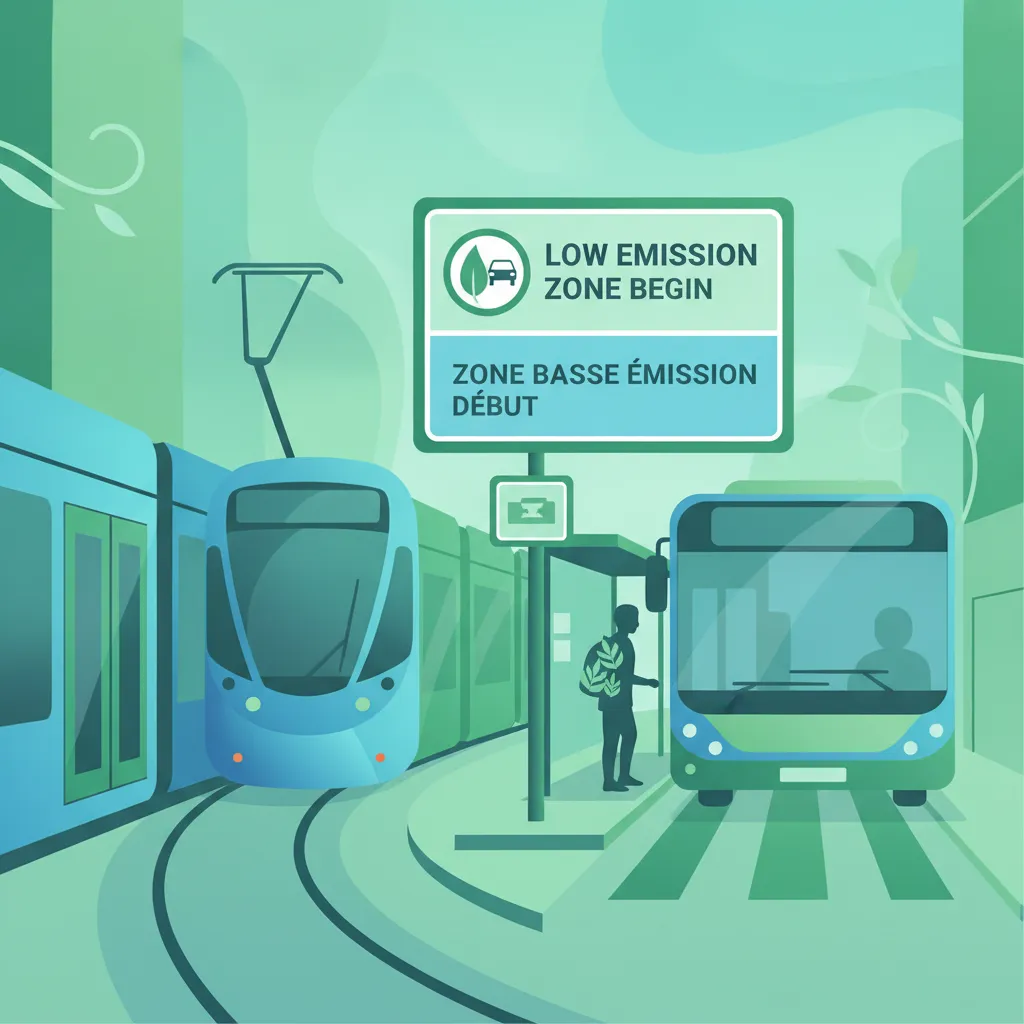
This lesson addresses unique traffic environments and special zones commonly found in Belgian urban areas. It clarifies the specific regulations concerning tramways, including where trams have absolute priority, and the conditions under which motorcycles may use bus lanes. The lesson also explains how to identify and comply with restrictions in low-emission zones.
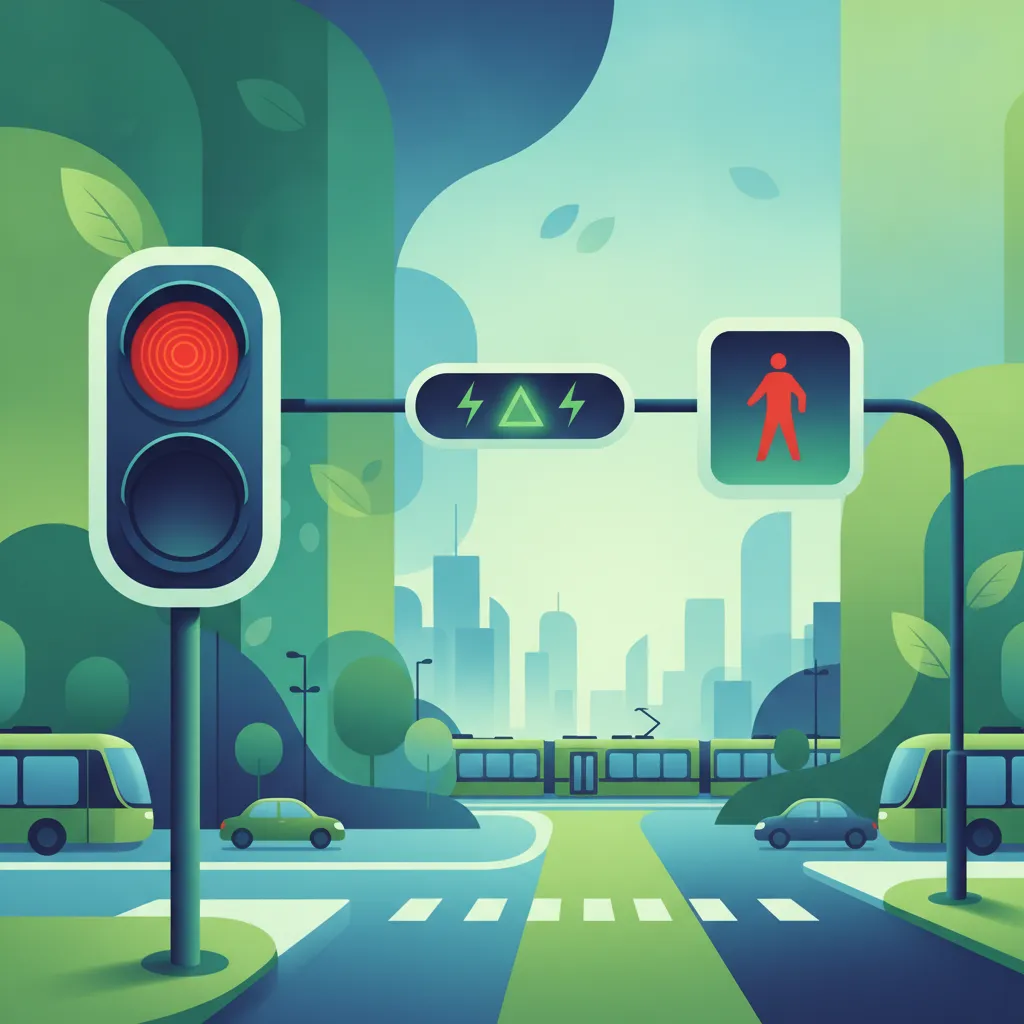
This lesson examines the operation of traffic light systems in Belgium, clarifying the meaning of red, amber, and green signals, including flashing lights and directional arrows. It details a motorcyclist's legal obligations when approaching and navigating signal-controlled intersections. The content also addresses specialized signals for pedestrians and trams that riders must recognize and respond to correctly.
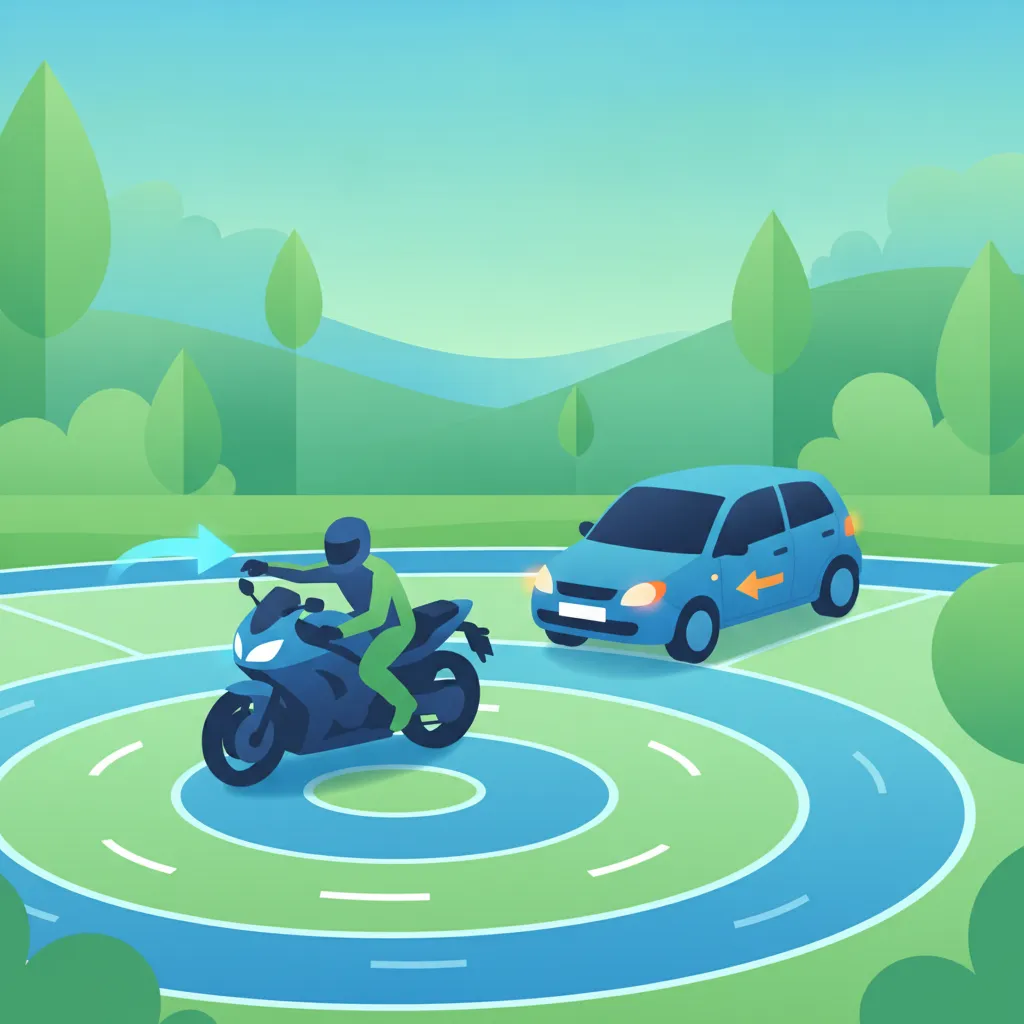
This lesson offers specific strategies for motorcyclists navigating roundabouts in Belgium. It covers the rules for entering the roundabout, including yielding to circulating traffic, and how to choose the correct lane for your intended exit. The content stresses the importance of clear signaling and maintaining awareness of other vehicles during entry and exit maneuvers.
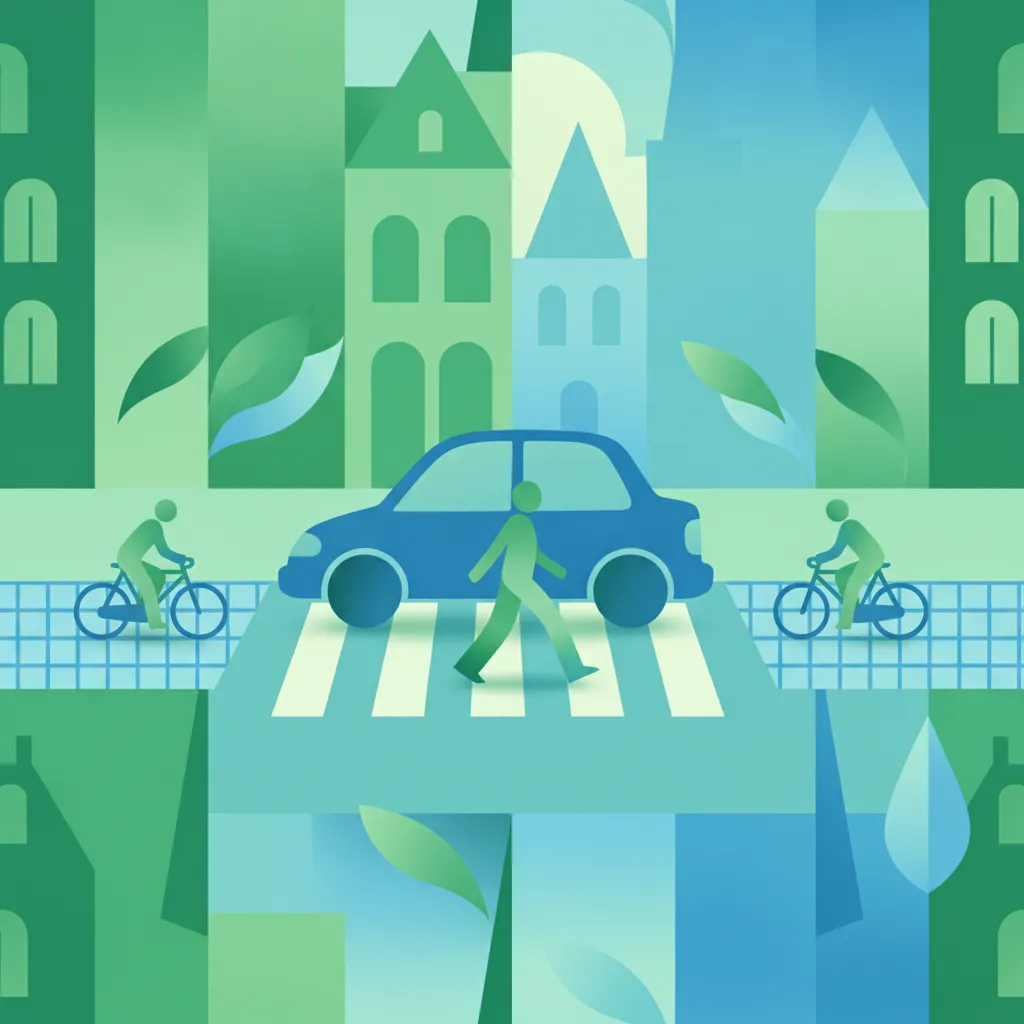
This lesson details a motorcyclist's obligations when approaching various types of crossings, including marked pedestrian and bicycle lanes. It emphasizes the legal requirement to yield to vulnerable road users and the importance of thorough visual checks before proceeding. You will learn how to maintain a safe distance and anticipate the movements of pedestrians and cyclists in urban areas.

This lesson provides a step-by-step guide to executing a safe overtaking maneuver in compliance with Belgian law. It covers the necessary pre-maneuver checks, proper signaling, and how to accurately judge the speed and distance of oncoming traffic. You will learn the correct procedure for passing a vehicle and safely returning to your original lane.
This lesson focuses on techniques and equipment designed to enhance a rider's visibility on the road. It covers the effective use of reflective materials on clothing and the motorcycle itself, as well as the legal requirements for lighting under Belgian law. You will learn strategies to improve your conspicuity during the day, at night, and in adverse weather conditions.
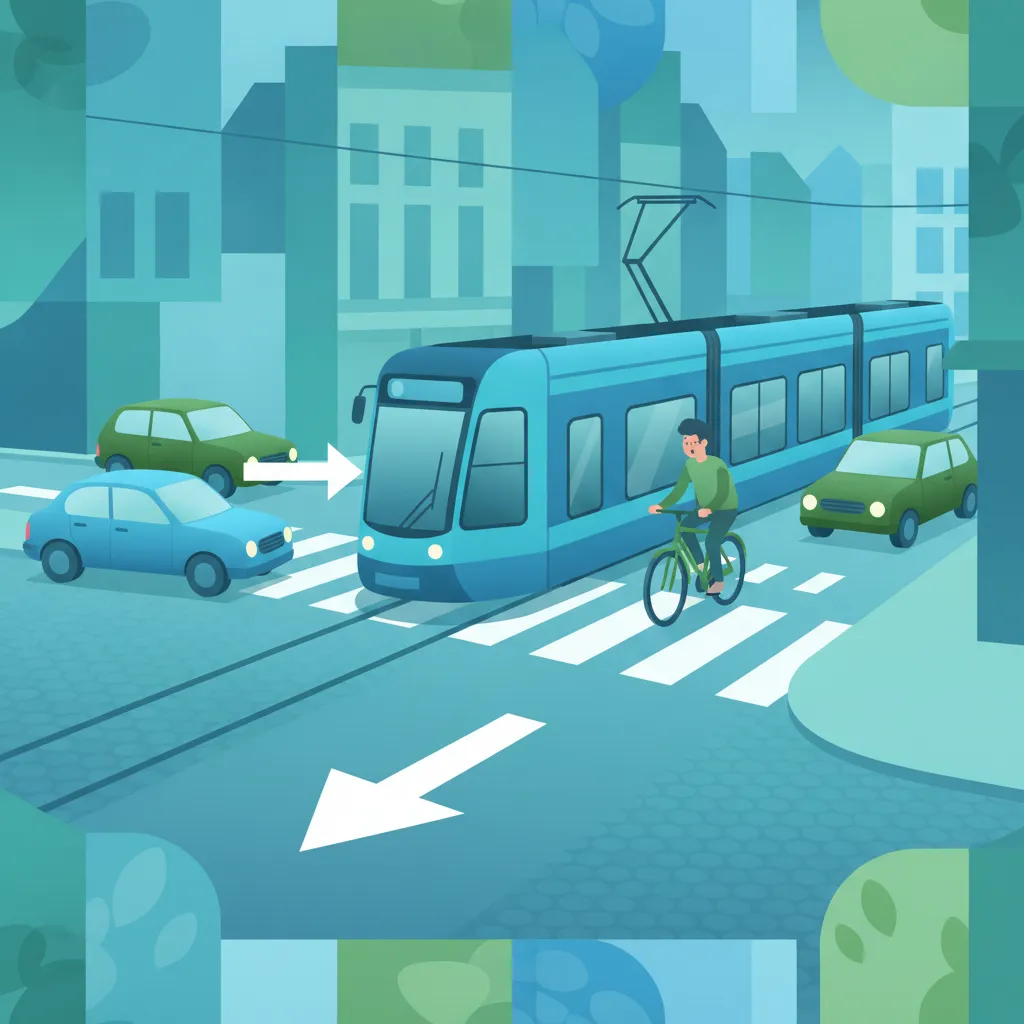
This lesson delves into the complex priority rules that govern Belgian roadways, with a strong focus on the default 'priority from the right' principle. It explains how to interpret priority signs, such as 'give way' and 'stop', and apply the correct right-of-way at various types of junctions. You will learn the hierarchy of road users and the specific rules for yielding in different traffic scenarios.
Understand the critical significance of road markings for pedestrian crossings (zebra crossings) and bicycle lanes in Belgium. Learn how to safely yield and interact with these zones as a motorcyclist.
This lesson details a motorcyclist's obligations when approaching various types of crossings, including marked pedestrian and bicycle lanes. It emphasizes the legal requirement to yield to vulnerable road users and the importance of thorough visual checks before proceeding. You will learn how to maintain a safe distance and anticipate the movements of pedestrians and cyclists in urban areas.
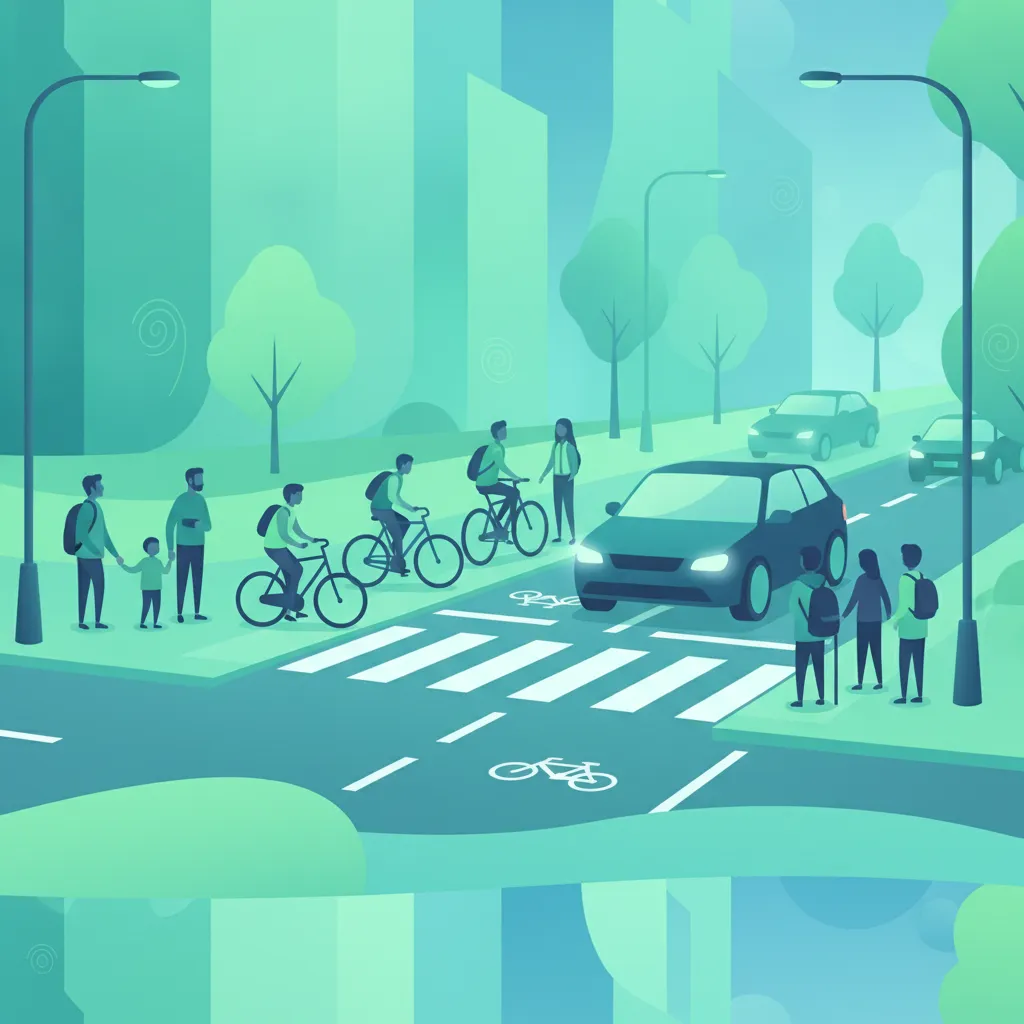
This lesson focuses on the heightened awareness required when approaching and traversing pedestrian and cyclist crossings. It clarifies the legal rules, including the absolute priority of pedestrians on zebra crossings, and the importance of reducing speed. Riders will learn how to anticipate the movements of these vulnerable road users and position their vehicle to ensure a safe interaction.
This lesson focuses on the correct identification and interpretation of regulatory and informative road signs that are particularly relevant to motorcyclists. It covers signs that dictate speed limits, prohibit overtaking, and indicate compulsory routes or turns. You will learn to recognize different sign categories based on their distinct shapes and colors as defined by Belgian traffic law.
This lesson examines the operation of traffic light systems in Belgium, clarifying the meaning of red, amber, and green signals, including flashing lights and directional arrows. It details a motorcyclist's legal obligations when approaching and navigating signal-controlled intersections. The content also addresses specialized signals for pedestrians and trams that riders must recognize and respond to correctly.
This lesson introduces the various types of road surface markings and their specific legal meanings in Belgium. Topics include the rules for solid and broken lines, double lines, and special markings for pedestrian zones, bus lanes, and tramways. Understanding these markings is essential for maintaining correct lane discipline and executing safe overtaking maneuvers.

This lesson focuses on the rules governing pedestrian crossings, including marked zebra crossings and signal-controlled crossings. Special attention is given to school zones and residential areas where pedestrian activity is high. Learners will understand how to recognize and respect pedestrian priority in various crossing scenarios to ensure their safety.
This lesson explains the role of information signs and road markings in guiding road users. It covers directional signs that help with navigation and markings that delineate lanes, pedestrian crossings, and zones for specific users like cyclists. Learners will understand how to use this information to maintain correct lane positioning and navigate their route efficiently and safely.
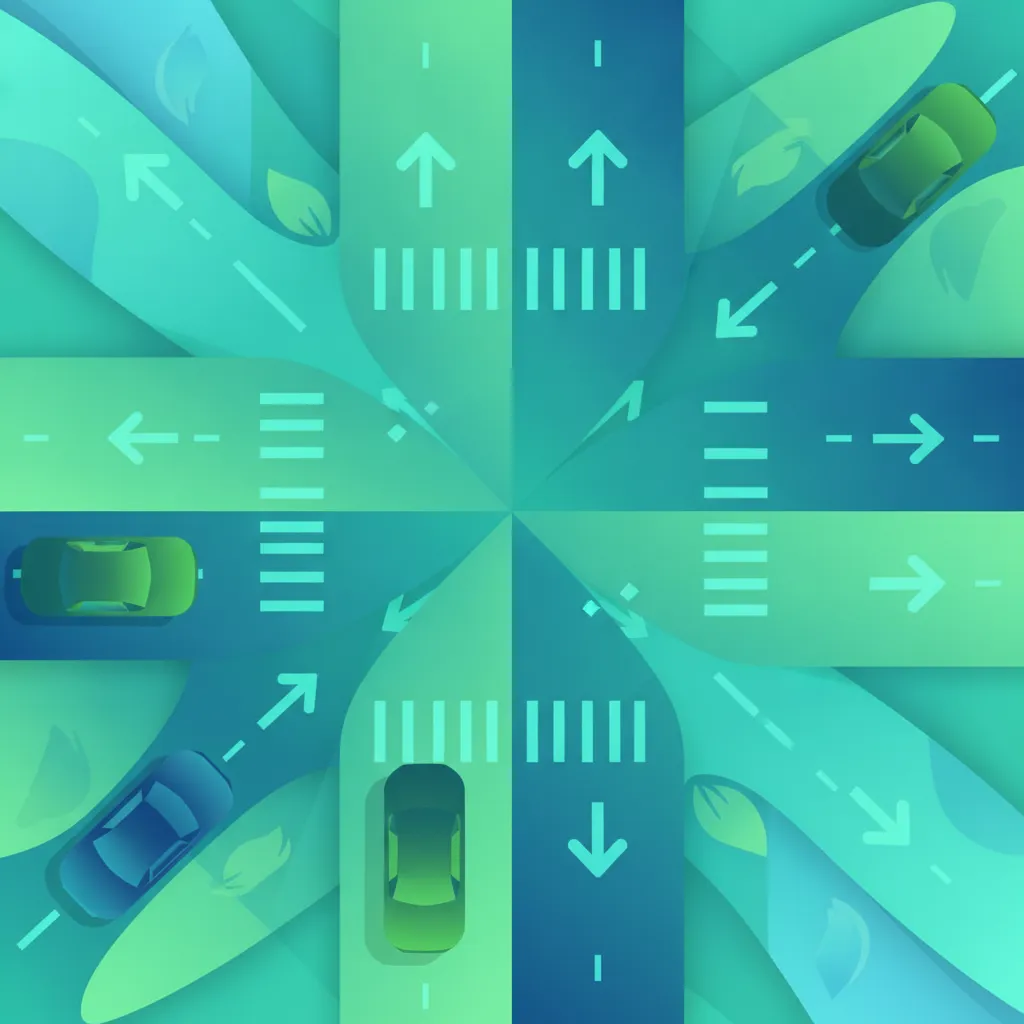
Directional symbols and arrows painted on the road surface guide drivers on permitted lane movements and turning directions. This lesson explains the interpretation of these arrows, covering rules for one-way streets, mandatory turns, and lane-specific instructions. Learners will understand how to comply with these symbols to navigate complex intersections safely and efficiently.
This lesson offers specific strategies for motorcyclists navigating roundabouts in Belgium. It covers the rules for entering the roundabout, including yielding to circulating traffic, and how to choose the correct lane for your intended exit. The content stresses the importance of clear signaling and maintaining awareness of other vehicles during entry and exit maneuvers.
This lesson addresses unique traffic environments and special zones commonly found in Belgian urban areas. It clarifies the specific regulations concerning tramways, including where trams have absolute priority, and the conditions under which motorcycles may use bus lanes. The lesson also explains how to identify and comply with restrictions in low-emission zones.
Find clear answers to common questions learners have about Road Markings and Their Significance for Bikers. Learn how the lesson is structured, which driving theory objectives it supports, and how it fits into the overall learning path of units and curriculum progression in Belgium. These explanations help you understand key concepts, lesson flow, and exam focused study goals.
In Belgium, you are generally prohibited from crossing a solid white line. However, specific exceptions exist for passing obstacles or slower road users under certain conditions, provided it is safe and allowed by supplementary signs. You must always exercise extreme caution.
A double solid white line reinforces the prohibition of crossing or driving on the left of these lines. It is typically used in areas with higher risks, and ignoring it during your driving test will lead to a significant point deduction.
Bicycle crossings are marked by two rows of white squares. You must not stop your motorcycle on these markings, and you must yield to cyclists who are already using or about to use the crossing.
Yes, pre-selection arrows painted on the road indicate the mandatory lane you must occupy to proceed in a specific direction. Failing to follow these at an intersection is a common error in the theory exam.
Ready to focus your Belgian driving theory revision? Utilize our powerful search tool to pinpoint exact topics, road signs, or difficulty levels. Engage with practice questions that directly address your learning needs and solidify your understanding of Belgian traffic laws for your upcoming exam.