
This lesson explores the essential priority rules required for your Belgian motorcycle theory exam. You will learn to navigate various intersection types while applying the principle of priority from the right and interpreting mandatory regulatory signs.
Lesson content overview
Welcome to this comprehensive lesson on priority rules and right-of-way scenarios, an essential topic for anyone preparing for the Comprehensive Belgian Motorcycle Theory Course: Licence A, A1 & A2. Mastering these rules is not merely about passing your exam; it's fundamental to safe navigation, preventing collisions, and ensuring a smooth flow of traffic on Belgian roadways. This chapter will delve into the intricate hierarchy of priority rules, focusing on default principles, sign-based directives, and how different road users interact at intersections.
Understanding who has the right-of-way in various situations reduces ambiguity, minimises conflict points, and clarifies responsibility, making you a more confident and safer motorcyclist. We will build upon your existing knowledge of Belgian road signs and markings to provide a robust foundation for more complex topics like intersection navigation and defensive riding.
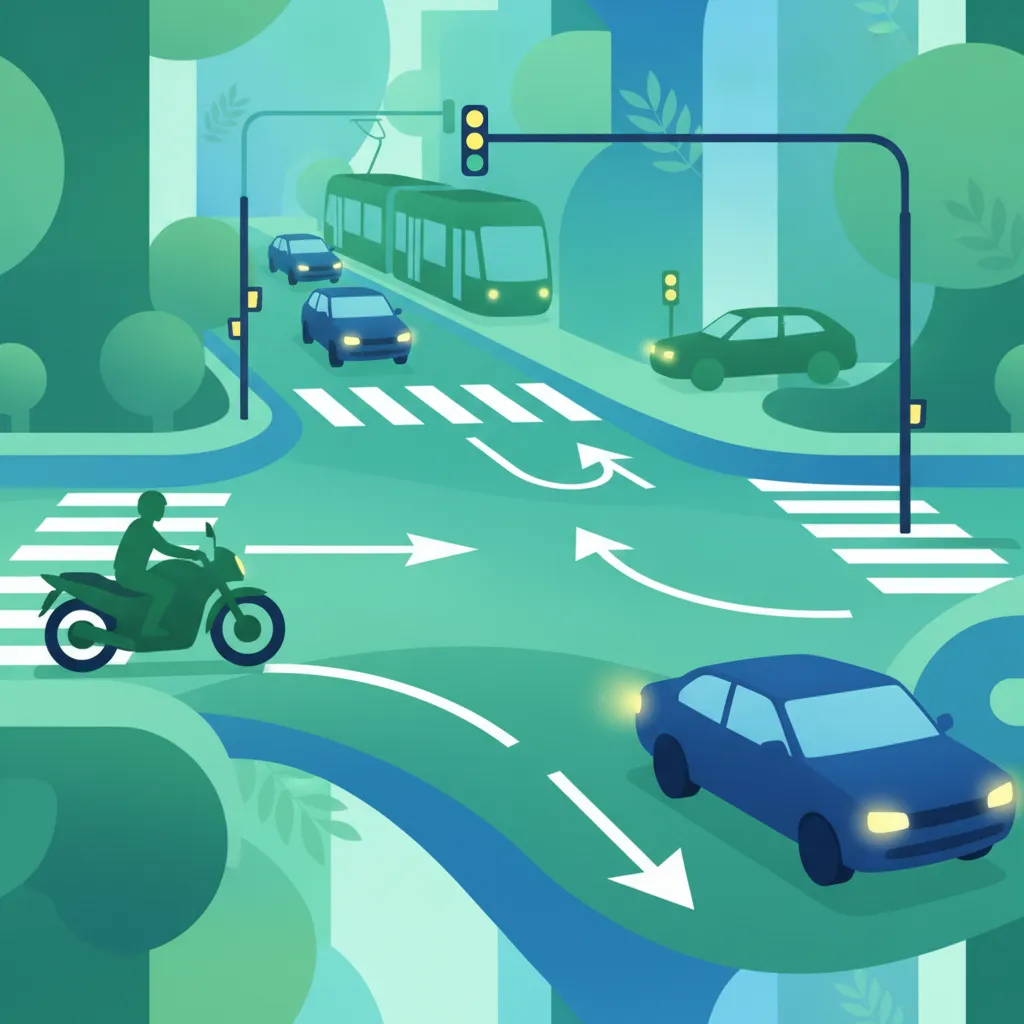
At its core, Belgian traffic law is built upon a fundamental principle: priority from the right, often referred to as the "right-hand rule" (or rechts voorrang in Dutch). This rule dictates who proceeds first at an intersection where there are no traffic signs, signals, or road markings indicating otherwise.
In the absence of any other traffic control devices, a vehicle approaching an uncontrolled intersection must yield to any vehicle coming from its right. This rule applies to all drivers, including motorcyclists, ensuring predictability at unmarked junctions. For example, if you are approaching a crossroads and a vehicle is coming from your right, you must slow down and allow that vehicle to pass before you proceed. This principle is crucial for managing traffic at countless minor intersections across Belgium, especially in residential or rural areas where formal signage might be scarce.
The concept of priority from the right is designed to eliminate guesswork and assign clear responsibility. It is vital not to assume priority based on vehicle size, type, or perceived speed. Every driver must actively assess the intersection and identify if there is traffic approaching from their right that they must yield to. Failure to yield in such a scenario is a common cause of collisions and can lead to significant legal penalties.
While priority from the right serves as the default, many junctions in Belgium are controlled by specific traffic signs that override this general rule. The most common of these are the yield sign and the stop sign, each demanding a distinct response from the driver.
The yield sign (sign B1) is a triangular sign, typically with a red border and a white background. It explicitly instructs drivers to give way to traffic on the road they are about to enter or cross. This means you must be prepared to slow down significantly, or even come to a complete stop, to allow vehicles on the intersecting road to pass first. The presence of a yield sign means that the intersecting road has priority over your current path.
When encountering a yield sign, a motorcyclist should:
A common misunderstanding is to treat a yield sign as optional if the road appears clear. However, the requirement to yield is absolute. You must ensure that your entry into the intersection does not force other drivers to brake or swerve. Yield signs are frequently found at T-junctions, crossroads where one road has priority, and at the entrance to roundabouts (though roundabouts have their own specific priority rule for circulating traffic, often reinforced by a yield sign).
The stop sign (sign B5) is an octagonal red sign with the word "STOP" in white letters. It is one of the most authoritative regulatory signs and demands a complete and absolute halt before proceeding. Unlike a yield sign, which allows for a rolling yield if the path is clear, a stop sign mandates that your vehicle comes to a full stop.
When approaching a stop sign, motorcyclists must:
Rolling through a stop sign, even at a slow speed, is a significant violation and carries severe penalties. The purpose of the stop sign is to compel drivers to take maximum caution at potentially dangerous intersections, allowing sufficient time to assess the situation fully before moving forward.
Certain main roads in Belgium are designated as priority roads (also known as priority ways). Vehicles travelling on a priority road have continuous right-of-way over traffic entering or crossing from intersecting roads. This significantly streamlines traffic flow on major routes and often allows for higher speeds.
A priority road is indicated by sign B7, a white square with a black border and a yellow diamond symbol in the centre. This sign means that traffic on this road has priority at all subsequent intersections until an end-of-priority-road sign (B9 – the same yellow diamond with a black diagonal stripe through it) is encountered.
For motorcyclists, understanding priority roads means:
It's a common mistake to assume a priority road continues indefinitely. Always be aware of the end-of-priority-road sign (B9) as it indicates that the default priority from the right rule, or other specific signage, will resume at subsequent junctions.
Roundabouts are circular intersections designed to improve traffic flow and safety by replacing traditional four-way stops or traffic light intersections. They have their own specific priority rule that motorists must adhere to.
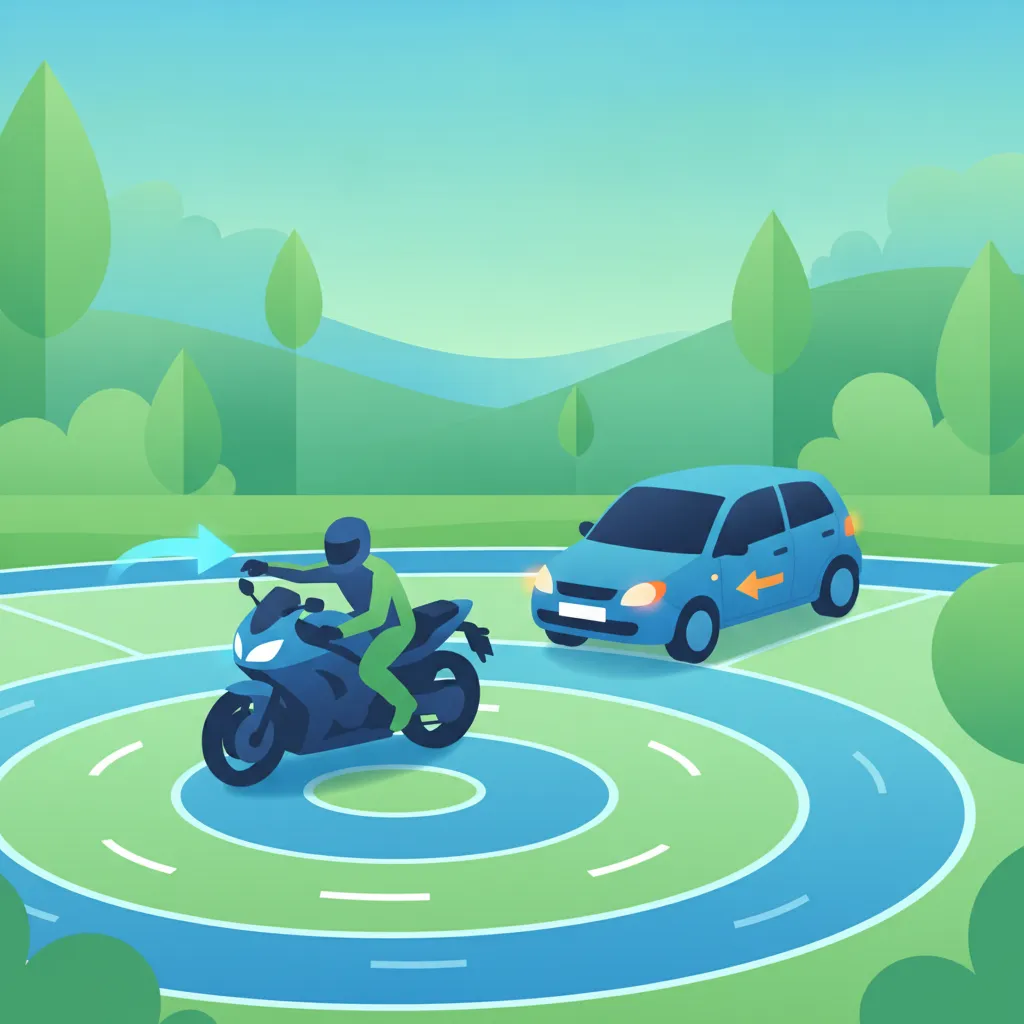
In Belgium, the rule at roundabouts (indicated by sign D5) is clear: vehicles already circulating within the roundabout have priority over vehicles entering it. This means that if you are approaching a roundabout, you must yield to traffic coming from your left that is already inside the roundabout.
When approaching a roundabout on your motorcycle:
A common error is for drivers to enter a roundabout without yielding, causing potential conflicts and accidents. Remember, the general rule of priority from the right does not apply to traffic entering a roundabout; instead, circulating traffic has the right-of-way. Once you are inside the roundabout, you have priority until you exit.
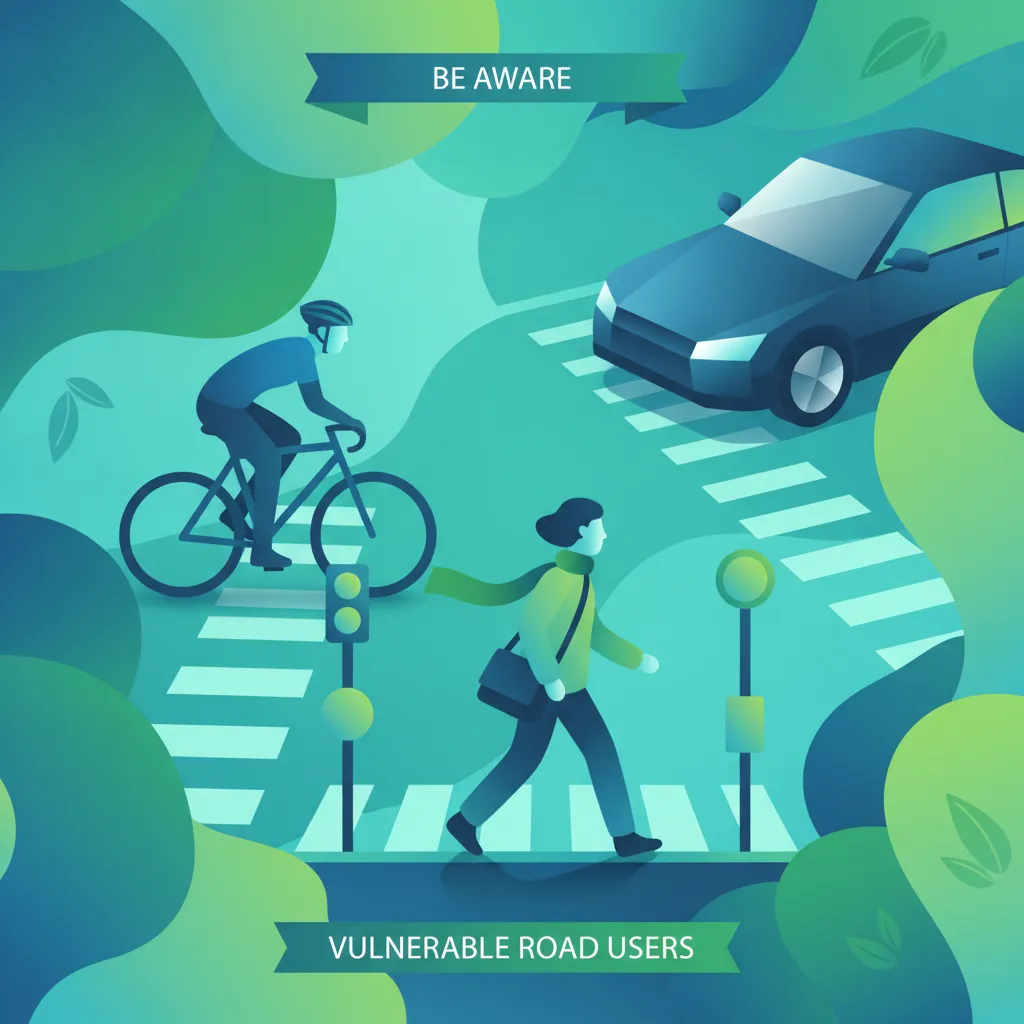
Belgian traffic law places a strong emphasis on protecting vulnerable road users – pedestrians, cyclists, and occupants of certain public transport vehicles like trams. Specific rules grant them priority in particular situations, overriding general priority principles.
At marked pedestrian crossings, indicated by zebra stripes on the road, pedestrians generally have priority. If a pedestrian is already on the crossing or clearly intending to cross, drivers must stop and yield to them. This applies even if there are no traffic lights or specific yield signs for pedestrians.
When approaching a crosswalk:
Failing to yield to pedestrians at a marked crosswalk is a serious offence due to the significant risk posed to them.
Cyclists also receive special priority in designated areas. At marked bicycle crossings that are part of a continuous bicycle path, cyclists often have priority over turning vehicles or vehicles crossing the path. Drivers emerging from a path or road must yield to cyclists on dedicated bicycle paths.
Motorcyclists should always be extra vigilant for cyclists, especially when turning or merging, as they can be less visible and their intentions sometimes harder to predict.
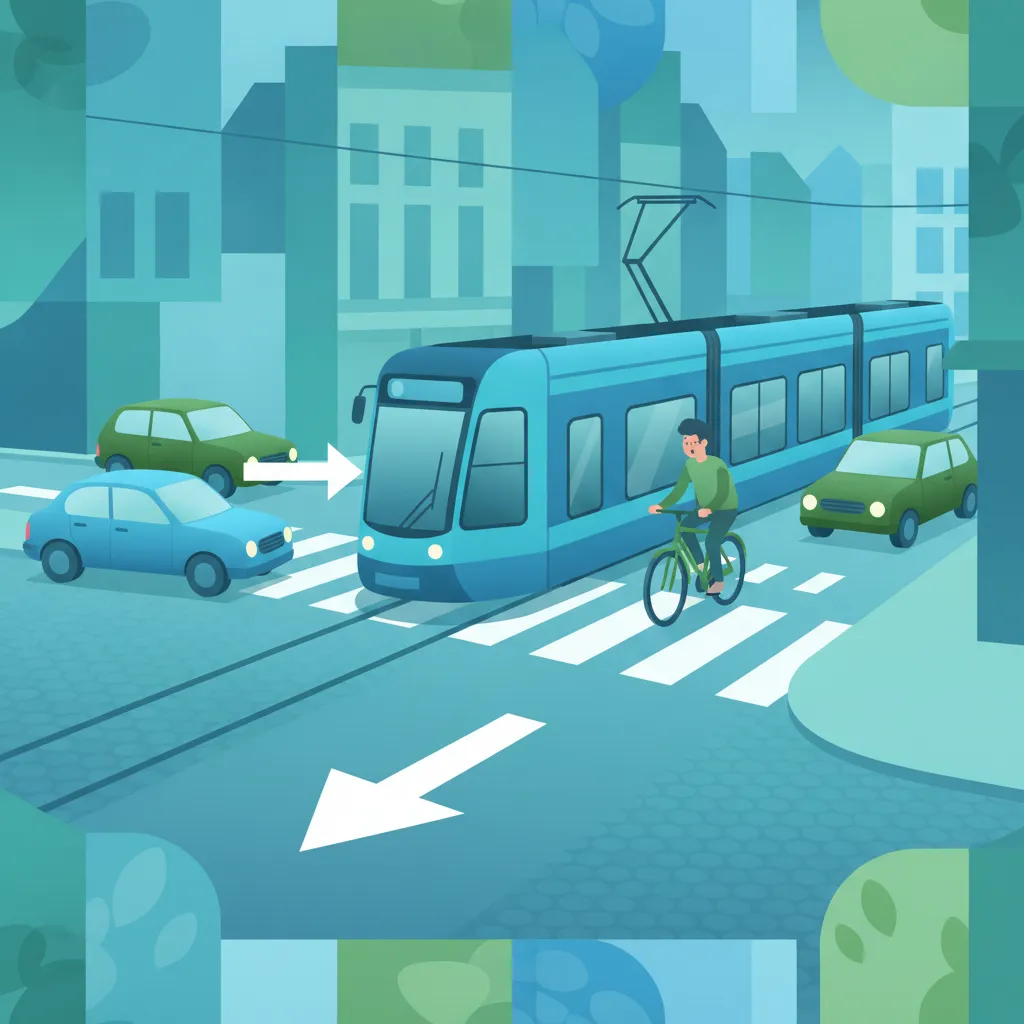
Trams, being fixed-rail vehicles, almost always have priority in Belgium. At tram crossings or in areas where trams operate, other road users must yield to them, regardless of other signs or signals, unless traffic lights specifically indicate otherwise. This is due to the tram's inability to swerve or stop quickly. When a tram approaches, it takes precedence over all other traffic. This also extends to certain public transport buses when pulling out from a designated stop within an urban area, where other vehicles are often required to yield.
While priority rules are generally straightforward, their application in real-world driving situations can be influenced by various external factors. A responsible motorcyclist considers these conditions to ensure safe navigation, even when they technically have the right-of-way.
Adverse weather conditions such as heavy rain, fog, or snow significantly reduce visibility and stopping distances. Even if you have priority, you must exercise extreme caution. Reduced visibility means others might not see you, and your own assessment of an intersection might be impaired. Always be prepared to yield or stop, even if the rules technically grant you right-of-way, if it prevents a dangerous situation. Nighttime driving also reduces visibility, making it harder to spot signs and other road users. Rely on reflective signs and your full attention.
The application of priority rules can also vary based on the type of road and environment. For instance, on motorways (expressways), there is no priority from the right rule; merging traffic typically yields to circulating traffic. In contrast, urban roads often feature complex intersections with multiple signs and signals, demanding constant vigilance. Rural roads might have many uncontrolled intersections where priority from the right is the primary rule. Always adapt your riding to the specific road type.
The type of vehicle you are driving can also impact how you apply priority rules. Heavy vehicles, for example, require significantly longer stopping distances. As a motorcyclist, while you are nimble, you are also more vulnerable. Always assess the stopping capabilities of other vehicles around you. Special conditions like emergency vehicles (with flashing lights and sirens) always have absolute priority, regardless of any other signs or rules. Drivers must immediately yield the right-of-way to them.
Understanding common mistakes helps motorcyclists proactively prevent them, ensuring safer riding and compliance with the law.
Let's illustrate these rules with practical examples that you might encounter on your motorcycle.
Explanation: In this classic scenario, the rule of priority from the right creates a deadlock. In such cases, drivers must communicate (e.g., eye contact, hand gestures) and proceed cautiously, usually by allowing the vehicle that arrived first to establish priority, or by mutual agreement. However, the theoretical rule assigns priority to the vehicle on your right. The safest approach is for each vehicle to ensure the vehicle to its right can proceed safely, often resulting in the first vehicle to arrive proceeding first, then the next in a clockwise fashion.
Explanation: The motorcycle on the minor road must yield to the white car on the main road because of the yield sign. The motorcyclist must slow down, check for traffic from both left and right on the main road, and only proceed when there is a safe gap, allowing the white car to pass first.
Explanation: The blue car, already circulating in the roundabout, has priority. The red motorcycle approaching the entry must yield to the blue car. The motorcyclist should slow down, look for circulating traffic from their left, and enter only when the path is clear, ensuring they do not cut off the blue car.
Explanation: The green motorcycle on the priority road has the right-of-way. The yellow car on the side street, faced with a yield sign, must stop or slow down and yield to the motorcycle on the priority road before proceeding. The motorcyclist, while having priority, should still be aware of the intersecting traffic and potential errors.
Mastering priority rules and right-of-way scenarios is not just a theoretical exercise; it is a critical skill for every motorcyclist in Belgium. Adhering to these rules fosters predictability, significantly reduces the risk of collisions, and contributes to a smoother, safer traffic environment for everyone. By consistently applying the principle of priority from the right, understanding the directives of yield and stop signs, respecting priority roads, navigating roundabouts correctly, and always yielding to vulnerable road users, you will become a more responsible, confident, and competent rider. Remember that while rules provide a framework, your ultimate safety always depends on vigilance, anticipation, and defensive riding.
This lesson covers the foundational priority rules of Belgian traffic law essential for safe motorcycle operation. It establishes priority from the right as the default principle at uncontrolled intersections, while explaining how specific regulatory signs like yield (B1) and stop (B5) override this default. The lesson details priority roads (B7/B9), roundabout protocols where circulating traffic takes precedence, and special protections for vulnerable users including pedestrians at crosswalks, cyclists on dedicated paths, and trams which have near-absolute priority at crossings. Understanding these rules is critical for both passing the theory exam and navigating Belgian roads safely.
A short set of high-value points that capture the most important learning from this lesson.
Priority from the right is the default rule at uncontrolled Belgian intersections, requiring you to yield to traffic approaching from your right
Traffic signs always override the default priority-from-right rule; yield (B1) and stop (B5) signs dictate who must give way
Priority roads (B7) grant continuous right-of-way over intersecting side roads until an end-of-priority sign (B9) is encountered
At roundabouts, vehicles already circulating have absolute priority over vehicles attempting to enter
Trams have near-absolute priority at crossings due to their inability to swerve or stop quickly, overriding other general rules
Explore all units and lessons included in this driving theory course.
At any unmarked intersection, yield to vehicles approaching from your right
A stop sign (B5) requires a complete halt before proceeding; a yield sign (B1) requires slowing and giving way without necessarily stopping
Priority road status ends at the B9 sign, after which priority from the right resumes at subsequent junctions
Pedestrians on marked zebra crossings always have priority, even without specific pedestrian signals
When multiple vehicles arrive simultaneously at an uncontrolled crossroads, communicate and proceed cautiously, usually in clockwise order
Rolling through a stop sign without coming to a complete halt
Entering a roundabout without yielding to traffic already circulating inside it
Assuming you have priority when you should yield to traffic from your right at an uncontrolled intersection
Failing to yield to pedestrians who are already on or clearly waiting at a marked crosswalk
Ignoring the end-of-priority-road sign (B9) and incorrectly assuming priority continues indefinitely
Lesson content overview
A short set of high-value points that capture the most important learning from this lesson.
Priority from the right is the default rule at uncontrolled Belgian intersections, requiring you to yield to traffic approaching from your right
Traffic signs always override the default priority-from-right rule; yield (B1) and stop (B5) signs dictate who must give way
Priority roads (B7) grant continuous right-of-way over intersecting side roads until an end-of-priority sign (B9) is encountered
At roundabouts, vehicles already circulating have absolute priority over vehicles attempting to enter
Trams have near-absolute priority at crossings due to their inability to swerve or stop quickly, overriding other general rules
Explore all units and lessons included in this driving theory course.
At any unmarked intersection, yield to vehicles approaching from your right
A stop sign (B5) requires a complete halt before proceeding; a yield sign (B1) requires slowing and giving way without necessarily stopping
Priority road status ends at the B9 sign, after which priority from the right resumes at subsequent junctions
Pedestrians on marked zebra crossings always have priority, even without specific pedestrian signals
When multiple vehicles arrive simultaneously at an uncontrolled crossroads, communicate and proceed cautiously, usually in clockwise order
Rolling through a stop sign without coming to a complete halt
Entering a roundabout without yielding to traffic already circulating inside it
Assuming you have priority when you should yield to traffic from your right at an uncontrolled intersection
Failing to yield to pedestrians who are already on or clearly waiting at a marked crosswalk
Ignoring the end-of-priority-road sign (B9) and incorrectly assuming priority continues indefinitely
Explore search topics learners often look for when studying Priority Rules and Right-of-Way Scenarios. These topics reflect common questions about road rules, driving situations, safety guidance, and lesson level theory preparation for learners in Belgium.
Browse additional driving theory lessons that cover connected traffic rules, road signs, and common driving situations related to this topic. Improve your understanding of how different rules interact across everyday traffic scenarios.
Understand specific Belgian traffic laws regarding priority for trams, cyclists, pedestrians, and emergency vehicles. Learn how these rules apply in complex scenarios and differ from standard priority from the right.
This lesson introduces the core principles of priority that govern traffic flow in Belgium, with a primary focus on the 'priority from the right' rule. It explains how to identify priority roads indicated by signs and how to act at uncontrolled intersections where the default rule applies. Understanding these rules is critical for AM riders to navigate junctions, intersections, and roundabouts safely and without conflict.

This lesson details the specific rights and responsibilities of motorcyclists within the Belgian road system, focusing on the correct application of priority rules and safe overtaking. It covers the legal requirements for signaling intentions and adhering to proper road etiquette to ensure smooth traffic flow. The content emphasizes how riders must balance their rights with their safety obligations toward all other road users.
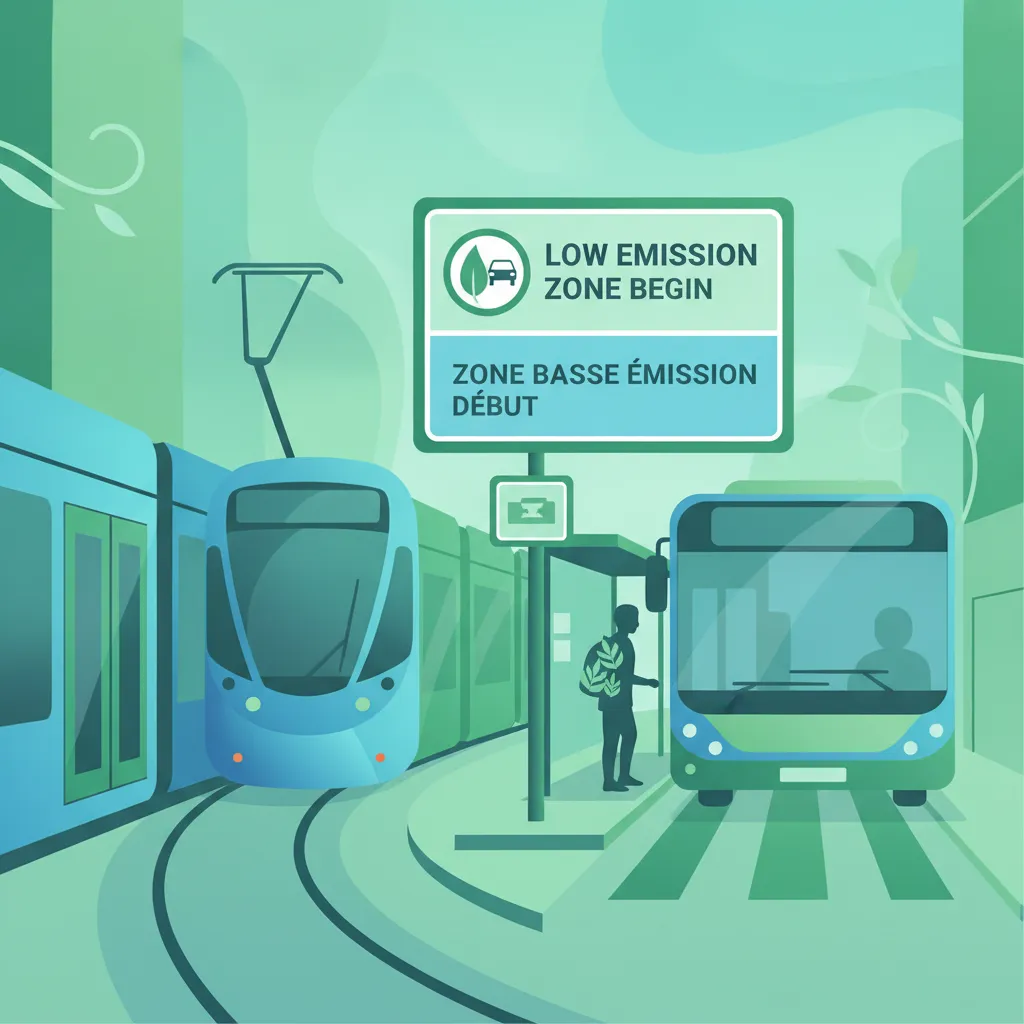
This lesson addresses unique traffic environments and special zones commonly found in Belgian urban areas. It clarifies the specific regulations concerning tramways, including where trams have absolute priority, and the conditions under which motorcycles may use bus lanes. The lesson also explains how to identify and comply with restrictions in low-emission zones.
This lesson details a motorcyclist's obligations when approaching various types of crossings, including marked pedestrian and bicycle lanes. It emphasizes the legal requirement to yield to vulnerable road users and the importance of thorough visual checks before proceeding. You will learn how to maintain a safe distance and anticipate the movements of pedestrians and cyclists in urban areas.
This lesson provides a systematic approach to navigating intersections, emphasizing the importance of observation, speed control, and correct positioning. It reinforces the application of priority-from-the-right and other right-of-way rules in real-world junction scenarios. You will learn effective visual scanning techniques to anticipate the actions of other road users and ensure a safe passage.
In this lesson, learners will examine the fundamental priority rules that dictate traffic flow at unmarked intersections. The lesson focuses on the principle of priority from the right, the hierarchy of traffic signs and signals, and situations requiring yielding or stopping. Understanding these principles is crucial for safe and lawful navigation of Belgian road networks.
This lesson offers specific strategies for motorcyclists navigating roundabouts in Belgium. It covers the rules for entering the roundabout, including yielding to circulating traffic, and how to choose the correct lane for your intended exit. The content stresses the importance of clear signaling and maintaining awareness of other vehicles during entry and exit maneuvers.
This lesson focuses on the legal responsibilities mandated for all motorcyclists in Belgium, emphasizing strict adherence to the traffic code. It details a rider's obligation to conduct risk assessments, comply with speed limits, and maintain high safety standards. The content also clarifies the legal liability associated with traffic infractions and the importance of carrying correct documentation at all times.

This lesson provides a step-by-step guide to executing a safe overtaking maneuver in compliance with Belgian law. It covers the necessary pre-maneuver checks, proper signaling, and how to accurately judge the speed and distance of oncoming traffic. You will learn the correct procedure for passing a vehicle and safely returning to your original lane.
This lesson examines the operation of traffic light systems in Belgium, clarifying the meaning of red, amber, and green signals, including flashing lights and directional arrows. It details a motorcyclist's legal obligations when approaching and navigating signal-controlled intersections. The content also addresses specialized signals for pedestrians and trams that riders must recognize and respond to correctly.
Identify and learn to avoid frequent errors in applying Belgian priority rules at intersections, roundabouts, and when dealing with other road users. Enhance your understanding of right-of-way to improve road safety and theory exam preparation.
In this lesson, learners will examine the fundamental priority rules that dictate traffic flow at unmarked intersections. The lesson focuses on the principle of priority from the right, the hierarchy of traffic signs and signals, and situations requiring yielding or stopping. Understanding these principles is crucial for safe and lawful navigation of Belgian road networks.
This lesson introduces the core principles of priority that govern traffic flow in Belgium, with a primary focus on the 'priority from the right' rule. It explains how to identify priority roads indicated by signs and how to act at uncontrolled intersections where the default rule applies. Understanding these rules is critical for AM riders to navigate junctions, intersections, and roundabouts safely and without conflict.
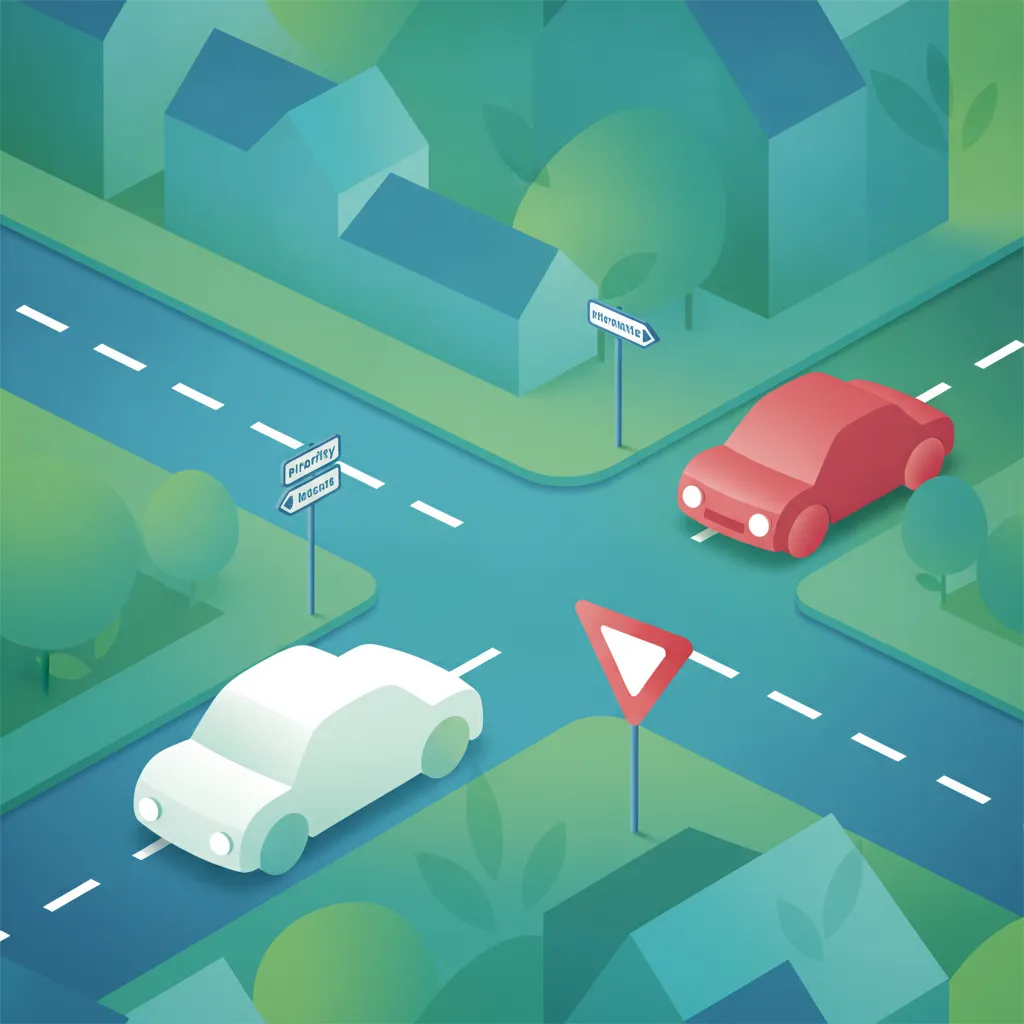
This lesson focuses on the distinction between the default priority from the right and designated priority roads, explaining how drivers should yield or proceed. Learners will discover the specific signs that indicate a priority road and when that priority ends. Understanding these concepts is essential for predictable and safe road use at intersections.

This lesson focuses on the rules governing pedestrian crossings, including marked zebra crossings and signal-controlled crossings. Special attention is given to school zones and residential areas where pedestrian activity is high. Learners will understand how to recognize and respect pedestrian priority in various crossing scenarios to ensure their safety.
This lesson details the safe and systematic approach to different types of intersections, both signal-controlled and uncontrolled. It explains how to use road signs and markings to determine right-of-way and when to stop or yield. The importance of comprehensive scanning for traffic from all directions and adjusting approach speed is emphasized to ensure safe passage.

Overtaking safely is a critical driving skill. This lesson explains where and how overtaking is permitted in Belgium, the importance of correct signaling, and maintaining a sufficient speed differential. Learners will understand the rules for passing on motorways and single-carriageway roads, and how to identify zones where overtaking is prohibited.
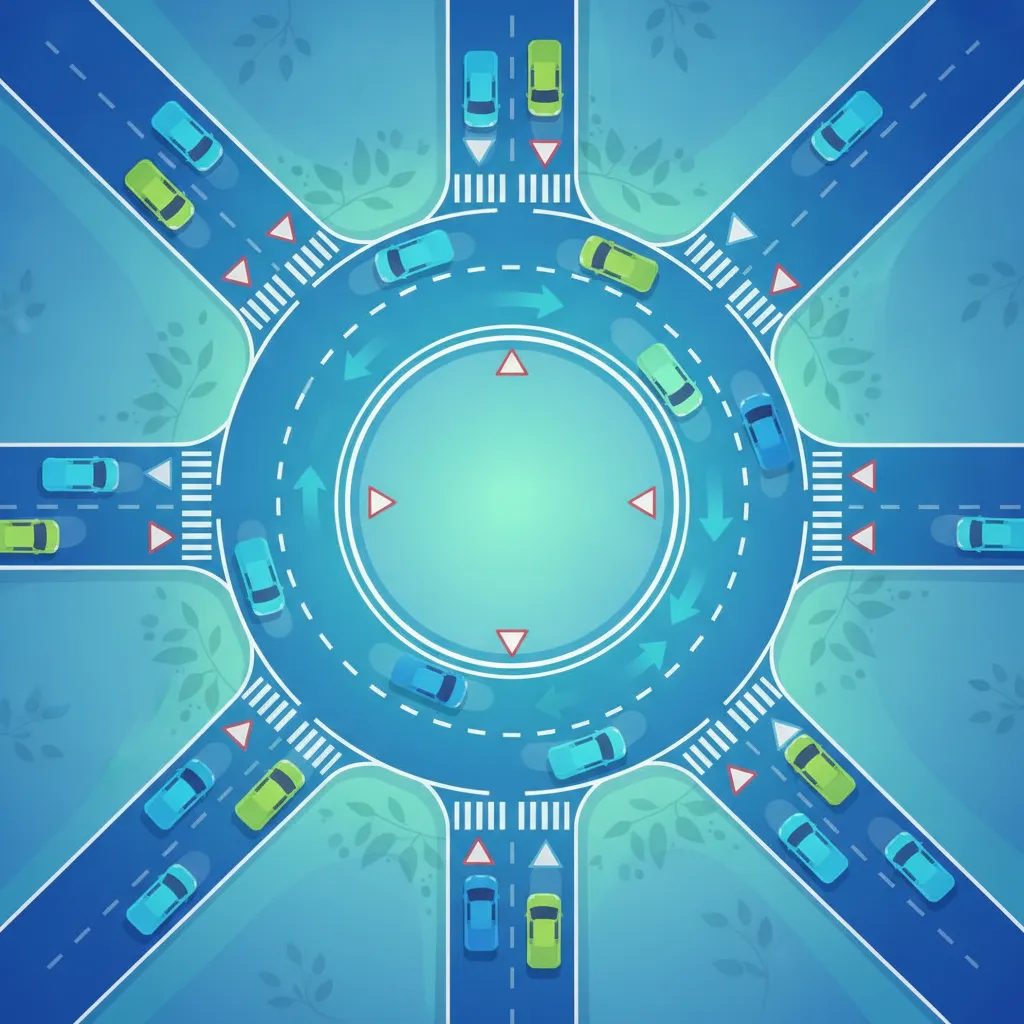
Roundabouts are a key feature of Belgian traffic management. This lesson explains how to approach, enter, navigate, and exit a roundabout safely, with a focus on yielding priority to traffic already circulating. Learners will also study correct lane positioning on multi-lane roundabouts and the appropriate use of signals.
This lesson provides a systematic approach to navigating intersections, emphasizing the importance of observation, speed control, and correct positioning. It reinforces the application of priority-from-the-right and other right-of-way rules in real-world junction scenarios. You will learn effective visual scanning techniques to anticipate the actions of other road users and ensure a safe passage.
This lesson details the specific rights and responsibilities of motorcyclists within the Belgian road system, focusing on the correct application of priority rules and safe overtaking. It covers the legal requirements for signaling intentions and adhering to proper road etiquette to ensure smooth traffic flow. The content emphasizes how riders must balance their rights with their safety obligations toward all other road users.
This lesson details a motorcyclist's obligations when approaching various types of crossings, including marked pedestrian and bicycle lanes. It emphasizes the legal requirement to yield to vulnerable road users and the importance of thorough visual checks before proceeding. You will learn how to maintain a safe distance and anticipate the movements of pedestrians and cyclists in urban areas.
Find clear answers to common questions learners have about Priority Rules and Right-of-Way Scenarios. Learn how the lesson is structured, which driving theory objectives it supports, and how it fits into the overall learning path of units and curriculum progression in Belgium. These explanations help you understand key concepts, lesson flow, and exam focused study goals.
It is the default rule at intersections where there are no traffic signs or road markings. However, if there are priority signs, traffic lights, or road markings like shark teeth, you must follow those instead.
In most cases, yes. Trams have priority over other vehicles at intersections unless specific signs or signals indicate otherwise. As a motorcyclist, you must always yield to trams.
A Stop sign requires a full, complete halt of your motorcycle, even if the road is clear, before proceeding. A Give Way (inverted triangle) sign means you must slow down and allow others to pass if they are close, but you do not need to stop if the intersection is entirely clear.
On a standard roundabout in Belgium, traffic already on the roundabout generally has priority over those entering. Always look for yield signs or markings at the entry point.
Ready to focus your Belgian driving theory revision? Utilize our powerful search tool to pinpoint exact topics, road signs, or difficulty levels. Engage with practice questions that directly address your learning needs and solidify your understanding of Belgian traffic laws for your upcoming exam.