
This lesson provides an in-depth look at how traffic light signals function within the Belgian road network. You will learn to interpret standard lights, flashing signals, and complex directional arrows to ensure you navigate signalized intersections safely as a motorcycle rider.
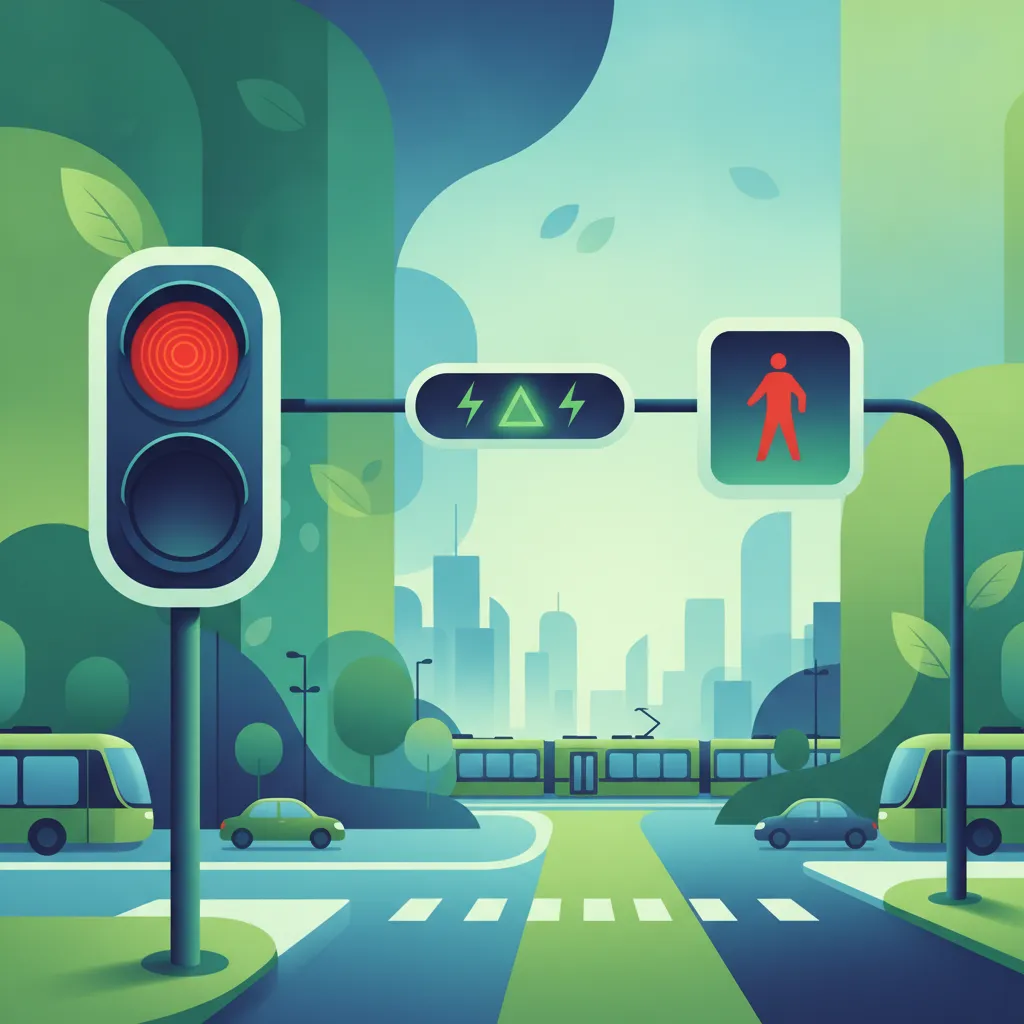
Lesson content overview
Traffic lights and signal coordination are fundamental to managing the flow of vehicles and pedestrians on Belgian roads, particularly at busy intersections. For motorcyclists, a thorough understanding of these signals is not just about compliance; it's about ensuring safety, preventing accidents, and navigating complex junctions confidently. This lesson, part of the Comprehensive Belgian Motorcycle Theory Course: Licence A, A1 & A2, will detail the operation, meaning, and correct response to various traffic signals, from standard red, amber, and green lights to flashing signals, directional arrows, and specialized signals for pedestrians and trams.
Traffic signals are carefully designed systems implemented to control the movement of road users, including vehicles, cyclists, and pedestrians, at intersections, pedestrian crossings, and other conflict points. Their primary purpose is to reduce the potential for collisions and facilitate an orderly, efficient flow of traffic. By providing clear, timed instructions, these signals eliminate ambiguity regarding who has the right-of-way, thereby enhancing overall road safety.
The logic behind traffic signals is rooted in sequencing and timing. Signals are coordinated based on factors such as traffic demand, road geometry, and safety considerations. This coordination ensures that different streams of traffic are given priority at specific times, allowing them to proceed without conflicting with others. For motorcyclists, understanding this underlying logic helps in anticipating signal changes and reacting appropriately, which is crucial for safe riding. This topic is closely linked to priority rules, pedestrian crossings, and tram zones, which you may have covered in previous lessons on Belgian road signs and markings.
To effectively navigate signal-controlled areas, motorcyclists must grasp the core principles governing traffic light operations. These principles dictate how signals change, what they mean, and how various road users are integrated into the system.
Signal timing refers to the programmed durations for which each traffic light color is displayed. These intervals are not arbitrary; they are meticulously calculated to optimize traffic flow, reduce congestion, and enhance safety across an entire network of intersections. Factors like peak hour traffic volumes, the number of lanes, and pedestrian activity all influence signal timing. As a motorcyclist, anticipating these timings—for example, knowing that an amber light typically precedes red—allows you to adjust your speed in advance, ensuring you can stop safely or proceed appropriately.
The standard traffic light sequence provides a predictable progression that all drivers are expected to understand. In Belgium, the typical sequence is:
This predictable sequence allows motorcyclists to anticipate changes and react smoothly, minimizing abrupt braking or acceleration. Violating this sequence, for example, by proceeding during the red and amber phase, constitutes an infraction and increases the risk of collision.
Directional arrows, displayed in green, amber, or red, provide instructions for specific movements at an intersection, such as turning left, right, or going straight. These arrows are particularly important because they can override the general meaning of a main traffic light. For example, a green arrow for a left turn means you can turn left even if the main light for straight-through traffic is red. Conversely, a red arrow prohibits a specific movement, even if the main light is green. Motorcyclists must always prioritize the directives of these arrows for the specific lane they are in.
Beyond vehicular traffic lights, specialized signals are used to manage pedestrians and trams. These signals are vital for the safety of vulnerable road users and the efficient operation of public transport. Motorcyclists must be aware of and respect these signals, as they dictate priority at crossings and junctions. For instance, a green signal for pedestrians means they have the right-of-way, and motorcyclists must yield. Similarly, trams often have their own signals, and when a tram has a green signal, it always has priority, requiring motorcyclists to stop and give way.
The most common traffic signals you will encounter are the standard red, amber, and green lights. Each color has a precise legal meaning and requires a specific response from motorcyclists.
A red light is a mandatory stop signal for all traffic approaching the intersection or crossing. When you see a solid red light, you must bring your motorcycle to a complete halt before the stop line or, if no stop line is present, before the crosswalk. If there is no crosswalk, you must stop before entering the intersection in such a way that you do not obstruct crossing traffic.
There are no exceptions to stopping at a solid red light unless a specific green directional arrow permits a particular movement. Ignoring a red light is a serious offense that significantly increases the risk of side-impact collisions. Occasionally, you might encounter a flashing red light, particularly at railway crossings or emergency vehicle exits; this also means a complete stop, just like a solid red light or a stop sign.
The amber light serves as a caution signal, indicating that the light is about to change to red. Upon seeing a steady amber light, motorcyclists must prepare to stop. The rule is to stop safely before the stop line if you can do so without sudden, dangerous braking.
However, if you are already in the intersection when the light turns amber, or if you are so close to the stop line that an emergency stop would be unsafe (e.g., risking a rear-end collision with the vehicle behind you), you may proceed through the intersection. It is crucial not to accelerate to "beat" the amber light, as this can lead to dangerous situations and traffic violations.
A green light is a go signal, permitting you to proceed through the intersection in the indicated direction(s).
While a green light grants you permission to move, it does not grant absolute right-of-way in all circumstances. As a motorcyclist, you must still be vigilant and proceed with caution. Specifically, you must yield to pedestrians who are already crossing on a green pedestrian signal or who have begun crossing before the light changed. Similarly, you must yield to trams that have their own green signal, as trams always have priority. Always scan the intersection for other road users, especially vulnerable ones, before accelerating.
Beyond the standard red, amber, and green, you will encounter flashing signals that convey specific instructions, primarily involving caution or mandatory stops.
A flashing amber light is a caution signal that indicates you may proceed without stopping, but you must do so with extreme care and be prepared to yield to other traffic or hazards.
This signal is often used at intersections where traffic volumes are low, allowing for free flow but reminding drivers to be vigilant. It is effectively a "yield" situation: you do not have to stop, but you must be prepared to give way to any traffic that might have priority or appear unexpectedly. Do not mistake a flashing amber for a full green light; it always implies a need for heightened awareness and readiness to stop.
A flashing red light carries the same weight as a solid red light or a stop sign: it means you must come to a complete stop.
You must stop before the stop line or crossing, look carefully for conflicting traffic (especially at railway crossings), and only proceed when it is safe to do so. Common locations for flashing red lights include railway level crossings, fire station exits, or emergency vehicle entrances where sudden, high-speed crossings might occur. Ignoring a flashing red light is extremely dangerous and carries severe penalties.
Directional arrows provide specific instructions for turns or straight-through movements, allowing for more precise traffic management at complex intersections.
A green directional arrow permits movement in the indicated direction, even if the main traffic light for other directions is red.
For example, a green left-turn arrow means you can safely turn left while oncoming traffic or straight-through traffic might still be held by a red light. This is designed to optimize traffic flow by allowing turns when there's no conflict. However, always remember to still check for pedestrians or cyclists who might have a conflicting green signal, as they always have priority.
Conversely, a red directional arrow explicitly prohibits movement in the indicated direction, regardless of what the main traffic light displays.
If you see a red left-turn arrow, you must not turn left, even if the main light is green. This setup is common at intersections where a turn might conflict with crossing pedestrians, oncoming traffic, or other simultaneous movements. Motorcyclists must wait until the red arrow turns green before attempting the indicated maneuver. Disregarding a red arrow can lead to severe collisions and legal consequences.
In urban areas, motorcyclists frequently share the road with pedestrians and trams. Recognizing and respecting their specialized signals is critical for safety and adherence to Belgian traffic law.
Pedestrian signals are distinct from vehicle signals and typically feature symbolic representations of a walking person or a hand.
Trams operate on fixed tracks and have limited maneuverability, granting them special priority in traffic. Belgian law prioritizes trams, and specific signals are often used to control their movement.
Adhering to traffic signal rules is not just a matter of good practice; it is a legal requirement with significant implications for safety and penalties for violations.
Rule Statement: Motorcyclists must come to a complete stop at a red traffic light, whether solid or flashing, before the designated stop line or crosswalk.
Applicability: This rule applies universally at all intersections and crossings controlled by a red signal.
Rationale: This rule is paramount for preventing head-on or side-impact collisions at junctions, which can be particularly dangerous for motorcyclists.
Correct Example: A motorcyclist approaches an intersection, sees the light turn red, and smoothly decelerates to a complete stop behind the white stop line.
Rule Statement: Upon encountering a steady amber light, motorcyclists must prepare to stop. Proceeding is only permissible if stopping safely before the stop line is not possible.
Applicability: This applies to all steady amber signals preceding a red light.
Rationale: The amber phase provides a brief window for vehicles already in the intersection to clear it safely, or for those approaching to stop without causing a hazard.
Correct Example: A motorcyclist sees an amber light far enough away to safely slow down and stop before the stop line.
Rule Statement: Motorcyclists may proceed on a green light but must always yield to pedestrians who have a green signal and are crossing, and to trams that have their own green signal.
Applicability: This applies at all intersections and crossings where green lights are displayed.
Rationale: This ensures the safety of vulnerable road users like pedestrians and accounts for the limited maneuverability of trams.
Correct Example: A motorcyclist proceeds on a green light, scanning for and stopping for a pedestrian who has stepped onto the crosswalk with their green signal.
Rule Statement: Do not turn in the direction indicated by a red arrow, even if the main traffic light is green.
Applicability: At any intersection equipped with specific directional arrow signals.
Rationale: Red arrows prevent conflicts with other traffic streams or pedestrians that have priority for that specific movement.
Correct Example: A motorcyclist waits at the stop line even though the main light is green, because the left-turn arrow is red.
Rule Statement: Motorcyclists may turn in the direction of a green arrow, even if the main light for other movements is red, provided it is safe to do so and conflicts with pedestrians or trams are checked.
Applicability: At intersections where green directional arrows are present.
Rationale: Green arrows optimize traffic flow by allowing specific movements when there is no conflict.
Correct Example: A motorcyclist turns left on a green left-turn arrow while the main light for straight-through traffic remains red.
Rule Statement: Motorcyclists must yield to pedestrians who have started crossing the road with a green pedestrian signal.
Applicability: At all pedestrian crossings controlled by traffic lights.
Rationale: This rule safeguards pedestrians, who are highly vulnerable in traffic.
Correct Example: A motorcyclist stops at a green light to allow a group of pedestrians to finish crossing at a green pedestrian signal.
Rule Statement: Motorcyclists must yield to trams that have a green signal and must not overtake a tram at an intersection where it has a signal.
Applicability: At all intersections and crossings where trams operate and have dedicated signals.
Rationale: Trams have fixed paths and long braking distances, requiring them to have priority for safety and operational efficiency.
Correct Example: A motorcyclist stops before an intersection, allowing a tram with a green signal to pass first.
Ignoring or misinterpreting traffic signals is a leading cause of accidents. Here are some common violations by motorcyclists and how to avoid them:
Proceeding on Amber (Beating the Light): Accelerating to get through an amber light before it turns red is extremely dangerous.
Ignoring a Red Directional Arrow: Turning in the direction of a red arrow even if the main light is green.
Not Yielding to Pedestrians on a Green Light: Proceeding through an intersection while pedestrians are crossing with their green signal.
Overtaking a Tram at a Red Signal or Intersection: Attempting to pass a tram that is stopped at a red light or an intersection.
Malformed Intersection Approach: Approaching an intersection at excessive speed, making it impossible to stop safely when the light turns amber.
Effective response to traffic signals requires more than just knowing the rules; it demands adapting your riding to various conditions and contexts.
Adverse weather conditions significantly impact how you should react to traffic signals:
Riding at night presents its own challenges for traffic signal interpretation:
The weight and balance of your motorcycle affect its stopping capabilities:
Always extend extra caution around tram crossings and pedestrian zones, irrespective of your signal:
Traffic signals are a cornerstone of road safety and efficient traffic management. Their correct interpretation and adherence are critical for several reasons:
Violating traffic signals not only puts you and others at risk but also results in significant legal penalties, including fines and potential license consequences. Safe and responsible motorcycling hinges on unwavering respect for these critical road controls.
Let's consider a few practical scenarios to solidify your understanding of traffic light rules as a motorcyclist in Belgium.
Belgian traffic lights follow a predictable sequence where Red requires a complete stop before the line, Red+Amber indicates imminent green but drivers must remain stopped, Green permits movement while still requiring yield to pedestrians and trams, and Amber demands preparation to stop if safely possible. Directional arrows provide specific movement permissions or prohibitions that override the main signal for that lane, with red arrows absolutely prohibiting turns regardless of the main light color. Flashing signals add nuance: flashing amber means proceed with extreme caution without stopping, while flashing red mandates a complete stop identical to a stop sign. Special attention must be given to pedestrians with green signals and trams with priority signals, as these always take precedence over your own green light in Belgian traffic law.
A short set of high-value points that capture the most important learning from this lesson.
The standard Belgian traffic light sequence is Red, Red+Amber, Green, Amber, returning to Red, and each phase has a specific legal meaning
A red directional arrow always prohibits that specific movement, even when the main traffic light shows green
Green lights grant permission to proceed but never override pedestrian or tram priority when they have their own green signals
Flashing amber signals allow you to continue without stopping but require heightened caution and readiness to yield
Trams with a green signal always have priority over other traffic, requiring motorcyclists to stop and give way
Explore all units and lessons included in this driving theory course.
Red+Amber means prepare to go when it turns green, not permission to start moving now
Amber means prepare to stop if safe to do so; only proceed if you cannot stop without causing danger
Flashing amber = proceed with caution (no stop required); Flashing red = complete stop mandatory (like a stop sign)
At any signal-controlled junction, scan for pedestrians and cyclists before accelerating on green
Directional arrows override the main signal for the specific lane and movement they control
Accelerating to 'beat' an amber light instead of stopping safely, which risks collisions with emerging cross-traffic
Turning in the direction of a red arrow because the main light is green, creating conflict with protected traffic streams
Proceeding on a green light without yielding to pedestrians who have already started crossing on their own green signal
Attempting to overtake a tram at a red signal or intersection, where blind spots and disembarking passengers create hazards
Approaching intersections too fast to stop safely on amber, resulting in either running the red or emergency braking that risks a skid
Lesson content overview
A short set of high-value points that capture the most important learning from this lesson.
The standard Belgian traffic light sequence is Red, Red+Amber, Green, Amber, returning to Red, and each phase has a specific legal meaning
A red directional arrow always prohibits that specific movement, even when the main traffic light shows green
Green lights grant permission to proceed but never override pedestrian or tram priority when they have their own green signals
Flashing amber signals allow you to continue without stopping but require heightened caution and readiness to yield
Trams with a green signal always have priority over other traffic, requiring motorcyclists to stop and give way
Explore all units and lessons included in this driving theory course.
Red+Amber means prepare to go when it turns green, not permission to start moving now
Amber means prepare to stop if safe to do so; only proceed if you cannot stop without causing danger
Flashing amber = proceed with caution (no stop required); Flashing red = complete stop mandatory (like a stop sign)
At any signal-controlled junction, scan for pedestrians and cyclists before accelerating on green
Directional arrows override the main signal for the specific lane and movement they control
Accelerating to 'beat' an amber light instead of stopping safely, which risks collisions with emerging cross-traffic
Turning in the direction of a red arrow because the main light is green, creating conflict with protected traffic streams
Proceeding on a green light without yielding to pedestrians who have already started crossing on their own green signal
Attempting to overtake a tram at a red signal or intersection, where blind spots and disembarking passengers create hazards
Approaching intersections too fast to stop safely on amber, resulting in either running the red or emergency braking that risks a skid
Explore search topics learners often look for when studying Traffic Lights and Signal Coordination. These topics reflect common questions about road rules, driving situations, safety guidance, and lesson level theory preparation for learners in Belgium.
Browse additional driving theory lessons that cover connected traffic rules, road signs, and common driving situations related to this topic. Improve your understanding of how different rules interact across everyday traffic scenarios.
Understand specialized traffic signals for pedestrians and trams in Belgium. Learn how these signals dictate priority and ensure safe navigation through complex urban intersections as a motorcyclist.
This lesson examines the interactions between private vehicles and public transport, focusing on buses and trams. Learners will understand the priority rules for these vehicles, recognizing dedicated lanes and stopping positions. Special considerations for motorcyclists, school buses, and other vulnerable users are also discussed to ensure safe coexistence.

This lesson focuses on the rules governing pedestrian crossings, including marked zebra crossings and signal-controlled crossings. Special attention is given to school zones and residential areas where pedestrian activity is high. Learners will understand how to recognize and respect pedestrian priority in various crossing scenarios to ensure their safety.
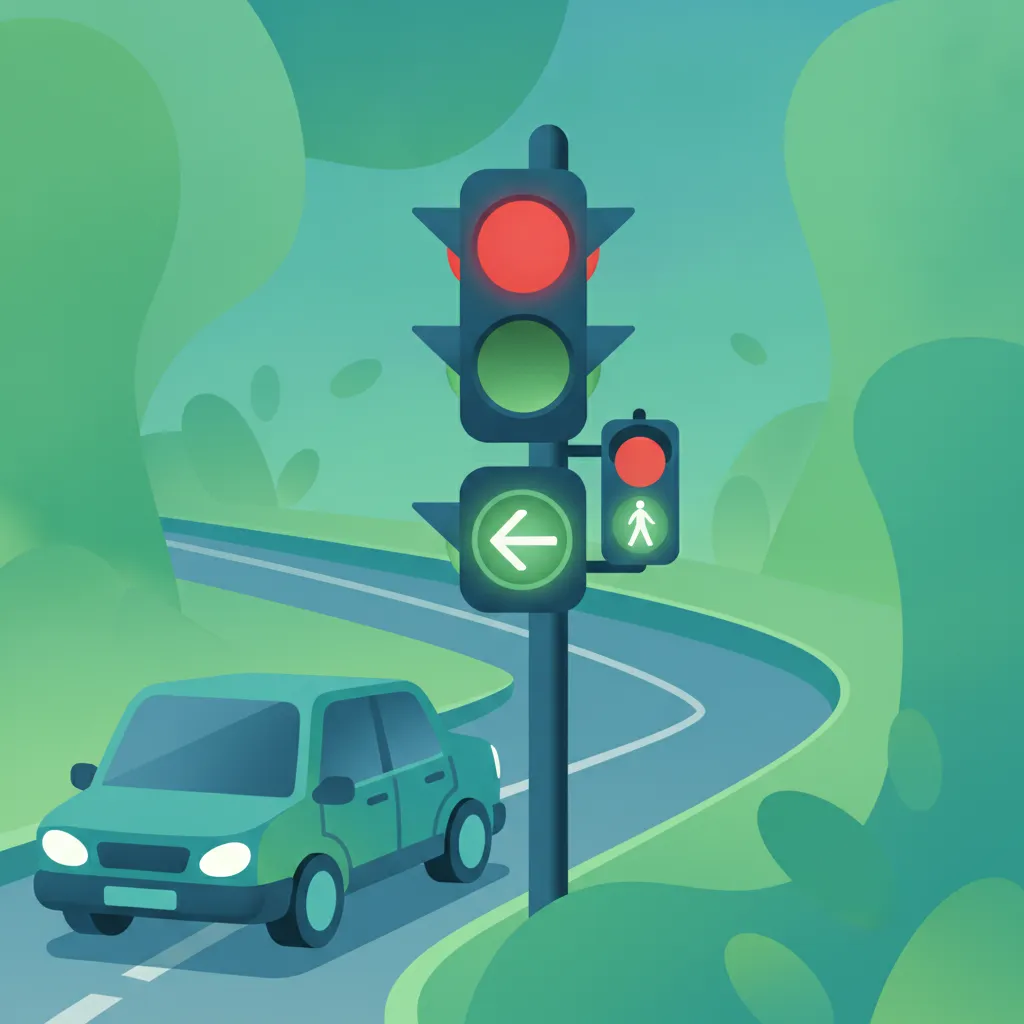
This lesson provides a detailed explanation of traffic light systems and the correct response to each signal. It covers the standard red, amber, and green light sequence, as well as specific signals for pedestrians and cyclists that AM riders must also obey. The meaning of flashing amber and red lights is also clarified to ensure correct and safe behavior at signalized intersections.
This lesson teaches motorcyclists how to safely navigate mixed traffic environments that include cars, buses, and trams. It highlights the significant blind spots of larger vehicles and explains the absolute priority of trams on their tracks. You will learn the rules for sharing space with public transport and how to maintain safe distances when following or overtaking buses.
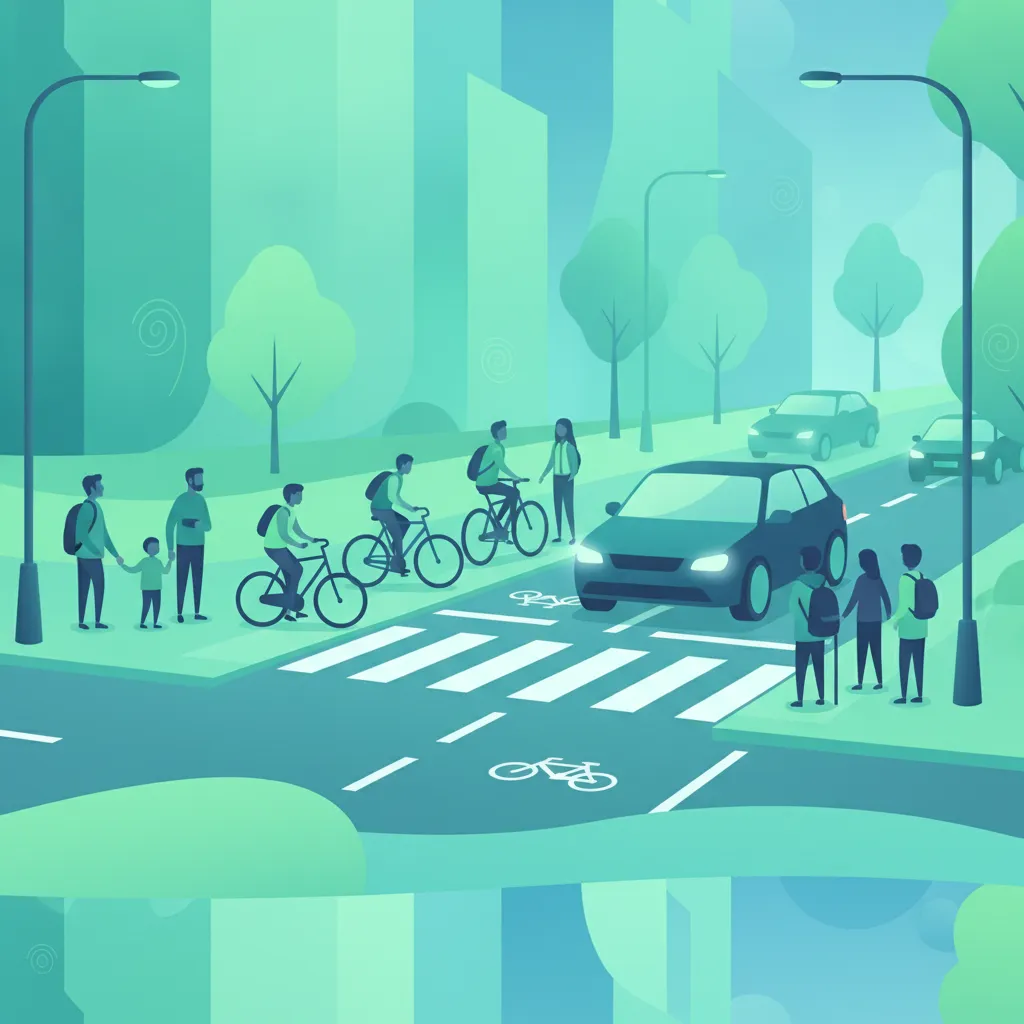
This lesson focuses on the heightened awareness required when approaching and traversing pedestrian and cyclist crossings. It clarifies the legal rules, including the absolute priority of pedestrians on zebra crossings, and the importance of reducing speed. Riders will learn how to anticipate the movements of these vulnerable road users and position their vehicle to ensure a safe interaction.
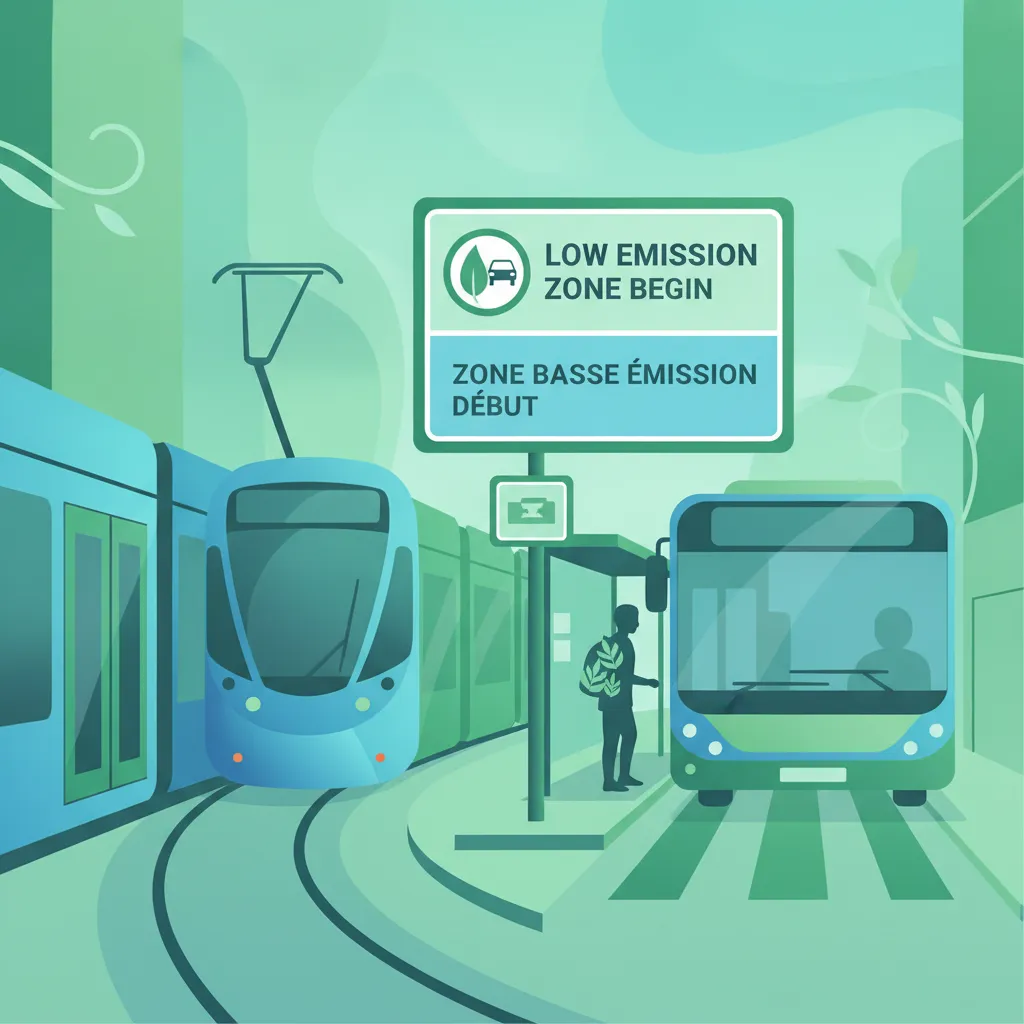
This lesson addresses unique traffic environments and special zones commonly found in Belgian urban areas. It clarifies the specific regulations concerning tramways, including where trams have absolute priority, and the conditions under which motorcycles may use bus lanes. The lesson also explains how to identify and comply with restrictions in low-emission zones.

This lesson details the safe and systematic approach to different types of intersections, both signal-controlled and uncontrolled. It explains how to use road signs and markings to determine right-of-way and when to stop or yield. The importance of comprehensive scanning for traffic from all directions and adjusting approach speed is emphasized to ensure safe passage.
This lesson details a motorcyclist's obligations when approaching various types of crossings, including marked pedestrian and bicycle lanes. It emphasizes the legal requirement to yield to vulnerable road users and the importance of thorough visual checks before proceeding. You will learn how to maintain a safe distance and anticipate the movements of pedestrians and cyclists in urban areas.
Detailed explanation of traffic light sequences, timing, and directional arrows in Belgium. Master how standard, flashing, and arrow signals control intersection traffic flow and your obligations as a rider.
Directional symbols and arrows painted on the road surface guide drivers on permitted lane movements and turning directions. This lesson explains the interpretation of these arrows, covering rules for one-way streets, mandatory turns, and lane-specific instructions. Learners will understand how to comply with these symbols to navigate complex intersections safely and efficiently.
This lesson provides a detailed explanation of traffic light systems and the correct response to each signal. It covers the standard red, amber, and green light sequence, as well as specific signals for pedestrians and cyclists that AM riders must also obey. The meaning of flashing amber and red lights is also clarified to ensure correct and safe behavior at signalized intersections.
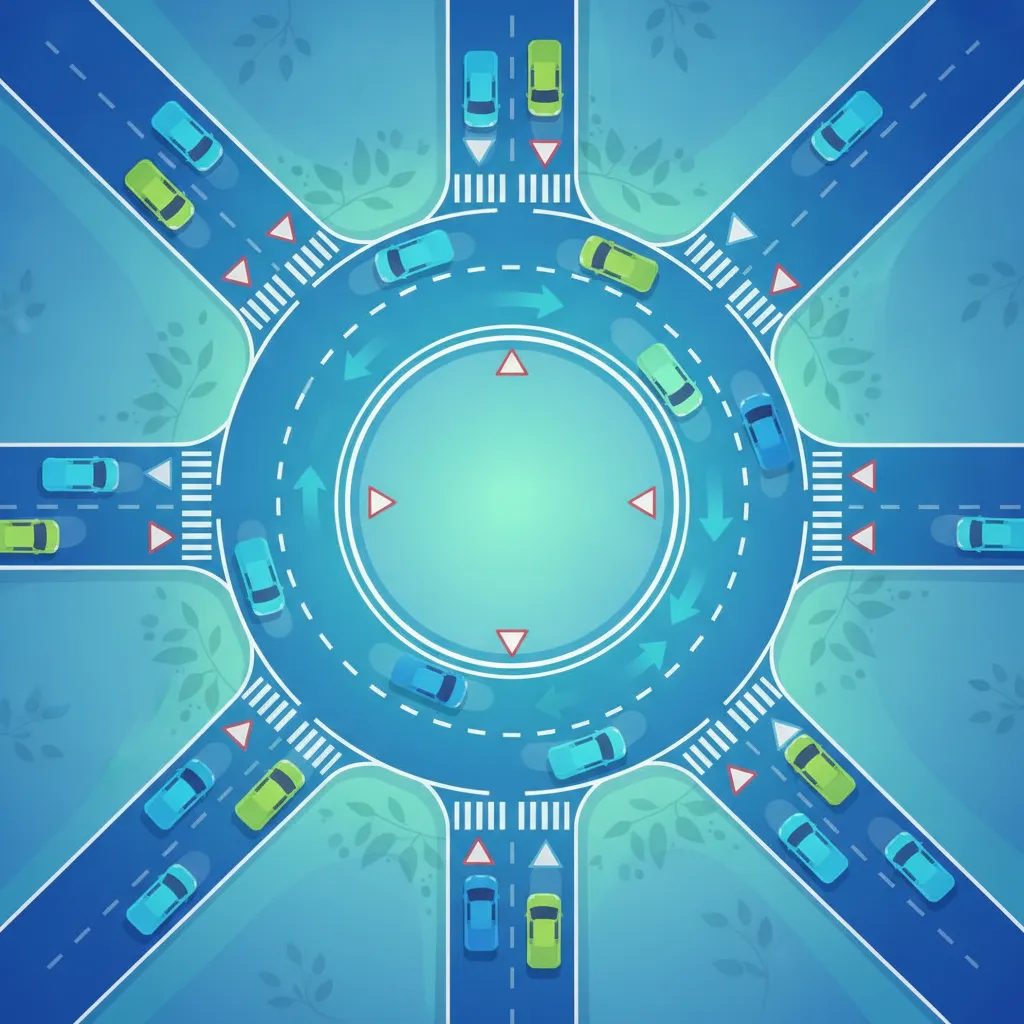
Roundabouts are a key feature of Belgian traffic management. This lesson explains how to approach, enter, navigate, and exit a roundabout safely, with a focus on yielding priority to traffic already circulating. Learners will also study correct lane positioning on multi-lane roundabouts and the appropriate use of signals.

This lesson details the proper use of all vehicle lights and signaling devices. It explains when to use low and high beams, fog lights, hazard lights, and turn signals to communicate effectively with other road users. Correct lighting usage improves visibility and safety, especially in adverse weather conditions and during hours of darkness.
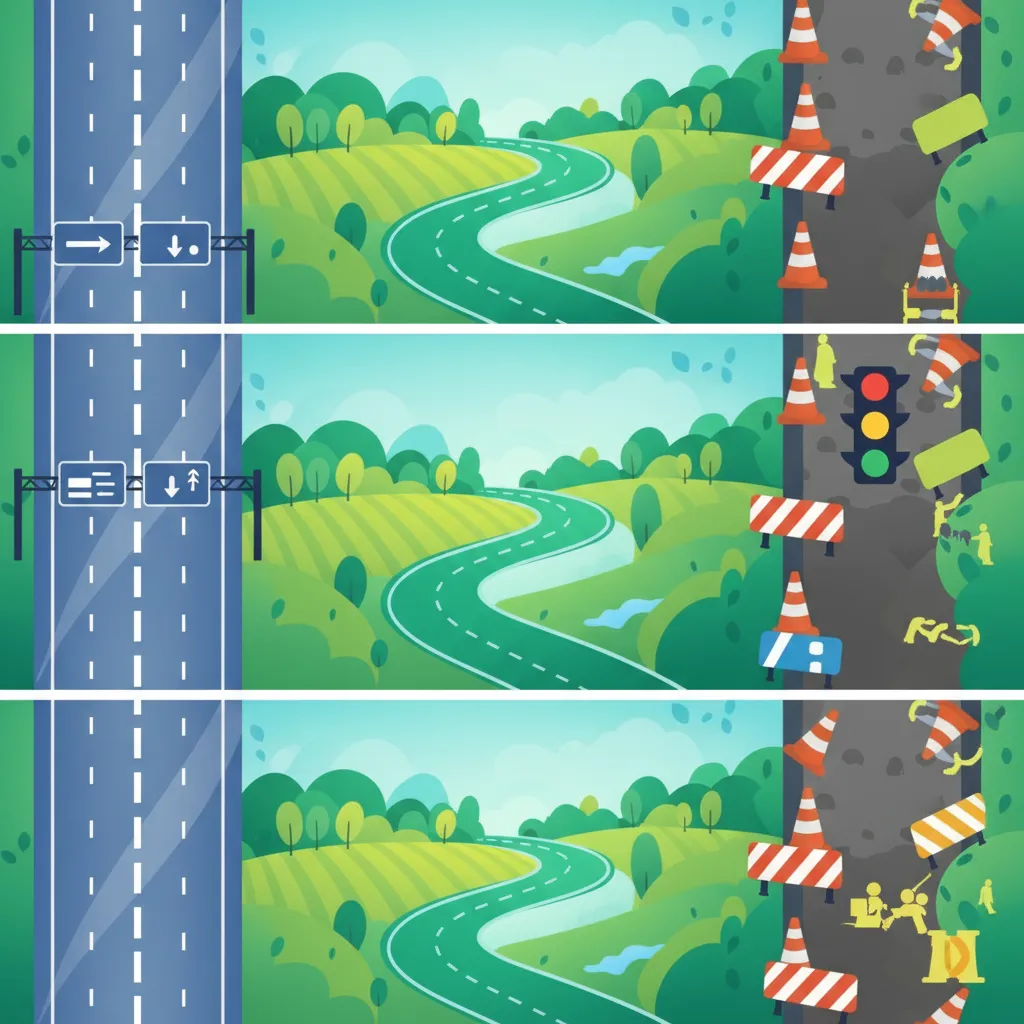
This lesson covers the specific challenges of driving on motorways, rural roads, and navigating roadworks. Learners will review lane discipline on high-speed roads and identify hazards common to rural roads, such as sharp bends and wildlife. It also explains the importance of adjusting speed and following temporary signage in construction zones.

This lesson focuses on warning signs designed to alert drivers to potential hazards ahead. Topics include warnings for sharp curves, steep gradients, slippery surfaces, and zones with high pedestrian or wildlife activity. Learners will understand how to correctly interpret these signs and adjust their driving behavior to maintain safety on the road.

This lesson provides detailed guidance on navigating various intersections, focusing on yielding behaviors at give way signs and mandatory stops at stop signs. Learners will explore how traffic lights override other priority rules and the importance of granting right-of-way to pedestrians and cyclists. The lesson emphasizes safe crossing procedures and correct yielding.
This lesson provides specific instructions for navigating roundabouts, a common feature on Belgian roads. It covers the rules of priority upon entry, the correct lane choice based on the intended exit, and the proper use of signals. Learners will understand how to safely circulate and exit, while being mindful of other vehicles, particularly larger ones with significant blind spots.
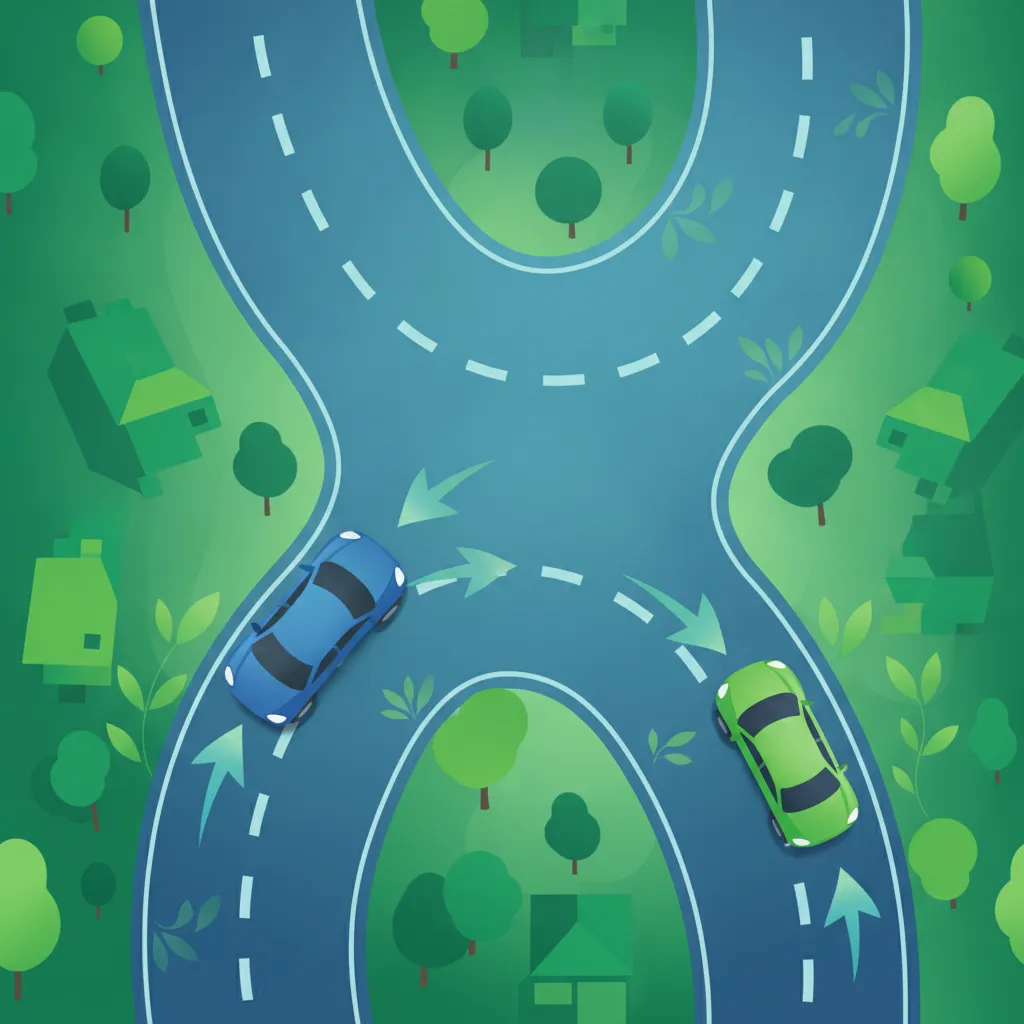
This lesson focuses on basic manoeuvres, covering the proper use of indicators, safe lane positioning, and correct steering for turns. Learners will study the importance of checking blind spots and maintaining appropriate speed for a smooth transition when changing lanes. It also addresses turning at intersections and signaling intentions clearly to other road users.
This lesson focuses on the rules governing pedestrian crossings, including marked zebra crossings and signal-controlled crossings. Special attention is given to school zones and residential areas where pedestrian activity is high. Learners will understand how to recognize and respect pedestrian priority in various crossing scenarios to ensure their safety.
Find clear answers to common questions learners have about Traffic Lights and Signal Coordination. Learn how the lesson is structured, which driving theory objectives it supports, and how it fits into the overall learning path of units and curriculum progression in Belgium. These explanations help you understand key concepts, lesson flow, and exam focused study goals.
You must stop if you can do so safely. If you are already too close to the intersection or braking would cause a danger to yourself or following traffic, you may proceed with caution.
Yes, trams often have specialized signals that override standard traffic lights. Always yield to trams when their dedicated signals indicate they have the right of way, even if your light is green.
A steady red light means you must come to a complete stop. A flashing yellow light serves as a warning, usually at a dangerous intersection, indicating that you must proceed with extra caution while respecting standard priority rules.
Generally no, motorcycles follow the same signals as cars. However, some intersections have special lights for cyclists that might affect your lane positioning if you are filtering or waiting at the stop line.
Ready to focus your Belgian driving theory revision? Utilize our powerful search tool to pinpoint exact topics, road signs, or difficulty levels. Engage with practice questions that directly address your learning needs and solidify your understanding of Belgian traffic laws for your upcoming exam.