
Preparing for your practical driving test requires more than just vehicle control; it demands a clear understanding of the safe and responsible behavior expected by Danish examiners. This guide outlines how to perform essential observation checks and prepare for the initial technical questions, helping you bridge the gap between your theory knowledge and real-world application. Learn how to navigate the test duration effectively and present yourself as a safe, conscientious driver.
Article content overview
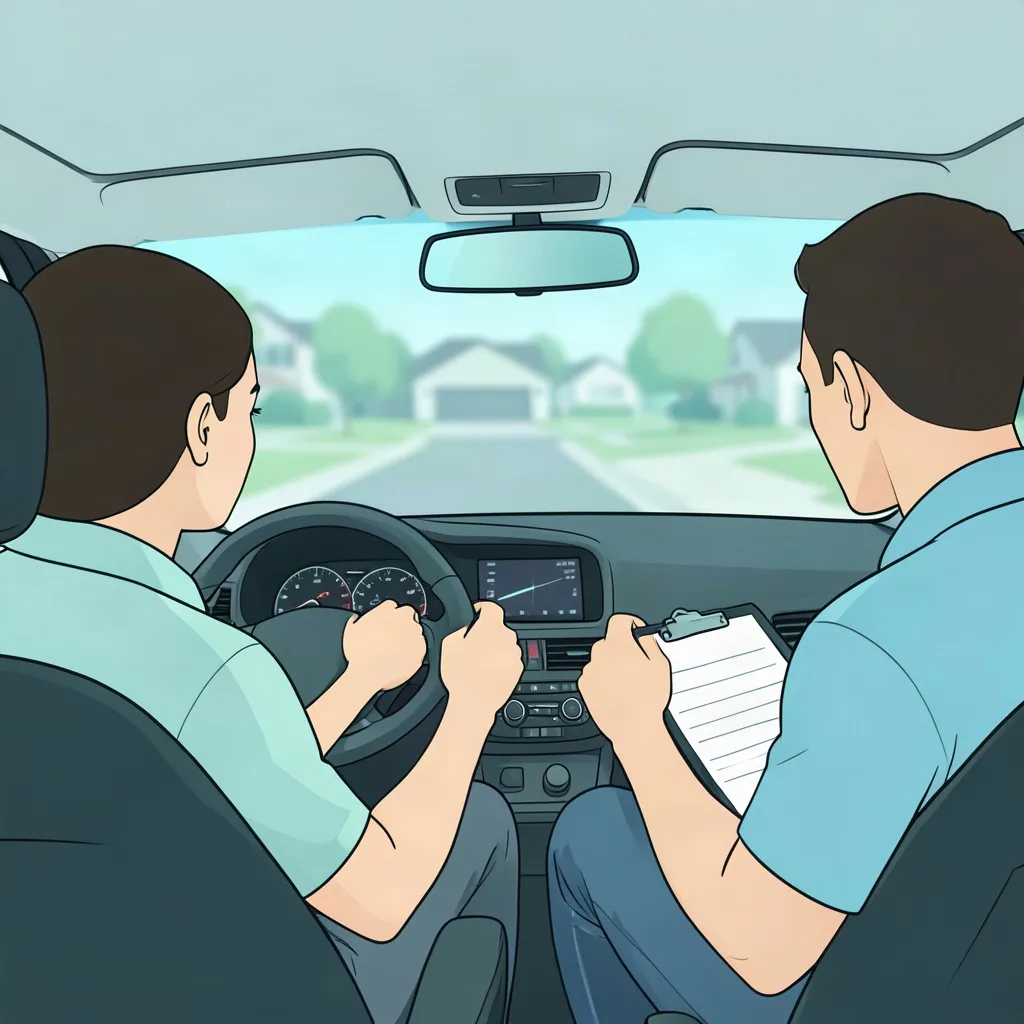
Passing the Danish practical driving test—the køreprøve—is a significant milestone that marks your transition from a student driver to a licensed road user. Administered by Færdselsstyrelsen, this exam is designed to verify that you can operate a vehicle safely, legally, and with consideration for all other road users. It is important to remember that the examiner is not looking for a flawless, robotic performance; rather, they are assessing your ability to handle real-world traffic situations with maturity and sound judgment.
The practical driving test typically lasts between 25 and 45 minutes. Focus on maintaining a calm demeanor and consistent, safe driving behavior rather than striving for perfection, as minor, non-dangerous mistakes are often forgiven if your overall conduct is safe.
In Denmark, the single most critical element of your driving performance is your observation technique. The "mirror-mirror-shoulder" check is a non-negotiable standard that every candidate must master. Before changing lanes, turning, or pulling away from the curb, you must verify that the path is clear by checking your interior mirror, the relevant side mirror, and finally, looking over your shoulder to check the blind spot.
Cyclists are a constant presence in Danish traffic, particularly in urban areas. Failing to check your blind spot when turning right across a cycle path is a common reason for exam failure. Always assume a cyclist might be positioned in your blind spot whenever you approach an intersection or prepare to turn.
Before you even begin driving, you will typically be tested on your technical knowledge of the vehicle. You should be prepared to answer questions or perform quick checks on essential equipment, such as brakes, tires, lighting, and the steering system. This is an official requirement of the Danish undervisningsplan, and being unable to demonstrate basic vehicle familiarity can start the test on a negative note.
The Danish Transport Authority (Færdselsstyrelsen) sets the guidelines for the driving test, ensuring all candidates can prove they possess the necessary skills to contribute to a safe and predictable traffic environment.
It is perfectly natural to feel anxious during your køreprøve. However, the best remedy for nerves is thorough preparation. Ensure that you have all your required documentation, including your signed lektionsplan (lesson plan) and a valid form of identification, such as your passport or current driver's license. If you are under 18, verify that your custodian's consent is in order.
If you feel insecure about your ability to handle specific scenarios—such as motorway entry, complex roundabouts, or heavy city traffic—consult your driving instructor for additional lessons. If a candidate performs a maneuver that is deemed dangerous or illegal, the examiner will interrupt the test immediately. However, if you remain focused on being "safe, lawful, and considerate," you stand the best chance of passing.
The Danish practical driving exam (køreprøve) administered by Færdselsstyrelsen tests your ability to drive safely, lawfully, and considerately over 25-45 minutes. Your primary focus should be mastering the mirror-mirror-shoulder check before changing lanes, turning, or pulling away, with special attention to cyclists in your blind spot. Before driving begins, expect questions about basic vehicle equipment (brakes, tires, lighting, steering). The examiner values mature judgment and safety awareness over flawless performance, so minor mistakes are overlooked if your overall conduct demonstrates responsible driving behavior.
A short set of high-value points that capture the most important ideas from this article.
The mirror-mirror-shoulder check is the single most critical observation technique you must master before your køreprøve
Cyclists in your blind spot are a primary hazard in Danish urban traffic, especially when turning right across cycle paths
The examiner evaluates safe, lawful, and considerate driving behavior rather than flawless performance
Technical vehicle knowledge (brakes, tires, lighting, steering) is tested before you begin driving
Minor non-dangerous mistakes are often forgiven if your overall conduct demonstrates safety and responsibility
Check interior mirror → side mirror → shoulder (blind spot) → signal before any lane change or turn
The practical test lasts between 25 and 45 minutes; maintain consistent safe behavior throughout
Bring your signed lektionsplan (lesson plan) and valid identification on exam day
Always assume a cyclist could be in your blind spot near intersections and cycle tracks
If a maneuver is deemed dangerous or illegal, the examiner will interrupt the test immediately
Failing to perform the shoulder check, particularly when turning right across a dedicated cycle path
Neglecting to monitor mirrors regularly during driving, not just before maneuvers
Not signaling intentions clearly or signaling too late for other road users to react
Arriving without required documentation (lektionsplan, valid ID, custodian consent if under 18)
Becoming so focused on perfection that you appear robotic rather than aware and considerate of other road users
Article content overview
A short set of high-value points that capture the most important ideas from this article.
The mirror-mirror-shoulder check is the single most critical observation technique you must master before your køreprøve
Cyclists in your blind spot are a primary hazard in Danish urban traffic, especially when turning right across cycle paths
The examiner evaluates safe, lawful, and considerate driving behavior rather than flawless performance
Technical vehicle knowledge (brakes, tires, lighting, steering) is tested before you begin driving
Minor non-dangerous mistakes are often forgiven if your overall conduct demonstrates safety and responsibility
Check interior mirror → side mirror → shoulder (blind spot) → signal before any lane change or turn
The practical test lasts between 25 and 45 minutes; maintain consistent safe behavior throughout
Bring your signed lektionsplan (lesson plan) and valid identification on exam day
Always assume a cyclist could be in your blind spot near intersections and cycle tracks
If a maneuver is deemed dangerous or illegal, the examiner will interrupt the test immediately
Failing to perform the shoulder check, particularly when turning right across a dedicated cycle path
Neglecting to monitor mirrors regularly during driving, not just before maneuvers
Not signaling intentions clearly or signaling too late for other road users to react
Arriving without required documentation (lektionsplan, valid ID, custodian consent if under 18)
Becoming so focused on perfection that you appear robotic rather than aware and considerate of other road users
Explore related topics, search based questions, and concepts that learners often look up when studying Passing the Danish Practical Exam. These themes reflect real search intent and help you understand how this topic connects to wider driving theory knowledge in Denmark.
Find clear and practical answers to common questions learners often have about Passing the Danish Practical Exam. This section helps explain difficult points, remove confusion, and reinforce the key driving theory concepts that matter for learners in Denmark.
It is a mandatory observation technique in Denmark used before changing lanes, turning, or pulling away. You must check your interior mirror, the relevant side mirror, and finally check your shoulder (blind spot) to ensure it is safe to proceed.
Not necessarily. The examiner assesses your overall ability to drive safely, legally, and considerately. While dangerous or illegal behavior leads to an immediate fail, minor errors are evaluated within the context of your total driving performance.
At the start of the exam, the examiner will ask you specific technical questions about the vehicle's equipment, such as braking systems, lights, or tires. You should practice these checks thoroughly with your driving instructor as part of your exam preparation.
You must bring valid identification, such as your passport or current driving licence, and your lektionsplan (lesson plan) signed by your driving instructor.
Continue your learning journey by searching for additional articles or browsing our comprehensive topic categories. Deepen your knowledge of Danish road law, vehicle mechanics, and hazard perception to ensure complete preparation for your official theory exam.