
The green wave is a strategic traffic management system designed to minimize stops and lower emissions by synchronizing traffic signals across city corridors. You will learn how to identify these zones, understand the required constant speeds for both motorists and cyclists, and apply this knowledge to both your driving practice and your theory exam performance.
Article content overview
In the context of Danish driving theory, efficiency and environmental responsibility are as vital as safety. One of the most effective ways the Danish road authorities manage urban traffic flow is through the "grøn bølge" or "green wave" system. This system is a sophisticated form of traffic signal coordination designed to allow a steady stream of traffic to move through a series of intersections without needing to stop. Whether you are navigating the bustling streets of Copenhagen or the radial arterials of Aarhus, understanding how these systems operate is essential for passing your theory exam and becoming an eco-conscious driver.
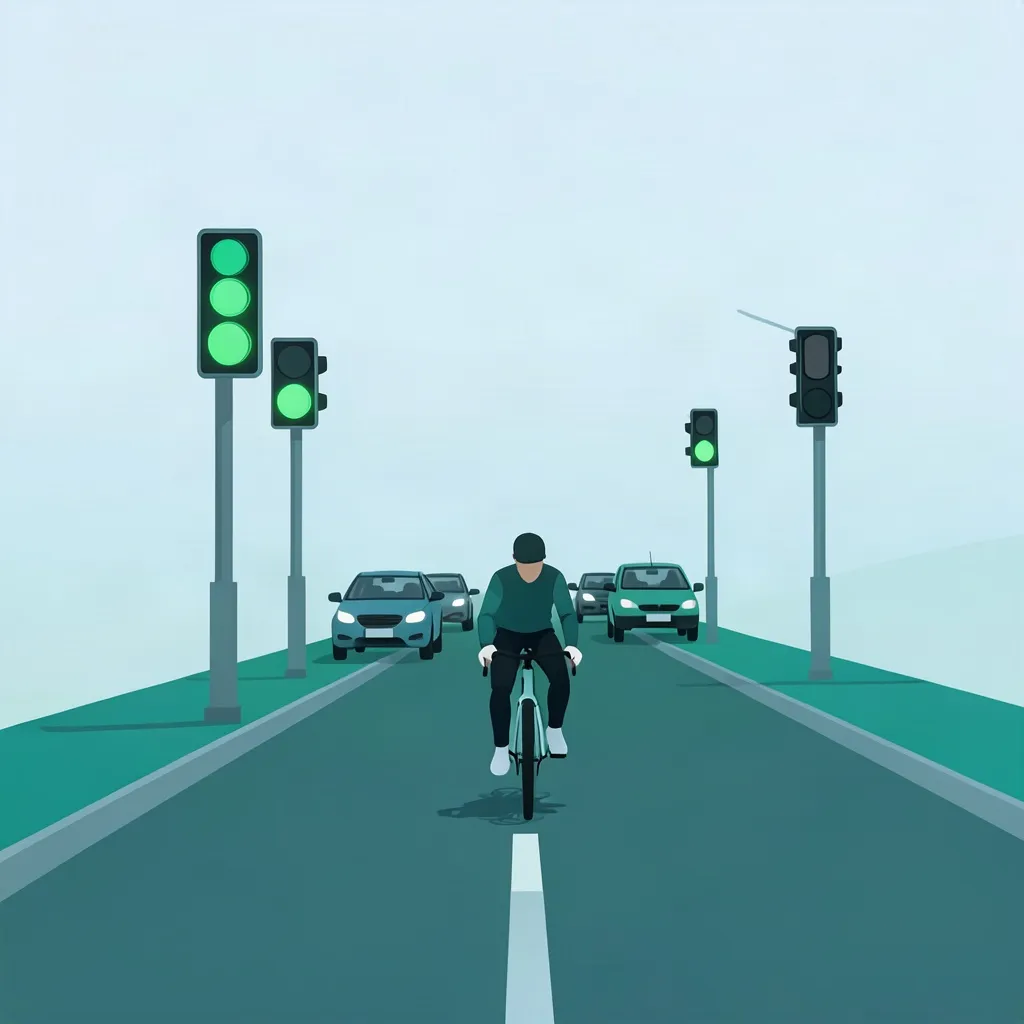
The green wave is not merely a random set of lights; it is a calculated timing sequence. Traffic signals along a major corridor are synchronized so that the green light begins at each successive intersection at precisely the time a vehicle traveling at the designated speed reaches it. By maintaining this specific speed—often aligned with the urban speed limit of 50 km/h—drivers can avoid the "stop-and-go" cycle that increases fuel consumption, mechanical wear, and driver fatigue.
For the theory exam, it is important to understand that the green wave is a tool for traffic management, not a license to speed. If you drive too fast, you will simply catch the tail end of a red light at the next intersection. If you drive too slowly, you will arrive after the green phase has ended. Consistency is the key to reaping the benefits of this system.
Denmark is world-renowned for its cycling infrastructure, and the green wave concept has been uniquely adapted for cyclists. The most famous example is found on Nørrebrogade in Copenhagen. This corridor is synchronized to the average cycling speed of approximately 20 km/h. During peak hours, a cyclist who maintains a steady pace can travel the entire length of the street without encountering a single red light.
To assist cyclists, some corridors feature LED "speed indicators" embedded in the asphalt. These lights pulse green to show the recommended pace required to maintain the green wave. For learner drivers, observing how cyclists interact with these systems provides a great lesson in defensive driving; knowing that cyclists are encouraged to maintain a constant speed helps you anticipate their movements and avoid unnecessary lane changes.
The primary motivation behind the implementation of the green wave is the reduction of emissions and the improvement of traffic flow. Every time a vehicle is forced to stop at a red light, it requires extra fuel to accelerate back to cruising speed. This process significantly increases the output of CO2 and other pollutants, particularly for older vehicles that lack modern start-stop technology.
Furthermore, reducing the frequency of stops lowers the wear and tear on brake pads and tires, which helps reduce the amount of brake-related particulate matter in urban air. In your theory education, you will find that these environmental considerations are central to the concept of "eco-driving." Demonstrating an understanding of how to drive in sync with traffic signals is a core component of being a responsible road user in Denmark.
The green wave is intended to optimize traffic flow, but it is never a substitute for safety. Even if you believe you are within a green wave, you must always be prepared to stop for pedestrians, cyclists, or emergency vehicles. Never prioritize the "wave" over your obligation to observe priority rules or traffic signs.
When preparing for your theory test, you should focus on the relationship between signal timing and driver behavior. You may encounter questions regarding how to maintain a green wave or how to react when a signal changes unexpectedly. The goal of the system is to minimize conflict and maximize efficiency, but road conditions such as weather, heavy traffic, or road works can disrupt the synchronization.
A traffic management strategy where a series of traffic signals are synchronized to allow continuous movement through multiple intersections for a specific group of road users at a predetermined speed.
The Danish green wave (grøn bølge) is a synchronized traffic signal system used on major urban corridors that allows vehicles and cyclists traveling at a consistent, predetermined speed to pass through multiple intersections without stopping. For motor vehicles, this speed typically aligns with the urban limit of 50 km/h, while Copenhagen's cycling green wave on Nørrebrogade uses approximately 20 km/h. The primary goals are reducing stop-and-go driving to lower emissions and fuel consumption, minimizing mechanical wear, and improving overall traffic flow. Understanding this system is essential for the theory exam, as questions focus on the relationship between speed, signal timing, and driver behavior, as well as the environmental principles of eco-driving.
A short set of high-value points that capture the most important ideas from this article.
The green wave synchronizes traffic signals so vehicles traveling at the designated speed encounter green lights across multiple intersections
For vehicles, the synchronized speed typically aligns with the urban limit of 50 km/h; for cyclists on Nørrebrogade, it is approximately 20 km/h
Maintaining a constant speed is essential—driving too fast or too slow will cause you to hit red lights at subsequent intersections
The system is a traffic management tool for efficiency and emissions reduction, not permission to exceed speed limits
Environmental benefits include reduced fuel consumption, lower CO2 output, and decreased brake and tire wear
Speed consistency is the key to benefiting from a green wave—if in doubt, match the posted speed limit
Cyclists have their own separate green wave timing, often with LED indicators showing recommended cycling pace
The green wave can be disrupted by weather, heavy traffic, or road works, requiring driver adaptability
Always maintain awareness of cyclists and pedestrians even when you expect a green light
The green wave optimizes flow but never overrides your obligation to stop for pedestrians, cyclists, or emergency vehicles
Driving faster than the designated speed in an attempt to beat the lights, which causes you to arrive too early and hit a red
Assuming all traffic signals on a route are part of a green wave coordination, when only major arterial corridors are synchronized
Ignoring the safety callout—prioritizing the wave by running a light to maintain flow, which is illegal and dangerous
Failing to observe cyclists who may be traveling at their own synchronized speed, leading to unnecessary lane changes or conflicts
Believing the green wave eliminates the need for defensive driving or scanning intersections for hazards
Article content overview
A short set of high-value points that capture the most important ideas from this article.
The green wave synchronizes traffic signals so vehicles traveling at the designated speed encounter green lights across multiple intersections
For vehicles, the synchronized speed typically aligns with the urban limit of 50 km/h; for cyclists on Nørrebrogade, it is approximately 20 km/h
Maintaining a constant speed is essential—driving too fast or too slow will cause you to hit red lights at subsequent intersections
The system is a traffic management tool for efficiency and emissions reduction, not permission to exceed speed limits
Environmental benefits include reduced fuel consumption, lower CO2 output, and decreased brake and tire wear
Speed consistency is the key to benefiting from a green wave—if in doubt, match the posted speed limit
Cyclists have their own separate green wave timing, often with LED indicators showing recommended cycling pace
The green wave can be disrupted by weather, heavy traffic, or road works, requiring driver adaptability
Always maintain awareness of cyclists and pedestrians even when you expect a green light
The green wave optimizes flow but never overrides your obligation to stop for pedestrians, cyclists, or emergency vehicles
Driving faster than the designated speed in an attempt to beat the lights, which causes you to arrive too early and hit a red
Assuming all traffic signals on a route are part of a green wave coordination, when only major arterial corridors are synchronized
Ignoring the safety callout—prioritizing the wave by running a light to maintain flow, which is illegal and dangerous
Failing to observe cyclists who may be traveling at their own synchronized speed, leading to unnecessary lane changes or conflicts
Believing the green wave eliminates the need for defensive driving or scanning intersections for hazards
Explore related topics, search based questions, and concepts that learners often look up when studying Danish Green Wave System Explained. These themes reflect real search intent and help you understand how this topic connects to wider driving theory knowledge in Denmark.
Find clear and practical answers to common questions learners often have about Danish Green Wave System Explained. This section helps explain difficult points, remove confusion, and reinforce the key driving theory concepts that matter for learners in Denmark.
A green wave is a system where a sequence of traffic lights is coordinated so that a vehicle or cyclist traveling at a specific, constant speed will encounter consecutive green lights without needing to stop.
No, Denmark utilizes green waves for both motor vehicles, typically set at 50 km/h in urban areas, and for cyclists on major corridors like Nørrebrogade, which are often timed at approximately 20 km/h.
By reducing the need for vehicles to repeatedly stop and accelerate, the green wave helps lower fuel consumption, minimize exhaust emissions, and reduce the wear on brake components.
Yes, the effectiveness of the green wave relies on the driver or cyclist maintaining the designated 'wave speed' for that specific stretch of road; moving significantly faster or slower will likely cause you to encounter red lights.
Continue your learning journey by searching for additional articles or browsing our comprehensive topic categories. Deepen your knowledge of Danish road law, vehicle mechanics, and hazard perception to ensure complete preparation for your official theory exam.