
This lesson details the critical methods for securing cargo to ensure vehicle stability and legal compliance. It builds on your understanding of vehicle mass and weight limits, focusing on the practical application of securing equipment to prevent load movement during transit.

Lesson content overview
Operating heavy goods vehicles (HGVs) in Denmark, especially for those pursuing a Category C license, demands a profound understanding of how to manage and secure cargo. Proper load securing is not merely a procedural step; it is a critical safety measure that protects the driver, other road users, and the cargo itself. This lesson will provide comprehensive instruction on the methods, equipment, and legal regulations essential for ensuring that every load transported is stable and safe from departure to destination.
The significance of effective load securing cannot be overstated. Unsecured or improperly secured cargo can shift during transit, drastically altering the vehicle's centre of gravity. This can lead to vehicle instability, loss of control, reduced braking efficiency, and even severe accidents, including rollovers or cargo spilling onto the roadway. Adherence to Danish and European Union (EU) transport regulations is also paramount, avoiding fines, legal liabilities, and ensuring professional competence.
Before delving into the specifics, it's beneficial to have a foundational understanding of vehicle dimensions, mass limits, and axle loads, as covered in Lesson 2. A grasp of basic road safety and vehicle checks (Lesson 3), along with the fundamentals of brakes and vehicle stability (Lesson 4), will also enhance your learning experience in this critical area.
At its heart, load securing is governed by several fundamental principles rooted in physics and safety. These principles guide all methods and equipment choices, ensuring cargo remains stable under the dynamic forces of transport.
The weight of the cargo must be distributed as evenly as possible over the vehicle's axles. Uneven distribution can overload a single axle, leading to premature tire wear, compromised braking performance, and reduced vehicle stability. A balanced load ensures optimal handling characteristics, particularly during cornering and braking.
The cargo's centre of gravity should always be kept as low and as centred as possible within the vehicle's cargo area. A high or off-centre CoG significantly increases the risk of vehicle instability and rollovers, especially during turns or on uneven terrain. This principle is closely related to Lesson 5.1, which details the theory behind load distribution.
All cargo, regardless of its size or weight, must be firmly fixed to the vehicle to prevent any movement in any direction (forward, backward, sideways, or upward). This involves using appropriate securing devices that are correctly applied and adequately tensioned.
Beyond direct fixation, physical barriers and structural supports are often necessary to restrict cargo movement. Blocking involves placing solid objects against the cargo to prevent sliding, while bracing uses structures like beams or frames to hold cargo in place, particularly for irregularly shaped or bulky items.
The securing equipment chosen must always be suitable for the specific type of cargo being transported and appropriate for the vehicle's load-carrying capacity. Using undersized or incompatible equipment dramatically increases the risk of securing failure.
Load securing is not a one-time task. It must be thoroughly inspected before departure and periodically during transport. This ensures compliance, verifies the integrity of the securing equipment, and allows for adjustments if the load shifts or weather conditions change.
A variety of specialized equipment is used to achieve proper cargo fixation. Understanding the correct application and limitations of each type is crucial for professional drivers.
Straps are among the most common and versatile load-securing devices. They are typically made of durable synthetic webbing or, for heavier applications, steel cable.
Chains are primarily used for extremely heavy, robust, or irregularly shaped cargo, such as construction machinery, large pipes, or concrete blocks, where webbing straps might be inadequate or susceptible to damage.
While not primarily for fixation, nets and tarpaulins play a crucial role in securing lighter, loose, or aggregate loads, and in protecting cargo from weather and debris.
Beyond direct lashing with straps or chains, physical barriers are often essential to prevent cargo movement, especially for loads that are not easily strapped or are prone to shifting despite tie-downs.
Blocking involves placing solid, often rigid, objects directly against the cargo to physically stop it from sliding.
Bracing provides structural support, often used in conjunction with blocking, to further stabilize cargo, especially tall or irregularly shaped items.
The effectiveness of straps and chains hinges on maintaining adequate tension. Specialized devices are used to apply and hold this tension, ensuring the load remains secure throughout the journey.
Beyond individual securing techniques, the overall placement of cargo within the vehicle is paramount for safety and stability. This concept, extensively covered in Lesson 5.1, directly impacts vehicle dynamics and accident risk.
Drivers of heavy goods vehicles in Denmark operate under strict legal requirements concerning load securing, derived from national legislation (such as the Danish Road Traffic Act, Færdselsloven) and broader EU directives. Compliance is non-negotiable and fundamental to professional driving.
Effective load securing is an ongoing process that begins before the journey and continues throughout. Regular inspection and verification are critical to preventing accidents.
Before a heavy vehicle departs, a thorough inspection of the load and its securing arrangements is mandatory.
Visually inspect the entire load to ensure it is evenly distributed and that the centre of gravity appears low and centred.
Check all straps, chains, nets, and other securing devices for signs of wear, cuts, frays, corrosion, or damage. Replace any faulty equipment immediately.
Verify that all securing devices are correctly attached to designated tie-down points on the vehicle and that these points are themselves in good condition.
Ensure adequate tension on all straps and chains. There should be no slack, but also no excessive tension that could damage cargo or equipment.
Confirm that any blocking or bracing elements are firmly in place and securely fastened to prevent their own movement.
Check that the load does not obstruct the driver's view, vehicle lights, or registration plates.
Load security can change during a journey due to vehicle movement, road conditions, or even minor load shifts.
Even experienced drivers can make mistakes in load securing, often due to complacency or time pressure. These errors can have severe consequences.
Violations of load securing regulations can result in significant fines, points on your license, vehicle immobilization, and potential legal prosecution in case of an accident. Always prioritize safety and compliance.
Load securing is not a one-size-fits-all process. Various external and internal factors can influence the required securing methods and the level of vigilance needed.
Understanding the underlying physics is key to appreciating why load securing is so vital.
Let's consider how these principles apply in real-world situations for a heavy vehicle driver.
For drivers holding a Danish Category C license, mastery of load securing is fundamental. All cargo must be thoroughly secured against movement in every direction before commencing a journey and continuously monitored throughout transit. The selection and application of securing equipment—be it straps, chains, or nets—must adhere to strict tensile strength requirements and proper attachment to designated points on the vehicle.
It is crucial to employ an adequate number of securing points to stabilize cargo in its length, width, and height, applying appropriate tension without causing damage. Blocking and bracing techniques offer vital additional stability, particularly for bulky or heavy items. Moreover, strategic load distribution is essential, keeping the centre of gravity low and centred to prevent axle overload and maintain vehicle stability.
Mandatory pre-trip inspections of both cargo and securing equipment, followed by re-checks after significant speed changes or challenging road conditions, are non-negotiable. Drivers must always comply with Danish and EU regulations, understanding how factors like weather, road type, vehicle condition, and specific load characteristics influence securing requirements. Ultimately, a deep understanding of proper load securing is directly linked to vehicle stability, safe braking, and overall road safety for everyone on the road.
Load securing for Category C vehicles requires mastering principles of equal weight distribution, maintaining a low centre of gravity, and providing firm fixation in all directions using appropriate equipment such as straps, chains, nets, and physical barriers. Drivers must select securing devices with correct tensile strength ratings, attach them to designated tie-down points, apply proper tension without overstraining, and use blocking and bracing techniques for heavy or irregular loads. Legal compliance under Danish road traffic law (Færdselsloven) and EU regulations mandates pre-trip equipment inspection, periodic reinspection during transit, and strict adherence to axle load limits and securing standards to ensure vehicle stability, safe braking, and prevention of road hazards.
A short set of high-value points that capture the most important learning from this lesson.
All cargo must be secured against movement in all directions (forward, backward, sideways, upward) using equipment rated for the cargo weight and transport forces
The cargo centre of gravity should be kept as low and centred as possible to prevent vehicle instability and rollover risk
Load distribution must be balanced across all axles, with heavy items placed low and over the main axle positions
Securing equipment must be inspected before every trip and re-checked after significant speed changes or challenging road conditions
Danish and EU regulations require all load-securing devices to meet specific tensile strength standards and be used according to manufacturer instructions
Explore all units and lessons included in this driving theory course.
Straps require adequate tension without over-tightening, chains need protection from sharp cargo edges, and blocking materials must themselves be secured to the vehicle
Ratchet binders offer safer, more controlled tensioning than lever binders, which can snap shut with force
Blocking uses rigid barriers against cargo to prevent sliding, while bracing uses structural elements to prevent leaning or toppling
During braking, unsecured cargo continues forward due to inertia, adding unexpected weight to front axles and reducing braking effectiveness
Heavy loads on winding roads, steep terrain, or in high winds require extra securing points and tension compared to standard conditions
Using straps or chains with insufficient tensile strength for the cargo weight, leading to equipment failure and load loss
Failing to secure cargo in all three dimensions, allowing forward, backward, or lateral movement despite some restraints being in place
Placing heavy items too high or unevenly over one axle, creating an unstable centre of gravity prone to rollovers
Assuming dense or heavy cargo will not move without proper securing, or neglecting reinspection after the journey begins
Using damaged, worn, or non-compliant securing equipment instead of replacing it before departure
Lesson content overview
A short set of high-value points that capture the most important learning from this lesson.
All cargo must be secured against movement in all directions (forward, backward, sideways, upward) using equipment rated for the cargo weight and transport forces
The cargo centre of gravity should be kept as low and centred as possible to prevent vehicle instability and rollover risk
Load distribution must be balanced across all axles, with heavy items placed low and over the main axle positions
Securing equipment must be inspected before every trip and re-checked after significant speed changes or challenging road conditions
Danish and EU regulations require all load-securing devices to meet specific tensile strength standards and be used according to manufacturer instructions
Explore all units and lessons included in this driving theory course.
Straps require adequate tension without over-tightening, chains need protection from sharp cargo edges, and blocking materials must themselves be secured to the vehicle
Ratchet binders offer safer, more controlled tensioning than lever binders, which can snap shut with force
Blocking uses rigid barriers against cargo to prevent sliding, while bracing uses structural elements to prevent leaning or toppling
During braking, unsecured cargo continues forward due to inertia, adding unexpected weight to front axles and reducing braking effectiveness
Heavy loads on winding roads, steep terrain, or in high winds require extra securing points and tension compared to standard conditions
Using straps or chains with insufficient tensile strength for the cargo weight, leading to equipment failure and load loss
Failing to secure cargo in all three dimensions, allowing forward, backward, or lateral movement despite some restraints being in place
Placing heavy items too high or unevenly over one axle, creating an unstable centre of gravity prone to rollovers
Assuming dense or heavy cargo will not move without proper securing, or neglecting reinspection after the journey begins
Using damaged, worn, or non-compliant securing equipment instead of replacing it before departure
Explore search topics learners often look for when studying Load Securing Methods and Regulations. These topics reflect common questions about road rules, driving situations, safety guidance, and lesson level theory preparation for learners in Denmark.
Browse additional driving theory lessons that cover connected traffic rules, road signs, and common driving situations related to this topic. Improve your understanding of how different rules interact across everyday traffic scenarios.
Explore essential load securing methods and regulations for Category C drivers in Denmark. Learn about straps, chains, blocking, and verification for safe cargo transport according to legal standards.

This lesson focuses on the safe transportation of both passengers and cargo. It details the legal requirements for using seat belts and the mandatory use of appropriate child restraints for younger passengers. Additionally, it explains the principles of proper load distribution and securing methods to prevent cargo from shifting, which could dangerously affect the vehicle's stability and handling.

This lesson explains the fundamental physics of load distribution and its direct impact on a heavy vehicle's centre of gravity. It details how the positioning of cargo—whether high, low, forward, or back—alters handling characteristics and overall stability. The content emphasizes the importance of achieving a balanced load to minimize rollover risk and comply with Danish regulations for safe weight distribution.

This lesson provides a step-by-step guide to safe loading and unloading practices. It covers the importance of ensuring proper weight distribution during the process, re-checking cargo securement, and adhering to safety protocols at loading docks. The content also includes ergonomic best practices to prevent driver injury and guidelines for the safe operation of equipment like tail lifts and pallet jacks.

Proper axle load distribution is crucial for the safety and legality of heavy vehicle operations. This lesson explains how axle pressure is defined and regulated, highlighting the importance of distributing weight correctly across all axles. It covers how imbalanced loads can negatively affect braking performance, steering control, and overall vehicle stability, while also explaining the Danish regulations for maximum axle loads.

This lesson teaches the essential skill of calculating a heavy vehicle's payload capacity, taking into account both its design specifications and legal restrictions. It explains the relationship between unladen weight, gross vehicle mass, and the resulting legal payload. The content emphasizes the critical role of accurate load planning to prevent overloading, which poses significant safety risks and leads to legal penalties.

This lesson addresses how to safely carry luggage or a passenger on a motorcycle. It explains the effects of added weight on the vehicle's balance, steering, and braking performance. Learners will understand correct procedures for securing loads and adjusting their riding technique to maintain control and stability.
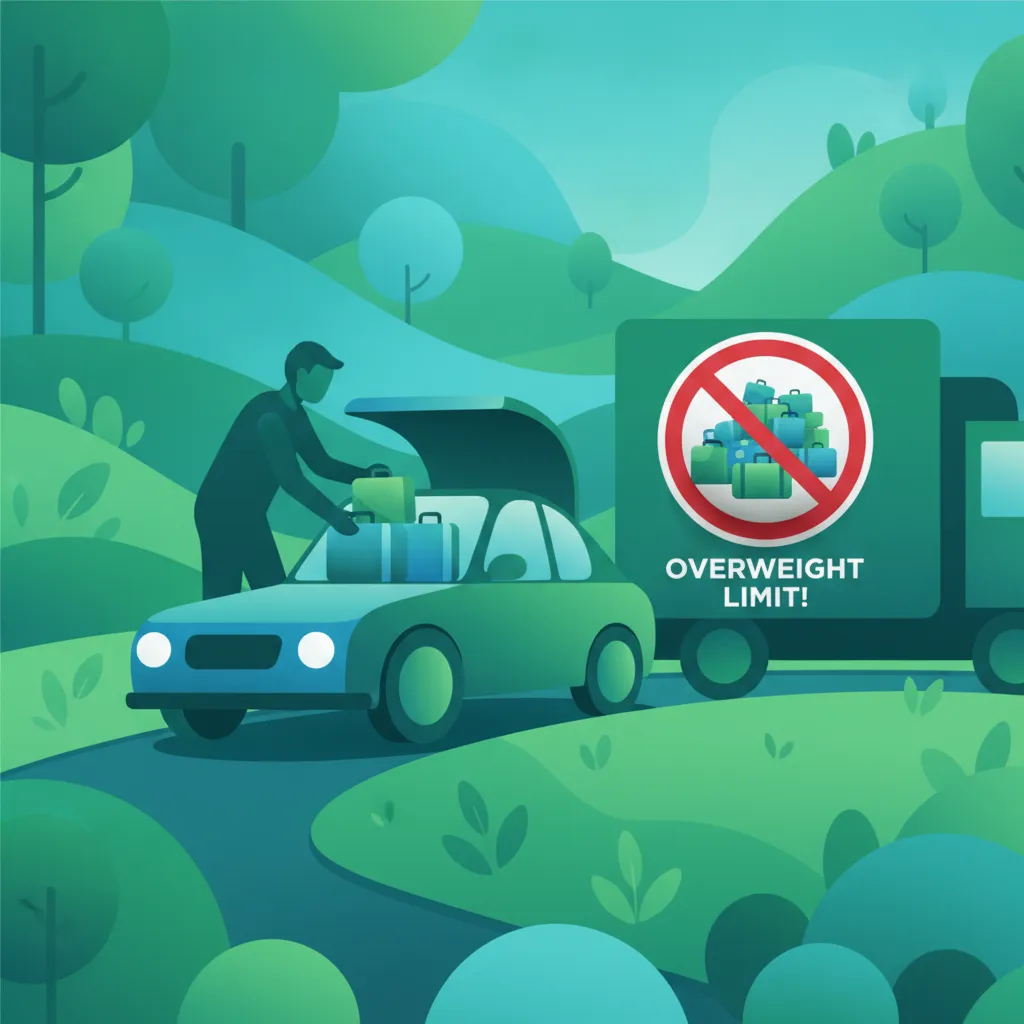
This lesson introduces the fundamental concepts of vehicle mass, clarifying the legal distinctions between total weight, actual weight, and loaded weight under Danish law. It emphasizes the importance of strictly adhering to these limits to ensure safe vehicle operation and handling characteristics. The content also details the significant safety risks and legal penalties associated with exceeding weight limits, such as fines and vehicle impoundment.

This lesson details the specific procedures for safely transporting a heavy vehicle via ferry. It covers the process of boarding and maneuvering on the ferry deck, the correct methods for securing the vehicle and trailer for sea transit, and the relevant Danish regulations. The content also explains the safety protocols to follow during the crossing and the correct procedure for disembarking upon arrival.

This lesson focuses on the legal dimensional limits—length, width, and height—for heavy goods vehicles and their interaction with road infrastructure. It explains Danish regulations and the importance of planning routes to avoid constraints such as low bridges, narrow tunnels, and weight-restricted roads. Learners will understand how to interpret road signs indicating these limits and the procedures for obtaining permits for oversized loads.
Understand how cargo placement affects a heavy vehicle's centre of gravity and overall stability. Learn about equal distribution and its importance for safe driving and braking in Denmark.
This lesson explains the fundamental physics of load distribution and its direct impact on a heavy vehicle's centre of gravity. It details how the positioning of cargo—whether high, low, forward, or back—alters handling characteristics and overall stability. The content emphasizes the importance of achieving a balanced load to minimize rollover risk and comply with Danish regulations for safe weight distribution.
Proper axle load distribution is crucial for the safety and legality of heavy vehicle operations. This lesson explains how axle pressure is defined and regulated, highlighting the importance of distributing weight correctly across all axles. It covers how imbalanced loads can negatively affect braking performance, steering control, and overall vehicle stability, while also explaining the Danish regulations for maximum axle loads.

This lesson examines the primary factors that contribute to heavy vehicle instability and the risk of rollover. It explains how high-speed cornering, sudden maneuvers, and improperly secured loads can create dangerous lateral forces that compromise vehicle stability. Learners will understand how to identify high-risk situations and apply preventive driving techniques to maintain control and adhere to Danish safety guidelines.
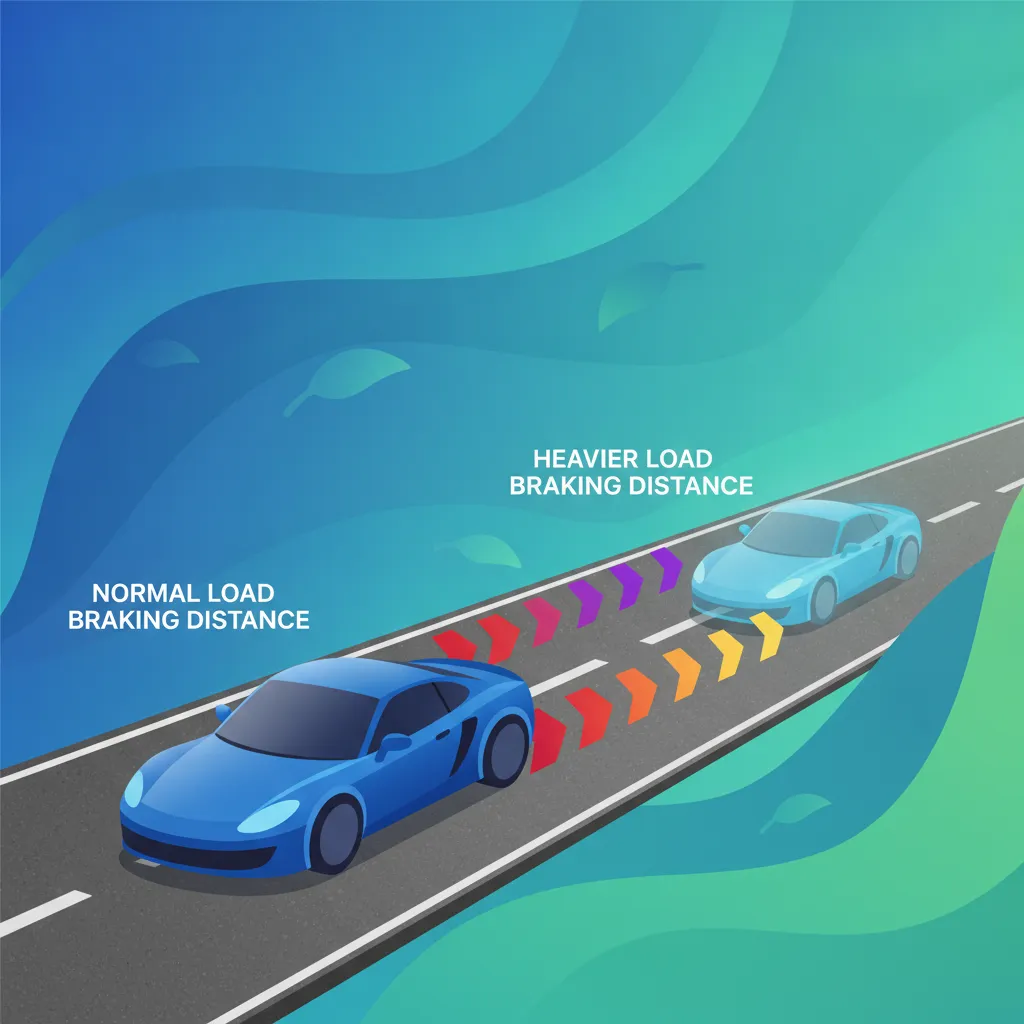
This lesson explores the direct relationship between a vehicle's mass, its speed, and the distance required to stop. It explains how increased load significantly lengthens the braking distance and details how road conditions like gradient and surface friction further affect this calculation. Learners will understand the importance of anticipating stops and maintaining a greater following distance to ensure safety.
This lesson provides a step-by-step guide to safe loading and unloading practices. It covers the importance of ensuring proper weight distribution during the process, re-checking cargo securement, and adhering to safety protocols at loading docks. The content also includes ergonomic best practices to prevent driver injury and guidelines for the safe operation of equipment like tail lifts and pallet jacks.
This lesson focuses on the safe transportation of both passengers and cargo. It details the legal requirements for using seat belts and the mandatory use of appropriate child restraints for younger passengers. Additionally, it explains the principles of proper load distribution and securing methods to prevent cargo from shifting, which could dangerously affect the vehicle's stability and handling.

This lesson delves into the unique dynamics of articulated vehicles, focusing on the behavior of the combination around its articulation point. It explains the concept of off-tracking, where the trailer's wheels follow a tighter path than the tractor's, and its implications for negotiating turns and corners. Understanding these dynamics is crucial for safe maneuvering in confined spaces and preventing collisions with curbs or other obstacles.
This lesson introduces the fundamental concepts of vehicle mass, clarifying the legal distinctions between total weight, actual weight, and loaded weight under Danish law. It emphasizes the importance of strictly adhering to these limits to ensure safe vehicle operation and handling characteristics. The content also details the significant safety risks and legal penalties associated with exceeding weight limits, such as fines and vehicle impoundment.
Find clear answers to common questions learners have about Load Securing Methods and Regulations. Learn how the lesson is structured, which driving theory objectives it supports, and how it fits into the overall learning path of units and curriculum progression in Denmark. These explanations help you understand key concepts, lesson flow, and exam focused study goals.
A common mistake is failing to account for the dynamic forces during transit. Learners often underestimate the need for both friction and mechanical restraint, leading to incorrect choices of securing equipment like straps versus chains.
Yes. While technical methods are universal, the Danish exam tests your knowledge of the legal obligation to ensure that no cargo can shift or fall in a way that endangers road safety, as stipulated in Danish traffic laws.
Blocking and bracing are methods used to fill voids and prevent movement before the load is tied down. Tie-downs provide downward pressure to increase friction, whereas blocking physically stops the cargo from sliding against the structure of the trailer.
The surface friction coefficient of the vehicle floor is critical. If a surface is slippery, simple friction won't hold the load, requiring more robust securing methods like anti-slip mats or direct lashing to prevent movement during heavy braking.
Use our powerful search tool to pinpoint specific Danish driving theory topics, road signs, or traffic situations you need to review. Start exploring relevant practice sets now to reinforce your knowledge and build confidence for your upcoming driving licence exam.