
This lesson explores the complex physics of operating articulated vehicles and trailer combinations. By mastering the behavior around articulation points, you will improve your maneuvering skills and prepare for technical questions on the Danish C-category theory exam.

Lesson content overview
Operating an articulated vehicle, such as a lorry with a trailer or a semi-trailer, demands a specialized understanding of its unique movement dynamics. Unlike rigid vehicles, the combination's tractor and trailer move independently around a pivot point, introducing complex behaviors like off-tracking and the risk of jack-knifing. For drivers pursuing a C-category licence in Denmark, mastering these concepts is not merely theoretical; it is crucial for daily safe maneuvering, especially in confined spaces, challenging turns, and during critical braking situations.
This lesson delves into the intricacies of combination vehicle dynamics, focusing on how the articulation point influences the entire vehicle's behavior. It aims to equip future heavy goods vehicle drivers with the knowledge to anticipate, understand, and safely manage the movements of their tractor-trailer unit, thereby preventing collisions and ensuring operational efficiency on Danish roads.
An articulated vehicle is a heavy goods vehicle (HGV) comprising two or more distinct units – typically a tractor unit and one or more trailers – connected by a pivotal joint. This design allows for greater carrying capacity and maneuverability compared to a single, rigid vehicle of similar length. However, the flexibility offered by the articulation point also introduces unique dynamic challenges that require a high level of driver skill and awareness.
The way these distinct units interact, particularly during turns, braking, and reversing, defines the combination's dynamic behavior. Understanding this interaction is fundamental to maintaining control, ensuring adequate clearances, and avoiding dangerous situations such as jack-knifing or trailer sway. This knowledge builds upon basic vehicle handling principles and is essential for safe operation of heavy transport.
The articulation point is the physical connection that allows relative movement between the tractor unit and its trailer. In a lorry-and-trailer combination (drawbar combination), this is often a tow coupling or drawbar eye. In a tractor-semitrailer combination, it is the fifth wheel coupling located on the tractor unit. This pivot acts as the fulcrum around which the trailer moves independently of the tractor, particularly when steering.
The location and design of this articulation point are critical. It determines the geometric relationship between the tractor and trailer, directly influencing the vehicle's turning radius and the phenomenon known as off-tracking. A driver’s ability to predict and manage the trailer’s movement around this pivot is paramount for safe operation, especially when negotiating tight corners or reversing into a loading bay.
One of the most significant dynamics of an articulated vehicle is off-tracking, a phenomenon that every heavy vehicle driver must master. It directly impacts safety margins and maneuvering strategies, particularly in urban environments or on winding roads. Understanding off-tracking is vital to avoid hitting curbs, other vehicles, or roadside obstacles.
Off-tracking, also known as 'cutting the corner,' is the characteristic behavior where the rear wheels of a trailer follow a tighter, narrower path than the front wheels of the tractor unit during a turn. When the tractor turns, its front wheels initiate a specific turning radius. Due to the articulation point and the trailer's length, the trailer does not simply follow this same radius. Instead, its rear axles track inwards, closer to the center of the turn.
This difference in path creates a lateral offset, meaning the trailer can encroach on areas that the tractor has already cleared. Recognizing and compensating for this lateral shift is a core skill for professional drivers of combination vehicles.
The primary reason for off-tracking lies in the fundamental geometry of an articulated vehicle. The articulation point, whether a drawbar coupling or a fifth wheel, is always located behind the rear axle of the tractor unit. This offset means that when the tractor turns, it essentially pivots from a point further forward than where the trailer begins to pivot.
Consider a left turn: as the tractor's front wheels turn left, the tractor unit itself begins to move left. The trailer, connected at a point behind the tractor's rear axle, is initially pulled in a relatively straight line before its own axles begin to turn. This delay and the pivot point's location cause the trailer to swing inwards, resulting in its wheels tracing a smaller radius than the tractor's. The longer the trailer's wheelbase and the greater the distance from the tractor's rear axle to the articulation point (drawbar length), the more pronounced the off-tracking effect will be.
The implications of off-tracking are profound for the daily operation of heavy goods vehicles. Failure to account for it can lead to dangerous situations and costly accidents. For C-category drivers, this means:
To safely manage off-tracking, heavy vehicle drivers must adopt specific techniques and maintain heightened awareness:
The physical configuration of the tractor-trailer combination, known as articulation geometry, directly dictates its maneuverability and the overall turning radius required. Understanding these geometric principles is essential for predicting vehicle behavior in various driving scenarios.
The design and placement of the articulation point profoundly influence how a trailer behaves relative to the tractor. In a drawbar trailer combination, the distance between the tractor's rear axle and the drawbar's pivot point (the drawbar length) is a critical factor. A longer drawbar increases the effective distance between the tractor's steering axle and the trailer's pivot point, which can amplify the off-tracking effect.
For semi-trailer combinations, the fifth wheel, located over the tractor's rear axles, also plays a crucial role. While different in mechanism, the principle remains: the trailer pivots around this point. The closer the trailer axles are to this pivot point, the less pronounced off-tracking may be, but overall maneuverability can still be challenging due to the sheer length of the combination.
The turning radius of an articulated vehicle is significantly larger than that of the tractor unit alone. This is because the entire combination must be accommodated within the turning arc, and the trailer's off-tracking means it requires more lateral space than the tractor's footprint suggests.
Drivers must mentally "calculate" or estimate the required turning radius for their specific combination before attempting any turn. This involves considering:
Failure to account for the actual turning radius can lead to dangerous situations, such as blocking multiple lanes, hitting oncoming traffic, or colliding with fixed objects.
Reversing an articulated vehicle is perhaps one of the most challenging maneuvers, demanding exceptional spatial awareness and precise control over the articulation point. Unlike reversing a rigid vehicle, where the front wheels dictate the path, when reversing an articulated combination, steering the tractor influences the trailer's direction indirectly.
Initial Steering Input: To make the trailer move to the left when reversing, you must steer the tractor to the right (and vice-versa). This initial counter-intuitive steering pushes the trailer's rear in the desired direction.
Small Corrections: Once the trailer begins to move in the desired direction, immediately straighten the tractor's wheels or steer slightly in the opposite direction to prevent over-steering and excessive trailer swing. Over-steering the tractor quickly leads to jack-knifing during reverse.
Constant Mirror Checks: Continuously monitor both side mirrors and, if available, rear-view cameras. Observe the angle between the tractor and trailer and the trailer's path relative to obstacles.
Go Slow: Reversing should always be done at a walking pace. This allows for ample time to react, make small corrections, and prevents rapid changes in the trailer's angle that are difficult to recover from.
"Chase the Trailer": If the trailer starts to swing too much to one side, gently steer the tractor in the same direction the trailer is swinging. This will reduce the angle between the two units and help straighten the combination.
Use a Spotter: Whenever possible, especially in tight or complex areas, use a reliable spotter. Communicate clearly and ensure they are always visible to you.
Jack-knifing is one of the most feared and dangerous conditions that can occur with articulated vehicles. It represents a severe loss of control, where the trailer swings violently out of line with the tractor, often forming an acute angle resembling a folded pocketknife. Preventing jack-knifing is paramount for the safety of the driver, the load, and all other road users.
Jack-knifing occurs when the trailer's forward momentum or lateral forces overcome its ability to track behind the tractor, causing it to pivot sharply at the articulation point. This creates a "V" shape between the tractor and trailer, often leading to the trailer striking the tractor unit, causing significant damage and potentially a rollover.
The most common causes include:
Effective braking is the primary defense against jack-knifing. Drivers must understand and apply correct braking techniques:
The way a trailer is loaded significantly impacts its stability and susceptibility to jack-knifing. Incorrect load distribution can exacerbate the risks associated with braking and turning.
Operating an articulated vehicle in Denmark, like any other heavy vehicle, is governed by specific regulations and requires adherence to best practices to ensure public safety. These rules are designed to mitigate the inherent risks associated with their size and complex dynamics.
Danish traffic law, aligned with European standards, mandates that drivers of heavy goods vehicles must always account for their vehicle's dimensions, including the effects of off-tracking. This translates into practical requirements for maintaining sufficient clearance and strict lane discipline:
In Denmark, as in most European countries, heavy trailers are required to be equipped with effective braking systems that are integrated with the tractor unit's brakes. This ensures synchronized braking, a critical safety feature for articulated vehicles.
Operating an articulated vehicle demands an exceptional level of observational skill and anticipation. Due to the vehicle's length and the articulation, blind spots are extensive and dynamic.
The dynamics of combination vehicles are significantly affected by external conditions. Professional drivers must adapt their techniques to maintain safety and control, regardless of the environment.
Adverse weather conditions amplify the inherent challenges of driving an articulated vehicle:
Urban areas present a concentrated challenge for articulated vehicles due to narrow streets, dense traffic, frequent turns, and a high presence of vulnerable road users.
Understanding the specific terminology associated with combination vehicles is vital for clear communication and comprehension of advanced driving concepts.
Mastering combination dynamics is a continuous process that combines theoretical knowledge with practical experience. For C-category drivers in Denmark, a thorough understanding of off-tracking, articulation geometry, and jack-knifing prevention is indispensable. By applying these principles, drivers can significantly enhance safety, efficiency, and confidence when operating heavy articulated vehicles. Continue to review these concepts and actively seek opportunities to refine your maneuvering skills.
This lesson covers the essential physics and handling characteristics of articulated heavy vehicles, with particular focus on off-tracking—the phenomenon where trailers follow a tighter path than tractors during turns. Understanding articulation geometry and the role of the pivot point is crucial for safely negotiating corners and avoiding collisions with curbs or roadside obstacles. The lesson also addresses jack-knifing prevention through proper braking techniques, load distribution awareness, and synchronized braking systems. Reversing procedures are detailed step-by-step, emphasizing counter-intuitive steering inputs and the importance of slow, gradual corrections. Danish traffic regulations require drivers to account for vehicle dimensions and off-tracking effects, maintain functional trailer brakes, and exercise heightened caution around vulnerable road users in urban environments.
A short set of high-value points that capture the most important learning from this lesson.
Off-tracking means the trailer's rear wheels follow a tighter path than the tractor's front wheels during turns, requiring drivers to anticipate wider clearances.
The articulation point (fifth wheel or drawbar coupling) is the pivot that allows independent movement between tractor and trailer, directly influencing turning dynamics.
Jack-knifing occurs when braking forces or traction loss cause the trailer to swing sharply sideways, forming a dangerous V-shape with the tractor.
Reversing an articulated vehicle requires steering opposite to the desired trailer direction initially, then chasing the trailer to prevent over-steering.
Load distribution and synchronized braking between tractor and trailer are critical safety factors that directly affect jack-knifing risk.
Explore all units and lessons included in this driving theory course.
Trailer wheels take a tighter turn than the tractor—always assume encroachment on the inside of any turn.
To reverse the trailer left, steer the tractor right first, then straighten and chase the swing.
Smooth, progressive braking prevents jack-knifing; harsh or sudden braking on slippery surfaces is extremely dangerous.
The longer the drawbar and trailer wheelbase, the more pronounced the off-tracking effect becomes.
In urban areas, cyclists and pedestrians are at extreme risk from off-tracking during right turns due to large blind spots between tractor and curb.
Assuming the trailer follows the same path as the tractor during turns, leading to curbside or obstacle collisions.
Applying brakes too abruptly, especially on wet or slippery surfaces, which can trigger jack-knifing.
Over-steering the tractor during reverse maneuvers, causing excessive trailer swing and loss of control.
Failing to perform continuous mirror checks to monitor the trailer's position throughout turns and lane changes.
Attempting sharp turns at normal driving speeds instead of reducing speed to accommodate the larger turning radius of the combination.
Lesson content overview
A short set of high-value points that capture the most important learning from this lesson.
Off-tracking means the trailer's rear wheels follow a tighter path than the tractor's front wheels during turns, requiring drivers to anticipate wider clearances.
The articulation point (fifth wheel or drawbar coupling) is the pivot that allows independent movement between tractor and trailer, directly influencing turning dynamics.
Jack-knifing occurs when braking forces or traction loss cause the trailer to swing sharply sideways, forming a dangerous V-shape with the tractor.
Reversing an articulated vehicle requires steering opposite to the desired trailer direction initially, then chasing the trailer to prevent over-steering.
Load distribution and synchronized braking between tractor and trailer are critical safety factors that directly affect jack-knifing risk.
Explore all units and lessons included in this driving theory course.
Trailer wheels take a tighter turn than the tractor—always assume encroachment on the inside of any turn.
To reverse the trailer left, steer the tractor right first, then straighten and chase the swing.
Smooth, progressive braking prevents jack-knifing; harsh or sudden braking on slippery surfaces is extremely dangerous.
The longer the drawbar and trailer wheelbase, the more pronounced the off-tracking effect becomes.
In urban areas, cyclists and pedestrians are at extreme risk from off-tracking during right turns due to large blind spots between tractor and curb.
Assuming the trailer follows the same path as the tractor during turns, leading to curbside or obstacle collisions.
Applying brakes too abruptly, especially on wet or slippery surfaces, which can trigger jack-knifing.
Over-steering the tractor during reverse maneuvers, causing excessive trailer swing and loss of control.
Failing to perform continuous mirror checks to monitor the trailer's position throughout turns and lane changes.
Attempting sharp turns at normal driving speeds instead of reducing speed to accommodate the larger turning radius of the combination.
Explore search topics learners often look for when studying Combination Dynamics and Articulation Points. These topics reflect common questions about road rules, driving situations, safety guidance, and lesson level theory preparation for learners in Denmark.
Browse additional driving theory lessons that cover connected traffic rules, road signs, and common driving situations related to this topic. Improve your understanding of how different rules interact across everyday traffic scenarios.
Explore advanced techniques for safely maneuvering articulated lorries, focusing on precise control of articulation points and managing off-tracking in complex Danish urban environments. Essential theory for Category C drivers facing challenging situations.

Reversing a tractor-trailer combination requires skill and a clear understanding of vehicle dynamics. This lesson breaks down the technique, explaining how to use steering inputs to guide the trailer accurately while monitoring its position through mirrors and cameras. It emphasizes the importance of a slow, controlled speed and planning the entire maneuver before starting to ensure safety and precision.

This lesson focuses on the practical skills needed to maneuver a large vehicle in confined environments such as urban delivery zones and loading docks. It teaches how to accurately judge the required space, understand the vehicle's turning radius, and use reference points to position the vehicle precisely. The content covers strategies for navigating tight corners and avoiding fixed obstacles, which is essential for damage-free urban operations.

This lesson addresses the causes and prevention of trailer sway and jack-knifing, two critical loss-of-control events. It explains how factors like improper braking, high speeds, crosswinds, and poor load distribution can trigger these dangerous situations. Learners will study avoidance strategies, including proper speed management and smooth steering inputs, as well as corrective actions to regain control if sway begins.

This lesson addresses the unique environment of bus terminals, focusing on safe, low-speed maneuvering around other vehicles and pedestrians. It also introduces the theory for combination vehicles (Category DE), including the principles of coupling and uncoupling trailers. The content emphasizes the different handling characteristics and increased turning radius associated with articulated buses or buses with trailers.

This lesson introduces the various types of trailers and semitrailers used in commercial transport, from rigid drawbar trailers to articulated semitrailers. It explains their distinct characteristics, including legal dimensional limits, typical axle configurations, and maximum loading capacities as defined by Danish regulations. Understanding these differences is fundamental for selecting the right combination for a given load and ensuring legal operation.
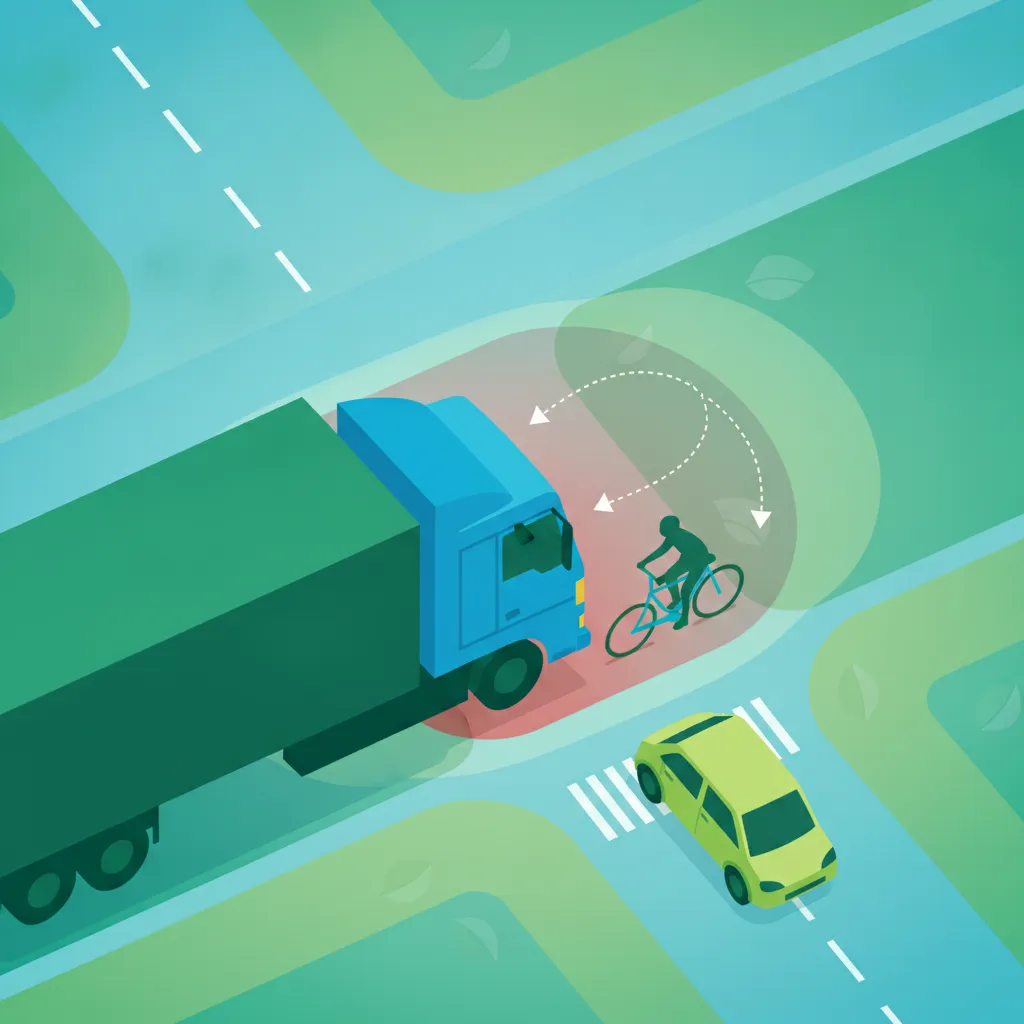
This lesson maps out the extensive blind spots, or 'no-zones,' that exist around a tractor-trailer combination, particularly to the sides and rear. It teaches the proper techniques for adjusting all mirrors to minimize these areas and explains how modern camera systems provide critical visibility. Understanding and compensating for these blind spots is a fundamental skill for preventing collisions, especially during lane changes and turns.

This lesson examines the primary factors that contribute to heavy vehicle instability and the risk of rollover. It explains how high-speed cornering, sudden maneuvers, and improperly secured loads can create dangerous lateral forces that compromise vehicle stability. Learners will understand how to identify high-risk situations and apply preventive driving techniques to maintain control and adhere to Danish safety guidelines.

Proper axle load distribution is crucial for the safety and legality of heavy vehicle operations. This lesson explains how axle pressure is defined and regulated, highlighting the importance of distributing weight correctly across all axles. It covers how imbalanced loads can negatively affect braking performance, steering control, and overall vehicle stability, while also explaining the Danish regulations for maximum axle loads.

This lesson focuses on the rules and best practices for operating heavy vehicles on motorways and interchanges. It details Danish regulations regarding lane usage and speed limits for lorries, and explains safe techniques for merging into and exiting high-speed traffic. Maintaining a safe and appropriate following distance to allow for longer stopping distances is a key focus of the content.

Beyond basic checks, this lesson covers the inspection of critical vehicle systems like brakes, steering, and suspension to ensure they are functioning correctly. It also details the importance of properly adjusted mirrors and the use of modern camera systems for monitoring blind spots and enhancing situational awareness. Understanding these systems is vital for safe maneuvering, compliance with Danish regulations, and overall vehicle roadworthiness.
Learn the critical theory behind preventing dangerous jack-knifing situations with articulated lorries. Understand how load distribution, braking, and road conditions affect stability for safe operation on Danish roads.
This lesson addresses the causes and prevention of trailer sway and jack-knifing, two critical loss-of-control events. It explains how factors like improper braking, high speeds, crosswinds, and poor load distribution can trigger these dangerous situations. Learners will study avoidance strategies, including proper speed management and smooth steering inputs, as well as corrective actions to regain control if sway begins.
This lesson examines the primary factors that contribute to heavy vehicle instability and the risk of rollover. It explains how high-speed cornering, sudden maneuvers, and improperly secured loads can create dangerous lateral forces that compromise vehicle stability. Learners will understand how to identify high-risk situations and apply preventive driving techniques to maintain control and adhere to Danish safety guidelines.
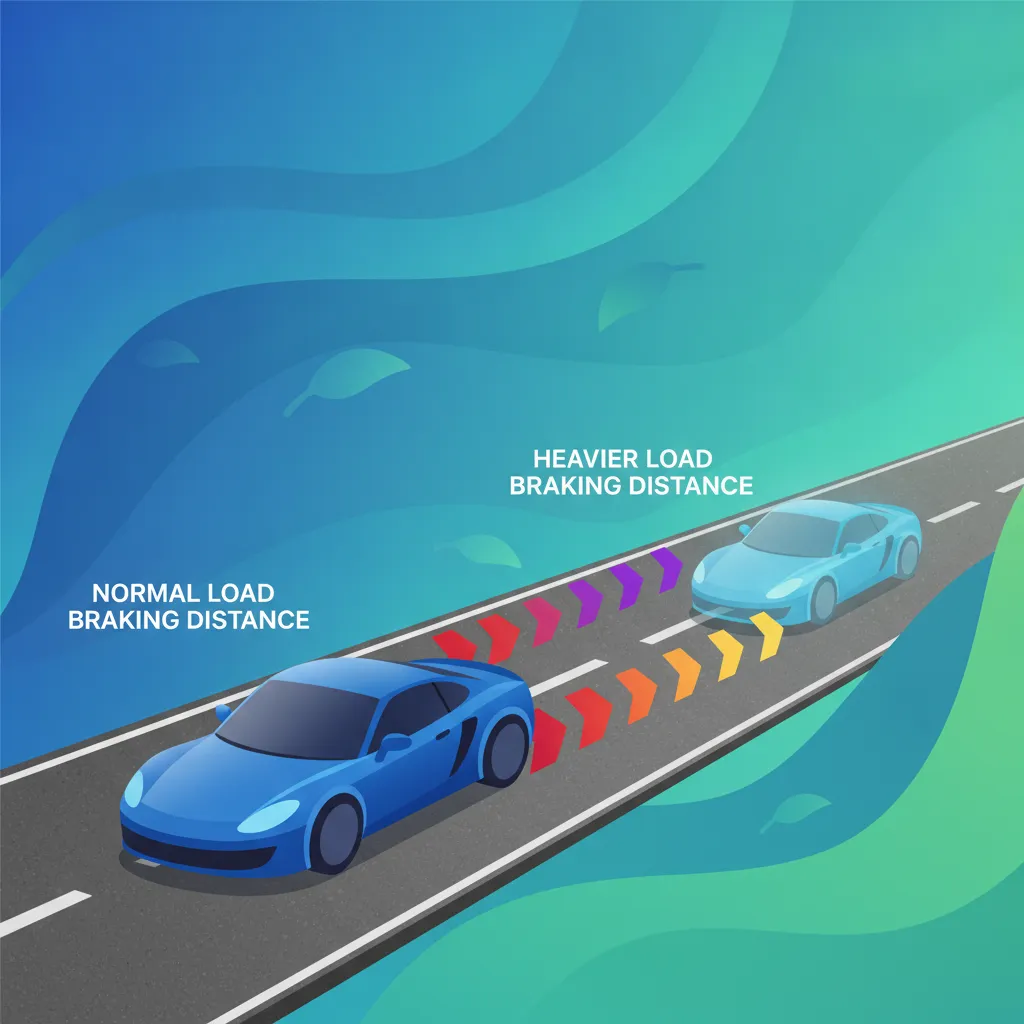
This lesson explores the direct relationship between a vehicle's mass, its speed, and the distance required to stop. It explains how increased load significantly lengthens the braking distance and details how road conditions like gradient and surface friction further affect this calculation. Learners will understand the importance of anticipating stops and maintaining a greater following distance to ensure safety.

This lesson explains the fundamental physics of load distribution and its direct impact on a heavy vehicle's centre of gravity. It details how the positioning of cargo—whether high, low, forward, or back—alters handling characteristics and overall stability. The content emphasizes the importance of achieving a balanced load to minimize rollover risk and comply with Danish regulations for safe weight distribution.

This lesson provides a systematic, safety-focused procedure for coupling and uncoupling tractor-trailer combinations. It covers the mechanical inspection of the fifth wheel and kingpin, the correct sequence for connecting air and electrical lines, and the final checks to confirm a secure lock. Following this detailed process is essential for preventing trailer separation and ensuring the combination is safe for the road.
Reversing a tractor-trailer combination requires skill and a clear understanding of vehicle dynamics. This lesson breaks down the technique, explaining how to use steering inputs to guide the trailer accurately while monitoring its position through mirrors and cameras. It emphasizes the importance of a slow, controlled speed and planning the entire maneuver before starting to ensure safety and precision.

This lesson focuses on the fundamental skills of balance and steering. It explains how body position affects the vehicle's center of gravity and stability. The concept of counter-steering is introduced as the primary method for initiating turns at moderate to high speeds, a key skill for effective control.
Beyond basic checks, this lesson covers the inspection of critical vehicle systems like brakes, steering, and suspension to ensure they are functioning correctly. It also details the importance of properly adjusted mirrors and the use of modern camera systems for monitoring blind spots and enhancing situational awareness. Understanding these systems is vital for safe maneuvering, compliance with Danish regulations, and overall vehicle roadworthiness.
This lesson maps out the extensive blind spots, or 'no-zones,' that exist around a tractor-trailer combination, particularly to the sides and rear. It teaches the proper techniques for adjusting all mirrors to minimize these areas and explains how modern camera systems provide critical visibility. Understanding and compensating for these blind spots is a fundamental skill for preventing collisions, especially during lane changes and turns.

This lesson introduces the primary components of heavy vehicle braking systems, distinguishing between service, parking, and auxiliary brakes like retarders. It explains the mechanical and pneumatic principles behind how these systems operate to safely slow and stop a large vehicle. Understanding the function of each component is essential for proper use, maintenance, and compliance with Danish braking regulations.
Find clear answers to common questions learners have about Combination Dynamics and Articulation Points. Learn how the lesson is structured, which driving theory objectives it supports, and how it fits into the overall learning path of units and curriculum progression in Denmark. These explanations help you understand key concepts, lesson flow, and exam focused study goals.
Off-tracking occurs because the rear wheels of a trailer follow a shorter path than the front wheels of the tractor when turning. This happens because the trailer pivot point is at the coupling mechanism, forcing the trailer to cut the corner shorter than the tractor.
You must use a wider entry angle for your turn to ensure the rear wheels of the trailer clear the curb. Always monitor your mirrors and the pivot point carefully, adjusting your position early to compensate for the trailer's intended path.
Yes, higher speeds increase the forces acting on the trailer, which can cause excessive swinging or instability. Maintaining a steady, slower speed through turns allows you to maintain control and reduces the risk of the trailer deviating from the tractor's path.
Yes, the theory exam often includes questions about vehicle dimensions, maneuvering space, and the physics of heavy vehicles. Understanding articulation and off-tracking is essential for these situational awareness questions.
Use our powerful search tool to pinpoint specific Danish driving theory topics, road signs, or traffic situations you need to review. Start exploring relevant practice sets now to reinforce your knowledge and build confidence for your upcoming driving licence exam.