
This lesson focuses on the critical safety skills required to identify and prevent trailer sway and the life-threatening phenomenon of jack-knifing. Building on your knowledge of combination dynamics, you will learn to manage speed and steering inputs to maintain total control of your heavy vehicle in various driving conditions.

Lesson content overview
Driving a heavy vehicle combination, such as a lorry with a trailer or a semi-trailer, demands a comprehensive understanding of vehicle dynamics and potential hazards. Among the most critical loss-of-control events are trailer sway and jack-knifing, situations that can rapidly escalate into severe accidents. This lesson delves into the fundamental causes, effective prevention strategies, and essential corrective actions for managing these dangerous phenomena, ensuring stable and safe operation for Category C license holders.
Mastering the principles of combination stability, proper load distribution, and disciplined driving inputs is paramount. This knowledge builds upon an understanding of trailer types, coupling procedures, and basic braking principles, all of which are interconnected in maintaining control over heavy transport.
Trailer sway, also known as lateral oscillation, describes the dangerous side-to-side weaving or rocking motion of a trailer that can occur while driving. It can range from a subtle, manageable movement to a severe, uncontrolled oscillation that amplifies over time, leading to a complete loss of control. When a trailer sways, it can exert significant lateral forces on the towing vehicle, pushing and pulling it across the road, making the entire combination unstable.
This phenomenon is typically experienced as a noticeable wobble or shimmy that originates from the trailer and can be felt through the steering wheel and the seat of the tractor. If left unchecked, this weaving motion can cause the trailer to cross into adjacent lanes, potentially colliding with other vehicles, or even lead to a rollover or jack-knifing incident. Recognising the early signs of sway is crucial for timely and effective intervention.
Jack-knifing is an extremely hazardous condition where the trailer pushes the towing vehicle (tractor) from behind, causing the entire combination to fold into a sharp angle. This resembles the blade of a folding knife closing into its handle, hence the term "jack-knife." This severe angle can be so extreme that the trailer effectively comes alongside or even ahead of the tractor, leading to an immediate and catastrophic loss of control.
Jack-knifing often results in the combination blocking multiple lanes, potential rollovers, and severe collisions. It can be triggered suddenly by excessive sway, or by improper or sudden braking, especially on slippery surfaces. The forces involved are immense, and once a jack-knife begins, it is often very difficult, if not impossible, for a driver to regain control. Understanding the dynamics that lead to jack-knifing is essential for prevention.
Multiple factors, often in combination, contribute to the onset of trailer sway and the risk of jack-knifing. Identifying and mitigating these causes is the cornerstone of safe heavy vehicle operation.
High speeds significantly increase the dynamic forces acting on a vehicle combination. As speed rises, the aerodynamic resistance, centrifugal forces in curves, and the impact of external factors like wind all intensify. Exceeding the stability threshold of the combination can easily initiate or exacerbate trailer sway, making it unmanageable. The faster you drive, the less time you have to react, and the more exaggerated any instability becomes.
One of the most frequent causes of instability is incorrect load distribution. If too much weight is concentrated at the rear of the trailer, or if the load is not evenly distributed from side-to-side, it creates an unstable pivot point. This can cause the trailer to "wag the dog," initiating sway with very little external input. Similarly, a load that is too high raises the center of gravity, making the combination more prone to rollovers and sway. Proper load distribution ensures that the weight on the trailer axles and the coupling point maintains optimal balance and stability.
Always ensure the heaviest items are placed low and centered over the trailer axles to maintain a low center of gravity and stable weight distribution. Avoid excessive weight on the very rear of the trailer.
Strong crosswinds exert significant lateral force on the large surface area of a heavy vehicle trailer. This constant pushing from the side can easily initiate or worsen trailer sway, especially on open highways or bridges where there is little to no windbreak. Other weather conditions, such as heavy rain, snow, or ice, reduce tyre grip and braking effectiveness, further increasing the risk of instability and making sway or jack-knifing more likely even at moderate speeds. Strong tailwinds can also contribute by pushing the trailer forward and reducing the effective load on the hitch.
The braking systems of the tractor and trailer must be perfectly synchronized and balanced. If the trailer brakes are too powerful or activate too aggressively relative to the tractor brakes, the trailer can decelerate faster than the tractor. This can cause the trailer to "push" the tractor, leading to a jack-knife, particularly on slippery surfaces. Conversely, if the trailer brakes are too weak, the combination's overall stopping distance will increase, and the trailer might not contribute enough to stable deceleration. Issues with brake maintenance, such as worn brake linings or faulty proportioning valves, can exacerbate these problems.
A device within the braking system that regulates and balances the braking force between the tractor and the trailer, ensuring that neither overpowers the other during deceleration.
A loose or improperly secured coupling between the tractor and trailer can introduce play and instability into the combination. This slack allows for excessive movement, which can easily translate into sway. Worn components in the hitch, suspension, or steering systems of either the tractor or the trailer can also compromise stability. Safety chains, while a backup against detachment, must also be correctly connected and tensioned to provide their intended support without contributing to slack.
Uneven road surfaces, potholes, sudden dips, or changes in road camber can momentarily destabilize the trailer. When combined with other factors, these can trigger sway. Furthermore, abrupt or excessive steering inputs by the driver can induce sway. Quick, sharp turns, or sudden lane changes, especially at speed, can create lateral forces that overwhelm the combination's stability.
Preventing trailer sway and jack-knifing is primarily about proactive measures and disciplined driving. A thorough understanding of these strategies is vital for every heavy vehicle driver.
Always drive at a speed appropriate for the vehicle combination, road conditions, and prevailing weather. Heavy vehicle combinations often have lower maximum speed limits than solo vehicles. On motorways, for instance, a heavy vehicle combination may be limited to 80 km/h in Denmark, regardless of the posted limit for passenger cars. Reduce speed significantly in strong crosswinds, heavy rain, snow, or on icy roads. Anticipate curves and descents, and adjust speed well in advance to avoid sudden braking or steering corrections.
Proper load distribution is arguably the most critical factor for preventing sway. Ensure that the cargo's weight is evenly distributed across the trailer axles and from side to side. Heavy items should be placed as low as possible in the trailer and secured firmly to prevent shifting during transit. A shifting load can drastically alter the center of gravity and induce immediate sway. Ensure that the weight on the coupling point (e.g., fifth wheel or tow hitch) is appropriate – too little or too much can both lead to instability.
Before every journey, conduct a comprehensive pre-trip inspection. Verify that the coupling mechanism (e.g., fifth wheel, drawbar coupling) is properly secured, locked, and free of excessive play. Check that safety chains are correctly attached and tensioned according to regulations. Inspect the tyres of both the tractor and trailer for proper inflation and condition, as under-inflated tyres can contribute to instability. Confirm that all lights and brakes are functioning correctly on both units.
Regular maintenance of the entire braking system is crucial. Ensure that the brakes on both the tractor and the trailer are in excellent working order and correctly adjusted. The brake balance between the two units must be optimal, often regulated by a proportioning valve. This prevents the trailer brakes from locking up prematurely or applying too much force, which could lead to jack-knifing. Any issues with air pressure, brake linings, or system leaks must be addressed immediately.
Adopt a smooth and controlled driving style. Avoid sudden acceleration, abrupt braking, or sharp steering inputs. Anticipate traffic flow, road conditions, and potential hazards well in advance, allowing for gradual and deliberate maneuvers. Gentle steering adjustments and controlled speed changes contribute significantly to maintaining the stability of the entire combination. Use engine braking effectively to reduce speed without heavily relying on the service brakes, especially when descending hills or on slippery roads.
The technique of using the engine's resistance, typically by downshifting gears, to slow down the vehicle without (or with minimal) use of the service brakes. This helps stabilize the combination.
Always be acutely aware of weather conditions. If strong winds are forecast, consider delaying your journey or planning a route that offers more protection from crosswinds. Adjust your driving for wet, icy, or uneven road surfaces. Be particularly cautious when approaching bridges, overpasses, or open stretches of road where crosswinds are more likely to occur. The combination of high speed and adverse conditions dramatically increases the risk of sway and jack-knifing.
Despite all preventive measures, trailer sway can occasionally begin. Knowing the correct and immediate actions to take can prevent a minor wobble from becoming a catastrophic event. The key is to react calmly and deliberately, avoiding instinctive overcorrections.
Ease Off the Accelerator Gradually: The first and most critical action is to slowly and smoothly lift your foot from the accelerator pedal. This will gently reduce the vehicle's speed and allow the combination to naturally stabilize. Do not brake abruptly.
Maintain a Straight Steering Wheel: Resist the urge to make sudden or exaggerated steering corrections. Hold the steering wheel firmly and keep it as straight as possible, guiding the tractor in a straight line. Abrupt steering will only amplify the sway.
Apply Tractor Brakes Lightly (Engine Braking Preferred): If deceleration alone doesn't stop the sway, apply very light and steady pressure to the tractor's service brakes. This can help "stretch out" the combination and restore stability. Even better, use engine braking (downshifting) if conditions permit, as it slows the tractor without directly engaging the trailer's brakes.
Absolutely Do Not Brake on the Trailer Alone: Never apply only the trailer brakes or stomp hard on the service brake pedal. This will almost certainly cause the trailer to push the tractor, leading directly to a jack-knife, especially on slippery surfaces.
Continue Gradual Deceleration and Stabilize: Remain calm, continue to gradually reduce speed until the sway subsides completely. Once stable, assess the situation and proceed cautiously, adjusting your speed and driving style as needed.
The most common and dangerous mistake when sway begins is to apply sudden, hard braking or to make aggressive steering corrections. These actions will almost always worsen the situation and can quickly lead to a jack-knife or rollover.
Compliance with specific Danish regulations for heavy vehicle combinations is not just a legal requirement but a fundamental aspect of safety. These rules are designed to mitigate the risks of instability.
It is imperative for all professional drivers to stay informed about the latest amendments to the Danish Road Traffic Act (Færdselsloven) and related executive orders concerning heavy vehicle operations.
Many incidents of trailer sway and jack-knifing can be traced back to common driver errors or negligence in vehicle maintenance. Understanding these pitfalls can help prevent their occurrence.
The risk of trailer sway and jack-knifing is not static; it varies significantly based on environmental conditions, road characteristics, and the state of the vehicle.
Trailer sway and jack-knifing are critical dangers in heavy vehicle operations, stemming from complex interactions between speed, load, braking, and environmental factors. For Category C license holders, understanding and actively preventing these events is paramount for safety.
The core principles of prevention include meticulous load distribution, diligent speed management adapted to all conditions, maintaining smooth and controlled driving inputs, and ensuring the entire braking system is perfectly balanced and well-maintained. When sway does occur, the correct response is counter-intuitive: ease off the accelerator, maintain straight steering, and use light tractor braking (preferably engine braking), while emphatically avoiding sudden braking or sharp steering corrections. Consistent pre-trip checks and an awareness of conditional variations will further reinforce safe practices. By internalizing these concepts, professional drivers can significantly reduce the risk of these hazardous situations and ensure stable, secure transport operations.
Trailer sway and jack-knifing are critical loss-of-control events in heavy vehicle combinations caused by excessive speed, poor load distribution, unbalanced braking, and environmental factors like crosswinds. Prevention relies on proper load placement (heavy items low and centered), disciplined speed management adapted to conditions, synchronized brake systems, and smooth driving inputs. If sway begins, the counter-intuitive correct response is to ease off the accelerator, hold the steering straight, and use light tractor braking or engine braking—never sudden braking or sharp steering corrections. Danish regulations mandate specific speed limits for combinations, proper brake balancing, and secure load fastening to mitigate these hazards.
A short set of high-value points that capture the most important learning from this lesson.
Trailer sway is lateral oscillation that can amplify from a minor wobble to catastrophic loss of control if not addressed early.
Jack-knifing occurs when the trailer pushes the tractor into a sharp angle, often triggered by excessive sway or improper braking.
Speed is the most critical factor affecting combination stability; higher speeds dramatically reduce reaction time and worsen any instability.
Improper load distribution with excessive rear weight or high center of gravity is a primary cause of trailer instability.
Brake synchronization between tractor and trailer, regulated by the proportioning valve, is essential to prevent jack-knifing during deceleration.
Explore all units and lessons included in this driving theory course.
Heavy vehicle combinations on Danish motorways are typically limited to 80 km/h, regardless of posted limits for cars.
Always place the heaviest cargo low and centered over trailer axles to maintain a low center of gravity.
If trailer sway begins, ease off the accelerator gradually while keeping the steering wheel straight; never brake suddenly.
Use engine braking (downshifting) on descents and slippery surfaces rather than relying heavily on service brakes.
Never apply only trailer brakes or stomp on the brakes during sway—this almost guarantees a jack-knife.
Assuming sway will correct itself without intervention, allowing minor oscillation to escalate into severe instability.
Making sudden or aggressive steering corrections when sway begins, which amplifies rather than dampens the oscillation.
Driving at inappropriate speeds during strong crosswinds or on slippery surfaces without reducing speed.
Failing to check coupling security, brake balance, and tyre condition during pre-trip inspections.
Overloading the rear of the trailer or failing to secure cargo, causing load shift that destabilizes the combination.
Lesson content overview
A short set of high-value points that capture the most important learning from this lesson.
Trailer sway is lateral oscillation that can amplify from a minor wobble to catastrophic loss of control if not addressed early.
Jack-knifing occurs when the trailer pushes the tractor into a sharp angle, often triggered by excessive sway or improper braking.
Speed is the most critical factor affecting combination stability; higher speeds dramatically reduce reaction time and worsen any instability.
Improper load distribution with excessive rear weight or high center of gravity is a primary cause of trailer instability.
Brake synchronization between tractor and trailer, regulated by the proportioning valve, is essential to prevent jack-knifing during deceleration.
Explore all units and lessons included in this driving theory course.
Heavy vehicle combinations on Danish motorways are typically limited to 80 km/h, regardless of posted limits for cars.
Always place the heaviest cargo low and centered over trailer axles to maintain a low center of gravity.
If trailer sway begins, ease off the accelerator gradually while keeping the steering wheel straight; never brake suddenly.
Use engine braking (downshifting) on descents and slippery surfaces rather than relying heavily on service brakes.
Never apply only trailer brakes or stomp on the brakes during sway—this almost guarantees a jack-knife.
Assuming sway will correct itself without intervention, allowing minor oscillation to escalate into severe instability.
Making sudden or aggressive steering corrections when sway begins, which amplifies rather than dampens the oscillation.
Driving at inappropriate speeds during strong crosswinds or on slippery surfaces without reducing speed.
Failing to check coupling security, brake balance, and tyre condition during pre-trip inspections.
Overloading the rear of the trailer or failing to secure cargo, causing load shift that destabilizes the combination.
Explore search topics learners often look for when studying Trailer Sway and Jack-Knifing Avoidance. These topics reflect common questions about road rules, driving situations, safety guidance, and lesson level theory preparation for learners in Denmark.
Browse additional driving theory lessons that cover connected traffic rules, road signs, and common driving situations related to this topic. Improve your understanding of how different rules interact across everyday traffic scenarios.
Understand the causes and prevention methods for trailer sway and jack-knifing. Learn critical driving techniques and corrective actions to maintain control of heavy vehicle combinations on Danish roads. Essential theory for Category C drivers.

This lesson delves into the unique dynamics of articulated vehicles, focusing on the behavior of the combination around its articulation point. It explains the concept of off-tracking, where the trailer's wheels follow a tighter path than the tractor's, and its implications for negotiating turns and corners. Understanding these dynamics is crucial for safe maneuvering in confined spaces and preventing collisions with curbs or other obstacles.

Reversing a tractor-trailer combination requires skill and a clear understanding of vehicle dynamics. This lesson breaks down the technique, explaining how to use steering inputs to guide the trailer accurately while monitoring its position through mirrors and cameras. It emphasizes the importance of a slow, controlled speed and planning the entire maneuver before starting to ensure safety and precision.
This lesson covers the safe and correct method for attaching a trailer to your vehicle, including all necessary safety checks. It explains the importance of proper load distribution to maintain trailer stability and prevent dangerous swaying. The content also revisits the critical rules for passenger safety, with a focus on selecting and using the correct child restraint systems according to Danish law.

This lesson explains the fundamental physics of load distribution and its direct impact on a heavy vehicle's centre of gravity. It details how the positioning of cargo—whether high, low, forward, or back—alters handling characteristics and overall stability. The content emphasizes the importance of achieving a balanced load to minimize rollover risk and comply with Danish regulations for safe weight distribution.
This lesson provides a systematic, safety-focused procedure for coupling and uncoupling tractor-trailer combinations. It covers the mechanical inspection of the fifth wheel and kingpin, the correct sequence for connecting air and electrical lines, and the final checks to confirm a secure lock. Following this detailed process is essential for preventing trailer separation and ensuring the combination is safe for the road.

This lesson examines the primary factors that contribute to heavy vehicle instability and the risk of rollover. It explains how high-speed cornering, sudden maneuvers, and improperly secured loads can create dangerous lateral forces that compromise vehicle stability. Learners will understand how to identify high-risk situations and apply preventive driving techniques to maintain control and adhere to Danish safety guidelines.
Proper axle load distribution is crucial for the safety and legality of heavy vehicle operations. This lesson explains how axle pressure is defined and regulated, highlighting the importance of distributing weight correctly across all axles. It covers how imbalanced loads can negatively affect braking performance, steering control, and overall vehicle stability, while also explaining the Danish regulations for maximum axle loads.

This lesson introduces the various types of trailers and semitrailers used in commercial transport, from rigid drawbar trailers to articulated semitrailers. It explains their distinct characteristics, including legal dimensional limits, typical axle configurations, and maximum loading capacities as defined by Danish regulations. Understanding these differences is fundamental for selecting the right combination for a given load and ensuring legal operation.
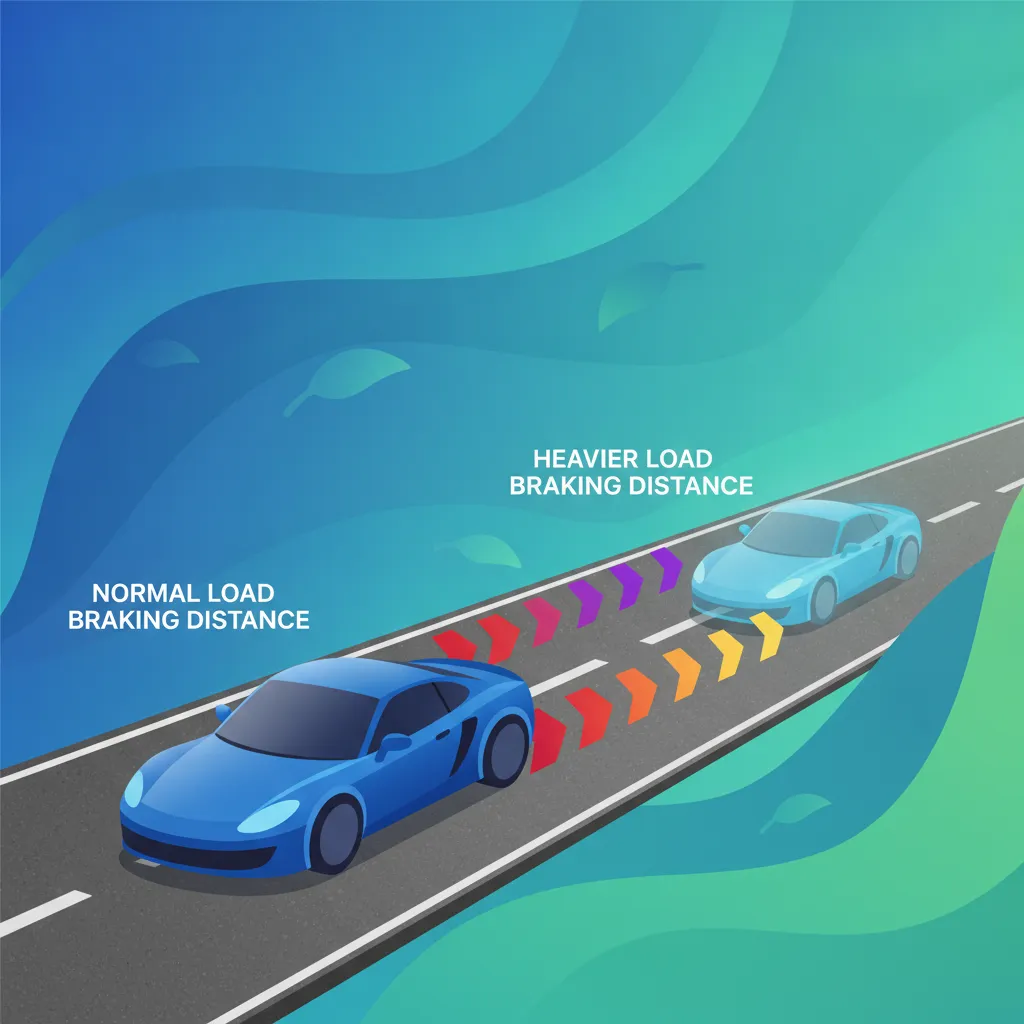
This lesson explores the direct relationship between a vehicle's mass, its speed, and the distance required to stop. It explains how increased load significantly lengthens the braking distance and details how road conditions like gradient and surface friction further affect this calculation. Learners will understand the importance of anticipating stops and maintaining a greater following distance to ensure safety.
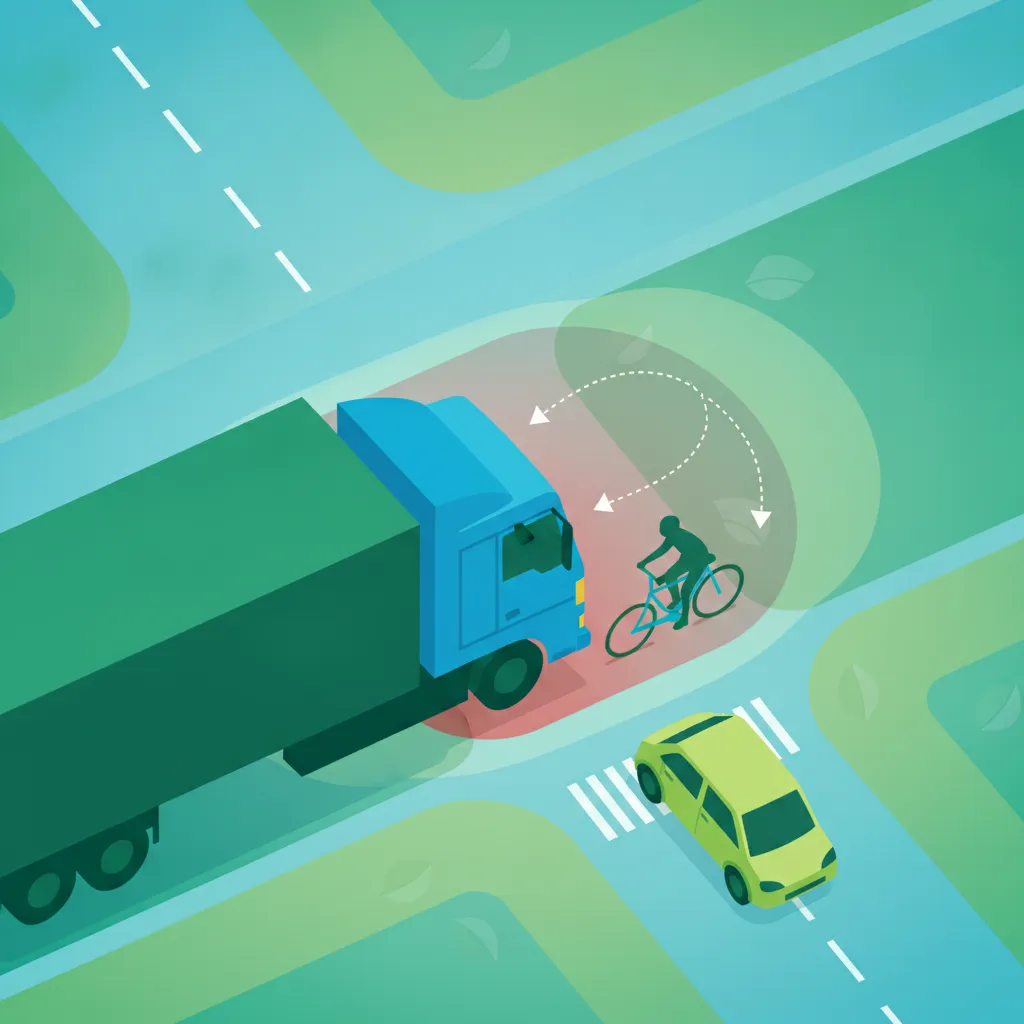
This lesson maps out the extensive blind spots, or 'no-zones,' that exist around a tractor-trailer combination, particularly to the sides and rear. It teaches the proper techniques for adjusting all mirrors to minimize these areas and explains how modern camera systems provide critical visibility. Understanding and compensating for these blind spots is a fundamental skill for preventing collisions, especially during lane changes and turns.
Explore how proper load distribution and securing cargo prevent trailer sway and jack-knifing. This lesson details weight limits, center of gravity effects, and stability principles for safe heavy vehicle operation in Denmark.
This lesson explains the fundamental physics of load distribution and its direct impact on a heavy vehicle's centre of gravity. It details how the positioning of cargo—whether high, low, forward, or back—alters handling characteristics and overall stability. The content emphasizes the importance of achieving a balanced load to minimize rollover risk and comply with Danish regulations for safe weight distribution.
Proper axle load distribution is crucial for the safety and legality of heavy vehicle operations. This lesson explains how axle pressure is defined and regulated, highlighting the importance of distributing weight correctly across all axles. It covers how imbalanced loads can negatively affect braking performance, steering control, and overall vehicle stability, while also explaining the Danish regulations for maximum axle loads.
This lesson examines the primary factors that contribute to heavy vehicle instability and the risk of rollover. It explains how high-speed cornering, sudden maneuvers, and improperly secured loads can create dangerous lateral forces that compromise vehicle stability. Learners will understand how to identify high-risk situations and apply preventive driving techniques to maintain control and adhere to Danish safety guidelines.
This lesson delves into the unique dynamics of articulated vehicles, focusing on the behavior of the combination around its articulation point. It explains the concept of off-tracking, where the trailer's wheels follow a tighter path than the tractor's, and its implications for negotiating turns and corners. Understanding these dynamics is crucial for safe maneuvering in confined spaces and preventing collisions with curbs or other obstacles.
This lesson explores the direct relationship between a vehicle's mass, its speed, and the distance required to stop. It explains how increased load significantly lengthens the braking distance and details how road conditions like gradient and surface friction further affect this calculation. Learners will understand the importance of anticipating stops and maintaining a greater following distance to ensure safety.
This lesson covers the safe and correct method for attaching a trailer to your vehicle, including all necessary safety checks. It explains the importance of proper load distribution to maintain trailer stability and prevent dangerous swaying. The content also revisits the critical rules for passenger safety, with a focus on selecting and using the correct child restraint systems according to Danish law.
This lesson introduces the various types of trailers and semitrailers used in commercial transport, from rigid drawbar trailers to articulated semitrailers. It explains their distinct characteristics, including legal dimensional limits, typical axle configurations, and maximum loading capacities as defined by Danish regulations. Understanding these differences is fundamental for selecting the right combination for a given load and ensuring legal operation.
Find clear answers to common questions learners have about Trailer Sway and Jack-Knifing Avoidance. Learn how the lesson is structured, which driving theory objectives it supports, and how it fits into the overall learning path of units and curriculum progression in Denmark. These explanations help you understand key concepts, lesson flow, and exam focused study goals.
Jack-knifing is most frequently caused by improper or sudden braking while cornering, especially on slippery surfaces. When the drive wheels lose traction while the trailer pushes forward, the trailer can swing outward and fold toward the cabin.
Poorly distributed cargo, especially an unevenly loaded center of gravity, makes the trailer more prone to swaying at speed. Ensure the load is secured centrally and low to maintain stability according to Danish transport regulations.
Do not panic-brake, as this can worsen the sway. Gradually lift your foot off the accelerator, maintain a steady, straight steering input, and allow the vehicle to slow down naturally until the sway subsides.
Yes, the Danish C-category exam often includes scenario-based questions asking you to identify the safest response to vehicle instability, such as how to handle crosswinds or slippery road conditions when towing.
Use our powerful search tool to pinpoint specific Danish driving theory topics, road signs, or traffic situations you need to review. Start exploring relevant practice sets now to reinforce your knowledge and build confidence for your upcoming driving licence exam.