
This lesson guides you through the essential safety procedures for managing a motorcycle breakdown on Danish roads. Understanding how to secure your vehicle and protect yourself is a critical component of rider responsibility and is frequently tested in your theory exam. Building on your knowledge of hazard perception, you will learn the precise steps to minimize risk during roadside emergencies.

Lesson content overview
Riding a motorcycle offers unparalleled freedom, but like any vehicle, mechanical issues can arise unexpectedly. Knowing how to react calmly and correctly to a breakdown is crucial for your safety and the safety of other road users. This lesson, part of your Danish Motorcycle Theory course, outlines the step-by-step procedures for managing a motorcycle breakdown, focusing on safe stopping, enhancing visibility, and calling for assistance. Adhering to these guidelines minimizes risks and ensures you comply with Danish traffic regulations.
A motorcycle breakdown refers to any mechanical failure that prevents your motorcycle from operating safely or continuing its journey. This could range from a sudden engine stall to brake failure or a flat tyre. Your immediate reaction upon recognizing a problem is paramount. Panic can lead to dangerous decisions; therefore, a structured approach is essential.
Before a complete breakdown, your motorcycle might exhibit warning signs. These could include unusual noises, vibrations, a sudden loss of power, a change in braking feel, or warning lights on your dashboard.
Familiarize yourself with your motorcycle's normal sounds and feel. Any deviation should prompt immediate attention and a safe assessment of the situation.
Once you perceive a malfunction, you must quickly assess its severity. If the issue severely compromises control (e.g., brake failure, uncontrollable steering), you must initiate a controlled stop as immediately as possible, prioritizing safety above all else. If the motorcycle is still somewhat controllable but requires attention (e.g., engine sputtering, a minor fluid leak), it is often safer to try and ride it a short distance to the nearest safe stopping location.
A safe stopping location is an area off the main carriageway where a vehicle can be safely brought to a halt without obstructing or endangering other traffic. This is typically a hard shoulder, an emergency lane, or a designated lay-by.
Avoid stopping abruptly in the middle of a lane, on blind curves, at the crest of a hill, or immediately after an exit where traffic may be merging. Your goal is to move the motorcycle out of the main flow of traffic to prevent further incidents.
Bringing your motorcycle to a controlled stop, especially during a breakdown, requires careful execution. Your actions must be predictable to other drivers.
Upon deciding to stop, gradually reduce your speed. Check your mirrors and signal your intention to move to the side of the road using your indicator lights. If your indicators are not working, use appropriate hand signals if it is safe to do so. Decelerate smoothly using a combination of the clutch and brakes, ensuring you maintain control of the motorcycle.
Once you reach a safe stopping location, position your motorcycle as far to the right and as far off the carriageway as possible. This creates maximum clearance from passing traffic. Ensure the motorcycle is stable, either on its side stand or center stand, to prevent it from falling over.
Never stop directly on the carriageway unless it is absolutely unavoidable. If you must stop on the carriageway, do so in a straight line, as close to the right edge as possible, and immediately activate your hazard lights.
Once stopped, your primary concern shifts to making yourself and your motorcycle visible to prevent secondary accidents. Danish regulations mandate specific actions to warn other drivers.
Hazard warning lights, also known as hazard lights, are flashing amber lights that activate all your indicator lights simultaneously. These must be used immediately when your motorcycle is stopped on the carriageway or shoulder due to a breakdown, signaling to other road users that your vehicle is a stationary hazard.
Flashing lights that signal a stopped or slow-moving vehicle, alerting other road users to a potential obstruction or danger.
Keep your hazard lights on until your motorcycle is moved to a completely safe location or roadside assistance arrives. Only deactivate them when you are ready to resume riding or when the hazard has been completely removed.
In Denmark, it is mandatory to wear high-visibility clothing, such as a reflective vest, when you are outside your vehicle on a roadway after a breakdown. This ensures you are easily seen by other drivers, especially in low light conditions, adverse weather, or on high-speed roads.
Immediately after stopping, retrieve your high-visibility vest from your luggage.
Put on the vest before you step off your motorcycle or exit the immediate vicinity of the bike.
Keep the vest on until you are safely away from the roadway or assistance has arrived and the situation is resolved.
This simple measure can significantly reduce the risk of being struck by passing traffic.
A warning triangle is a reflective triangular device that must be placed on the road to warn approaching drivers of your stopped vehicle. Its use is mandatory if your motorcycle is immobile and poses a danger to traffic.
The placement distance of the warning triangle is critical and depends on the speed limit of the road:
Ensure your hazard lights are active and you are wearing your high-visibility vest.
Carefully walk to the appropriate distance behind your motorcycle, facing oncoming traffic to remain aware of your surroundings.
Place the warning triangle firmly on the road surface so it is stable and clearly visible to approaching drivers.
Return to a safe location, preferably behind a crash barrier or well away from the traffic flow.
Beyond visual warnings, effective communication and knowing when to call for help are vital.
While moving to a safe stopping location, clear communication of your intentions is essential. Use your turn signals to indicate a lane change or pull-over. Maintain eye contact with other drivers where possible to confirm they have seen you. Once stopped, rely on your hazard lights, high-visibility vest, and warning triangle. Avoid making sudden movements that could confuse or startle other drivers.
You must contact emergency services (112 in Denmark) if your breakdown creates a significant hazard that cannot be quickly resolved or if you are injured. This includes situations where:
When calling 112, provide clear and concise information:
For non-emergency breakdowns, you will typically contact your roadside assistance provider or a local mechanic. Ensure you know your membership number and the process for requesting help. Many insurance policies or motorcycle clubs offer roadside assistance services.
The moment you realize a breakdown is occurring, a quick assessment is critical for your safety.
Your decision-making process is heavily influenced by the immediate danger posed by the malfunction versus the danger of stopping in a particular location. Always prioritize moving away from moving traffic if it can be done safely.
Danish traffic law is clear about the responsibilities of drivers during a breakdown to ensure road safety. Non-compliance can lead to fines and penalties.
Failing to follow these mandatory regulations not only endangers yourself and others but can also result in significant fines. Always carry a warning triangle and a high-visibility vest on your motorcycle.
Understanding common errors and how different conditions affect breakdown procedures can save lives.
While not immediately critical for safety, documenting the incident can be important for insurance or legal purposes.
If the breakdown is significant or results in damage, it's advisable to document the incident.
This documentation can be invaluable when dealing with insurance claims or if there are any legal disputes.
Being prepared for a breakdown is a fundamental aspect of responsible motorcycling. By following these procedures, you enhance your personal safety and contribute to the overall safety of the road environment.
By internalizing these steps, you will be well-equipped to manage the unexpected challenges of a motorcycle breakdown with confidence and competence.
This lesson covers the essential safety procedures for managing a motorcycle breakdown on Danish roads, emphasizing that rider safety and minimizing secondary hazards are the top priorities. Key steps include moving the motorcycle off the carriageway to a safe location, immediately activating hazard lights, wearing mandatory high-visibility clothing, and deploying a warning triangle at legally prescribed distances that vary between urban and high-speed roads. Danish traffic law is explicit about these obligations, and compliance is both a safety requirement and a legal duty. The lesson also covers when to call emergency services (112) versus arranging roadside assistance, and how road type, weather, and time of day all affect the procedures and their urgency.
A short set of high-value points that capture the most important learning from this lesson.
Move the motorcycle off the main carriageway to a safe stopping location as the first priority during any breakdown.
Activate hazard lights immediately when stopped on the carriageway or shoulder - this is mandatory in Denmark.
Put on your high-visibility reflective vest before stepping away from the motorcycle - it is a legal requirement.
Place the warning triangle at the correct distance: 5-10 metres in urban areas, at least 30 metres on rural roads and motorways.
Call 112 when the breakdown creates a significant hazard that cannot be quickly resolved or if anyone is injured.
Explore all units and lessons included in this driving theory course.
The shoulder, hard shoulder, or lay-by are preferred safe stopping locations - avoid stopping in lane, on blind bends, or hill crests.
Warning triangle distance is legally prescribed: closer placement in urban zones, further back on high-speed roads.
Hazard lights must stay on until the motorcycle is moved to safety or assistance arrives.
Minor issues (sputtering engine) may allow riding to a safe spot; major failures (brake loss) require immediate controlled stop.
After stopping: vest on first, then hazard lights, then deploy warning triangle at correct distance.
Stopping in a dangerous location such as the middle of a lane, on a blind bend, or at a hill crest where traffic cannot see you in time.
Failing to activate hazard lights immediately, leaving other road users with no warning of your stationary motorcycle.
Neglecting high-visibility clothing, especially in low light, rain, or darkness where a rider without a reflective vest is very difficult to see.
Placing the warning triangle too close to the motorcycle, particularly on motorways, giving drivers insufficient reaction time.
Attempting to continue riding with serious mechanical issues like brake failure or a rapidly deflating tyre at speed.
Lesson content overview
A short set of high-value points that capture the most important learning from this lesson.
Move the motorcycle off the main carriageway to a safe stopping location as the first priority during any breakdown.
Activate hazard lights immediately when stopped on the carriageway or shoulder - this is mandatory in Denmark.
Put on your high-visibility reflective vest before stepping away from the motorcycle - it is a legal requirement.
Place the warning triangle at the correct distance: 5-10 metres in urban areas, at least 30 metres on rural roads and motorways.
Call 112 when the breakdown creates a significant hazard that cannot be quickly resolved or if anyone is injured.
Explore all units and lessons included in this driving theory course.
The shoulder, hard shoulder, or lay-by are preferred safe stopping locations - avoid stopping in lane, on blind bends, or hill crests.
Warning triangle distance is legally prescribed: closer placement in urban zones, further back on high-speed roads.
Hazard lights must stay on until the motorcycle is moved to safety or assistance arrives.
Minor issues (sputtering engine) may allow riding to a safe spot; major failures (brake loss) require immediate controlled stop.
After stopping: vest on first, then hazard lights, then deploy warning triangle at correct distance.
Stopping in a dangerous location such as the middle of a lane, on a blind bend, or at a hill crest where traffic cannot see you in time.
Failing to activate hazard lights immediately, leaving other road users with no warning of your stationary motorcycle.
Neglecting high-visibility clothing, especially in low light, rain, or darkness where a rider without a reflective vest is very difficult to see.
Placing the warning triangle too close to the motorcycle, particularly on motorways, giving drivers insufficient reaction time.
Attempting to continue riding with serious mechanical issues like brake failure or a rapidly deflating tyre at speed.
Explore search topics learners often look for when studying Handling Breakdowns and Safe Stopping Procedures. These topics reflect common questions about road rules, driving situations, safety guidance, and lesson level theory preparation for learners in Denmark.
Browse additional driving theory lessons that cover connected traffic rules, road signs, and common driving situations related to this topic. Improve your understanding of how different rules interact across everyday traffic scenarios.
Explore comprehensive procedures for motorcycle breakdowns in Denmark. This lesson covers safe stopping, enhancing visibility with hazard lights and high-vis gear, warning triangle placement, and emergency communication protocols according to Danish traffic law.

This lesson provides a step-by-step guide for managing a vehicle breakdown safely. It instructs the rider on moving the vehicle to a safe location, making it visible to other traffic using hazard lights, and personal safety while waiting for assistance. The importance of staying away from active traffic lanes is a key point.
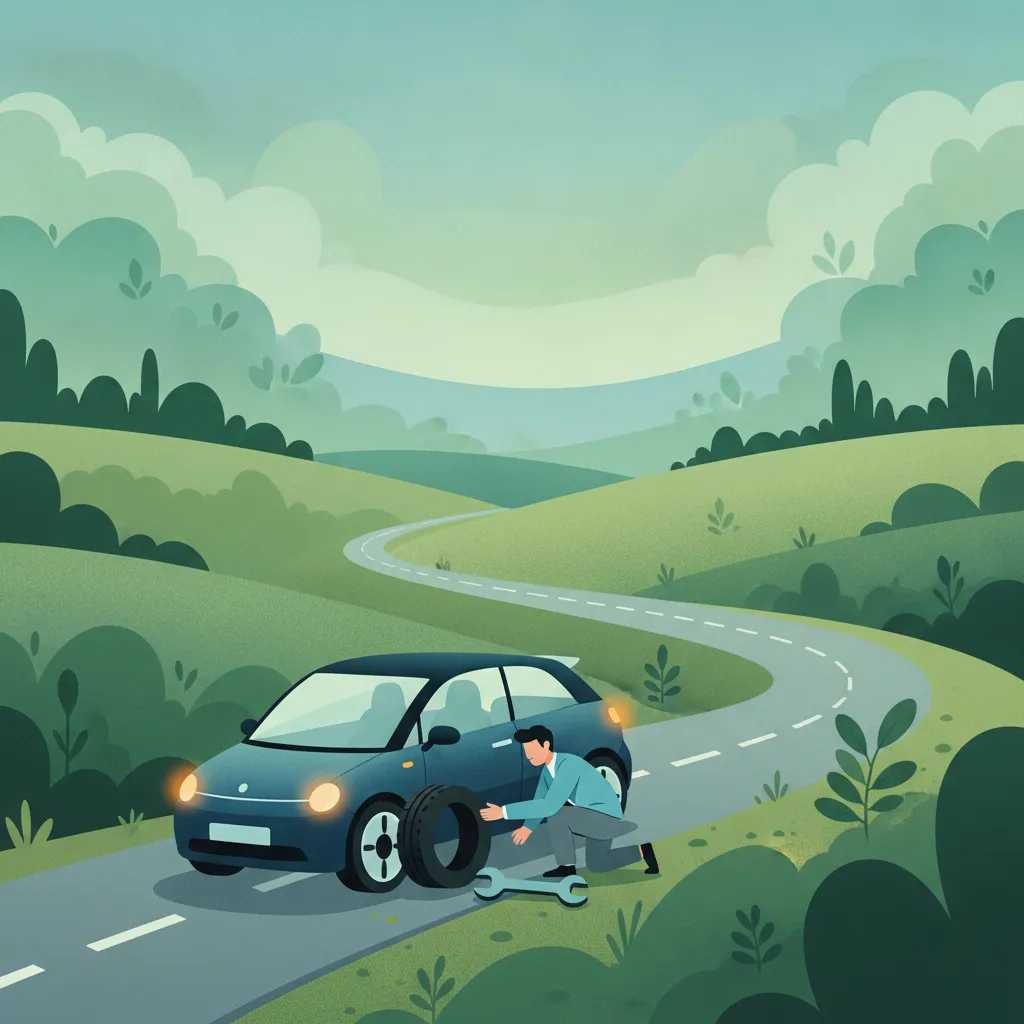
This lesson provides a clear, safety-oriented protocol for handling a vehicle breakdown or tyre failure. It covers how to safely maneuver the vehicle to the roadside, the correct use of hazard lights and warning triangles to alert other traffic, and procedures for contacting assistance. Adhering to these steps, as required by Danish law, is critical for protecting yourself and other road users from further incident.

This lesson prepares riders for the specific hazards of rural roads, which often have less visibility and more unpredictable surfaces. It covers strategies for approaching blind curves, safely passing agricultural machinery, and being vigilant for animals on the road. Adjusting speed to match visibility is a core principle.
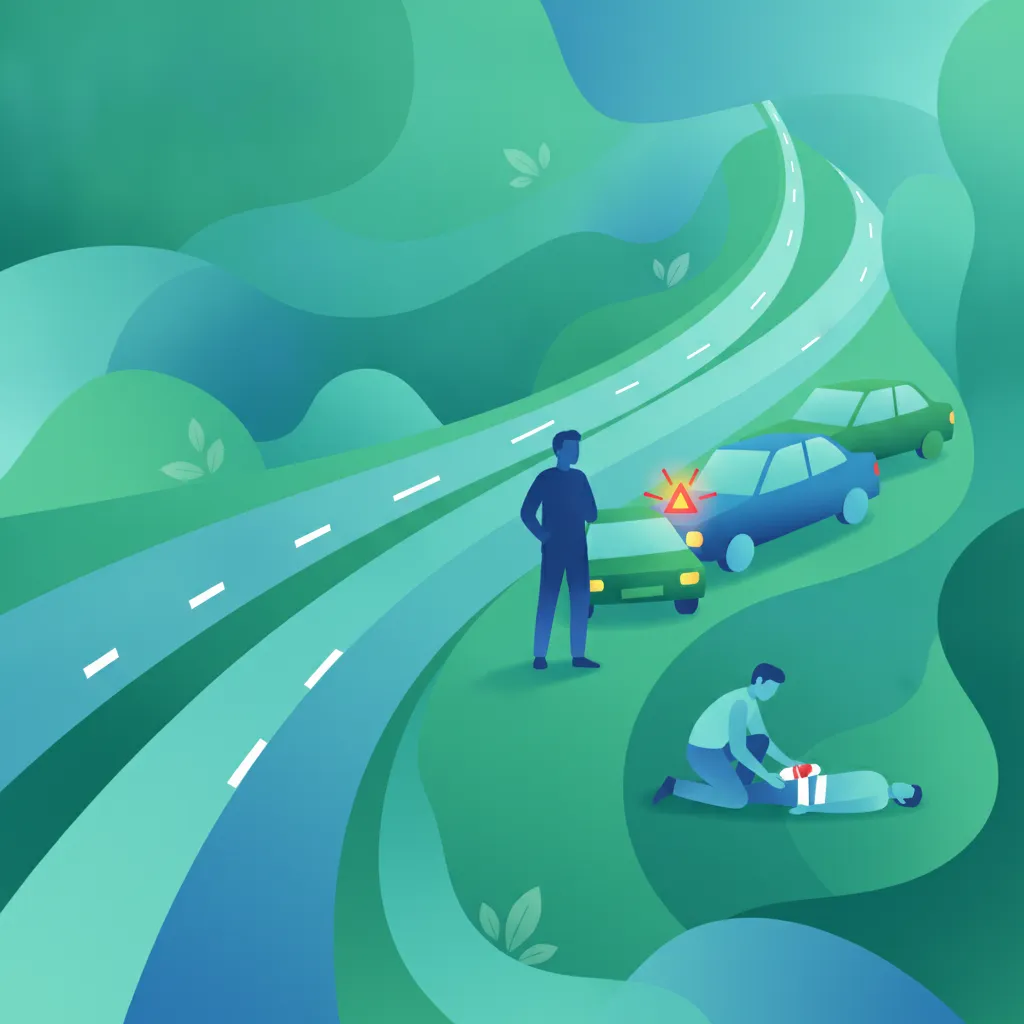
This lesson provides a clear action plan for handling emergencies on the road. It explains how to secure an accident scene using a warning triangle, when and how to call the emergency number 112, and the fundamentals of providing basic first aid. You will also learn the safe procedure for dealing with a vehicle breakdown to protect yourself and other road users.

This lesson provides a guide to motorway riding, a high-speed and demanding environment. It details the process for using acceleration lanes to merge smoothly, maintaining proper lane discipline, and preparing for exits well in advance. Key safety principles like the two-second rule are reinforced for this context.

This lesson focuses on the challenges of braking in adverse conditions like rain or on icy patches. It teaches riders to increase their following distance and apply brakes smoothly and gently to prevent traction loss. The role of ABS in these scenarios and strategies for maintaining control are also explained.
This lesson explains the procedures for safely riding through construction zones. It covers how to respond to temporary signage, lane closures, and flaggers directing traffic. Riders will learn to reduce speed and be vigilant for uneven pavement, loose gravel, and the movement of workers and equipment.

This lesson defines the fundamental responsibilities of a motorcyclist, which extend beyond simple rule-following. It emphasizes the duty of care required to operate safely, including practicing defensive riding techniques and proactively identifying potential hazards. The content focuses on the importance of maintaining visibility and communicating intentions clearly to ensure safe interactions in traffic.

This lesson prepares riders for the unfortunate event of a crash. It covers the crucial first steps to take, including ensuring personal safety, making the accident scene visible to prevent further collisions, and assessing for injuries. Understanding these immediate priorities can significantly impact the outcome of an emergency situation.
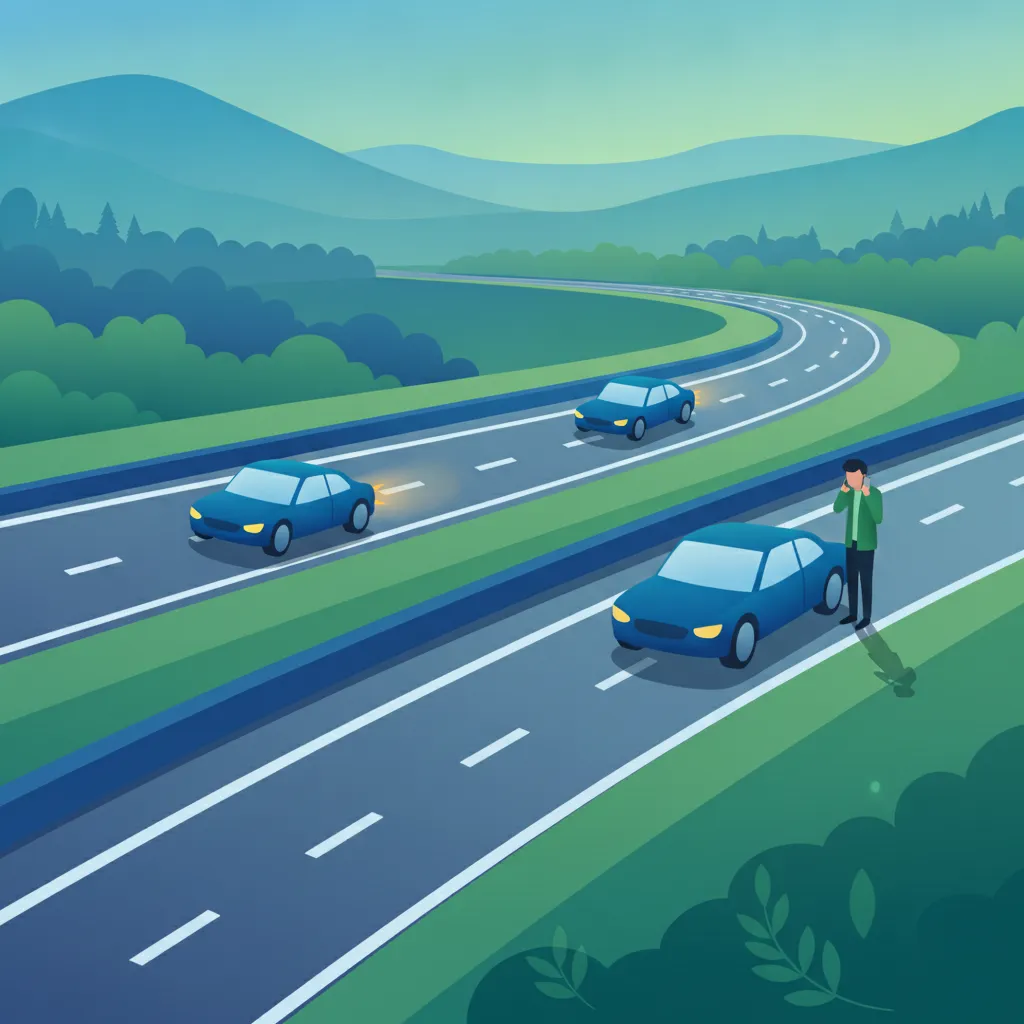
This lesson covers the immediate actions to take at the scene of an accident. It explains how and when to call the Danish emergency number 112, and what information to provide to the operator. The content also includes the principles of securing an accident scene to prevent further incidents and basic first aid concepts.
Learn to avoid critical errors during motorcycle breakdowns. This lesson details common mistakes, contextual variations for different road types and weather, and emphasizes hazard perception and crucial safety measures required by Danish regulations.
This lesson provides a step-by-step guide for managing a vehicle breakdown safely. It instructs the rider on moving the vehicle to a safe location, making it visible to other traffic using hazard lights, and personal safety while waiting for assistance. The importance of staying away from active traffic lanes is a key point.
This lesson prepares riders for the specific hazards of rural roads, which often have less visibility and more unpredictable surfaces. It covers strategies for approaching blind curves, safely passing agricultural machinery, and being vigilant for animals on the road. Adjusting speed to match visibility is a core principle.

This lesson examines the specific risks inherent to motorcycling, emphasizing a rider's vulnerability due to reduced physical protection compared to other vehicles. It covers the heightened severity of injuries in accidents and the critical role of protective gear in mitigating harm. Learners will understand how to adopt defensive strategies, such as proper road positioning, to counteract these risks.

This lesson provides an in-depth look at the blind spots of other vehicles and how to manage them. It teaches riders to recognize the large 'no-zones' around trucks and buses where they cannot be seen. Strategies include avoiding lingering in these areas and positioning the motorcycle for maximum visibility.

This lesson breaks down the critical skill of overtaking into a safe, repeatable process. It covers how to judge the time and space needed, check for oncoming traffic, and execute the maneuver decisively. The importance of signaling and returning to the lane safely is also emphasized.
This lesson explains the procedures for safely riding through construction zones. It covers how to respond to temporary signage, lane closures, and flaggers directing traffic. Riders will learn to reduce speed and be vigilant for uneven pavement, loose gravel, and the movement of workers and equipment.
This lesson provides a clear, safety-oriented protocol for handling a vehicle breakdown or tyre failure. It covers how to safely maneuver the vehicle to the roadside, the correct use of hazard lights and warning triangles to alert other traffic, and procedures for contacting assistance. Adhering to these steps, as required by Danish law, is critical for protecting yourself and other road users from further incident.
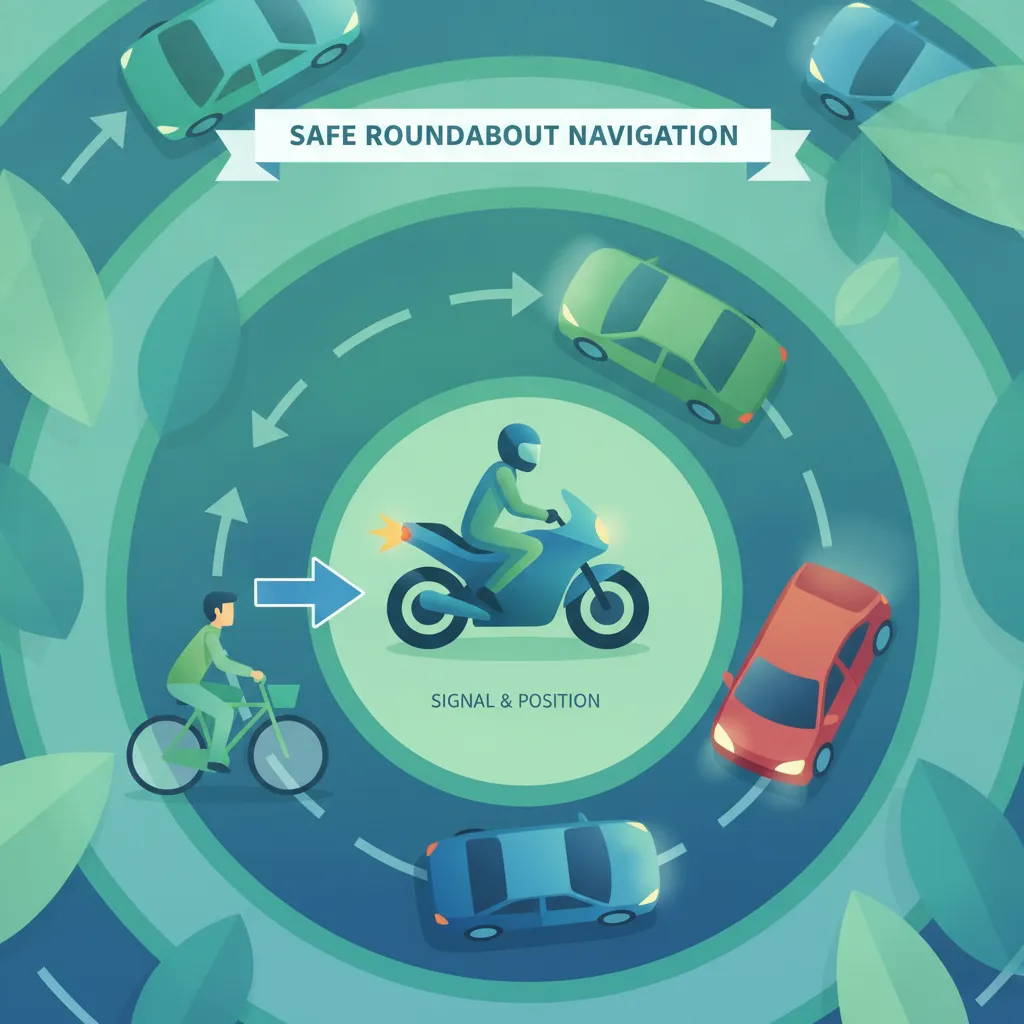
This lesson details the specific skills needed to navigate roundabouts on a motorcycle. It explains how to approach at a safe speed, select the correct lane based on your intended exit, and yield to circulating traffic. Proper use of signals to indicate intentions when entering and exiting is also covered.

This lesson addresses the specific hazards found on exposed structures like bridges and open coastal roads. It teaches techniques for managing strong crosswinds and sudden gusts that can affect stability. Additionally, it covers how to handle potentially slippery surfaces like metal expansion joints often found on bridges.
This lesson prepares riders for the unfortunate event of a crash. It covers the crucial first steps to take, including ensuring personal safety, making the accident scene visible to prevent further collisions, and assessing for injuries. Understanding these immediate priorities can significantly impact the outcome of an emergency situation.
Find clear answers to common questions learners have about Handling Breakdowns and Safe Stopping Procedures. Learn how the lesson is structured, which driving theory objectives it supports, and how it fits into the overall learning path of units and curriculum progression in Denmark. These explanations help you understand key concepts, lesson flow, and exam focused study goals.
You should aim to exit the road entirely if possible. If you must stop on the hard shoulder, park as far to the right as possible, away from the active traffic lanes, and ensure you and any passenger exit the motorcycle and wait behind the guardrail for safety.
Yes, if your motorcycle is immobilized in a position that could pose a danger to others, hazard warning lights must be activated immediately to alert oncoming traffic to your presence, especially in low light or poor visibility conditions.
Motorcyclists are vulnerable road users. In a breakdown, wearing high-visibility gear ensures that other drivers can see you quickly, which is critical for preventing accidents when you are off your bike and potentially exposed to traffic.
Your priority is always personal safety. Once the motorcycle is in a relatively safe position and the hazard lights are on, you should move yourself to a protected area away from the flow of traffic before calling for assistance.
Use our powerful search tool to pinpoint specific Danish driving theory topics, road signs, or traffic situations you need to review. Start exploring relevant practice sets now to reinforce your knowledge and build confidence for your upcoming driving licence exam.