
This lesson teaches you the vital skills of road positioning and lane discipline required for operating an AM-class moped or scooter. By learning how to choose the right spot in your lane and anticipate the movements of other road users, you will significantly improve your safety and prepare effectively for your German theory exam.

Lesson content overview
Operating a moped or scooter requires not only vehicle control but also a keen understanding of how to position yourself safely and effectively on the road. This lesson for the German Driving Theory Course for AM Licence holders focuses on strategic road positioning to enhance visibility, predict the actions of other road users, and navigate complex traffic situations confidently. Proper positioning is not merely a suggestion; it is a fundamental aspect of road safety mandated by the Straßenverkehrs-Ordnung (StVO).
The ability to maintain appropriate lane discipline and accurately anticipate the movements of drivers, cyclists, and pedestrians is crucial for preventing conflicts and collisions. This knowledge builds upon your understanding of visual perception and blind spots, and forms the foundation for effective signalling and safe interactions with all road users. Ignoring these principles compromises your safety, increases accident risk, and can lead to legal penalties.
Effective road positioning is guided by several fundamental principles designed to maximize safety and predictability for all road users. Understanding these concepts will help you make informed decisions on where to ride and how to react to your surroundings.
Vehicle positioning refers to where your moped is placed relative to the lane boundaries and road markings. This seemingly simple decision has a profound impact on your visibility, your ability to maneuver, and how other traffic interacts with you.
While you might instinctively ride in the middle of a lane, different situations call for different placements.
Appropriate vehicle positioning enables clear signaling of your intentions, makes the most efficient use of available road space, and significantly enhances your overall safety. The Straßenverkehrs-Ordnung (StVO) addresses lane usage directly, particularly in §5, which dictates how vehicles should use lanes and perform overtaking maneuvers. Riding too close to either the lane edge or the centerline unnecessarily are common misunderstandings that can compromise safety.
For example, on a straight, clear road, maintaining a central lane position makes you highly visible and predictable. However, when you approach an exit on a multi-lane road, moving closer to the right edge of your lane signals your intention to exit and allows through-traffic to pass on your left more clearly.
Lane discipline is the practice of consistently adhering to lane-specific rules and maintaining the appropriate position within your designated lane. It is vital for orderly traffic flow and reducing conflict points on the road.
Good lane discipline reduces potential conflict points between vehicles and supports a smoother, more predictable traffic flow. The StVO sections §2(2) and §2(3) specifically address lane selection and overtaking, emphasizing the importance of staying in the correct lane and using the rightmost lane unless overtaking. A common misunderstanding is using the wrong lane for overtaking or for preparing a turn, which can confuse other drivers and lead to dangerous situations.
For instance, on a road with multiple lanes traveling in the same direction, you should generally stay in the rightmost lane. You would only move to a left lane to overtake another vehicle, and then return to the rightmost lane once the maneuver is complete and safe.
Anticipating the potential actions of other drivers, cyclists, and pedestrians is a critical defensive riding skill. It allows you to react proactively to developing situations, often preventing a collision before it even becomes imminent.
Developing the ability to predict behavior involves a continuous cycle of observation, recognition, and assessment:
Look for eye contact: If you can make eye contact with a pedestrian or another driver, it can confirm that they have seen you, which is a significant step towards predicting their actions.
Accurate prediction enables you to take proactive measures, such as adjusting your speed, changing your lane position, or preparing to brake or swerve, to avoid potential collisions. StVO §6, concerning yielding and right-of-way, implicitly requires this anticipatory yielding. A dangerous misunderstanding is assuming that other road users will always follow the rules or that they have seen you. Always assume others might make a mistake or fail to see you.
For example, if you see a cyclist look over their left shoulder and then extend their left arm, you should immediately predict they intend to change lanes to the left. This allows you to adjust your speed or position to give them space well in advance.
Certain situations on the road demand specific positioning strategies to maximize safety and efficiency.
Intersections are high-risk areas due to crossing traffic and complex right-of-way rules. Your vehicle placement when approaching, traversing, or exiting an intersection is critical for reducing ambiguity and conflict.
StVO §9 explicitly dictates vehicle usage at intersections based on intended direction. Misinterpreting lane markings at complex intersections is a common error that can lead to confusion and potential collisions. For instance, if you intend to turn left at a multi-lane intersection, you must position yourself in the designated left-turn lane, not stay in a straight-ahead lane.
Riding past parked or stationary vehicles, especially on busy streets, presents unique hazards. Doors can open suddenly, pedestrians might step out, or a vehicle might pull away without warning.
Riding too close to parked cars is a common, dangerous misunderstanding. StVO §7 provides recommendations for maintaining a minimum lateral distance when passing stationary vehicles. Adhering to this rule significantly reduces the risk of colliding with an opening door or a vehicle suddenly entering traffic.
The German Straßenverkehrs-Ordnung (StVO) provides the legal framework for all traffic behavior, including specific rules on road positioning, lane discipline, and the expectation of anticipatory driving.
This rule establishes general principles for right-of-way. While the blueprint mentions §2 as "Right of Way," its core meaning for positioning is often linked to the general requirement to drive on the right side of the road and allow free passage, particularly for vehicles entering from side roads where priority applies. However, the blueprint description primarily focuses on priority itself rather than positioning. For this lesson, we will focus on explicit positioning rules.
This section mandates that drivers must stay within their lane and outlines the rules for safe overtaking, generally requiring it to be done on the left side.
This rule specifies that a minimum lateral distance must be maintained when passing stationary vehicles, including parked cars, broken-down vehicles, or stopped buses.
This section mandates that drivers must position their vehicle according to their intended direction when approaching and traversing intersections.
Many accidents involving mopeds and scooters stem from improper positioning or a failure to predict the actions of others. Being aware of these common pitfalls can help you avoid them.
Your optimal road position is dynamic and must be adjusted based on environmental factors and specific road situations.
Always prioritize the safety of vulnerable road users. Give cyclists and pedestrians ample space, even if it means altering your usual road position.
Understanding the rationale behind these rules and guidelines reinforces their importance for your safety and the safety of others.
Let's consider a few practical situations to illustrate correct positioning and prediction.
Mastering road positioning, lane discipline, and road user prediction is fundamental for safety when riding a moped or scooter in Germany.
By consistently applying these principles, you will not only comply with German traffic laws but also become a safer, more confident, and more responsible AM licence holder on the road.
Safe road positioning for AM riders rests on four core principles: visibility (positioning where you can see and be seen), predictability (maintaining consistent lane position), safety margins (keeping sufficient lateral and longitudinal space), and contextual adaptation (adjusting position based on conditions). Central lane position is generally optimal, while edge positioning is reserved for turns or overtaking scenarios. StVO regulations §5, §7, and §9 provide the legal framework governing lane discipline, lateral distances when passing parked vehicles, and correct positioning at intersections. Predictive awareness—continuously observing signals, recognizing intent through cues, and assessing trajectories—enables proactive hazard avoidance rather than reactive responses. Dynamic adjustment based on weather, lighting, road type, and vulnerable road users is essential for maintaining safety at all times.
A short set of high-value points that capture the most important learning from this lesson.
Central lane position is generally optimal on straight roads as it maximizes visibility to vehicles ahead and behind while providing equal lateral safety margins
Position near the lane edge only when preparing for specific maneuvers—left edge for left turns, right edge for right turns or allowing overtaking
Maintain a minimum lateral distance of at least 1 meter when passing parked vehicles to avoid collisions with opening doors or emerging pedestrians
Predictive awareness is a continuous cycle of observing signals, recognizing intent through body language and subtle cues, and assessing probable trajectories
Your optimal road position must continuously adapt based on weather conditions, lighting, road type, and the presence of vulnerable road users
Explore all units and lessons included in this driving theory course.
Central positioning gives maximum visibility; edge positioning is only for turns or when allowing others to overtake
StVO §5 governs lane usage and overtaking (left side), §7 mandates minimum lateral distance when passing stationary vehicles, §9 requires correct lane position at intersections
When passing cyclists in Germany, maintain a minimum lateral distance of 1.5 meters and be prepared to slow down
Look for eye contact with other road users as confirmation they have seen you, but never assume they will react correctly
Observe not just obvious signals like turn indicators but also subtle cues such as brake lights, wheel movements, pedestrian body language, and exhaust fumes from parked vehicles
Riding too close to lane boundaries—too far left risks side collisions with oncoming traffic, too far right risks debris, curbs, and opening car doors
Positioning incorrectly when preparing to turn, such as staying central when intending a left turn, which causes ambiguity and blocks other traffic
Following too closely when passing stationary vehicles, drastically reducing reaction time if a door opens or a pedestrian steps out
Assuming other road users have seen you or will follow the rules—always ride defensively and prepare for the worst-case scenario
Misinterpreting lane markings at complex intersections, particularly at multi-lane roundabouts, leading to wrong lane entry or exit
Lesson content overview
A short set of high-value points that capture the most important learning from this lesson.
Central lane position is generally optimal on straight roads as it maximizes visibility to vehicles ahead and behind while providing equal lateral safety margins
Position near the lane edge only when preparing for specific maneuvers—left edge for left turns, right edge for right turns or allowing overtaking
Maintain a minimum lateral distance of at least 1 meter when passing parked vehicles to avoid collisions with opening doors or emerging pedestrians
Predictive awareness is a continuous cycle of observing signals, recognizing intent through body language and subtle cues, and assessing probable trajectories
Your optimal road position must continuously adapt based on weather conditions, lighting, road type, and the presence of vulnerable road users
Explore all units and lessons included in this driving theory course.
Central positioning gives maximum visibility; edge positioning is only for turns or when allowing others to overtake
StVO §5 governs lane usage and overtaking (left side), §7 mandates minimum lateral distance when passing stationary vehicles, §9 requires correct lane position at intersections
When passing cyclists in Germany, maintain a minimum lateral distance of 1.5 meters and be prepared to slow down
Look for eye contact with other road users as confirmation they have seen you, but never assume they will react correctly
Observe not just obvious signals like turn indicators but also subtle cues such as brake lights, wheel movements, pedestrian body language, and exhaust fumes from parked vehicles
Riding too close to lane boundaries—too far left risks side collisions with oncoming traffic, too far right risks debris, curbs, and opening car doors
Positioning incorrectly when preparing to turn, such as staying central when intending a left turn, which causes ambiguity and blocks other traffic
Following too closely when passing stationary vehicles, drastically reducing reaction time if a door opens or a pedestrian steps out
Assuming other road users have seen you or will follow the rules—always ride defensively and prepare for the worst-case scenario
Misinterpreting lane markings at complex intersections, particularly at multi-lane roundabouts, leading to wrong lane entry or exit
Explore search topics learners often look for when studying Positioning on the Road, Lane Discipline, and Road User Prediction. These topics reflect common questions about road rules, driving situations, safety guidance, and lesson level theory preparation for learners in Germany.
Browse additional driving theory lessons that cover connected traffic rules, road signs, and common driving situations related to this topic. Improve your understanding of how different rules interact across everyday traffic scenarios.
Deepen your understanding of anticipating the actions of other road users. This lesson provides strategies for observing and predicting movements of cars, cyclists, and pedestrians to enhance safety on German roads.

This lesson builds on defensive driving by focusing specifically on hazard perception ('Gefahrenerkennung'). It teaches you how to actively scan the driving environment for potential risks, not just immediate dangers. You will learn to anticipate the likely actions of other road users and identify clues that signal a developing hazardous situation, allowing you to react early and safely.

This lesson trains drivers to proactively identify vulnerable road users and anticipate their often unpredictable behavior. It highlights the specific risks posed by children, elderly pedestrians, cyclists, and e-scooter users, particularly near bus stops and crossings. The goal is to develop a heightened sense of risk perception and apply defensive driving techniques to protect those who are most at risk on the road.

This lesson focuses on identifying and managing internal and external risk factors. It discusses the dangers of distractions like mobile phones, the influence of peer pressure in group riding scenarios, and the impairing effects of fatigue, alcohol, and drugs. The goal is to foster a mature and responsible attitude towards riding.

This lesson focuses on maintaining a safe buffer around the vehicle in traffic. It explains the 'two-second rule' as a simple method for ensuring adequate following distance and discusses how to adjust this for adverse conditions. A key focus is on developing hazard anticipation skills through continuous scanning and risk assessment.

This lesson teaches riders how to develop strong visual perception skills for the road. It covers systematic scanning patterns, the correct use of mirrors, and the critical importance of performing a head check to cover blind spots. Understanding the larger blind spots of trucks and buses is also a key safety component.
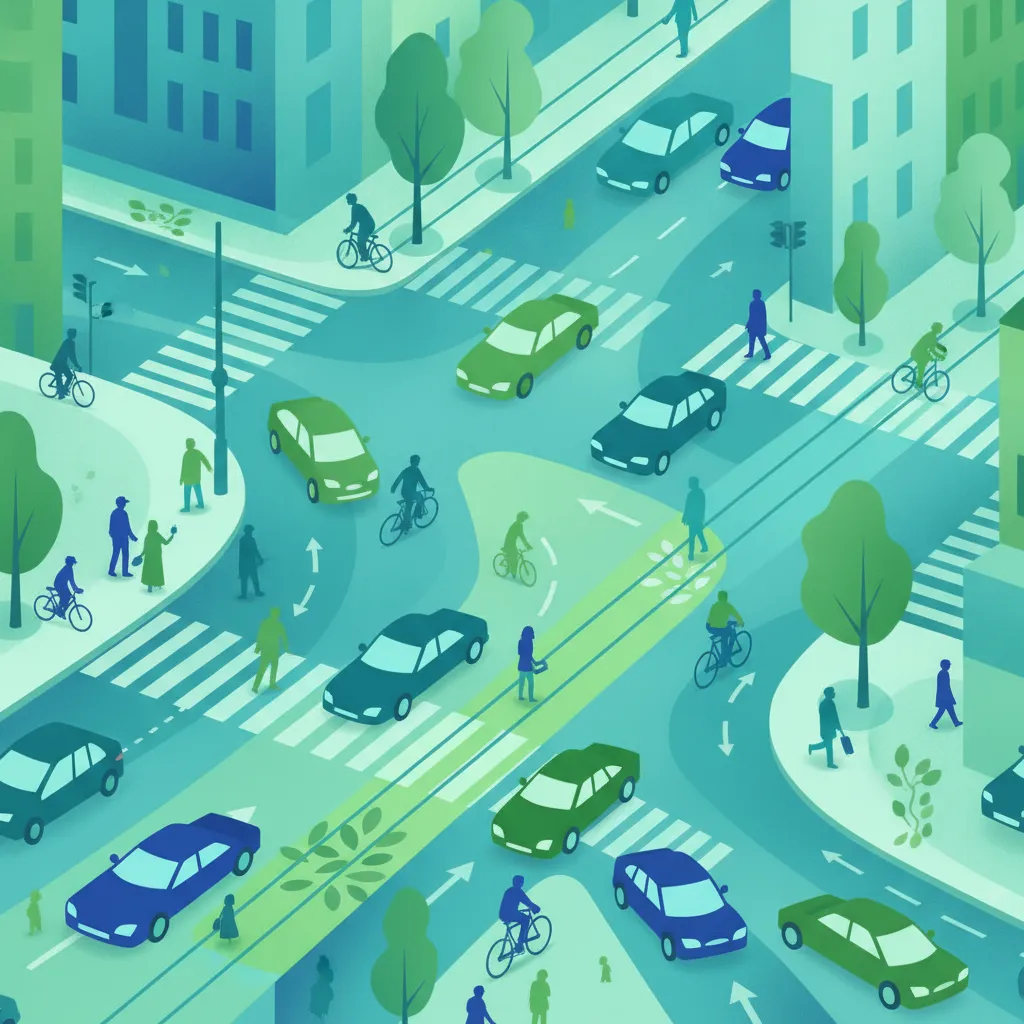
This lesson addresses the challenges of operating a small AM vehicle in dense, mixed traffic. It provides strategies for increasing visibility to other drivers, positioning oneself defensively, and safely sharing lanes with cyclists. The content emphasizes awareness of larger vehicles' blind spots and maintaining a safe space cushion.

This lesson examines the specific hazards posed by different weather conditions. It explains how rain can lead to hydroplaning and reduced grip, how fog impairs visibility, and how strong winds can affect stability. Riders will learn practical strategies, such as reducing speed and increasing following distance, to mitigate these risks.

This lesson focuses on identifying and safely managing various road surface imperfections and hazards. It provides techniques for riding over loose surfaces like gravel, dealing with the low traction of wet leaves or manhole covers, and safely crossing tram tracks. The key is to recognize these hazards early and adjust technique accordingly.
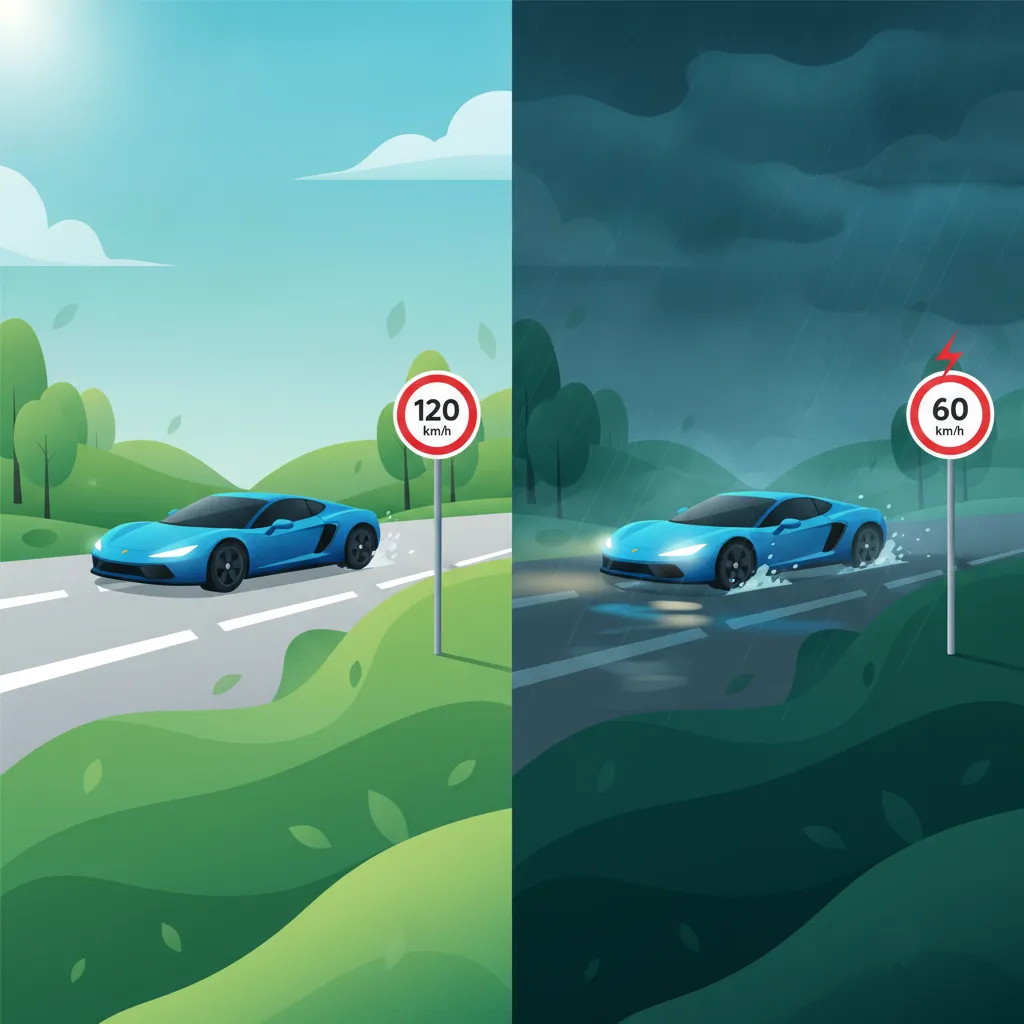
This lesson details the various speed limits applicable in Germany, from urban zones to rural roads. It emphasizes the critical skill of adapting speed to prevailing conditions such as rain, fog, or poor road surfaces. The content explains how external factors significantly impact vehicle handling and stopping distances.
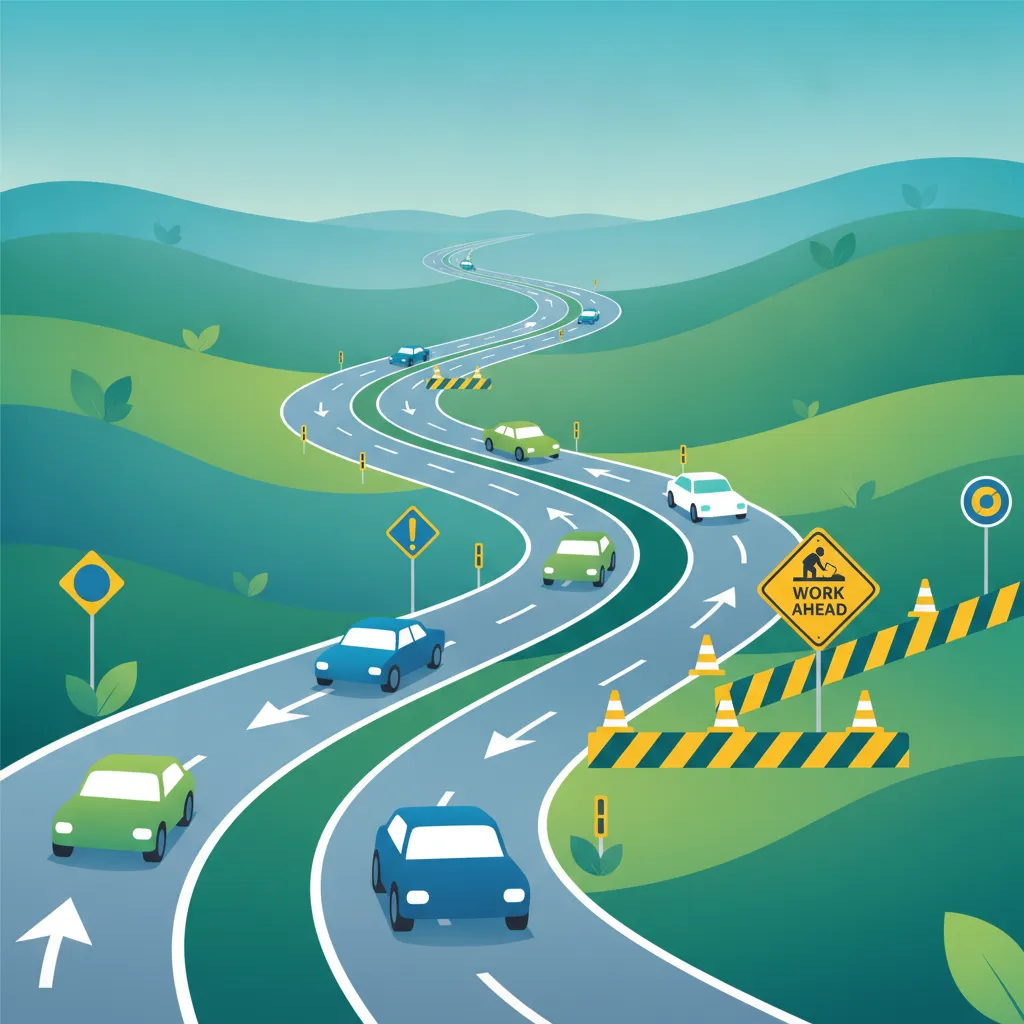
This lesson focuses on interpreting various road markings, from lane lines and directional arrows to stop lines and pedestrian crossings. It explains the rules associated with solid versus broken lines and how to navigate temporary markings found in construction zones. Correctly reading these markings is vital for proper lane discipline and safety.
Explore how to apply correct lane discipline in various scenarios. Understand optimal vehicle positioning near intersections, parked cars, and in mixed traffic to ensure safety and visibility according to German traffic laws.
This lesson covers the principles of correct vehicle positioning and lane discipline, which are essential for predictable and safe driving. It reinforces the 'Rechtsfahrgebot' (drive on the right) principle and explains how to choose the appropriate lane on multi-lane roads and motorways. Proper positioning for turns and maintaining a safe space cushion around the vehicle are also key topics.

This lesson focuses on the critical maneuver of changing lanes ('Fahrstreifenwechsel'), a common cause of accidents if done incorrectly. It teaches a systematic, safe procedure based on thorough observation, clear signaling, and a final blind spot check. You will learn how to assess traffic speed and identify a safe gap before smoothly moving into the adjacent lane.
This lesson focuses on interpreting various road markings, from lane lines and directional arrows to stop lines and pedestrian crossings. It explains the rules associated with solid versus broken lines and how to navigate temporary markings found in construction zones. Correctly reading these markings is vital for proper lane discipline and safety.
This lesson addresses the challenges of operating a small AM vehicle in dense, mixed traffic. It provides strategies for increasing visibility to other drivers, positioning oneself defensively, and safely sharing lanes with cyclists. The content emphasizes awareness of larger vehicles' blind spots and maintaining a safe space cushion.

This lesson focuses on the importance of strategic road positioning for enhancing safety and visibility. Learners explore different lane positions and understand when to use them to see, be seen, and create a safety buffer. The content emphasizes maintaining a long visual focus down the road to anticipate hazards and avoid target fixation, particularly when cornering.
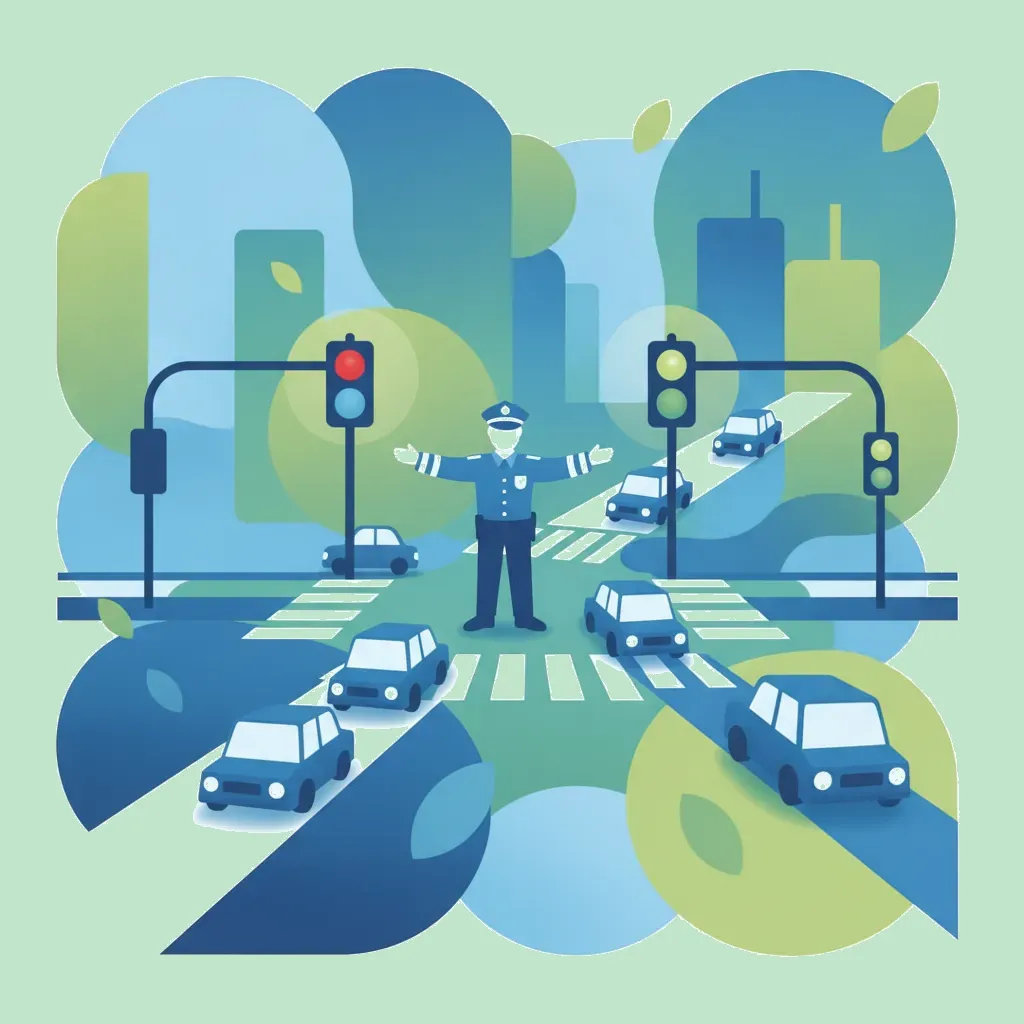
This lesson explains the function and meaning of traffic light signals, including standard cycles, flashing lights, and arrows. It also details how to interpret and obey hand signals given by police officers, which override all other signs and signals. Understanding these instructions is crucial for navigating controlled junctions and emergency situations.
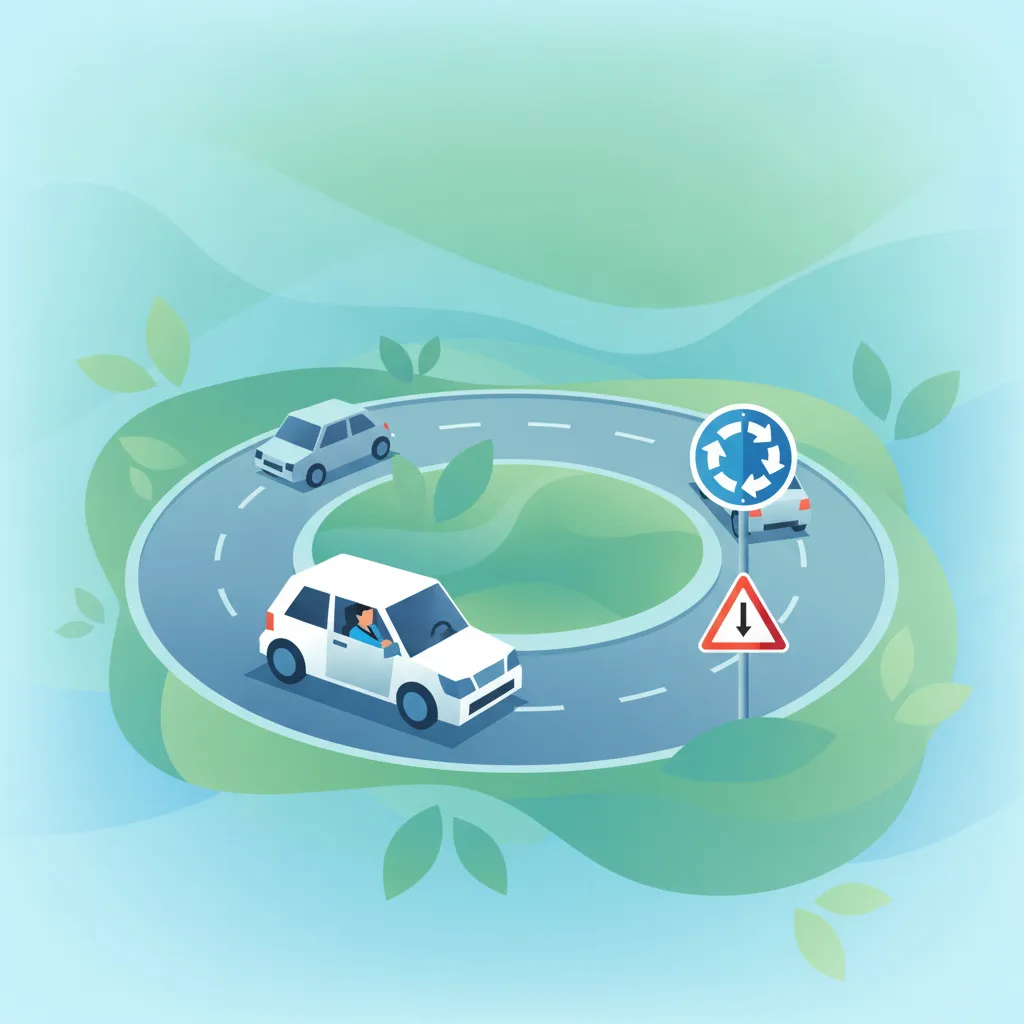
This lesson provides clear instructions on how to navigate roundabouts in Germany. It explains the crucial rule of yielding to traffic already inside the circle, proper lane choice for your intended exit, and the correct use of signals. Safe interaction with cyclists and pedestrians at roundabout exits is also covered.

This lesson focuses on complex traffic environments where different types of road users share the same space. It provides guidance on situations like driving on streets with integrated tram tracks or where bus and bicycle lanes are part of the roadway. The content emphasizes understanding the specific priority rules and being extra vigilant to anticipate potential conflicts in these busy, shared zones.

This lesson details the correct procedure for executing left turns, right turns, and U-turns. It emphasizes the importance of proper signaling, correct lane positioning before the turn, and managing speed throughout the maneuver. The content also covers fundamental cornering techniques to maintain stability and control.
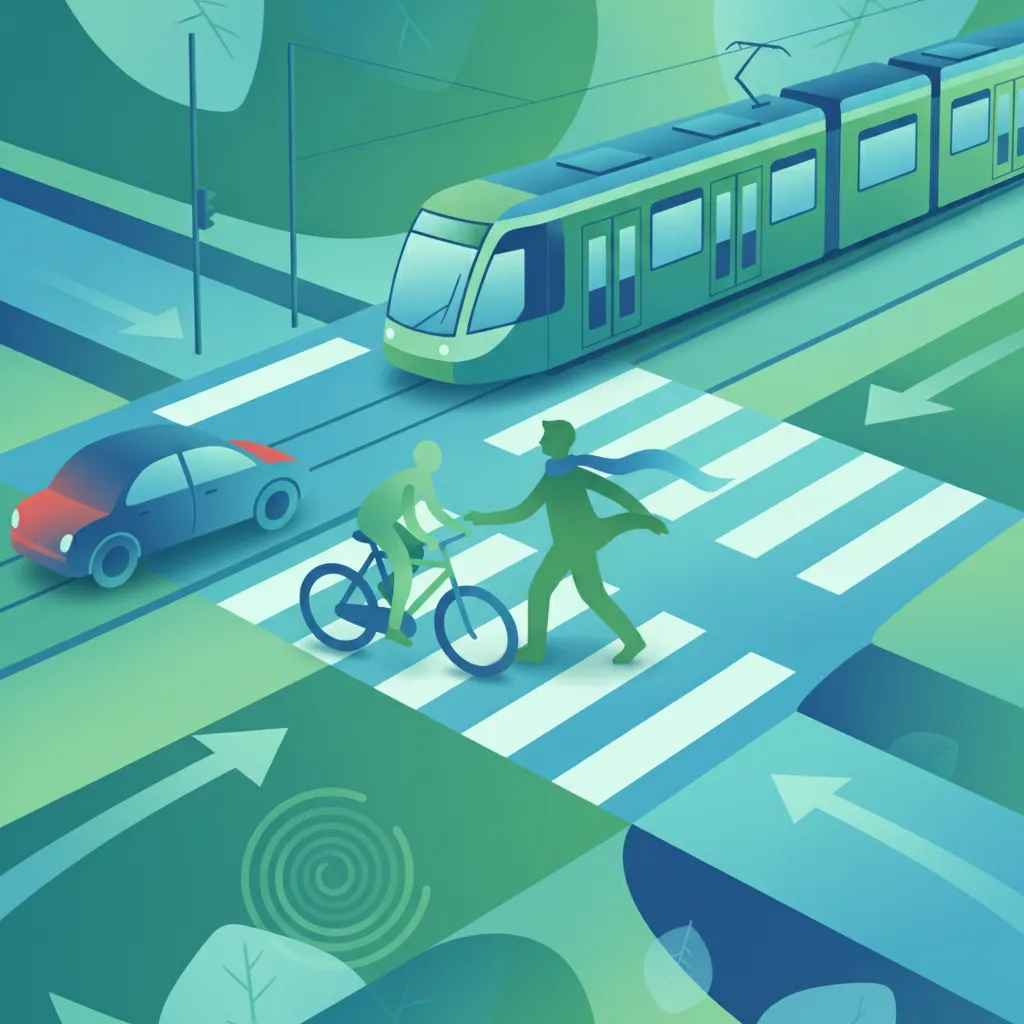
This lesson details the critical right-of-way regulations according to the German StVO. It covers the default 'right before left' rule, the meaning of priority road signs, and specific rules for roundabouts and yielding to pedestrians. A thorough understanding of these priority rules is fundamental for preventing accidents at junctions.
Find clear answers to common questions learners have about Positioning on the Road, Lane Discipline, and Road User Prediction. Learn how the lesson is structured, which driving theory objectives it supports, and how it fits into the overall learning path of units and curriculum progression in Germany. These explanations help you understand key concepts, lesson flow, and exam focused study goals.
Because moped and scooter riders are smaller than cars, correct positioning is vital for visibility. Staying in a 'primary' position makes you more visible to following traffic and helps you avoid being squeezed by turning vehicles.
You should maintain a safe distance from parked cars to avoid the 'door zone'. This means keeping enough space to react if a driver suddenly opens a car door, which is a common scenario in German theory test questions.
It is the ability to read cues from other drivers, such as looking at their front wheels or head movements. The theory test assesses this to ensure you can anticipate potential hazards before they develop into dangerous situations.
Yes, adjusting your position can help you be seen by oncoming traffic and prevent other vehicles from attempting to overtake you in narrow spaces. Always position yourself according to the flow of traffic and your intended direction.
Begin your targeted revision now. Use our practice search to quickly find specific German driving theory questions. Filter by StVO rules, road signs, or hazard perception to create your focused study plan. Master challenging areas and prepare confidently for your theoretical driving test.