
As an AM category rider in Iceland, navigating the roads after dark or in low-light conditions presents unique challenges. This lesson focuses on maximizing your visibility and safety when riding at night, covering essential gear, lighting, and hazard perception specific to Icelandic roads.
Lesson content overview
Riding a Category AM moped in Iceland during nighttime presents unique challenges that demand heightened awareness and specific safety strategies. With reduced natural light, visual cues diminish significantly, impacting your ability to perceive distances, identify hazards, and, crucially, for other road users to see you. This lesson is designed to equip you with the knowledge and techniques necessary to ride safely and confidently after dark, ensuring both your legal compliance and your personal safety.
Understanding the principles of visibility – both being seen and seeing your surroundings – is paramount. Your moped’s lighting systems, combined with appropriate reflective gear, work in tandem to counteract the limitations of night vision. By mastering these elements, along with strategic riding practices, you can mitigate the inherent risks of low-light conditions and enhance your overall safety on Icelandic roads.
Night riding fundamentally alters how riders perceive their environment and how they are perceived by others. The absence of daylight drastically reduces visual information, making everything from judging speed to spotting obstacles more difficult.
Human vision relies heavily on light, and our eyes process information differently in low-light conditions. At night, our peripheral vision, which is sensitive to motion, becomes more dominant, while our central vision, crucial for detail and color, significantly diminishes. This means objects may appear less distinct, colors fade, and details are harder to discern.
The ability to accurately judge distances between objects. At night, with fewer visual cues like shadows and textures, depth perception is severely impaired, making it challenging to gauge how far away hazards or other vehicles are.
Motion parallax, the way objects at different distances appear to move at different speeds as you move, is also less effective in the dark, further hindering depth perception. This can lead to misjudgments of distance, speed, and the size of objects, increasing the risk of collisions.
Beyond general visual limitations, specific hazards become more prominent at night:
Your moped's lighting system is your primary tool for both seeing and being seen at night. Proper operation and maintenance of these lights are not just about safety; they are legal requirements.
Your moped's front illumination system comprises two main settings: low beam and high beam. Understanding when and how to use each is critical for safe night riding.
The low beam, also known as dipped beam, is your standard headlamp setting for night riding. It provides sufficient illumination directly ahead of your moped without blinding oncoming traffic or drivers you are following.
The standard front headlight setting that illuminates the road directly ahead with a short, wide beam, designed to avoid dazzling other road users.
In Iceland, headlamps (low beam) must be activated from sunset to sunrise and at any time during reduced visibility, such as fog, heavy rain, or snowfall, or when visibility drops below approximately 400 metres. Even in well-lit urban areas, your low beam must be on to ensure you are visible to other drivers.
Always ensure your low beam is activated as soon as dusk begins, not waiting until it is completely dark. This ensures maximum conspicuity during twilight hours.
The high beam, or main beam, provides extended range illumination, allowing you to see much further down the road than the low beam. This is particularly useful on unlit rural roads where there is no ambient light.
A powerful headlight setting that provides extended range illumination, suitable for unlit rural roads, but must be dimmed when other vehicles are present.
However, high beams are very powerful and can temporarily blind other drivers. Icelandic law requires you to dim your high beams (switch to low beam) when:
When you see the headlights of an oncoming vehicle, dim your high beams well in advance, typically when they are more than 150 metres away.
When you are following another vehicle, dim your high beams to avoid glaring in their rear-view mirrors, generally within 150 metres.
When you enter an area with adequate street lighting, switch to low beam.
Failing to dim your high beams can cause temporary blindness for other drivers, significantly increasing the risk of a head-on collision or other serious accidents. This is a serious violation.
While headlights help you see, your rear lights ensure you are seen from behind.
A continuous red rear-facing light that indicates the presence of your vehicle to road users behind you.
Your tail light must be functional and illuminated whenever your headlamps are on (from sunset to sunrise or during reduced visibility). This constant red glow is crucial for other drivers to gauge your position and relative speed.
A brighter red rear-facing light that illuminates when you apply your brakes, signaling to following drivers that you are decelerating or stopping.
The brake light is a critical safety feature. It must activate immediately and brightly whenever you apply either your front or rear brake. Functional brake lights are essential for preventing rear-end collisions, especially at night when visual cues are scarce. Always check that your brake light is working before a night ride.
Your moped may be equipped with amber hazard lights, which flash simultaneously.
Flashing amber lights used when a vehicle is stationary and poses a potential danger or obstruction to other road users, alerting them to an unusual situation.
These lights are only to be used when your moped is stationary and presents a hazard to other road users, for example, due to a breakdown on the roadside. They are not to be used while moving, as this can confuse other drivers into thinking your vehicle is stopped or experiencing an emergency.
Using hazard lights while moving is a common misunderstanding and can mislead other drivers. Reserve them strictly for stationary emergency situations.
Even with excellent lighting, reflective gear significantly enhances your visibility, especially when other vehicles' headlights shine upon you.
An optical phenomenon where light is reflected directly back towards its source, making reflective materials appear very bright to the person holding the light source (e.g., a driver).
Reflective materials on your clothing or moped use retro-reflection to bounce light from other vehicles directly back to their drivers. This makes you stand out vividly against a dark background, often appearing much brighter than your moped's lights alone.
In Iceland, the law specifically mandates the use of high-visibility reflective clothing for moped and motorcycle riders at night. This isn't just a recommendation; it's a legal obligation designed to drastically reduce the risk of collisions.
A safety vest or jacket with reflective material and fluorescent fabric, designed to meet specific legal standards (e.g., Class II or III) for enhancing rider visibility in low-light conditions.
You should ensure that any reflective clothing you wear meets the appropriate Icelandic standards (often specified as Class II or III). These classes refer to the amount of reflective material and fluorescent background material present, ensuring maximum conspicuity.
Beyond your moped's equipment, your riding behavior plays a vital role in ensuring your safety at night.
One of the most critical adjustments for night riding is to reduce your speed and increase your following distance.
Even if your moped's lights seem adequate, the human eye's limitations mean you need more time to process information. Slower speeds directly translate to safer stopping distances.
Your position on the road can significantly impact how visible you are to other drivers.
The degree to which a rider is noticeable or visible to other road users, critical for reducing collision risk, especially at night.
Active scanning and anticipation are key to hazard identification in low light.
Adhering to Icelandic traffic laws regarding night riding is not just good practice; it's a mandatory requirement for your safety and to avoid penalties.
As specified in the Icelandic Road Traffic Act, your moped's headlamps (low beam) must be switched on and operational from sunset to sunrise. This rule applies regardless of whether the road is illuminated by streetlights or not. Additionally, headlamps are mandatory during any period of reduced visibility, such as fog, heavy rain, or snow, even during daylight hours.
The conditional use of high beams is strictly regulated to prevent dazzling other drivers. You must switch from high beam to low beam when:
Icelandic law explicitly requires moped riders to wear high-visibility reflective clothing when riding at night. This underscores the critical importance of being seen by others. This typically means wearing an approved reflective vest or a jacket with significant reflective elements that meet safety standards. Failure to comply can result in fines and compromises your safety.
Always check that your riding gear, especially for night use, complies with the latest Icelandic traffic regulations.
Many accidents at night are preventable and often stem from common oversights or misjudgments.
Ignoring lighting regulations or failing to wear reflective gear can have severe consequences:
Riding a moped without proper lights or reflective gear at night significantly increases your risk of a collision and carries legal penalties. Always prioritize your visibility.
Regular maintenance of your moped's lighting system is crucial:
Night riding is rarely uniform. You must adapt your strategies based on prevailing conditions.
Adverse weather conditions further complicate night riding:
The environment profoundly influences night riding tactics:
Your awareness of and interaction with other road users is heightened at night:
Safe and responsible night riding on an Icelandic Category AM moped requires a combination of proper equipment, adherence to regulations, and advanced riding strategies.
By diligently applying these principles, you will significantly enhance your safety and the safety of others on the road, ensuring a confident and compliant riding experience even after darkness falls.
Night riding on an Icelandic AM moped requires understanding specific visibility principles and legal requirements. Your low beam headlights must be on from sunset to sunrise and during reduced visibility, while high beams are reserved for unlit rural roads and must be dimmed within 150 metres of other traffic. Icelandic law mandates that moped riders wear high-visibility reflective clothing meeting safety standards at night, making you conspicuous to other road users. Adjust your riding by reducing speed, increasing following distance to 3-4 seconds, and maintaining a central lane position. Actively scan for animals, unlit obstacles, and pedestrians, as depth perception and visual acuity are significantly impaired in low-light conditions, requiring more reaction time and defensive riding.
A short set of high-value points that capture the most important learning from this lesson.
Low beam headlights are mandatory from sunset to sunrise and during any reduced visibility (fog, rain, snow, visibility below approximately 400m)
High beams must be dimmed when approaching oncoming traffic or following another vehicle within 150 metres, and in lit urban areas
Icelandic law requires moped riders to wear high-visibility reflective clothing meeting Class II or III standards when riding at night
Reduce speed and increase following distance to at least 3-4 seconds in low-light conditions to allow adequate reaction time
Amber hazard lights are strictly for stationary hazards only and must never be used while moving
Explore all units and lessons included in this driving theory course.
Your tail light must be illuminated whenever your headlamps are on, and your brake light must activate brightly whenever you apply the brakes
Retro-reflection bounces light from other vehicles directly back to their drivers, making you appear much brighter than without reflective gear
Scan road edges and ditches for animal eyes reflecting in your headlights, especially on rural Icelandic roads where sheep and reindeer are common hazards
Keep reflective gear clean as dirt and grime drastically reduce its effectiveness
Ride slightly toward the centre of your lane to remain in other drivers' direct line of sight and avoid blind spots of larger vehicles
Waiting until it is completely dark to activate headlights instead of switching them on at dusk for maximum conspicuity during twilight
Using amber hazard lights while moving, which can mislead other drivers into thinking your vehicle is stopped
Failing to regularly check that all lights are working before night rides, especially the brake light
Not maintaining headlight alignment, which can reduce effective vision or blind oncoming traffic
Assuming pedestrians in dark clothing are visible; in reality, they may be nearly invisible until very close
Lesson content overview
A short set of high-value points that capture the most important learning from this lesson.
Low beam headlights are mandatory from sunset to sunrise and during any reduced visibility (fog, rain, snow, visibility below approximately 400m)
High beams must be dimmed when approaching oncoming traffic or following another vehicle within 150 metres, and in lit urban areas
Icelandic law requires moped riders to wear high-visibility reflective clothing meeting Class II or III standards when riding at night
Reduce speed and increase following distance to at least 3-4 seconds in low-light conditions to allow adequate reaction time
Amber hazard lights are strictly for stationary hazards only and must never be used while moving
Explore all units and lessons included in this driving theory course.
Your tail light must be illuminated whenever your headlamps are on, and your brake light must activate brightly whenever you apply the brakes
Retro-reflection bounces light from other vehicles directly back to their drivers, making you appear much brighter than without reflective gear
Scan road edges and ditches for animal eyes reflecting in your headlights, especially on rural Icelandic roads where sheep and reindeer are common hazards
Keep reflective gear clean as dirt and grime drastically reduce its effectiveness
Ride slightly toward the centre of your lane to remain in other drivers' direct line of sight and avoid blind spots of larger vehicles
Waiting until it is completely dark to activate headlights instead of switching them on at dusk for maximum conspicuity during twilight
Using amber hazard lights while moving, which can mislead other drivers into thinking your vehicle is stopped
Failing to regularly check that all lights are working before night rides, especially the brake light
Not maintaining headlight alignment, which can reduce effective vision or blind oncoming traffic
Assuming pedestrians in dark clothing are visible; in reality, they may be nearly invisible until very close
Explore search topics learners often look for when studying Riding at Night and Visibility Strategies. These topics reflect common questions about road rules, driving situations, safety guidance, and lesson level theory preparation for learners in Iceland.
Browse additional driving theory lessons that cover connected traffic rules, road signs, and common driving situations related to this topic. Improve your understanding of how different rules interact across everyday traffic scenarios.
Learn essential Icelandic theory for safe night riding on mopeds. Covers legal requirements for lights, effective use of reflective gear, and strategies for identifying night-time hazards on Icelandic roads.
This lesson focuses on methods to enhance a rider's visibility, covering high-visibility clothing, reflective materials, and strategic lighting. Learners will understand how to use daytime running lights and position themselves to minimize time in others' blind spots. These proactive techniques are essential for being seen by other road users, significantly reducing the risk of collisions.
This lesson details how various weather conditions impact moped stability, traction, and visibility. It provides practical strategies for handling crosswinds, avoiding hydroplaning in rain, and maintaining grip on icy or snowy surfaces. Riders will learn to assess weather-related risks and adapt their speed and control inputs to navigate challenging conditions safely.
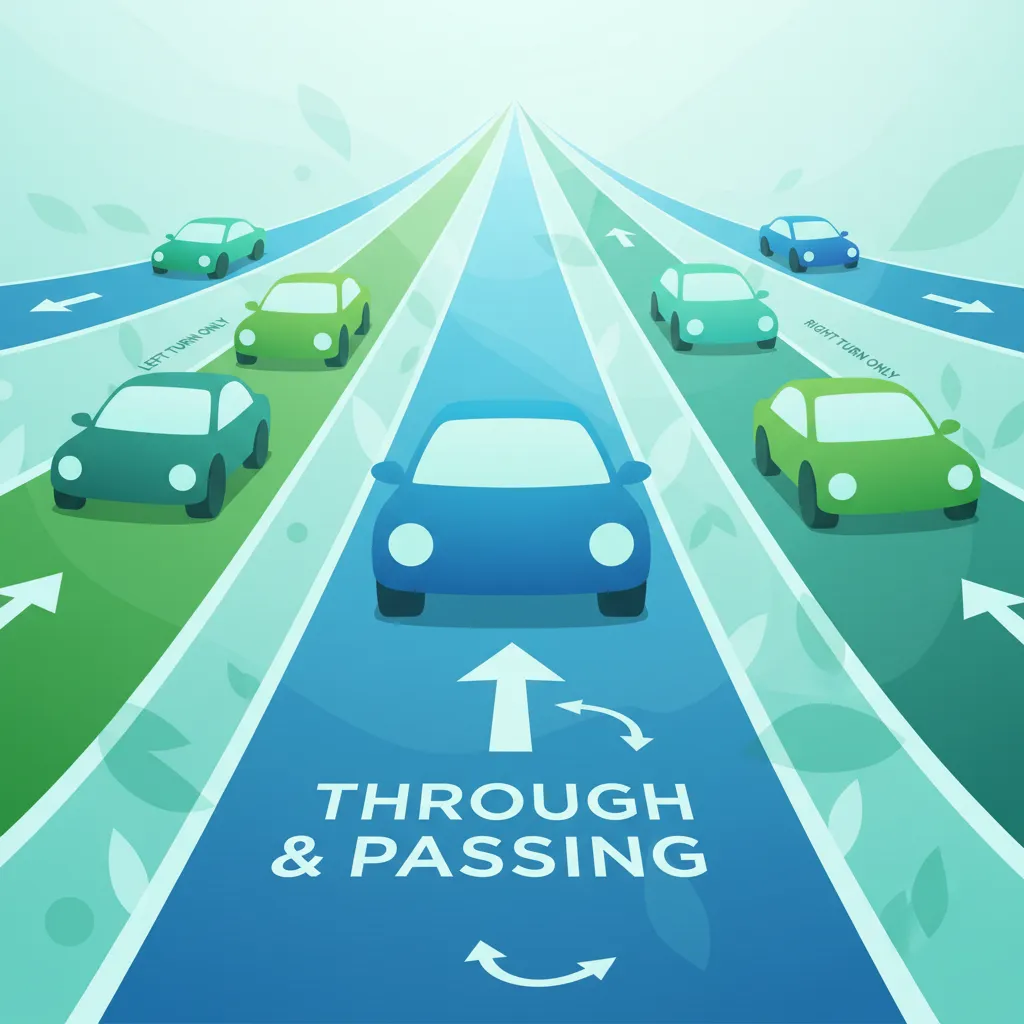
This lesson outlines best practices for positioning a moped on urban roads to maximize visibility and safety. It explains how to choose a lane position that makes you visible to drivers ahead and behind, while avoiding road debris and dooring hazards from parked cars. The content addresses adapting your position based on traffic speed, density, and road conditions.
This lesson examines how strong winds and varying light conditions affect vehicle handling and safety, including techniques for maintaining stability under cross-winds and assessing gust intensity. The content also explains proper headlight usage during daylight, dusk, and nighttime, addressing glare reduction strategies and when to employ high-beam headlights. By mastering these concepts, drivers can navigate Icelandic weather and lighting challenges confidently and safely.
This lesson addresses the challenges of driving in rain and fog, focusing on strategies to maintain visibility and vehicle control. Learners will explore the correct use of windshield wipers, defoggers, and appropriate headlight settings, including when to use fog lights. The content also covers the increased risk of hydroplaning, the importance of adjusting speed in wet conditions, and the need to extend following distances to account for longer stopping distances.
This lesson examines the psychological factors crucial for safe riding, promoting a defensive mindset and heightened risk awareness. It provides strategies for managing stress, identifying potential hazards early, and making proactive decisions to prevent dangerous situations. Cultivating mental discipline and a safety-conscious attitude is fundamental to long-term rider safety on Icelandic roads.
This lesson details the fundamentals of lane discipline and proper turning techniques for moped riders. It covers the correct use of turn signals, judging appropriate cornering speed, and executing safe lane changes. The material provides a step-by-step guide to navigating intersections and curves with control and predictability, ensuring safety for the rider and other road users.
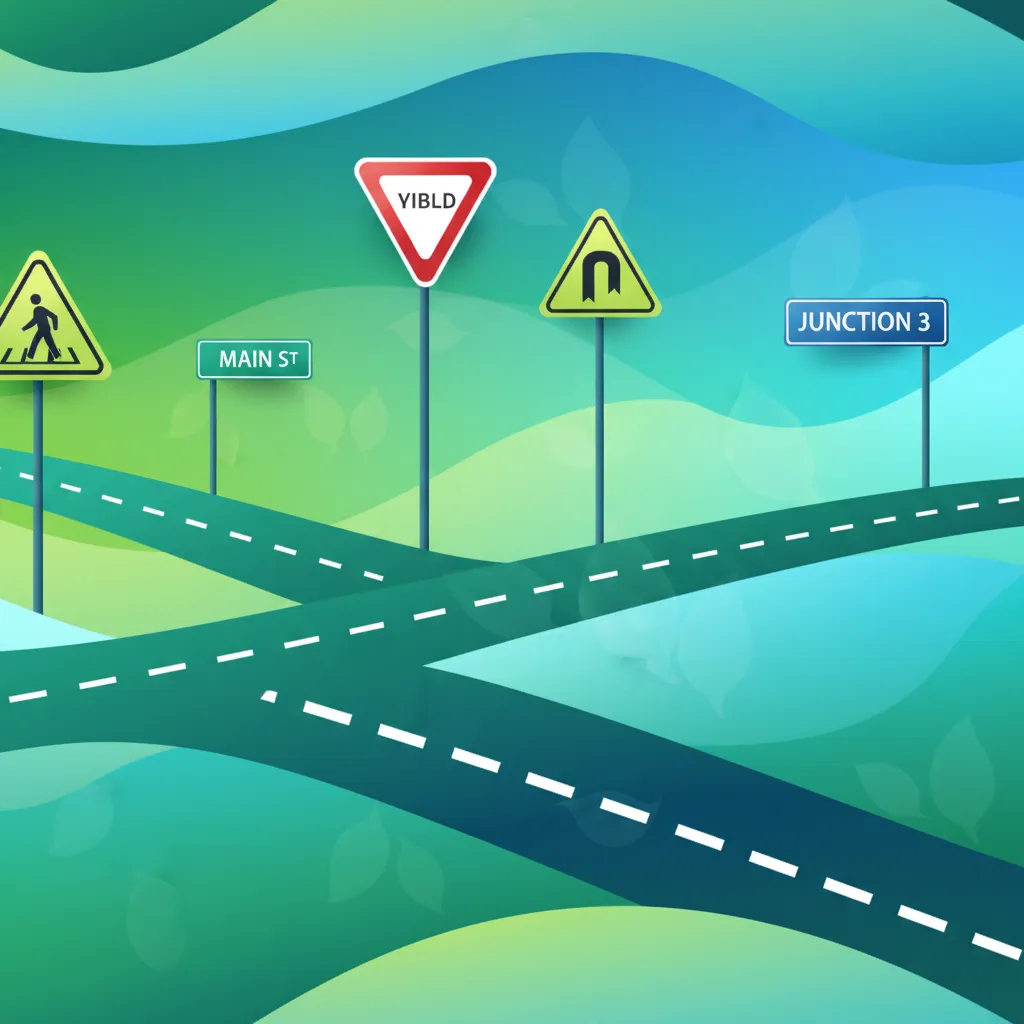
This lesson familiarizes learners with signs that warn of upcoming hazards, such as sharp curves, slippery surfaces, or animal crossings. It emphasizes the importance of early hazard recognition and response, which is especially critical for vulnerable moped riders. Understanding these signs allows riders to anticipate road conditions and adjust their riding strategy accordingly for increased safety.
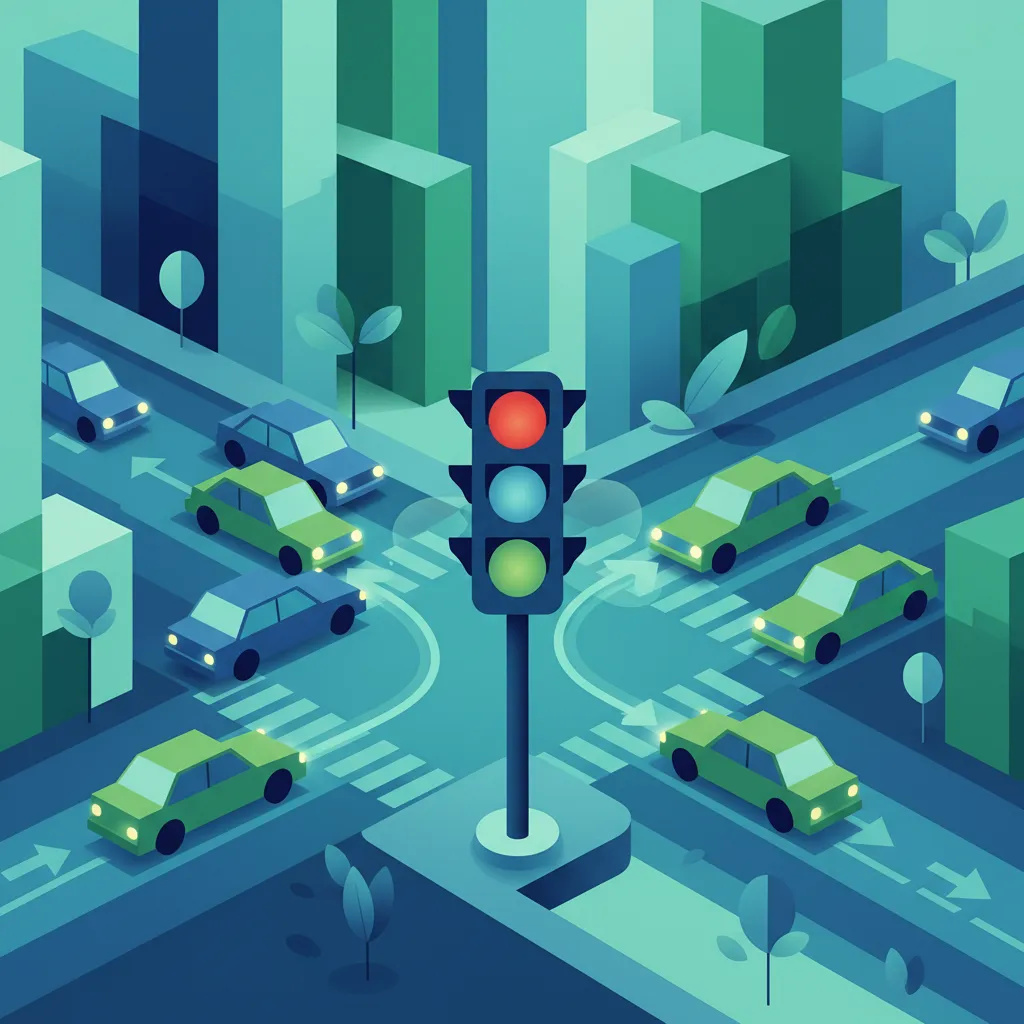
This lesson dissects the three-color traffic light system, detailing the meaning of red, amber, and green signals, including flashing lights and directional arrows. It explains how signal timing impacts moped riders and the legal requirement to obey all signals at intersections. Proper interpretation is crucial for navigating signalized junctions safely and avoiding conflicts with other traffic.
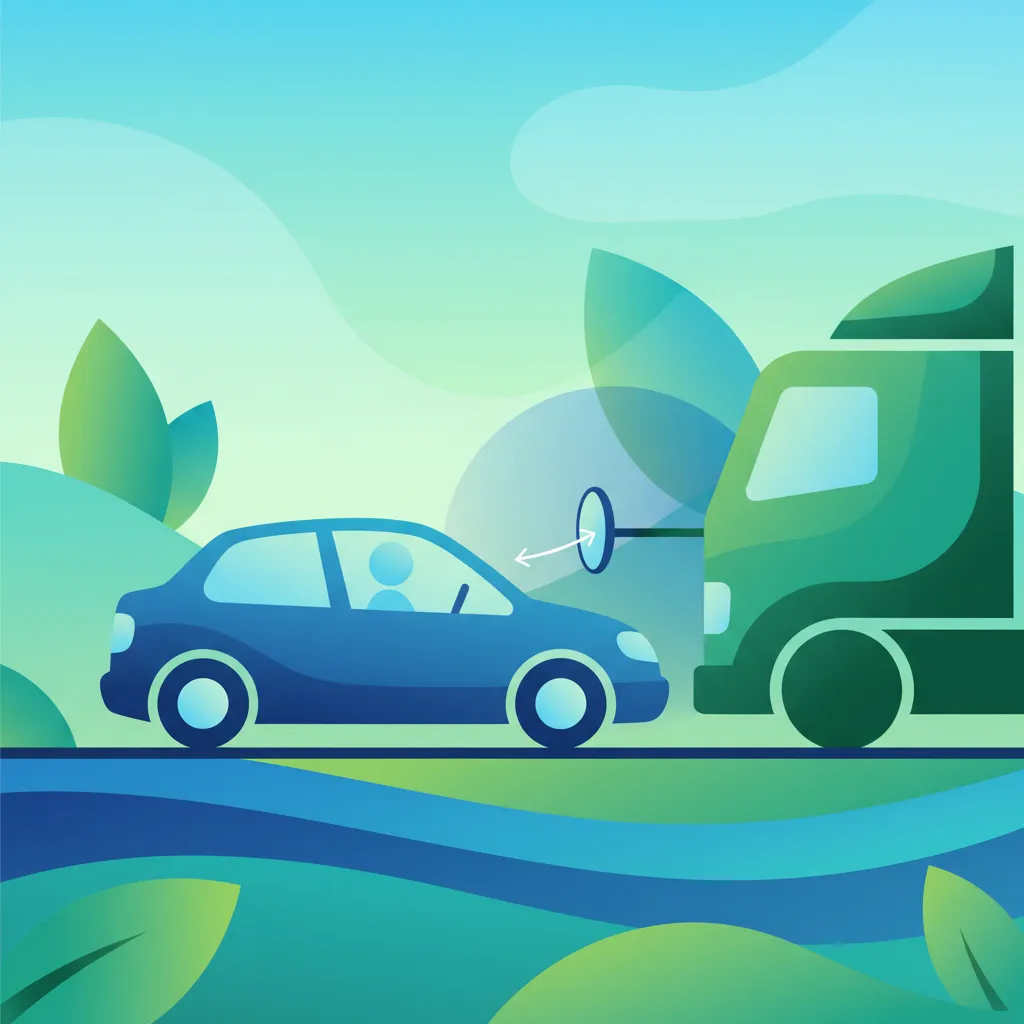
This lesson explores the blind spot zones of cars, trucks, and buses, highlighting the vulnerability of moped riders. It provides effective strategies for positioning your vehicle to remain visible to other drivers at all times. Riders will learn to anticipate lane changes and movements from larger vehicles, significantly reducing the risk of being unseen in traffic.
Understand the unique hazards of night riding in Iceland for mopeds, such as animals and reduced perception. Learn how to adapt speed, positioning, and awareness to ride safely after dark.
This lesson focuses on methods to enhance a rider's visibility, covering high-visibility clothing, reflective materials, and strategic lighting. Learners will understand how to use daytime running lights and position themselves to minimize time in others' blind spots. These proactive techniques are essential for being seen by other road users, significantly reducing the risk of collisions.
This lesson details how various weather conditions impact moped stability, traction, and visibility. It provides practical strategies for handling crosswinds, avoiding hydroplaning in rain, and maintaining grip on icy or snowy surfaces. Riders will learn to assess weather-related risks and adapt their speed and control inputs to navigate challenging conditions safely.
This lesson examines the psychological factors crucial for safe riding, promoting a defensive mindset and heightened risk awareness. It provides strategies for managing stress, identifying potential hazards early, and making proactive decisions to prevent dangerous situations. Cultivating mental discipline and a safety-conscious attitude is fundamental to long-term rider safety on Icelandic roads.
This lesson outlines best practices for positioning a moped on urban roads to maximize visibility and safety. It explains how to choose a lane position that makes you visible to drivers ahead and behind, while avoiding road debris and dooring hazards from parked cars. The content addresses adapting your position based on traffic speed, density, and road conditions.
This lesson familiarizes learners with signs that warn of upcoming hazards, such as sharp curves, slippery surfaces, or animal crossings. It emphasizes the importance of early hazard recognition and response, which is especially critical for vulnerable moped riders. Understanding these signs allows riders to anticipate road conditions and adjust their riding strategy accordingly for increased safety.
This lesson focuses on the specific challenges of riding on gravel and uneven rural roads. It teaches techniques for maintaining stability and traction on loose surfaces, including speed management, body positioning, and gentle control inputs. Understanding how to handle these conditions is essential for safely exploring areas outside of main urban centers in Iceland.
This lesson details the fundamentals of lane discipline and proper turning techniques for moped riders. It covers the correct use of turn signals, judging appropriate cornering speed, and executing safe lane changes. The material provides a step-by-step guide to navigating intersections and curves with control and predictability, ensuring safety for the rider and other road users.
This lesson focuses on the concept of maintaining a safe following distance using the time-gap method. It explains how to create a sufficient buffer zone to react to sudden stops by the vehicle ahead. Riders will learn to adjust this gap based on speed, weather, and visibility to prevent rear-end collisions and ensure adequate reaction time.
This lesson covers the statutory speed limits applicable to Category AM vehicles in various environments, from urban centers to rural roads. It emphasizes the critical importance of adapting speed to conditions such as rain, wind, or poor visibility. Riders will learn practical techniques for managing acceleration and maintaining a safe, legal speed at all times.
This lesson examines how strong winds and varying light conditions affect vehicle handling and safety, including techniques for maintaining stability under cross-winds and assessing gust intensity. The content also explains proper headlight usage during daylight, dusk, and nighttime, addressing glare reduction strategies and when to employ high-beam headlights. By mastering these concepts, drivers can navigate Icelandic weather and lighting challenges confidently and safely.
Find clear answers to common questions learners have about Riding at Night and Visibility Strategies. Learn how the lesson is structured, which driving theory objectives it supports, and how it fits into the overall learning path of units and curriculum progression in Iceland. These explanations help you understand key concepts, lesson flow, and exam focused study goals.
The primary dangers include significantly reduced visibility for both the rider and other road users, altered depth perception, and increased difficulty spotting hazards like unlit obstacles, animals, or changes in road surface. Iceland's unique conditions, such as long periods of darkness in winter and potential for fog, exacerbate these risks.
Your moped must have working front (white) and rear (red) lights that are illuminated from dusk till dawn and whenever visibility is poor. The rear light must be clearly visible from a distance. Ensure all lights are clean and functioning correctly before riding.
Reflective gear is critically important. While mandatory lights help, reflective materials on your clothing, helmet, and the moped itself significantly increase your conspicuity to drivers of larger vehicles, especially in low light or poor weather. The Icelandic Transport Authority (Samgöngustofa) emphasizes these visibility aids.
Be especially vigilant for animals crossing the road, pedestrians who may not be easily seen, potholes or uneven road surfaces that are harder to spot, and other vehicles, particularly those whose lights might be obscured or who may not see you. Also, be aware of parked cars that could suddenly open doors ('dooring').
Ride at a reduced speed, maintain a greater following distance, position yourself to be more visible, and anticipate potential hazards by scanning further ahead. Use high-beam headlights where appropriate and safe, but dip them for oncoming traffic. Be more cautious at junctions and crossings.
Yes, the Icelandic AM theory exam includes questions testing your knowledge of safe riding practices in darkness and low-visibility conditions. These questions often cover lighting requirements, the use of reflective gear, hazard perception, and appropriate speeds and distances.
Utilize our advanced practice set search to pinpoint the exact Icelandic driving theory topics you need to review. Filter by subject, difficulty, or question type to create a highly effective study plan and ensure you are fully prepared for your official driving licence test in Iceland.