
This lesson is your essential guide to navigating the Icelandic driving theory exam for Category B. We'll break down the test structure, from scheduling and locations to question formats and passing criteria, ensuring you know exactly what to expect. Learn effective study techniques and resources to build your confidence and succeed.

Lesson content overview
Preparing for the Icelandic Category B driving theory test is a crucial step towards obtaining your driving licence. This comprehensive guide outlines everything you need to know about the examination process, from its structure and logistical details to effective preparation strategies and official policies. Understanding these elements will enable you to approach the test with confidence, avoid common administrative errors, and efficiently allocate your study time.
The theory test is a standardised assessment designed by Samgöngustofa, the Icelandic Transport Authority, to ensure that all prospective drivers possess the fundamental knowledge required for safe driving under Icelandic conditions. It verifies your understanding of traffic laws, road signs, and safe driving practices, integrating concepts of legal compliance, safety rationale, and practical applicability.
The Icelandic Category B theory test is a formal, computer-based assessment. It is meticulously structured to evaluate a candidate's comprehensive knowledge of traffic regulations and road safety.
The theory test is administered on a computer terminal at an authorised testing centre. Candidates are presented with a series of multiple-choice questions, each designed to assess a specific aspect of driving knowledge. This digital format ensures uniform testing conditions for all applicants. The exam typically consists of 45 to 50 questions. Each question offers four possible answer options, from which you must select the single correct response.
The questions on the Icelandic theory test cover a broad spectrum of topics essential for safe driving. These can generally be grouped into three main categories:
It is important to note that each question is typically weighted equally, and there is no negative marking for incorrect answers. This means you should attempt every question, even if unsure, as leaving a question unanswered counts as an incorrect response.
Effective time management is paramount to successfully completing the Icelandic driving theory test. The exam is strictly timed, requiring candidates to pace themselves thoughtfully throughout the session.
The total allotted time for the entire theory exam is 45 minutes. This duration includes the time needed to read the instructions, review all questions, and submit your answers. The timer is typically visible on the test interface, providing a constant reminder of the remaining time. Once the 45 minutes expire, the system automatically submits any unanswered questions and finalises your test.
With approximately 45-50 questions to answer within 45 minutes, candidates should aim to spend an average of less than 30 seconds per question. This allows for a small buffer to review answers or spend a bit more time on more complex scenario-based questions. Rushing through the questions without careful consideration can lead to errors, while spending too much time on a single question can jeopardise your ability to complete the entire exam.
Pacing Strategy: Try to answer simpler questions quickly to save time for more challenging ones. If you encounter a difficult question, make an educated guess and flag it for review if you have time at the end. Remember, unanswered questions count as incorrect.
The on-screen timer is an indispensable tool during the exam. It provides a real-time countdown, helping you to manage your progress. There is no option to pause the timer once the exam begins. Therefore, it is essential to be prepared to complete the test in one continuous session. Candidates who finish early may submit their answers before the timer expires; however, leaving the exam before submission will result in an incomplete test being recorded as a fail.
To successfully pass the Icelandic Category B theory test, candidates must achieve a specific minimum score. Understanding this criterion is essential for focused preparation.
The current minimum required score to pass the Icelandic driving theory exam is 85%. This means that if the test contains 45 questions, you must answer at least 38 or 39 questions correctly to achieve a passing grade. This high threshold underscores the importance of comprehensive preparation and a thorough understanding of all lesson topics.
The scoring system for the theory test is straightforward. Each correct answer contributes one point to your total score, and there is no partial credit for questions. Crucially, there is no negative marking for incorrect answers. This policy encourages candidates to attempt every question without fear of losing points for wrong guesses. However, it also means that unanswered questions are treated as incorrect, directly impacting your pass percentage.
Aim for Excellence: While the pass mark is 85%, striving for 100% mastery in your preparation is the best approach. A single mistake can significantly impact your final score and potentially lead to a failed attempt.
Upon completing the theory test, you will typically receive an immediate result, indicating whether you have passed or failed. The Icelandic system uses a binary pass/fail assessment rather than issuing a specific grade. If you meet or exceed the 85% pass mark, you will receive a "Pass" result, allowing you to proceed with the next stages of your driving licence application, such as the practical driving test. If your score falls below the required threshold, you will receive a "Fail" result, necessitating a retake.
Booking your theory test is a formal procedure that requires careful attention to detail. The process ensures efficient management of testing centre capacity and smooth administration.
The primary method for scheduling your Icelandic Category B theory test is through Samgöngustofa's (the Icelandic Transport Authority) official online portal. This online scheduler allows you to view available time slots at various testing centres, select your preferred date and time, and complete the registration process electronically. It is generally recommended to book your exam well in advance, especially in urban areas where demand might be higher.
Access Samgöngustofa's official online portal for driving licence services.
Log in using your electronic ID (rafskilríki) or other approved identification method.
Navigate to the theory test booking section for Category B licences.
Select your preferred testing centre and browse available dates and times.
Choose a suitable slot, confirm your details, and proceed with payment of the examination fee.
Receive a confirmation email or message with your appointment details.
Before you can register for or sit the theory test, you must meet specific eligibility criteria and present valid identification.
No Walk-Ins: It is generally not possible to simply walk into a testing centre and expect to take the exam. All appointments must be pre-booked through the official system.
Samgöngustofa has specific policies regarding cancellations and rescheduling to manage testing centre capacities efficiently. Typically, cancellations or changes to your appointment must be made at least 24 hours in advance to avoid forfeiture of the examination fee. If you fail to cancel within the specified timeframe or do not show up for your appointment, you may lose your fee and need to pay again for a new booking. It's crucial to check the specific terms and conditions on Samgöngustofa's website at the time of booking.
The Icelandic driving theory test is administered at designated facilities approved by Samgöngustofa across the country. These testing centres provide the standardised environment required for the examination.
Testing centres are strategically located to serve candidates in both urban and regional areas. Major urban centres like Reykjavík and Akureyri typically offer more frequent testing slots, often daily. In contrast, regional centres in towns such as Ísafjörður or Selfoss might have limited weekly availability. When scheduling your exam through the online portal, you will be able to see a list of available centres and their respective schedules.
Upon arrival at your chosen testing centre, you will need to present your valid identification to the proctor or staff member. They will verify your identity and appointment details before assigning you a computer terminal. The testing environment is strictly controlled to ensure fairness and prevent cheating.
No External Materials: During the exam, you are strictly prohibited from using any external materials such as books, notes, or electronic devices (including mobile phones, smartwatches, or calculators). All personal belongings, including bags and mobile phones, must typically be stored in a designated area or locker outside the testing room. Any violation of this rule may lead to immediate disqualification and invalidation of your test results.
Testing centres are generally equipped to provide necessary accessibility features. If you have specific accessibility needs (e.g., wheelchair access, extended time for certain conditions, or other accommodations), it is crucial to request these in advance during the scheduling process. This allows the testing centre to make the necessary arrangements to ensure a comfortable and fair testing experience for all candidates.
Failing the theory test is not uncommon, and Samgöngustofa has a clear policy for retaking the exam. Understanding these regulations is vital for planning your next attempt.
There is generally no limit to the total number of times a candidate may attempt the Icelandic theory test. However, each subsequent attempt requires you to adhere to specific waiting periods and pay the examination fee again. This policy aims to encourage adequate preparation between attempts rather than repeated failures without further study.
After a failed attempt, a mandatory waiting period is imposed before you can schedule your next exam.
These waiting periods are strictly enforced by the online scheduling system. Attempting to book an exam before the waiting period has elapsed will be automatically rejected.
Each theory test attempt, including retakes, incurs the standard examination fee. Therefore, if you fail, you will need to pay the fee again when scheduling your next appointment. It is advisable to use the waiting period for intensive study and practice, focusing on the areas where you performed poorly, to maximise your chances of success on the next attempt. Some driving schools or online platforms may offer additional preparation resources or mock tests specifically designed for retakers.
While theory test results are usually final, candidates have the right to appeal if they believe a procedural error or unfair conduct occurred during their examination.
An appeal is a formal mechanism for contesting the outcome of a theory test. Valid grounds for an appeal typically relate to procedural irregularities rather than simply disagreeing with an incorrect answer. This might include:
Disagreement with a question's content or a general feeling of unfairness without specific evidence of procedural error is usually not considered a valid ground for appeal.
To file an appeal, you must submit a formal written request to Samgöngustofa. This letter should clearly describe the alleged procedural error, the date and time of your exam, and any supporting documentation or evidence you can provide (e.g., screenshots if a technical glitch occurred, details of specific interactions). Verbal complaints at the testing centre are generally not sufficient; a formal written submission is required.
Gather all relevant information: exam date, time, location, your ID number, and a detailed description of the incident.
Collect any supporting evidence (e.g., notes, names of staff involved if applicable).
Draft a formal letter to Samgöngustofa, clearly stating your grounds for appeal.
Submit the appeal letter and all documentation within the specified deadline.
Await Samgöngustofa's review and decision.
Appeals must be filed within a specific timeframe, usually 14 days from the date you received your exam results. Appeals submitted after this deadline may be automatically rejected. Samgöngustofa will review your submission and any provided evidence. The review timeline can vary, but you should expect a decision within a reasonable period. If an appeal is successful, it may result in a free retake of the theory test, or in rare cases, a re-evaluation of your original score. Appeals that do not meet the evidence criteria or are based on invalid grounds will be rejected.
Thorough preparation is the single most critical factor for success in the Icelandic Category B theory test. A systematic approach to studying will significantly enhance your chances of passing on your first attempt.
To prepare effectively, leverage a variety of trusted resources:
Scenario-based questions are a significant part of the theory test and require more than just memorisation. They demand an understanding of how rules apply in dynamic situations.
Regularly taking timed mock tests is one of the most effective preparation methods.
A deep understanding of the Icelandic Traffic Regulations (Umferðarlög) is non-negotiable. These laws form the backbone of all driving rules. Familiarise yourself with:
Adherence to specific rules and regulations is mandatory for all candidates taking the Icelandic Category B theory test. These are designed to ensure the integrity and fairness of the examination.
To maintain a secure and impartial testing environment, certain items and behaviours are strictly prohibited:
Violation of these rules will lead to immediate invalidation of your test results and may have further consequences.
Being aware of common mistakes and potential issues on exam day can help you avoid unnecessary stress and ensure a smooth testing experience.
One of the most frequent issues is late arrival. Arriving after your scheduled appointment time will almost certainly lead to forfeiture of your exam slot. Testing centres operate on a strict schedule, and delays impact subsequent candidates. If you are denied entry due to lateness, you will lose your examination fee and have to re-book and pay again.
Plan Your Journey: Always plan to arrive at the testing centre at least 15-20 minutes before your scheduled appointment. Factor in potential traffic delays, parking challenges, or unexpected weather conditions.
The temptation to use unauthorized materials might arise, but the consequences are severe. Using a smartphone, notes, or attempting to communicate during the exam will be caught by the proctor, resulting in immediate test invalidation, potential bans from future attempts, and loss of your fee. Rely solely on your preparation.
Test anxiety can significantly hinder performance. Combined with the 45-minute time limit, it can lead to rushed decisions or blanking out.
Icelandic weather can be unpredictable, especially during winter. Severe weather conditions like heavy snow, strong winds, or power outages could potentially lead to testing centre closures or delays.
Successfully navigating the Icelandic Category B driving theory test is an achievable goal with proper preparation and an understanding of the examination process. This comprehensive guide has provided detailed insight into the structure, logistics, and content of the test, including its format, question types, and time allocation. We've covered how to schedule your exam, locate testing centres, and the specific criteria required to pass. Furthermore, you've been introduced to effective preparation methods, recommended study resources, and the official policies governing retakes and appeals.
By applying the knowledge gained from this lesson—combined with a thorough understanding of Icelandic traffic laws (Umferðarlög) and road signs—you are well-equipped to approach your theory test with confidence. Remember that the theory test is a foundational step, validating your essential knowledge before you proceed to the practical driving examination. Good luck with your preparation and your journey towards obtaining your Icelandic Category B driving licence!
The Icelandic Category B driving theory test is a computer-based exam with 45-50 multiple-choice questions, a 45-minute time limit, and an 85% pass mark with no negative marking, meaning unanswered questions count as incorrect. Candidates must be at least 17 years old, present valid Icelandic identification, and have pre-booked their appointment through Samgöngustofa's online portal. If you fail, mandatory waiting periods apply before retaking: 7 days for a first retake and 30 days for any further attempts. Effective preparation focuses on the Umferðarlög traffic regulations, road sign recognition, and scenario-based reasoning through regular timed mock tests. Exam day rules are strict regarding external materials, electronic devices, and conduct, and Icelandic weather conditions can occasionally cause testing centre disruptions.
A short set of high-value points that capture the most important learning from this lesson.
The Icelandic Category B theory test is computer-based with 45-50 multiple-choice questions, each with four options, and you must score 85% or higher to pass.
With 45 minutes total, you have less than 30 seconds per question on average, making pacing strategy essential for success.
There is no negative marking for wrong answers, so always attempt every question rather than leaving any unanswered.
Booking is mandatory through Samgöngustofa's online portal; walk-ins are not permitted, and you must present valid Icelandic ID or passport.
Failing requires mandatory waiting periods before retaking: 7 days after a first fail, and 30 days after subsequent failures.
Explore all units and lessons included in this driving theory course.
Pass mark is 85% and there is no negative marking for incorrect answers or partial credit.
You must be at least 17 years old and present a valid Icelandic ID card or passport on exam day.
Mobile phones, smartwatches, books, notes, and any external materials are strictly prohibited and must be stored outside the testing room.
Retake waiting periods: 7 days for first retake, 30 days for subsequent attempts, enforced automatically by the booking system.
Appeals must be submitted in writing to Samgöngustofa within 14 days of receiving your results and only apply for procedural errors.
Arriving late or missing your appointment, which results in forfeiture of the exam fee and requires rebooking.
Assuming you can use a phone or study materials during the exam, leading to immediate disqualification.
Underestimating the 85% pass threshold and relying on last-minute cramming instead of thorough preparation.
Misreading question options and selecting the second-best answer instead of the most correct response.
Failing to account for Icelandic weather disruptions when planning travel to the testing centre.
Lesson content overview
A short set of high-value points that capture the most important learning from this lesson.
The Icelandic Category B theory test is computer-based with 45-50 multiple-choice questions, each with four options, and you must score 85% or higher to pass.
With 45 minutes total, you have less than 30 seconds per question on average, making pacing strategy essential for success.
There is no negative marking for wrong answers, so always attempt every question rather than leaving any unanswered.
Booking is mandatory through Samgöngustofa's online portal; walk-ins are not permitted, and you must present valid Icelandic ID or passport.
Failing requires mandatory waiting periods before retaking: 7 days after a first fail, and 30 days after subsequent failures.
Explore all units and lessons included in this driving theory course.
Pass mark is 85% and there is no negative marking for incorrect answers or partial credit.
You must be at least 17 years old and present a valid Icelandic ID card or passport on exam day.
Mobile phones, smartwatches, books, notes, and any external materials are strictly prohibited and must be stored outside the testing room.
Retake waiting periods: 7 days for first retake, 30 days for subsequent attempts, enforced automatically by the booking system.
Appeals must be submitted in writing to Samgöngustofa within 14 days of receiving your results and only apply for procedural errors.
Arriving late or missing your appointment, which results in forfeiture of the exam fee and requires rebooking.
Assuming you can use a phone or study materials during the exam, leading to immediate disqualification.
Underestimating the 85% pass threshold and relying on last-minute cramming instead of thorough preparation.
Misreading question options and selecting the second-best answer instead of the most correct response.
Failing to account for Icelandic weather disruptions when planning travel to the testing centre.
Explore search topics learners often look for when studying Examination Process and Preparation. These topics reflect common questions about road rules, driving situations, safety guidance, and lesson level theory preparation for learners in Iceland.
Browse additional driving theory lessons that cover connected traffic rules, road signs, and common driving situations related to this topic. Improve your understanding of how different rules interact across everyday traffic scenarios.
Understand the structure, question types, timing, and scoring of the Icelandic Category B driving theory test. Learn how to schedule your exam, identify testing centres, and grasp the official pass mark and retake policies.

This lesson examines the calculation of safe following distances using the two-second rule and formulas that factor in vehicle speed and road conditions. The content explains how reaction time, weather conditions like ice or rain, and vehicle load affect braking zones. Students also learn specific techniques for stopping on hills and how to avoid tailgating, thereby maintaining sufficient safety margins under all Icelandic weather conditions.

This lesson explores the health criteria mandated by Icelandic law for operating a vehicle, focusing on visual and auditory acuity, as well as overall physical capability. Students will study required medical certifications and understand acceptable vision levels and hearing standards necessary for safe driving. The lesson also outlines how chronic illnesses, medication side-effects, and mental health conditions can influence driver fitness and legal compliance.
This lesson explores the proper use of lane markings to maintain correct vehicle centering and adherence to the prescribed traffic flow direction in Iceland. The content describes how to interpret solid and broken lines, maintain safe following distances within a lane, and avoid unintended lane departures. Learners also examine the legal prohibitions on using the road shoulder for general travel, ensuring compliance with lane discipline rules for overall traffic safety.
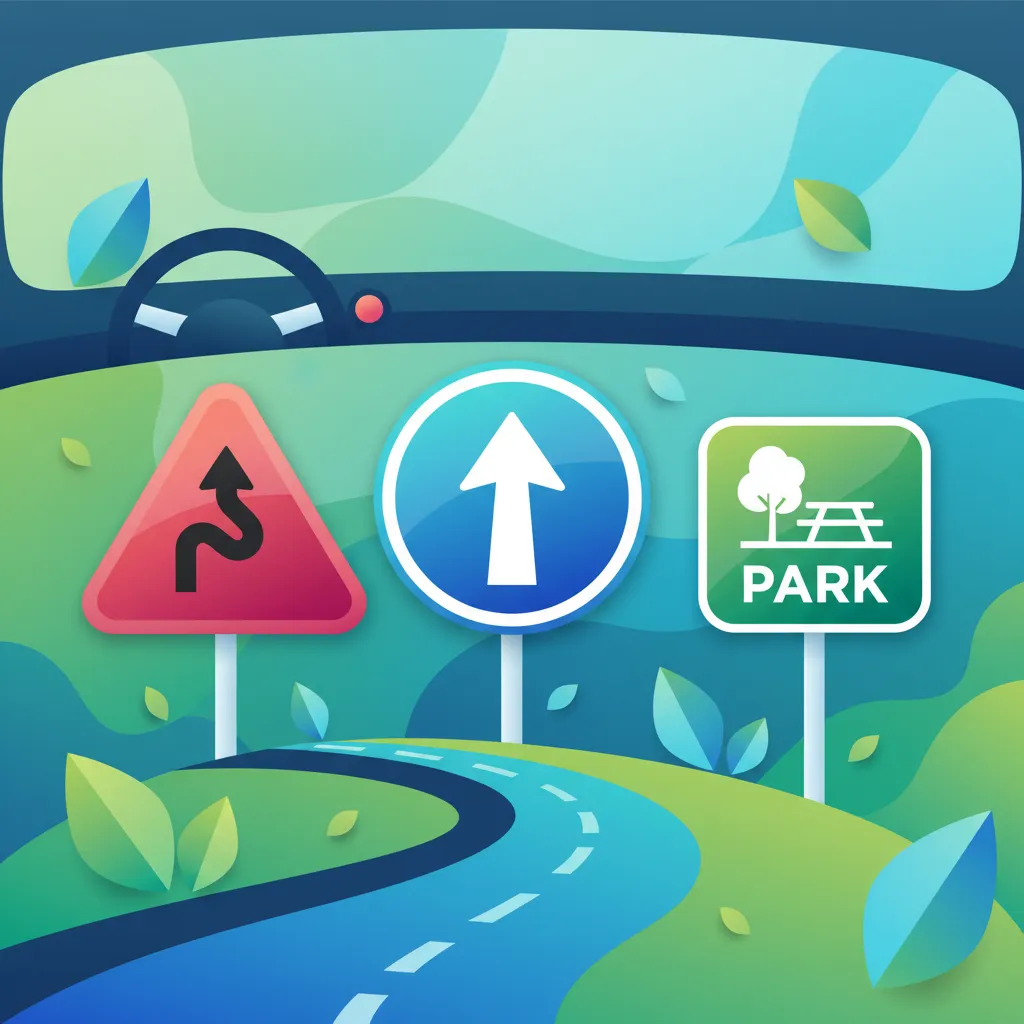
This lesson categorizes Icelandic road signs into regulatory signs that dictate mandatory actions, warning signs that alert drivers to hazards, and informational signs that provide guidance. It explains the distinctive shapes and colour schemes for each category, such as circles for prohibitions and triangles for warnings. By mastering these conventions, students will be able to interpret sign intent instantly and adapt their driving behaviour accordingly to comply with legal obligations.

This lesson helps learners develop an understanding of how drivers perceive and assess risks on Icelandic roads, particularly under variable weather and lighting conditions. The content discusses mental models used to anticipate the actions of other road users and the importance of identifying subtle hazards. By analysing environmental cues and applying systematic hazard perception strategies, students learn to enhance their situational awareness and make safer driving decisions.
This lesson examines the set of safety equipment required by Icelandic law to be present in every passenger vehicle, focusing on seat belts, airbags, fire extinguishers, and reflective vests. The content explains the correct placement and usage protocols for each item, including how to operate a fire extinguisher and don a reflective vest. Additionally, learners are introduced to the legal requirement for an emergency triangle and a first-aid kit.

This lesson explores the specific challenges of driving on Icelandic gravel roads, focusing on the reduced traction and vehicle dynamics associated with loose surfaces. The content explains how to adapt speed appropriately, maintain safe following distances, and use gentle braking to avoid skidding. Learners also study proper lane sharing etiquette, including how to safely pass other vehicles and manage loose stones that may be thrown, ensuring vehicle stability.
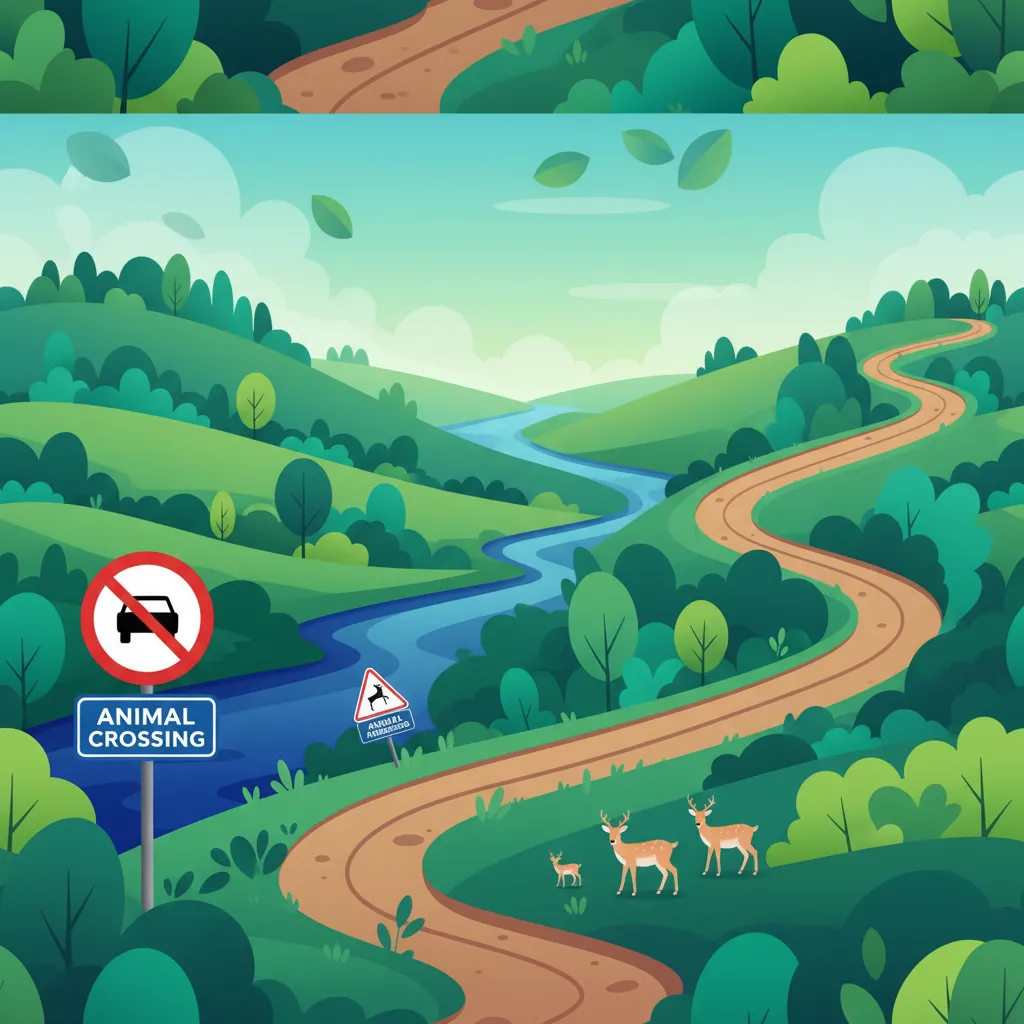
This lesson focuses on the regulations governing highland travel and off-road restrictions, including environmental protections that prohibit off-road driving in certain zones. The lesson details how to interpret highland road signage, understand restrictions related to wildlife crossings like reindeer and sheep, and adhere to road width management guidelines. Learners are also instructed on using emergency contact points in sparsely populated regions.
This lesson addresses the challenges of driving in rain and fog, focusing on strategies to maintain visibility and vehicle control. Learners will explore the correct use of windshield wipers, defoggers, and appropriate headlight settings, including when to use fog lights. The content also covers the increased risk of hydroplaning, the importance of adjusting speed in wet conditions, and the need to extend following distances to account for longer stopping distances.

This lesson focuses on the routine maintenance tasks essential for preserving vehicle safety and compliance in Iceland, including how to check tire pressure, assess brake wear, and monitor fluid levels. The content also outlines the periodic vehicle inspection process, the requirement for emissions testing, and the steps needed to renew vehicle registration. Understanding these procedures ensures the vehicle remains roadworthy and legally compliant.
Discover effective strategies for preparing for your Icelandic driving theory test, including study resources and timed practice. Learn how to avoid common pitfalls on exam day such as late arrival, anxiety, and prohibited conduct.
This lesson helps learners develop an understanding of how drivers perceive and assess risks on Icelandic roads, particularly under variable weather and lighting conditions. The content discusses mental models used to anticipate the actions of other road users and the importance of identifying subtle hazards. By analysing environmental cues and applying systematic hazard perception strategies, students learn to enhance their situational awareness and make safer driving decisions.
This lesson addresses the challenges of driving in rain and fog, focusing on strategies to maintain visibility and vehicle control. Learners will explore the correct use of windshield wipers, defoggers, and appropriate headlight settings, including when to use fog lights. The content also covers the increased risk of hydroplaning, the importance of adjusting speed in wet conditions, and the need to extend following distances to account for longer stopping distances.
This lesson examines the calculation of safe following distances using the two-second rule and formulas that factor in vehicle speed and road conditions. The content explains how reaction time, weather conditions like ice or rain, and vehicle load affect braking zones. Students also learn specific techniques for stopping on hills and how to avoid tailgating, thereby maintaining sufficient safety margins under all Icelandic weather conditions.
This lesson examines the set of safety equipment required by Icelandic law to be present in every passenger vehicle, focusing on seat belts, airbags, fire extinguishers, and reflective vests. The content explains the correct placement and usage protocols for each item, including how to operate a fire extinguisher and don a reflective vest. Additionally, learners are introduced to the legal requirement for an emergency triangle and a first-aid kit.
This lesson explores the specific challenges of driving on Icelandic gravel roads, focusing on the reduced traction and vehicle dynamics associated with loose surfaces. The content explains how to adapt speed appropriately, maintain safe following distances, and use gentle braking to avoid skidding. Learners also study proper lane sharing etiquette, including how to safely pass other vehicles and manage loose stones that may be thrown, ensuring vehicle stability.
This lesson categorizes Icelandic road signs into regulatory signs that dictate mandatory actions, warning signs that alert drivers to hazards, and informational signs that provide guidance. It explains the distinctive shapes and colour schemes for each category, such as circles for prohibitions and triangles for warnings. By mastering these conventions, students will be able to interpret sign intent instantly and adapt their driving behaviour accordingly to comply with legal obligations.
This lesson explores the proper use of lane markings to maintain correct vehicle centering and adherence to the prescribed traffic flow direction in Iceland. The content describes how to interpret solid and broken lines, maintain safe following distances within a lane, and avoid unintended lane departures. Learners also examine the legal prohibitions on using the road shoulder for general travel, ensuring compliance with lane discipline rules for overall traffic safety.
This lesson focuses on the regulations governing highland travel and off-road restrictions, including environmental protections that prohibit off-road driving in certain zones. The lesson details how to interpret highland road signage, understand restrictions related to wildlife crossings like reindeer and sheep, and adhere to road width management guidelines. Learners are also instructed on using emergency contact points in sparsely populated regions.

This lesson examines the specific techniques required for safe driving on snow-covered or icy roads in Iceland, covering the mandatory use of winter tires and the operation of anti-lock braking systems. Learners will study optimal low-speed cornering, proper braking distances on ice, and how to recover from a skid safely. By mastering these techniques, drivers can maintain control in challenging winter conditions and significantly reduce the risk of accidents on slippery surfaces.
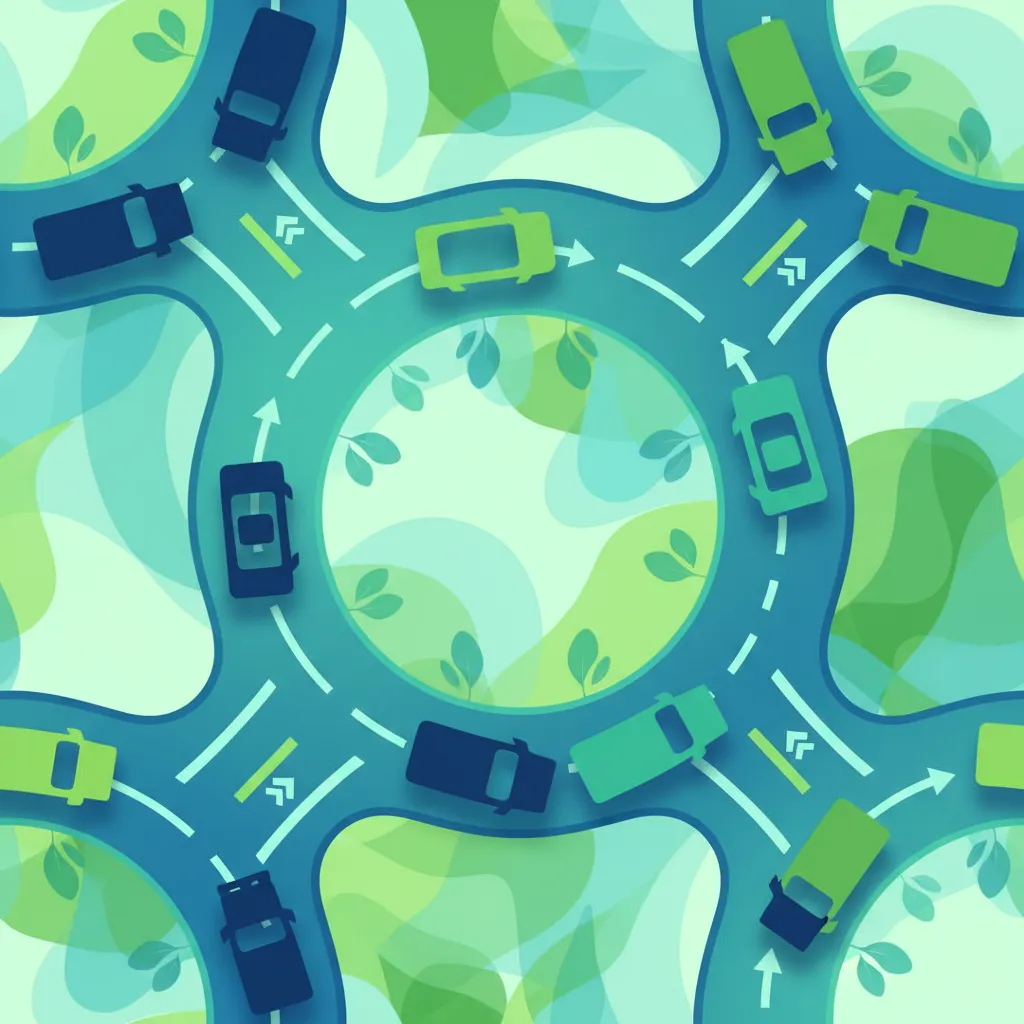
This lesson focuses on the operation of roundabouts, which are common in Icelandic towns and rural areas, and explains how drivers must yield to circulating traffic upon entry. The content covers how to interpret roundabout signage and follow lane markings to maintain correct positioning. Students also learn strategies for safe exit, handling multi-lane roundabouts, and recognizing deceptive entries that require heightened vigilance for smooth navigation.
Find clear answers to common questions learners have about Examination Process and Preparation. Learn how the lesson is structured, which driving theory objectives it supports, and how it fits into the overall learning path of units and curriculum progression in Iceland. These explanations help you understand key concepts, lesson flow, and exam focused study goals.
The Icelandic theory test for Category B typically includes multiple-choice questions. These questions assess your understanding of road signs, traffic rules, priority situations, safe driving practices, and specific Icelandic road conditions. Some questions may also present visual scenarios requiring you to identify the correct action.
You can schedule your theory test through the official website of the Icelandic Transport Authority (Samgöngustofa) or often via your driving instructor. You will need to select a testing center location and a suitable date and time. Ensure you have all necessary documentation ready before booking.
The passing score is determined by Samgöngustofa and can vary slightly. Generally, you need to answer a high percentage of the questions correctly. Specific details on the number of questions and the exact passing threshold are provided by the testing authority and will be covered in this lesson.
You will typically need to bring a valid form of identification, such as a passport or national ID card, and your booking confirmation. It is advisable to check the specific requirements on the Samgöngustofa website or with your driving instructor to ensure you have everything needed on the day.
If you do not pass the theory test, you will need to wait a specified period before you can retake it. This period is set by Samgöngustofa to allow for further study. This lesson will cover the policies and procedures for retakes and appeals.
Utilize our advanced practice set search to pinpoint the exact Icelandic driving theory topics you need to review. Filter by subject, difficulty, or question type to create a highly effective study plan and ensure you are fully prepared for your official driving licence test in Iceland.