
Welcome to the lesson on complex manoeuvres, covering U-turns and three-point turns. As part of the Lane Use, Positioning, Turning & Manoeuvres unit in your Official Icelandic Driving License B Theory Course, this lesson will equip you with the practical knowledge needed to safely execute these challenging turns in various road conditions. Understanding these manoeuvres is crucial for both passing your theory exam and navigating Icelandic roads confidently.
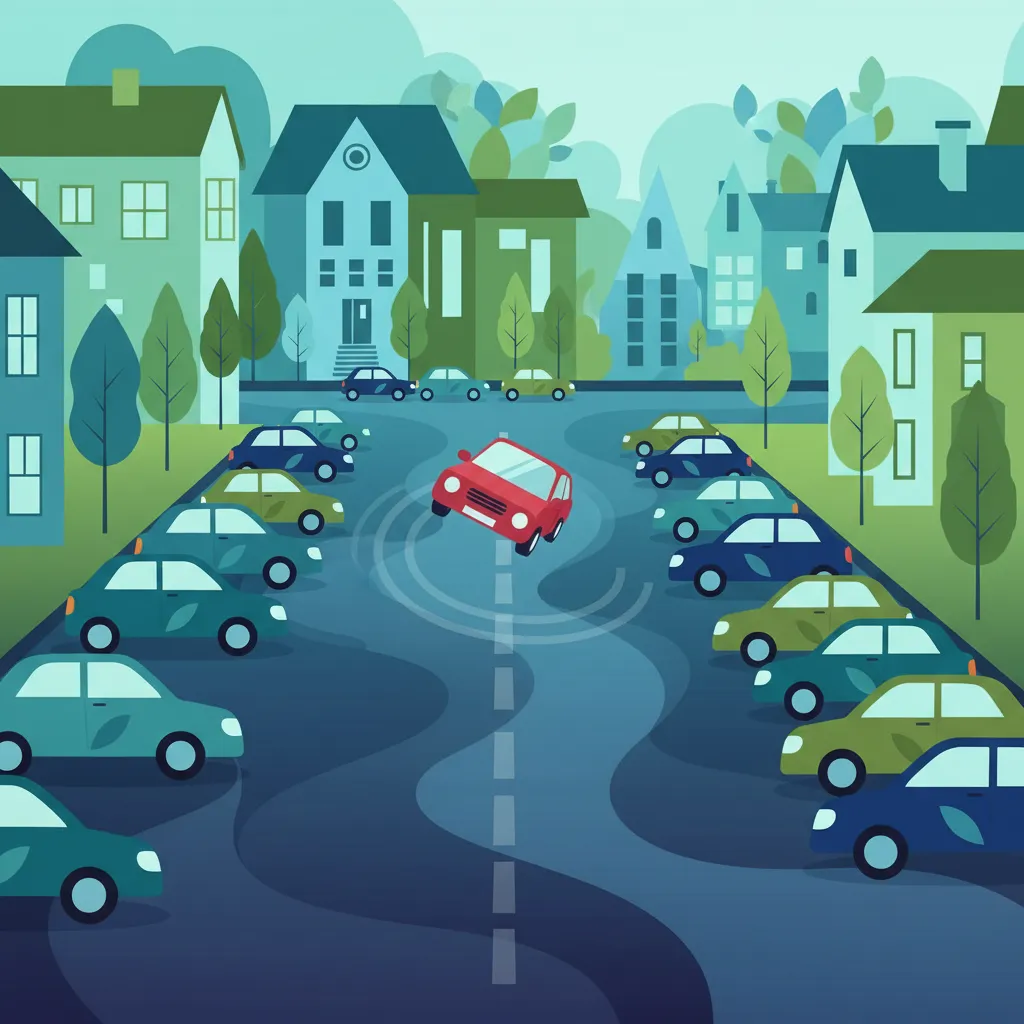
Lesson content overview
Navigating the diverse roads of Iceland, from bustling urban streets to narrow rural paths, often requires drivers to master complex manoeuvres like U-turns and three-point turns. These techniques are essential for safely reversing direction when a simple turn-around is not possible or legal. This lesson, part of the Official Icelandic Driving License B Theory Course, will detail the specific legal requirements, safety considerations, and step-by-step procedures for performing these manoeuvres confidently and correctly within the Icelandic traffic system.
Changing direction completely on a road requires careful planning and execution to ensure the safety of all road users. In Iceland, traffic laws are precise about when and how a driver may reverse their vehicle's direction, reflecting the unique challenges of Icelandic roads, such as varying widths, surface conditions, and sometimes unpredictable weather. Understanding these rules is not only crucial for passing your driving theory test but also for safe, responsible driving throughout the country.
Mastery of U-turns and three-point turns is vital for several reasons. It allows drivers to correct course after a missed turn, navigate dead-end streets, or simply change direction when no other options are available. However, these manoeuvres are inherently complex and, if executed incorrectly, can lead to serious hazards. Collisions with other vehicles, pedestrians, or stationary obstacles are real risks. Furthermore, improper execution can obstruct traffic flow, leading to frustration for other drivers and potential legal penalties. Therefore, safety is paramount, requiring strict adherence to visibility, road width, and signalling protocols.
A U-turn is a manoeuvre where a vehicle changes its direction 180 degrees to travel back along the same road but in the opposite direction, typically in one continuous sweep. It is a common technique when a driver realises they have gone past their destination or need to return quickly.
A U-turn is defined as a continuous, single-motion turn that completely reverses the vehicle's direction. For a U-turn to be feasible, the road must be sufficiently wide to allow the vehicle to complete the entire 180-degree turn without stopping or backing up. This manoeuvre is usually performed from the far-left lane or position, swinging widely across the road to enter the opposite lane.
In Iceland, U-turns are permitted only under specific conditions to ensure safety and prevent traffic disruption. It is crucial to be aware of both where they are allowed and where they are expressly forbidden.
A U-turn must only be performed where there are no road signs explicitly prohibiting it. One such sign is the "No U-turn" sign.
Furthermore, U-turns are generally prohibited at intersections, within roundabouts, and on one-way streets, as these are high-risk zones where conflicting traffic flows make such manoeuvres dangerous.
Attempting a U-turn on a narrow one-way street violates the one-way traffic flow and creates a direct head-on conflict with oncoming vehicles. Always seek an alternative route or perform a three-point turn where permissible.
Specific Conditions for Permitted U-turns:
Executing a U-turn requires a systematic approach to ensure safety and compliance.
Assess the Situation: Before you even consider a U-turn, assess the road width, visibility, traffic density, and check for any "No U-turn" signs. Look for a stretch of road that offers clear sight lines for at least 30 metres in both directions.
Signal Your Intent: Activate your left turn indicator at least 3 seconds before you begin slowing down or changing position. This gives other drivers ample warning of your intention to turn across the road.
Position Your Vehicle: Move your vehicle towards the far-left side of your lane, as close to the centre line (if present) or left edge as safely possible, without crossing into oncoming traffic. This maximises your turning radius.
Check Mirrors and Blind Spots: Thoroughly check your rear-view mirror, left side-mirror, and perform a head-turn check over your left shoulder to ensure no vehicles, cyclists, or pedestrians are in your blind spot. Also, check for oncoming traffic.
Execute the Turn: When the path is clear, steer sharply to the left, maintaining a slow, controlled speed. Aim to complete the turn in a single, continuous motion, staying within the road boundaries. Be prepared to stop if unforeseen hazards arise.
Adjust and Resume: Once the turn is completed, straighten your steering wheel and accelerate smoothly to match the flow of traffic in your new direction. Turn off your indicator once the manoeuvre is finished.
When performing a U-turn, especially on rural roads, remember that vehicles approaching from a distance might be travelling at higher speeds. Always allow more time and space than you think is strictly necessary.
When a U-turn is not possible due to insufficient road width, traffic conditions, or legal restrictions, a three-point turn (also known as a Y-turn) becomes the necessary manoeuvre to reverse direction in a confined space.
A three-point turn is a manoeuvre that reverses the vehicle's direction in three distinct steps: forward, reverse, and then forward again. Unlike a U-turn, it involves stopping and changing gear (from forward to reverse, then back to forward) as the vehicle is repositioned across the road. This makes it suitable for narrower roads or situations where continuous movement is not feasible.
You should opt for a three-point turn when:
Performing a three-point turn requires precision and careful observation throughout each phase.
Assess and Prepare: Find a safe, level spot with clear visibility. Ensure the usable road width is at least 2.5 metres for passenger cars. Check for traffic, pedestrians, and cyclists in all directions. Signal your intent to pull over to the left if needed to start the manoeuvre.
Phase 1: Forward Towards the Curb (or Left Edge):
Phase 2: Reverse Backwards (and Turn):
Phase 3: Forward into the New Direction:
On a steep incline, if you need to perform a three-point turn, apply the handbrake (parking brake) between each phase when stationary to prevent unintentional rolling. Ensure you have adequate traction before proceeding with each movement.
Regardless of whether you are performing a U-turn or a three-point turn, several core principles apply to ensure safety and legal compliance on Icelandic roads.
The physical space available on the road is a primary determinant of whether a manoeuvre can be performed safely.
The lateral distance between the usable edges of the road, including shoulders where appropriate, that is free from obstructions.
As noted, U-turns generally require a minimum usable width of 3 metres for passenger cars, while three-point turns can be performed in narrower spaces, typically 2.5 metres. Attempting these manoeuvres on roads below these minimums risks encroaching on opposing traffic lanes, hitting curbs, or even leaving the road entirely. Always assess the actual usable width, accounting for parked vehicles, snowbanks, or other roadside obstacles.
The length of road ahead and behind a vehicle that is clearly visible to the driver, free from obstructions like bends, hills, or dense foliage.
Adequate sight distance is non-negotiable for safe reversal manoeuvres. Drivers must confirm they can see at least 30 metres for a U-turn and 20 metres for a three-point turn (as per the blueprint, subject to verification) to provide sufficient reaction time for both themselves and any other road users. Never attempt a U-turn or three-point turn around a blind bend, over the crest of a hill, or in heavy fog/snow where visibility is severely limited.
Signalling Protocol: Any change of direction, including U-turns and each phase of a three-point turn, requires clear signalling. In Iceland, turn indicators must be activated at least 3 seconds before the manoeuvre begins and remain on until it is completed. This communicates your intentions to other drivers, allowing them to anticipate your actions and adjust their speed or position accordingly. Failure to signal is a common cause of accidents and is a direct violation of traffic law.
Mirror and Blind-Spot Checks: Before initiating any part of a reversal manoeuvre, and especially between each phase of a three-point turn, comprehensive visual checks are mandatory.
Areas around a vehicle that are not visible to the driver through the rear-view or side-view mirrors.
You must use your rear-view mirror, both side-mirrors, and perform a head-turn check over your shoulder to cover any blind spots. Cyclists, motorcyclists, and even smaller cars can easily be hidden in these areas. Ignoring blind spot checks significantly increases the risk of collision, particularly with vulnerable road users.
Road signs are critical for indicating where certain manoeuvres are forbidden. The "No U-turn" sign explicitly prohibits U-turns. Beyond signage, certain locations have inherent restrictions:
When performing a U-turn or three-point turn, your vehicle may temporarily move across areas where pedestrians are likely to be present, such as sidewalks or areas near crosswalks. It is mandatory to yield to pedestrians at all times. This means stopping if necessary to allow them to cross safely. Vulnerable road users always have priority, and extra vigilance is required in urban and residential areas.
Iceland's unique environment demands drivers to adapt their driving techniques, especially for complex manoeuvres.
Gravel Roads: On unpaved gravel roads, tyre grip is significantly reduced compared to asphalt. U-turns, particularly those attempted at speed, can easily lead to loss of traction and skidding. It is generally safer to perform a three-point turn on gravel, executed slowly and deliberately. If reversing on an incline, use the handbrake to secure the vehicle between movements.
Snow and Ice: Winter conditions drastically increase stopping distances and reduce tyre grip, requiring a larger turning radius. On snowy or icy surfaces, U-turns should be avoided if possible. A three-point turn, performed slowly and with extra care, is often the safer option. Allow more time for each phase, make smaller steering inputs, and be prepared for reduced responsiveness from the vehicle.
Night Driving: At night, perception of distance and speed is altered. When performing a reversal manoeuvre, rely more heavily on your headlights (low beam) to illuminate your path and surrounding obstacles. Be extra vigilant for pedestrians and animals that may be harder to spot. Thorough mirror and blind-spot checks are even more critical.
Heavy Rain, Fog, or Snow: These conditions severely limit visibility. If you must perform a reversal manoeuvre in poor weather, proceed with extreme caution. Re-confirm your sight distance multiple times. It might be safer to drive to a more open, well-lit area before attempting the turn, or even to find an alternative route if conditions are too hazardous.
Fully Loaded Vehicle: A vehicle carrying a heavy load will have increased inertia, affecting its braking distance and turning radius. It will require more space to complete a turn, potentially making a U-turn unfeasible where it might have been possible with an unloaded vehicle. Plan accordingly and allow extra clearance.
Vehicle with Trailer: Performing a U-turn or three-point turn with a trailer is significantly more challenging due to the increased length and articulation point. A three-point turn might become impractical, requiring a much larger area. In most cases, it is advisable to seek a large, open area (like a car park) or an alternative route that allows for a wide, gradual turn without reversing with the trailer.
To ensure safety and avoid legal repercussions, be aware of these frequent errors:
Mastering U-turns and three-point turns is a fundamental aspect of safe driving in Iceland. These manoeuvres require not only precise vehicle control but also a deep understanding of Icelandic traffic laws and an acute awareness of your surroundings.
By diligently practicing these techniques and internalising the underlying safety principles, you will be well-prepared to execute complex manoeuvres confidently and safely on any Icelandic road.
This lesson covers the legal and procedural requirements for performing U-turns and three-point turns in Iceland, essential for both theory exam preparation and safe driving. U-turns require a minimum 3-metre road width and 30-metre visibility, while three-point turns can be executed in narrower spaces (2.5 metres minimum, 20-metre visibility) through three controlled phases. Key safety requirements include mandatory signalling at least 3 seconds in advance, comprehensive mirror and blind-spot checks before each movement, and yielding to pedestrians at all times. The lesson also addresses Icelandic-specific challenges such as gravel roads, winter conditions, and night driving, advising drivers to adapt their technique and choose three-point turns over U-turns when road surfaces are slippery or visibility is reduced.
A short set of high-value points that capture the most important learning from this lesson.
U-turns require a minimum road width of 3 metres for passenger cars and at least 30 metres of clear visibility in both directions.
Three-point turns need a minimum road width of 2.5 metres and approximately 20 metres visibility, performed in three distinct phases with full stops between each.
U-turns are prohibited where a No U-turn sign is displayed, at intersections, within roundabouts, and on one-way streets.
Turn indicators must be activated at least 3 seconds before beginning any reversal manoeuvre and remain on until completion.
Gravel roads narrower than 3 metres generally prohibit U-turns due to reduced tyre grip and vehicle control.
Explore all units and lessons included in this driving theory course.
Always perform head-turn checks over your shoulder to cover blind spots; mirrors alone are insufficient to detect cyclists, motorcyclists, and pedestrians.
Come to a complete stop between each phase of a three-point turn; do not attempt to coast or roll between phases.
Use the handbrake on inclines to prevent unintentional rolling between the stationary phases of a three-point turn.
Pedestrians have legal priority and must be yielded to at all times, especially near crosswalks and sidewalks.
In poor conditions (gravel, snow, ice), three-point turns are generally safer than U-turns due to slower, more controlled movements.
Failing to signal before initiating the manoeuvre, leaving other road users without warning of the intended direction change.
Assuming mirrors cover all areas and skipping the required head-turn check for blind spots, risking collisions with vulnerable road users.
Attempting a U-turn on a road that is too narrow, leading to encroachment into opposing traffic lanes or hitting the curb.
Disregarding No U-turn signage or attempting the manoeuvre at prohibited locations like intersections or roundabouts.
On slippery surfaces, making sharp steering inputs or accelerating too quickly, resulting in loss of traction and skidding.
Lesson content overview
A short set of high-value points that capture the most important learning from this lesson.
U-turns require a minimum road width of 3 metres for passenger cars and at least 30 metres of clear visibility in both directions.
Three-point turns need a minimum road width of 2.5 metres and approximately 20 metres visibility, performed in three distinct phases with full stops between each.
U-turns are prohibited where a No U-turn sign is displayed, at intersections, within roundabouts, and on one-way streets.
Turn indicators must be activated at least 3 seconds before beginning any reversal manoeuvre and remain on until completion.
Gravel roads narrower than 3 metres generally prohibit U-turns due to reduced tyre grip and vehicle control.
Explore all units and lessons included in this driving theory course.
Always perform head-turn checks over your shoulder to cover blind spots; mirrors alone are insufficient to detect cyclists, motorcyclists, and pedestrians.
Come to a complete stop between each phase of a three-point turn; do not attempt to coast or roll between phases.
Use the handbrake on inclines to prevent unintentional rolling between the stationary phases of a three-point turn.
Pedestrians have legal priority and must be yielded to at all times, especially near crosswalks and sidewalks.
In poor conditions (gravel, snow, ice), three-point turns are generally safer than U-turns due to slower, more controlled movements.
Failing to signal before initiating the manoeuvre, leaving other road users without warning of the intended direction change.
Assuming mirrors cover all areas and skipping the required head-turn check for blind spots, risking collisions with vulnerable road users.
Attempting a U-turn on a road that is too narrow, leading to encroachment into opposing traffic lanes or hitting the curb.
Disregarding No U-turn signage or attempting the manoeuvre at prohibited locations like intersections or roundabouts.
On slippery surfaces, making sharp steering inputs or accelerating too quickly, resulting in loss of traction and skidding.
Explore search topics learners often look for when studying Complex Manoeuvres: U‑turns and Three‑point Turns. These topics reflect common questions about road rules, driving situations, safety guidance, and lesson level theory preparation for learners in Iceland.
Browse additional driving theory lessons that cover connected traffic rules, road signs, and common driving situations related to this topic. Improve your understanding of how different rules interact across everyday traffic scenarios.
Understand the specific Icelandic laws, road width rules, and critical visibility requirements for performing U-turns and three-point turns. Learn about common violations and how to ensure safety.
This lesson focuses on the principles of executing safe turns, highlighting the correct use of turn signals and lane positioning before initiating a turn. Learners examine the timing required for signaling, the rules governing right-turns and left-turn yields, and the importance of checking blind spots and cyclist lanes. The lesson also addresses the concept of turning radius to ensure drivers can complete turns without compromising the safety of others on the road.
This lesson focuses on the operation of roundabouts, which are common in Icelandic towns and rural areas, and explains how drivers must yield to circulating traffic upon entry. The content covers how to interpret roundabout signage and follow lane markings to maintain correct positioning. Students also learn strategies for safe exit, handling multi-lane roundabouts, and recognizing deceptive entries that require heightened vigilance for smooth navigation.
This lesson focuses on the regulations governing highland travel and off-road restrictions, including environmental protections that prohibit off-road driving in certain zones. The lesson details how to interpret highland road signage, understand restrictions related to wildlife crossings like reindeer and sheep, and adhere to road width management guidelines. Learners are also instructed on using emergency contact points in sparsely populated regions.
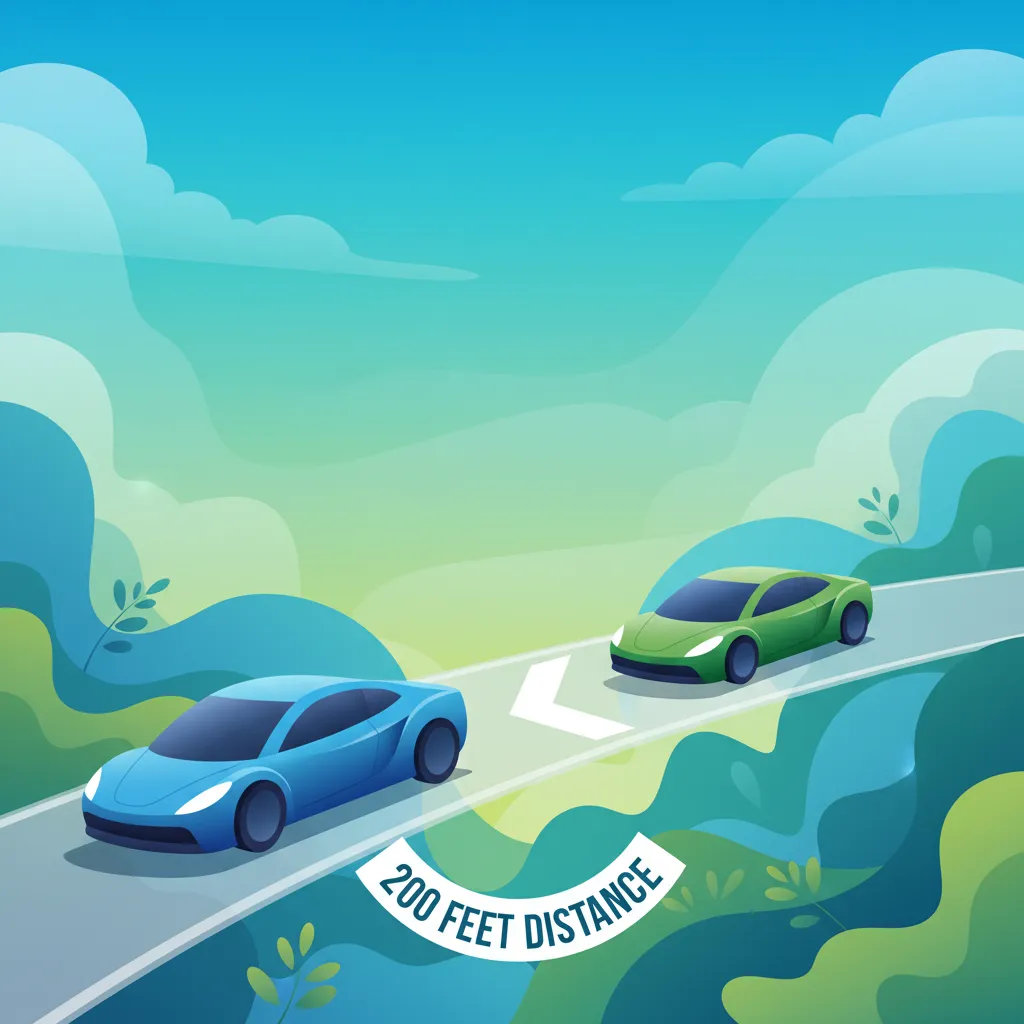
This lesson examines the calculation of safe following distances using the two-second rule and formulas that factor in vehicle speed and road conditions. The content explains how reaction time, weather conditions like ice or rain, and vehicle load affect braking zones. Students also learn specific techniques for stopping on hills and how to avoid tailgating, thereby maintaining sufficient safety margins under all Icelandic weather conditions.

This lesson explores the health criteria mandated by Icelandic law for operating a vehicle, focusing on visual and auditory acuity, as well as overall physical capability. Students will study required medical certifications and understand acceptable vision levels and hearing standards necessary for safe driving. The lesson also outlines how chronic illnesses, medication side-effects, and mental health conditions can influence driver fitness and legal compliance.

This lesson outlines the regulations governing pedestrian crossings, including zebra crossings, pedestrian traffic lights, and the driver’s obligations to yield. Learners will study how to identify crosswalk markings, interpret pedestrian signal phases, and understand the enhanced caution required in school zones and areas with high foot traffic. The content also emphasizes the need for drivers to anticipate vulnerable pedestrians and provide additional yielding in low-visibility conditions.
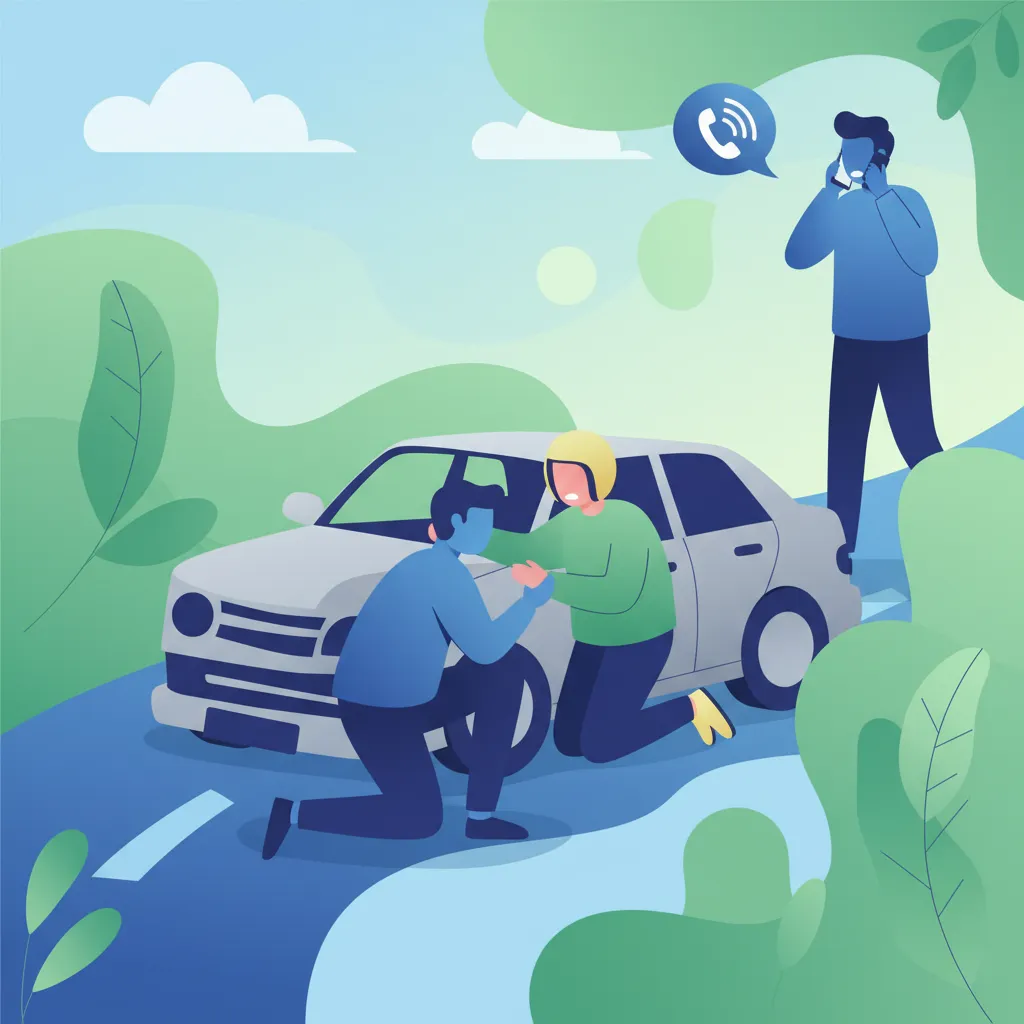
This lesson details the essential actions to take immediately after a collision, focusing on securing the accident scene and contacting emergency services using the universal number 112. The content explains how to use hazard lights, position vehicles to avoid secondary collisions, and assess the situation for immediate dangers. Learners also review their legal duty to report accidents and the appropriate information to provide to the police to ensure the scene remains safe.

This lesson explores the conduct required at uncontrolled crossings where the right-hand rule typically applies. It emphasizes the need to reduce speed, be prepared to stop, and establish clear communication with other road users. Riders will learn to assess the situation carefully and proceed only when it is confirmed to be safe, a critical skill for rural and residential areas.
This lesson examines the set of safety equipment required by Icelandic law to be present in every passenger vehicle, focusing on seat belts, airbags, fire extinguishers, and reflective vests. The content explains the correct placement and usage protocols for each item, including how to operate a fire extinguisher and don a reflective vest. Additionally, learners are introduced to the legal requirement for an emergency triangle and a first-aid kit.
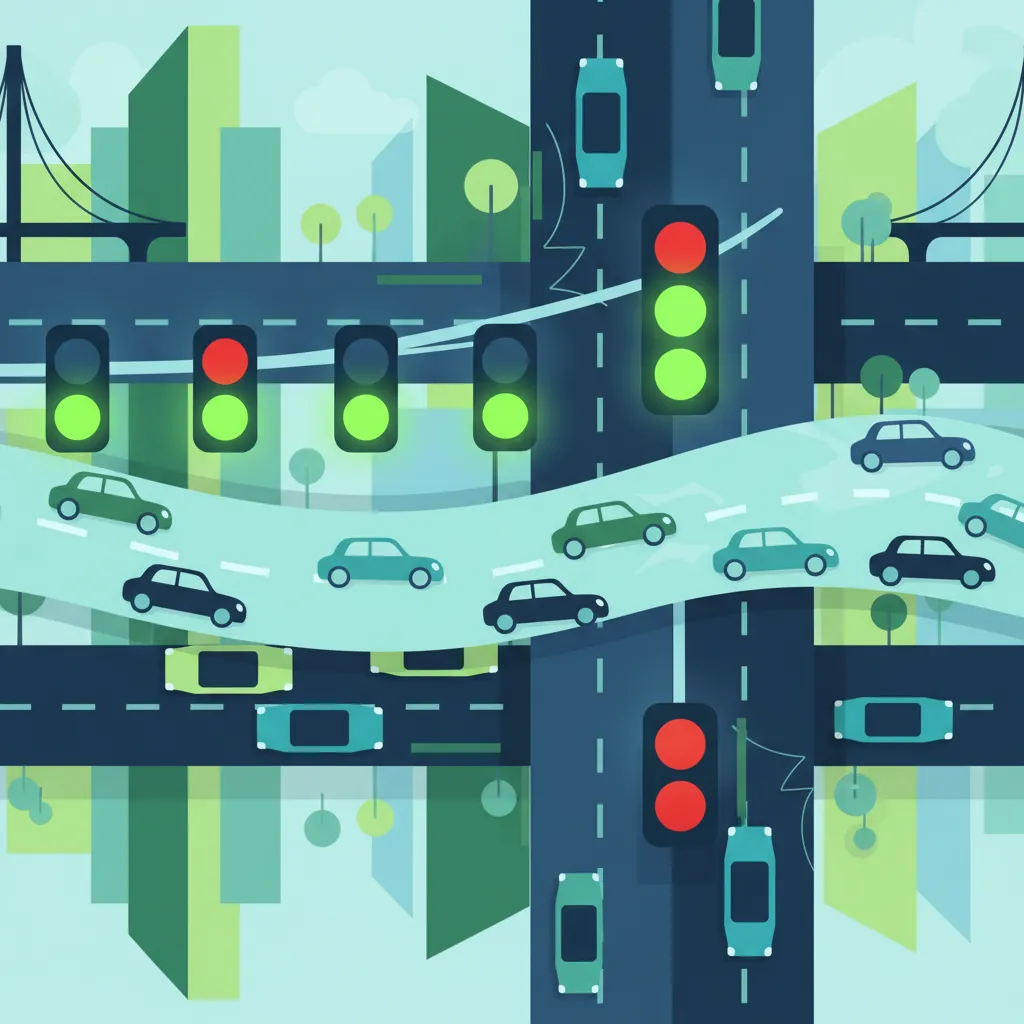
This lesson focuses on the operation of traffic lights in Iceland, describing standard three-phase cycles (red, amber, green) and variations such as flashing amber for yielding. Learners will also explore dedicated signals for pedestrians, cyclists, and turning movements, including arrow indications. The lesson explains how signal timing integrates with right-of-way rules at intersections, ensuring drivers can interpret and respond to each light state to maintain safety.
Learn how to safely execute U-turns and three-point turns on Iceland's diverse roads, including gravel, snow, and ice. This lesson covers visibility challenges and vehicle-specific adjustments.
This lesson examines the specific techniques required for safe driving on snow-covered or icy roads in Iceland, covering the mandatory use of winter tires and the operation of anti-lock braking systems. Learners will study optimal low-speed cornering, proper braking distances on ice, and how to recover from a skid safely. By mastering these techniques, drivers can maintain control in challenging winter conditions and significantly reduce the risk of accidents on slippery surfaces.

This lesson explores the specific challenges of driving on Icelandic gravel roads, focusing on the reduced traction and vehicle dynamics associated with loose surfaces. The content explains how to adapt speed appropriately, maintain safe following distances, and use gentle braking to avoid skidding. Learners also study proper lane sharing etiquette, including how to safely pass other vehicles and manage loose stones that may be thrown, ensuring vehicle stability.
This lesson focuses on the principles of executing safe turns, highlighting the correct use of turn signals and lane positioning before initiating a turn. Learners examine the timing required for signaling, the rules governing right-turns and left-turn yields, and the importance of checking blind spots and cyclist lanes. The lesson also addresses the concept of turning radius to ensure drivers can complete turns without compromising the safety of others on the road.
This lesson addresses the challenges of driving in rain and fog, focusing on strategies to maintain visibility and vehicle control. Learners will explore the correct use of windshield wipers, defoggers, and appropriate headlight settings, including when to use fog lights. The content also covers the increased risk of hydroplaning, the importance of adjusting speed in wet conditions, and the need to extend following distances to account for longer stopping distances.
This lesson focuses on the operation of roundabouts, which are common in Icelandic towns and rural areas, and explains how drivers must yield to circulating traffic upon entry. The content covers how to interpret roundabout signage and follow lane markings to maintain correct positioning. Students also learn strategies for safe exit, handling multi-lane roundabouts, and recognizing deceptive entries that require heightened vigilance for smooth navigation.

This lesson examines how strong winds and varying light conditions affect vehicle handling and safety, including techniques for maintaining stability under cross-winds and assessing gust intensity. The content also explains proper headlight usage during daylight, dusk, and nighttime, addressing glare reduction strategies and when to employ high-beam headlights. By mastering these concepts, drivers can navigate Icelandic weather and lighting challenges confidently and safely.
This lesson focuses on the specific challenges of riding on gravel and uneven rural roads. It teaches techniques for maintaining stability and traction on loose surfaces, including speed management, body positioning, and gentle control inputs. Understanding how to handle these conditions is essential for safely exploring areas outside of main urban centers in Iceland.
This lesson focuses on the regulations governing highland travel and off-road restrictions, including environmental protections that prohibit off-road driving in certain zones. The lesson details how to interpret highland road signage, understand restrictions related to wildlife crossings like reindeer and sheep, and adhere to road width management guidelines. Learners are also instructed on using emergency contact points in sparsely populated regions.
This lesson details how various weather conditions impact moped stability, traction, and visibility. It provides practical strategies for handling crosswinds, avoiding hydroplaning in rain, and maintaining grip on icy or snowy surfaces. Riders will learn to assess weather-related risks and adapt their speed and control inputs to navigate challenging conditions safely.
Find clear answers to common questions learners have about Complex Manoeuvres: U‑turns and Three‑point Turns. Learn how the lesson is structured, which driving theory objectives it supports, and how it fits into the overall learning path of units and curriculum progression in Iceland. These explanations help you understand key concepts, lesson flow, and exam focused study goals.
U-turns are generally permitted where there is sufficient space and visibility, and no signs prohibit them. This typically includes wider roads with multiple lanes or sections where visibility is not obstructed. Always check for signs that explicitly ban U-turns, such as 'No U-turn' signs or on roads with solid white lines indicating no crossing.
The main dangers involve misjudging space, leading to hitting curbs or other vehicles, and failing to check blind spots adequately. Poor signalling can also confuse other road users. It's essential to proceed slowly, check all directions, and complete the manoeuvre efficiently.
Road width is critical. On very narrow roads, especially gravel roads or those without clear shoulders, a U-turn might be impossible or illegal. If a U-turn requires crossing into the opposing lane or onto the shoulder, and there isn't ample space for both directions of traffic, it's likely unsafe or prohibited.
U-turns are typically not allowed at intersections controlled by traffic lights or where signs prohibit them. At uncontrolled intersections, it may be permissible if there is clear visibility, no signs forbidding it, and sufficient space, but it's generally safer and often legally required to use other turning methods or find a more suitable location.
The exam often presents scenarios where you must decide if a U-turn is legal and safe, or choose the correct procedure for a three-point turn. Questions may involve identifying prohibited locations, understanding signalling requirements, or sequencing the steps of a three-point turn correctly.
Utilize our advanced practice set search to pinpoint the exact Icelandic driving theory topics you need to review. Filter by subject, difficulty, or question type to create a highly effective study plan and ensure you are fully prepared for your official driving licence test in Iceland.